SIG SAUER - Never Settle

Archive for the ‘Contracts’ Category

Saab Receives Order for Carl-Gustaf Ammunition and AT4 from U.S. Armed Forces

Thursday, September 8th, 2022

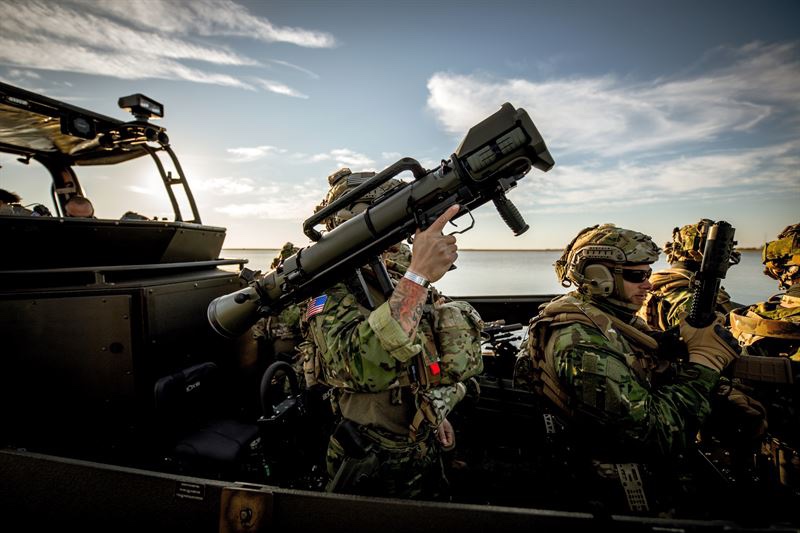
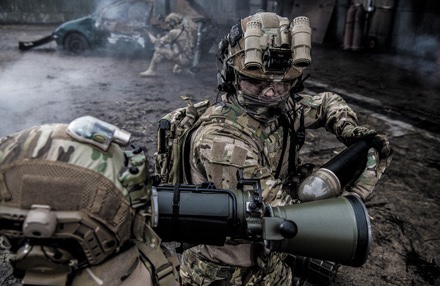
Saab has received an order for Carl-Gustaf® ammunition and AT4CS RS systems for U.S. Armed Forces. The order value is USD 81.8 million (SEK 812.7 million) and deliveries will take place during 2024.

The delivery order is signed within an Indefinite Delivery, Indefinite Quantity (IDIQ) framework agreement signed in 2019 between Saab and the U.S. Army that allows the customer to place orders for Carl-Gustaf ammunition and the single-shot AT4 shoulder-fired weapon systems during a five-year period.

The Carl-Gustaf ammunition and AT4 systems within this order will be used by the U.S. Army, U.S. Special Operations Command (SOCOM) and U.S. Marine Corps.

“We are proud to provide the U.S. Army, U.S. SOCOM and U.S. Marine Corps with a world-class, battlefield proven and effective multi-purpose shoulder fired capability (anti-armor, anti-structure, anti-personnel and illumination). Most importantly, Saab’s Carl-Gustaf and AT4 weapon systems will continue to provide warfighters with a significant lethal overmatch capability when engaging armored and dismounted threat forces on current and future battlefields,” said Erik Smith, President and CEO of Saab in the U.S.

Saab’s Carl-Gustaf system (designated MAAWS in the U.S.) has a long and proven record with the U.S. military. The reloadable, multi-purpose system has been in service in the U.S. since 1990 and a program of record for the U.S. Army since 2013.  In 2018, the U.S. Army announced it would acquire the latest version of the weapon, the Carl-Gustaf M4 (designated M3A1 in the U.S.). 

INVISIO Receives a Second Volume Order for Its Intercom System

Wednesday, September 7th, 2022

INVISIO is receiving another volume order for the Intercom System, within a short period of time. The customer is the same European NATO country that placed a first order for the solution in July 2022. The new order is valued at SEK 14 million.

This is one more significant reference order for the new Intercom system. INVISIO estimates that the future needs of the customer may lead to further volume orders.

The systems are to be delivered in the third and fourth quarter of 2022 and the combined value is SEK 14 million.

“It is very gratifying that the customer now places a second order for the new Intercom system and we expect that there can come additional orders in the future from the same customer,” says Lars Højgård Hansen, CEO of INVISIO.

About the Intercom system
The Intercom system is a new solution developed by INVISIO. The system enables simple and effective internal communication in vehicles, boats and helicopters, in a considerably more flexible way than has previously been possible, at a cost that is far below that of traditional solutions.

The Intercom system is already used in live environments and a number of customers have also certified the solution for use in Black Hawk-helicopters. These two successes are significant for the credibility of the solution and continued marketing.

Rheinmetall and UVision to Supply HERO Loitering Munitions to a Major European NATO Partner

Monday, September 5th, 2022

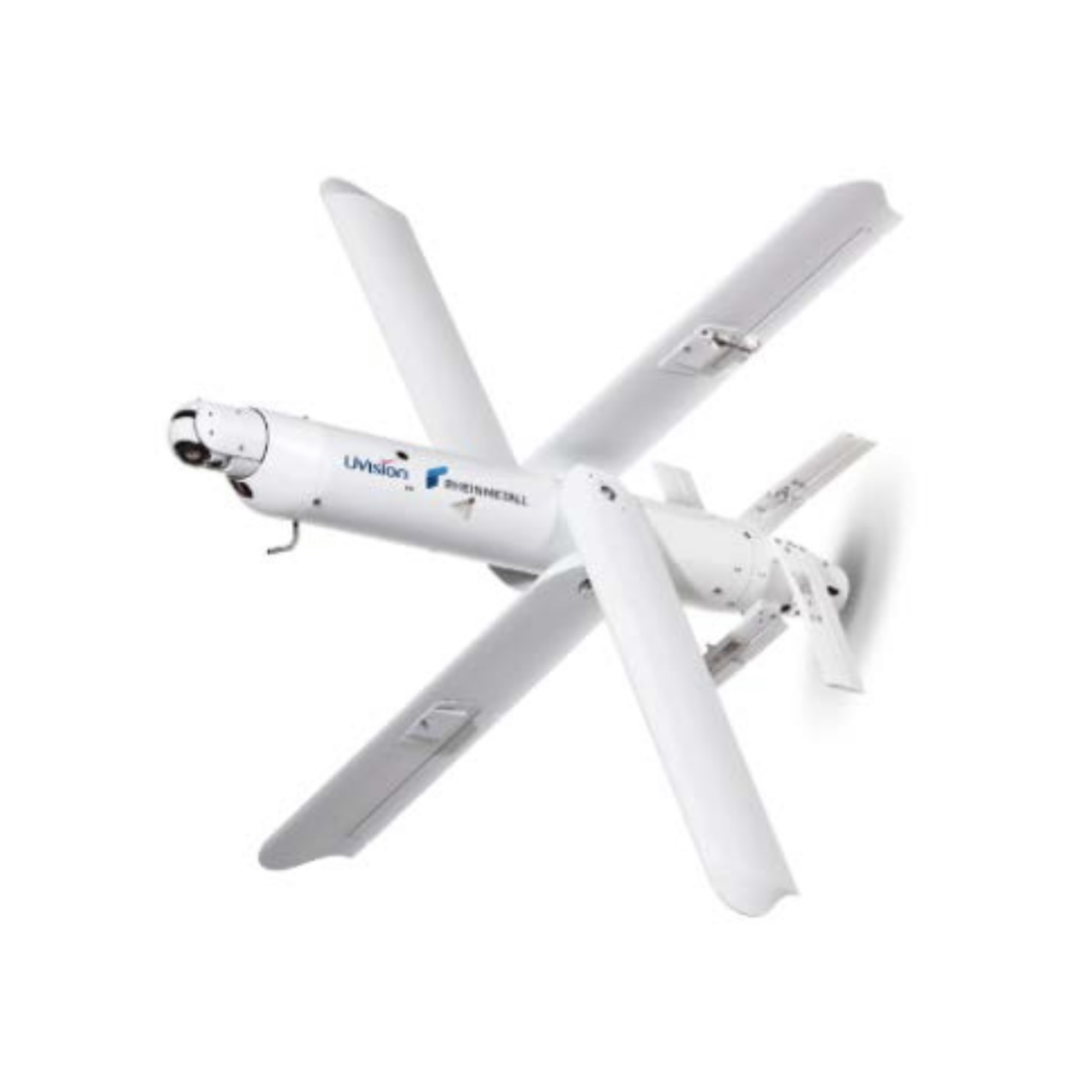
Rheinmetall and its partner UVision have won a first order from a major European NATO military force for HERO loitering munitions. The customer, a special forces formation, ordered Hero-30 combat and training munitions, simulator, training courses as well as integrated logistics equipment and support. This first order is worth a figure in the single-digit million-euro range with possible additional orders might be expected in the future. The exact number of munitions to be supplied is classified. The order was placed in July 2022, with delivery scheduled to take place by 2023.

For both Rheinmetall and UVision, the order is of particular importance as it is the first delivery to a major European NATO force. This strengthens the joint presence of both partners in Europe. The contract was awarded under secrecy clauses which limit revealing its full details to the public. However, prior to awarding the contract, the customer conducted a market survey indicating that the HERO family had already proven itself in service with other armed forces such as the United States Marine Corps. In addition, it was noted that due to the high operability of the HERO systems family, there is the possibility that the customer will also introduce the next-in-series HERO loitering munitions into its forces in the future.

Hero loitering munition is a series of operationally proven, widely deployed effectors, manufactured and distributed in Europe as part of a cooperation between UVision Air Ltd. and Rheinmetall’s Italian subsidiary RWM Italia S.p.A. In October 2021, Rheinmetall and the Israeli company UVision entered a strategic partnership in the field of loitering munition. In this partnership, Rheinmetall and UVision are jointly addressing the rapidly growing market for remote-controlled precision ammunition.

Combat power multiplier

Loitering munitions – remote-controlled airborne precision-strike munitions – combine the operational advantages of drones and guided missiles. The systems provide front-line forces with a combination of advanced intelligence gathering and target acquisition capabilities along with extended range firepower, which until now could only be achieved by complex coordination between several units and echelons.

The term loitering munition (“LM” for short) is derived from the munition’s ability to remain undetected in the airspace above the target area for an extended period of time and to strike when the right moment arrives.

Versatile and easy to operate, loitering munitions can be used in national and allied defence as well as in low-intensity conflicts or peace stabilization operations. LM offers the military user considerable cost advantages over guided missiles, delivering comparable effectiveness as well as the ability to reconnoitre, locate and track targets from the air for an extended period. An important tactical advantage of the operationally proven UVision HERO systems lies in their high-precision strike capabilities, which results in minimal risk of collateral damage. Continuous monitoring in accordance with the “human in the loop” principle enables calculated, pinpoint attacks that are precisely tailored to the timing and conditions of a constantly changing situation.

A loitering munition system includes a single or multi-canister launcher, a loitering munition (or multiple LMs if the latter), communication technology, and a ground control module for the operator. The loitering munitions themselves are remote-controlled small air vehicles, each of which can attack ground targets – even beyond the line of sight.

All models are equipped with high-resolution electro-optical sensors and infra-red cameras that enable the operator to locate, monitor and ultimately engage even time-critical low-signature targets. In this way, enemy targets can be located, tracked, and verified to conduct precise strikes. The HERO system can abort an attack in mid-air, return to flight mode and then resume the attack or reassign other targets, giving operators great tactical flexibility on the modern battlefield.

NATO Customer Norway Officially Commissions New High-Performance Rheinmetall MAN Logistic Vehicles

Friday, September 2nd, 2022

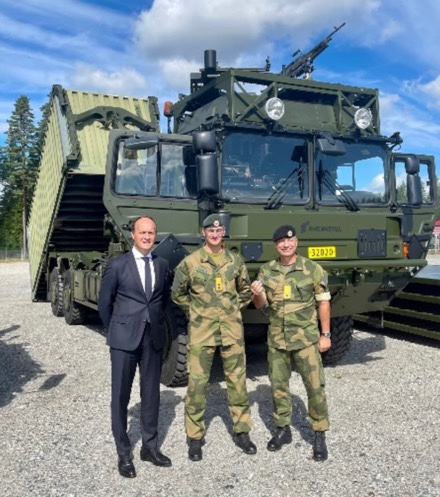
On 23 August 2022, in the presence of company officials from Rheinmetall MAN Military Vehicles, the Norwegian military procurement agency, NDMA, formally transferred over a hundred new HX and TGS-mil military trucks to the Norwegian Army, the end customer. The ceremony took place at Sessvollmoen military base near Oslo. Major General Øyvind Johan Kvalvik, Deputy Director of the NDMA, symbolically handed over the keys to the Norwegian Army’s second in command, Brigadier General Frode Ommundsen.

“We are proud to be able to transfer these state-of-the-art truck systems today to the most important people in the Norwegian armed forces – the troops!”, declared Michael Wittlinger, chairman of the board of management of Rheinmetall MAN Military Vehicles (RMMV) in a speech marking the occasion. “We are certain that these vehicles will satisfy Norway’s soldiers, providing them with the best-possible protection and support.” 

The roots of the project go back to 2008, when a committee of Norwegian military officials drew up a list of specifications for new military logistic vehicles. Norway gave Rheinmetall MAN Military Vehicles (RMMV) the nod in 2013. Then, on

31 March 2014, NDMA and its Swedish opposite number, the FMV procurement agency in Stockholm, entered a framework agreement with RMMV to supply of military logistic vehicles, which runs through to 2025. Linked to this is an additional agreement encompassing long-term service support from RMMV. Rheinmetall MAN Military Vehicles is a joint venture owned by Rheinmetall AG, which holds a 51% stake in the company, and MAN Truck & Bus SE, which holds the remaining 49% share. 

The first shipments of trucks earmarked for Norway include 109 vehicles of various types: twenty-four 24 HX 8×8 trucks with hook lift systems; fifty-six TGS 6×6 heavy-duty tractor trailers; and twenty-nine TGS 4×4 and 6×6 vehicles.

Michael Wittlinger went on to note in his speech that “this is RMMV’s most complex project to date. Our contract is not just with Norway but with Sweden, too. Owing to the special challenges of the Scandinavian operating environment, the technical specifications are very complex. Moreover, the order encompasses 38 different truck configurations and trailer variants, making this a very multifaceted programme.”  Furthermore, each individual variant is subject to an extremely rigid and ambitious timetable for reaching milestones, with highly detailed lifecycle support documentation required at every stage. All of this goes way beyond the expectations of our other customers.”

The new vehicles are intended first and foremost to improve the transport capacity of the Norwegian military’s logistics corps, while simultaneously expanding the operational capabilities of its armed forces. This new high-tech family of vehicles fully meets the comprehensive requirements of its military users. Some of these trucks feature an integrated armoured vehicle cab for protecting the crew from ballistic threats and shrapnel. Furthermore, they can also be equipped with state-of-the-art communication and command-and-control systems as well as remote-control weapon stations.

Mack Defense Receives Order for 144 Additional Trucks for the U.S. Army M917A3 Heavy Dump Truck Program

Tuesday, August 23rd, 2022

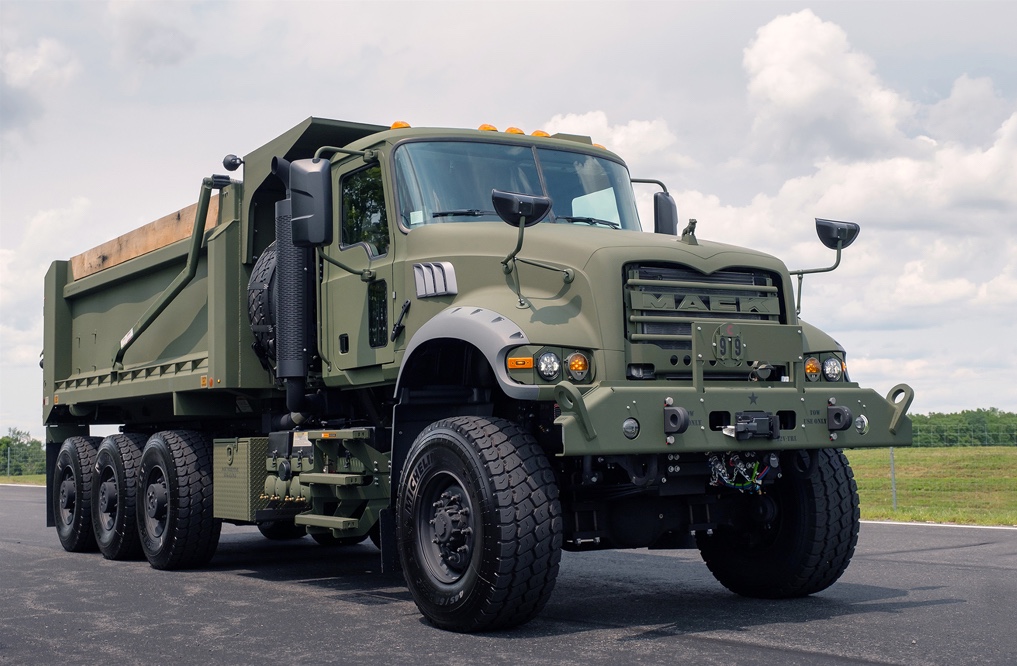
ALLENTOWN, PA – Mack Defense announced today that the U.S. Army and the U.S. Army Reserve have ordered an additional 144 Mack Defense M917A3 Heavy Dump Trucks (HDTs).

The additional vehicles, based on the commercially available Mack® Granite® model, are part of the previously announced firm-fixed price $296 million contract to be fulfilled over seven years that the Army awarded Mack Defense in 2018. The HDTs are a key component in construction and maintenance missions for infrastructure assets, such as airfields, roadways, landing strips, supply facilities and motor pools.

“We are proud to maintain our production operation which was created for the U.S. Army M917A3 HDT program, and we are extremely proud that our Mack Defense HDT vehicles, which have been fielded, are meeting and exceeding expectations,” said David Hartzell, president of Mack Defense. “Mack Defense remains committed to producing vehicles for the U.S. armed forces based on modified versions of our industry-leading Mack vehicles providing the latest technologies and best value while meeting the military’s demanding requirements.”

The Army previously had ordered 155 HDTs, which are spec’d with heavier-duty rear axles, all-wheel drive, increased suspension ride height and other ruggedized features to meet the unique requirements of the Army. Those HDT vehicles have all been built, and final deliveries will continue through August 2022.

The Mack Granite HDT model is a modern truck equipped with modern technology, such as ABS and other active safety systems. The Granite model is user-friendly, comfortable and safer to operate compared with other past models used by the Army, which is key to the Army’s investment in the new HDTs, Hartzell said. The Granite HDTs and the production line at the Mack Experience Center in Allentown, Pennsylvania, were both inspected by the government quality auditors to ensure both met expectations.

Production of the HDTs at the MEC began in Q1 2021, following an investment of $6.5 million to create a dedicated HDT production line at the facility. The production line helps fulfill the M917A3 contract, while allowing Mack Defense to produce other vehicle variants.

The production line in the MEC is in Mack’s former Customer Adaptation Center, where vehicle modifications occurred. The Customer Adaptation Center has since moved to Mack’s Lehigh Valley Operations (LVO) in Macungie, Pennsylvania, where all Mack Class 8 vehicles for North America and export are assembled. Previously, non-armored HDT vehicles began production at LVO and were then transported to the MEC, where final assembly, including adding the dump body, occurred.

www.mackdefense.com

BAE Systems wins U.S. Army’s Cold Weather All-Terrain Vehicle (CATV) Competition, Receives $278 Million Contract

Tuesday, August 23rd, 2022

FALLS CHURCH, Va. – August 22, 2022 – BAE Systems’ Beowulf has won the U.S. Army’s competition for its Cold Weather All-Terrain Vehicle (CATV) program and the company has received a $278 million contract for production units, spare parts and contractor logistics support. The win further confirms BAE Systems as the industry leader in the design and production of military all-terrain vehicles for operations in harsh terrains and in the toughest weather conditions.

Beowulf is an unarmored, tracked, and highly versatile vehicle for carrying personnel and a variety of payloads in either of its two compartments. Beowulf can traverse snow, ice, rock, sand, mud, and swamp conditions, and can operate in steep mountain environments. Its amphibious feature also allows it to swim in flooded areas or coastal waters. This marks the first sale of Beowulf, which is based on its sister BvS10 armored variant in service with several European nations.

As the focus on Arctic Mobility operations grows, we see increasing opportunities in other markets for the BvS10 and Beowulf with an emerging demand to replace legacy BV206s.

“Beowulf is a highly capable solution to meet the US Army’s requirement for Arctic operations. We look forward to providing our soldiers operating in challenging terrain and environments with this highly capable vehicle,” said Mark Signorelli, vice president of business development at BAE Systems Platforms & Services. “We have been maturing and modernizing cold weather all-terrain capabilities for decades, bringing advanced capabilities to the United States and numerous other countries. This contract means we will continue to do so for many years to come.”

Beowulf’s articulated mobility system is key to its effectiveness, providing optimal maneuverability across varying surfaces. Its modular design can be reconfigured for multiple missions, such as logistical support, disaster and humanitarian relief, search and rescue, and other missions as required.

Its large windows and spacious cabin make Beowulf suitable to the tasks for the CATV program, including search and rescue, defense support to civilian authorities, and homeland defense. Its modern, commercial design ensures soldiers’ operational effectiveness in executing a wide variety of difficult missions.

Beowulf successfully completed the prototype evaluation phase of the CATV program earlier this year in Alaska. It performed in multiple tasks while remaining fully mission capable. The testing included amphibious operations, navigating terrain with varying levels of complexity, starting and operating in extreme cold weather, and most critically, user assessment by soldiers.

Beowulf is built by BAE Systems Hägglunds in northern Sweden, adding firsthand experience in operating in an arctic environment. The platform includes several key components from U.S. suppliers, such as its engine, transmission, and hydraulic system. The CATV program will replace the legacy fleet of Small Unit Support Vehicles (SUSVs), also built by BAE Systems Hägglunds, and known internationally as the BV206. The BV206 has been in service globally, including with the U.S. Armed Forces, since the early 1980s.


Norwegian Armed Forces Place Order for Programmable Carl-Gustaf Round

Monday, August 22nd, 2022

Saab has received an order from the Norwegian Armed Forces for deliveries of ammunition for the recoilless Carl-Gustaf® rifle.

The order is signed within a 15-year framework agreement that allows the Norwegian Armed Forces to place orders for Carl-Gustaf ammunition and weapons. This includes the new programmable high explosive round HE 448, among other ammunition types. In January 2021, Norway became the 14th user of the latest Carl-Gustaf M4.


“We are pleased to continue to support the Norwegian Armed Forces with our Carl-Gustaf ammunition. These munitions will further strengthen Norwegian defence capability,“ says Görgen Johansson, head of Saab’s business area Dynamics.

The programmable high explosive ammunition HE 448 gives the Carl-Gustaf operator the ability to quickly configure a chambered round. The wide range of ammunition available for Carl-Gustaf further strengthens the system’s tactical flexibility, enabling faster engagement, increased hit probability and greater effectiveness for soldiers.

www.saab.com

U.S. Army Selects AeroVironment JUMP 20 Medium Unmanned Aircraft System for Future Tactical Unmanned Aircraft System (FTUAS) Increment 1

Monday, August 22nd, 2022

• FTUAS to replace RQ-7B Shadow UAS currently fielded in selected Brigade Combat Teams

• Increment 1 entails testing and fielding JUMP 20 medium unmanned aircraft on an accelerated schedule as it competes to become the U.S. Army’s FTUAS of choice  

• The JUMP 20 vertical takeoff and landing (VTOL), runway independent medium unmanned aircraft system provides intelligence, surveillance and reconnaissance (ISR) services with increased maneuverability, and improved command and control


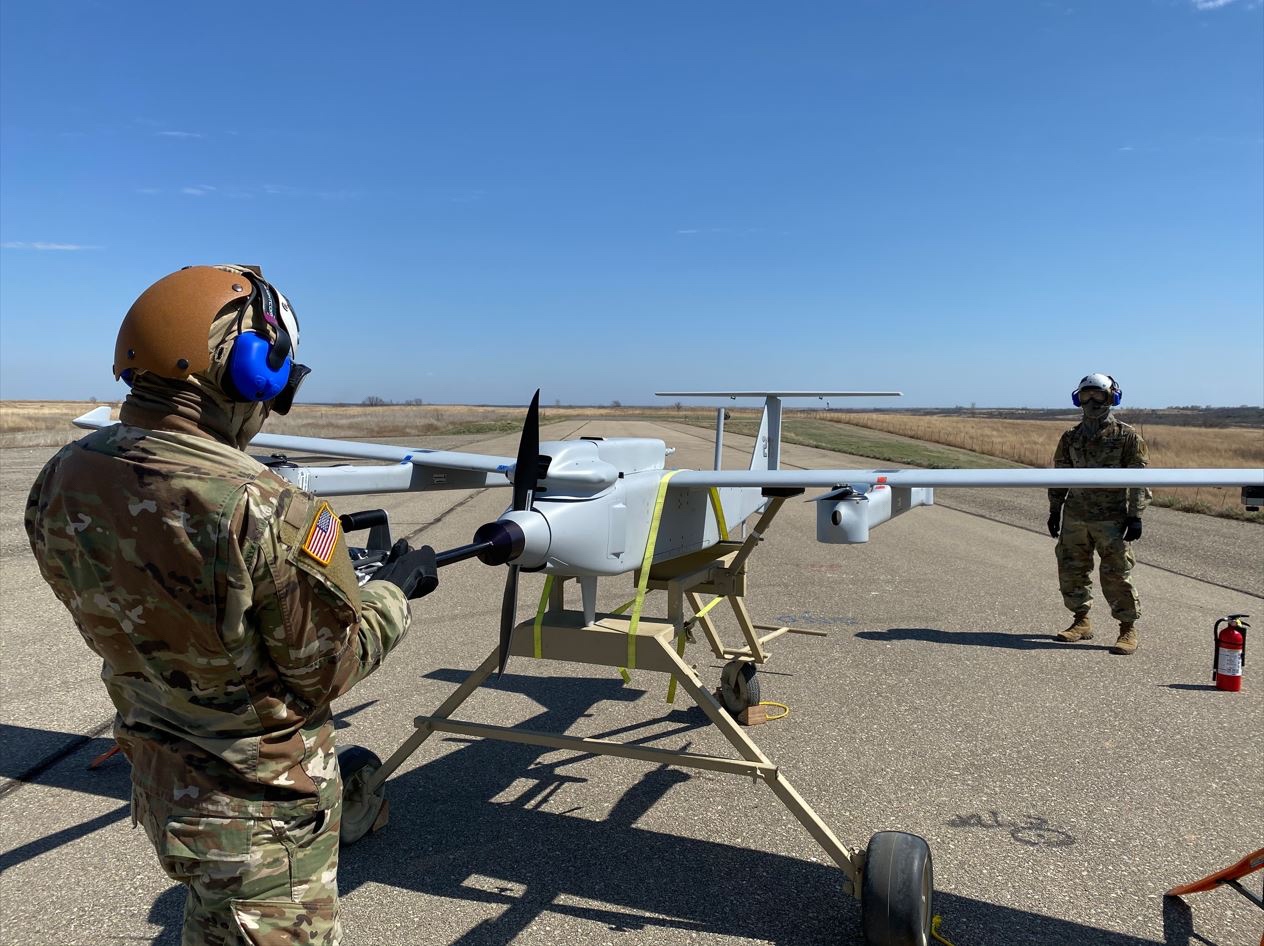
Specialist. Christopher McCoy assigned to 1st Engineer Battalion, 1st Infantry Division, conducts an engine start on the JUMP 20 prior to a launch during the FTUAS capabilities assessment at Fort Riley, Kansas. (Photo: Courtesy asset of the U.S. Department of Defense [DoD]) Disclaimer: The appearance of U.S. DoD visual information does not imply or constitute DoD endorsement.

ARLINGTON, Va., Aug. 19, 2022 –AeroVironment, Inc. (NASDAQ: AVAV), a global leader in intelligent, multi-domain robotic systems, today announced it received an Other Transaction Agreement award by the United States Army on Aug. 18, 2022 for Increment 1 of the Future Tactical Unmanned Aircraft System (FTUAS) program. The contract encompasses the purchase, testing and delivery of one JUMP® 20 medium unmanned aircraft system (MUAS) to a selected Army Brigade Combat Team (BCT) and associated services, training and support.

“With Increment 1 of the FTUAS program, the Army will be testing and fielding the JUMP 20 on an accelerated schedule as they seek a replacement for the RQ-7B Shadow UAS currently fielded in Brigade Combat Teams,” said Gorik Hossepian, AeroVironment vice president and product line general manager for MUAS. “The combat-proven JUMP 20 is a rapidly deployable, runway independent, vertical takeoff and landing solution for the Army. Its ability to be deployed, operated and sustained from anywhere is a game-changer in theater and in situations where the enemy has invaded or destroyed infrastructure.”

The AeroVironment JUMP 20 is the first fixed-wing unmanned aircraft system capable of vertical takeoff and landing (VTOL) to be deployed extensively in support of U.S. military forces. Ideal for multi-mission operations, JUMP 20 delivers 14+ hours of endurance, a standard operational range of 115 miles (185 kilometers) and is runway independent. The system can be set up and operational in less than 60 minutes without the need for launch or recovery equipment and has a useable payload capacity of up to 30 pounds (13.6 kilograms). The JUMP 20 also features a common autopilot and ground control system architecture providing a highly customizable, modular platform that can be custom configured to meet operational or customer requirements.