GORE-TEX WINDSTOPPER

Archive for the ‘Drone’ Category

Army Leaders, Stakeholders Discuss Future of UAS Transformation

Friday, September 12th, 2025

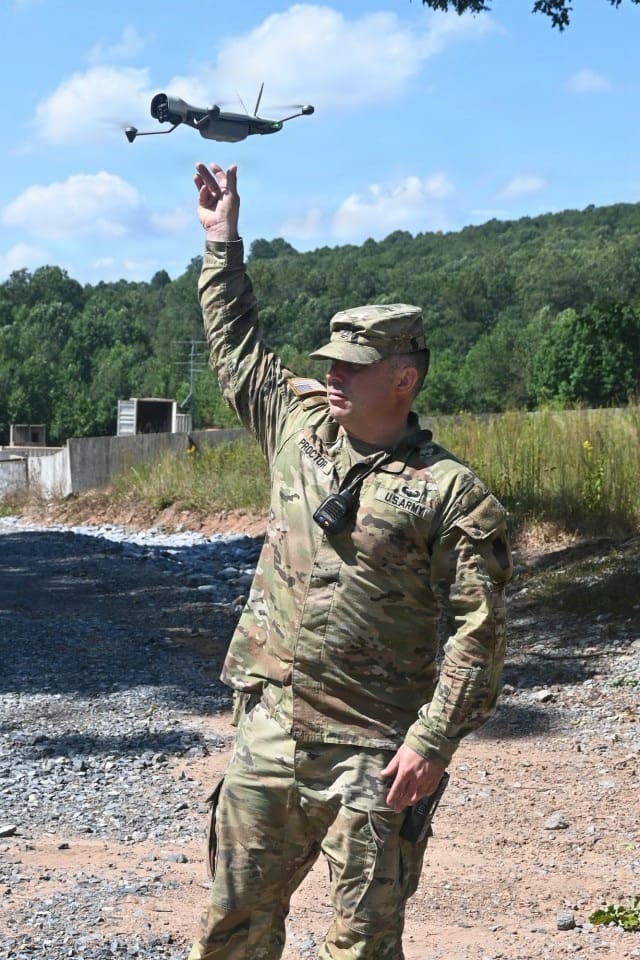
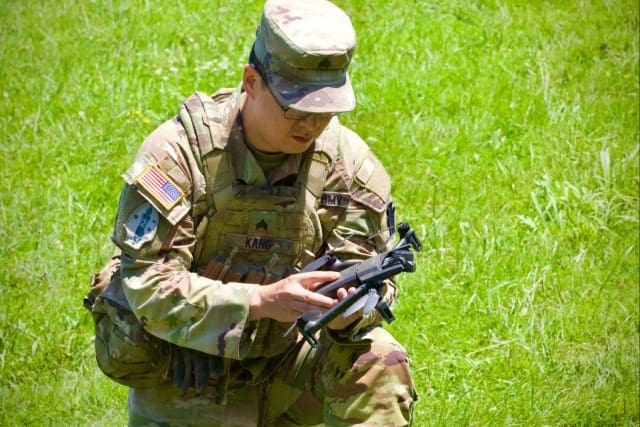
FORT RUCKER, Ala. – The Army conducted its largest unmanned aerial system flight demonstrations with industry and first UAS lethal live fire experimentation range for more than 400 stakeholders during the annual UAS and Launched Effects Summit.

“This was the single largest transformation venue solely focused on UAS across all of DOD,” said Col. Nicholas D. Ryan, director, capability manager for UAS, Fort Rucker.

Senior leaders, Soldiers and industry representatives discussed the future of UAS, policy changes, the deployment of drones, emerging capabilities and the challenges posed by adversaries who are developing and advancing their own unmanned systems.

Partnerships

UAS stakeholders who collaborated throughout the event included UAS operators from Army divisions, training installations and combatant commands; UAS experts from joint and interagency services including the Marines, Air Force, Navy, Special Forces, the Department of Homeland Security, police agencies and allied partners from Japan, South Korea, Australia, Britain, Germany and Israel; more than 275 industry partners; and policy makers from the joint staff at the Pentagon.

“They all synchronized all UAS transformation efforts, shared best practices and [tactics, techniques and procedures], and rapidly proliferated UAS capability across the Army,” said Ryan. He said they took lessons learned from current conflicts, where unmanned systems are being deployed and reshaping battlefield tactics, and discussed the future of the Army’s UAS program.

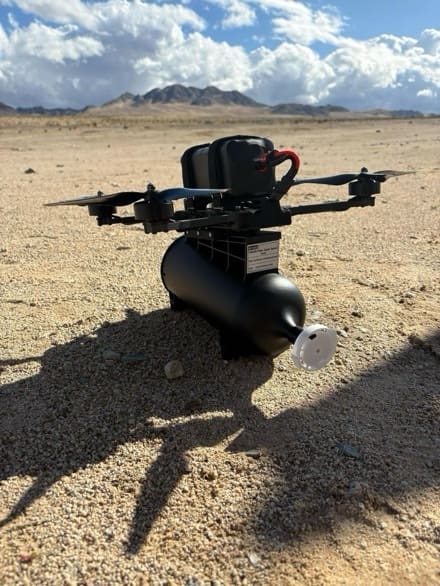
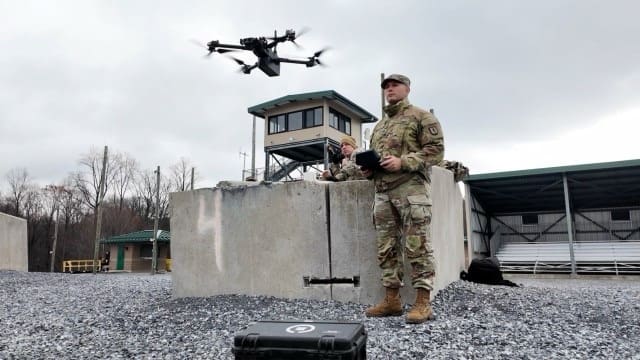
During the summit, system developers and industry partners exhibited both fielded and in-development UAS systems on Fort Rucker’s ranges. Soldiers and industry experts conducted a live demonstration of lethal UAS, showing drones armed with bomb and grenade dropping systems, 12-gauge shotguns, 40mm grenade launchers, and various explosive payloads. First-person-view drones were demonstrated destroying moving ground vehicles and intercepting other drones mid-flight.

“This was the opportunity to see the art of the possible… and the best of industry, and to take that across the street and put it in the hands of the Soldiers was great,” said Maj. Gen. Clair Gill, commanding general, Army Aviation Center of Excellence and Fort Rucker.

Transformation

Ryan said events like the summit allows the Army to achieve the goals of the Army Transformation Initiative, the White House’s Executive Order for unleashing American drone dominance and the Defense Secretary’s guidance for unleashing U.S. military drone dominance.

“The Army’s UAS mission is to rapidly integrate UAS technology and accelerate UAS transformation efforts across the Army,” said Ryan. “This summit is the largest Army venue solely focused on accelerating the Army’s UAS transformation efforts. The past two years of executing the Army UAS and LE summit have driven significant change across national, DOD and Army transformation and integration initiatives.”

Future

Looking ahead, commanders at brigade level and below will soon have access to a secure online storefront to purchase drones for experimentation, training, and operational use. The intent is to empower units to develop their own tactics and discover novel applications for unmanned systems in support of their missions.

“We want to give the commanders a lot of risk authority, let the commanders fly these systems in their area,” said Ryan.

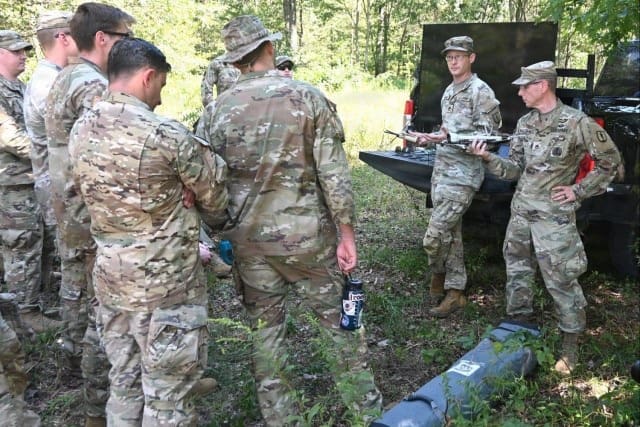
Fort Rucker is conducting the first iteration of the Army’s new lethal operator course, which trains Soldiers in the use of armed small UAS.

“Almost every division and [Army National Guard and Special Operations Command] has folks here at our course, and they are going to leave here as lethal operators that can go back out and train their units,” said Gill.

The course is being developed with the objective of becoming like other Army specialty programs such as Air Assault School, with the goal of standardizing instruction and enabling expansion to other installations.

“The idea is that we can export it,” said Gill. “So now we’re running Air Assault School; we’ve got a standardized block of instruction, here’s what you need, here’s the equipment you have to buy, here’s the ranges, capabilities, and limitations you’re going to have, here’s the pre-requisites to bring people in, and what you’re going to train them on. So, you’ll see that lethal operator course probably at the Fires Center, the Maneuver Center, and probably anywhere else (the Army) thinks it’s appropriate.”

Ryan said Soldiers from every career field across the Army are innovating and adopting new UAS technology and TTP’s at every echelon down to the squad level to maintain a tactical advantage over any adversary.

As UAS technology advances, these Soldiers are learning to operate and integrate new UAS air vehicles and payloads faster than before,” said Ryan. “Taking lessons from Ukraine, these Soldiers are also innovating with 3D printing and additive manufacturing to develop, build, and fly their own Soldier-built UAS capabilities. The Army is quickly implementing new policies and training programs to accelerate and resource this front-line innovation and integration.”

Fort Rucker

Fort Rucker is uniquely positioned to support UAS advancement because it combines experienced personnel, available airspace and the necessary approvals to conduct complex and realistic training and evaluation, said Ryan.

He envisions the post as a location where industry can bring new capabilities to put directly in Soldiers’ hands for operational feedback.

“We have the experts here, we have (U.S. Army Combat Capabilities Development Command) here, and now we have the range and approvals to do it,” said Ryan. “So, our intent, working with industry, is: use us, come to (Fort Rucker) as a location and a site if you want to test out a new drone or a new capability, or something lethal. Come to us, we’ve got the airspace, we’ve got the range and we’ve got the people here.”

Col. Joshua Ruisanchez, director, Army aviation capabilities and integration directorate, urged continued collaboration between the Army and industry.

Over the next six months, the focus will be on three critical areas: artificial intelligence integration, the development of a universal drone controller, and the continued refinement of the drones themselves, said Ruisanchez.

“The Maneuver Center will ensure every Soldier touches the drone, and they get the training that’s needed to be able to operate them,” he said. “We see this almost like a basic training task like chemical gear. How do you protect yourself against a drone, and how do you employ the drone?”

Gill said AVCOE will serve as the Army’s central proponent for UAS, ensuring a unified approach to fielding, training, and operational integration.

“It needs to be centralized, one proponent to bring it all in and push it all out,’” he said.

Ryan said that though AVCOE and Rucker will be the central proponent for the Army’s UAS program, the Army’s close partnership with all its stakeholders is essential.

“Operational, joint and allied teammates, academia, capability managers, material developers, policy makers, industry partners, they all drive the acceleration and implementation of the Army’s transformation efforts,” said Ryan.

By Shannon Collins and and John Hamilton, Army News Service

Tobyhanna Army Depot’s First Drone Shipment Takes Flight

Thursday, September 11th, 2025

TOBYHANNA, Pa. — Tobyhanna Army Depot is playing a pivotal role in the Department of Defense’s quest for battlefield superiority.

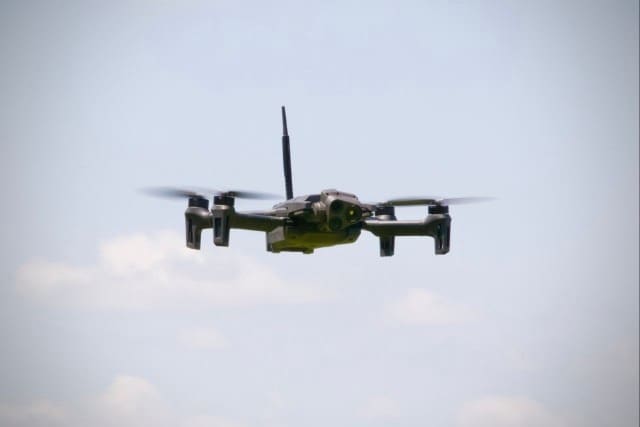
The organization successfully completed its first delivery of first-person view small uncrewed aircraft systems, commonly referred to as sUAS, on Aug. 28, marking a significant milestone in advancing its mission to enhance readiness for America’s warfighters.

The Army and DOD’s transformation initiatives seek to facilitate a leaner and more agile Army through development of modernized UAS/sUAS capabilities, as highlighted in the memo titled “Unleashing U.S. Military Drone Dominance.” In it, U.S. Secretary of Defense Pete Hegseth described drones as “the biggest battlefield innovation in a generation.”

Led by the Army Materiel Command, this collaborative effort leverages the unique capabilities of multiple Army organizations, including the U.S. Army Tank-Automotive & Armaments Command. Rock Island Arsenal’s Joint Manufacturing and Technology Center provides 3D-printed airframes, while Tobyhanna Army Depot provides essential logistics and electronics expertise to complete the integration of sUAS systems.

Those leading the initiative describe it as a thrilling and transformative period for Team Tobyhanna.

“We are excited to seize the opportunity to integrate and ship cutting-edge drones to units across the United States. This effort stands to transform the landscape and future of the organic industrial base, positioning Tobyhanna at the forefront of innovation and readiness for our nation’s defense,” said Steven Wiltz, a logistics management specialist supporting the emerging mission.

Depot Commander Col. Benjamin L. Kilgore agreed, noting the importance of the accomplishment.

“This new mission is an opportunity for Tobyhanna Army Depot to support the Army’s readiness needs of today, evolve our capabilities, and align with the future of the force,” he said.

Tobyhanna has a robust history of support for DOD UAS systems. The organization has supported the MQ-9 Reaper since the 2010s through public-private partnerships with L3 Harris and General Atomics. The experience gained supporting those workloads have created a strong foundation for this new effort, according to sUAS Project Manager Christopher Volch.

“TYAD’s longstanding support for UAS has underscored our critical role in modern warfare. From TYAD’s sustainment efforts for the United States Air Force’s MQ-9 Reaper, the depot has learned just how essential and in demand these systems are to the battlefield. The same holds true for sUAS, as seen in the Russia-Ukraine conflict, these systems are the eyes and ears at the tactical edge. That’s why TYAD has committed substantial resources to the sUAS project, with progress reflected in both its defined objectives and completed milestones,” said Volch.

Kilgore emphasized that the initial delivery is just the first step in Tobyhanna’s sUAS journey.

“In the coming years, we will establish a robust capability to produce sUAS motors and circuit card assemblies to support emerging warfighter needs for the multi-domain battlefield.”

Tobyhanna Army Depot is designated as the Center of Industrial and Technical Excellence for Command, Control, Communications, Computers, Intelligence, Surveillance and Reconnaissance, electronics, avionics and missile guidance and control. TYAD provides cradle-to-grave lifecycle support through depot-level repair, systems integration, software and cyber engineering, and field support. A key enabler of operational readiness for Joint and Allied Forces globally, TYAD leverages new and emerging technologies to further expand the Department of Defense’s organic capabilities for microelectronics, secure communications infrastructure, unmanned aerial systems, Joint All-Domain Command and Control, Integrated Air and Missile Defense (IAMD), and the Army’s Next Generation Combat Systems. TYAD’s ability to rapidly surge production, deploy field support teams, and scale for contingency or theater-level operations makes it a vital contributor to strategic readiness and operational reach.

By Danielle E. Weinschenk, Public Affairs Officer, with additional reporting by Nicolo Manzo.

Origin Robotics Unveils BLAZE, a Cost-Effective Drone Interceptor with AI-powered Computer Vision

Wednesday, September 10th, 2025

RIGA, Latvia (May 6, 2025) – Defence tech startup Origin Robotics has launched BLAZE, an autonomous counter-unmanned aerial system (C-UAS) interceptor designed to neutralize fast-moving aerial threats with precision and speed. As drones become an increasingly dominant force on the modern battlefield, BLAZE offers a cost-effective solution to counter them, filling the gap between traditional gun-based air defence and high-cost missile interceptors. The interceptor is aimed to strengthen the defence capabilities of European countries amid rising threats and geopolitical uncertainty.

Drones have reshaped modern warfare, dictating battlefield strategies and shifting the balance of power. Their widespread use, particularly in Ukraine, has demonstrated both their effectiveness and the high cost of countering them. In January 2025 alone, Russia launched over 2,500 drones into Ukrainian territory – an average of 80 drones per day. This escalation underscores the urgent need for advanced yet cost-efficient air defence solutions.

Agris Kipurs, CEO and co-founder of Origin Robotics, said, “In asymmetric warfare, drones are relatively inexpensive and widely deployed to overwhelm air defenses and strike targets both at the frontline and deep behind it, making it challenging and costly to counter. We designed BLAZE specifically to address this threat—a fast, intelligent, and cost-effective addition to existing air defense systems. We remain committed to delivering cost-efficient and adaptable solutions to support Europe and NATO allies in addressing existing and future security challenges.”

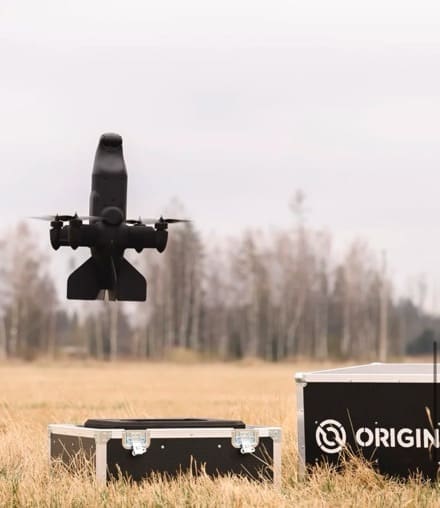
BLAZE is a man-portable, rapidly deployable interceptor designed to defeat fast-moving aerial threats, including loitering munitions and hostile UAVs. The system combines radar-based detection with AI-powered computer vision, delivering autonomous target acquisition and operator-approved interception. Equipped with a high-explosive (HE) fragmentation warhead, it ensures precise and effective threat elimination, even in contested environments.


The system autonomously detects, acquires, and locks onto targets using a combination of radar tracking and AI-powered computer vision. Upon operator confirmation, the system executes a precisely calculated attack—either destroying the target on direct impact or engaging it with an airburst fragmentation detonation.  BLAZE delivers high mobility, scalability, and cost-efficiency for modern armed forces.

As an operator-supervised autonomous system, it ensures the operator retains final-stage control, including the ability to issue a wave-off command that directs the BLAZE to either return safely or self-destruct. This capability allows immediate deployment even in scenarios with uncertain target identification, significantly reducing the risks of friendly fire and minimizing collateral damage.

The interceptor is designed for quick deployment and high-intensity operations. The first drone can be launched in under five minutes, with subsequent launches taking less than a minute. Compact and portable, BLAZE’s transport case doubles as a launch station and charging dock. Its tool-less setup ensures it is flight-ready in under ten minutes.

Following the battlefield-proven success of its flagship drone system, BEAK, currently deployed by the Ukrainian and Latvian Armed Forces, Origin Robotics continues to develop scalable, next-generation technologies for modern warfare. Thanks to BEAK’s rapid deployment and proven capabilities, Origin has quickly earned recognition for its technology and built trust in its autonomous aerial systems—reflected in an R&D contract from the Latvian Ministry of Defence and a grant from the European Defence Fund.

PEO Soldier Takes Reigns of Purpose Built Attritable System Program

Wednesday, September 10th, 2025

PEO Soldier recently released this statement regarding their designation as the program office for the Army’s Purpose Built Attritable System effort which looks to field attritable FPV drones across the formation. It’s a great choice for this capability which will transform the Army from the squad up.

The Assistant Secretary of the Army (Acquisition, Logistics, and Technology) has officially designated PEO Soldier as the lead for the Purpose Built Attritable System (PBAS) program. This designation and alignment highlight the Army’s commitment to addressing new threats posed by emerging technologies and underscore the importance of ensuring our Soldiers remain equipped to meet the challenges of a rapidly evolving battlefield.

We would like to extend our sincere gratitude to PM UAS and PEO Aviation for their exceptional efforts and collaboration in recent months. Their hard work and dedication, including the work leading up to the recent vendor fly-off event, have been instrumental in laying the foundation for the PBAS program. We deeply value their contributions and teamwork in advancing this initiative. We will continue to work closely with PM UAS in the future regarding all things robotics to ensure we design and deliver solutions correctly to our formations.

As we move forward, the team at PEO Soldier is eager to engage with industry partners to drive the growth of the PBAS capabilities. We are committed to addressing emerging threats and delivering capabilities that meet the needs of our Soldiers. Additional details regarding an upcoming industry day and program updates will be shared soon.

PEO Soldier looks forward to working together with all stakeholders and industry to ensure the success of the PBAS program. We remain committed to our mission of equipping America’s Soldiers with the best equipment possible to make them a more efficient and lethal force.

British Soldiers Advance from Flying to Fighting with Drones

Friday, September 5th, 2025

From maintenance to flying one-way missions to strike the enemy, soldiers have progressed their skills from flying to fighting with drones for the first time.

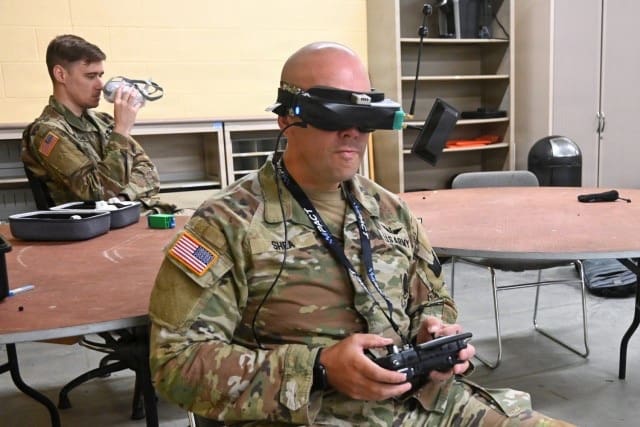
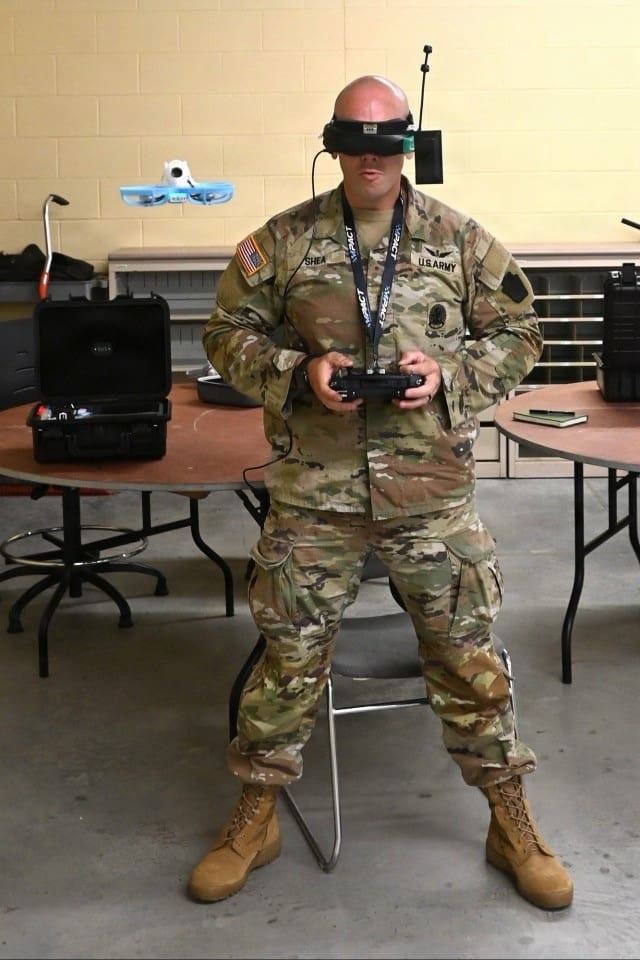
First Person View (FPV) Uncrewed Aircraft Systems (UAS) provide a precision strike capability on the battlefield and are being used to great effect by the Ukrainian Armed Forces. Flown using a virtual reality headset and carrying small explosive charges, the manoeuvrability of FPV UAS means they can punch above their weight and cost, such as flying through an open hatch to destroy an armoured vehicle by exploding inside it.

We’re teaching soldiers from the ground up how to configure and fly FPV UAS and then how to fight with them, working as a team alongside reconnaissance drones to find and strike targets.

COLOUR SERGEANT DANNY WADE, 2ND BATTALION THE PARACHUTE REGIMENT

At the Bramley ranges in Hampshire, a three-week workshop (7-25 July) has taught soldiers already trained to fly FPV UAS about how to fight with them – known in military jargon as One Way Attack (OWA). The training was split between classroom lessons, flight simulators and training in the field to teach soldiers how to work with reconnaissance UAS to fly strike missions, while avoiding being targeted by enemy UAS and Electronic Warfare capabilities.


The workshop was delivered by 2nd Battalion The Parachute Regiment’s UAS Platoon, the first to be set up in the Army. The instructors have trained at the Army’s UAS Centre at Lulworth as OWA team commanders and were cascading their skills to qualify soldiers from across 1st (UK) Division as OWA operators.

Colour Sergeant Danny Wade, commander of 2 PARA’s UAS Platoon, lead the training.

“We’re teaching soldiers from the ground up how to configure and fly FPV UAS and then how to fight with them, working as a team alongside reconnaissance drones to find and strike targets,” he said. “It’s very different training and FPV flying is a hard skill to learn, but everyone has put the effort in and progressed well.

This is where warfare is going, and it is interesting to be part of it. The skills I’ve learnt are very different to what you would expect an infantry soldier to do.

KINGSMAN KAIDYN HILTON, 1ST BATTALION THE DUKE OF LANCASTER’S REGIMENT

“The entry point is for a soldier to have 30 flying hours on a simulator, and across the three weeks they’ll have logged another 100 hours both on the simulator and flying. The ability to fly accurately is more important than speed, because we want to able to hit exact points on a target to maximise the damage.”

Kingsman Kaidyn Hilton, of 1st Battalion The Duke of Lancaster’s Regiment, said his unit had used UAS for reconnaissance assets “for some time”, but OWA was “something new”.

“FPV drones are hard to fly, because you are fully in control of it, whereas a normal drone is basically on autopilot and you’re directing it where to go,” he said. “It can be disorientating because when you’ve got the goggles on you need to really concentrate on flying, and you’re getting told information about the tactical situation by someone who is outside the bubble that you are in. There’s a dose of adrenaline, because you know you’ve got control of a weapon that can hit bigger targets more quickly than the infantry used to be able to do. 

“This is where warfare is going, and it is interesting to be part of it. The skills I’ve learnt are very different to what you would expect an infantry soldier to do.”

It’s been a steep learning curve for us with a lot of trial and error. There’s so much to think about, from logistics to command and control, and how we coordinate UAS with artillery and air support.

COLOUR SERGEANT DANNY WADE, 2ND BATTALION THE PARACHUTE REGIMENT

PARA’s UAS Platoon, formed in late 2024, is at the forefront of bringing OWA into how the Army fights. It has taken part in 2 PARA exercises as both friendly and enemy forces to get the battalion thinking about operating with and against drones.

CSgt Wade said: “The battalion took the decision to create a specialist platoon to really make the most of UAS. This is an entirely new class of weapon and, as yet, there’s no formal Army doctrine on OWA. It’s been a steep learning curve for us with a lot of trial and error. There’s so much to think about, from logistics to command and control, and how we co-ordinate UAS with artillery and air support.

When I joined up, drones were a niche capability somewhere in the artillery world, and I would never have thought that in my career I would be training infantry soldiers as pilots.

COLOUR SERGEANT DANNY WADE, 2ND BATTALION THE PARACHUTE REGIMENT

“We’ve looked hard at the technology, studied how the Ukrainians and NATO armies are using it, and developed our own tactics. This workshop is about sharing our thinking and skills for the soldiers we’re training to take back and adapt to suit their unit’s role and approach.”  

CSgt Wade joined the Army in 2008 and has deployed on operations in Afghanistan twice.

“When I joined up, drones were a niche capability somewhere in the artillery world, and I would never have thought that in my career I would be training infantry soldiers as pilots,” he said.

“At first, there wasn’t much enthusiasm for UAS, because the culture was that paratroopers are about kicking down doors and clearing trenches. But there’s been a real shift, because everyone can see what’s happening with UAS in Ukraine and that they are going to feature massively on future battlefields.”

Via British Army

MOD Crown Copyright

Galvion Unveils BATLCHRG UX Unmanned Platform Wireless Charging System at DSEI 2025

Thursday, September 4th, 2025

Galvion, a global leader in the design and manufacture of innovative head systems, power and data management solutions, and integrated soldier systems, is expanding its BATLCHRG™ wireless charging capability with the introduction of BATLCHRG™ UX at DSEI 2025. This next-generation solution redefines how power can be delivered to unmanned systems operating in remote and high threat environments across land, air and maritime environments. Galvion will be exhibiting BATLCHRG UX, along with their wider systems and solutions, at DSEI 2025 in booth N2-420.

BATLCHRG UX is a portable wireless charging system that provides autonomous recharging for unmanned robotic platforms through magnetic resonance technology. Designed for ground/in-field placement, customized electronics and receivers on the unmanned system enable power transfer when the UxS lands on the base power transmission unit, eliminating tethered charging or return-to-base delays. Wide surface charging area removes any requirement for precise alignment.

Engineered for agility and resilience in the most austere and contested tactical environments, the system delivers power through obstacles such as snow, ice, water and soil, and can be tactically deployed beneath debris to support covert operations. Compatible with multiple power sources, including solar, batteries and solid fuel cells, the system can be operated remotely via tactical radio or satellite. When deployed as a series of tactical recharging nodes, BATLCHRG UX allows unmanned systems to transit between operating areas without the need to return to the operator for re- charging. Dislocating the UxS from operator location significantly reduces human exposure to battlefield threats, enhances logistic efficiency and drives extended platform endurance for robotic systems.

Galvion originally demonstrated its BATLCHRG wireless charging concept at SOF Week in May 2024 in a vehicle-mounted operation scenario, with power transmission base in a vehicle seat and receiver integrated in soldier-worn vest. The set-up demonstrated that soldiers could charge multiple battery powered systems through the wireless power transfer system. Like BATLCHRG UX, this robust wireless solution has excellent power transfer rates and efficiency, a broad position tolerance to account for movement and misalignment of surfaces, and functionality even in the harshest environments. The manned wireless charging capability is known as BATLCHRG MX.

Todd Stirtzinger, CEO at Galvion said: “It’s no secret that power has been a problem for the military as technology increases. We’ve been addressing this issue for the soldier for over a decade, developing intelligent power delivery and management solutions to increase mission efficiency by minimizing battery loads, and physical and logistical burden. The power problem increases exponentially when you start to add in unmanned systems, and the BATLCHRG capability is really pushing the boundaries on the battlefield.” He added: “This technology transforms tactical logistics by providing continuous, autonomous access to power in the most demanding environments. It’s not just about powering devices, it’s about generating tactical advantage by enabling persistent, agile operations that keep our warfighters ahead of the threat.”