Phantom Lights

Archive for the ‘EW’ Category

GA-ASI Completes First Flight of MQ-9B With AEW Pods

Thursday, May 21st, 2026

New Development Effort Will Enable Airborne Early Warning Capability for MQ-9B

SAN DIEGO – 21 May 2026 – General Atomics Aeronautical Systems, Inc. (GA-ASI) flew its MQ-9B Remotely Piloted Aircraft for the first time with Airborne Early Warning (AEW) pods. The much-anticipated AEW capability is being provided through a partnership with Saab. Once the AEW sensor, named LoyalEye, is made available to MQ-9B operators and new customers, it will deliver persistent and cost-effective air surveillance capabilities in regions where it is currently unavailable. 

GA-ASI conducted a validation flight of MQ-9B using AEW radar pods on May 19 from GA-ASI’s Desert Horizon flight operations facility in Southern California using a company-owned aircraft. The flight signaled the first step in a development process that is expected to take several months and culminate with a full-capability demonstration later this year.

GA-ASI and Saab announced their partnership last year with the intention of bringing AEW capability to the MQ-9B platform.

MQ-9B models include the SkyGuardian®and SeaGuardian®, the United Kingdom’s MQ-9B variant known as Protector, and the new MQ-9B STOL (Short Takeoff and Landing) configuration currently in development for naval aircraft carriers.

“AEW for MQ-9B will offer critical aloft sensing to defend against tactical air munitions, guided missiles, drones, fighter and bomber aircraft, and other threats. Operational availability for a medium-altitude, long-endurance UAS is the highest of any military aircraft, and as an unmanned platform, its aircrews are not put into harm’s way,” said GA-ASI President David R. Alexander.

“This partnership integrates MQ-9B with LoyalEye, equipping operators with vital information for critical decision-making. LoyalEye extends the capabilities of manned systems, and it offers persistent surveillance and greater operational flexibility. This enhances situational awareness and boosts mission success,” said Carl-Johan Bergholm, Senior Vice President and Head of Business Area Surveillance at Saab.

GA-ASI and Saab’s AEW offering will span a wide range of applications, including early detection and warning, long-range detection and tracking, and simultaneous target tracking and flexible system integration, all over line-of-sight and SATCOM connectivity.

Rohde & Schwarz and Quantum Systems Join Forces to Redefine EW and C-UAS-Enabled Uncrewed Operations

Monday, May 18th, 2026

Rohde & Schwarz and Quantum Systems sign strategic Memorandum of Partnership to jointly integrate advanced EW capabilities and C-UAS solutions into next-generation uncrewed-systems, delivering robust, defense solutions for evolving threat environments.

Bonn, May 12, 2026 – Rohde & Schwarz today announced the signing of a Memorandum of Understanding (MoU) with Quantum Systems during AFCEA 2026. This strategic agreement marks a significant step toward advancing integrated defense capabilities through the combination of electromagnetic warfare (EW) and counter uncrewed arial systems (C-UAS) expertise and cutting-edge uncrewed systems.

Quantum Systems, a key player in the development of uncrewed and intelligent aerial systems, will collaborate closely with Rohde & Schwarz to explore the integration of the latter’s advanced EW solutions into Quantum Systems’ uncrewed platforms (UxV). The partnership also includes the joint development and deployment of C-UAS solutions, addressing the growing need for effective protection against, e.g. uncrewed aerial threats.

Under the terms of this MoU, both companies will work to enhance operational effectiveness by embedding EW capabilities directly into next-generation uncrewed systems. This collaboration aims to provide defense and security forces with robust, adaptable solutions for complex and evolving operational environments.

“This MoU represents an important milestone in our mission to deliver innovative EW solutions,” said Alexander Philipp, Managing Director, Rohde & Schwarz Vertriebs-GmbH. “By partnering with Quantum Systems, we are combining complementary strengths to create powerful, future-ready capabilities for our customers.”

“The requirements of modern armed forces are changing at a rapid pace. Today, the key is the ability to quickly transfer proven technologies onto new platforms and make them immediately usable. Together with Rohde & Schwarz we are creating a German solution for uncrewed signals intelligence in the air and electronic protection systems on the ground, thereby deliberately expanding capabilities on the battlefield,” said Martin Karkour, Chief Revenue Officer of Quantum Systems.


The agreement underscores both companies’ commitment to innovation, collaboration, and strengthening technological leadership in the defense sector.

NSWC Crane Sailor Brings Fleet to the Lab to Elevate Electromagnetic Warfare Capabilities

Monday, May 18th, 2026

A Naval Surface Warfare Center, Crane Division (NSWC Crane) Sailor and Avionics Technician has spent his decade-long career honing his knowledge and expertise in electromagnetic warfare to support the Fleet. Avionics Technician Petty Officer Second Class (AT2) Jeffrey Weaver joined the U.S. Navy after receiving his bachelor’s degree. He specialized in maintenance, troubleshooting, and repair of transmitter and radar packages to support F/A-18 platforms and ALQ-99 Tactical Jamming Systems.

In 2023, AT2 Weaver transferred to NSWC Crane, where he continues to support the Navy’s mission and capabilities by bringing operator-level feedback to engineering building and maintaining tools. This includes scheduled and unscheduled repair of ALQ-99 transmitters, which protect aircraft such as the F/A-18 by disrupting enemy radar.

Working at a federal research and development laboratory forges strong bonds and enables collaboration between the military and civilian workforce.

“The highlight of my time at Crane would be the conversion of the Low Band Transmitter to Low Band Consolidated Transmitters for domestic and Foreign Military Sales programs,” said AT2 Weaver. “The knowledge shared and gained from my time here [is important to me]. I was able to share my expertise on Low Band Transmitters, and my experiences from working in the Fleet with the engineers and civilian technicians. I gained a lot of new insights and knowledge working on transmitters at a deeper level than many of my fellow service members will ever experience.”

AT2 Weaver said his time at NSWC Crane will be valuable as he continues his career.

“I believe the role of a technician in this field is becoming more crucial as technology continues to improve and develop,” he said. “Being able to maintain and repair assets in the Fleet with the knowledge gained here will only improve mission readiness. Developing the skills that allow the Navy to maintain air superiority to protect our aircraft and troops is vital in our nation’s current climate.”

Knowing the impact of his efforts is motivating for AT2 Weaver.

“I find the work important because the work we do here helps Fleet Readiness Centers like Whidbey, the ships in the fleet, and ultimately the pilots flying dangerous missions overseas. Knowing what I work on can help the Navy to fly more missions safely is very important to me.”

Story by Sarah Oh

Dogface Soldiers Integrate Drones, Electronic Warfare During Raider Density

Friday, May 8th, 2026

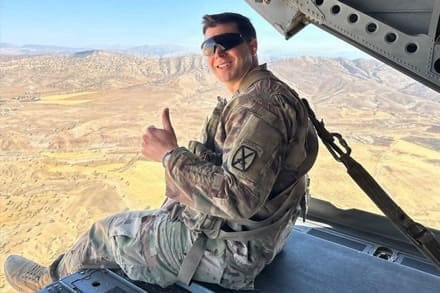
FORT STEWART, Ga. — U.S. Soldiers assigned to 1st Armored Brigade Combat Team, 3rd Infantry Division, are redefining how modern warfare is fought during Raider Density, an intensive training event conducted from April–May designed to prepare units for large-scale combat.

Across the installation’s training areas, Soldiers are adapting to a battlefield where information, speed and innovation are as critical as firepower, taking on expanded roles as battlefield technology integrators who connect emerging capabilities directly into maneuver formations.

The concept is rooted in multi-domain operations, or MDO, which synchronizes effects across land, air, cyber and electromagnetic domains. During Raider Density, Soldiers are applying it by employing unmanned aircraft systems and electronic warfare tools at the lowest levels to sense, understand and act within complex environments.

“It’s best to put UAS assets at the company level because it allows them to be used more freely,” said Sgt. Ian Anglin, a UAS operator with 1st ABCT. “At lower levels, they’re quickly accessible and ready to be used at a moment’s notice.”

For cavalry scouts, this shift is transforming reconnaissance by pairing traditional observation with quadcopter drones and EW capabilities, enabling them to identify targets, monitor movement and interpret activity within the electromagnetic spectrum with greater speed and precision. For Soldiers integrating EW at the maneuver level, maintaining proximity to the formation is critical.

“Staying with the formation allows us to get close enough to intercept those systems while maintaining good security,” said Sgt. Griffin Quimby, assigned to the 10th Brigade Engineer Battalion, 1st ABCT.

By integrating UAS and EW into a single sensing framework, Soldiers can confirm targets, share real-time intelligence and speed up decision-making, increasing responsiveness across maneuver elements.

“Having UAS allows us to scout the battlefield before we’re out there,” said Anglin. “We can relay enemy positions and direct or indirect fire missions.”

Elements of 5th Squadron, 7th Cavalry Regiment have demonstrated this integration during the exercise, reflecting a broader effort across the brigade to place advanced capabilities in the hands of junior Soldiers, enabling them to adapt quickly and shape the fight at the tactical level.

“If we want to be able to counter UAS and EW or improve our own EW capabilities, we’re going to have to allow the Soldiers to innovate,” said Quimby.

As Raider Density continues, Soldiers of 1st ABCT are reinforcing that success in future conflicts depend on both advanced technology and the Soldiers who employ it. This approach to integrating emerging systems at the lowest tactical level is emerging as a key component of the division’s readiness across multiple domains.

“Integrating with maneuver formations allows Soldiers to see what’s ahead,” said Anglin. “It allows them to survive.”

– SGT Jonathon Downs

Pacific Defense Awarded US Marine Corps Contract for Next Generation Electronic Warfare Prototype

Friday, May 1st, 2026

Award advances SOSA/CMOSS mission system ecosystem and informs future EW fielding decisions.

EL SEGUNDO, Calif. — Pacific Defense has been awarded a 12-month rapid prototyping contract by the U.S. Marine Corps Systems Command (MARCORSYSCOM), Program Manager for Tactical Communications and Electronic Warfare (PM TCE) to support next-generation electronic warfare (EW) capability evaluation. The effort will assess Modular Open Systems Approach (MOSA) Electronic Warfare (EW) mission systems and their potential in modernizing USMC capabilities.

Under the contract, Pacific Defense will deliver SOSA/CMOSS-aligned mission systems to enable vehicle-based experimentation by U.S. Marines. The Next Generation EW prototype is centered on the C5ISR Modular Open Suite of Standards (CMOSS) and the Sensor Open Systems Architecture (SOSA) technical standards. This approach enables rapid integration of new hardware and software into a common chassis, accelerating capability insertion while reducing vendor lock and lifecycle costs.

“This effort reflects a pivotal shift toward software-defined, open architecture C5ISR/EW capabilities that can keep pace with the modern threat environment,” said Frank Pietryka, VP of EW, SIGINT & Autonomy at Pacific Defense. “By leveraging SOSA and CMOSS, we’re enabling a scalable, interoperable ecosystem that allows the USMC to rapidly integrate and deploy new capabilities at the tactical edge. We’re proud to support this initiative and help inform the next generation of EME systems.”

This award builds on Pacific Defense’s role as the incumbent on the U.S. Army’s CMOSS Mounted Form Factor (CMFF) program and the Australia Land 555 program. Insights gained through this effort will provide MARCORSYSCOM leadership with critical data to inform future force modernization and follow-on program decisions.

Army Research Laboratory, Virginia National Guard Partner to Shape Electronic Warfare Technologies

Tuesday, April 28th, 2026

ADELPHI, Md. – Researchers at the Army’s sole fundamental research laboratory and the Virginia Army National Guard are partnering to advance electronic warfare capabilities.

The U.S. Army Combat Capabilities Development Command, known as DEVCOM, Army Research Laboratory, DEVCOM Army Research Office, and the Virginia Army National Guard’s 116th Mobile Brigade Combat Team kicked off their collaboration at Fort Pickett, Virginia.

Electronic warfare is the use of the electromagnetic spectrum to gain a military advantage by disrupting, denying or degrading an adversary’s communications and electronic systems while protecting friendly forces’ use of the spectrum.

“By grounding research in Soldier experience, this collaboration will help accelerate the science needed to improve the range, runtime, and reliability of future Army EW systems,” said Dr. Matt Glasscott, ARO program manager and lead for the effort.

This effort is just one of several ongoing research initiatives between ARL and the Virginia National Guard, reflecting a strong and growing partnership focused on the Army’s continuous transformation and Soldier readiness.

“Our partnership with the Army Research Laboratory is pivotal to the Virginia National Guard’s commitment to modernization and readiness,” said Brig. Gen. Rusty McGuire, Virginia National Guard, Assistant Adjutant General for Army Strategic Initiatives. “This collaboration ensures our Soldiers are at the forefront of innovation, equipped to counter emerging threats and prepared to excel in overseas deployments. It highlights the vital role our Guard members play in advancing the security of our nation.”

The event marked the beginning of a multi-year effort to address operational challenges faced by Soldiers in the field and to enhance the performance of an Army electronic warfare and signals intelligence system designed to provide Brigade Combat Teams with advanced capabilities to detect, identify, locate, and disrupt enemy communications and electronic signals.

“This collaboration is a great opportunity to interface with and listen to the Soldiers who use these systems every day,” said Dr. Adam Wilson, an ARL task lead for the program. “We are addressing their challenges with innovative solutions. Their insights are critical to shaping the future of electronic warfare technology.”

During the visit, the research team observed the 116th MBCT’s training exercise with the Terrestrial Layer System-Brigade Combat Team electronic warfare system and conducted preliminary field experiments related to thermal behavior, battery performance and system carriage and storage configurations.

Working closely with Soldiers, the team is trying to understand how the thermal generation in these systems affects battery performance and how battery performance can be maximized under the extreme conditions required for these systems.

Future engagements will include live-fire exercises and additional field experiments to refine and validate solutions.

“This is just the beginning of a long-term collaboration that will not only address current challenges but also anticipate future needs,” said Dr. Kyle Grew, ARL branch chief for battery science. “By working hand-in-hand with Soldiers, we’re getting the ground truth on the challenges that the Army’s electronic warfare systems and the batteries that power them are facing to ensure that our research is focused on meeting the real demands of tomorrow’s battlefield.”

By DEVCOM Army Research Laboratory Public Affairs

CPE ISW Announces Rapid Electromagnetic Warfare & Signals Intelligence Commercial Solutions Offering

Monday, April 27th, 2026

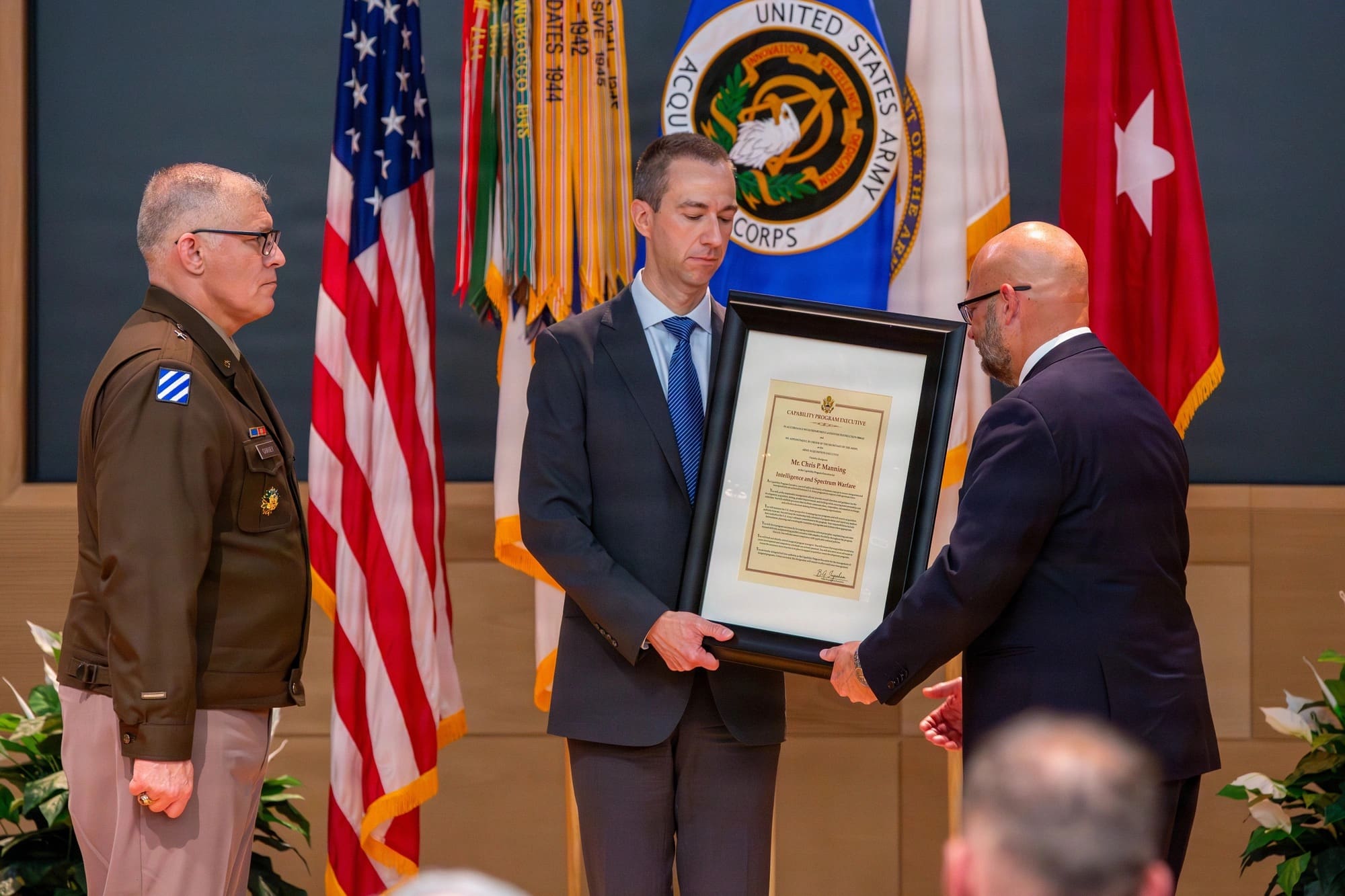
ABERDEEN PROVING GROUND, Md. – The U.S. Army’s Capability Program Executive Intelligence and Spectrum Warfare (CPE ISW) has announced a special notice for vendors. The Rapid Electromagnetic Warfare & Signals Intelligence Commercial Solutions Offering (REWSI) under the Army Open Solicitation (AOS) Commercial Solutions Opening (CSO) was released today via the VULCAN portal seeking commercially available technologies.

The Call for Solutions (Army Open Solicitation – W9128Z-25-S-A002) is part of a broader effort to establish a collection of commercial capabilities, streamlining the acquisition process and giving unit Commanders faster access to a diverse range of technologies tailored to their mission needs. Interested parties must submit a Solution Brief through the VULCAN portal. The call will remain open for approximately 12 months, with reviews of submissions ongoing.

“By utilizing a ‘library approach’ for our EMSO (Electromagnetic Spectrum Operations) solutions, the Army is embracing a more agile acquisition model,” said Joseph Welch, Portfolio Acquisition Executive for Command and Control (C2)/Counter C2. “This allows for the rapid integration of commercial technologies and non-developmental items, bypassing traditional, lengthy development cycles to ensure Soldiers have advanced capabilities in a relevant timeframe.”

The initiative, led by Project Manager Electromagnetic Warfare & Collection (PM EW&C), aims to rapidly procure and sustain advanced equipment to meet the Army’s EMSO Characteristics of Need (CoN). “The EMSO battlespace is at the forefront of all Army operations and the pace of change within this fast-moving environment. The EMSO CoN focuses on operational challenges and required capabilities rather than pre-defined solutions and will afford us greater flexibility in addressing evolving threats with emerging technologies,” said Col. Scott Shaffer, PM EW&C.

This will empower industry partners to propose a wider range of innovative technologies, ultimately bridging the gap between private sector ingenuity and the Army’s operational needs.

“The Call for Solutions is a key step in building a rigorously vetted library of commercial technologies, allowing Commanders to quickly select the best tools for their specific mission,” said Danielle Moyer, executive director, Army Contracting Command – Aberdeen Proving Ground (ACC-APG). “This approach allows us to tap into a more flexible model and encourages early and continued competition as the call will remain open and updated as specific capabilities needs emerge.”

The notice can be also be found at:
sam.gov/workspace/contract/opp/690727c72d7345a79a39b7b44135e711/view

Accelerating Transformative Technologies Aids Commanders’ Readiness Across the Pacific

Monday, April 27th, 2026

SCHOFIELD BARRACKS, Hawaii (April 21, 2026) – With instrumental support from industry partners, the 25th Infantry Division accelerated its digital kill chain in just three months using advanced AI-driven technologies.

As part of the Army’s Next Generation Command and Control (NGC2) “commercial first” effort, the division joins the 4th Infantry Division (4ID) to prototype modern technologies that make data more usable and accessible to commanders across all the warfighting function technologies.

NGC2 provides a “full stack” capability ecosystem, comprised from the top-down of Apps, Data/AI, Infrastructure, and Transport capabilities. Integrating AI into the NGC2 stack will enhance the Army’s competitive advantage, however, Army leaders emphasize that at no time will commanders lose their autonomy while conducting missions.

“AI will continue to be a decision aid, and accelerate the decision cycle, not replace commanders, who will make the final judgement calls,” said Brig. Gen Shane Taylor, Capability Program Executive Command and Control Information Network (CPE C2IN).

Through a series of operational exercises, Ivy Stings for the 4ID and Lightning Surges for the 25th Infantry Division (25ID), Soldiers continue to identify in real time which technologies aid the mission, and which need improvement.

“The Soldier’s feedback is the most important product we generate,” said Lt. Col. Andrew Batule, 25ID Innovation Officer. “The Soldiers in the TOC [Tactical Operations Center] and on the gunline are the ones who tell us, in real time, if this is making us more lethal. Their direct input is what informs every single software update and ensures we are building the right tools for the fight.”

During the time between Lightning Surge 1 and Lightning Surge 2, division leadership, artillery (DIVARTY), and technical staff stated they achieved a digital end-to-end workflow that accelerated the fires process by integrating four key commercial capabilities within the NGC2 stack: An advanced data platform supported by an AI mission system; modern, automated target workflow software; enhanced electronic warfare capabilities and 5G data transport.

“From a technology perspective, ‘commercial first’ means the tech is available to everybody,” Taylor said. “It’s only as good as our ability to rapidly inject it, train it, field it and then replace it with the next solution right behind it.”

This full-speed-ahead iteration and integration approach is ensuring the Army arrives at best-of-breed commercial solutions tailorable to any unit’s mission, including the contested environment across the Pacific theater’s tyranny of distance.

“We have to move out very quickly and iterate fast,” said Maj. Gen. James Bartholomees, 25ID commanding general. “That’s exactly why our model is—experiment with it, train with it, and then deploy it forward into the terrain with our allies to both assure them and deter our adversaries.”

Refined data, modern fires app

The division’s call for fires chain consists of forward observers identifying a potential target and transmitting target data to the Fires Direction Center, allowing the fires direction officer to calculate if, when, and how to engage kinetic fires.

Industry teams and division personnel collaborated to accelerate this process by establishing a prototype, AI-aided data platform integrated with the Army’s new app-based, data-centric fires command and control system, called the Artillery Execution Suite, or AXS.

During the event, forward observers used hand-held devices to extract data from the edge sensors – both on the ground and in the air – which was ingested into the data platform and then simultaneously into AXS. New algorithms calculated the specific type of data ingested from the sensors to publish to the DIVARTY common operational picture.

“We are now at a place where we are feeding all the data into the data platform,” said Maj. Rebecca Borrebach, 25ID G6 data officer. “Our data is accessible, and now an application can subscribe to the data it needs.”

Controlling the electronic spectrum

Before the forward observers can confidently share information on a potential target, the commander must conduct an Electromagnetic Warfare (EW) assessment to identify and understand what signals an adversary may be transmitting to interrupt the mission.

“Almost all warfighting functions need access to EW data,” said Cpt. Curtis Hart, assistant product manager for the Electronic Warfare Planning and Management Tool (EWPMT).

“Aviators want to know where they can fly without their GPS navigation being degraded. Artillerymen want to know where they can employ precision-guided munitions without interference. Ground maneuver forces want to know where they can expect radio transmissions to be unreliable,” he said.

NGC2 allows this data, previously only readily available to the CEMA [Cyber Electromagnetic Activities] cell, to be widely disseminated and used by these sister warfighting functions, he said.

“With the eventual addition of AI, I feel confident that the data my EW team aggregates will inform commanders and their staffs throughout the division,” said CW2(P) Kris Perez, Electromagnetic Warfare Technician, 25ID. “This will enable them to make more timely, informed decisions, which will increase the division’s lethality.”

5G-Transport Diversity

Unlike the 4ID, which is prototyping NGC2’s full stack, the 25ID is primarily prototyping the data and application software on top of its previously fielded modern “C2 Fix” transport and infrastructure. However, the NGC2 prototype effort provided flexibility for the unit and industry teams to experiment with desired capabilities, based on the division’s missions, including the need to operate in the degraded environments often encountered in the Indo-Pacific.

“Our focus for Lightning Surge 2 was the ‘first mile, last mile’ challenge,” said Lt. Col. Adam Brinkman, 25ID G6. “We used what we learned from our last event to upgrade the launchers and guns with better radios and private 5G, which gives the commander more resilient options to get a fire mission from the sensor all the way to the shooter at the tactical edge.”

For the first time in the Army, private 5G served as the primary pathway to travel from the fires direction officer to the guns, with modern satellite radios available as the secondary transport.

“We are implementing incremental lessons learned from the 4ID, where its personnel viewed the fires chain using 5G in one of its previous NGC2 Ivy Sting events,” said Lt. Col. Clarke Brown, product manager for Network Modernization, Capability Program Executive Command and Control Information Network (CPE C2IN). “Pushing the capability to actually transport the call for fires down to the field artillery Soldiers was an exciting accomplishment for the unit.”

Conclusion

The Lightning Surge and Ivy Sting exercises continue to leverage data and AI technologies that deliver information across all warfighting functions to enhance commanders’ decision making.

According to Bartholomees, the Lightning Surge events are more than exercises; rather, they are “rehearsals” as he leads his division into multi-national Indo-Pacific exercises to train in real-life electromagnetic, cyber, distance and denied environment challenges.

“We exercise in the Hawaiian Islands across the archipelago so we can then project those forces into the first island chain within the Philippines,” Bartholomees said. “Our next Lightning Surge series will be in conjunction with Philippines joint and combined exercises, in which we’ll be able to put all this together and really test out the concepts that Next Generation C2 is delivering.”

By Kathryn Bailey, CPE C2IN Public Communications Directorate