Celebrate 20 years of the TLR-1

Archive for the ‘Guest Post’ Category

MCTSSA Designated Corps’ First STRL, Accelerating Force Modernization

Tuesday, January 30th, 2024

Marine Corps Base Camp Pendleton, Cali. —

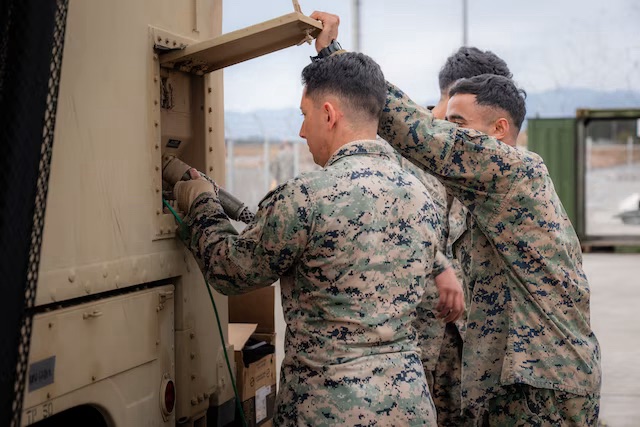
Marking a significant advancement towards Force Design’s ambitious modernization goals, Marine Corps Tactical Systems Support Activity, or MCTSSA, has been designated as the first Science and Technology Reinvention Laboratory, or STRL, within the Marine Corps.

Created by the Department of Defense to streamline existing federal acquisition processes, STRLs are historically designated through the National Defense Authorization Act or by the Under Secretary of Defense for Research and Engineering.

Federal entities that receive such a designation are empowered with legislative authorities, including personnel flexibility, minor military construction capabilities, and discretionary funding control for their directors.

 “MCTSSA’s acceptance to the Naval Research and Development Enterprise with STRL designation occurred at the perfect time given the USMC’s current Force Design efforts,” Col. Craig Clarkson, commanding officer at MCTSSA

Although the Pentagon has granted 20 such designations since 2021, MCTSSA’s designation as the first for the Corps represents a monumental stride, signaling the Corps’ leadership in troubleshooting, innovating, and creating solutions to some of the most challenging problems faced by the warfighter.

According to Col. Craig Clarkson, commanding officer at MCTSSA, the designation represents a significant step forward in achieving the Corps’ ambitious Force Design modernization goals.

“MCTSSA’s acceptance to the Naval Research and Development Enterprise with STRL designation occurred at the perfect time given the USMC’s current Force Design efforts,” he noted. “We are now optimally positioned to support Service Combined Joint All Domain Command & Control initiatives and the development of other future capabilities.”

Furthermore, the STRL designation advances the Corps’ Talent Management strategy, positioning the Corps’ acquisition community to effectively compete with industry for top talent—ensuring a robust pipeline of highly skilled professionals adept at addressing the dynamic challenges of the modern battlefield.

“STRL designation enables MCTSSA to operate more like a Marine Corps Expeditionary Warfare Center, with the personnel and acquisition authorities to develop and scale a highly-skilled, technical workforce focused on delivering integrated Naval capabilities,” said Mr. Timothy Gramp, USMC chief engineer, deputy to the Commander for Systems Engineering and Acquisition Logistics, and executive director for the new STRL.

As the Corps continues its strategic shift to the Indo-Pacific, the new STRL designation stands to mitigate perceived limitations in the Pentagon’s existing acquisition architecture. By enabling MCTSSA to more effectively—and rapidly—adapt and integrate emerging technologies into the warfighter’s arsenal of capabilities, the Corps stands better equipped to face the evolving threats of the future battlefield.

By Johannes Schmidt, MCSC Office of Public Affairs and Communication | Marine Corps Systems Command
Washington, Oregon National Guard Soldiers Test New Weapons

Monday, January 29th, 2024

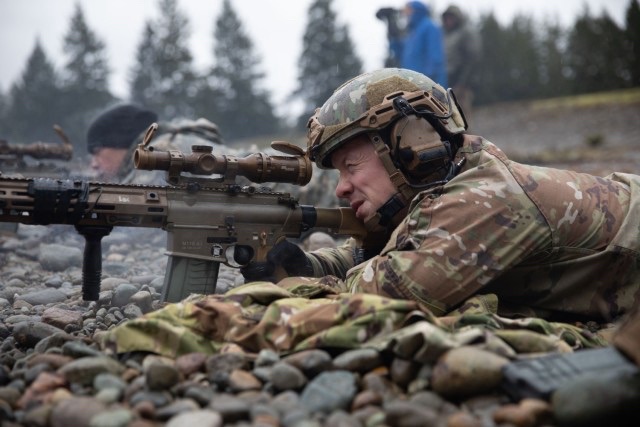
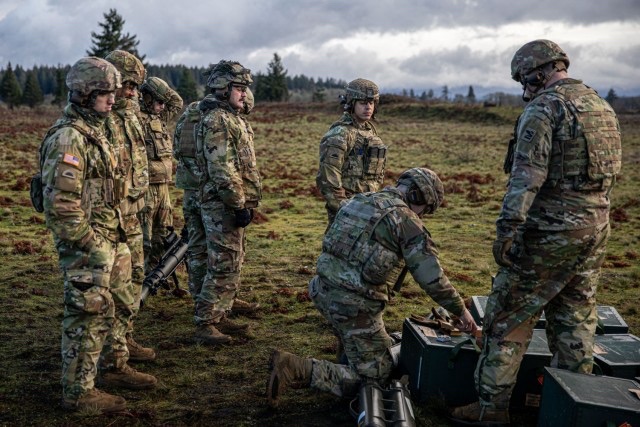
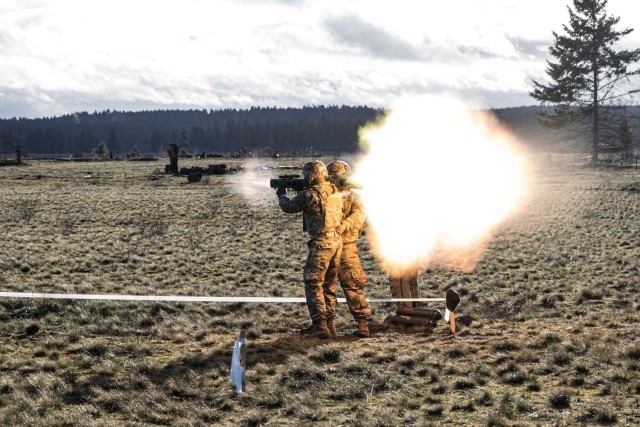
JOINT BASE LEWIS MCHORD, Wash. — Washington and Oregon National Guard Soldiers with the 81st Stryker Brigade Combat Team and 96th Troop Command started the new year with a bang by conducting new weapons training and fielding on Camp Murray and Joint Base Lewis-McChord Jan. 16-17.

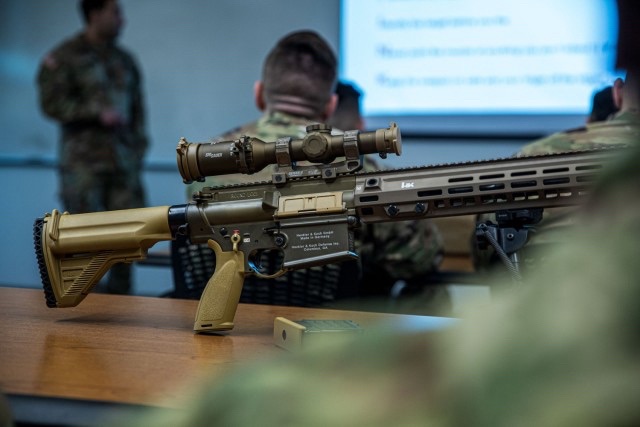
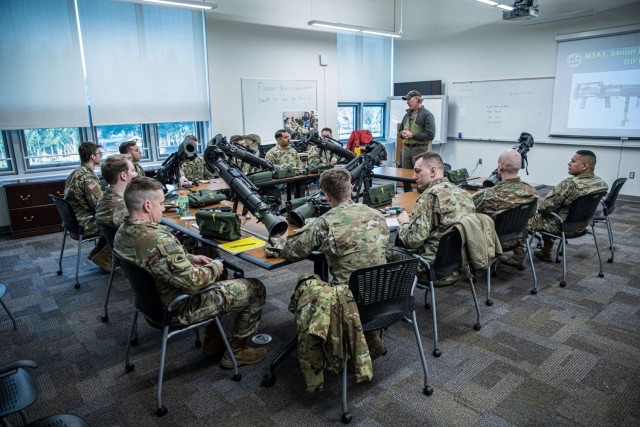
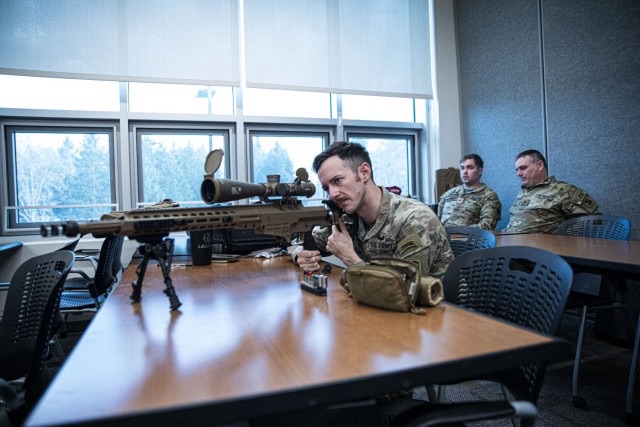
The training began with classroom instruction on Camp Murray. The weapons being introduced were the M110A1 Squad Designated Marksman Rifle, MK22 Precision Sniper Rifle and the M3 Multi-Role Anti-Armor Anti-Personnel Weapon System.

Soldiers focused on the weapons systems’ functions, safety and maintenance. The next day, they brought their weapons to the rainy ranges of JBLM for some hands-on training.

The M110A1 SDMR enables infantry, scout and engineer squads to engage enemies as far as 600 meters away.

“One thing I have done with the M110A1 in my platoon is assigned it as a primary weapon system for my weapons squad leader,” said Sgt. 1st Class Tylor Anderson, an infantry platoon sergeant with Alpha Company, 1st Battalion, 161st Infantry Regiment, 81st Stryker Brigade Combat Team, Washington National Guard. “This means that he is utilizing the same caliber as his machine gun teams, forcing him to ‘think’ in 7.62 more consistently when planning for enemy engagements.”

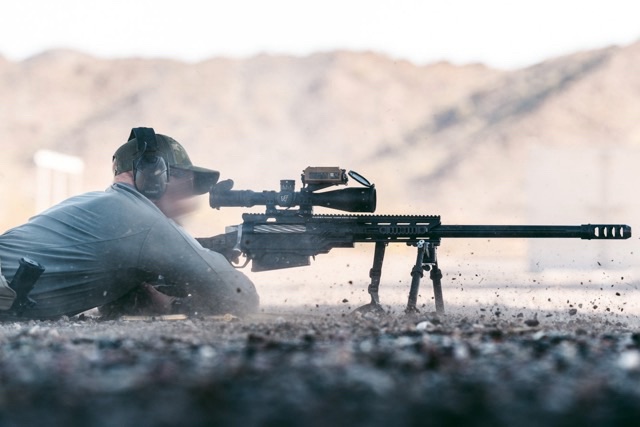
The MK22 PSR, set to replace the Army’s existing M2010 and M107 sniper rifles, is outfitted with a modular, multi-barrel design, providing sniper teams with more diversity than its predecessors.

“It definitely improves our versatility when it comes to bringing the right tool for the job when we’re preparing for a mission,” explained Sgt. Remi Milslagle, a sniper with Headquarters and Headquarters Company, 3rd Battalion, 161st Infantry Regiment, 81st Stryker Brigade Combat Team. “We need to out-range enemy snipers, and we need ammunition that’s going to put holes through newer and stronger armor at those ranges.”

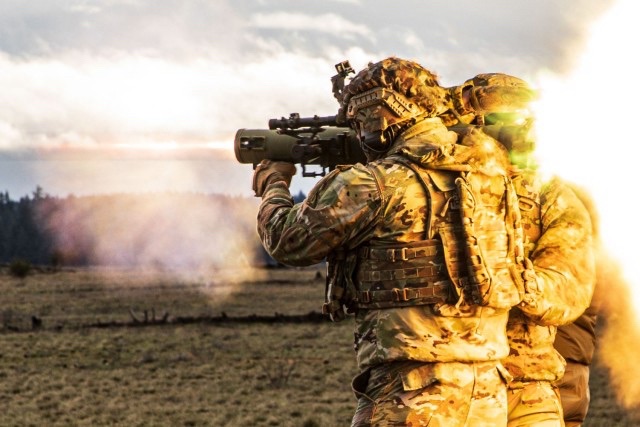
The M3E1 MAAWS, sometimes referred to as the “Carl Gustaf,” is an 84 mm lightweight, man-portable, direct-fire recoilless rifle, which is an upgrade from the AT4. It can fire a wide range of munitions effective against light and medium armor, personnel in open bunkers, and structural targets up to 1,300 meters.

“The AT4 with its ‘one-and-done’ loadout is not as adaptable as the M3,” said Staff Sgt. Dustin Davis, a section sergeant with Bravo Company, 1st Squadron, 82nd Cavalry Regiment, 81st Stryker Brigade Combat Team, Oregon National Guard. “The variety of munitions the M3 has proves it to be a very adaptable weapon.”

Fielding new weapons allows team leaders to gain knowledge and experience. It enables them to develop as weapons experts and take their newly honed skills back to their organization to train other Soldiers on operating and maintaining their new weapons systems effectively and safely.

As they become more familiar with the new weapons, they can develop and implement standard operating procedures for the additions to their arsenal.

“Soldiers can look forward to getting experience with these platforms and developing unit-level SOPs on how they are employed,” said Anderson. “Training is paramount when it comes to staying ahead of potential adversaries in combat. By adding newer and more capable tools to our arsenal, we allow technology to help us consistently maintain that edge on the battlefield.”

By SFC Nicolas A. Cloward, 122nd Theater Public Affairs Support Element

Army Developing First Arctic Doctrine in More Than 50 Years

Sunday, January 28th, 2024

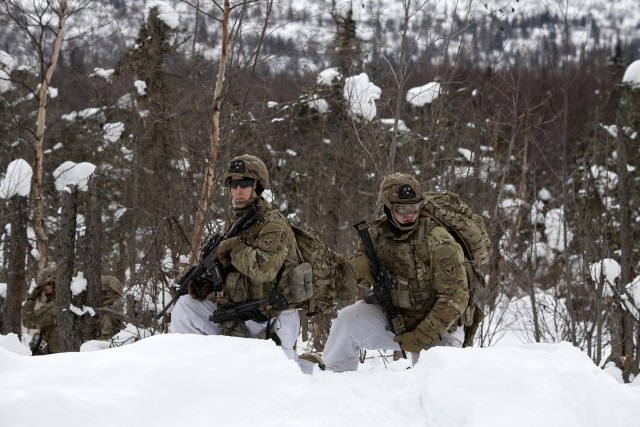
FORT LEAVENWORTH, Kan. — The U.S. Army has begun development on the first Arctic-focused doctrine in more than 50 years, Army Techniques Publication 3-90.96, Arctic and Extreme Cold Weather Operations. The manual, slated for release in mid-2024, will provide Soldiers and leaders with the knowledge and techniques necessary to overcome the Arctic environment and succeed in temperatures as cold as minus 40 degrees Fahrenheit.

“Arctic and extreme cold weather operations are about more than being able to survive, you have to be able to thrive,” said Capt. Edward A. Garibay, the lead doctrine author for the publication with the Combined Arms Doctrine Directorate. “As the Arctic warms from climate change, it’s going to become more and more accessible in the coming decades and take on new importance. We have to be ready to accomplish the mission in such an environment. This doctrine will help our Soldiers do that.”

The publication will be tactically focused and will help Soldiers use the concepts and experience they already know and adapt them for the Arctic and Subarctic. It will explain many of the unique and sometimes counterintuitive aspects of the region and the considerations Soldiers must take to adjust operations. For instance, the sun may never rise during the month of December; GPS and satellites can be unreliable due to solar storms; metals and plastics become brittle and can break; and batteries have significantly shorter life.

“One of the problems we face now is that we have a lot of localized knowledge that isn’t easily shared across the Army,” said Garibay. “We have pockets of individuals and units that are experts, but their knowledge is only available in local [standard operating procedures] and only passed down from one command to the next. We’re consolidating all that knowledge in one place and providing a foundation for everyone to build on.”

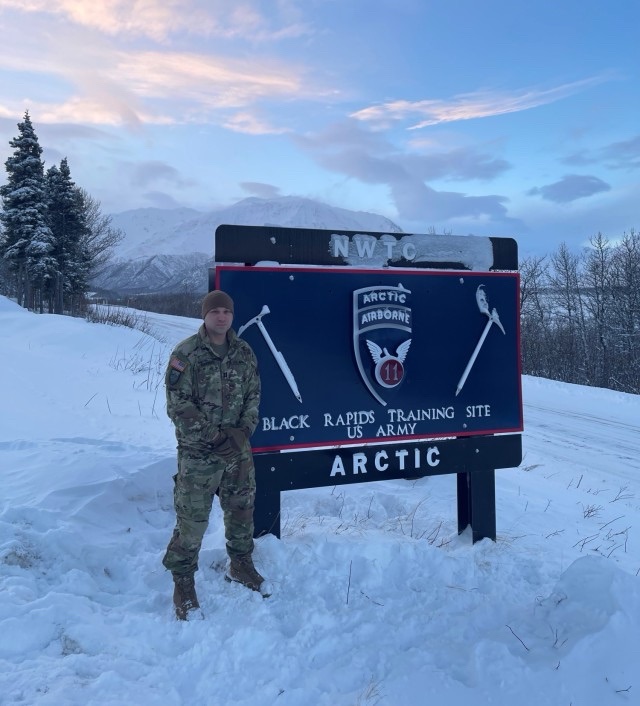
The CADD Special Doctrine Division, the doctrinal proponent for cold weather, has been extensively researching Arctic and extreme cold weather operations for more than a year. Their efforts include training at the Northern Warfare Training Center, referencing historical records, and consultation with other Arctic nations such as Canada, Norway, Finland, Sweden and Denmark. One of their primary resources is the 11th Airborne Division in Alaska, which has played a critical role in developing doctrine. According to Garibay, their continued innovation and expertise has been invaluable. They have taken an active role in writing Arctic doctrine, staffing revisions, and providing subject matter experts.

“The U.S. Army has to be ready to fight and win in extreme cold and mountainous environments in order to deter conflict, and the 11th Airborne Division is the foundation of that capability,” said Maj. Gen. Brian Eifler, commander, 11th Airborne Division. “To build sustained Arctic readiness, we need to follow the example of Alaska native communities who have thrived here successfully for millennia, sharing best practices and lessons learned.”

Another milestone in the doctrine’s development will occur during the 11th Airborne Division’s upcoming Joint Pacific Multinational Readiness Center exercise this winter. During the exercise, which will replicate large-scale combat conditions, the division will also be validating concepts for the doctrine and providing immediate feedback to CADD.

To learn more about Army doctrine and access doctrinal resources, visit the CADD public website.

By Combined Arms Doctrine Directorate staff

FirstSpear Friday Focus – Tropic Skull

Friday, January 26th, 2024

Introducing the Tropic Skull Hat – the apex predator of headgear, designed for warriors, defenders, and those who thrive on the frontline of rowdy. This ain’t your grandpa’s trucker hat; this is a tactical masterpiece, crafted for the true operators who demand more from their gear. At the helm of this mission-ready headpiece is FirstSpear’s iconic skull logo, proudly emblazoned on a rugged leather patch that’s tougher than nails. The Tropic Multicam panels scream ‘Merica.

Aside from the battle-hardened leather patch, this hat boasts a green mesh backing that’s as breathable as our silkies. Designed to handle the heat, this hat keeps you cool under pressure. Wear it with pride, whether you’re hitting the range or just conquering the concrete jungle. Grab yourself one and let the world know you’re not here to blend in; you’re here to dominate with swagger. It’s time to upgrade your game – the Tropic Skull Hat is your call to action.

Visit FirstSpear to find American Made kit and accessories, Built For The X.

Army Hosts First-of-Its-Kind Cold Weather Manufacturing Challenge

Friday, January 26th, 2024

HANOVER, N.H. — If a critical part breaks in the Arctic, or other similarly remote and austere environments, forward-deployed warfighters can’t just order a replacement on the internet and have it shipped overnight. But what if they could manufacturer it onsite themselves?

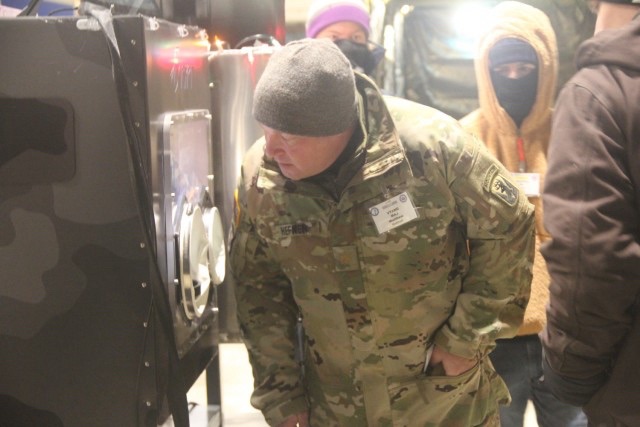
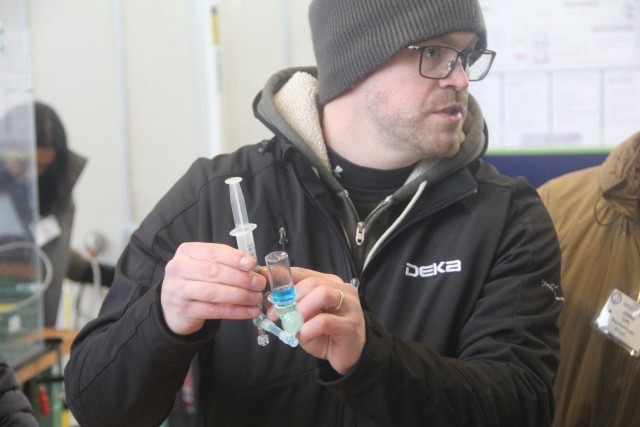
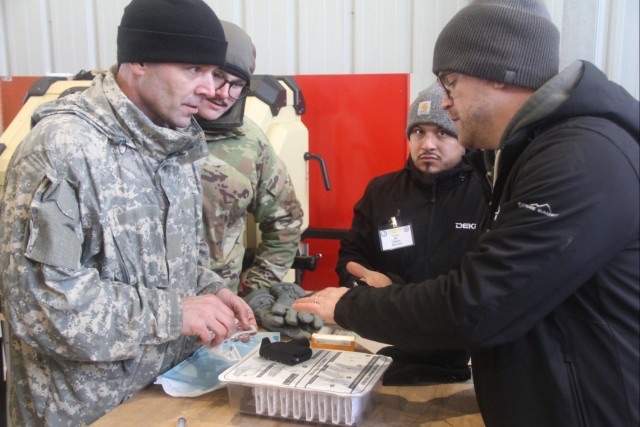
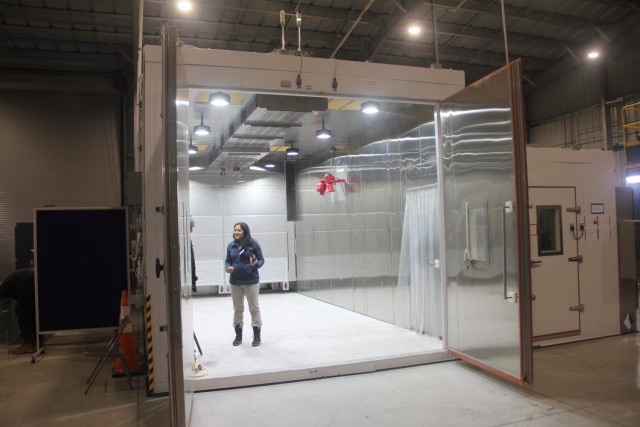
That was the premise behind the Office of the Secretary of Defense Manufacturing Technology, or ManTech, Program’s first-of-its-kind Point of Need Manufacturing Challenge, held December 4-8, at the U.S. Army Engineer Research and Development Center’s Cold Regions Research and Engineering Laboratory, or CRREL, in Hanover, New Hampshire.

The event showcased technologies generated by member companies of the Department of Defense Manufacturing Innovation Institute. Six projects, selected for funding in March by ManTech and DoD expert judges, used the event to demonstrate that their systems could be deployed in a cold weather environment to help close supply chain gaps and enable warfighters to manufacture and utilize critical equipment right where they need it.

“Material performance in the cold is different,” said Dr. Steven Wax, acting Assistant Secretary of Defense for Science and Technology in the Office of the Under Secretary of Defense for Research and Engineering. “We must understand this to adapt to support current operations.”

According to Stephen Luckowski, an advanced manufacturing associate at the Combat Capabilities Development Command Armaments Center, CRREL was selected by the Office of the Undersecretary of Defense to host the event because of the unique capabilities that exist at the laboratory.

“The cold temperature capabilities at minus-60 degrees emulate the environments that we believe we will see in operations around the world,” Luckowski said. “This is a unique capability in the United States, and the only place where we could actually execute this type of work.”

One of the industry participants, Anusha Iyer, CEO and founder of Vienna, Virginia-based Corsha, said the opportunity to work in such extreme cold temperatures was invaluable.

“It’s been an incredible experience being able to come here and do this exercise at CRREL and really simulate that our platform can work at these kinds of extreme, austere temperatures and environments, and make sure that we’re putting in place technologies and solutions for the warfighter that will help them at point of need,” said Iyer, whose team demonstrated a platform that manages cybersecurity challenges presented by point-of-need manufacturing. “It’s only when you come into these types of settings that you see the unique constraints — everything that you take for granted sitting in an office or sitting in a secure data center that’s warmed up and continually connected — it’s a totally different playing field when you come into an environment like this. Everything from connectivity to cabling, to environmental constraints, are what we are solving for, and it’s great to do it in a live environment like this.”

Defense officials from allied partner nations joined senior leaders and general officers from the Office of the Secretary of Defense, the military services, defense agencies and the National Guard to witness manufacturing demonstrations in extreme cold temperatures.

Wax was joined by the U.S. Army Combat Capabilities Development Command Deputy Commanding General Brig. Gen. David Trybula and DoD ManTech Director Tracy Frost in attending the event and interacting with and congratulating the developers on their accomplishments advancing the defense technologies to meet the warfighters’ needs.

The event allowed CRREL’s scientists and engineers to demonstrate the laboratory’s capabilities and forge important relationships with defense industry and DoD personnel.

“Hosting the Point of Need Challenge provided an opportunity for the CRREL community of scientists and engineers to not only support a significant DoD technology demonstration, but also to connect with, and develop, new partnerships with the larger DoD community of stakeholders,” said Dr. Joseph Corriveau, director of CRREL. “Through these partnerships our ultimate goal is to work together on tomorrow’s challenges, today.”

Those new partnerships have already begun to pay dividends, according to Dr. Orian Welling, chief of CRREL’s Force Projection and Sustainment Branch.

“Since the event, I’ve talked to several researchers who’ve been invited to engage on numerous topics, including participating in events this winter with SOCOM, holding trainings for our staff in Picatinny, and collaborating with researchers at the U.S. Army Research Laboratory and Natick Soldier Center,” said Welling.

The projects covered three challenges — the Warfighter Medical, Health and Nutrition Challenge; the Staying in the Fight Challenge; and the Cyber Challenge — and were assessed in real time by Soldiers, Marines, National Guardsmen and engineers. ManTech will invest nearly $2.5 million, while industry partners will contribute nearly $700,000 in cost share.

By Justin Campfield

Vigilant Security Services VSS-103 Assigned National Stock Number

Thursday, January 25th, 2024

The VSS-103 Specialized Rifle System from Vigilant Security Services has been awarded National Stock Number 1005-01-D17-6268. Chambered in 7.62 x 39, this AK-pattern rifle features a 16.5” hammer forged barrel from FN which averaged sub 3 MOA during testing at the Army Research Labs. In addition to being equipped with a direct thread suppressor, the VSS-103 also has the following features:

– Enhanced AK Trigger
– Free-Float M-Lok Handguard
– Integrated Red-Dot Sight Mount
– Side-Folding Stock
– Compatible with all Magazines

VSS Founder and CEO Erik Lawrence stated, “We built a rifle to an exacting requirement and are proud to be awarded this National Stock Number after a vigorous series of government testing.”

www.vig-sec.com

Former Tomb Guard Pins Son with Badge

Thursday, January 25th, 2024

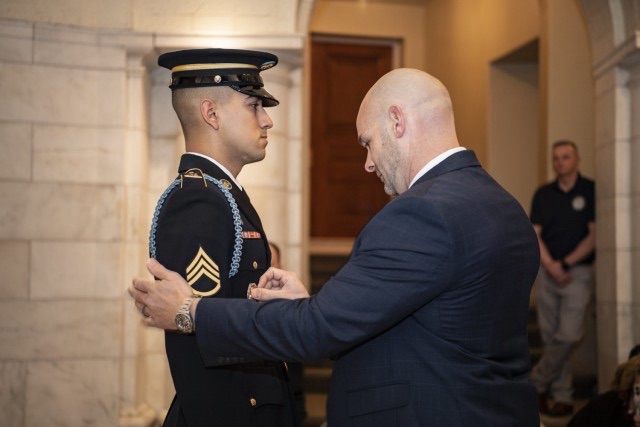
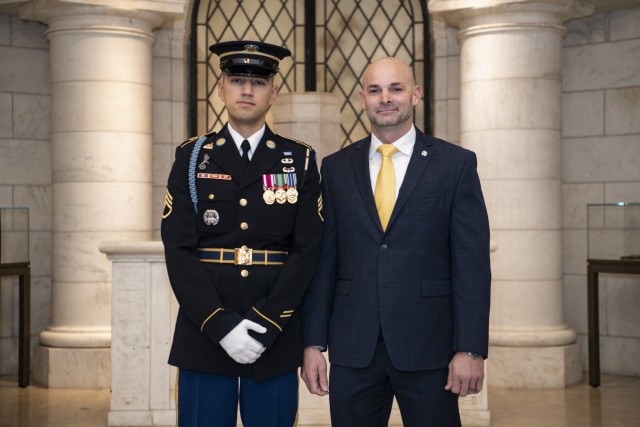
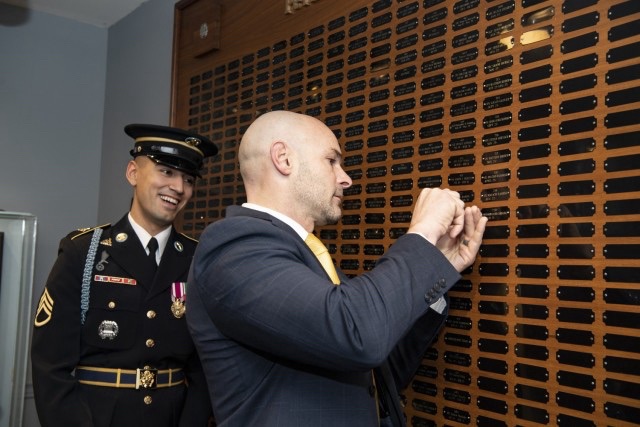
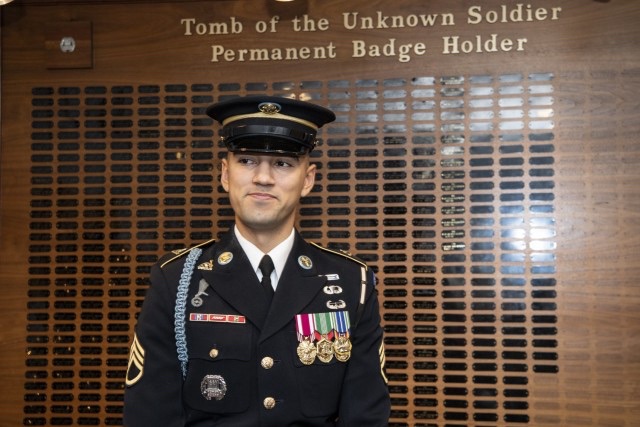
ARLINGTON, Va. — When Bryan Campagna pinned the Guard, Tomb of the Unknown Soldier Identification badge onto the chest of his son, Staff Sgt. Isaiah Jasso-Campagna, it symbolized more than a father honoring his son. Campagna had earned his own Tomb badge as a Tomb Guard decades earlier, making the pair only the second father-son badge earners in the history of the Army’s 3rd U.S. Infantry Regiment, nicknamed The Old Guard.

To earn his badge, Jasso-Campagna completed five phases of testing and demonstrated a high degree of proficiency in Army and Tomb Guard knowledge. Tomb Guards who earn the badge are called Sentinels.

Jasso-Campagna received his badge at a ceremony in the chapel of Arlington National Cemetery on Jan. 11, 2024. As he stood at attention before a crowd of family, friends and his fellow Tomb Guards, Sgt. 1st Class Andrew Jay, who oversaw the ceremony, told him, “You have met the standard and you are now charged with helping the next Soldiers grow into Sentinels.”

Jay then invited Jasso-Campagna’s father to pin the badge onto his son. Campagna needed no instruction as to where to pin the badge, having worn one himself when he served as a Tomb Guard from 2002 to 2004. Some of Jasso-Campagna’s family members came to tears. Once he finished the task, Campagna patted his son on his abdomen and returned to his seat. Everyone applauded.

With his Tomb Badge firmly in place, Jasso-Campagna recited the Sentinel’s creed. “My dedication to this sacred duty is total and wholehearted,” he declared in a strong voice. His father immediately stood at attention and joined his son and the other Tomb Guards in reciting the rest of the creed in unison.

The ceremony also meant a lot to Campagna. “It was a special moment to see my son’s achievement,” he said, “and a privilege for our family.” While Campagna did not directly help his son study for his tests, he helped in other ways. “I just gave him encouragement and direction and support.”

“It was a very emotional experience,” Jasso-Campagna said after the ceremony. “I came down to Arlington National Cemetery twenty years ago to watch my father do the same job,” he added, “so to be here receiving the badge and doing the same thing he did was truly something else.

Story by Kevin M. Hymel

Photos by Elizabeth Fraser

Soldiers Train to Enable Arctic Dominance

Wednesday, January 24th, 2024

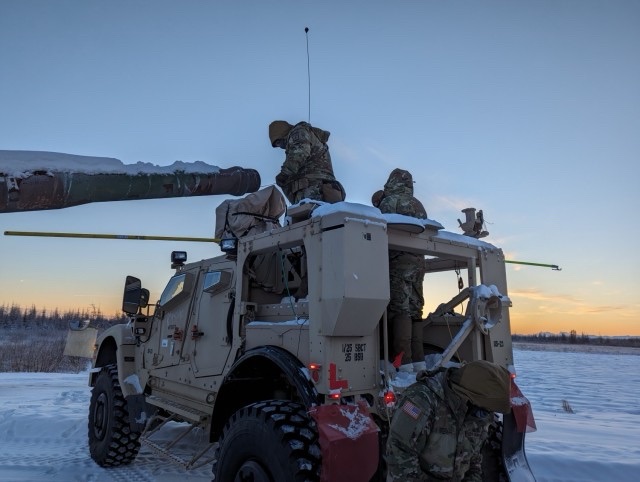
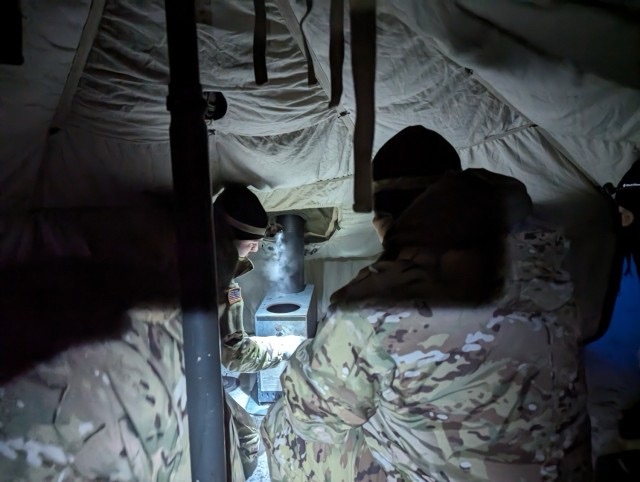
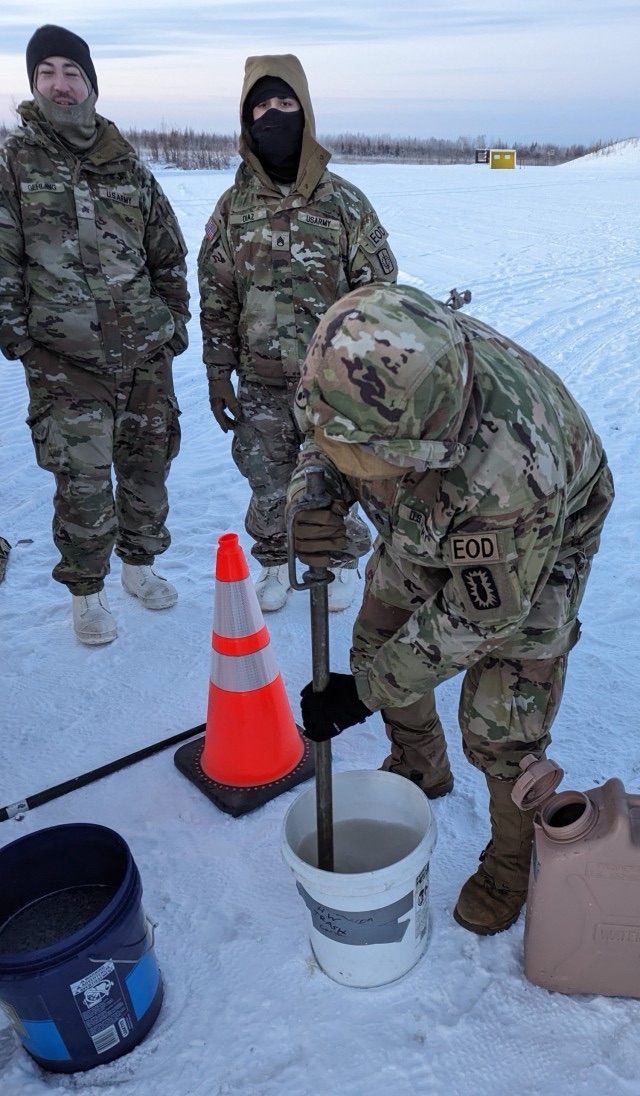
FORT WAINWRIGHT, Alaska — Explosive Ordnance Disposal technicians who routinely defeat dangerous devices had to overcome a different kind of hazard during training in Alaska.

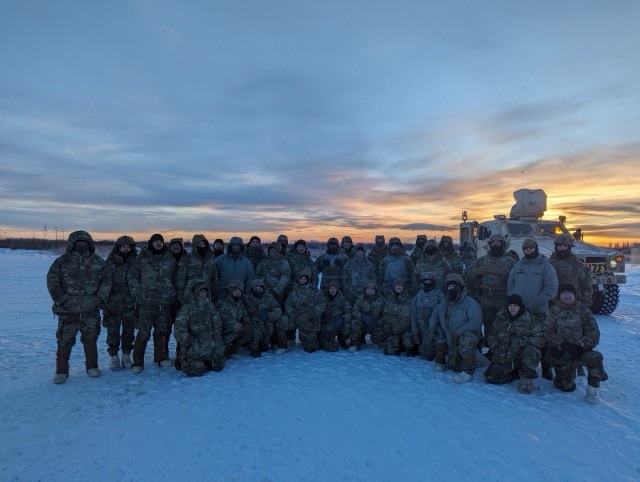
To enable the U.S. Army’s focus on regaining Arctic dominance, EOD techs from the Fort Drum, New York-based 760th Ordnance Company (EOD) recently traveled to an even colder climate to train together with 65th Ordnance Company (EOD) on Fort Wainwright, Alaska.

EOD technicians from the 760th EOD Company attended the Cold Weather Indoctrination Course in December where they learned to construct improvised shelters and fighting positions, to ruck in snowshoes and to cook in subzero temperatures.

Capt. John D. Velasquez from Bethesda, Maryland; 1st Lt. Jude A. McDowell from Downingtown, Pennsylvania; Sgt. 1st Class Justin E. Liller from Philadelphia; and Sgt. Andrew G. McCoy from Tallahassee, Florida, from the 760th EOD Company attended the training.

Velasquez, the commander of the 760th EOD Company, said the EOD techs also trained with explosives in colder temperatures.

“We spent two days on the demolition range comparing the impact of the cold on the explosive effects of demolition material,” said Velasquez, a graduate of American Military University with a sociology degree who has deployed to Afghanistan twice during his 14 years in the Army. “Tests were run with explosives that were both at ambient room temperature and exposed to the cold and comparisons were made between the two.”

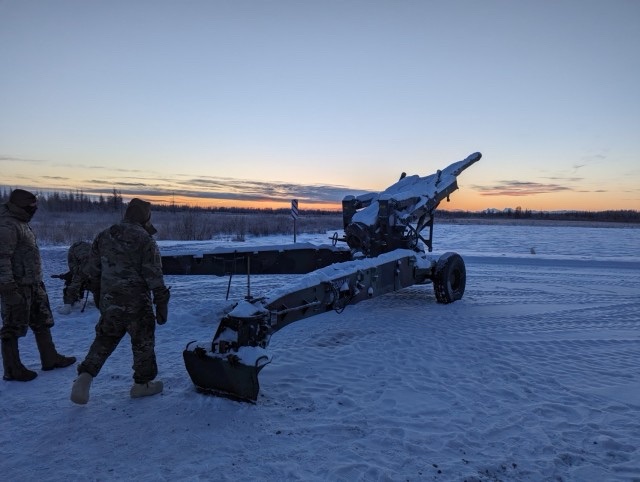
Velasquez said the EOD technicians also tested different methods for dislodging stuck rounds from an M777 Howitzer barrel during freezing temperatures.

The 760th EOD Company enables military operations around the world and supports civil authorities at home. The company most recently deployed to Kuwait in 2021 and covers domestic response missions across the northeastern United States.

The 760th EOD Company is part of the 192nd EOD Battalion, 52nd EOD Group and 20th Chemical, Biological, Radiological, Nuclear, Explosives (CBRNE) Command, the U.S. military’s premier deployable and multifunctional CBRNE formation.

Soldiers and Army civilians from 20th CBRNE Command deploy from 19 bases in 16 states to take on the world’s most dangerous hazards.

On Fort Wainwright and Fort Greely, Alaska, the 65th EOD Company supports the 11th Airborne Division and organizations requiring EOD support while using the 870,000 acres of training land available in Alaska.



Capt. Stephen S. Goetz, the commander of the Fort Wainwright, Alaska-based 65th EOD Company, said this area includes Donnelly Training Area, Yukon Training Areas and Tanana Flats Training Areas. He added the 65th EOD Company also supports civilian and federal law enforcement across the northern half of Alaska.


“The 65th Ordnance Company (EOD) represents a very small portion of the Army garrisoned in Alaska but together we all face the same challenges presented by this harsh and austere environment,” said Goetz. “We are still working to source innovative solutions to the challenges presented and identifying ways to regain Arctic dominance.”

A native of El Paso, Texas, Goetz graduated from Texas A&M Corpus Christi with a biochemistry degree. He has deployed to Afghanistan and Iraq during his 13 years in the Army.

To add teeth to the U.S. Army effort to regain Arctic dominance, the 11th Airborne Division was reactivated in June 2022.

The Alaska-based airborne division conducts expeditionary and multi-domain operations in the Indo-Pacific theater and stays ready decisively defeat any adversary in extreme cold weather on mountainous, high-latitude and high-altitude terrain during large-scale combat operations.

Goetz said the 11th Airborne Division has been spearheading many new ideas and the 65th EOD Company is focused on explosive effects, render safe techniques and survival in small teams.

Many new challenges come with the harsh and remote operational environment, said Goetz.

“Batteries do not hold a charge rendering some equipment useless, ordinary drinking water freezes and puts you at risk of dehydration, unique rations must be used, weapons require different lubrication, rubber and seals in vehicles become brittle leading to non-mission capable vehicles, limited daylight affects operations and the physical wellbeing of personnel and EOD tactics, techniques and procedures must be modified based on the extreme cold,” said Goetz. “Everything takes longer and you must have a backup plan for everything that you do.”

Training with other EOD units helps to strengthen everyone involved, said Goetz.

“Working with another organization is always better,” said Goetz. “You can share ideas, build camaraderie, and realize other organizations share the same problem sets.”

“Compared to any installation in the lower 48, Fort Wainwright is not easily accessible,” said Goetz. “The highlight of the training with the 760th Ordnance Company (EOD) was working hand-in-hand with EOD brothers and sisters, shivering together, training to build skillsets and doing things that no one else gets to experience.”

By Walter T. Ham IV