TYR Tactical

Archive for the ‘Guest Post’ Category

National Guard Members Test Skills at Cyber Shield 2024

Monday, July 1st, 2024

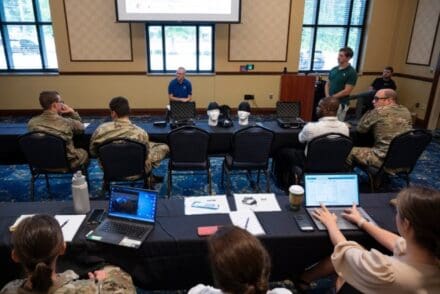
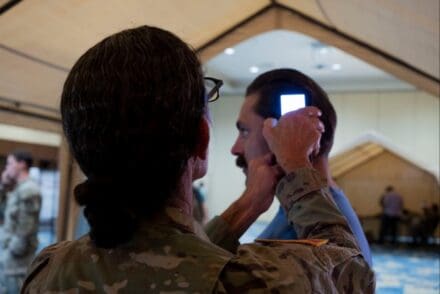
VIRGINIA BEACH, Va. — Almost 1,000 participants flooded the Virginia National Guard State Military Reservation in Virginia Beach for the longest-running and largest Department of Defense cyber defense exercise May 31 to June 15, 2024.

Cyber Shield is an annual National Guard event that hosts National Guard and Army Reserve Soldiers, Airmen, civilian cyber professionals and international partners worldwide.

A number of National Guard State Partnership Program countries, including Poland, the Republic of Moldova, Lithuania, Romania, the Republic of Georgia and Kosovo joined this year’s cyber shield exercise.

“The importance is international outreach,” said North Carolina Army National Guard Staff Sgt. Todd Webster, a cybersecurity team leader. “Not only are we able to help cyber developing companies and countries, but we’re also able to provide outreach across the globe.”

Cyber forces were brought together in Virginia Beach to develop, train and test their limits. Those involved had the opportunity to attend rigorous courses, conduct cyber exercises, and test their skills in this year’s NetWars competition.

Cyber Shield held training classes tailored to various skill sets, including Pen+, Security+, Linux+ and CISSP.

“Our overall goal for Cyber Shield is to train and learn on the cyber domain,” said North Carolina Army National Guardsman Lt. Col. Brian Dodd, Cyber Shield’s defensive cyber team chief. “We learn how to better respond to incidents in the cyber domain and how to better react to the problems that we see.”

This event was designed to increase participants’ ability to infiltrate, defend and enhance the cybersecurity network for global defense measures.

“We continue to see increased severity and increased frequency of cyber attacks regularly,” Dodd said. “There are more threats than there have ever been in the cyber domain, so we need to come to an event like this and train together.”

By Hannah Tarkelly, 449th Combat Aviation Brigade

McAlester Army Ammunition Plant Successfully Completes Surge Outload Exercise

Sunday, June 30th, 2024

A week of bustling activity at the McAlester Army Ammunition Plant’s depot operations outload sites ensured the depot operations team executed its outload mission with a 100% completion rate and 19 hours ahead of the surge outload exercise scheduled stop time.

The exercise began on June 3 and was completed on June 7 with the depot operations team prepping and packaging almost 500 twenty-foot equivalent units in nine 12-hour shifts.

“The shipping of ammunition to the warfighter attracts a certain vigor from the MCAAP team. When experiencing this mission activity on the distribution pads, there just isn’t a greater feeling of patriotism that can be applied to our duty as Army Civilians,” said Todd Stone, MCAAP’s depot operations director. “It is simply moving to watch thousands of tons of ammunition, prepared and loaded by the MCAAP teammates, to be shipped to serve our nation. This is truly where the rubber meets the road.”

In coordination with the Transportation Engineering Agency, MCAAP sent munitions Outside the Continental U.S. in support of U.S. Central Command, U.S. European Command, and Presidential Drawdown requirements demonstrating the installation’s capability of ramping up outload requirements with short notice.

“I am extremely proud of the mission our depot operations team recently completed,” said Col. Gabe Pryor, MCAAP’s commander. “It can be difficult to operate as a well-oiled machine during a long-sustained outload, but the team welcomed the task and executed the mission with precision.

“The highly skilled workforce of MCAAP allows us to remain ready, reliable, and lethal at any given time,” Pryor added. “Our depot operations team worked diligently to ensure safety and readiness.”

The mission of MCAAP, a subordinate of the Joint Munitions Command, is to provide global sustainment across the Army through ammunition production, storage, distribution, and demilitarization. The government-owned, government-operated installation is housed on more than 45,000 acres and has the storage capacity of 6.3 million square feet.

By Julia Hawkins

Register Today for Commando LEAD Virtual Symposium

Saturday, June 29th, 2024

HURLBURT FIELD, Fla. —  

Register today for the Commando LEAD Symposium 2024, which will be held virtually on July 15. AFSOC is focused on developing Air Commandos to maximize their potential and this symposium is for any member within the command. Register at forms.osi.apps.mil/r/csGEz3j8c5 or use the QR code in the above image.  

The Commando LEAD Symposium will have an array of AFSOC speakers, civilian to military, from all ranks and AFSCs.  This will sharpen the Air Commando mindset and provide the tools needed to cultivate a professional workplace, nurture workforce talent, and promote an inclusive environment. When we foster an environment of inclusion, our force becomes more engaged, effective, and lethal. 

LEAD stands for Leadership, Equity, Advocacy and Development. 

By Air Force Special Operations Command Public Affairs

FirstSpear Friday Focus: No Bubbles No Troubles V5

Friday, June 28th, 2024

• Limited Edition

• Performance and Comfort Tri-Blend

Meet the new No Bubbles No Troubles V5 T-shirt from FirstSpear — the ultimate summer tee for those who want to look good without sacrificing comfort and performance.

Crafted from a soft and breathable tri-blend of 50% Polyester, 25% Cotton, and 25% Rayon. And what kind of man would you be if you didn’t demand a little style? The eye-catching design on the back and the bold FirstSpear skull logo on the chest says you have great taste but don’t need to brag about it. So forget about the bubbles and grab the No Bubbles, No Troubles V5 T-shirt, because it’s time to look good and feel even better.

Get one before they’re gone!

For more information check out: www.first-spear.com/no-bubbles-no-troubles-v5

US Army Marksmanship Unit’s Connection to the Olympic Games

Friday, June 28th, 2024

FORT MOORE, Ga. — Shooting sports debuted at the 1896 Olympics in Athens, Greece, in front of an audience of 40,000 spectators.

The sport, which was one of the original nine disciplines at those first modern Games, included five events: 200m military rifle, 300m three-position rifle, 25m military pistol, 25m rapid fire pistol and 30m free pistol.

With the exception of the 1904 and 1928 Olympics, shooting sports have been a vital part of every Summer Olympics since.

Today, the number of events has increased to 15: men’s and women’s Olympic trap, men’s and women’s skeet, men’s and women’s 10m air rifle, men’s and women’s 50m three-position rifle (or smallbore), men’s and women’s 10m air pistol, women’s 25m pistol, men’s 25m rapid fire pistol, mixed 10m air rifle team, mixed 10m air pistol team and mixed skeet team.

The U.S. Army Marksmanship Unit was established in 1956 by President Eisenhower with the goal of increasing the nation’s marksmanship skills in competition. Since then, Soldiers of the unit have earned spots on every U.S. Olympic Shooting Team.

The first official Olympic medal for the U.S. Army Marksmanship Unit technically predates the unit and was won by Huelet “Joe” Benner in the slow fire free pistol event at the 1952 Games in Helsinki, Finland. Benner earned his spot on Team USA when he was in the unit that was renamed the U.S. Army Marksmanship Unit just four years later.

By the 1964 Tokyo, Japan Games, the USAMU Soldiers were well established and sent a powerhouse of marksmen to compete, bringing home six individual Olympic medals.

William Morris claimed the bronze medal in Olympic trap while Martin Gunnarsson and Tommy Pool secured their own bronze medals in three-position free rifle and prone smallbore rifle, respectively. Lones Wigger edged out Pool for the silver medal in prone smallbore rifle. And Wigger and Gary Anderson both won gold medals in three-position smallbore rifle and three-position free rifle, respectively.

In 1968, Capt. Jack Writer won the silver medal in three-position smallbore rifle at the Mexico City Olympic Games. Then four years later, he won the gold in that same event at the 1972 Olympic Games in Munich, Germany. Today, the Olympian is a vital part of the USAMU Custom Firearms Shop.

The first woman to win an Olympic shooting medal was a member of the U.S. Army Marksmanship Unit. Maj. Margret Murdock won the silver medal at the 1976 three-position smallbore rifle event in Montreal, Canada. This medal was also unique in the fact that there were no separate events for women at the time. Murdock had no problem competing in the men’s event. In fact, she actually tied the gold medalist, Maj. Lanny Bassham who was also part of the U.S. Marksmanship Unit.

By the 1984 Olympics, women were given their own shooting sports events. And again, members of the U.S. Army Marksmanship Unit stood out. Capt. Wanda Jewell secured the bronze medal in three-position smallbore rifle. Meanwhile, Staff Sgt. Dan Carlisle claimed the bronze medal in Olympic trap. Then adding two gold medals to the Team USA count were Staff Sgt. Matt Dryke and Capt. Edward Etzel in the skeet and smallbore prone rifle events, respectively.

As the U.S. Army Marksmanship Unit earned more Olympic Medals over the years, the unit became known as the Home of Champions. A testament to the nickname, the last four Olympic medals won by USAMU Soldiers have been gold.

At the 2008 Beijing, China Olympics Sgts. Glenn Eller and Vincent Hancock stood at the top of the podium in men’s double trap and men’s skeet. Hancock then went on to claim his second gold medal at the 2012 Games in London, England.

And at the most recent Summer Games in 2020, 1st Lt. Amber English brought home the gold in women’s skeet, making the USAMU Olympic medal count 26.

Four USAMU Soldiers have earned spots on Team USA and will represent the nation at the 2024 Summer Games in Paris, France.

Sgt. Ivan Roe, a Manhattan, Montana native will compete in at his first Olympic Games in both the men’s 10m air rifle and 50m three-position rifle (or smallbore) events.

Sgt. Sagen Maddalena, a Groveland, California, native will compete in both the women’s 10m air rifle and 50m three-position rifle (or smallbore) events. This will be the first Olympic Games for Maddalena in the 10m air rifle event, but the second in the 50m three-position rifle (or smallbore) event. She competed at the Tokyo Games, where she placed fifth in the smallbore finals.

Staff Sgt. Will Hinton, a Dacula, Georgia, native will represent the nation in men’s Olympic trap. Staff Sgt. Rachel Tozier, a Pattonsburg, Missouri, native will compete in women’s Olympic trap. This is the first time either of these Soldiers have participated in the Olympics.

After the Olympic Games, the Paralympics will begin and U.S. Army Marksmanship Unit’s Staff Sgt. Kevin Nguyen, a Westminster, California, native will be there to compete in the R6 prone rifle event.

As the Games kick off on July 26, 2024, in Paris, the rich history of Soldier-Olympians from the U.S. Army Marksmanship Unit will continue.

By LTC Michelle Lunato

SOARescue – Pediatric PillBox

Thursday, June 27th, 2024

We’ve made kits for LEOs, paramedics, firefighters, SWAT medics, laypeople, and so many more beloved groups of people in our community. Months ago, we finally launched a child-focused medical kit. As an extension of our PillBox line, our Pediatric Pillbox was initially (and still is) available in a waterproof sealed hardshell case and filled with over-the-counter child-friendly medications, dosing charts,  and equipment like emesis bags and bandages.

After many customers reached out regarding the size and practicality of the case, our design team went back to the drawing board. The result: a resealable, more compact baggedPediatric PillBox. Containing all of the same components, this version of the kit is easily packed in a center console, drawer, diaper bag, stroller stowaway pouch, and anywhere else you may need to place it.

Parents still desiring the more rugged option can purchase the kit in the case, but parents needing another solution now have the soft packed kit to choose.

Pediatric PillBoxes Include:

• Tylenol and diphenhydramine dosing card

• Pediatric Stickers (just for fun)

• Children’s Liquid Diphenhydramine (Benadryl)

• Children’s Liquid Acetaminophen (Tylenol)

• Children’s Cough Lollipops

• Children’s Chewable Dramamine pack

• Forehead Cooling Pack

• Forehead Temperature Strips

• Pedialyte Packets

• Hydrocortisone Ointments

• Triple Antibiotic Ointments

• Vitamin A & D Creams (diaper cream)

• Boogie Alcohol-Free Wipes

• Gloves

• Emesis Bags

• Disposable Tweezers

• 1″ Paper Tape Roll

• Cotton Balls

• Cotton Tipped Applicators

• 5mL syringe

• StingX

A patient’s a patient, no matter how small.

shop.soarescue.com/products/pediatric-pillbox

Prototypes Come to Life in MakerSpace Challenge

Thursday, June 27th, 2024

ABERDEEN PROVING GROUND, Md. — The U.S. Army Combat Capabilities Development Command Chemical Biological Center wrapped up its center-wide MakerSpace Challenge to encourage the use of the lab’s unique capabilities. The four-week long competition pitted the CBC workforce’s potential mission-related prototypes against each other, all while leveraging the various 3D printers offered by the lab.

The competition was touted as a way to promote MakerSpace’s full potential as being the center’s main hub for proof-of-concepts to take shape. All CBC employees were encouraged to participate in creating their own physical or virtual model to be evaluated, as long as it pertained to mission readiness. Competitors were judged by a panel from CBC’s Innovation Council with winners announced in several categories during a Coffee with Colleagues poster session in late May.

CBC acquired its first 3D printer in 1989, just four years after the first commercial grade printer became available to the public. While those antique, hulking machines cost nearly half a million dollars then, MakerSpace now offers 28 machines encompassing 7 different processes, varying from cost-effective tabletop plastic filament models that retail closer to $1,200, to larger units capable of printing with metals.

Bradley Ruphrecht, the MakerSpace lead and an engineering technician at CBC, has been working with additive manufacturing for over 20 years. He says that the MakerSpace challenge offers the chance for all employees to try their hand at experiencing the significant advantages that a physical prototype of one’s own design can offer.

“We had an open house this past November to spread the word on what our lab can offer,” said Ruprecht. “We have a couple of experts here that are always ready to give a quick introduction to our printers to help everyone get started on their first iteration of whatever their trying to achieve.”

Curtis Kreuziger, a general engineer from CBC’s satellite campus located at Rock Island Arsenal, Illinois, was one of several participants and teams selected on the merit of their initial proposals to the competition. Kreuziger had a novel solution to develop a 3D printed, plastic version of the tool that Soldiers use to perform maintenance on their M53A1 protective mask. The valve cassette removal tool — currently a proprietary part that retails for about $2,500 — could possibly now be replicated by utilizing a cost-effective and field-ready solution.

“The challenge announcement gave me an outlet — and an excuse — to go after this prototype I’ve been thinking of for a while now,” said Kreuziger. “This new tool I’m developing can hopefully cut down cost by up to 90 percent for this tool that gets pretty regular use.”

Kreuziger traveled to CBC’s Edgewood, Maryland, headquarters specifically for the MakerSpace challenge due to its multiple printer solutions and material types. He also anticipated his prototype to be created using FDM machines due to their ubiquity in the field. These designs can be utilized from a database, thus making them an ever-ready staple that Soldiers can have access to wherever they have access to a printer.

“The ability to print via multiple techniques and materials cannot be understated,” said Kreuziger. “Some portions of my design, such as the smaller protruding tabs, are just inherently difficult for certain machines due to cooling time or their specific manufacturing process. I would never have known about that until physically holding it. Thankfully I have access to all the different types of printers as the intent is to try them all out.”

– Courtesy of the U.S. Army Combat Capabilities Development Command (DEVCOM) Chemical Biological Center (CBC).

Ventus Tests Apple Vision Pro on the Range: A Soldier’s First Look

Wednesday, June 26th, 2024

Ventus Respiratory Technologies recently tested Apple’s Vision Pro headset on a shooting range, exploring its potential for military applications and soldier system integrations. Integrating their TR2 tactical respirator, ear pro, helmet, and comms, they evaluated the headset’s capabilities in “shoot, move, communicate” scenarios on a static range.

Key Takeaways:

Intuitive Interface: The headset is remarkably user-friendly, even without prior experience.

Comfort & Integration: The Vision Pro’s design is comfortable for extended wear and integrates seamlessly with existing tactical gear.

Immersive AR & Passthrough Video: The augmented reality overlays and real-time video feed provide a unique perspective for training and operations.

Hands-Free Control: The hand-eye control interface allows soldiers to maintain focus on their weapons and surroundings.

Endless Potential: Ventus envisions a wide range of applications, including mission planning, battlefield management, and telemedicine/tele-training.

Immediate Applications:

Live Shooting Scenarios: AR overlays can augment dynamic training environments with key information such as distances, wind, hit-no-hit, and speed of moving targets.

Performance Analysis: The headset can track and analyze shooting techniques in real-time, offering instant feedback for improvement as well as offering tele-training capabilities

Soldier Health Monitoring: Biometric sensors and telemedicine capabilities could monitor soldier health in the field.

While the Vision Pro shows promise, Ventus notes that further iterations are needed to address specific military requirements like RF signature management, battery life, and ruggedness. The potential for this technology to revolutionize soldier training and operations is undeniable, with the Apple Vision Pro being similar toan off-the-shelf IVAS system.

Short Video

Long Video

Ventus Respiratory Technologies is a veteran-led innovation company specializing in respiratory protection solutions. It is known for developing cutting-edge technology designed for demanding environments and professions where respiratory hazards are a concern.

The TR2 is Ventus’ flagship product. The TR2 is a tactical respirator designed for military, law enforcement, and other first responders. It offers a lightweight, low-profile design that doesn’t hinder movement or communication while providing effective protection against airborne threats like dust, breaching debris, toxic particulates, and specific chemical hazards.

ventusrespiratory.com