Phantom Lights

Archive for the ‘Guest Post’ Category

“You Have Arrived”: 1st Special Operations Command and the Birth of Modern ARSOF

Friday, November 10th, 2023


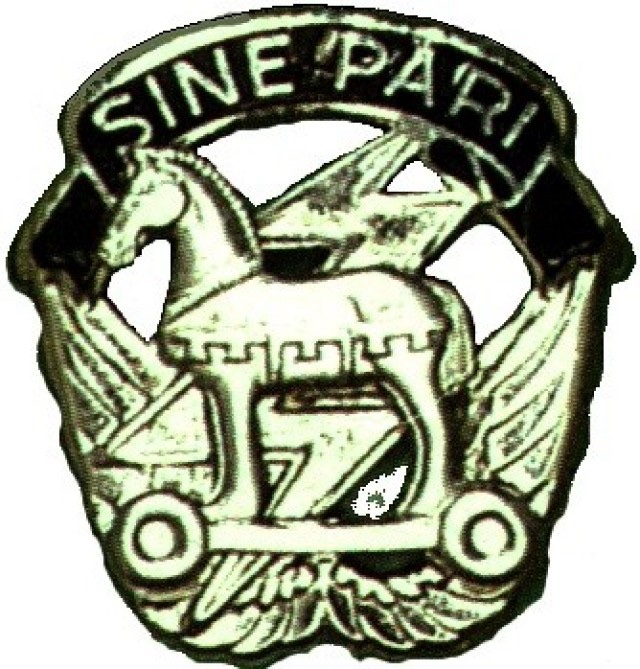
1st SOCOM distinctive unit insignia (Photo Credit: U.S Army)

On August 7, 1984, Maj. Gen. Joseph C. Lutz stood beside his wife Joyce in the shadow of the Special Forces Soldier statue, known to most as “Bronze Bruce,” and fought back tears while the 24th Infantry Division band played “Auld Lang Syne.” Fifteen minutes earlier, Lutz had passed the colors of the U.S. Army 1st Special Operations Command (1st SOCOM), which he had commanded since its founding two years earlier, to Maj. Gen. Leroy N. Suddath, Jr.
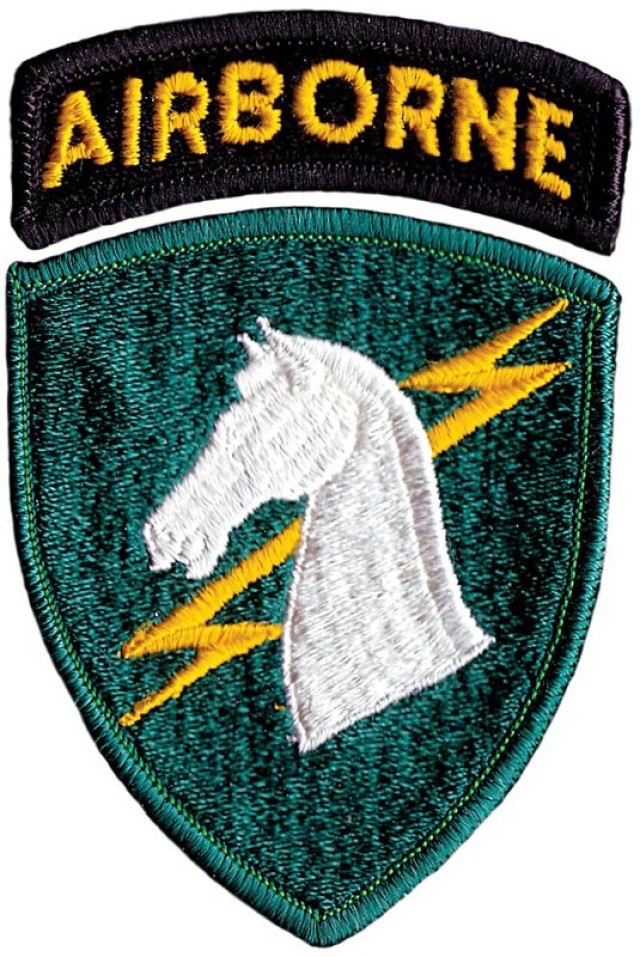

1st SOCOM shoulder sleeve insignia (Photo Credit: U.S Army)

Opposite the incoming and outgoing commanders stood a formation representing the Army Special Forces (SF), Rangers, Psychological Operations (PSYOP), and Civil Affairs (CA) units that came under the command of 1st SOCOM upon its provisional establishment on October 1, 1982, at Fort Bragg, North Carolina (known as Fort Liberty since 2023). Prior to that, no single command and control headquarters existed for all Army Special Operations Forces (ARSOF) units. Since then, the Army has not lacked one, with the U.S. Army Special Operations Command (USASOC) filling that role since December 1989.

“A Rocky Road”

General Robert W. Sennewald presided over the change of command ceremony, as the commander of 1st SOCOM’s higher headquarters, the U.S. Army Forces Command. In his remarks, he noted the rocky road that 1st SOCOM had travelled to get to where it was in August 1984. Without elaborating on the specific obstacles overcome by 1st SOCOM, Sennewald’s comments likely resonated with the Vietnam-era ARSOF leaders in attendance, including Lutz. After great sacrifice and exceptional valor in Vietnam, many ARSOF units endured force reductions and resourcing shortages in the aftermath of that war. By the late 1970s, ARSOF was reeling from years of neglect.
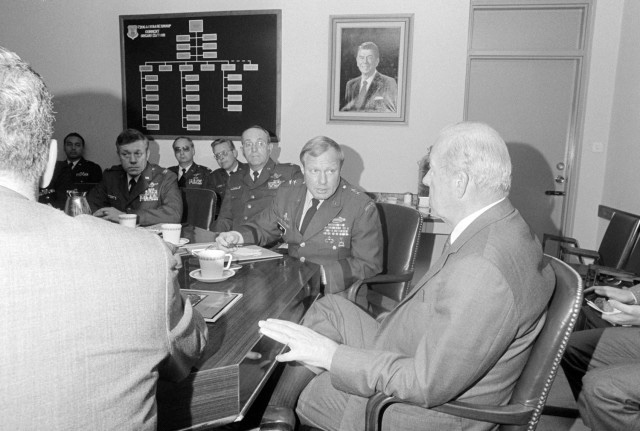

After leaving 1st SOCOM in August 1984, Maj. Gen. Joseph C. Lutz served as Chief of the Joint United States Military Aid Group to Greece. Here his pictured (second from right) briefing U.S. Secretary of State George Schultz (far right) at Hellenikon Air Base, Greece. (Photo Credit: NARA)

From his position as the Commander, U.S. Army John F. Kennedy Center for Military Assistance, Lutz had played a significant role in revitalizing ARSOF, and Army Special Forces, in particular. Under his leadership, the Center produced an Army-directed Special Operations Forces Mission Area Analysis that prescribed some of the most impactful changes to ARSOF in the 1980s, including the establishment of 1st SOCOM. Sennewald testified to Lutz’s impact, saying, “Our national leadership made a commitment to develop your capabilities, and General Lutz has been instrumental in bringing this commitment to reality.”

With a mission to prepare, provide, and sustain active-duty Army SF, PSYOP, CA, and Ranger units, 1st SOCOM was the first headquarters to exercise both administrative and operational control of the full spectrum of ARSOF. On Lutz’s watch, the command had fought a brief war on the Caribbean Island of Grenada (Operation URGENT FURY) and deployed mobile training teams to sixty-five countries, including such hotspots as El Salvador, Honduras, and Lebanon.
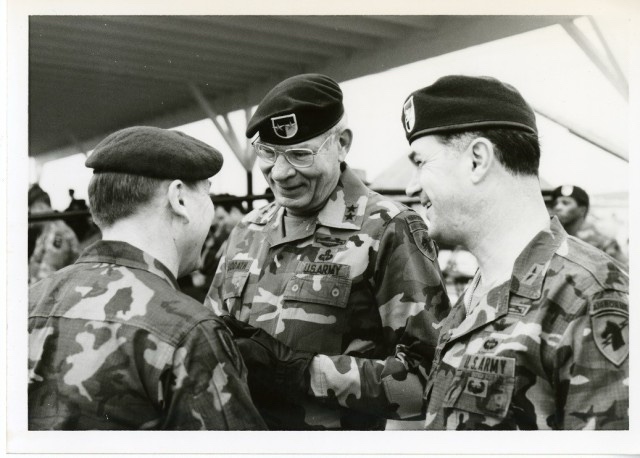

Maj. Gen. Leroy N. Suddath, Jr. (left) and Col. John N. Dailey (right) are pictured here at the October 1986 activation ceremony for the 160th Special Operations Aviation Group at Fort Campbell Kentucky (Image Credit: U.S. Army). (Photo Credit: U.S Army)

Under the leadership of Lutz and his successor, Maj. Gen. Suddath, 1st SOCOM continued to revitalize and expand ARSOF, reversing some of the post-Vietnam cuts and adding new capabilities. In 1984 alone, the command oversaw the reactivation of 1st Special Forces Group (SFG) and the addition of a Ranger Regimental headquarters and the 3rd Ranger Battalion. Early the following year, the Army transferred Task Force-160, a dedicated ARSOF Aviation unit, from the 101st Airborne Division to 1st SOCOM. This unit was reorganized into the 160th Special Operations Aviation Group (SOAG) in October 1986. 1st SOCOM also added two dedicated ARSOF Support units that year.

By 1987, when 1st SOCOM became the Army component of the newly established U.S. Special Operations Command (USSOCOM), its major subordinate units were the 75th Ranger Regiment; the 1st, 5th, 7th, and 10th Special Forces Groups; the 4th PSYOP Group; the 96th CA Battalion; the 528th Support Battalion; the 112th Signal Battalion; and the 160th Special Operations Aviation Group.

Toward a MACOM

In 1988, Suddath passed command to Maj. Gen. James A. Guest, an SF veteran of the Vietnam War who had previously commanded the U.S. Army John F. Kennedy Special Warfare Center and School and 5th SFG. Under Guest’s leadership, 1st SOCOM successfully advocated for the establishment of a Major Command (MACOM) for ARSOF. On December 1, 1989, the Army activated USASOC, under the command of Lt. Gen. Gary E. Luck, as the Army’s sixteenth MACOM.

Concurrently, 1st SOCOM became a major subordinate command of USASOC, responsible for all active-duty ARSOF, alongside the short-lived U.S. Army Reserve Special Operations Command taking command of all U.S. Army Reserve (USAR) and Army National Guard (ARNG) SOF units. Guest continued serving as 1st SOCOM commander through this transition period, during which the command rapidly deployed large contingents in support of Operation JUST CAUSE in Panama and Operation DESERT SHIELD in Saudi Arabia.

On November 27, 1990, 1st SOCOM was redesignated as the U.S. Army Special Forces Command (USASFC) and assigned the mission of equipping, training, and validating all Army Special Forces, including two ARNG and two USAR SF Groups. This arrangement persisted until 2014, when USASFC merged with active-duty PSYOP, CA, and ARSOF Support units to form the 1st Special Forces Command (Airborne), a division-level ARSOF headquarters under USASOC that commands and controls five active-duty and two ARNG SF groups, two PSYOP groups, a CA brigade, and a Sustainment brigade.

“You have arrived.”

It is difficult to see how organizations such as USASOC and 1st Special Forces Command would exist, had it not been for forward-thinking leaders like Joseph Lutz, Leroy Suddath, and James Guest. These three were the only commanders of 1st SOCOM, the first modern ARSOF headquarters.

Despite the long and sometimes rocky road back from the post-Vietnam doldrums, General Sennewald saw only positives in August 1984. “Today,” he said, “I am firmly convinced that road is part of history. If the words ‘you have arrived’ have meaning to anyone, they should have special meaning to the soldiers of 1st SOCOM.”

In the intervening four decades, ARSOF has continued to prove its value to the nation in myriad ways and innumerable places, in conflicts big and small, always striving to live up to the motto first adopted by 1st SOCOM in 1982: Sine Pari, meaning “Without Equal.” In his parting comments, Lutz expressed a sentiment shared by ARSOF leaders ever since when he said, “I want to thank General Sennewald and our Army for allowing me the privilege to command the greatest soldiers in the world.”

By Christopher E. Howard
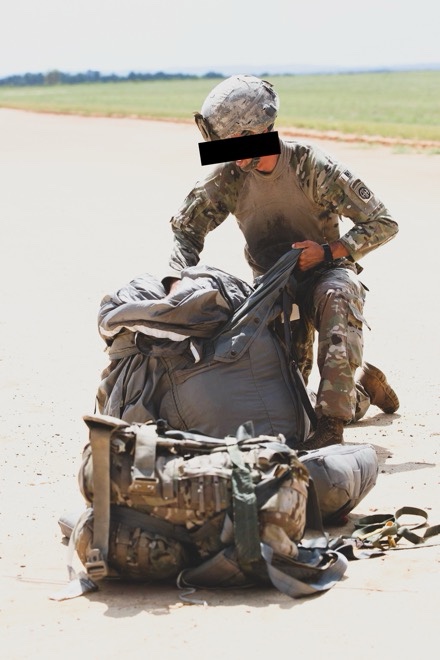
S.O.Tech Parachutists Kit Bag

Thursday, November 9th, 2023

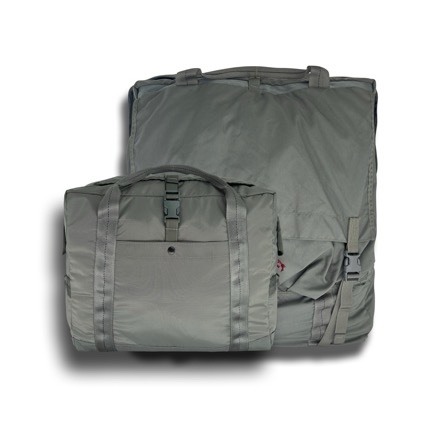
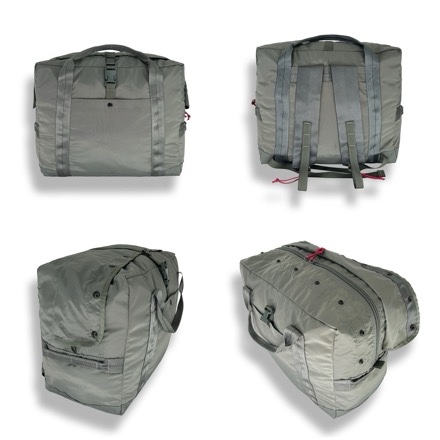
Paratrooper gear is part of S.O.Tech’s DNA.  When we were contracted to sew the Universal Parachutist Kit Bag for a major aerospace firm, we saw the huge design advantages over the old school aviator kit bag.  So when we were contracted by a major shoe company to do a collaboration on a tactical themed bag, we saw an opportunity to take the UPKB design and shrink it to gym bag dimensions.  That project was in colors to match the shoes, so this year while looking at the materials left over from our UPKB run, we saw an opportunity to make a paratrooper homage bag.

The bag is shorter and we had to drop the external flapped pocket, but otherwise nearly identical – even down to the dark red paracord we used on the zipper pulls.

Bags go live Friday 11/10 12pm PST. $180. Ships immediately. Limit 1 per customer.

www.specopstech.com

New PDW Watch Band Compass Kit 2.0

Thursday, November 9th, 2023

The Original Expedition Watch Band Watch Band Compass Kit Returns with Major Updates

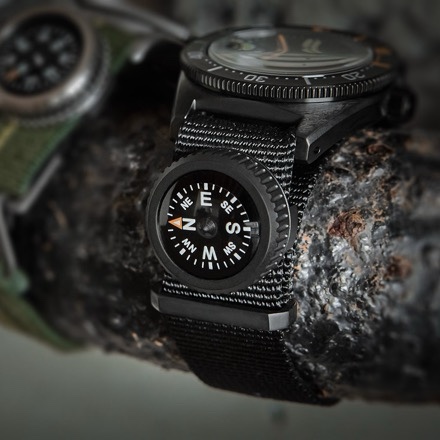
This Fall 2023, PDW debuts their newly updated Expedition Watch Band Compass Kit 2.0. The original titanium cased dive rated button compass returns with a totally re-engineered 2-pc case with a screw down bezel making compass change outs toolless, easy and quick. An explorer’s tool and for those who find a way or make one. A best grade, versatile, amphibious-rated, EDC, Survival and Field compass accessory that can be worn on a nylon NATO to MN Para type watch bands in 20mm to 22mm, or in its silicone carrier for multiple carry options. Our button compass unit is rated to a depth of 100M/300′ and encapsulated in the lowest profile, precision machined titanium case available today. The kit includes four colors of silicone carriers. Available in a fine matte, polished (satin), or black PVD finish to match watch cases.


The Expedition Watch Band Compass Kit 2.0 is available in the three noted case finishes and now includes all four colors of silicone carriers.

The Design and R&D Team at PDW states:


“After numerous production runs of our all-time best selling EDC product, we took some time to step back and revisit our original concept for this compact compass design, which included the screw down bezel. Due to the cost prohibitive steps in machining when we first introduced this years ago, we didn’t pursue this original design. Now that CNC production has become readily available driving costs down from years ago, we decided to return to this original format. This updated version is the lowest profile we could make it and the ease in which the user can now simply change out without any tools, the button compass itself for a replacement or to a thermometer, is a significant upgrade. This is the original titanium cased watch band compass and remains the high standard.”


The PDW Expedition Watch Band Compass Kit 2.0 is available for $76.00-$79.00 via their website, prometheusdesignwerx.com.

Beez Combat Systems Predator Ghillie SPECTRALFLAGE BLANKET A-TACS U|CON

Thursday, November 9th, 2023

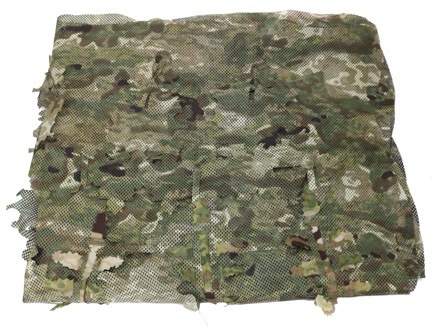
The PREDATOR GHILLIE™ SPECTRALFLAGE BLANKET reduces the VIS (physical visual), UV, NIR, and thermal signature (6µm ~ 15µm, High end of MWIR, LWIR,FIR) of the individual to avoid being observed and/or targeted by ground-based detection, sUAS and UAS Near-Peer threats.

The PREDATOR GHILLIE™ SPECTRALFLAGE BLANKET uses complex, next generation engineering to accomplish the unthinkable. Thermal mitigation and spectral signature reduction of the individual war fighter against real world thermal technology and night vision while simultaneously providing a 3D VIS breakup. This system is designed to be utilized as a Hide/Blind or camouflage blanket. While this system exponentially excels at outline breakup and mitigating heat signature to thermal threats, the laws of convection still apply. Increased distance between the user’s body heat and the blanket is better. It will help mask the VIS signature regardless of its use due to the VIS breakup and the most advanced military grade camouflage A-TACS® patterns.

The Predator Ghillie SPECTRALFLAGE BLANKET is the next evolution in concealment technology. On the battlefield of today multispectral concealment is the way.

Available only at www.beezcombatsystems.com.

Vigilant Defense 24: Accept Follow-On Forces

Thursday, November 9th, 2023

KUNSAN AIR BASE, South Korea —  

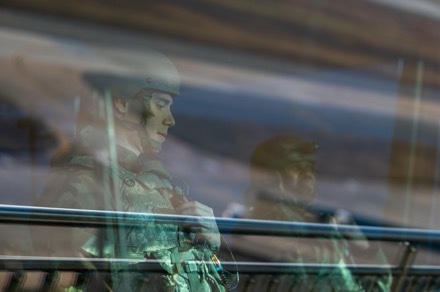
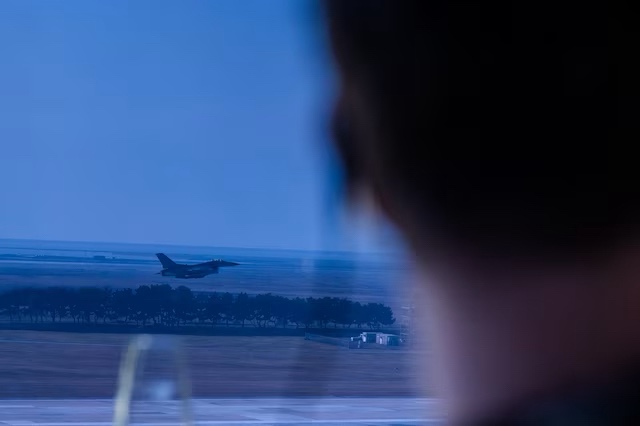
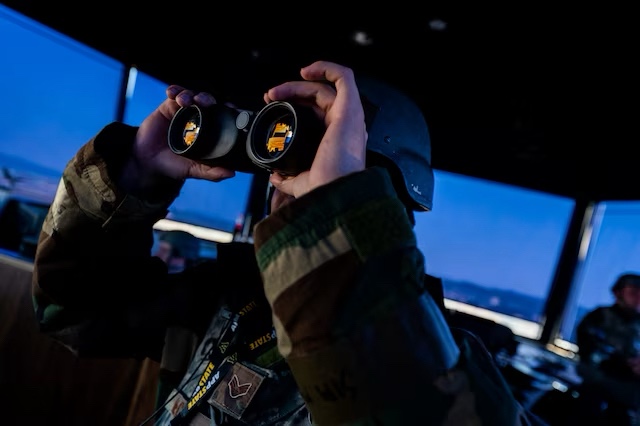
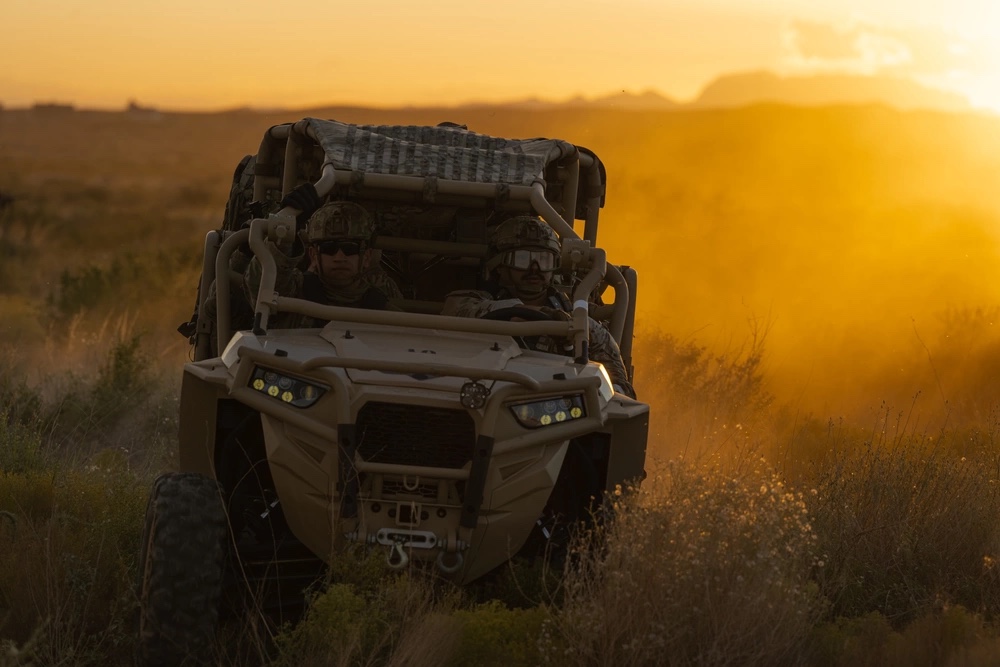
During the combined flying training event known as Vigilant Defense 24, more than 25 various types of fighters, cargo, tanker and reconnaissance aircraft from the U.S., South Korea and Royal Australian Air Force are conducting flight operations from South Korea and U.S. bases across the peninsula Oct. 30 – Nov. 3.

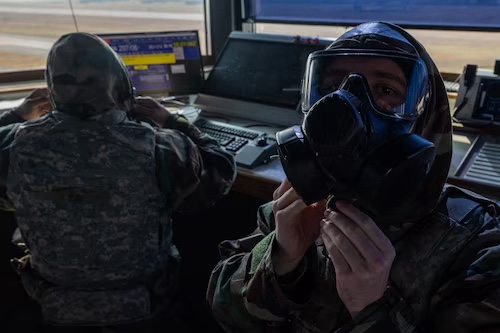
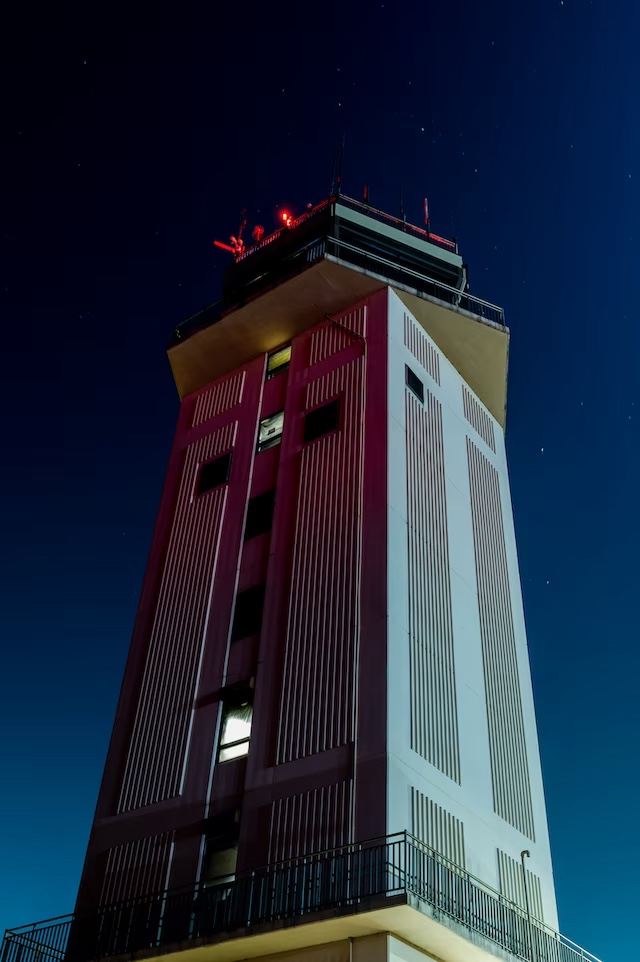
Vigilant Defense is designed to enhance combined training and to ensure Airmen remain safe in the sky and on the ground by air traffic controllers like U.S. Air Force Tech. Sgt. Paul Gary, 8th Operations Support Squadron air traffic controller senior watch supervisor.

“As air traffic controllers, we have to be proficient at coordinating all airframes from fighter to cargo, military or civilian,” Gary said. “We’re always prepared for whatever may come our way, including an increase in air traffic operations during a contingency operation because for us it would be nothing more than practicing how we play.”

The center component of Kunsan Air Base’s three-part mission is to “Accept Follow-on Forces” and during a contingency operation, ATC’s ability to coordinate increased flight operations is vital to ensuring efficient and safe reception of those forces.

“I think it is important for Airmen to step away from exercises like this with the ability to remain flexible in situations that take you outside of your comfort zone. You may have to adapt and follow someone else’s lead in a dynamic situation, and doing so could be the difference in saving or losing lives while coordinating aircraft.”

U.S. Air Force Tech. Sgt. Paul Gary, 8th Operations Support Squadron Air Traffic Controller Senior Watch Supervisor

Controllers provide pilots with their flight and landing information along with weather reports all while deconflicting landing and air space congestion within their zone of responsibility. Gary explains how working together is essential to performing ATC operations.

“Building teams is particularly important,” Gary said. “The person on your left and right needs to be on the same page as you.”

Combat flying training events are regularly scheduled training events designed to enhance the readiness of U.S. and South Korea forces and sustain capabilities, which strengthen the South Korea-U.S. alliance.

By TSgt Emili Koonce, 8th Fighter Wing Public Affairs

Photos by SSgt Samuel Earick

Defender Flag Field Exercise Tests, Validates Ground Defense Operations

Wednesday, November 8th, 2023

FORT BLISS, Texas (AFNS) —  

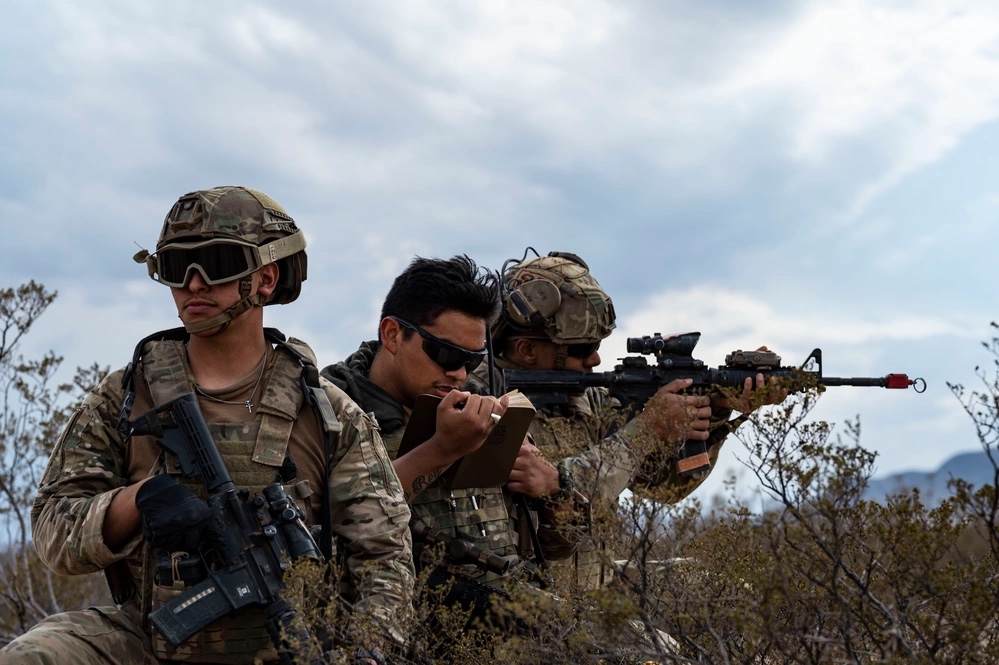
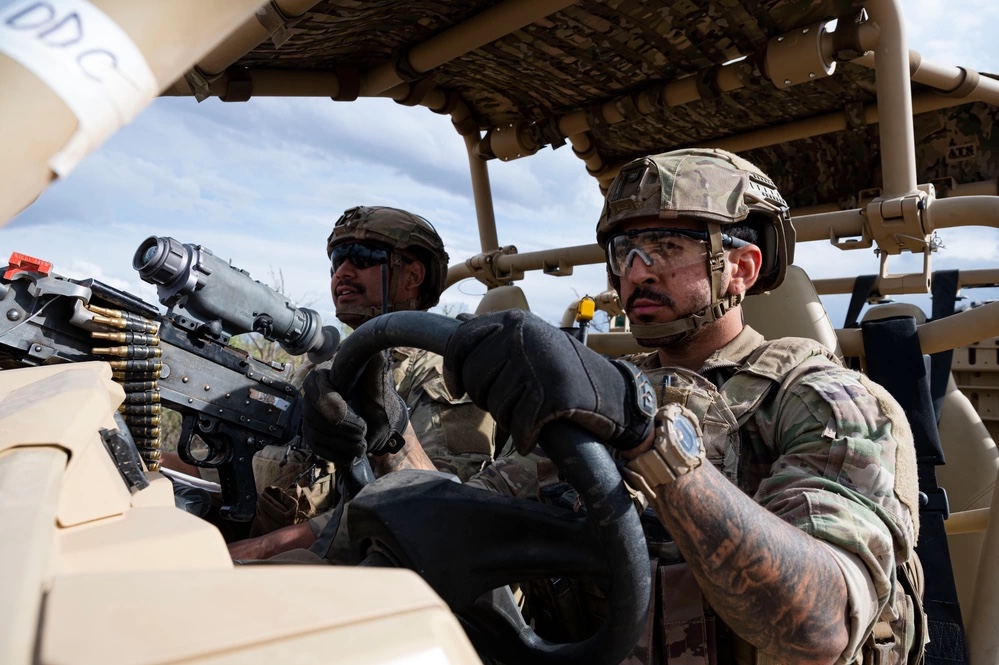
U.S. Air Force Defenders tested and validated the career field’s operations for base defense in the New Mexico desert Oct. 23-27 during the inaugural Defender Flag field exercise.

More than 180 Defenders from every major command participated in the event, thanks to help from support agencies, Headquarters Air Force, the Air Force Installation and Mission Support Center and the Air Force Security Forces Center.

The live-fire exercise provided realistic assessment and validation of base defense tactics, techniques and procedures during intense, realistic scenarios, said Lt. Col. Christopher Jackson, chief of the AFSFC’s Security Forces Training Support Division and event lead for both Defender Flag and Defender Challenge. It also tested and evaluated new concepts, TTPs and equipment, identifying potential gaps and needed changes to career field training curriculum.

The field exercise was conducted simultaneously with Defender Challenge, the security forces competition to determine the best-of-the-best in combat tactics, weapons proficiency and physical endurance. Both events, hosted by the Air Force Security Forces career field, were planned and executed by the AFSFC.

The team members who helped put together Defender Flag had a tremendous amount of pressure on their shoulders, Jackson said.

“The countless members of the team who helped put together Defender Flag knew how important the event would be to help us get ready for the next fight,” the lieutenant colonel said. “They knew the mission planning was absolutely critical and even more important was collecting data we can use for TTPs to inform training and equipment we’ll need for the future fight.”

“The fight of yesterday looks different than what is needed for the fight of tomorrow,” said Brig. Gen. Thomas Sherman, Air Force director of security forces. “Strategic competition is our primary national security challenge and events like Defender Flag and Defender Challenge are paramount to our career field’s success.”

The security forces career field is in an evolutionary period, he added, so holding Defender Flag at this time was important.

“This exercise is helping the career field assess Defender skillsets in challenging environments and testing innovative tactics to solve difficult problems,” Sherman said, with lessons applied across the force.

“We realize that the threats we’re seeing in strategic competition and the way the world is around us calls for a change. It calls for us to relook at ourselves and who we are, how we look at base defense and how we see ourselves as being the greatest contribution to the U.S. Air Force. What Defenders did during both events displayed our potential,” Sherman said. “We’re setting the course for the future … identifying what we are incredible at, the areas where we have gaps and how we need to sharpen our sword to be prepared for what lies ahead.”

Much has changed with security forces operations and training since 2015, said Chief Master Sgt. Donnie Gallagher, security forces career field manager, and “Defender Flag is arguably the most important thing going on right now in Defender Nation.

“We’re getting after things from a different mindset, trying to really see where we’re at,” the chief said. “Are we as good as we think we are, or do we have a lot of work to do? What we did last week will lay the foundation for things to come on how we evolve as a career field to get after the base defense mission, which has become our primary purpose.”

For the chief, Defender Flag was an eye-opening experience.

“It really pointed out some things we need to get after, maybe in our training environment at home station versus what we do at some of our readiness training venues,” he said. “It validated the importance of physical fitness. The sheer weight of our weapons, armor and heavy equipment points to the importance of being at the peak point of fitness. Therefore, we are looking at different physical training program options to reinforce this fact.”

For tactics and other aspects of security forces operations, “we need to get out the honing stone and sharpen the sword … but we’re looking pretty good,” Gallagher said.

Both Defender Flag and Defender Challenge are helping to make sure Defenders are trained and ready for the future fight.

They validated everything the Air Force did after the former Defender Next-32 Initiative, which directed a more challenging and realistic training curriculum for Defenders, the chief explained.

“The strategy General Sherman is forming today will reshape what we’re getting after and how we support air power throughout the world,” Gallagher said. “We’re more than any law enforcement agency. Our biggest mission is getting after our peer-peer, near-peer global competitors. Change is coming.”

Story by Debbie Aragon, Air Force Installation and Mission Support Center Public Affairs

Photos by Airman 1st Class Isaiah Pedrazzini

Human-Factors Engineering Modernizes Army Aviation Platforms

Tuesday, November 7th, 2023

REDSTONE ARSENAL, Ala. — If a technology isn’t intuitive, chances are, it won’t be used.

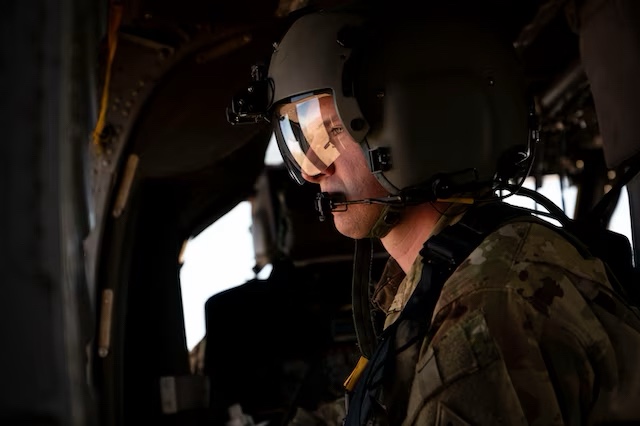
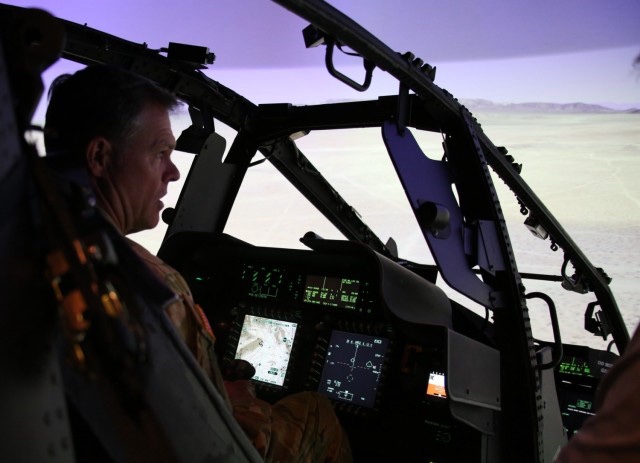
True in everyday life and especially true in aviation when creating technology to support Army aviators. Partnering with Program Executive Office – Aviation’s project offices, the U.S. Army Combat Capabilities Development Command Aviation & Missile Center conducts government-executed Crew Station Working Groups to assess the avionics requirements through human-factors engineering, utilizing early Soldier evaluations.

The key mission of the DEVCOM AvMC Aviation Crew Stations Branch is conducting CSWGs comprising Army and industry partner stakeholders, all with a vested interest in ensuring that Army aviators have the best solution at their fingertips.

“We support the end user,” said Jena Salvetti, lead human factors engineer for the Crew Stations branch. “We evaluate prototype interfaces, with users-in-the-loop, while addressing human factors principles, aviation mission tasks, and sub-system conventions to ensure that final designs are intuitive. The CSWG process was designed to ensure aviators have a say in their interfaces rather than pushing an interface to the field and saying, ‘You’ll figure it out.’ One of the things we hear from the field is that systems are not being used because they’re too hard to use. The CSWG was created to mitigate this issue.”

For more than 25 years, AvMC has partnered with the Utility and Cargo Helicopter Project Offices leading the working group activities. With the demonstrated success of more than 115 CSWG activities across 13 project offices and seven airframes, the Apache Helicopter Project Office joined the partnership with the fielding of the AH-64E.

One of the ways that the Aviation Crew Stations Branch ensures that they are designing with the user — or pilot — in mind is utilizing former Army pilots to lead the process. They have seven.

“This is a really unique branch in the number of users we have in the group,” said Kevin Bieri, aerospace engineer. The Aviation Crew Stations Branch, totaling 10 civilians with contracting support, is divided into three teams: platform leads, human factors and engineering.

“There’s a lot of experience in the room,” Ross Lewallen, AH-64E Crew Station Working Group lead, said.

Of course, anyone familiar with Army aviation knows that pilots won’t hold back when it comes to talking shop — or how to make the aircraft better.

“You have two pilots in a room and get three opinions,” Bieri said with a laugh.

The team agreed the reason why the CSWG works so well is due to the rapid prototyping that takes place during those Soldier evaluations. When the pilots give their evaluation, often the engineers will immediately make the adjustments to the technology. In the world of engineering, to have that instant impact is immensely rewarding, they said.

The challenge is that sometimes they work too fast, Lewallen said, evaluating technology for the CSWG that is not yet mature. It’s a unique challenge but one that they accept, to continue to bring the best capabilities to the Soldiers.

“We are three to five years ahead of the product line,” said Lewallen. “Which is good because some of the things that we’re working on, we’re given a blank slate. They ask, ‘How do you think this will work?’ And that’s when we use the experience we have in the lab — former pilots, engineers, aerospace guys, all of our talents — to come up with something. Then we fly and make some modifications to it to fit with the users want. We know a long time ahead of the airframe what it’s going to look like. I think that is that is a unique part of our job. I love it. It’s one of my favorite parts — getting out ahead of the conception line.”

By Katie Davis Skelley, DEVCOM Aviation & Missile Center Public Affairs

Army Researchers Receive Patent for Pocket-Sized Chemical and Biological Assessment Kit

Monday, November 6th, 2023

ABERDEEN PROVING GROUND, Md. — Army researchers have developed an innovative design for immediate on-the-ground chemical and biological assessment, giving traditional everyday laboratory equipment a new purpose for Soldiers in the field.

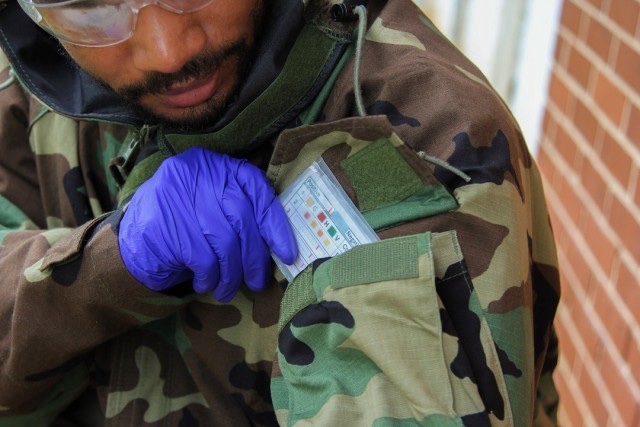
The invention, known as the pocket detection pouch, or PDP, was granted a patent on July 26, 2023, for its unique design that enables a one-way flow of a chemical or biological liquid sample that can be assessed and preserved in a lightweight, pocket-sized pouch.

The invention itself was deliberately designed to be “low-tech,” with the purpose to provide simple, immediate, and easily readable test results in the field while reducing the size, weight, and burden that traditional detection equipment imposes on the warfighter.

The idea for the PDP began at the U.S. Army Combat Capabilities Development Command Chemical Biological Center and was brought forward through the collaboration of two researchers at the organization — Ms. Kelley Betts and Dr. Jennifer Sekowski.


Betts, a research scientist and an Army wife, understood that every ounce carried by a Soldier during deployments matters, and wondered if there was a way to combine both a chemical and biological detection capability into a single, easy-to-use platform using something readily accessible — like an inexpensive plastic bag.

She decided to use her knowledge and expertise to develop a customizable chemical and biological assessment tool that was small, lightweight and could fit easily in the pocket of every warfighter. Betts developed the initial prototype in her kitchen using everyday resealable sandwich bags and a heat-sealer. “I found a way to come up with multiple individual chambers within the bag, and that’s how the one-way flow for liquids was born,” said Betts.

In this episode of CB Defense Today, public affairs specialist, Jack Bunja, interviews Doctor Jennifer Sekowski, a molecular toxicologist at the Center and inventor of the Pocket Detection Pouch (PDP), and Yusuf Henriques, founder and CEO of IndyGeneUS AI.

DEVCOM CBC Video by Ellie White

Betts then introduced the idea to Sekowski, who further helped to develop the prototype and proposed the technology to the Innovative Development of Employee Advanced Solutions program at DEVCOM CBC where she was awarded $50,000 over the span of six months to further develop the technology.

Gathering information and garnering feedback from other scientists, researchers, and warfighters within the Center allowed Sekowski and Betts to further refine their invention by increasing the size of the flap opening, reducing the size of the pouch and including a self-loading feature that allows the end user to tailor the PDP for different scenarios.

During refinement, the pair maintained the idea to reduce the burden to the warfighter by making the asset easy to use, lightweight, inexpensive, power-free with little debris footprint, and enabling the ability of containment. “It is one of the least expensive projects I’ve ever done, and one of the most successful,” said Sekowski.

The final design allows for a pouch that collects a sample into a main chamber which then flows into individual testing channels that are perforated at the bottom and housed in an external chamber. It is essentially a bag within a bag. “Other people have developed other, small form factor platforms, but in the end, we were able to demonstrate that our device is worthy of a patent because of the design,” said Sekowski.

The design has been able to gain further support and funding for production on a larger scale. The team has been able to partner with IndyGeneUS AI, a veteran- and minority-owned business dedicated to the field of medical technology, to further the development of the PDP. “We’re very fortunate that we were able to patent it and that allowed us to work with IndyGeneUS AI. They are going to help us find funding to do that engineering work to make it a commercial product,” said Sekowski.

With both the patent and partnership in place, Betts and Sekowski plan to continue developing the product further, working with IndyGeneUS AI to make the PDP commercially available. “I would like to see it in the hands of Soldiers, in the hands of people, where it can make a big difference in the world,” said Betts.

By Aeriel Storey