Wilcox Ind RAID Xe

Archive for the ‘Guest Post’ Category

Army Enables Flexible Communications Across a Strategic Paradise

Tuesday, December 26th, 2023

SCHOFIELD BARRACKS, Hawaii — The blue Pacific is now saturated with Army green as allies and partners join forces to prepare for large-scale combat operations.

As the Army adapts and evolves its network to reduce complexity and tailor capabilities at echelon, it relies on persistent experimentation, fielding and Soldier feedback to refine network operational concepts.

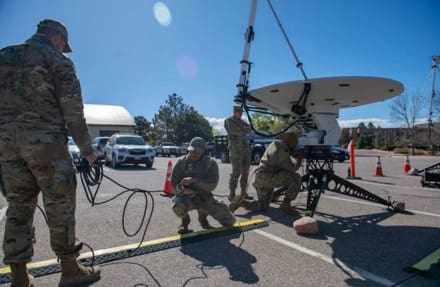
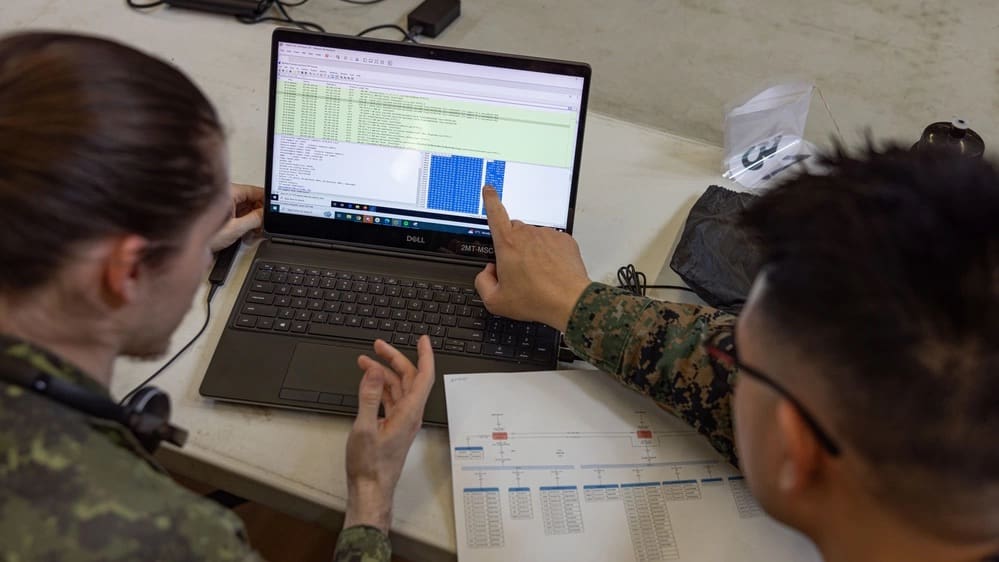
The 25th Infantry Division has been a critical experimentation partner in this effort, most recently during the Joint Pacific Multinational Readiness Center 24-01 exercise at Schofield Barracks employing the Integrated Tactical Network, or ITN, for its networked communications.

“Here in the Pacific, we’re faced with unique environmental considerations, from triple canopy jungles to the mountains and volcanoes,” said Maj. Justin James, division deputy communications officer (G6) for the 25th ID. “The ITN is going to help us communicate over terrain in which we couldn’t before.”

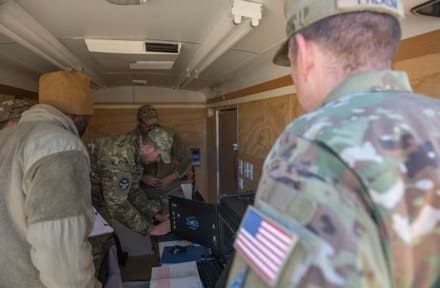
The ITN is comprised of a flexible network kit that incorporates commercial capabilities such as tactical data radios, commercial cell technologies, and tactical cross domain solutions that integrate into the Army’s network foundation. The flexibility of the ITN allows higher echelons to take on complex network planning and management, while retaining necessary network capabilities for commanders at lower echelons who are focusing on the fight.

One priority for the 25th ID during the execution of JPMRC 24-1 was to exercise and fight on the Sensitive but Unclassified – Encrypted, or SBU-E, network to the greatest extent possible. The use of the SBU-E enclave supported communications across echelons and the joint and coalition communities.

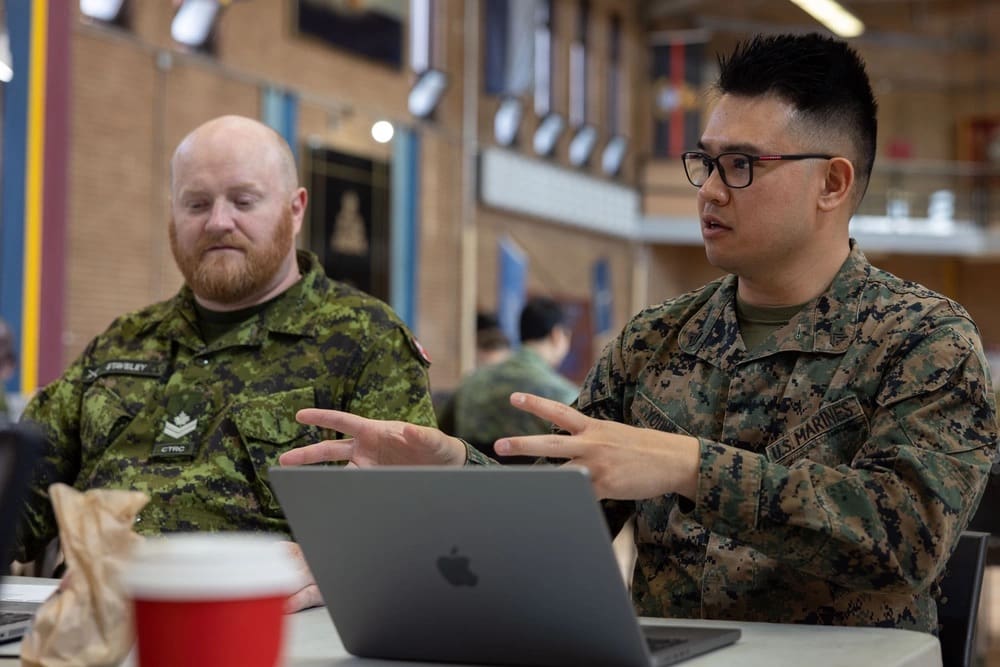
“In a future fight, the U.S. will have to fight with its partners and allies and to make that interoperability real, our network has to be as flat, fast and accurate as possible,” said Col. Rob Shaw, 3rd Infantry Brigade Combat Team, 25th Infantry Division commander. “Because it’s at an [acceptable] level of encryption I can pull in our partner nations.”

Over the past six years, nine brigade combat teams and six security force assistance brigades have successfully conducted operations using SBU-E at brigade and below to provide increased operational flexibility, interoperability, and security, while retaining secret voice and data communications where required.

During the experimentations, the 3-25 established communications up to division and down to the tactical command post using SBU-E to follow each tactical operations center movement. This provided Army network developers with data to inform network design.

Persistent Experimentation: Extending the Network

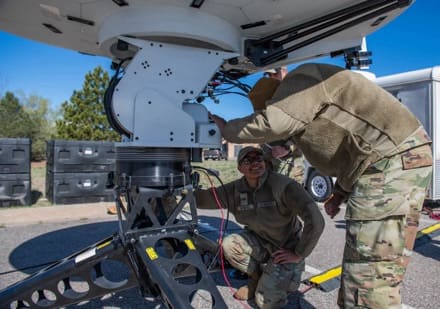
To complement the existing ground-based ITN capabilities, the Army inserted new aerial tier experiments by incorporating the ITN’s tactical radios into fixed wing drones, which significantly extended the network across intra- and inter-island terrains and onto a UH-60 Blackhawk for air to ground communications.

The Aerial Tier Network Extension featured a K-1000 drone, which completed a 26-hour flight carrying full motion video with the radio creating a single mesh network to significantly extend the mesh network.

The Aerial Integrated System, also known as ITN in the air, provided shared position location information between the pilot down to dismounted troops equipped with end user devices.

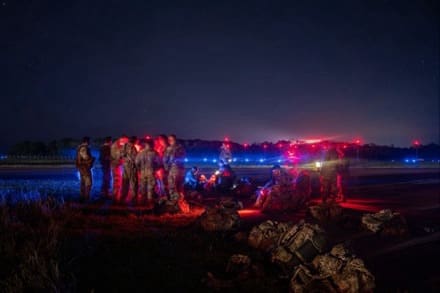
“As soon as the helicopter comes into the line of sight, the system creates a communications bubble between the pilot, who is tracking the mission on a tablet, and the ground forces, who are communicating with the pilot and each other using their end user devices,” said Maj. John Azbill, 3-25 S6. “Air to ground communications are especially critical during our night time air assault operations.”

The unit also successfully experimented with a joint-enabled radio for shore-to-ship joint call for fires, which enabled the forward observer to initiate the fires chain up to a U.S. Navy destroyer offshore to launch a notional fires mission.

“We’re in the Pacific, so joint fires missions are probably what we’re going to most rely upon to fight,” Shaw said.

The 25th ID will continue to participate in operational exercises in 2024, where it will refine its ITN capabilities and provide the Army with additional feedback on how to implement a strategic communications link across the Indo-Pacific.

Story and photos Kathryn Bailey, U.S. Army Public Affairs

Some photos by Sam Brooks

NSA Focuses on Talent as Pace of Technology Quickens

Sunday, December 24th, 2023

WASHINGTON — The National Security Agency’s ability to recruit and retain top talent is key to meeting the demands of the future, agency Director Army Gen. Paul M. Nakasone, said today.

Nakasone said the rapid evolution of technology continues to reshape the national security landscape and how his agency responds to new threats, but people remain central to the NSA’s mission.

“A lot of times we think about the incredible technological capabilities and the high-speed computers that are there, but, at the end of the day, what makes us the agency that we are is our talent,” he said during a discussion in Washington hosted by the Intelligence and National Security Alliance, a trade organization focused on public-private national security partnerships.

Earlier this year, the National Security Agency launched its largest hiring surge in three decades with a goal of hiring more than 3,000 new employees by the end of 2023.

Spotlight: Engineering in the DOD

Nakasone said the NSA is “moving very quickly” to meet that goal, but said numbers are only part of the overall objective.

He said the agency has also focused on improvements to its recruiting and retention practices to ensure it attracts a “future-ready workforce.”

“How do we think about a population that is over 50% today millennials and [Generation Z]?” he said. “Ten years ago, 70% of our workforce was baby boomers. Five years ago, Gen Z and millennials overtook baby boomers. Five years from now, 70% will be Gen Z and millennials.”

“This is the workforce that is coming into our agency, so this is an agency that is looking much differently in how we retain our workforce,” he said.

That approach includes a focus on adapting to work-life balance demands and easing career mobility between the government and private sector.

That workforce will be on the frontlines of significant change as the agency adapts to technologies — such as artificial intelligence and quantum computing — that Nakasone said will have a significant impact on the national security landscape.

Spotlight: Artificial Intelligence

The NSA has been forward-leaning in its approach to game these game changers.

Earlier this year, Nakasone, who also commands U.S. Cyber Command and serves as the chief of the Central Security Service, announced the creation a new entity to oversee the development and integration of artificial intelligence capabilities within U.S. national security systems.

The AI Security Center will become the focal point for developing best practices, evaluation methodology and risk frameworks with the aim of promoting the secure adoption of new AI capabilities across the national security enterprise and the defense industrial base.

The new entity will consolidate the agency’s various artificial intelligence, security-related activities.

Nakasone said on Friday that the AI Security Center has begun bringing together a series of partners to tackle the issues linking AI to national security.

Recently, he said, the group released a report on AI security infrastructure in partnership with the Cybersecurity and Infrastructure Security Agency, the United Kingdom’s Government Communications Headquarters and other organizations.

Spotlight: Value of Service

“Artificial intelligence is probably the most transformative things that we’re going to experience in our lifetime,” he said. “We have to ensure that the information, the infrastructure, [and] the ability for AI to operate within this nation [is] secure.”

“That’s where the National Security Agency comes in,” he said.

By Joseph Clark, DOD News

A Glimpse Into the Future of Warfare

Saturday, December 23rd, 2023

The world’s first hybrid electric jet aircraft, drones that fit in the palm of your hand and driverless vehicles were just some of latest equipment with new technology put to the test on the Army Warfighting Experiment (AWE) 2023.

AWE has been the Army’s flagship innovation experimentation programme for the past six years, forging relationships with industry to identify technology that could be used in future warfare.

The focus of this year’s AWE was to identify current and emerging technologies that could provide solutions to the challenges faced by soldiers in urban warfare.

Over 40 systems from 35 suppliers; two thirds of which are from British industry, were tested and assessed by the Army’s Experimentation Battalion, 2nd Battalion The Royal Yorkshire Regiment, during four weeks of combat trials on Salisbury Plain.

They were joined on the experiment by US, Dutch, French, German, Spanish and Italian troops, as well as observers from Canada, Australia, KSA and Turkey.

“We are looking towards the future battlespace and looking at lessons learned from countries like Ukraine. It’s important to learn the lessons from those conflicts and stay up-to-date and get ahead of the curve. This kit will help us do that or, at the very least, enable us to stay on par with a future enemy.”

PRIVATE DANIEL GONZALEZ

Among the products being tested was the Hydra 400 – the world’s first hybrid heavy lift drone, which is powered by eight electric motors and four jet engines with a maximum lift of 400kg. The jets take the weight of the cargo, and the rotors look after the navigation and flight symmetry.

The next generation drone can be assembled and ready for flight in six minutes and can carry the Brimstone missile that can engage a wide range of targets including fast moving vehicles and vessels at sea.

The results from the experiment will generate evidence to inform future investment decisions and drive the thinking on design and training decisions, ensuring the Army has the best solutions to meet the demands of modern warfare.

Private Daniel Gonzalez said: “We’ve been trialling everything from software to unmanned vehicles, and from ladders to an electric wheelbarrow that can be used to evacuate casualties or to carry kit.”

“You can see exactly where a lot of the kit slots into the battlespace. Some of the kit less so as it is still in development, and some is not fit for purpose.”

“We are looking towards the future battlespace and looking at lessons learned from countries like Ukraine. It’s important to learn the lessons from those conflicts and stay up-to-date and get ahead of the curve. This kit will help us do that or, at the very least, enable us to stay on par with a future enemy.”

“Our job role is incredibly exciting because we get to see the latest kit available first.”

The next generation of lightweight Uncrewed Aerial Systems (UAS) were tested, including the Black Hornet 4. Small enough to fly into buildings and with a flying time of more than 30-minutes, it can provide situational awareness without putting lives at risk.

Private Gonzalez said: “We can send the Black Hornet 4 and similar drones through an open window to look inside a building, find out its layout and see who’s in there. That info can then be used to aid troops’ entry and approach once inside. With this information the survivability of soldiers is increased.”

“On the AWE we feedback directly to the defence industry whether the product is easy to set up and use and how feasible it is to use in a real-life situation. On past exercises we have given feedback and seen the results, whether it’s a software update or even entirely new hardware and when we see that, it makes it really worth it.”

The soldiers were also testing new software that could be added to existing kit to improve performance. This included Instant Connect Enterprise (ICE) software that, when added to existing headphones and software, automatically translated the sender’s language into the language of the receiver. This enabled easier and quicker communication between British and international troops.

Private Matthew Perkins said: “The translation works with hardly any delay and network interference. The idea is there, and it does work. The main issue is the delay and in a battle a lot of things can happen. Given a few tweaks to make it smoother, I would use it.”

Watch the video here.

Colonel Toby Till, Commander of the UK’s Experimentation Trials Group said: “This is the third iteration in the AWE urban focused series, held in close collaboration with industry, and is designed to make the Army more lethal.

“The driving force is the Land Operating Concept. It can be likened to the North Star for the Army and demonstrates how we are going to fight differently in the future and the capabilities we will need to do so.”

“Our collaboration with industry on this event is key – we couldn’t do without them. We are seeing different industries collaborating who wouldn’t normally do so, and military advice being provided to both of them.”

The evidence from the AWE will inform the Army and Defence as to the capabilities which should receive investment in order that the Army may become more lethally effective and remain competitive on the global stage.

Story published by British Army

All photos MOD Crown Copyright

Ivy Soldiers Test Knowledge, Strength and Determination During E3B qualification

Saturday, December 23rd, 2023

FORT CARSON, Colo. — For an entire month, Ivy Soldiers prepare, practice and perfect more than 40 tasks in order to successfully execute a five-day evaluation. Upon sufficing the tasks, Soldiers are able to earn one of three Army-sponsored badges: the Expert Infantryman Badge, the Expert Soldier Badge and the Expert Field Medical Badge.

1st Stryker Brigade Combat Team, 4th Infantry Division, recently hosted the three badge evaluations, known as E3B, at Fort Carson from December 4-8, 2023.

“This is a great opportunity for Soldiers to hone and sharpen all of their skills,” said Sgt. 1st Class Julian Pacheco, E3B lane noncommissioned officer in charge assigned to 1st SBCT, 4th Inf. Div. “Whether you get it or not, there is a positive outcome out of this. Soldiers get an opportunity to come out here and train.”

Each testing lane evaluated is a skill level 10, or entry level, task. Pacheco says the badge helps a Soldier’s career progression regardless of their occupational specialty, however, it is no easy feat.

“There is a very high rate of attrition because it’s very methodical and procedural,” said Pacheco. “It asks a lot of the Soldiers throughout the week in order to get their GOs.”

To put the attrition into perspective, 1,100 hundred Soldiers submitted a packet for E3B. By day 3 of the testing, 252 remained in the running for one of the three badges.

Pfc. Angelina Shabelina, a cavalry scout assigned to 2nd battalion, 23rd Infantry Regiment, 1st SBCT, 4th Inf. Div., felt added pressure to her participation as she aspired to gain her ESB.

“I am nervous about earning my ESB because I am the only female from the battalion who is testing for the ESB,” Shabelina said. “It’s a lot of pressure and work.”

Shabelina says there is a lot of preparation behind E3B testing, which consists of events ranging from land navigation to weapon familiarity. The first event started with the expert physical fitness assessment and then moved onto land navigation.

However, the testing doesn’t end there. Throughout the week, Soldiers must pass 10 different stations that tested their knowledge of tactical combat casualty care, weapons functions checks and basic knowledge of different weapon systems, patrolling and tasks associated specifically to the badge they were testing for.

For example, the EFMB conducts three testing lanes with a varying number of evaluated skills. These lanes test the practical ability and keen eyes of candidates while performing evacuation and warrior skills tasks.

“EFMB is a test of a candidate’s attention to detail,” said Sgt. 1st Class Jonathan Bland, flight paramedic, 2nd Battalion, 4th General Support Aviation Battalion, 4th Combat Aviation Brigade, 4th Inf. Div. “All of the grade sheets and standards are published and that is really where the rubber meets the road.”

Soldiers are graded on each task to a strict standard. Participants are eliminated if they receive two no-go’s on a task. Soldiers who complete all the tasks perfectly are recognized as earning their “True Blue” for EIB, “Perfect Edge” for ESB and “No Blood” for those who earned their EFMBs with perfect scores.

Despite a plethora of rigor during the first few days of competition, the remaining Soldiers enter the final event, a 12-mile road march completed within three-hours. After crossing the finish line, Soldiers must disassemble and reassemble their weapon within five minutes.

“If you feel like you are losing yourself when you’re training up, you get everything right, you are in line to test out, and your mind goes completely blank, try to remember the Soldiers who are motivating you,” Shabelina said. “For me it’s my first sergeant and my team leader.”

In the end, 172 out of 924 Soldiers earned one of the E3B awards. Ivy Division alumni were able to pin the respective badges onto the recipients during the award ceremony at the conclusion of the final event.

Story by SPC Jason Klaer

Photos by PVT Cecilia Ochoa and SPC Mark Bowman

Spike Missile Integrated into Apache Helicopter at Yuma Proving Ground

Friday, December 22nd, 2023

YUMA PROVING GROUND, Ariz. — A primary responsibility of U.S. Army Yuma Proving Ground is to support developmental testing to improve existing weapons systems, even on platforms considered the most lethal of their kind.

A recent example of this is testing in support of an airworthiness release that will allow the Spike non-line of site missile to be integrated into the AH-64 Apache attack helicopter.

Always identified with state-of-the-art sensors and precision guidance systems, as well as lethal air-to-surface missiles like the Hellfire, the Apache will now boast a precision weapon with more than four times the range of the iconic missile.

“Our plan is to field next summer,” said Maj. Brian Haley, assistant product manager for Program Manager Apache. “We are going rapidly from this culminating test event to fielding. It is an awesome capability that I think will be a game-changer.”

Over the course of five days in December 2023, testers fired eight full-up rounds in a variety of test scenarios at the proving ground: day and night shots, against both moving and static targets such as a mock SA-22 and a Dodge Dakota truck, at different distances, from hovers close up to more than 30 kilometers away.

In more than one fire, the Apache dropped down in altitude and even turned 180 degrees as the missile sped toward its target to intentionally lose link with the round to verify it would still hit the target on its automatic track: the link was reestablished before impact in one test and intentionally not reestablished in another.

The Spike missile is also able to disable the warhead mid-flight, and one test verified this, hitting a target board like a slug. The test included acoustic sensors to gather sound data on its impact.

“The flight restriction algorithm on the Spike is pretty robust,” said Cole Sutter, YPG test officer. “It has an intended and expected flight area, and when it leaves that expected flight area it induces a roll to land within the surface danger zone.”

Aviation testers appreciate YPG’s vast ranges and variety of realistic targets as they put the weapon through its paces in a variety of situations and altitudes. YPG’s natural desert environment also contributes significantly to the realism of the testing. The Spike had three successful test shots in January 2023 for integration qualification and had been demonstrated at the proving ground in 2019 and during Project Convergence 2021.

“We’ve had a relationship with Yuma for four years now,” said Haley. “It has the range space, the facilities, and frequency management requirements that are specific to us. Other ranges have different resource challenges that we don’t have here.”

Information gathered during the test will not only validate fielding the weapon, but also contribute new insights into reconfiguring existing pods on the Apache to accommodate more missiles, as well as in training combat pilots on how to use the Spike for maximum effect.

By Mark Schauer

Editor’s note: Spike Non Line of Sight (NLOS) is part of the Spike Fire-and-Forget family of missiles manufactured by Israel’s Rafael. It was selected in 2020 by the US Army as their Interim-Long Range Precision Munition.

Here is a Lockheed Martin press release on the test . They accomplished the system integration and offer Spike in the US.

Wilcox Industries – BTAC

Thursday, December 21st, 2023

BTAC is the network and sensor engine for Wilcox’s FUSION SYSTEM™ and Xe™ Line of products. BTAC (BlueforceTACTICAL) is an extensible situational awareness mobile app developed by Blueforce Development Corporation, which enables the rapid formation of mobile teams and fuses sensor data of attached or proximate sensors to provide real-time location and sensor sharing.e

BTAC is secure, field-proven, and enables operators to extend their capabilities, share information horizontally, and swarm faster than their adversaries by communicating with devices that they carry and those installed at fixed locations, mounted on manned and unmanned systems, or worn on the body.

Learn more at www.wilcoxind.com/approach/btac

More than Metal: The Story Behind the Challenge Coin that Went Viral

Thursday, December 21st, 2023

FORT EISENHOWER, Ga. — The military has countless traditions, but few are as unique as the military challenge coin. And as one Signaleer recently pointed out, it’s not the coins that hold value as much as it is the memory associated with them.

A former first sergeant with 13 years of service, 2nd Lt. Michael Moser has given and accumulated more than his fair share of military coins — all of which are special to him. But none have garnered anywhere near the attention as the one he created for the Signal Basic Officer Leader Course, or SBOLC, he graduated from earlier in the fall.

While attending SBOLC (Class 006-23), Moser, of the Cyber Protection Brigade, created a challenge coin unique to his SBOLC class. Moser said he originally created two designs using photo editing software, then presented the ideas to his class who then voted on which one they liked best. The basis for inspiration came from a coin Moser had seen long ago that was created by the 3rd Infantry Division G6. Although similar in that both are modeled after a common access card, they are also vastly different.

Initially, Moser ordered just enough of the coins for everyone in his class, but after sharing a photo of it on his social media account, the coin went viral across numerous platforms and he was soon inundated with requests for the coin from all over the world.

“My phone, throughout the [field training exercise] I was in, continued to go off,” Moser said in disbelief. “Everybody loves it … it’s one for the ages,” Moser said.

So he placed an order for an additional 300 coins to have on hand for Signaleers who wanted one. Signal Corps Regimental Command Sgt. Maj. Linwood Barrett was one of them.

Barrett said he was “pleasantly surprised” by the coin, adding that he received multiple texts and phone calls asking if he had seen it.

“Seeing how [Moser] was in school here at Fort Eisenhower, I had to check it out,” Barrett said. “The CAC spin was amazing and well-received by all. The saying ‘No Comms No Bombs’ was the icing on the cake.”

To date, close to 1,400 of the coins Moser created have gone out spanning 32 states and eight other countries. And requests for more continue to come in.

Moser wasn’t sure what to make of all the craze at first, but after hearing that some people thought it was merely a publicity stunt, more came forward describing it as a “good morale boost” for the Army — the kind that Moser said brought people together.

“In no way did I ever think that a challenge coin would’ve reached this magnitude,” Moser said. “I’ve had people who have been retired out of the Army 15, 20 years hit me up saying, ‘Hey, I want that coin.’”

Behind every coin is a story

Moser estimates he has more than 100 coins on display that were given to him, reiterating that each comes with its own story. As for what the SBOLC coin means to him, “Due to the viral response, it stands up there” in terms of being one of his favorites, he said.

“I’ve had some coins from people that I’ve mentored, and some of those coins that were given to me for mentoring someone have meant a little bit more, because it means I’ve changed their life in some aspect … and I think that’s ultimately what I want to do.”

Just as Barrett remembers the details surrounding the first military coin he received (27 years ago, upon completion of Air Assault School, Fort Campbell, Kentucky), it’s likely each of the second lieutenants from Moser’s class will look back on the specially designed coin and be able to tell stories associated with it – something that is key to keeping military traditions sacred and alive.

“Traditions are vital, and they help us stay connected to the Army’s history and heritage,” Barrett said. “Challenge coins are not just a piece of metal; they are a small token and a quick reminder of how great an organization it is … often engraved with the unit motto, a slight glance and seeing words such as ‘Pride Is Forever’ or ‘This We’ll Defend’ is just what’s needed to charge the hill.”

By Laura Levering

SPD X Ares Diver-1 Mission Timer

Wednesday, December 20th, 2023

A Special Projects Division Edition of the Ares Diver-1 Swiss Movement 1000M Rated Watch

PDW’s Special Projects Division in collaboration with the American watch brand Ares Watch Co are releasing a special edition of their Diver-1 Mission Timer. This rugged, yet sophisticated and purpose driven time piece was designed for today’s modern adventurers and explorers. Featuring a Swiss ETA-2824 self-winding movement, hand tuned to certified chronometer spec, sapphire crystal with inside AR coating, an impressive 1000M depth rating, and built in the USA. This SPD Edition features the exclusive combination of a black Cerakote uni-directional diver elapsed bezel, black dial with the SPD Kraken Trident logo in C3 Super-LumiNova, sapphire crystal exhibition caseback, signature orange sweep hand, and the semi-recessed crown at the 4 o’clock position. This 1st edition run will also be serial numbered.

The SPD X Ares Diver-1 Mission Timer will be available with the signed OEM rubber strap, the PDW EWB-Compass Kit 2.0 with matte finish, an extra PDW Ti-Ring NATO-style strap, all packed in a waterproof Pelican storage case with certificates and extra accessories.

The Design and R&D Team at PDW states:

“There is a truly enduring quality to a timepiece whose heart is a self-winding mechanical movement. It speaks to a long tradition of analog precision and manufacturing focused on purely mechanical means. This watch does not rely on, nor will it ever need batteries to function, just your kinetic force of action day in and day out. Rated to go deeper than you will probably ever go, but moreover, an utterly reliable time keeping tool for the intrepid and those who are more than just ‘capable’.”

The SPD X Ares Diver-1 Mission Timer is available for $1975.00 via their website, prometheusdesignwerx.com.