SIG SAUER - Never Settle

Archive for the ‘Guest Post’ Category

Ocean State Innovations to Exhibit at SHOT Show Suppliers Showcase

Monday, December 12th, 2022

Ocean State Innovations will be exhibiting at the SHOT Show Suppliers Showcase in Las Vegas, Nevada at the Palazzo Ballroom – 5th Floor of the Venetian Expo on Monday & Tuesday, January 16-17th, 2023 – Booth # 52240. We hope to see you there! 

Ocean State Innovations

208 Clock Tower Square, Portsmouth, RI 02871

www.osinnovate.com

401-293-5500

Atlas Shirt from Kapsul

Monday, December 12th, 2022

The support of the head and neck complex is critical in all activities including sport, powersports, safety and the military. Attempts to support the neck have failed due to restriction in functional range of motion and comfort. Kapsul Tech is proud to announce its release of the Atlas Shirt. The Atlas shirt provides unparalleled, unrestricted protection and performance enhancement to the Head/Neck complex. Unparalleled, since Kapsul Technology is the only Dynamic Neck Stabilization Technology (DNST) product on the market, in the field, on the field, in the snow or wherever sport or activity happens. Kapsul’s patented solution helps protect the neck (and brain) through the dissipation of force. These forces can include Concussive Force, Repetitive Sub-Concussive Trauma, Posture and Vibration. The technology uses proprietary medical-grade, rate absorptive, viscoelastic foams against the skin and across joints to reduce joint acceleration, under stress and/or strain. The dissipation of force increases joint stability through reducing the load on active (muscles) and passive (ligaments, joint surfaces, etc.) support systems. It also mitigates the risk of injury, pain, strain, and fatigue to empower athletes and service members to do what they love, at their highest level, for as long as possible. All this in a form where the user barely feels it is there, until support is required.

Kapsul Tech was formed in 2015, built around the idea of empowering athletes and service members to do what they love longer through the provision of enhanced support to critical areas of the body. Kapsul is supported by leading edge research facilities and a consortium of Orthopaedic Surgeons, who are responsible for the Worlds leading athletes, including the NFL, CFL, NHL, MLB, NBA, Rugby and World Cup Skiing. The Kapsul Atlas was designed to seamlessly integrate into existing equipment under a variety of conditions and environments.

Why the Neck? To this point there is no solution that supports the neck that does not hinder the neck’s ability to move with an unrestricted range of motion. On the field or battlefield, this range of motion is crucial to optimal performance. Joint mobility comes at a cost. The more mobile the joint, the less stable those joints are. Your neck is especially vulnerable when you perform activities that tire the muscles and challenge ligaments and soft tissues that are the joints’ natural support system. This weakening of your neck’s natural support system and destabilization of its joints render you more susceptible to serious injury and pain from sudden impacts, low-force impacts, repetitive motion, and prolonged postural positions. The neck also controls the motion of the head and the brain housed within it. Acceleration/Deceleration of the neck create a relative acceleration of the brain inside the skull. Support and control of these motions in the head may protect the brain, particularly in conditions that don’t involve blunt force trauma directly to the head.

How does this relate to service members? Members of the military are athletes in their own right. Asked to perform tasks under duress and while carrying heavy loads. Body armor, helmets, night vision and weapon systems all place extreme load on the body. Additionally, the tasks we ask service members to complete, parachute insertion, mobility operations and general combat operations, while wearing kit, produce countless injuries and long-term disability. Kapsul understands this problem and its transition to military products was the clear next step. Actually, the product was born, designed and tested with the military athlete in mind. No single sporting category has the physical demands of the military athlete and injury statistics clearly demonstrate this. Kapsul Tactical will provide stand-alone solutions such as the Atlas shirt, and they are currently working with elements of USSOCOM and CANSOFCOM to develop the next generation of Kapsul protections. These innovations will include the complete integration of the Kapsul collar with existing Programs of Record, including combat shirts, flight suits, dry suits and tactical vests.

While the neck was its first choice, given the number 1 and 2 injuries sustained by US Forces were TBI and Neck Injury, Kapsul is also working to develop integrated support systems for other areas of the body, like the lower back and knees. Lots more to come from Kapsul!

More info on Kapsul and the Atlas Shirt can be found at www.kapsultech.com.

Colorado’s 138th Space Control Squadron Pioneers New Training

Monday, December 12th, 2022

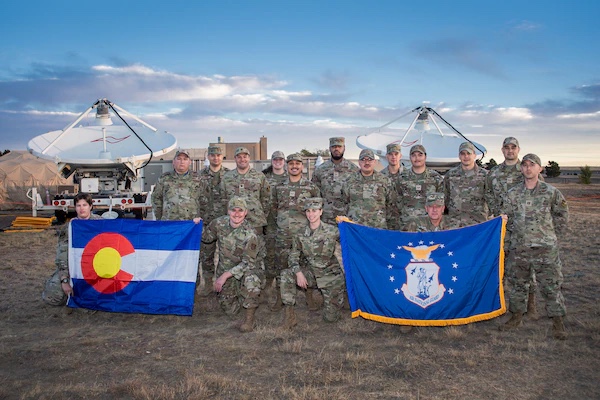
SCHRIEVER SPACE FORCE BASE, Colo. — The Colorado Air National Guard’s 138th Space Control Squadron, in conjunction with the National Space Test and Training Complex, conducted a training event named “Neptune Falcon,” which took place at Schriever Space Force Base, Colorado Springs, Colorado, to test new capabilities for meeting wartime objectives in the space domain. 

The exercise, held over 10 days in October 2022 at a newly created forward operating base by Airmen of the 138th, simulated real-world expeditionary operations and prepared them for upcoming deployments. 
 
“This is a Secretary of Defense level joint interoperability exercise that includes aircraft from Air Combat Command, space participants from the 138th Space Control Squadron, Colorado Air National Guard, and the 25th Space Range Squadron, as well as a host of other participants,” U.S. Air Force Lt. Col. Andy Gold, commander,138th SPCS, said. 
 
There have been many significant milestones that the 138th SPCS has led along the way, according to Gold. 
 
“This is the first time a U.S. Air Force or Air National Guard weapons system has ever connected to the Range Closed Loop Environment,” Maj. Matthew Thampy, assistant director of operations, 25th Space Range Squadron, said. “The RCLE provides a highly realistic electronic warfare system to train and test our systems.” 
 
This is also the first time the RCLE has been requested by a combatant command to support a joint interoperability exercise, such as Neptune Falcon. Additionally, this marks the first Total Force event (integration of Active Duty and Reserve forces) in which the combatant command and Air National Guard unit employed the RCLE, paving the way for future support for the broader Department of Defense need of realistic, dynamic environments to support the warfighter. 
 
“During this exercise, we are training to deal with crew dynamics, tactics, techniques, and procedures, as well as getting hands-on system time,”  U.S. Air Force Airman 1st Class Lindsey Sequoia, 138th SPCS space control operator, and Neptune Falcon participant, said. “Getting that practice on how to respond in a real-world scenario is invaluable to me.” 
 
Neptune Falcon also signifies a key Total Force Integration partnership for future training and test events involving the National Guard Bureau, Space Operations Command, and Space Training and Readiness Command. 
 
“Events like this also meet key U.S. Air Force and U.S. Space Force directives for highly realistic training events/scenarios in preparing Guardians, Airmen for war,” Thampy said. 
 
The 138th SPCS stood up in May 2019 and has rapidly improved the training environment to create the most realistic wartime scenarios possible, preparing space professionals for future wartime missions. Forward Operating Base Schriever is the latest iteration of technological advances in training for the members, which creates a superior training environment never before experienced by Air National Guard or Active Duty space warriors.

By Mr. John Rohrer, 140th Wing Public Affairs

SCUBAPRO Sunday – The Palawan Massacre

Sunday, December 11th, 2022

The Palawan massacre occurred on 14 December 1944, during World War II, near the city of Puerto Princesa in the Philippine province of Palawan. The Japanese Imperial Army massacred 139 of 150 American POWs. The Palawan compound was named Camp 10-A by the japanese, and the prisoners were quartered in several unused Filipino constabulary buildings. Food was almost nonexistent; the prisoners received a daily meal of wormy Cambodian rice and a canteen cup of soup made from camote vines boiled in water (camotes are a Philippine variant of sweet potatoes). Prisoners who could not work had their rations cut by 30%.

The Japanese unit in charge of the prisoners and the airfield at Palawan was the 131st Airfield Battalion, it was command of Captain Nagayoshi Kojima, whom the Americans called the Weasel. Lieutenant Sho Yoshiwara commanded the garrison company, and Lieutenant Ryoji Ozawa was in charge of supply. Ozawa’s unit had arrived from Formosa in 1942 and had previously been in Manchuria. There was also a Military police and intelligence unit, called the kempeitai at Palawan, they were feared by anyone who fell into their hands because of their brutal tactics.
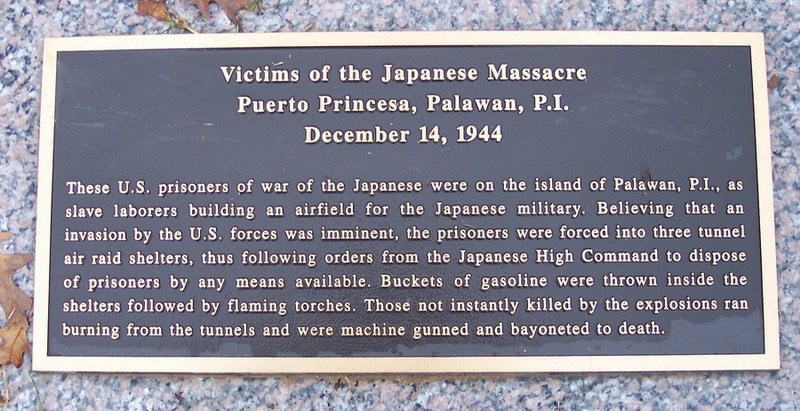
In September 1944, 159 of the American POWs at Palawan were returned to Manila. The Japanese estimated that the remaining 150 men could complete the arduous labor on the airfield, hauling and crushing coral gravel by hand and pouring concrete seven days a week. The men also repaired trucks and performed a variety of maintenance tasks in addition to logging and other heavy labor

An attack by a single American Consolidated B-24 Liberator bomber on 19 October 1944, sank two enemy ships and damaged several planes at Palawan. More Liberators returned on 28 October and destroyed 60 enemy aircraft on the ground. While American morale in the camp soared, the treatment of the prisoners by the Japanese grew worse, and their rations were cut. After initially refusing the prisoners’ request, the Japanese reluctantly allowed the Americans to paint American Prisoner of War Camp on the roof of their barracks. This gave the prisoners some measure of protection from American air attacks. The Japanese then stowed their supplies under the POW barracks.

On 14 December, Japanese aircraft reported the presence of an American convoy, which was headed for Mindoro, but which the Japanese thought was destined for Palawan. All prisoner work details were recalled to the camp at noon. Two American Lockheed P-38 Lightning fighter aircraft were sighted, and the POWs were ordered into the air-raid shelters. After a short time, the prisoners re-emerged from their shelters, but Japanese 1st Lt. Yoshikazu Sato, whom the prisoners called the Buzzard, ordered them to stay in the area. A second alarm at 2 p.m. sent the prisoners back into the shelters, where they remained, closely guarded.

Suddenly, in a deliberate and planned move, 50 to 60 Japanese soldiers under Sato’s leadership doused the wooden shelters with buckets of gasoline and set them afire with flaming torches, followed by hand grenades. The screams of the trapped and doomed prisoners mingled with the cheers of the Japanese soldiers and the laughter of their officer, Sato. As men engulfed in flames broke out of their fiery deathtraps, the Japanese guards machine-gunned, bayoneted and clubbed them to death. Most of the Americans never made it out of the trenches and the compound before they were barbarously murdered. Still, several closed with their tormentors in hand-to-hand combat and succeeded in killing a few of the Japanese attackers.
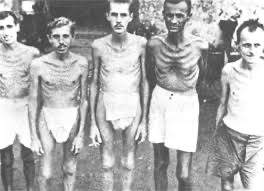
Marine survivor Corporal Rufus Smith described escaping from his shelter as coming up a ladder into Hell. The four American officers in the camp, Lt. Cmdr. Henry Carlisle Knight (U.S. Navy Dental Corps), Captain Fred Brunie, Lieutenant Carl Mango (U.S. Army Medical Corps) and Warrant Officer Glen C. Turner, had their dugout, which the Japanese also doused with gasoline and torched. Mango, his clothes on fire, ran toward the Japanese and pleaded with them to use some sense but was machine-gunned to death.

About 30 to 40 Americans escaped from the massacre area, either through the double-woven, barbed-wire fence or under it, where some secret escape routes had been concealed for use in an emergency. They fell and/ or jumped down the cliff above the beach area, seeking hiding places among the rocks and foliage. Marine Sergeant Douglas Bogue recalled: Maybe 30 or 40 were successful in getting through the fence down to the water’s edge. Of these, several attempted to swim across Puerto Princesa’s bay immediately but were shot in the water. I took refuge in a small crack among the rocks, where I remained, all the time hearing the butchery going on above. They even resorted to using dynamite in forcing some of the men from their shelters. I knew [that] as soon as it was over up above, they would be down probing among the rocks, spotting us and shooting us. The stench of burning flesh was strong. Shortly after this, they were moving in groups among the rocks dragging the Americans out and murdering them as they found them. By the grace of God, I was overlooked.

Eugene Nielsen of the 59th Coast Artillery observed, from his hiding place on the beach, a group of Americans trapped at the base of the cliff. He saw them run-up to the Japs and ask to be shot in the head. The Japs would laugh and shoot or bayonet them in the stomach. When the men cried out for another bullet to end their misery, the Japanese continued to make merry of it all and left them there to suffer. Twelve men were killed in this fashion. Nielson hid for three hours. As the Japanese were kicking American corpses into a hole, Nielson’s partially hidden body was uncovered by an enemy soldier, who yelled to his companions that he had found another dead American. Just then, the Japanese soldiers heard the dinner call and abandoned their murderous pursuit in favor of hot food. Later, as enemy soldiers began to close in on his hiding place, Nielson dived into the bay and swam underwater for some distance. When he surfaced, approximately 20 Japanese were shooting at him. He was hit in the leg, and bullets grazed his head and ribs. Even though he was pushed out to sea by the current, Nielson finally managed to reach the southern shore of the bay.

He was one of 11 prisoners of war who escaped the December 1944 massacre on Palawan Island in the Phillippines, where around 140 soldiers died when the Japanese put them into trenches, dumped gasoline on them and set them on fire. He was later a key witness in the War Crime Trials of 1945.
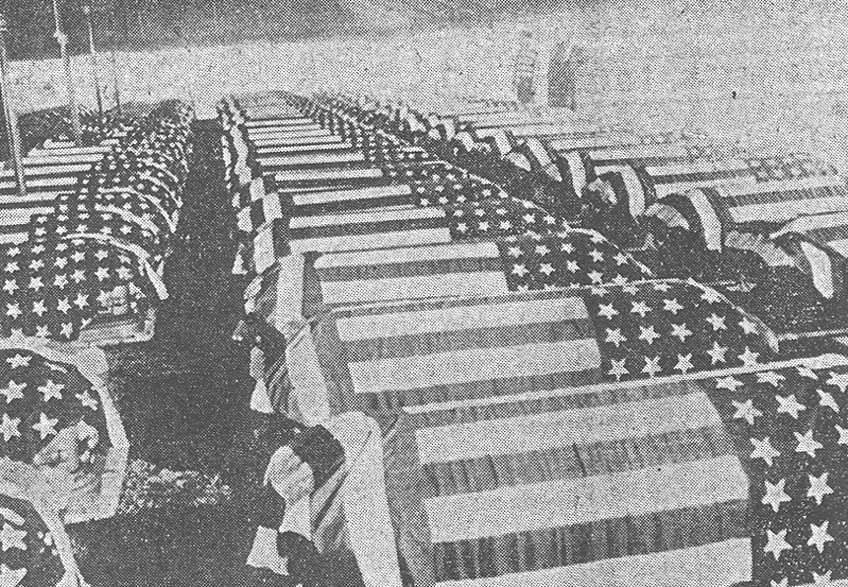
This biography tells the story of Glenn (“Mac”) McDole, one of eleven young men who escaped and the last man out of Palawan Prison Camp 10A. Beginning on 8 December 1941, at the U.S. Navy Yard barracks at Cavite, the story of this young Iowa Marine continues through the fighting on Corregidor, the capture and imprisonment by the Japanese Imperial Army in May 1942, Mac’s entry into the Palawan prison camp in the Philippines on 12 August 1942, the terrible conditions he and his comrades endured in the camps, and the terrible day when 139 young soldiers were slaughtered. The work details the escapes of the few survivors as they dug into refuse piles, hid in coral caves, and slogged through swamp and jungle to get to supportive Filipinos. It also contains an account and verdicts of the war crimes trials of the Japanese guards, follow-ups on the various places and people referred to in the text, with descriptions of their present situations, and a roster of the names and hometowns of the victims of the Palawan massacre.

www.humanitiestexas.org/news/articles/interview-rufus-w-smith-world-war-ii-pow

Combat Medic is Army’s Best Shooter

Saturday, December 10th, 2022

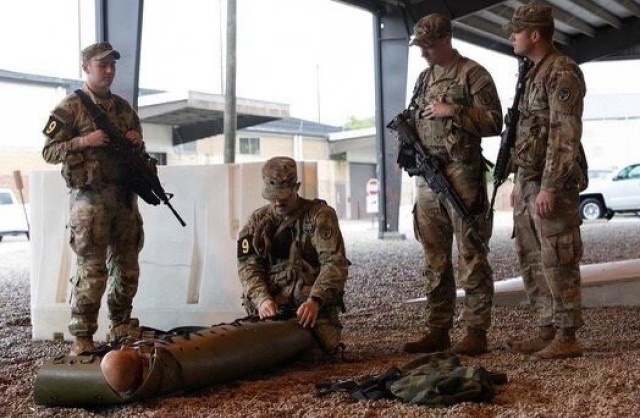
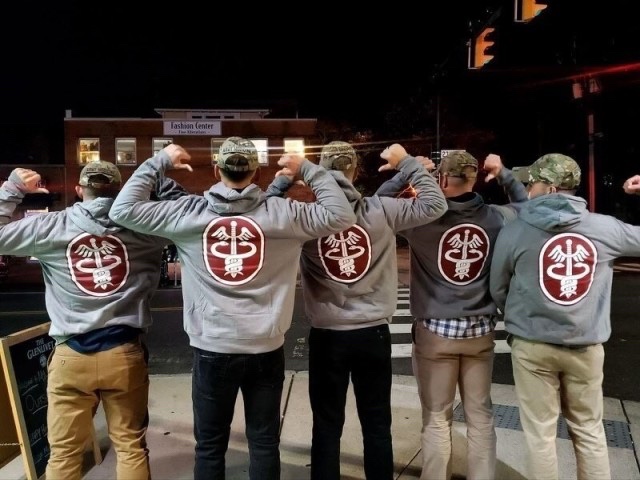
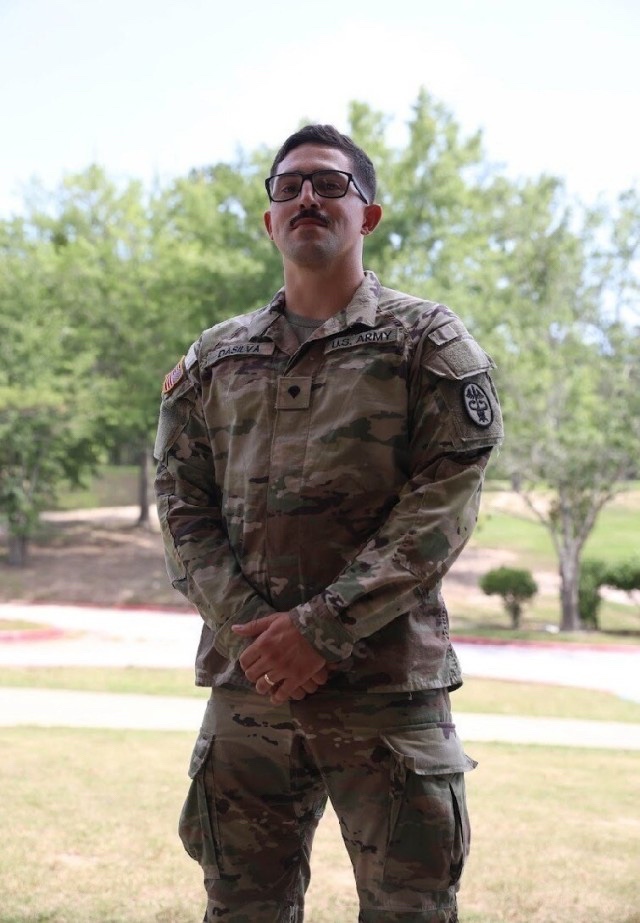
FALLS CHURCH, Va. — An Army Medicine Soldier was named the U.S. Army’s Best Shooter for 2022. Spc. Paulo DaSilva, Jr., a 68W combat medic excelled in the Army’s recent Best Squad Competition to receive the honor. Da Silva is assigned to the Medical Readiness Command West’s Reynolds Army Health Clinic at Fort Sill, Oklahoma.

The Army’s Inaugural Best Squad Competition, replacing the Best Warrior Competition, was held at Fort Bragg, North Carolina, and Washington, D.C. from Sept. 29-Oct. 7. The Army’s Soldier and NCO of the Year were also named. The NCO of the Year was also an Army Medicine Soldier — Sgt. Garrett Paulson.

DaSilva said that the Best Squad firing range was the most difficult firing range he’d ever seen.

“It was at an upward angle. There was lots of greenery that made it hard to see the targets because they blend into the surroundings.” It was also an overcast day, he said.

“I was confident in my shots. Although I excelled against my peers in the train up, I didn’t expect to win. I was pretty stoked to learn I’d won against such high-caliber competitors as the Special Forces and the Infantry,” he said.

DaSilva shared that all of the Army Medicine squad were highly motivated and went into the competition to win and worked hard in their training to do better.

“It really started within for all of us. We all had a drive. We spent our training time focusing on the areas in which we needed more help. I focused on shooting movement and land navigation. Shooting the M4 clicked with me and became an area I excelled in. We had good training and resources. I was in awe of the caliber of people who were training us,” he said.

DaSilva has only been in the Army for two years and is currently doing his first permanent party assignment. He ended up in the competition because one of his leaders saw his potential as a good competitor. DaSilva said he was “volun-told” to compete. The training leading up to the competition was rigorous and included early morning physical training, high-intensity workouts, weightlifting, ruck marching, obstacle courses and land navigation.

“We showed up as Army Medicine Soldiers,” he said. “Everything got thrown at us, not just medical. We had a lot of determination to show that MEDCOM is not to be taken lightly in this competition.”

Before joining the Army, DaSilva had been a painter, a maintenance man, a casino supervisor, a CNC machine operator and even did body piercings. He said he chose an Army medical career because of his religious background.

“I didn’t want to be striking anybody,” he said. “I didn’t want to be Infantry. Being a [68] Whiskey helped me save some Soldiers instead of taking people out. I wanted to help some Soldiers and become one,” said DaSilva.

The 30-year-old Californian has been married for two years, and he and his wife are expecting their first child in the coming weeks.

DaSilva said if he had a choice of future assignments, he would love to go to Joint Base Lewis-McChord in Washington State or to the 25th Infantry Division in Hawaii.

Story and photo by Stephanie Abdullah

Additional photo by PFC Hans Williams

Arc’teryx LEAF Sales and Distribution

Friday, December 9th, 2022

We received this statement from Arc’teryx regarding the LEAF program.

Since its inception 20 years ago, Arc’teryx LEAF has built best-in-class technical apparel and equipment solutions for specialized Military, Government, and Law Enforcement (MIL-GOV-LE) end-users in select NATO and NATO-allied countries.

As a result, Arc’teryx LEAF’s products have specific technical features required for specialized military, government, and law enforcement uses and are only produced in limited quantities.

To ensure that Arc’teryx LEAF products continue to be available for these core users in the volumes and the time frames needed, Arc’teryx LEAF has established a new distribution system. As of January 21, 2023, Arc’teryx LEAF will select resellers on the basis of their ability to service government agency contracts as well as their ability to sell directly or indirectly to government purchasers, among other criteria.

With this refined strategic approach, we remain focused on delivering our products and services to our intended market. Doing so enables Arc’teryx LEAF to respond swiftly to MIL-GOV-LE demand by ensuring available supply is reserved for those who safeguard public safety and national security.

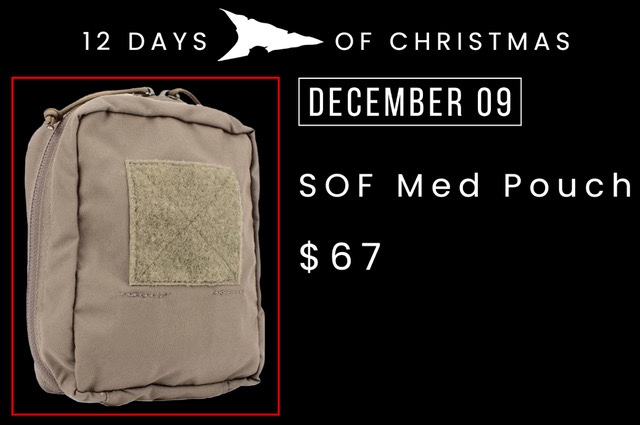
FirstSpear Friday Focus: 12 Days of Christmas – SOF Med Pouch

Friday, December 9th, 2022

The Special Operations Forces (SOF) Medical Pouch securely holds and organizes individual first aid items. A half-moon zipper provides rapid access and closure. This pouch attaches to your platform using either FirstSpear 6/12 or 6/9. A loop faced fabric square on the exterior allows you to mount FirstSpear Cell Tags.

This is a Non-Stocking Non-Standard pouch. These items have been designed by FirstSpear at the request of professional users to meet a unique mission set. Limited quantities and colors available.

Click HERE to enter. Visit FirstSpear to find America’s Best tactical gear this holiday season.

11th ACR’s Mastery of Maneuver Warfare Informs Future Prototype Development

Friday, December 9th, 2022

FORT IRWIN, Calif. — The 11th Armored Cavalry Regiment frequently functions as an opposing force, providing a realistic training environment for service members participating in exercises at Fort Irwin’s expansive National Training Center.

Last month, however, select Soldiers from the regiment had the opportunity to serve in a different and very unique role — that of a future warfighter.

Equipped with prototype wearables, next-generation drones and specialized knowledge of maneuver warfare, the Soldiers lent their time and insights to support Project Convergence 22, an experiment designed by the Army to illuminate the benefits and challenges new technologies could bring to tomorrow’s battlefields.

“It’s cool that we’re shaping the future of the Army,” said Sgt. Austin Gazaway.

Gazaway saw value in conducting future force experimentation alongside major allies — an effort he viewed as helping to “open up transparency” about emerging capabilities and warfighting systems.

Sgt. Calvin Robinson also enjoyed taking part in operational scenarios created specifically to field-test new technologies.

“I feel like the PC22 event went really well,” he said. “It was a good opportunity to see what the Army is possibly deciding to give future Soldiers.”

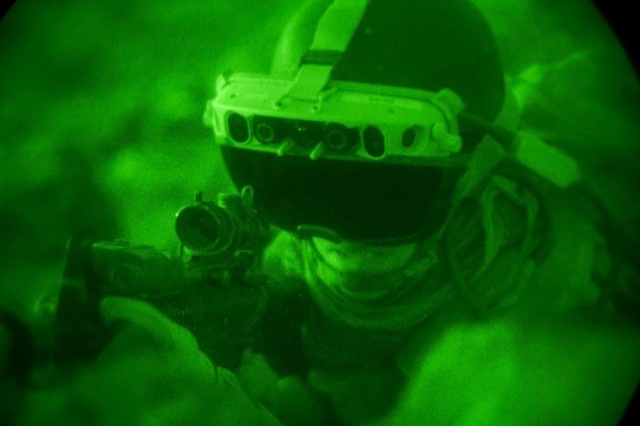
Gazaway, Robinson and other 11th ACR Soldiers, many of whom had not previously participated in dedicated Army innovation efforts, spent seven days in early November assessing the effectiveness of equipment such as the Enhanced Night Vision Goggle – Binocular, or ENVG-B; the Integrated Visual Augmentation System, or IVAS; and the ExoBoot.

“Going from old to new, to high-powered technology, it’s pretty nice,” said Spc. Ian Campbell.

Campbell felt the ENVG-B’s dual scopes performed better than a more traditional single scope night vision goggle.

“I thought it was really helpful to keep track of my team and to see where my guys are,” he said. “I think overall it improved our team’s lethality.”

For many of the Soldiers, using the still-in-development technology took some getting used to. Several experiment participants noted that the IVAS and ExoBoot still had “some kinks” to work through, but that they looked forward to seeing how the Army would incorporate their feedback into future iterations of the apparatuses.

“The fact that they gave us a chance to actually use some of the products is a really good thing, I feel like,” Robinson said.

Robinson added that the 11th ACR’s familiarity with the terrain at the National Training Center, which encompasses more than 1,000 square miles, helped ensure the technology received a rigorous and authentic evaluation.

Following completion of the experiment, the overall consensus among 11th ACR Soldiers interviewed was that the Army’s new approaches to enhancing Soldier Lethality were promising.

“I feel like it will make a lot of stuff easier,” Gazaway said.

He additionally reflected on how Soldiers in the past likely thought certain equipment that the Army uses today was “weird” or awkward when first introduced, but that adjustments to new operating tools and methods are a natural and necessary aspect of change.

“The future just keeps moving forward.”

Campbell agreed.

“At some point, it will just become the new normal.”

By Maureena Thompson, Army Futures Command