Troop Performance

Archive for the ‘Guest Post’ Category

Joint Effort Underway To Power Rocket Sleds Into The Future

Thursday, April 6th, 2023

HOLLOMAN AIR FORCE BASE, N.M. (AFNS) —  

Rocket sled testing is critical to bridging the gap between the laboratory and full-scale flight tests for weapon systems under development.

Keeping those sleds moving is the focus of a joint effort within the Department of Defense, which operates three sled track organizations, one each at China Lake, California; Eglin Air Force Base, Florida; and Holloman Air Force Base. Two other non-DoD tracks, Sandia National Laboratories in New Mexico and a track in Utah, round out what are considered the Big 5 sled tracks.

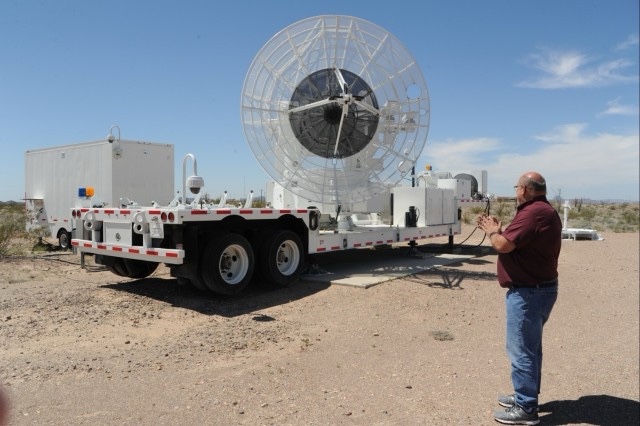
Holloman High Speed Test Track, a facility operated by the 846th Test Squadron, 704th Test Group, Arnold Engineering Development Complex, can achieve the fastest speeds among the five tracks and is used for a variety of tests, including munitions, crew escape systems, guidance systems, aerodynamics and environmental effects.

“At 50,000-plus feet, Holloman High-Speed Test Track is the longest and most versatile sled track, to our understanding, in the world,” said Bryan Sinkovec, Joint Economical Sled Track Rocket, or JESTR, project director and a test capabilities integration engineer with the Capabilities Integration Branch Operating Location – Holloman, Plans and Programs Division, AEDC.

Since sled tracks began operating, they have primarily used solid rocket motors and they have been the exclusive source of propulsion for more than three decades, according to Sinkovec.

The rocket motors currently in use are mainly sourced from surplus motors repurposed from Cold War assets, most of which were made in the 1950s, 1960s and 1970s. The motors work for sled track testing because of their short burn times, enabling them to achieve fast acceleration over the relatively short track lengths. Not all the motors available, though, are compatible with sled track testing.

While the surplus motors are essentially free, they have their limits in both quantity and capability.

The JESTR project aims power sled testing into the future by developing new sled track motors purpose-built for high performance, short burn times and structurally stable under sled track conditions.

The Air Force is leading the joint effort by the sled tracks and other DoD organizations, including the Navy. Desiree Craig, deputy project director for JESTR and flight chief for program management in the 704th Test Support Squadron, led the effort to leverage a Navy run other transaction authority.

“An OTA allows us to collaborate with the contractors to better define the technical portions of the statement of work to get the best product in the end,” Craig said. “Every portion of this project is team based.”

Since surplus motors were never intended for sled track usage, sleds and testing had to be designed around the motors.

“When describing our requirements, we were able to design the motor to the sled track testing instead of the other way around,” Sinkovec said. “That was new and exciting. We’ve always had to design our tests around the motors.”

The project is developing multiple sled track motors that vary in size and capability – small, medium, large and high performance.

While developing new rocket motors is the central focus, as the effort got underway team members realized they couldn’t develop the motors in a vacuum.

“The program was initially focused on only developing four rocket motors for production, but to execute an actual test it requires motors and sleds,” Craig said. “One of the problems we were running into was being able to utilize some of the legacy sleds here at the Holloman High Speed Test Track and fitting the new motors to all those various sleds. Therefore, we had to change how we looked at this program, from just motors to delivering the total capability.”

Realizing the effort was bigger than just designing new motors, the team then began to develop scenarios or missions the motors would be used in as proof that they work in the unique environment. Three scenarios – hypersonic impact, hypersonic rain erosion and supersonic munitions – will be tested at HHSTT, with a fourth – transonic impact – slated to be tested at China Lake.

The effort now includes developing new sled types, one of which is being developed in-house by the 846th Test Squadron.

“This effort is exciting because we’ve always had this lingering over our heads and now, we think we have a long-term solution,” Sinkovec said.

The DoD effort will benefit all the sled tracks by leading to the development of the production means and creating a supply of sled track motors.

Story by Jill Pickett, Arnold Engineering Development Complex Public Affairs

Photos by Deidre Moon, USAF

3rd Infantry Division Soldiers Win Dragon’s Lair 8

Tuesday, April 4th, 2023

TAMPA, Fla. — The eighth iteration of Dragon’s Lair was co-hosted by the U.S. Special Operations Command and the 18th Airborne Corps, which brought the finalists to the University of South Florida’s Research and Innovation Park in Tampa on Mar. 29, 2023.

During the competition, seven innovations that were developed by individuals and teams were presented in front of a panel of expert judges from government, industry, academia and investors. Each innovator had seven minutes to present the concept, scope and application of their ideas, which was followed by 12 minutes of questions generated by the judging panel.

After careful deliberation, the judges selected the Mold Conditions Awareness Tool, or MCAT, that was presented by U.S. Army 1st Lt. Chris Aliperti and Pvt. Salem Ezz from the 3rd Infantry Division, as the top innovation of Dragon’s Lair 8.

The MCAT is a specialized 3D-printed device that uses sensors to detect temperature and humidity levels within barracks rooms to identify early signs of mold. The data is ingested in real-time to an application through Wi-Fi that enhances military leaders and barracks managers’ visualization to assess the conditions and remediate through taking action.

“Dragon’s Lair was a great opportunity to present our ideas to leaders across the Department of Defense and the civilian sector,” Aliperti said. “It is not every day you get to present your ideas on improving the Army to a three and four-star general, so it was a great honor to be selected.”

Aliperti and Ezz expected the first problem they would address would focus on national security. “We did not expect to find the greatest threat to our Soldiers right now was within their own living areas,” said Aliperti.

The 18th Airborne Corps was fortunate to have Ms. Kathi Vidal, U.S. Undersecretary of Commerce for Intellectual Property and Director of the U.S. Patent and Trade Office, as a judge. Her experience and resources will help the innovator service members find a pathway to patent their intellectual property.

“I thought all the ideas today were so phenomenal,” said Vidal. “We saw these innovators really put their boots on the ground to see their projects through and create concrete solutions for real problems the Army currently faces.”

Ezz spent months developing the MCAT, and now it is being beta tested in barracks on Fort Stewart.

“It feels great to be recognized for our technical skills in software engineering and product management,” said Ezz. “This tool has been months in the making and it feels great that the hard work has been recognized by the Department of Defense.”

U.S. Army Gen. Bryan Fenton, commander of USSOCOM, presented Certificates of Achievement to the seven competing teams, thanking them all for their participation in Dragon’s Lair.

Canadian Army Brigadier General Pierre “Pete” Huet, the Assistant Commanding General of Operations, 18th Airborne Corps, directs modernization and innovation initiatives for the Corps.

“This was the best episode of Dragon’s Lair yet,” said Huet. “These innovators had their voices heard by industry and military leaders, and their concepts will make a real impact across the U.S. Department of Defense.”

With their selection, Aliperti and Ezz each were presented with the Meritorious Service Medal, they will be allowed to attend a military school of choice, and they will receive the support and resources from U.S. Special Operations Command and the 18th Airborne Corps to propel their idea’s implementation across the U.S. Department of Defense.

Story by SGT Jameson Harris

Photos by SGT Maxine Baen

Designing a New Vertical Capability

Monday, April 3rd, 2023

CRO Medical (Missoula, MT) is excited to announce the Hoist Harness. An ALL-IN-ONE riggers belt, gun belt, and assault climbing harness. Now available for select government buyers. Public release is scheduled for Summer 2023. For inquiries email support@cromedical.com

Almost everyone needs a vertical capability at some point in their career. The most common load-bearing feature is a hard-point tether attachment from a gun belt. This is fine for tying into helos or elevated positions but generally not suitable for rappelling, belaying, hoisting, or climbing, something you inevitably find yourself doing on occasion, regardless of the job.

We surveyed the market about a year ago to see what commercial options were available for hard point tethers in gun belts and climbing harnesses for tactical and civilian use. It became clear that there was a significant gap in capability for an all-in-one riggers belt, gun belt, and climbing harness.

We embarked on a year-long process researching and building countless prototypes, testing, and validating the design. This is what we discovered:

For flight missions that focus on hoisting, the Misty Mountain ISH harness or Edelrid tactical harness were common choices when surveying the community. The primary features that were most desirable for flight missions included:

1 Comfortable leg loops must be worn all day and hoisted for extended periods

2 Working loop to secure the carabiner for ease of clipping in

3 Load-rated friction buckle, commonly found in climbing harnesses, due to some flight crews not allowing cobra buckles

4 Lightweight and easy to integrate into existing gun belt setups

The ground assault mission has several different requirements. We had to strike a balance between a harness always worn for climbing or flight operations and an “in extremis” vertical capability when lowering, hauling, or hoisting for HAF, climbing, and VBSS assault missions.

For the ground force, the most desired features were the following:

1 Gun belt suitable for all existing tools and solid shooting platform

2 Rated climbing harness integration

3 Compact leg loops for “in extremis” use

4 Not dropping the gun belt to don the harness

Design

Eventually during the process we had a “light bulb” moment and decided that the inner belt should be the load-bearing component of the system. The inner belt would also replace the riggers belt and be worn all the time. The outer belt would provide a stable shooting platform, and the leg loops would need to detach to prevent dropping the belt when stepping into the harness. Never a good idea to drop your pistol, especially in a hasty hoist situation.

Here’s the full breakdown:

Inner Belt

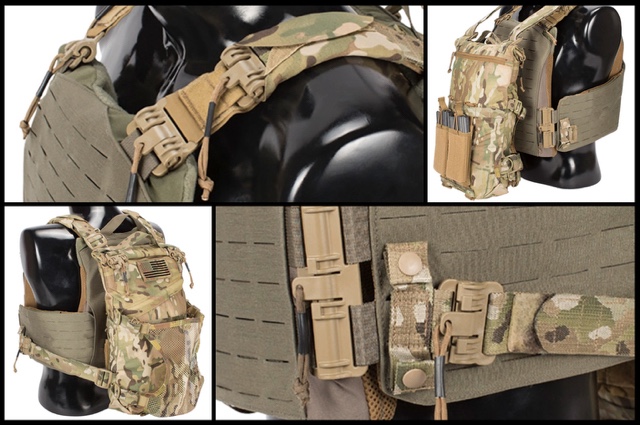
The Inner Belt replaces the riggers belt for everyday wear with combat pants, a key design feature of this product. The inner belt has a load-rated friction buckle and a belay loop/ working loop fixed, so no matter what, you always have a load-bearing capability whether you are using your gun belt or not. This also makes for an ultra-lightweight climbing harness. Feedback from the pararescue crowd confirmed working on the tower all day without the outer gun belt, but still having the harness available was a nice feature.

Belay Loop/ Working Loop

The load-bearing aspect of the product required us to certify both EN 12277 and EN 358 safety standards. This is the Type C fall arrest standard, including the belay loop being rated to 15 kN.

We had to lean into our material selection to meet the 15 kN safety rating while still being small and low profile. We settled on Sterling climbing webbing, which is both load rated and has a reliable supply chain.

Engineering an anodized aluminum friction buckle

Creating custom hardware for this project proved to be more complicated than we initially anticipated. Luckily, we have engineers on staff at CRO. We ended up with a custom friction buckle that works well with our webbing selection and has excellent retention while still allowing the user to tighten and loosen easily, which is required to route the inner belt through your belt loops.

Outer Belt

The Outer Belt needed to be familiar and functional for mounting a pistol, mags, dump pouch, tools, etc., but also needed to integrate with the inner belt. It’s bad practice to load metal on top of metal, so we offset the inner belt friction buckle to the side in the appendix area and centered the working loop/ belay loop. When loading the outer belt, the Cobra buckle routes through the belay loop, and both are centered. A perfect setup and the belay loop has a retention strap when not used. This makes a very clean, stable shooting platform with a ton of working space to mount tools.

Designing the Leg Loops

Retention was a key design metric during the process. The problem with most leg loops is they don’t stay in place when you put them on. They tend to sag and fall down the back of your legs. We found the ideal balance of retention, functionality, and comfort through trial and error.

These turned out really well, and they pack down nicely. They’re not too bulky like the ISH harness leg loops (although not quite as streamlined as the Arc’teryx Leaf leg loops), but they provide a REAL hoisting capability and are actually comfortable to use. Removing the tightening buckle hardware also allowed us to slim it down.

The result of this project is a riggers belt, gun belt, and assault climbing harness, all-in-one. So far, the feedback has been tremendous, and we look forward to getting this out to anyone needing a gun belt and a vertical capability.

For quotes, contact support@cromedical.com 

www.cromedicalgear.com/products/hoist-harness

MSRP $280

Studies and Analysis Squadron Unveils One-Stop Website for Enlisted Promotion Study Materials

Monday, April 3rd, 2023

JOINT BASE SAN ANTONIO-RANDOLPH, Texas (AFNS) —

For many years, Airmen have had to search multiple websites and resources to find the necessary material for their enlisted promotion studies. This could be anything from learning what they need to study or finding audio files to help them prepare for the tests. However, all of this is now a thing of the past thanks to the Studies and Analysis Squadron at Air Education and Training Command.

Members of the SAS have worked hard during recent months to create one comprehensive website where Airmen can access all their enlisted promotion study materials in one place – The Air Force Enlisted Promotion Study Guides website.

The site hosts electronic versions of AF Handbook 1, including both publication files as well as audio files; study guides tailored specifically towards those testing for staff sergeant or technical sergeant; plus, the Enlisted Promotions References & Requirements Catalog, which provides additional information on everything related to promotions within individual career fields.

The new resource makes it easier for Airmen preparing for an upcoming promotion test – no more having to hunt down different pieces from various places. Now, Airmen can quickly locate everything they need on one convenient page, just a few clicks away – making studying much simpler.

“The science of adult learning tells us that this learning occurs differently across populations and individuals. So, it’s important that we provide a variety of options for Airmen to learn,” said Lt. Col. Marcus McNabb, SAS commander. “This is an important first step in that direction and provides an audio resource, in addition to the traditional written resource.”

“Coupled with the plan to transition the test administration to an electronic medium in 2024, this modernization of testing resources and administration aims to reduce the administrative burden of testing Airmen and allows them to focus on the important aspects regarding Air Force and job-specific knowledge,” he said. “Ultimately, these efforts will ensure the Air Force promotion system continues to evolve to ensure we continue to promote the highest performing Airmen and meet the demand for quality Airmen to assure our nation’s defense.”


Studies and Analysis Squadron, Air Education and Training Command

Cadet Sisters Compete at the US Army Small Arms Championships

Saturday, April 1st, 2023

Fort Benning, Georgia — This year’s U.S. Army Small Arms Championships was more than just a unique training event for two Texas A&M Reserve Officers’ Training Corps cadets, it was a family affair.

Cadets Hayle Mayer and Jesse Mayer, who are sisters, participated in the week-long, comprehensive, live-fire marksmanship training event that brings together more than 250 Soldiers from across the U.S. Army to the Maneuver Center of Excellence. The annual event, which is commonly called the All Army, is hosted by the U.S. Army Marksmanship Unit and opens up with All Army competitors receiving a variety of classes from the USAMU champions and experienced trainers.

After that, the Soldier competitors, who were a mix of servicemembers from active duty, Reserve, National Guard and ROTC, put the lessons to the test on the ranges by competing in 11 different courses of fire during the week. The variety of matches allowed the Soldiers to compete in both rifle and pistol matches, with and without combat gear, as well a four-stage multigun match.

As a senior, All Army 2023 was Jesse’s second year to compete and the cadet said each year has been extremely helpful in developing her Soldier skills.

“I think both times that I have come here, I have really grown as a marksman…just learning the basics, what I am capable of, watching improvement each year, and just learning how complex marksmanship is. It’s been really incredible each time.”

For her sophomore sister, Hayle, it was her first All Army experience. With limited prior marksmanship experience and spending all week with an array of Soldiers with a range of marksmanship knowledge, Hayle said she was trying to absorb all that she could.

“I am just learning basically everything you can about shooting.”

Though Hayle and Jesse may at be different levels of marksmanship knowledge, the sisters say that military life in general is nothing new to them. In fact, they were born into that life since both their parents were Marines, both grandfathers were Soldiers and a grandmother was an Airman.

That meant that military life was just always there. It’s what we saw and respected, Jesse explained.

“Everyone was so disciplined and so patriotic. There was just such a higher purpose to the military that I always saw, and I wanted to be part of that.”

So when it came time for college, joining an Army ROTC program was nothing out of the ordinary because both our parents instilled a strong sense of independence and strength in us, Jesse said.

“Our parents really made sure that we always knew that we were capable of anything that we wanted to do. So there was nothing stopping us, as long as we put our minds to it and put in the hard work.”

And that’s exactly why Hayle and Jesse were at All Army. As part of their ROTC’s Ranger Challenge Team, the cadets competed in the USAMU training event to gather experience and knowledge that they could later share with other cadets. That way, the A&M Team will be stronger and more knowledgeable before we go to the Sandhurst Military Skills Competition at West Point, Hayle explained.

“We all want each other to do the best that we can.”

Jesse reflected that same espirit de corps as well when asked about if her and her little sister were competitive with each other.

“We are very competitive with each other, but also very supportive I think — we balance each other out.”

Sharing knowledge with her teammates, and her little sister, is just a way to pave it forward and frankly, just how we were brought up, Jesse explained.

“Growing up, I watched it—the honor, the sacrifice, and what it meant to give back and serve other people, your Country and your family.”

With all that, Jesse is proud to say that she is contracted to commission in May of 2024 and looks forward to carrying on her family’s tradition of service.

“It means a lot to me to serve my Country, to push myself in any way that I can, and it is part of a family legacy—being in the military—and I just want to complete that and do that for my family.”

Though military service is a tradition in the family, Hayle says it’s not something she feels like she has to do as well. She just wants to do it too, and that’s the advice she’d give to any other young adult, or even a little sister.

“Hold yourself to your own standards, not the standards of other people. If you want to do something, then that’s just the fact and just do it.”

By LTC Michelle Lunato

S.O.Tech 2023 Medical Catalog

Friday, March 31st, 2023

S.O. Tech is proud to announce our new 2023 medical catalog. Featuring our latest designs and tactical innovations. This catalog is part of our company rebrand, you will still see the same flow of innovation designs and legendary durability that has made S.O. Tech a go-to for Special Operations units around the globe.

To view catalog please go here.


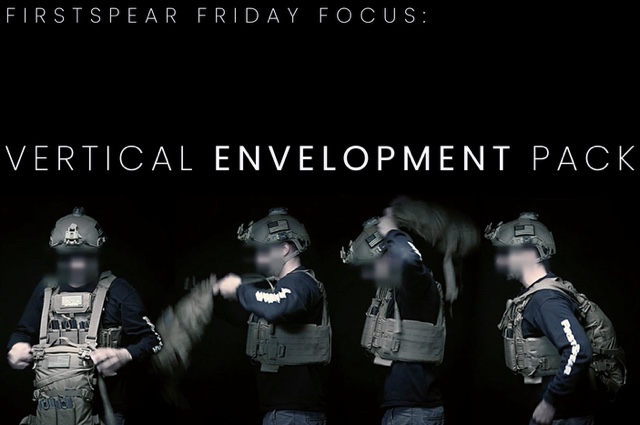
FirstSpear Friday Focus – Structured Pockets

Friday, March 31st, 2023

The new FirstSpear line of Structured Pockets are a redesign of our popular General Purpose (GP) Pockets. This new line includes the Medium and Large GP Pockets, Divided Stash Pocket v2 and introduces our new Long GP Pocket. These pockets are made with Squadron material and have many similarities to our new LaserFrame Pocket family which provide a durable, lightweight solution to gear management.


(Divided Stash v2 interior)


(Large GP interior)

New Structured Pockets come with interior dummy cord attachment tabs and two 12” shock cords with barrel locks for TQ attachment through the bottom of each pocket.

The Divided Stash v2 is designed for smaller items and accessories that need to be divided and organized into the three interior compartments. This pocket also features loop attachment for IFF / Cell Tag placement.

The new Long GP Pocket is 9” wide and features an exterior zippered pocket for additional storage. Elastic daisy chain on the interior provide organization and add to the versatility of this pocket.

The Structured Large GP Pocket and Medium GP Pocket both provide ample storage of gear and equipment. The build of these pockets allow them to retain shape and structure. They are incredibly durable and lightweight. These are next generation General Purpose pockets.

Visit FirstSpear to find America’s premier tactical gear and equipment.

1st Special Forces Group (Airborne) Tests New Prototype Glider

Friday, March 31st, 2023

YUMA PROVING GROUND, Ariz. – In February 2023, 1st Special Forces Group (Airborne) successfully tested a new unmanned aerial delivery platform, the GD-2000 glider (glider disposable 2000 lbs.). This glider is an alternative to the current means of supply delivery into diverse environments. Implementation of the glider will result in enhanced capabilities of the Special Forces detachments deployed through varied, and often restrictive, terrain.

Timely and accurate resupply is imperative to the success of combat operations.

This success does not only lie with the operators on the ground but also with utilizing emerging technology. The GD-2000 is a glider platform that Special Operation Forces innovators hope will revolutionize aerial delivery to Green Berets in the field.

“It’s an autonomous aircraft that carries 1,500 pounds of payload,” said Chip Yates, CEO of Yates Electrospace, and the creator of the glider.
“It flies for 15 minutes, flares and lands where you want it,” he continued.

Traditional supply delivery systems can be more cumbersome and more detectable by the enemy when compared with the glider. It was birthed out of a request from the U.S. Marine Corps as an alternative to the Joint Precision Air Drop System (JPADS). JPADS tend to be both larger in size and have limited ability to maneuver through the air, making them less accurate, especially over long distances or in high-wind conditions.

“What this glider does is give us a much greater [travel distance] and a much greater glide ratio into a target,” said a Special Forces detachment commander, whose team tested the glider.

The GD-2000 is a small aircraft designed to land at a precise location while being released from a greater distance than traditional supply drops. The glider can travel up to 40 miles once released and is completely disposable once on the ground, allowing it to be left in denied or contested territory without compromising the security of the Soldiers receiving the supplies or the technologies or techniques employed by the U.S. military.

“If we are able to get [the glider] up to 40,000 feet we’re looking at [travel distances] in excess of 25 to 30 miles. That’s a pretty unique capability and not matched by anything we currently have,” the commander said.

This would also allow for aerial delivery to remote islands that require a greater level of precision to reliably reach their destination. With some modifications, the designer of the glider claims it can also land and be recovered in a maritime environment, further enhancing resupply capabilities to the sort of small islands often found in the Indo-Pacific.

During the testing, the GD-2000 carried a 1,000-pound payload and was airdropped from a C-27J plane. During several drops, the glider landed within 30 meters of its intended target at Yuma Proving Grounds, Arizona. The hull of the aircraft was still intact and protected the cargo inside.

“[The glider] gives us the ability to drop this from a plane outside of controlled airspace into international air space and fly resupply in from an unmanned autonomous craft. It’s a huge enhancement to the mission” the commander said.

1st Special Forces Group (Airborne) is committed to innovating beyond the status quo. Today’s tests and experiments are done to ensure that tomorrow’s problems do not catch us off-guard. Enhancing our capabilities fosters an environment of competency within the unit and allows for our Soldiers to continue the mission of maintaining a free and open Indo-Pacific.


Story by SGT Thoman Johnson, 1st Special Forces Group (Airborne)