XC3 Weaponlight

Archive for the ‘Guest Post’ Category

Operation Hat Trick: Supporting American Service Members and Veterans

Wednesday, November 10th, 2021

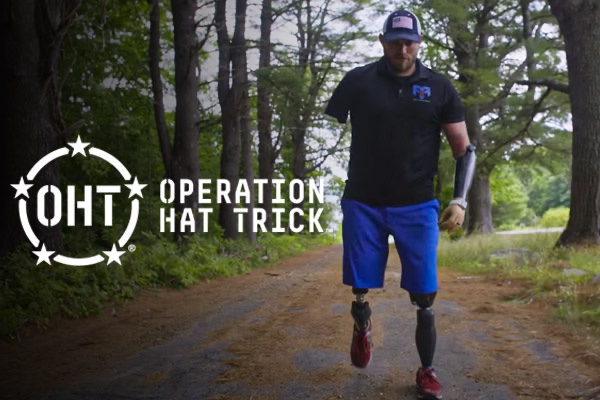
SIG SAUER is proud to partner with Operation Hat Trick, a non-profit organization that generates awareness and support for the recovery of wounded service members and veterans. Through the sale of branded merchandise and products, OHT donates proceeds to selected organizations that fulfill the OHT mission.

OHT is dedicated to American service members as they recover from the visible and invisible wounds of war by helping them move past the traumas of battle so they can focus on their lives and families at home.

Proceeds from the sales of OHT branded merchandise are donated to Operation Hat Trick to support its mission to assist American service members and veterans.

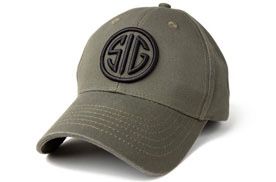
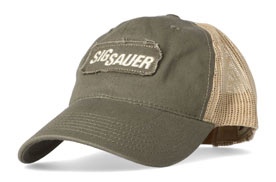
SIG OHT ODG Hat

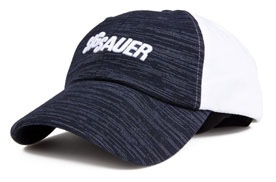
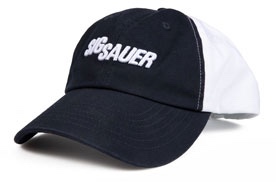
SIG OHT Blue and White Hat

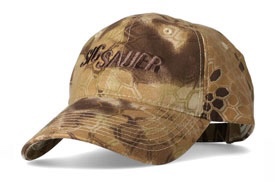
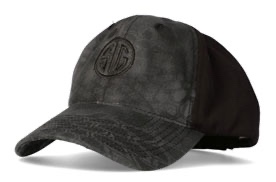
SIG OHT Kryptek Highlander Hat

SIG OHT ODG and Tan Hat

SIG OHT Blue + White Ball Cap

SIG OHT Kryptek Typhon Hat

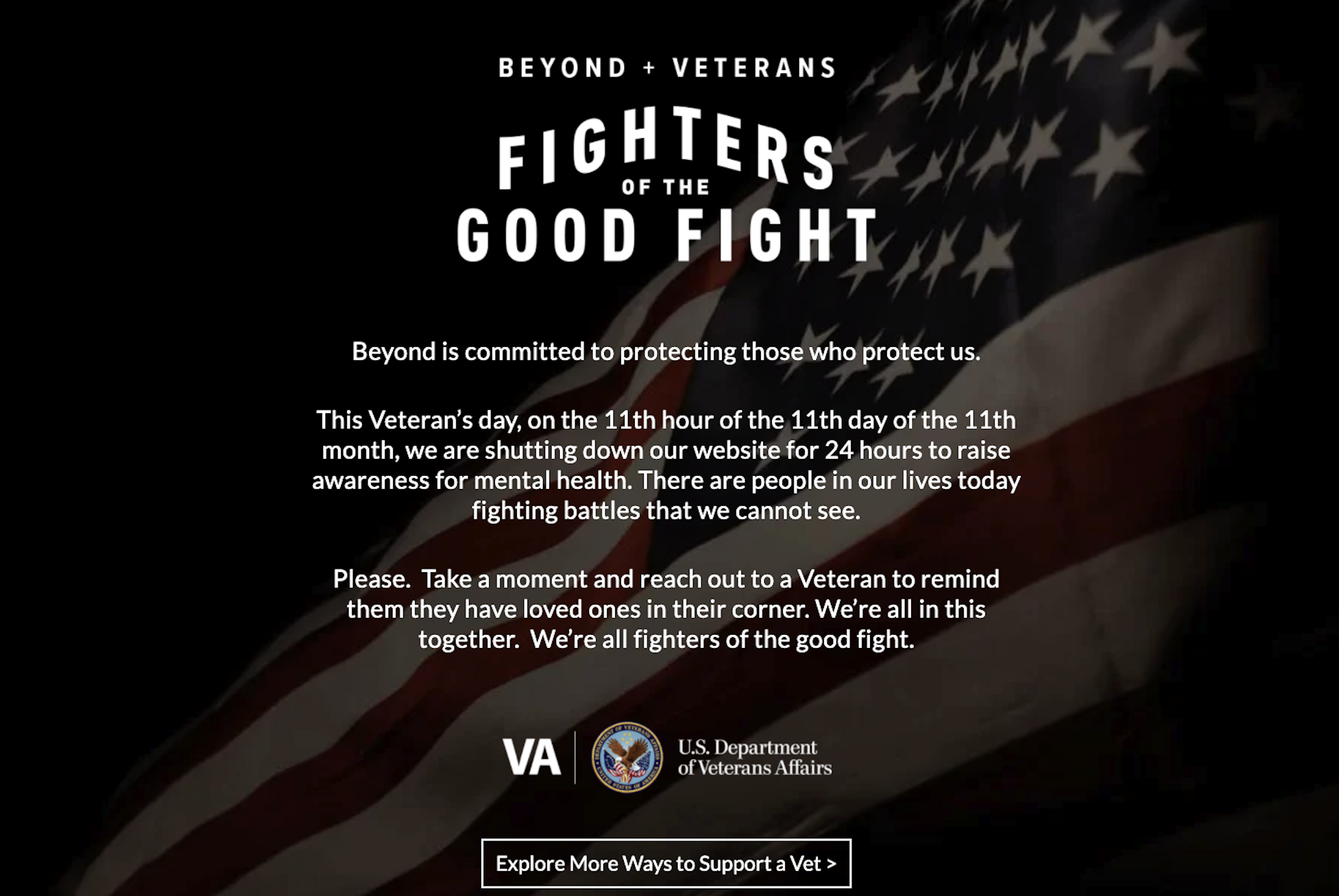
Beyond Is Committed To Protecting Those Who Protect Us

Wednesday, November 10th, 2021

This Veteran’s day, on the 11th hour of the 11th day of the 11th month, we are shutting down our website for 24 hours to raise awareness for mental health. There are people in our lives today fighting battles that we cannot see.

Please.  Take a moment and reach out to a Veteran to remind them they have loved ones in their corner. We’re all in this together.  We’re all fighters of the good fight.

Air Force Recruiting Releases Docuseries on BMT

Wednesday, November 10th, 2021

JOINT BASE SAN ANTONIO-LACKLAND, Texas (AFNS) —  

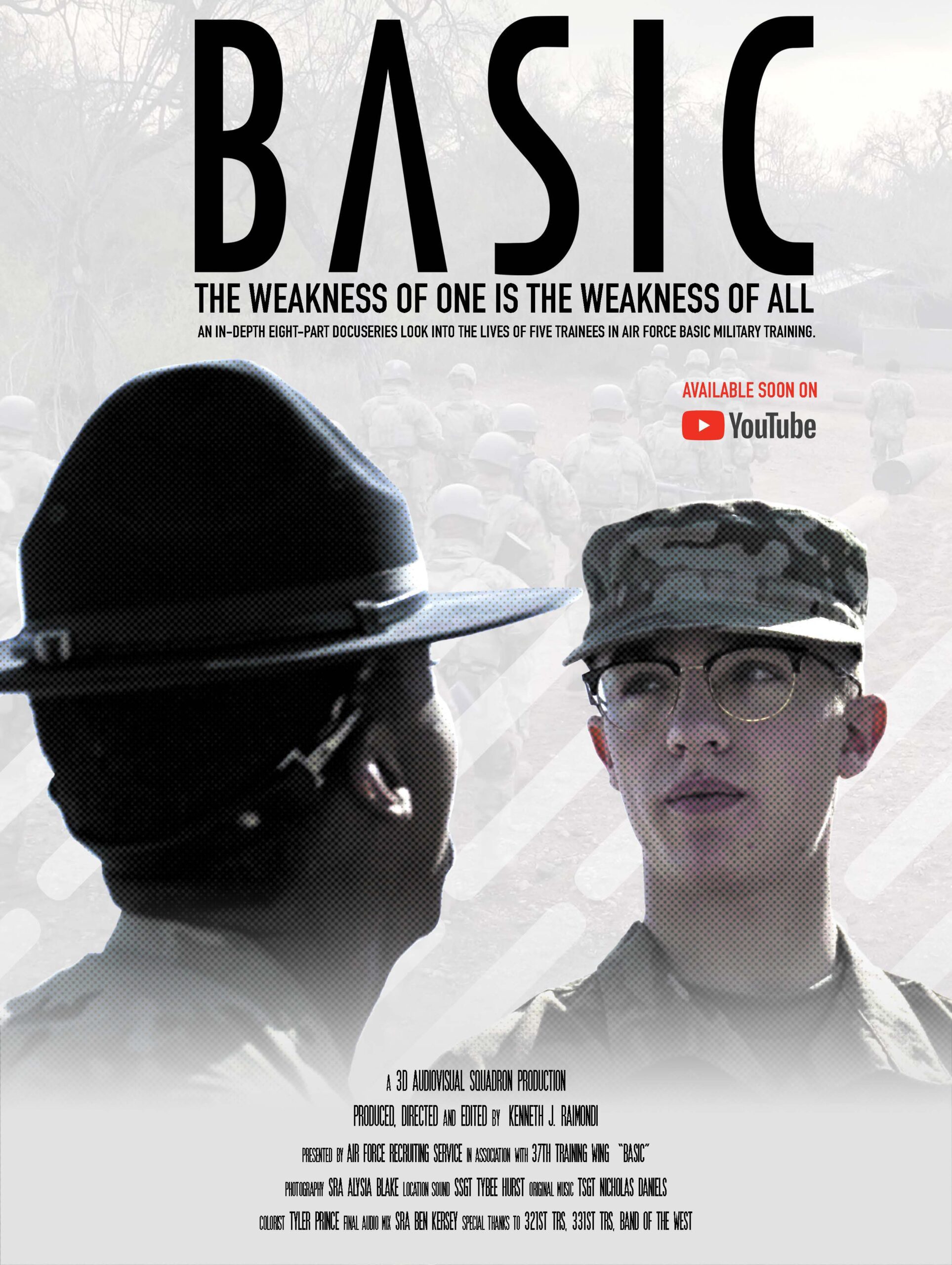
Anyone wondering what the process of joining the Air Force is like, leading up to and through the completion of Basic Military Training, should check out a new docuseries that follows five individuals as they transition from civilians to Airmen.

Titled “Basic,” the eight-part docuseries was released on the Air Force Recruiting official YouTube page Oct. 28.

For Air Force leaders, this is a unique opportunity to show recruits an in-depth look into their upcoming experience.

“From a recruiter’s first meeting with a future Airman or Guardian, their first questions always seem to be about what they can expect at Basic Military Training,” said Maj. Gen. Ed Thomas, Air Force Recruiting Service commander. “Today’s BMT isn’t what mom or dad went through decades ago, and it’s not necessarily what Hollywood portrays. The Air Force is granting access to BMT as it happened for brand-new Airmen. This series aims to shine a light on the reality and professionalism of basic training. We want future Airmen and future Guardians to know what to expect when they make decisions and prepare for this uncommon life.”

“I’m excited to provide this unique look into the journey America’s sons and daughters take as they become Airmen in the world’s greatest Air Force,” said Chief Master Sgt. of the Air Force JoAnne S. Bass. “Their service to our Air Force and nation has never been more important, and seeing our military training instructors in action as they develop these Airmen to fulfill those roles is motivating to say the least.”

Basic was produced and directed by Ken Raimondi, a former Air Force recruiter and current civil service producer and director with the 3rd Audio Visual Squadron. He led a team that grew from four to 17 people to complete the project. Raimondi said he has always wanted to do an in-depth documentary on BMT since he was on active duty.

“I was a recruiter from 2003-2006 and I wished there was something like this then that showed Basic Military Training in great detail from the perspective of the service member,” he said. “It just hasn’t existed up until the release of this project, in this amount of depth.”

Raimondi said the series shows all the emotions recruits go through during the process and gives viewers an inside look at BMT.

“It shows their nervous thoughts at home before they leave, the shock of the first weeks, the highs and lows, successes and failures, and everything in-between,” Raimondi said. “The eight-part series opens the doors to BMT in a way you’ve never experienced. Imagine being a fly on the wall throughout BMT and once a week, getting the chance to hear directly from the subjects, away from anyone else, including their military training instructors, to hear exactly what they think and feel.”

The project was initially brought to Raimondi in 2019 by the superintendent of BMT at the time, Chief Master Sgt. Lee Hoover.

“They wanted an in-depth look at the BMT experience,” Raimondi recalls. “After an initial discussion, we agreed to bring Air Force Recruiting Service on board as they have the highest traffic for the target audience we knew we wanted to go for.”

Rather than just tell the story of BMT and some of the changes in recent years, Raimondi had other ideas on how to tell this story.

“I pitched the idea to not just tell the world how BMT has changed, but let’s show it through the lives of five civilians as they make that transition to Airman,” he said. “The great thing about BMT is that the drama is built in from the start. It’s a captivating story that thousands of people experience every week here and taking just five of those stories and letting them tell it as they experience it accomplished multiple goals. It’s entertaining to watch, authentic, and informs our audience organically of what modern-day BMT is like.”

When BMT agreed to take the approach Raimondi pitched, they knew it couldn’t happen without the support of AFRS.

“First of all, recruiters are the face of the Air Force to many of our communities,” Raimondi said. “If recruiters were not involved in this, we would be missing a huge chance to reach our target audience at the very place where they would be asking the questions this series could answer. Beyond that, we also knew it would cost money to send our team of four on the road for five weeks from one hometown to another to cover the pre-Air Force life of our subjects.”

AFRS agreed to help fund the project. Now Raimondi had all the major stakeholders behind his idea and was free to see his vision through to the end. For AFRS, supporting this project was a no-brainer.

“This was an excellent opportunity for Air Force recruiting to provide potential recruits some insight into what that life changing moment of Basic Military Training is like,” said Wes Fleming, chief of plans and programs for AFRS public affairs. “We felt like this story hasn’t been told before, showing the life changing experience of becoming an Airman.”

AFRS did help fund this project, but also played a critical role throughout the making of this docuseries.

“AFRS was involved since pre-production,” Raimondi said. “They helped me narrow down our cast and paid for our travel from place-to-place before we began filming at BMT. Their participation from the start was critical to the success of this. They also helped me coordinate with the recruiters of each person so we can see some of that interaction. In fact, we get to cover a prospective battlefield Airman as he goes through training for the [Physical Ability Stamina Test] used in Special Warfare career fields before he ever leaves for BMT. That access is all due to AFRS.”

Raimondi realizes this is not the kind of product normally produced for AFRS.

“You may expect something shorter, punchier or slicker, and that would be fair,” Raimondi said. “They are vying for the attention of a target audience that has plenty of other things to do and see outside of what the Air Force offers. Speaking as a former recruiter, I know how hard that is. Now this series may not bring more people to the recruiting doors; I don’t know for sure. What I do know is that AFRS wants to make sure that the folks they do send to BMT are well informed and ready to succeed in the Air Force. I am 100% confident this series will do that.”

Raimondi optimistically thinks this series will motivate people to want to join, but at minimum, it gives recruits some understanding of what to expect at BMT.

“The important thing is that now the world has insight into how the Air Force trains civilians to become Airmen,” he said. “With that knowledge out there, prospective recruits and potential Airmen can make an informed decision and be ready to tackle the challenge of their lives.”

Tackling a project of this scope is no easy task for Raimondi and his team.

“I was lucky in the fact that the Navy produced a short format docuseries called ‘Boot Camp: Making a Sailor,’” he said. “I reached out to the producer, Austin Rooney, to hear some things that worked and some things that were challenging ahead of us moving forward. His insight definitely helped me think through some things and he helped me avoid some challenges that they faced in producing theirs. It’s a great series and I’m thankful Austin took the time to share the background with me.”

The one thing he knew he wanted to do differently was to be there every step of the way. From their hometowns to graduation, his small team of four spent seven days a week and upwards of 18 hours a day with them.

“The philosophy being that if we aren’t there to capture what happens, we can’t tell the entire story to the audience,” Raimondi said. “Documentary is all about being there when it happens and we made the sacrifice to do that, including holidays, weekends, evenings, mornings, whatever it took. It was an exhausting endeavor that allowed us to take home more than 20 terabytes of footage. Hundreds of hours of footage cut down to about five hours making up this eight-part series.”

The other thing that was really important to Raimondi was absolute authenticity. He said this isn’t the Air Force’s story or BMT’s story, it’s the story of the five.

“We didn’t conduct traditional interviews outside of the hometown visits,” he said. “The trainee sat in front of what we called a confessional camera, and was allowed to speak freely whatever they thought and felt from the week they experienced. As the editor, it wasn’t the easiest thing to cut as people didn’t just give simple sound bites, but to me that’s where the authenticity lives. It’s messy, real, raw … it’s life. I think modern audiences appreciate projects that have the shine off and show you how it really is. My goal is that the audience wouldn’t feel the hands of the director or editor, but instead be immersed into the story as it unfolds.”

Raimondi and his team felt fortunate to have wrapped up their production on this project January 6, 2020.

“Had COVID(-19) hit us while we were in production we would have had to stop filming and would have lost the whole project,” he said. “Training and safety come first and if the presence of our crew ever got in the way of either, we would have had to stop filming. As I was editing it, isolated in the edit bay during the social-distancing measures, it was weird watching all of these unmasked trainees working in close proximity. At the time it felt like another world. Thankfully, with vaccines picking up steam, I think a return to normal is around the horizon. I know I’m thankful for that.

I’m so proud of this project,” Raimondi said. “I fully expect this will reach a lot of people, and when they get to BMT, they will be ready to experience what’s ahead of them. For the parents and families of those leaving to serve, it will allow them a sneak peek into the BMT experience. For the casual fan of documentaries, they’ll love the drama that unfolds at BMT. Tears, cheers, blood, sweat and even laughter… it’s all there because that is the BMT experience.”

“Basic” will air on the Air Force Recruiting Service’s official YouTube at 8 p.m. EST, with a new episode each Thursday, with the exception of Thanksgiving night, beginning Oct. 28. Viewers can access it here.

TacMed Tuesday – Importance of K9 Transport Legislation

Tuesday, November 9th, 2021

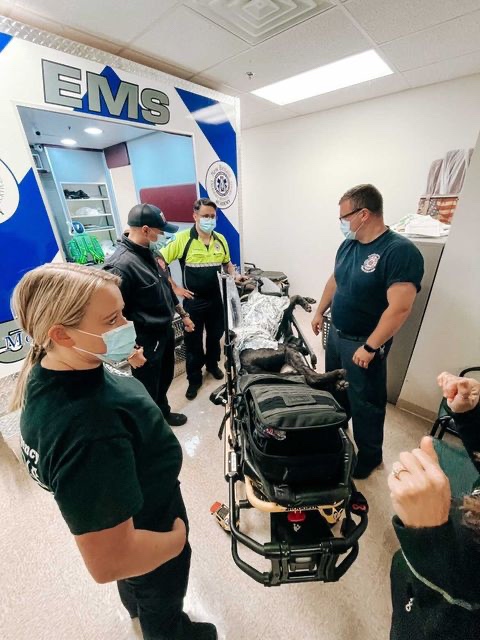
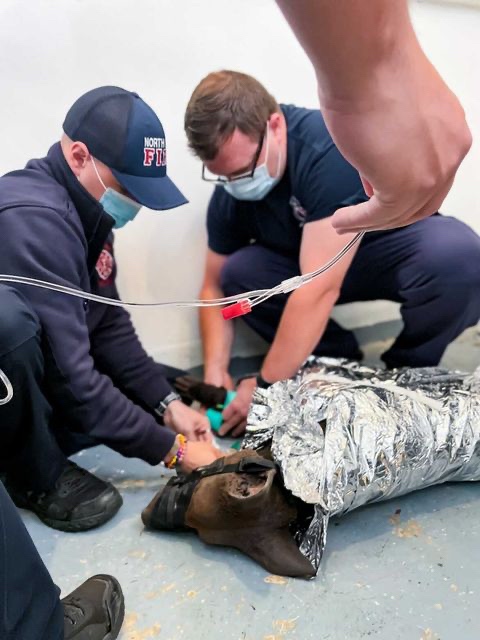
In 2018, Sgt. Sean Gannon and his K9 Nero suffered life-threatening gunshot wounds. Unfortunately, Sgt. Gannon succumbed to the injury, but K9 Nero was effectively treated on site by a Federal medic previously trained by K9 MEDIC®. The situation dramatically highlighted the state regulations that legally limited care and transport of K9s by local and state providers. Many states currently don’t have any legislation that would allow EMS to treat and transport an injured working K9. Today, Nero is alive and healthy and serves as an advocate for more states to support life-saving care.

Because many states such as Colorado, Massachusetts, Florida, Rhode Island, and more have recently begun passing legislation allowing for EMS treatment and transport of K9s, EMS K9 training is becoming increasingly important. One training resource that K9 Medic utilizes is TacMed Simulation Rental Program. Through this program, Jo-Anne Brenner and her K9 Medic team have been able to host a variety of training classes using our K9 Diesel and K9 Hero simulators. These simulators can provide over 28 different features and medical intervention sites to provide training on a wide range of critical life-saving tasks with a realistic experience.

We are thankful for K9 MEDIC® and other similar organizations who provide top-notch training and education for EMS personnel in order to best be prepared for a K9 emergency.

If you are a K9 Handler or part of a K9 Team, seek out proper training and equip yourself with the necessary life-saving medical equipment from TacMed™. Check out our K9 Handler Line here: tacmedsolutions.com/collections/k9-handlers

Army Future Command’s GEN Murray Visits DEVCOM Soldier Center for Program and Equipment Updates

Tuesday, November 9th, 2021

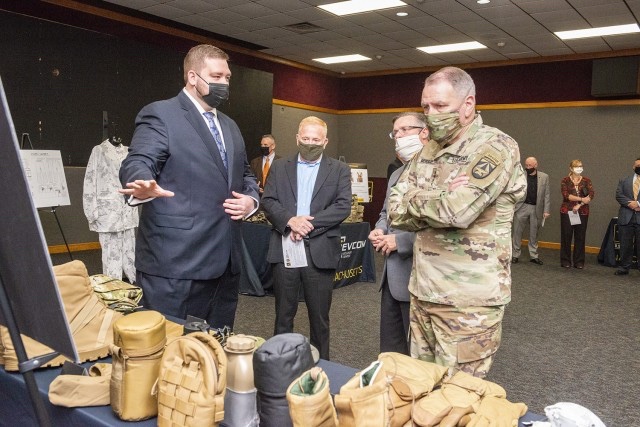
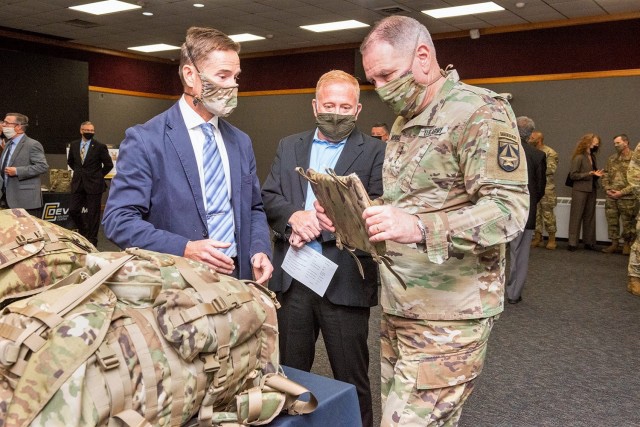
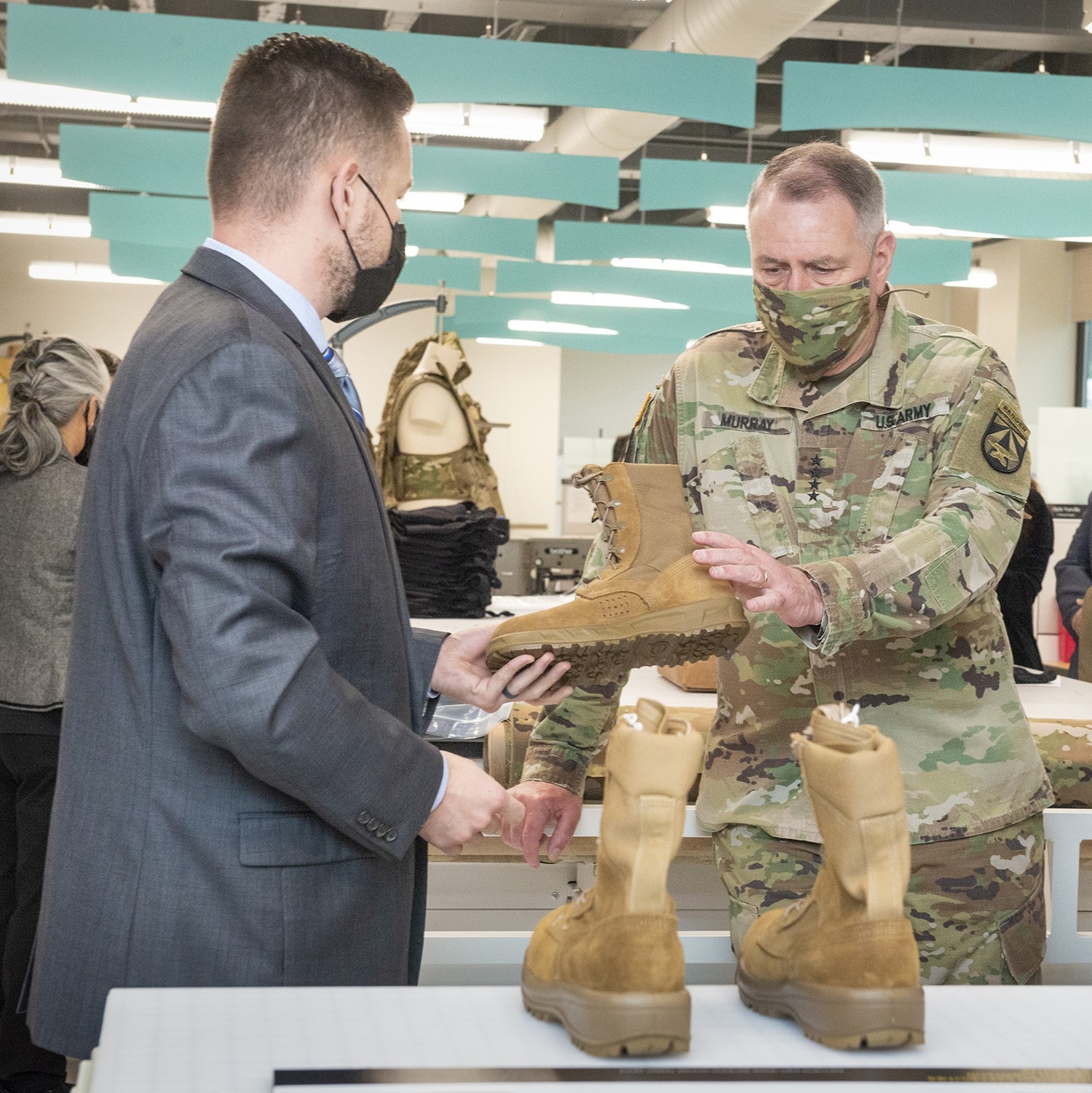
NATICK, Mass. — During an October 26 visit to the U.S. Army Combat Capabilities Development Command (DEVCOM) Soldier Center, Gen. John M. Murray, Commanding General of U.S. Army Futures Command (AFC), was updated on several programs and technologies helping advance two of the Army’s highest priorities — modernization and people.

DEVCOM Soldier Center’s mission, to research and develop science and technology solutions that protect and optimize warfighters on the battlefield, often occurs where these two priorities intersect, and Murray, charged with spearheading the Army’s force modernization efforts, got to see in person some key technologies the center is developing in support of the Soldier Lethality component of modernization.

“DEVCOM Soldier Center is executing a critical facet of the Army’s modernization strategy,” said Murray.

“By researching new approaches to optimize Soldier performance and developing new technologies with consensus from operating units to exceed the capabilities of our pacing threats, they are delivering on the tenets of their mission and reinforcing the Army’s commitment to its people.”

“I saw that in action here today,” said Murray.

The visit began with detailed updates on the progress of DEVCOM Soldier Center’s signature research program, Measuring & Advancing Soldier Tactical Readiness & Effectiveness, or MASTR-E, a comprehensive, data-based research effort to deliver infantry units the capability to measure, predict, and enhance human performance during close combat operations through the use of wearable biometric sensors.

Led by DEVCOM Soldier Center and supported by key S&T partners from infantry units, scientists, and engineers across the DoD, industry and academia, MASTR-E takes an integrated, multi-disciplinary approach to collecting and analyzing human performance data metrics, including physiological and behavioral indicators that give leaders a holistic view of their Soldiers’ status during close combat.

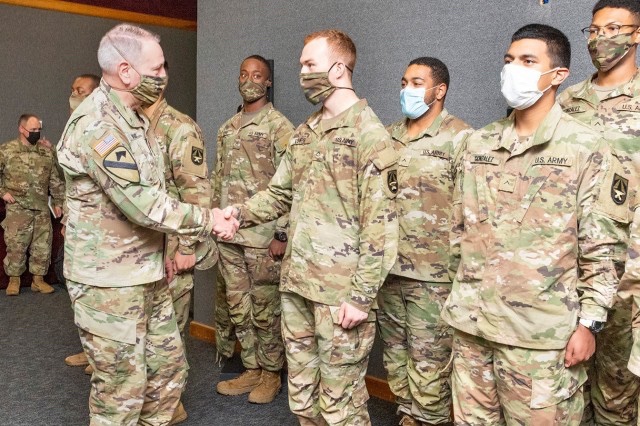
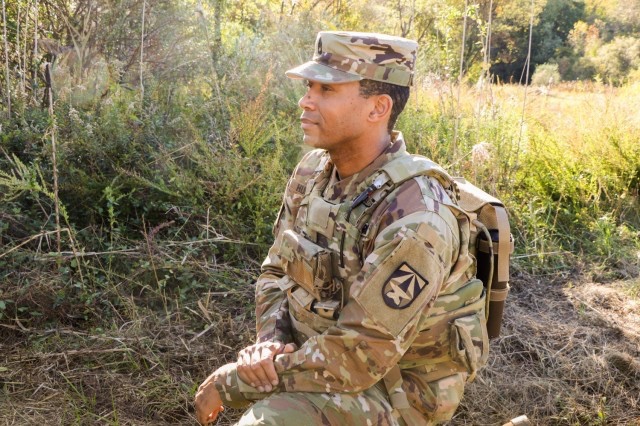
Murray also met with Human Research Volunteer, or HRV, Soldiers during the visit. The HRV program recruits approximately 30 new Soldiers from their Advanced Individual Training to voluntarily come to Natick for a 90-day assignment in which they participate in various human performance based research studies. HRV Soldiers support everything from field testing uniform and equipment items, sleep and nutrition studies, to cognitive, psychological, and physiological performance studies. HRV Soldiers play a vital role in the research and development of new technologies supporting modernization efforts.

The visit also featured a hands-on display of several innovative technologies being developed by Soldier Center scientists and engineers, including Cold Weather Equipment, Load Carriage Equipment, future body armor prototypes, and the Combat Protective Ensemble, or CAPE.

For Cold Weather Equipment, Murray saw uniform and equipment items being developed through a multiservice collaborative effort guided by seven item priorities with the goal of outfitting an arctic brigade within the next 18 months. The technologies, which included gloves, boots, and layered parker systems, were constructed with novel performance materials with inherent properties that prevent freezing in extreme arctic environments.

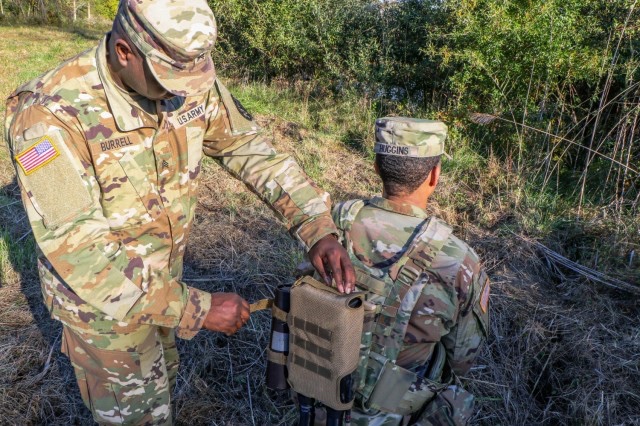
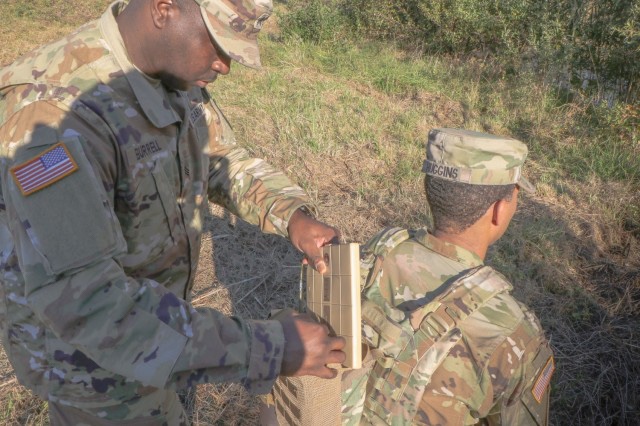
The Load Carriage Equipment items included prototype ruck sacks designed to accommodate specific infantry tasks and missions. Soldier Center equipment specialists utilized end user feedback collected during Soldier Touchpoint evaluations to redesign the placement of straps, buckles, ammunition and utility pouches, and ballistic plate carriers to develop lighter, streamlined prototypes more conducive to foundational infantry tactics like shooting and moving to contact.

The future body armor items displayed took a similar approach to their design, in which plate carrier systems were built based on the threat level. Researchers are working to reduce the overall weight of body armor prototypes while maintaining ballistic protection against the majority of round calibers and blast threats faced on the battlefield.

The CAPE program addresses the challenge of having multiple Soldier-worn equipment systems by incorporating novel performance fabrics and materials in order to maximize Soldier protection and survivability, while optimizing the distribution of power and data.

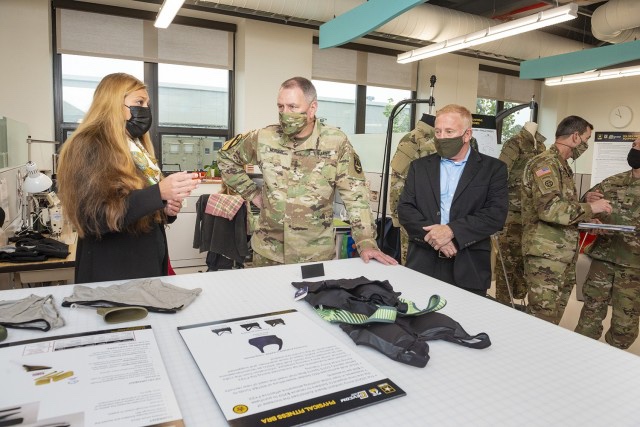
After the equipment display, Murray visited the Design Pattern Prototype Studio, where he was shown several Soldier Center developed products under the Organizational Clothing and Individual Equipment program, including the Female IOTV, the Physical Fitness Bra, the Female Urinary Diversion Device, or FUDD, and the Improved Hot Weather Combat Uniform — Female, or IHWCU-F — items that support the role and performance of female Soldiers in combat.

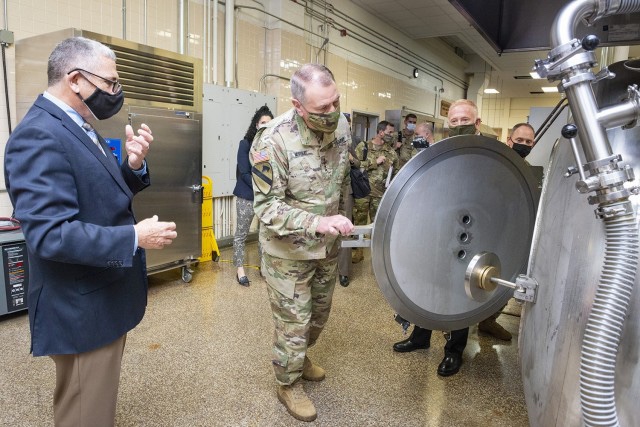
The last stop of Murray’s visit was to the Combat Feeding Division for an overview presentation, ration display, and tour of the pilot kitchen where new items are created. At CFD, Murray saw the Close Combat Assault Ration, or CCAR, a one-day ration designed to sustain dismounted warfighters for seven days operating autonomously without resupply. The CCAR includes nutrient-dense items made using Microwave Drying Technology, which reduces the weight by about 75 percent and volume by 40 percent from an MRE, the standard individual ration.

“General Murray’s visit allowed us to successfully demonstrate the important work we’re doing to enhance Soldier performance.” said DEVCOM Soldier Center Technical Director, Doug Tamilio. “The programs and technologies he was updated on are helping advance Soldier Lethality and directly support the Army’s major priorities.”

Story by Jeff Sisto, DEVCOM Soldier Center Public Affairs

Photo by David Kamm, DEVCOM Soldier Center

SOCOM-led Tactical Assault Kit Product Center Hosts Hybrid Workshop in Colorado Springs

Monday, November 8th, 2021

COLORADO SPRINGS, Colo. — The Tactical Assault Kit (TAK) Product Center is hosting a hybrid (in-person and virtual) workshop to expedite the development and integration of situational awareness tools Nov. 30 to Dec. 3.

The Tactical Assault Kit (TAK) is a map-based software application that enables coordination among thousands of users with features such as a position data, chat, mission planning and shared overlays. It is compatible with Android, Apple iOS and Windows.

The TAK offsite will offer an opportunity for stakeholders from across the Department of Defense (DoD), federal agencies and industry to exchange information and identify critical needs. The event will offer tracks for programmatic updates and training on the TAK platforms. A separate track for developers will be held virtually later this year.

“While programmatic briefs and demonstrations are important, feedback from previous TAK Offsites has been heavy on the value of hallway discussions and introductions between sessions,” said Mark Roberts, deputy director for the TAK Product Center. “This year’s hybrid event facilitates in-person meetings which are key to building strong, lasting relationships amongst community members while simultaneously enabling virtual participation from TAK users around the globe.”

As the central software development hub for all TAK efforts, including 13 federal programs of record, the TAK Product Center provides core development, software updates, cybersecurity and testing for an enhanced user experience.

To foster innovation, the TAK Product Center approved the public release of a non-military variant for federal and government agencies – known as the Android Team Awareness Kit-Civilian (ATAK-CIV) application – on Google Play and the open-source Standard ATAK Software Development Kit on TAK.gov.

“The crowd-sourced nature of the Team Awareness Kit (TAK) is unique among government materiel development programs. The TAK Product Center has proven that focusing on the user provides optimal solutions and wide adoption,” said Col. Paul Weizer, Program Executive Officer for SOF Digital Applications. “I expect open-source elements of the TAK software development/delivery model will become ubiquitous across government software program offices.”

Registration for the offsite is available at tak.gov/events/2021_Offsite until November 26th. Learn more about the event here:

By USSOCOM PAO

U.S. Army photo by SPC Joshua Cofield

US Army R&D Energizes Battery Charging for Soldiers

Monday, November 8th, 2021

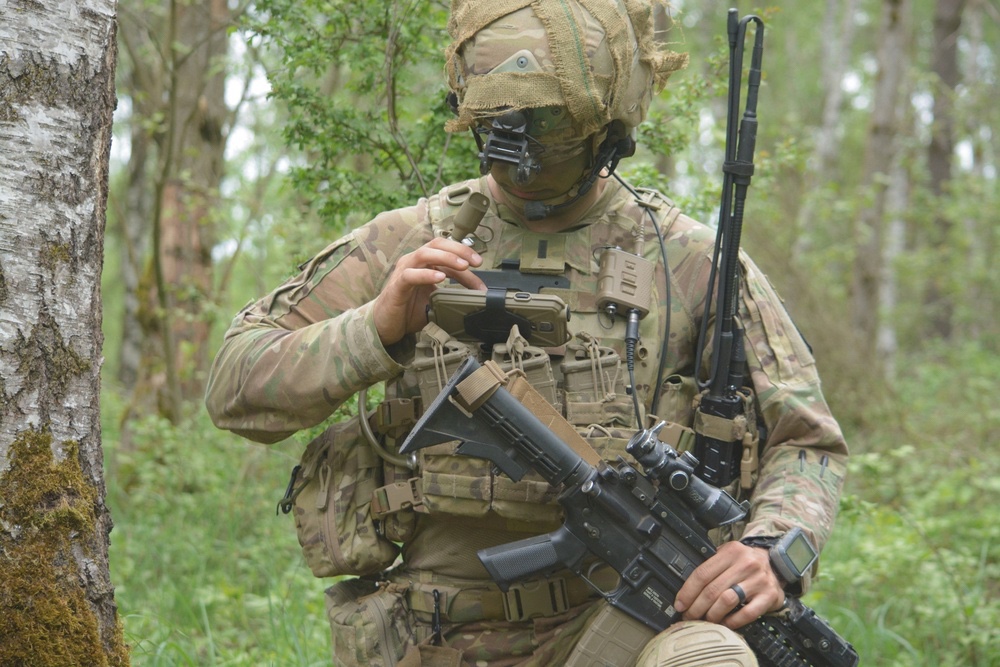
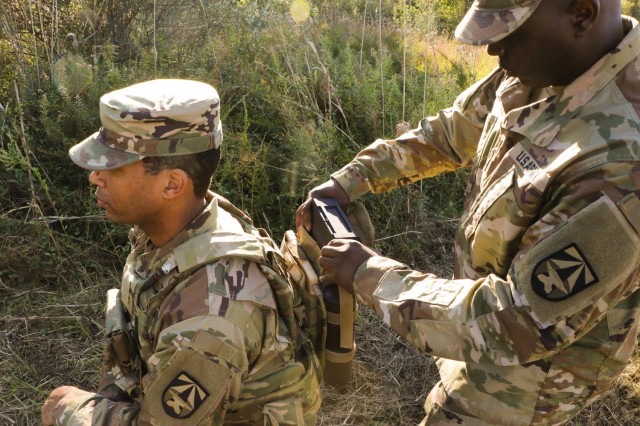
ABERDEEN PROVING GROUND, Md. — Army researchers are exploring new ways to keep Soldiers’ electronic devices powered during extended missions by using wearable fuel cells for on-the-move battery charging.

As the Army continues to modernize the force with high-tech Soldier-worn and handheld equipment like radios, GPS, night-vision devices and weapons, the energy demand is continually increasing.

Engineers are working on optimizing the power density and efficiency of emerging fuel-cell based power generation technology when operated with packaged fuels as well as commonly available substitutes such as windshield washer fluid.

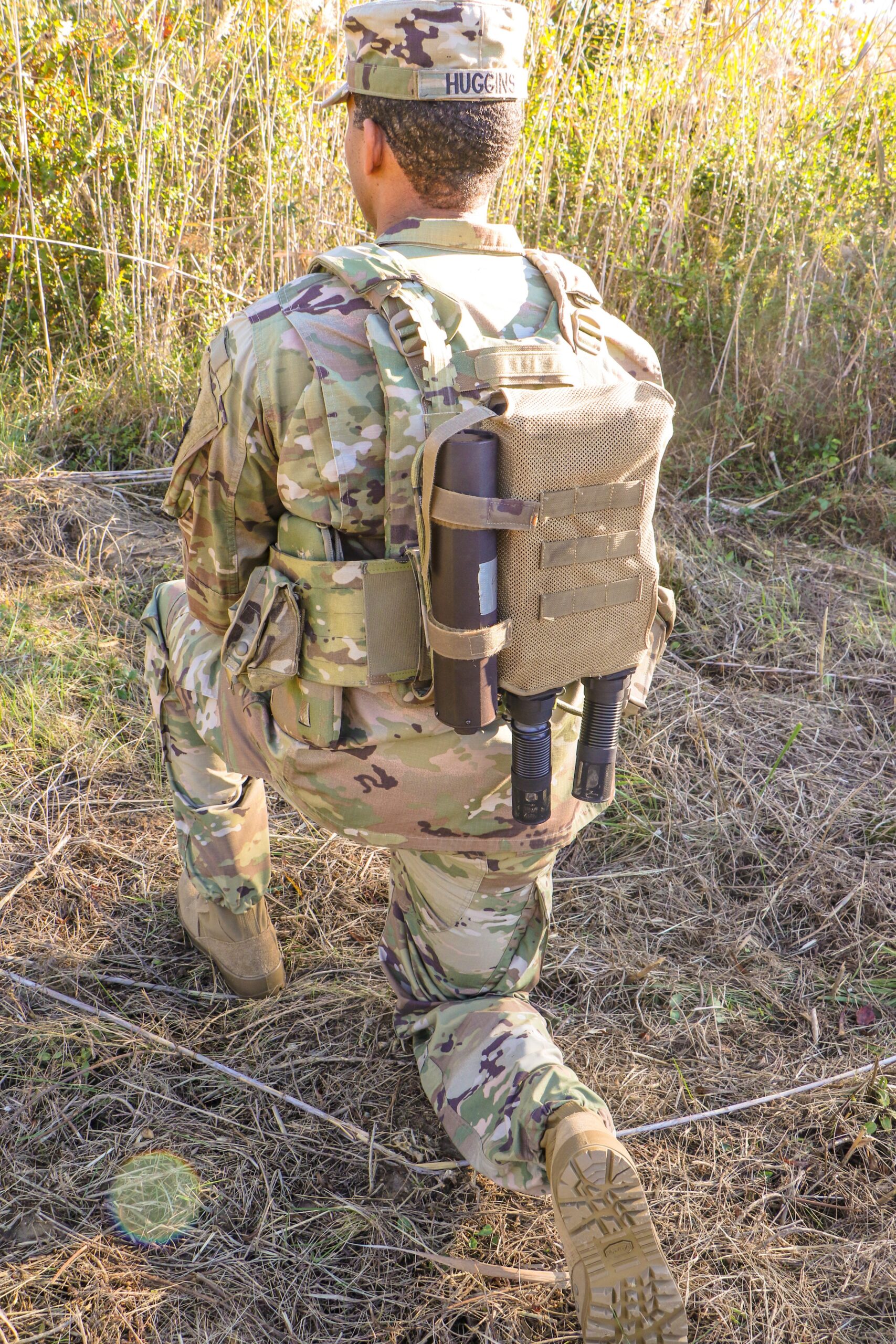
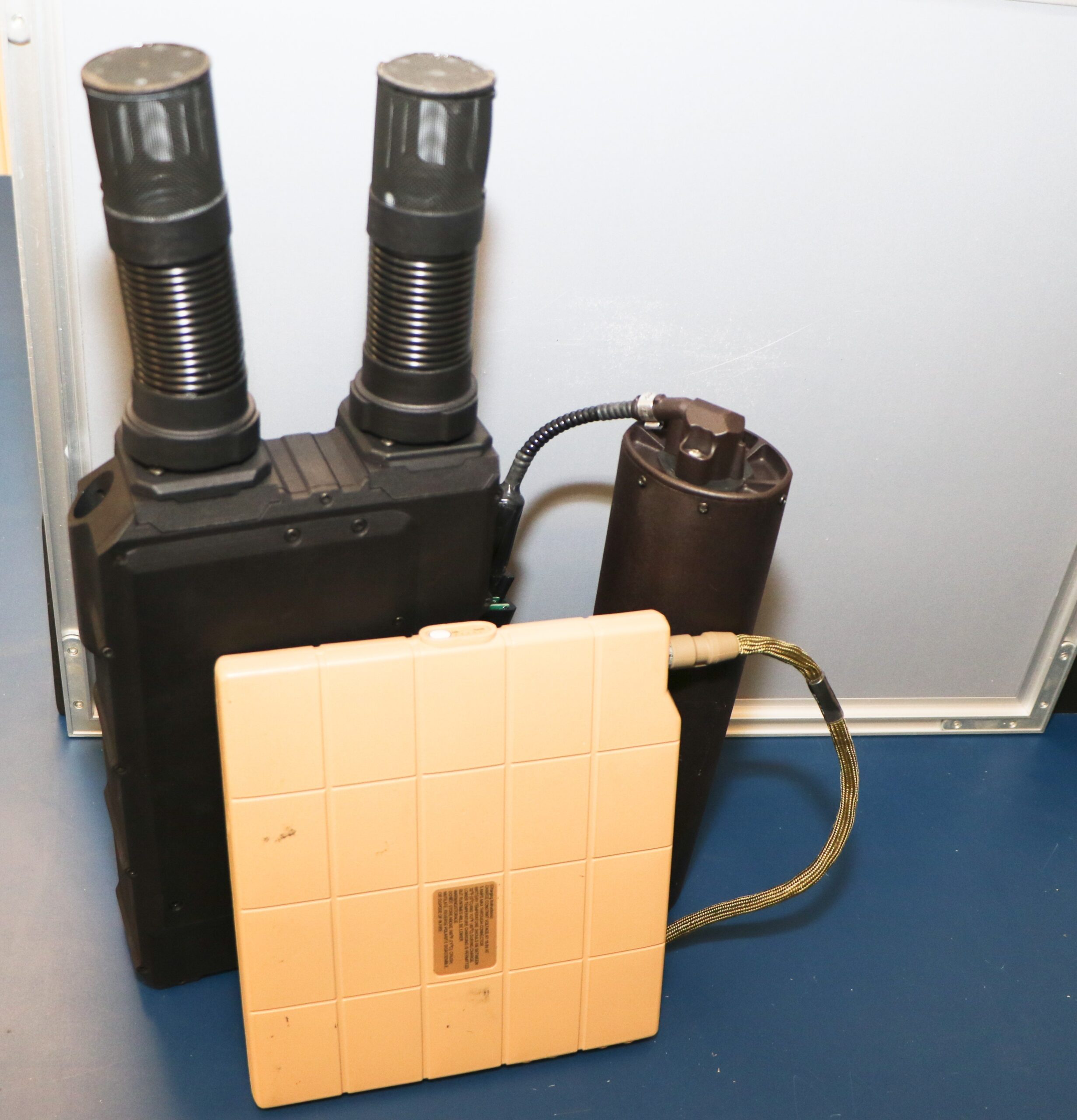
Army Futures Command (AFC) is leading work on the Soldier Wearable Power Generator (SWPG) that enables on-the-move charging, thus reducing the number of batteries required to be carried.

“We’re aiming to deliver a simple, easy-to-use way for Soldiers to extend battery life and keep moving in the field by developing wearable fuel cells,” said Shailesh Shah, a chemical engineer with the Command, Control, Communications, Computers, Cyber, Intelligence, Surveillance and Reconnaissance (C5ISR) Center — a component of AFC’s Combat Capabilities Development Command (DEVCOM). “Enabling fuel cell operation on windshield washer fluid already in the Army’s supply chain avoids the need to set up a logistics re-supply of custom fuels. The SWPG simultaneously reduces dependence on logistics for battery re-supply.”

The C5ISR Center’s research aligns with the Army’s renewed emphasis and interest in fuel-cell power generation for supplying power to dismounted Soldiers, according to Shah. Technology in the industry has improved significantly in the past 10 years in terms of size, weight, noise, thermal signature reduction, improved modularity and mounting systems.

Adding wearable fuel cells to the Soldier system enables users to charge the currently fielded thin, flexible Conformal Wearable Battery (CWB) worn on vests as a central power source for electronic devices. The fuel-cell research complements the C5ISR Center’s concurrent work to modernize the CWB with advanced materials.

Researchers are continuing SWPG design modifications to improve performance of the prototypes with an emphasis on size and weight reductions, according to Christopher Hurley, chief of the Center’s Tactical Power Branch. Soldiers on 72-hour missions could save 12 pounds in battery weight under normal power draws with current prototypes.

Additional organizations providing support are the Army’s Project Manager Integrated Visual Augmentation System, DEVCOM Soldier Center, the FBI and the National Defense Center for Energy and Environment.

“A key to enhancing our fuel-cell development is placing different prototypes in the hands of Soldiers during field exercises,” Hurley said. “C5ISR Center engineers have been side-by-side with Soldiers to gain feedback during the Army Expeditionary Warrior Experiment in 2020 and 2021 with plans for 2022. The Soldier touch points are an invaluable resource in our development process so we can immediately turn around and incorporate their evaluations into our hardware systems.”

By Dan Lafontaine, DEVCOM C5ISR Center Public Affairs

SCUBAPRO Sunday – Kokoda Track Campaign WW2

Sunday, November 7th, 2021

I posted this last year and I wanted to do it again. Australia is the only country that has fought alongside the U.S. in every major conflicted since WW1. Sorry I didn’t post it last weekend.

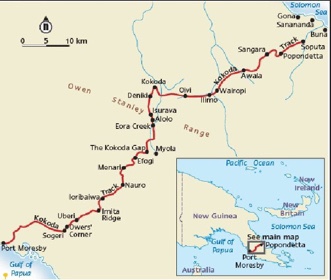
The 3rd of November is Kokoda Day or Kokoda Track Day in Australia. The Kokoda Track Campaign was mainly fought between the Australians, and the Japanese, with the Americans helping at first with supplies and then with troops. The Australian troops had to save Port Moresby from being captured by the Japanese because Papua New Guinea would have been a great staging point for Australia’s invasion.

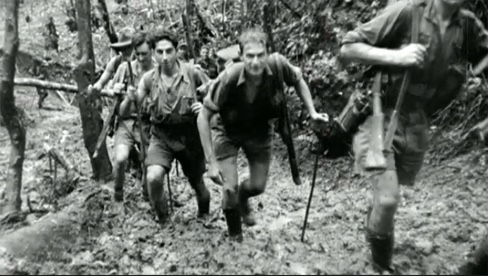
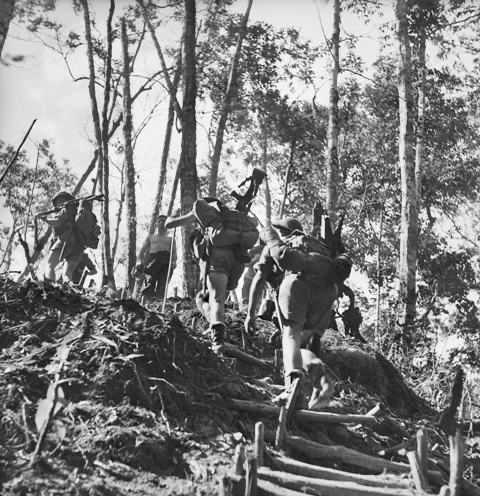
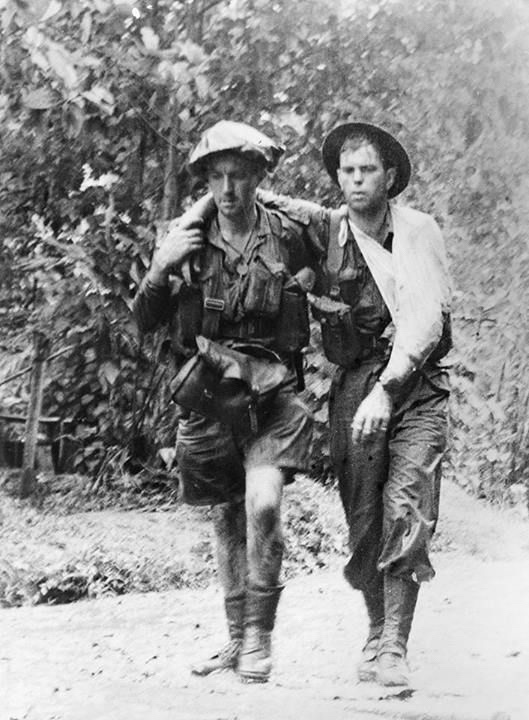
The Australian forces fought exceptionally well in the harsh and unforgiving jungle of the Kokoda Track. More than 600 Allies were killed, and about 75% of the allied troops got sick, with diseases like malaria, dengue fever, and dysentery. The campaign consisted of a series of battles fought between July and November 1942 in what was then Australian Papua New Guinea. The Australian Army halted the furthermost southward advance by Japanese forces in Papua New Guinea and then pushed the enemy back across the mountains.

Kokoda was one the most significant battles fought by Australians in the Second World War, first because it was fought so close to home, second because it was kind of Australia’s birth as a prominent player on the world stage. The Kokoda campaign saved Australia from possible invasion from the Japanese. Port Moresby held a tactical position, and preventing the Japanese from reaching it was vital. The battle was fought over five months, and the odds were stacked heavily in favor of the Japanese. They outnumbered the Aussies 5-1, had much better equipment, and a lot more of it, and at the time, they were considered by many the best jungle fighters in the world. The astounding feats performed by the diggers soldiers to hold off the Japanese and turn them back lead to the growth of Australia as a nation.

The Kokoda Track started as many small trails used as mail routes and to supply settlements around Kokoda. The military modified it. It became the main route that linked Ower’s Corner, 40 kilometers north-east of Port Moresby, and the small village of Wairopi, on the northern side of the Owen Stanley mountain range. But it was a lot more than 40 kilometers within walking distance because you had to take the jungle into account. The soldiers were challenged by steep, treacherous inclines, deep valleys, dense jungle, a debilitating climate, and drenching rain that frequently turned the ground into that jungle mud that sticks to everything just by looking at it.  

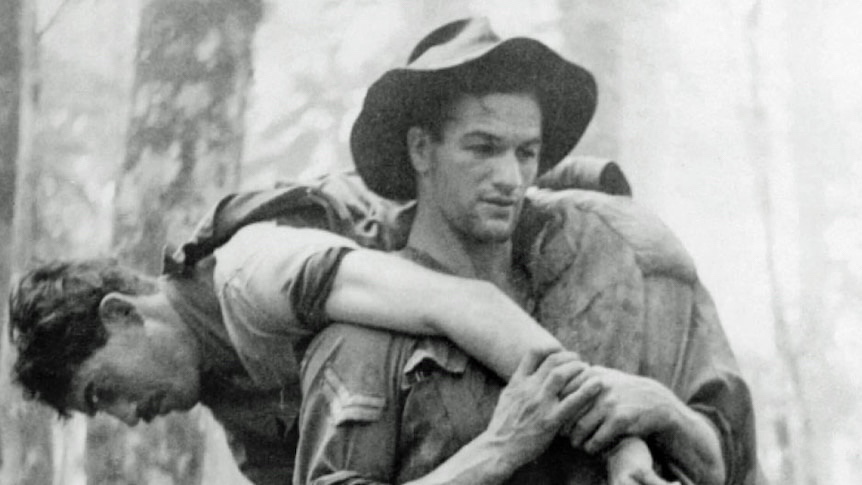
CPL ‘Bull’ Allen was born in 1916 in Ballarat, Victoria. Bull spent his early years with his brother and sister in an orphanage. Bull joined the Second Australian Imperial Force in April 1940 as a stretcher bearer assigned to the 2/5th Battalion. Allen saw action in the Western Desert in 1941 and proved to be dependable, although he was sent to the hospital in early April with “anxiety neurosis.” He rejoined his battalion for the Syria-Lebanon Campaign, where he treated wounds all night under fire near Khalde on July 1, 1941, and then walked 10 kilometers the next morning to reach transport.

Bull’s next adversary in the jungles of New Guinea would be the Japanese, after fighting the Italians, French, and Germans. Allen would be officially recognized for his gallant work as a stretcher-bearer in January 1943, while engaged in defensive operations in Wau. He was given the Military Medal after carrying out many of his fellow soldiers under heavy Japanese fire. (A medal comparable to the Bronze Star in the United Kingdom and Commonwealth.) Bull Allen would be on Mt Tambu with US troops on the 30th of July 1943 as part of the Wau-Salumua campaign. During the battle, Allen moved forward and transported no less than twelve American soldiers to safety. Bull was eventually given the Silver Star for his actions, with the citation reading, “Private Allen’s bearing and untiring efforts in caring to the injured and assisting with rations and stores were an inspiration.”

According to the contemporary diggers “He returned after a second trip. Get in touch with your pal. Jesus Christ is the Son of God. You believe you’ll be able to return this time. They’re wagering on it. He returned after a second trip. That guy deserved a whole case of medals. He had 12 holes in his shirt, his hat and his shirt and that jerk went in and out of there 12 times.” As of 2013 there have been calls for him to be awarded the Victoria Cross.


The Australians fought against all odds and without the help of Great Britain. It was fought mainly by Militia (reserve) troops or “chocolate soldiers” as the Australian Imperial Forces (AIF) called them because they were poorly trained, and it was said, “they would melt in the heat of battle.” At the start of the war, Australia sent its best troops, the AIF, to the middle east to help the brits. So, Australia stood up a Militia Battalions to serve in

Australia, to help protect the homeland. The 39th was only to be used on mainland Australia, but the government used a loophole saying that Papua New Guinea was a territory. Hence, they sent the 39th Militia there to help protect the island. This was one of the hardest fought battles in WW2 by anyone.

I have attached a couple of links so you can read about this.

As many military units are getting back into the jungle, this is full of instrumental lessons learned and is an excellent piece of history that should not be forgotten by any side. Stop for a minute or raise a beer to the diggers and all the people that have made the ultimate sacrifice for freedom everywhere and have gone before us. Long Live the Brotherhood.

kokodacampaignww2.weebly.com

SCUBAPRO Sunday is a weekly feature focusing on maritime equipment, operations and history.