TYR Tactical

Archive for the ‘Guest Post’ Category

FirstSpear Friday Focus— MultiPurpose Pack in Manatee & Woodland Camo

Friday, February 4th, 2022

It’s here in Woodland & Manatee! The MultiPurpose Pack was originally developed as a medical pack for a U.S. Special Operations unit, this pack can easily be adapted for use as a range bag, E&E pack, or 1-day pack. Features include hydration compartment, padded shoulder straps, 5 external pockets and compression straps.

• 5 external pockets including large hydration compartment
• Low profile padded shoulder straps
• Exterior compression straps
• Exceptional low profile range bag
• Developed as a med bag for a US SOF element
• Made in the USA

Currently available in woodland, manatee and ranger green.

For more information check out, www.first-spear.com/multi-purpose-pack .

Consortium Partnered with Army Research Lab Completes 10-year Program to Advance Armor Materials

Friday, February 4th, 2022

ABERDEEN PROVING GROUND, Md. — The Materials in Extreme Dynamic Environments Collaborative Research Alliance, or MEDE CRA, culminated its 10-year program with a virtual capstone event, co-hosted by the U.S. Army Combat Capabilities Development Command, known as DEVCOM, Army Research Laboratory and Johns Hopkins University.

More than 180 people participated in the event, including principal investigators, students from consortium universities, Army researchers and industry partners. Representatives from U.S. Army Futures Command, Office of the Assistant Secretary of the Army for Acquisition, Logistics, and Technology, Office of Naval Research, National Ground Intelligence Center, National Science Foundation, Department of Energy and other DEVCOM subordinate organizations participated as well.

The alliance is a basic research program led by Johns Hopkins University, which includes a consortium of 25 university and research partners located in 13 states and three foreign countries. MEDE has developed a materials-by-design strategy, which has resulted in innovative protection materials and computational design codes for armor applications. These new concepts will support the Soldier Lethality and Next Generation Combat Vehicle modernization priorities. According to DEVCOM ARL Director Dr. Patrick Baker, MEDE successfully achieved its mission by focusing on the three key elements of a basic research program: relevance, team, and science.

Maj. Gen. Edmond “Miles” Brown, DEVCOM commanding general, highlighted the capstone with a keynote address. He described a multinational force that was attacked while on patrol during a deployment to Afghanistan. The body armor they wore provided the necessary protection to survive the attack and make it back home safely. Additionally, Brown described the evolution of body armor from the time he entered the U.S. Army to present day, and the importance of basic research programs like the MEDE CRA.

Sen. Ben Cardin and Sen. Christopher Van Hollen of Maryland expressed their congratulations to the MEDE CRA. Cardin noted that MEDE has graduated 76 Ph.D. students and transitioned 55 postdoctoral fellows. More than 200 undergraduates participated in research activities; 62 of whom were from HBCUs and minority serving institutions. This highlights the program’s real dedication to inclusivity and diversity, he said. Van Hollen added that MEDE will help save American lives and keep troops safer for years to come.

Officials said a hallmark of the MEDE CRA is its impact on workforce development. Including the university faculty, students, postdoctoral fellows, and DEVCOM ARL researchers, over 600 individuals have been involved in the MEDE research. These individuals include high school and undergraduate student apprentices sponsored through DEVCOM’s Army Educational Outreach Program, and the Army Research Office’s partnered research initiative for HBCUs and minority serving institutions. The MEDE CRA ensured these valuable opportunities were incorporated into the core research program.

Prof. Lori Graham-Brady of Johns Hopkins and Dr. Sikhanda Satapathy, DEVCOM ARL, presented the numerous accomplishments of the MEDE CRA. According to Satapathy, the goal of the program was to look at the materials or different material classes at different scales, starting from the atomistic scale to the application scale. To achieve this, the MEDE program developed a rigorous mechanism-driven materials-by-design strategy that resulted in new magnesium alloys, boron carbide, and glass-epoxy composites.

In each material, MEDE was able to achieve a weight reduction and improved performance. These discoveries were translated into computational design codes which assisted in validating the experimental data. Industry partners were able to scale-up the laboratory produced materials for ballistic evaluation at DEVCOM ARL.

Graham-Brady said by improving these armor materials they will have a real impact on keeping people safe, which, she said, motivated much of the research.

The capstone included a MEDE CRA video, which provided an overview and successes of the program.

Awarded in April of 2012, the Materials in Extreme Dynamic Environments (MEDE) collaborative research alliance is a ten-year, basic research program which has developed a materials by design process which has improved protection materials for armor applications. Research activities were performed jointly amongst academia, the DEVCOM Army Research Laboratory (ARL), and industry.

This video highlights the tangible successes of the program.

Funding for MEDE created a center within HEMI. For more information, visit hemi.jhu.edu/cmede.

The impact of MEDE to the broader science community will be felt for years, Graham-Brady said. To date, MEDE university personnel and DEVCOM ARL researchers have authored 478 peer-reviewed journal articles. These articles have been cited over 8,000 times. To ensure the legacy of the MEDE CRA, special edition journals featuring MEDE research have been published.

Johns Hopkins University President Ronald Daniels expressed his appreciation to the U.S. Army for sponsoring the MEDE CRA. Johns Hopkins’ partnership with the Department of Defense was seeded in 1940 with the creation of the National Defense Research Committee. MEDE’s innovations will continue to shape the future of the government-university research through the doctoral students and postdocs now working in DOD and national laboratories, academia and global industry.

As the Army’s foundational research laboratory, ARL is operationalizing science to achieve transformational overmatch. Through collaboration across the command’s core technical competencies, DEVCOM leads in the discovery, development and delivery of the technology-based capabilities required to make Soldiers more successful at winning the nation’s wars and come home safely. DEVCOM Army Research Laboratory is an element of the U.S. Army Combat Capabilities Development Command. DEVCOM is a major subordinate command of the Army Futures Command.

By Dr. Victor Nakano, Johns Hopkins University

Photos by Jessica Ader, David Jordan, and Will Kirk

347 RQS Tests New Vehicle Drop for Lead Wing

Thursday, February 3rd, 2022

MOODY AIR FORCE BASE, Ga (AFNS) —  

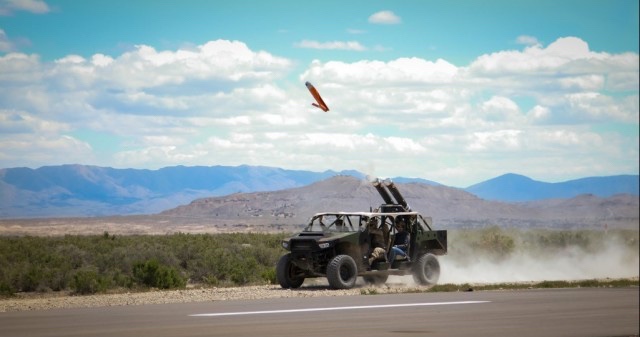
The Side by Vehicle (SXV) is the newest Search and Rescue Tactical Vehicle added to the 347th Rescue Group’s arsenal, bringing more firepower and range than other models.

Although the 38th Rescue Squadron has been integrating the SXV into ground combat training scenarios, this was the first time they teamed up with the 71st RQS for an aerial delivery of an SXV, Jan. 20.

“This is the first step in building greater ground mobility options for the 38th Rescue Squadron and Air Force Special Warfare,” said Lt. Col. Michael Vins, 38th RQS commander. “Wherever paratroopers and combat rescue officers can land, we can potentially drop a (a lighter-weight tactical vehicle) or SXV to assist with ground mobility.

“For example, if an airfield is attacked and runway unusable, we could drop in a Guardian Angel team and pair of vehicles to consolidate survivors into a casualty collection point, treat life-threatening injuries, provide security and prepare for extraction,” Vins added.

The drop took roughly a year to execute because the vehicle – stripped of weapons, equipment and fuel – weighs 4,445 pounds and is near the parachute weight limit. Accommodating the increased load required additional preparation.

“In order to be one-hundred percent combat effective, we need to see what works with the aerial delivery package and what does not,” said Master Sgt. Daniel Lillis, 38th RQS pararescue flight chief. “Once the vehicle and team leave the aircraft there may be little to no outside support. We need to determine what is required to be self-sufficient for extended durations of time in multiple environments. Additionally, we’re testing the durability of the vehicle itself upon airdrop – confirming that falling from the sky will not render the vehicle inoperable.”

This vehicle can be used to move equipment, personnel or patients to different locations. Furthermore, it has potential to develop the ability to provide power and be used as a moving communication center. Employing the vehicle requires personnel to know its capabilities, durability and sustainability.

“Understanding capabilities and limitations of our equipment is vital prior to employing it on an actual mission,” Lillis said. “Constantly refining our rescue equipment and employment of the equipment is crucial to remaining effective as we look to the future of warfare and rescue.”

By adding an additional infiltration and exfiltration method, Moody Air Force Base hones their Lead-Wing capabilities. This allows rescue personnel to be more agile.

“The reality is Guardian Angel has a vast array of employment methods such as boats, vehicles, on foot, or any type of aircraft the (Department of Defense) has to offer,” Lillis said. “Preparing for a peer-to-peer, or near-peer threat requires us to think outside the box and train toward other methods of infiltration/exfiltration.”

This drop marks the beginning of solidifying standard operating procedures using the SXV, and although it may not be the primary method for each mission, it adds another option to the rescue toolkit.

“As we progress, we’ll integrate the drops into scenarios with derigging procedures, ground movements and recoveries,” Vins said. “If successful and safe, we’ll be able to show a proof of concept to senior leaders of another infiltration method to bring isolated personnel home.”

Story by Airman 1st Class Deanna Muir, 23rd Wing Public Affairs

Photos by MSgt Daryl Knee

GHOSTHOOD Now Ships to USA

Wednesday, February 2nd, 2022

The well-known camouflage system manufacturer from Germany started 2018 with lightweight products for police and military special forces. The base for these camouflage systems is a thin fabric, that is printed with the CONCAMO® camouflage pattern with high standards for near infrared colors. CONCAMO® offers three patterns for different environments.

The patterns are named after their dominant color. So the green pattern is mainly for areas with green vegetation, the brown pattern for autumn or brown deserts and the beige one is for sand, beige deserts and also usable for the urban environment. Focus of these products is the lightweight and breathable design. As well as a easy to use and multiuse functionality of the product.

For American customers these products were not easy to get. But now GHOSTHOOD® started to offer USA shipping for 29,99€ (approx. $33.94).

www.ghost-hood.com

This report is courtesy of our friends at? spartan.at

Airborne 22: US, Japan Test Interoperability

Wednesday, February 2nd, 2022

YOKOTA AIR BASE, Japan (AFNS) —

The 374th Airlift Wing supported Japan Ground Self-Defense Force soldiers assigned to the 1st Airborne Brigade in operation Airborne 22, Jan. 25–26.

Airborne 22 is the largest annual static-line personnel jump and cargo drop exercise between the U.S. Air Force and JGSDF.

The exercise integrated 11 C-130Js from the 36th Airlift Squadron, Yokota Air Base, and two from Dyess Air Force Base, Texas, carrying approximately 500 JGSDF soldiers for an airdrop training at the Combined Arms Training Center Camp Fuji, Japan, drop zone.

An additional 100 Container Delivery System bundles, carrying simulated cargo, were also dropped from U.S. Air Force C-130Js at six different points of impact at Fuji DZ. The simulated cargo, which consisted of fuel, water, food, and different types of ammunition, directly supported JGSDF operations on the ground.

This interoperability mission provides an excellent opportunity for the JGSDF to get all the airborne exercise they need, said Capt. Jordan Baab, 36th Airlift Squadron instructor pilot and Airborne 22 mission commander. It also offers the 36th AS the chance to practice its forward-deployed attack capabilities.

Airborne 22 demonstrates the U.S. Air Force and JGSDF’s capability to execute a large force insertion on a drop zone. It showcases the combined capacity between USAF and JGSDF’s ability to rapidly deploy joint forces while emphasizing the strong allied commitment to a free and open Indo-Pacific region.

“This is a proof of concept that the tactics, techniques and procedures that we practice and train every day play into effect and work pretty well,” said Capt. Audrey Crismon, 39th Airlift Squadron C-130J pilot and Airborne 22 mission commander. “No matter where we are, who we are working with.”

By Senior Airman Brieana E. Bolfing, 374th Airlift Wing Public Affairs

TacMed Tuesday- Adaptive First Aid Kit

Tuesday, February 1st, 2022

What is TacMed’s Adaptive First Aid Kit?

The TacMed™ Adaptive First Aid Kit, or AFAK, is a compact kit that provides an individual soldier or law enforcement officer with the necessary lifesaving equipment to effectively treat injuries commonly associated with combat trauma.

The innovative design of the pouch and included tourniquet strap allow for the kit to be mounted either vertically or horizontally to any MOLLE surface, allowing the user to take advantage of unused space and prioritize preferred individual equipment layouts.

The AFAK can also be adapted to a MOLLE belt for operators that require a self-aid capability when not able to find space on a body armor system.

The removable insert and optional lanyard allow for “small of the back” placement with positive retention of the kit.

An additional MOLLE platform on the exterior of the pouch aids in maximizing available space for user equipment preference. The included tourniquet strap system is also fully adaptive for vertical and horizontal placement based on user preference for access with both hands.

This kit contains:

• 1x SOF® Tourniquet w/ Tourniquet Strap System

• 1x 4″ OLAES® Modular Bandage, flat-packed

• 1x Fox Chest Seal

• 1x Nasal Airway w/ Lube

• 1x 5.5″ Trauma Shears

• 1x 14GA Decompression Needle

• 1PR Black Nitrile Gloves (size XL)

As with many of our kits, this kit can be customized to fit your specific mission need. If you want to customize a kit or are interested in learning more, check it out at tacmedsolutions.com/products/tacmed-adaptive-first-aid-kit or email us at info@tacmedsolutions.com.

Army Applications Laboratory Names Four Companies to Soldier Power Cohort

Tuesday, February 1st, 2022

Cohort Aims to Help the US Army Power Soldiers on the Move
AUSTIN, TX – Four companies have been selected for the Soldier Power Cohort with the Army Applications Laboratory (AAL) through a program managed by Huntington Ingalls Industries (HII). Sourced from across the country, the selected companies are developing innovative power generation and power conversion, high-density energy storage, and intelligent management and distribution technologies that can support self-sufficiency, reduce burdens, and lessen dependence on resupply.

“Technology is a force multiplier for the Army, but with more technology comes more weight and the need for more power. We need to find a smart way to lighten that load for Soldiers who work in expeditionary environments for days at a time,” said Col. Jay Wisham, director of AAL. “While the commercial market for these technologies is relatively niche, both the Army and industry are facing similar challenges in how to maintain power for devices when away from the grid. This Cohort offers a way to join forces and move the field forward while keeping our Soldiers safe and effective in the harshest environments.”

Dramatic improvements in energy and power density for low-power commercial applications have increased the amount of output achievable while reducing size and weight. Intelligent power management and distribution solutions have also been instrumental in enhancing overall efficiency (as well as convenience) for consumers. As part of the Soldier Power Cohort, companies will earn $100,000 to develop conceptual designs that translate these existing solutions to address the Army’s specific problem. Cohort participants will learn about the Soldier Power problem set directly from key stakeholders, including Army Futures Command’s Soldier Lethality Cross-Functional Team; the Network Cross-Functional Team; and Combat Capability and Development Center Command, Control, Communications, Computers, Cyber, Intelligence, Surveillance, and Reconnaissance Center.

The 8-week Soldier Power Cohort began on January 24, 2022, with concept design presentations planned for March 17, 2022.

The following companies will participate in the cohort:

Epirus, Inc.

Hawthorne, CA

Epirus is a high-growth technology company that develops directed energy systems and power management solutions for broad applications across industries. The nucleus of Epirus’ innovation is the company’s machine intelligent SmartPower technology platform, a multi-layered management solution that delivers precision control, unprecedented power density, and high-power efficiency to various devices.

Resonant Link, Inc.

Shelburne, VT

Resonant Link powers fleets and devices while they work by wirelessly charging medical devices, consumer electronics, and electric vehicles. Through a breakthrough wireless charging technology called the Multi-layer Self-Resonant Structure (MSRS), Resonant Link provides wireless power for multiple Fortune 500 companies and government agencies.

Spark Thermionics, Inc.

Emeryville, CA

Spark Thermionics is an early-stage energy startup developing a “powerplant on a chip” — lightweight and fuel-flexible electricity generation based on a thermionic energy conversion. Spark is led by world leaders in thermionic technology and has received recognition in Physics Today, Fortune, the Official White House blog, and elsewhere.

Xerion Advanced Battery Corp.

Kettering, OH

Founded in 2010, Xerion Advanced Battery Corporation is a fast-growing battery company located in Dayton, OH, that works with Fortune 500 companies in a variety of industries. Through its patented battery technologies, the company aims to revolutionize the energy industry by introducing a step change in innovation in Li-ion batteries for portable electronics, power tools, and unmanned aerial systems (UASs).

Platatac’s Tet Offensive

Monday, January 31st, 2022

In late 2019 deep in the Platatac development skunk works we were made aware of some upcoming adversary training requirements by various units around the world and the demand for a low volume, high quality, battle proven modern combat uniform in a non-issue camouflage pattern.

It was a perfect fit for Platatac with a long history of developing and producing short run camouflage patterns for previous clients such as Australian SOCOMD with digitised Auscam & Marine Cam and numerous projects with UK MOD and many more that will never see the light of day.

The obvious choice for this was Tigerstripe, and so the quest to bring this project to life began. Tigerstripe came to prominence during the Vietnam War but was never an official US issue item, personnel permitted to wear it at first had their uniforms custom-made by local Vietnamese tailors so it was a perfect fit for what we had planned. 


What started out as a need for OpFor combat uniforms quickly snow balled in complexity as the product range expanded and we tried to navigate the ever changing challenges of Covid-era logistics and continuous unexpected delays along the way.

The next challenge was to find a high quality fabric that would be up to the rigors of the abuse the end users expect our products to handle, although Platatac is well known and for our ability to develop and digitise patterns in house the decision was made to expedite the project in early 2021 and partner with Flimmuur Tactical UK who was well down the path developing a Tigerstripe pattern with a nod to the classic faded look of the original Vietnam era pieces but on modern ripstop NyCo.

Fast forward to the anniversary of the Tet Offensive in 1968 and Platatac is proud to present an exclusive collaboration with Flimmuur UK in partnership with OPTactical in the US, bringing to life a reproduction of a classic weathered Tigerstripe pattern in a modern tactical uniform.  

Available exclusively in limited numbers from:

platatac.com 22:00hrs AEDT (Aus) – full collection

ftactical.co.uk 11:00hrs GMT (UK)

optactical.com 06:00 EST (US)