
If you’ve ever visited Arc’teryx Headqurters, you’ve met Usha. She began with the company 30 years ago and has been there ever since.


If you’ve ever visited Arc’teryx Headqurters, you’ve met Usha. She began with the company 30 years ago and has been there ever since.
The letter A in our MARCH algorithm stands for Airway. When discussing airway in MARCH, we also lump breathing into it (probably because MABRCH doesn’t sound right…). Contrary to the more common civilian equivalent treatment algorithm, known widely as the ABCs (which stands for Airway, Breathing, and Circulation), the MARCH system places life-threatening bleeding as its primary focus before any airway issues.
But why? Quite simply, you can go without oxygen for a far longer time and survive than you can with a life-threatening bleed. For example, in 2016, Aleix Segura Vendrell of Spain held his breath for an impressive 24 minutes and 3 seconds while floating in a pool. While this time drastically exceeds what most could achieve, it illustrates the cardiovascular system’s fantastic ability to use and circulate oxygenated red blood cells efficiently. Since these red blood cells live in our blood, and they are the body’s mechanism for carrying oxygen in your body, we must be hyper-vigilant in keeping as many of them inside of an injured person as we can!
After we have controlled any life-threatening bleeding, what can we do for an injured person’s airway and breathing? First, we want to make sure that the airway has no obvious obstructions, is open, and in a position that allows air to pass easily. The technique you use to open the airway depends on the circumstance you find yourself in and what level of training you have, but here are some basic methods:
• First, check to see if the person is breathing! Is the person alert or talking? If yes, that’s easy; they are!
• Look at the person’s chest to see if we can observe it rising and falling.
• If the person is not breathing and is unresponsive, we can do basic airway techniques to open the Airway, like the head tilt chin lift technique or the jaw thrust technique if you suspect a neck or spine injury.
• Place the person in the recovery position.
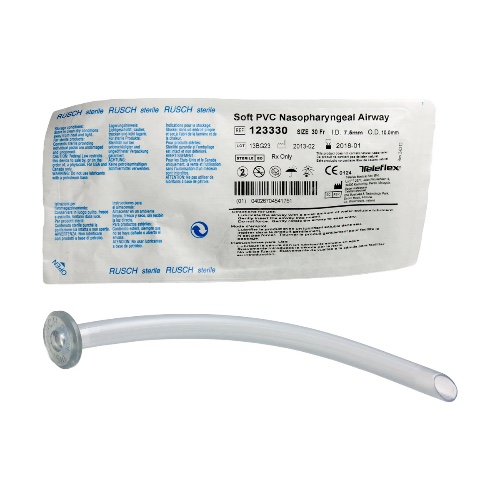
Some more advanced techniques allow the higher trained provider to secure the airway. These devices and methods “secure” the airway by ensuring that the patient’s airway will remain open for them to continue breathing on their own or allow you to breathe for the patient if you need to. Most of these devices require advanced training and certification to use. Still, the Nasopharyngeal Airway (aka an NPA, nose hose, or nasal trumpet) can be taught relatively easily to less trained rescuers. Some of the airway securing devices and methods available for advanced providers:
• Nasopharyngeal Airways (NPA)
• Oropharyngeal Airways (OPA)
• Endotracheal Tubes
• Supraglottic Airways (I-Gel, King Devices, LMA’s)
• Surgical Airways (TacMed Surgical Airway Kit, Cric Key)
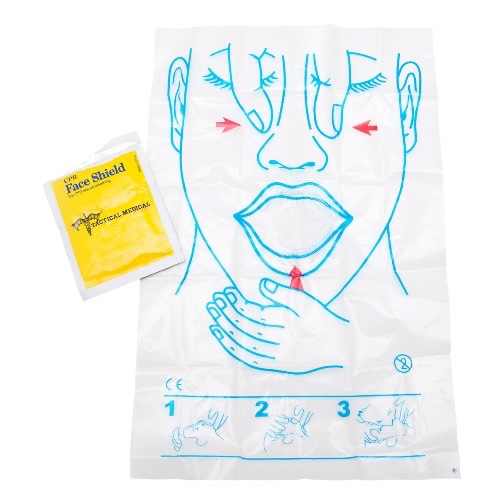
Once the airway is secured or opened, the two most common techniques for assisted breathing or breathing for your patient include:
• Rescue breathing with a face shield (commonly taught in CPR)
• Using a device like a Bag Valve Mask (BVM)
These methods use positive pressure to push air through the airway and into the injured person’s lungs to help oxygenate red blood cells. Those same red blood cells we worked so hard to keep inside of the victim during the M portion of a MARCH! Ultimately, stopping life-threatening bleeding in the M portion of MARCH, opening the airway, and breathing for the victim (if needed) in the A portion, equip our patient with the best chance for a positive outcome.
For more airway product information, check out tacmedsolutions.com/collections/m-a-r-c-h-tccc/airway.

Until now we have not spoken, because we needed time to think about how to help in the best possible way. And now is the time to share our decisions with you:
1. Together with Direct Action, we donated 50,000 EURO to the National Bank of Ukraine, because we know that military help requires financial support.
2. On the 24th of February, we stopped the sale of our products to Russia and Belarus.
3. We help refugees from Ukraine. We provide help here, within local communities near our Polish branches. We want the Ukrainians fighting on the front to know that their families are taken care of, here in Poland. We also enable our employees to support them by organizing a fundraiser.
We are in constant communication with our Ukrainian distributor, ready to help. Anytime.
#SolidatityWithUkraine

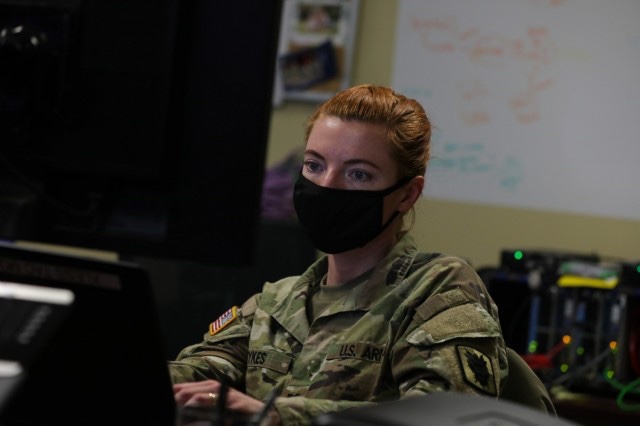
FORT BRAGG, N.C. — Soldiers assigned to the 50th Expeditionary Signal Battalion-Enhanced, 35th Corps Signal Brigade are in the early stages of using the Starlink commercial satellite system globally — improving transport diversity options for commanders and pushing data across the Army network at a faster rate.
The Starlink system, operated by SpaceX, consists of low earth orbiting satellites which provide high-speed, low-latency broadband internet across the globe. The terminal is small and lightweight, featuring a .6-meter phased array antenna and weighing only 15 pounds.
“The benefit of this system is the amount of time it takes for the signal to go up into space and come back down; it saves us a lot of time on latency,” said Chief Warrant Officer 3 Kyle Neese, the senior battalion network technician for the 50th ESB-E. “The old military satellite communication system uses what’s called geosynchronous [satellites], which orbit around the equator at a steady pace, but it takes a little over half a second for the signal to travel up and back down. With Starlink, it comes back at more than twice the speed.”
The 35th CSB aims to use the Starlink system to achieve faster broadband and increase internet speed capabilities in order to support XVIII Airborne Corps’ warfighters and their mission command systems.
“The Starlink terminal is being used to provide tactical network speeds of up to 70 megabits per second with approximately a third of the normal latency over military SATCOM” said Neese. “Testing is still being conducted to increase these speeds further in support of troops on ground.”
SpaceX is also piloting the creation of a miniature mobile satellite antenna to make the Starlink system more portable.
“So far, we’ve tested version one which comes with a dish, a power injector, and a router. The simplest way to hook the Starlink up to our kit is to take an ethernet cable and plug it into our router, which connects to our cradle point router and the cradle point router connects to our other systems as normal,” said Warrant Officer Corey McClure, a network technician for the 50th ESB-E. “This is the first of its kind to come on the market, and so far, it’s been great. It’s going to allow us to be a lot more flexible in terms of where we can set up and what we can do.”
Work is ongoing to assist with compatibility of the Starlink system with some of the current SATCOM equipment that the Army has in use.
“Starlink data rates exceed some of our current capabilities,” said Lt. Col. Mallory Wampler, the commander of the 50th ESB-E. “I know they’re still doing some engineering and design modifications to make the equipment more ruggedized like our 1.2 meter Hawkeye terminal, T2C2 and our Phoenix E systems.”
Wampler said she hopes to continue leveraging commercial off-the-shelf equipment to keep pace with technology improvements. “We are always looking to provide the most redundant Primary, Alternate, Contingency and Emergency plan or PACE plan as possible to support the warfighter and all mission command systems.”
From the initial implementation of this new equipment, the 50th ESB-E, 35th CSB has been at the spearhead of testing the Starlink system to meet the modern-day demand of signal equipment.
“We had the opportunity to work with the joint staff during the Bold Quest exercise last summer,” Wampler said. “We learned it brings a significant capability to the formation, which is good to align with our scalability. The bandwidth throughput is the most crucial factor with this new equipment, and I think it directly aligns with the 18th Airborne Corps’ line of effort when it comes to innovation and modernization. This is the future, and I’m excited to see where this equipment can take us.”
As part of XIII Airborne Corps’ Dragon Innovation Program, the 35th CSB is informing senior leaders on innovative ways to increase mission readiness in Corps Signal Brigades as part of the Army’s modernization efforts.
By SPC Maxine Baen
SCUBAPRO’s FRAMELESS is diving’s original frameless mask, and it’s still the best. Its distinctive rectangular single-lens shape is classic, providing an excellent field of view on the periphery as well as straight ahead. By eliminating the frame, you create a mask that sits closer to your eyes. This provides a broader field of view to better take in the underwater sights, plus it reduces volume which makes it easier to clear. Also, since there is no frame, the buckles attach directly to the skirt. This enables the mask to fold relatively flat for packing or for slipping into a BC cargo pocket.
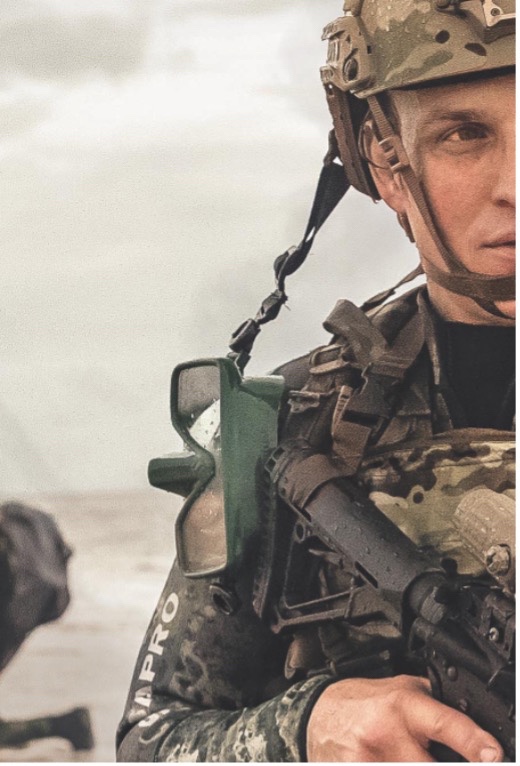
The soft silicone skirt on the FRAMELESS is comfortable yet durable, and the double-edge seal feels good against the skin. The push-button buckle system is easy to use and allows for quick adjustments. Buckles attach to flexible tabs on the skirt; this optimizes strap angle when dialing in the fit. The wide headband spreads the load on the back of the head, greatly enhancing comfort.
After decades on the diving scene, the original FRAMELESS continues to be the mask of choice among professional divers throughout the world. With its excellent field of view and comfortable fit, this stellar mask is destined to maintain its dominant position on the cutting edge of diving well into the future.
The FRAMELESS Gorilla has a slightly larger and wider lens in a matte finish. Single lens mask, featuring a unique lens and skirt assembly without a frame. The Gorilla Mask is a new SCUBAPRO classic for professionals. This single window lens design is for a superior field of vision. Mask has a tempered safety glass lens and a quality double -feathered edge silicone rubber skirt for exceptional comfort and fit. The unique assembly of the lens and skirt without a frame reduces weight, size and lowers the masks overall internal volume for a streamlined style and a snug fit.
This classic robust quality mask positions the buckles on the exterior of the mask body for convenience and comfort. The buckles system is easily adjusted with one-hand. The mask has a large easy to reach with gloved-hand, nose pocket for ear equalization. The wide split strap design provides even tension on the face for a perfect seal.
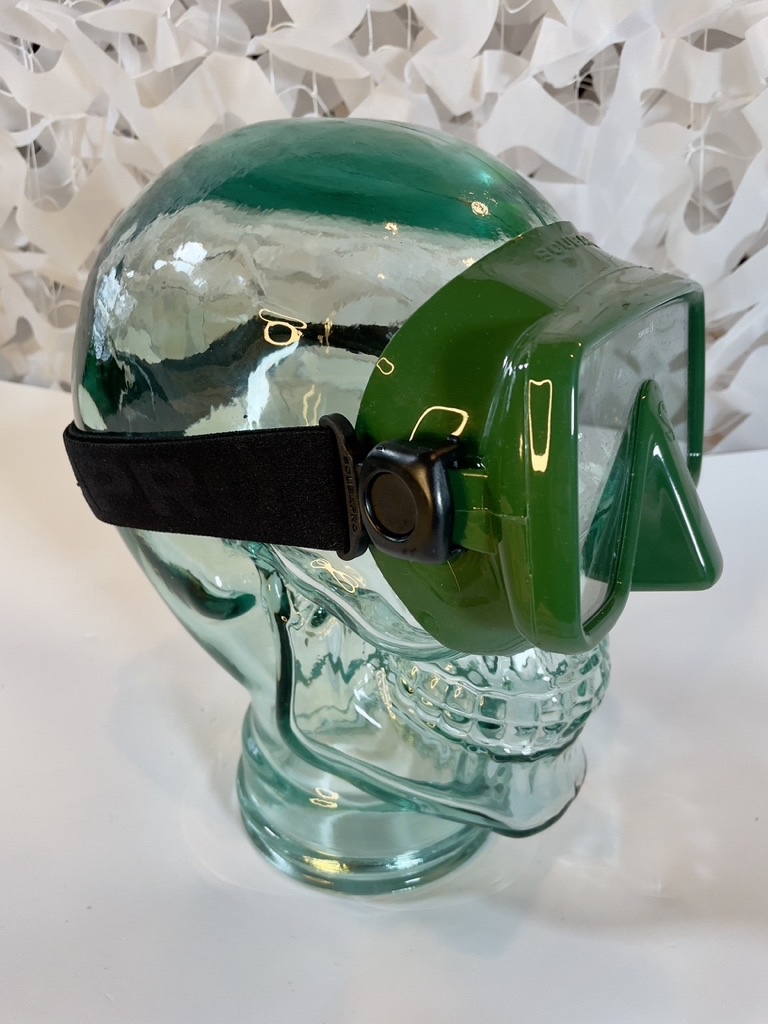
SCUBAPRO is always trying to set the bar for diving higher. The newest figures for the Frameless and Frameless Gorilla mask is the addition of the comfort strap adapter. This can be added onto any existing masks and adds several features to one of the most iconic masks ever made.
It allows the FRAMELESS / FRAMELESS Gorilla mask to be used with the SCUBAPRO comfort strap. The Comfort Strap is similar to a ski goggle strap in design, and it clips right into the mask buckle adapter and offers a wide adjustment range. It is also a lot less likely to break mid-dive as it is a nylon strap. The adapter also makes the mask non-magnetic for EOD use, as it removes all metal parts.
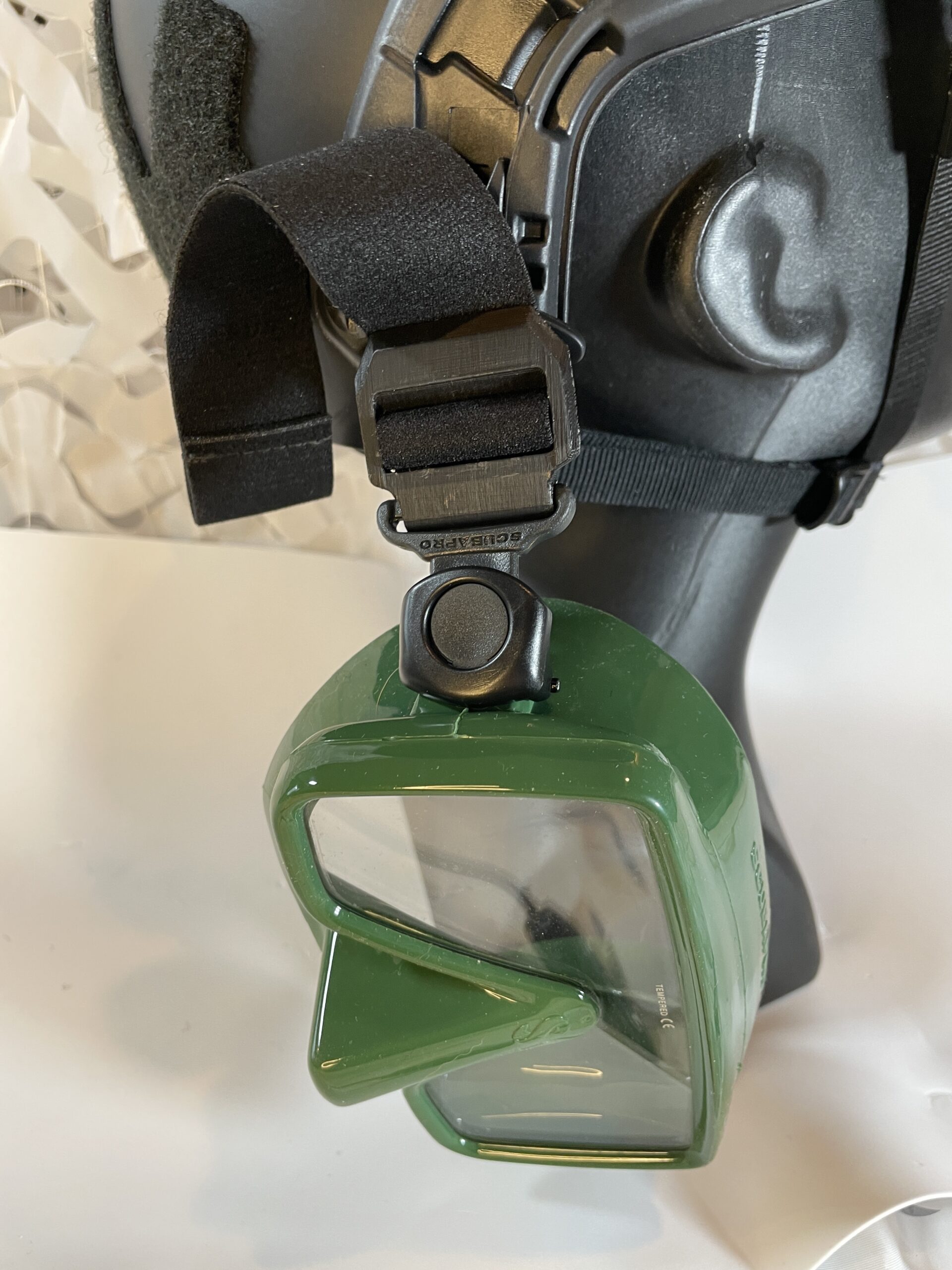
It allows the masks to be used with the Odin helmet mask strap. The Odin system allows any mask with quick clips to be attached to any helmet that has the Ops-Core ARC rail systems. To include the Team Wendy helmets and the Galvion (formally Revision) Odin straps are perfect for any time you must wear a helmet well diving. Like using a DPV, Wearing Jetboats, Search and Rescue Operations, overhead environment, or a follow-on assault when you get out of the water.
MAXWELL AIR FORCE BASE, Ala. (AFNS) —
Eleven German Language Enabled Airman Program Scholars aided the 435th Air Expeditionary Wing, Ramstein Air Base, Germany, and the 409th Air Expeditionary Group, Nigerien Air Base 201, Agadez, to share best practices with African nation partners through language support that further enhanced water sustainment at Nigerien Air Base 101, Niamey, Niger.
Through the Air Force Culture and Language Center’s Training Partnership Request, the 435th AEW requested translation support for a technical writing project to translate two major documents. The documents, totaling 62 pages, needed translation from German to English.
“This technical writing project demonstrated the can-do impact of LEAP Scholars on building partnerships in Niger and meeting short-notice operational needs through language and cultural skills,” said Christopher Chesser, AFCLC’s Language Division chief. “In response to Gen. Charles Q. Brown Jr.’s call to ‘Accelerate Change or Lose,’ our scholars are smashing old paradigms and bringing the capability to bear when and where it’s needed.”
The translation of these documents was critical for continuing a project in progress with the 435th AEW and its German partners to drill a well at a deployed location for enduring water sustainment. Without support from the LEAP team, the unit’s mission could have been postponed or derailed.
The LEAP team coordinated with members around the globe and divided into teams. Each team then divided the pages equally amongst team members to work translation. After completing the translation of their assigned section, members sent their documents to a designated partner for review. The lead from each team consolidated the documents and looked for discrepancies. The consolidated documents were then sent out one final time for review before a final copy was sent to the requester.
German LEAP scholar Maj. Franklin Nesselhuf participated in the project as his first official translation opportunity for the Air Force.
“The documents prevented the USAF from having to go through the testing and verification process a second time,” he said. “The documents we were using were a German translation from French, from the government of Niger, and revealed the water was too hard for use with filtration. That information will be very useful in informing the civil engineers where to drill and the requisite facilities needed to make the water potable. As we look to compete against Russia and China in Africa, developing bases and promoting stability in societies will be key to geopolitical success and human flourishing.”
Lt. Col. Gordon Kinney, director of staff at the 435th AEW, thanked the LEAP Scholars for their efforts in fulfilling the translation needs of this project.
“Africa is an unforgiving environment,” he said. “Between the heat, dust, wind and lack of water, our Airmen are taxed daily. This well affords our Airmen the peace of mind they need to focus on delivering secure, reliable, and flexible power projection platforms to combatant commanders and that’s thanks to the efforts of a few brilliant, dedicated LEAP scholars.”
Before the requested translation support, the German partners involved in the project had already accomplished well drilling on their side of the base. The team at 435th AEW needed a translation of these documents concerning the established well to expedite and enable drilling of the U.S. forces’ well. Without the translation of these documents, U.S. forces could not proceed with digging the well for airbase sustainment. Funding and engineering were in place, so the document translation was the final piece needed to commence the time-sensitive project.
Lt. Col. David Troxell, commander of the 768th Expeditionary Air Base Squadron, also expressed appreciation for the LEAP team and their work to support a project that will significantly enhance essential systems on base.
“This translation helps streamline a $500,000 project, ultimately supporting a $1.6 million total water production, treatment and distribution system,” he said. “This will go a long way to calm our nerves about sourcing water so we can focus on sustaining base operations, building our African partner’s defense capabilities, and enabling counter-violent extremism operations in the Sahel. This isn’t just a win for the U.S., it’s a win for all our allied and partnered nations.”
By Mikala McCurry, Air Force Culture and Language Center Outreach Team
Looking for the perfect item to get your gear squared away? The FirstSpear Sherpa has you covered.
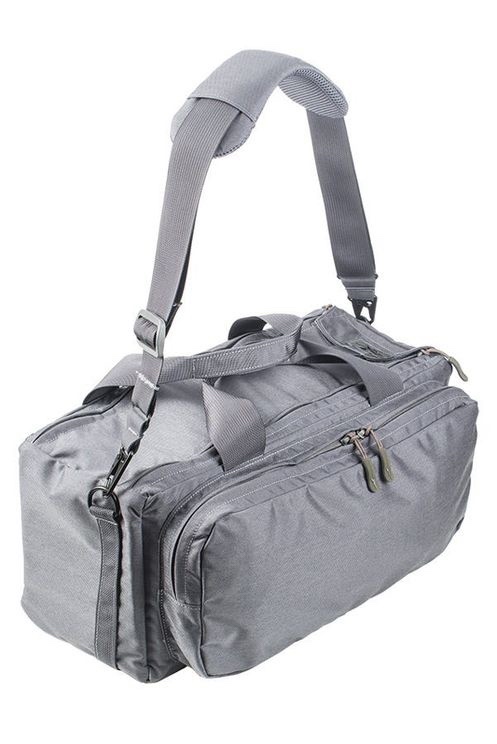
• Versatile range / equipment / travel bag
• Two padded pistol pockets
• Large main compartment with removable interior organizer panels
• Loop interior for hook backed Ragnar™ pockets and storing cell tags
• Removable padded shoulder strap with HK hooks
• Discreet appearance
• Made in the USA
• Available exclusively at FirstSpear
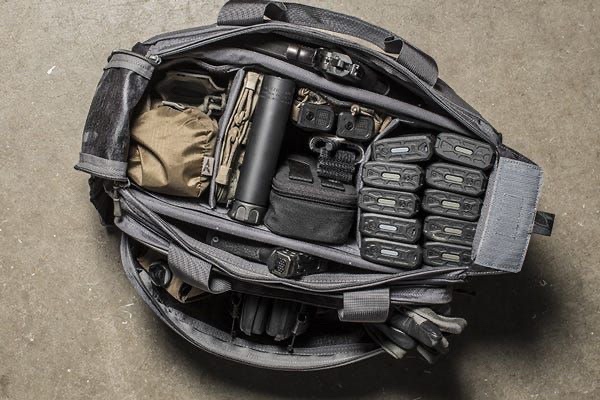
Designed in conjunction with FS professional users, the Sherpa is a hard use day bag that can be put to work across a wide variety of environments and situations. Whether you are going to the range, relaxing on the boat, or heading to a call out, this bag is the perfect size for those on the move. It comes standard with full 500D construction and premium hardware.
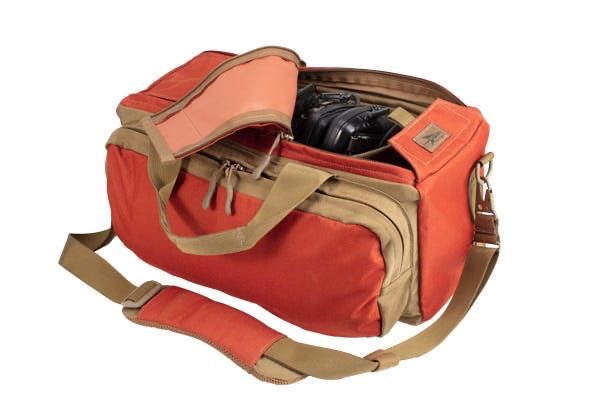
Available in manatee, black, manatee/kryptek and rust/khaki.
For more information check out: www.first-spear.com/sherpa-bundle.
BARKSDALE AIR FORCE BASE, La. (AFNS) —
Air Force Global Strike Command is modernizing older infrastructure by implementing the largest upgrade to its Nuclear Command, Control and Communication systems in more than 30 years.
In January, Barksdale Air Force Base became the first of two AFGSC bases to receive and implement the Global Aircrew Strategic Network Terminal — a new, innovative NC3 system that provides assured, survivable, fixed and transportable communications to wing command posts, munitions support squadrons and mobile support teams. Global ASNT provides the nuclear enterprise a new two-way reliable, redundant and robust communication path capable of connecting forces anytime, anywhere — allowing AFGSC greater agility and lethality than ever before.
“This system streamlines our NC3 capabilities and allows our team to deliver winning combat power,” said Senior Master Sgt. Katrina Strother, 2nd Bomb Wing Command Post senior enlisted leader. “It virtually provides commanders a standardized ‘command post in a box,’ replacing a single use system with a multi-use communication package that can talk on a multitude of networks and provides a modular design for future upgrades as opposed to costly replacements. Additionally, Global ASNT is survivable in Chemical, Biological, Radiological, Nuclear and High Yield Explosives; and High-altitude Electromagnetic Pulse environments — allowing operators the ability to work through a conflict without fail.”
Upgrading NC3
NC3 refers to an integrated weapons system comprised of facilities, equipment, communications, procedures and personnel. Ultimately, NC3 is what the National Military Command System uses to exercise and conduct continuous, survivable and secure Nuclear Command and Control.
Given the demands of a new era of command and control technology and processes, Global ASNT provides a new wave of capabilities to meet those modern demands head on.
“Global ASNT is a transformational new system that replaces Cold War era communications equipment with the intent of enhancing the warfighters capability as we transition to the command post of the future,” said Capt. Tony Scott, AFGSC Command Post NC3 ground requirements manager.
The acquisition of Global ASNT brings to bear years of research, planning and development.
“This acquisition is comparable to rolling out the new KC-46 or B-21 Raider,” said Chief Master Sgt. O’Shea Rhodes, AFGSC Command and Control Operations functional manager. “Similar to the KC-46 or B-21, this new weapons system increases force lethality and nuclear command and control capabilities. The idea is that all these acquisitions are designed to be interoperable—an important feat given the demands of today’s strategic environment.”
The new system, with acquisition costs in development and procurement ranging nearly $1.3 billion, will roll out across active duty, Guard and Reserve units in phased increments. The first phase consists of development, upgrading and installation; and the second phase consists of implementation. Specifically, the system implementation includes terminal replacement and providing communications for aircrew alert.
Total costs also factor in an estimated $82 million in enterprise-wide facility preparations, to include facility power modifications and upgrades to heating, ventilation and air conditioning units. However, Global ASNT transcends beyond the AFGSC mission and is forecasted for installation at 43 locations, across seven commands, in seven countries, on three continents, to include four major commands and the U.S. Space Force.
The introduction of Global ASNT is a high priority for the NC3 community. Directly getting after Department of Defense priorities with the aim of building a more lethal force and modernizing and recapitalizing NC3, the new terminal will equip forces with the needed tools to address future challenges in an era of strategic competition.
“This is a huge victory for the Department of the Air Force and AFGSC as we continue to modernize key NC3 systems critical to the successful management of the nuclear force at the tactical level,” Scott said.
By Keefer Patterson
2nd Bomb Wing Public Affairs