FirstSpear TV

Archive for the ‘Guest Post’ Category

Georgia Guard Activates First-Ever Electromagnetic Warfare Company

Thursday, June 12th, 2025

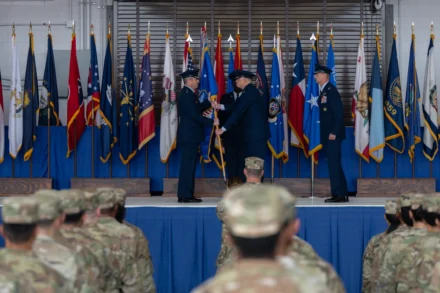
FOREST PARK, Ga. — The Georgia Army National Guard made history with the activation of the 111th Electromagnetic Warfare Company, the first unit of its kind in the U.S. Army.

The ceremony, held at the Fort Gillem Enclave, also included the assumption of command by Capt. Caleb Rogers.

Lt. Col. Luke Gurley, commander of the 221st Intelligence and Electronic Warfare Battalion, the parent command of the 111th EW, presided over the ceremony.

“Today we activate the 111th Electronic Warfare Company, a unit that will be at the forefront of our capabilities in the electromagnetic spectrum,” Gurley said.

The activation of the 111th EW Company marks a significant step in modernizing the Army’s capabilities within a domain that is increasingly critical to national security. This new formation will provide capabilities to detect, recognize, locate and identify signals of interest, supporting combatant commanders.

During his remarks, Gurley said the activation aligns with the philosophy of U.S. Army Chief of Staff Gen. Randy George, who advocates for rapidly modernizing units and equipment based on emerging needs and technology. He also believes every unit will need to master the electronic warfare fight.

“The legacy of the 221st Intelligence and Electronic Warfare Battalion and the Georgia Guard to lead from the front and provide those critical capabilities to support the warfight both locally and abroad is going to be driven by Georgia Soldiers,” said Brig. Gen. Theodore Scott III, commander of the 78th Troop Command. “And that means the world to me.”

Scott, once the leader of the 221st IEW, has watched the formation grow over the years.

“As the battlefield continues to evolve, the 221st IEW is ready,” Scott said. “It’s one of the most deployed units in the state and has been for a number of decades. And so that continues to articulate the relevancy of 221st and now the 111th.”

The 221st IEW has deployed Soldiers to Afghanistan, Iraq, Kuwait, Syria, Jordan, Turkey, Qatar, United Arab Emirates, Kosovo, Cuba and the southern border, and has supported U.S. Central Command and U.S. Indo-Pacific Command activities.

The 111th EW Company traces its lineage to the 1st Battalion, 111th Signal Battalion, the only Georgia Army National Guard unit mobilized during the Berlin Crisis in 1961 and the first unit mobilized since the Korean War.

“Today is not simply about activating a new unit. It’s about recognizing and honoring a proud legacy,” Gurley said.

Rogers, the newly appointed commander, acknowledged the unique challenges and opportunities associated with leading this pioneering unit. He said he is charged with coordinating with relevant schools and units to train on developing systems as the Army continues to identify and finalize the necessary training for the unit’s capabilities.

“No Soldier in the 111th ended up here through recruiting,” Rogers said. “They knew what they wanted when they came to the 111th. They knew that they wanted to rebuild Army EW.”

Rogers said the company will provide division commanders with four platoons of electromagnetic warfare teams, with a total of more than 80 Soldiers.

“All of our Soldiers are expected to keep up with evolving technology, and the unit as a whole is remaining flexible with the expectation of receiving a growing number of mission types,” Rogers said.

He also confirmed that the 111th EW Company will conduct its first field exercise in August at the Chattahoochee National Forest, focusing on electromagnetic support training and identifying and locating static and moving targets, including helicopters provided by the Georgia Guard’s 78th Aviation Troop Command.

“It’s a great time to be in military intelligence and electromagnetic warfare,” Scott said. “I am excited for the future.”

By Charles Emmons, Georgia National Guard

Army Accelerates Fielding of Advanced Small Uncrewed Aircraft Systems to Enhance Combat Capabilities

Wednesday, June 11th, 2025

The Army is rapidly advancing capabilities in the Short-Range Reconnaissance (SRR) program by deploying cutting-edge Small Uncrewed Aircraft Systems (SUAS) to Transformation in Contact (TiC) Brigades.

These modernized systems amplify combat power and lethality, improve troop survivability, and give commanders real-time intelligence on the modern battlefield.

COL Danielle Medaglia, UAS Project Manager, highlighted the importance of the Army’s approach.

“The technology across the UAS environment is evolving at a rapid pace,” Medaglia said. “Therefore, in parallel to fielding the next tranche of SRR we are already working on future capabilities, leveraging new mature technology and quickly iterating on Soldier feedback.”
“Continuous iteration and integration of new technology, multi-vendor awards, and continuous competition ensures we can field the most capable and cost effective UAS, at scale, that aligns with Soldier needs.”

SRR systems are integral to modern warfare. Equipped with advanced sensors, these SUAS provide real-time intelligence, reconnaissance, and target acquisition, empowering commanders with swift decision-making capabilities. Acting as force multipliers, they enable precise fires, support ground operations with timely information, enhance operational flexibility, and crucially, improve troop survivability by detecting threats and identifying safe routes.

Equipping of Next-Generation SUAS Capabilities

The Army continues to use a multi-vendor approach to drive competition and deliver technology at the speed of relevance.

“The rapid deployment of Tranche 2 SUAS to our combat teams is a testament to our commitment to providing Soldiers with the most advanced tools available,” said BG David Phillips, Program Executive Officer, Aviation. “These systems are not just about technology; they are about enhancing our operational capabilities and ensuring the safety and effectiveness of our troops on the ground.”

In April, PEO Aviation’s UAS Project Office responded to an urgent request to deploy Tranche 2 SUAS to the 1st Brigade Combat Team of the 101st Airborne Division (Fort Campbell, Kentucky) in support of their rotation at the Joint Readiness Training Center (JRTC) at Fort Johnson, Louisiana.

Demonstrating the Army’s ability to rapidly equip its forces, Skydio X10D systems were delivered to the 1/101st, under the Army’s TiC 2.0 initiative within one month of the request. Additionally, Teal Drones’ Black Widow system is preparing to field. Both Skydio and Teal will support Army TiC Brigades in developing and refining tactics, techniques, and procedures for employing networked reconnaissance and surveillance systems against emerging battlefield threats.

The Army’s Vision for the Future of SRR

The deployment and evaluation of these SUAS are part of a larger Army initiative focused on “Transforming in Contact” – evaluating uncrewed aircraft systems and aligning personnel and tactics with new technologies. The Tranche 2 system is built upon Soldier feedback with improvements such as enhanced autonomy, a new ground control station, and modular architecture.

The Army remains steadfast in its mission to strengthen Soldier lethality, creating a force that can dominate in large-scale combat operations across multiple domains.

“The modern battlefield is changing. I think we’ve seen that,” said Gen. Randy George, Chief of Staff of the Army, during a recent interview. “We’ve learned a lot over the last year and a half with our transformation in contact. So, this is bottom-up innovation that we know we need, and we know we’ve been watching what’s happening on the modern battlefield.”

From Program Executive Office, Aviation

U.S. Army Elevates Analytic Support Officers to Key Developmental Roles

Tuesday, June 10th, 2025

FORT EISENHOWER, GA.—The U.S. Army has officially designated the 17A Analytic Support Officer (ASO) role as a Key Developmental position for Captains (Capt.) and Majors (Maj.), a pivotal step aimed at bolstering the Cyber Mission Force’s ability to detect, analyze and counter sophisticated cyber threats. This designation, effective Fiscal Year 2025, underscores the Army’s recognition of the increasing importance of data analytics in modern warfighting.

The career path adjustments outlined in the Department of the Army Pamphlet (DA PAM) are primarily shaped by senior leaders within the Cyber and Electromagnetic Warfare (EW) communities. These leaders have long emphasized the criticality of ASOs, whose expertise in identifying adversaries within networks absent prior signatures forms a cornerstone of defensive cyber operations.

“Analytic support officers are force multipliers,” said the chief of cyber, Col. John Hosey. “They build the analytic scheme of maneuver that allows us to observe and understand adversaries in contested environments. The Army’s shift toward recognizing data as essential to warfighting functions reflects what we in cyber have understood for almost a decade0, given the nature of the domain.”

A Strategic Move for Talent Retention and Promotion

Elevating the ASO role to a Key Developmental position directly impacts talent management and career progression within the cyber force. Historically, technical expertise has not always translated into promotional advantage within traditional Army structures. With this change, officers specializing in advanced analytics now have a more straightforward pathway for career growth, acknowledging their contributions to mission success.

By formally incorporating the ASO role into the Key Developmental framework, the Army enhances the visibility and prestige of these officers, aligning their career trajectory with leadership expectations. This move also signals to the broader force that analytical prowess and cyber expertise improve mission and lethality and are indispensable components of national defense.

The Analytical Edge in Cyber Warfare

Analytical Support Officers dissect enormous datasets—including network traffic, endpoint logs, and diverse digital intelligence—to uncover adversary tactics. Their advanced methodologies range from statistical modeling to machine learning-driven detection techniques that identify evolving threats.

These officers leverage mathematics, programming, and deep domain expertise to grant commanders essential situational awareness, enabling rapid, informed decision-making. As cyber warfare intensifies globally, ASOs remain at the forefront, pioneering automation techniques to proactively identify and mitigate emerging cyber threats.

“The Army strategically places its most capable individuals in roles with the greatest impact, presenting the most complex challenges,” said the Principal Analytics Officer, U.S. Army Cyber Command, LTC Jacob Youmans. “The ASO exemplifies this, requiring expertise in mathematics, programming, and the cyber domain to effectively translate data into actionable insights, lead the analytic function during operations, and enable commanders’ decision-making. Designating the ASO role as a key developmental position appropriately acknowledges the ASO’s significant impact on the success of defensive cyberspace operations and signifies an important advancement for the Cyber Branch.”

A Long-Term Investment in Cyber Excellence

With this designation, the Army commits to systematically managing, developing, and retaining the specialized talent needed to confront evolving cyber threats. The move serves not only as a personnel management strategy but also as a reaffirmation of advanced analytics’ indispensable role in maintaining information dominance.

As cyber adversaries grow more sophisticated, the Army’s investment in cultivating a formidable analytic workforce ensures that the force remains resilient. The decision to classify ASOs as Key Developmental positions reinforces the ongoing priority on data-driven warfighting. This shift positions cyber operations at the heart of modern military strategy.

Story by MAJ Lindsay Roman 

U.S. Army Cyber Command

The Military Health System – A Medical System Ready for Any Challenge

Monday, June 9th, 2025

FALLS CHURCH, Virginia – One of George Washington’s many wise aphorisms, “To be prepared for war is one of the most effective means of preserving peace,” is timeless. Teddy Roosevelt updated the maxim for audiences of his time, advising the country to, “Speak softly and carry a big stick.” Today we press for Peace through Strength.

The Military Health System (MHS) is a key element in executing this strategy. With a global network of 700+ hospitals and clinics and more than 130,000 military and civilian healthcare professionals standing the watch, the MHS ensures America possesses a medically ready force that is fit to fight at a moment’s notice. The MHS sees optimizing the human factor as our strategic edge in combat. But the MHS is unlike any health care system in the United States – we go to war.

From keeping service members healthy here at home to mitigating disease overseas, we keep guns in the fight. By bringing operating rooms and ICUs to the front lines, aboard ships, and in the sky, we empower warfighters to take heroic risks, confident that the world’s best doctors, nurses, and medics have their back at each step and upon every acre on earth. There is nothing the MHS won’t do: no research too ambitious, no device too expensive, no distance too far to preserve or restore the health of our warfighters.

As Acting Assistant Secretary of Defense for Health Affairs, I’m proud to be charged with guaranteeing our medical forces provide world-class medical care and deploy rapidly to support any and all American military missions. The responsibility doesn’t end there. The MHS also ensures those who protect hearth and home -family members – also receive world-class medical care. This empowers deployed Service members to remain mission-focused without having to worry about the health of their spouse or child.

We also fulfill the solemn compact to provide health care to those retirees who devoted their life’s work and innumerable sacrifices in the service of this Nation. As a retired Navy physician and a military spouse, I understand the sacrifices Service members and their families make, both what it’s like to deploy and what it’s like to be left behind. This mission is both intensely personal and intensely rewarding.

That’s why the current underperformance of the new TRICARE contract is especially frustrating to me. The TRICARE health plan is a key pillar of the military’s healthcare delivery system. Millions of family members and retirees rely on TRICARE’s network of providers and hospitals for both medical care and mental health services, like autism care that families count on each and every day. The Defense Health Agency

and I are working tirelessly to hold the contractors accountable, to grant waivers to ensure access to specialty care, and to help families navigate this transition. We’re making progress, but not quickly enough. I will continue to work on behalf of military families until this system is fixed, and to ensure this doesn’t happen again.

The garrison mission of the MHS is carried out in military medical treatment facilities across the globe. The mission is best distilled to its essence: readiness. Medical readiness is combat readiness, and while we’re grateful to have the current moment of relative peace, we must remain vigilant. When the enemy strikes, we need our Service members physically fit, mentally aware, and healthy to defend our nation.

Throughout history, interwar periods have had a pernicious effect on medical readiness, so much so that these periods bear the eponym: The Walker Dip. In 2018, Surgeon General of the British Armed Forces Vice Admiral Alasdair Walker described a recurring and troubling pattern dating back to the 19th century. From the Napoleonic War (1803-1815) to Iraq and Afghanistan, hard-earned lessons and experience gained in combat, such as the importance of specialized trauma care and transfusion medicine, are forgotten and must be relearned. Sadly, these skills “dips” diminish survival rates, resulting in greater injury and loss of life. Forewarned is forearmed. It’s my personal mission to ensure that the skills and expertise leading to the historically high battlefield survival rates that we achieved in Iraq and Afghanistan are never forgotten.

In a world of profound geopolitical risk and competing economic priorities, how can military medicine avoid the Walker Dip? How can it successfully compete for resources with modernization and replenishment of our weapons stock? Simply put, we can’t afford not to.

Fortunately, military medicine isn’t in competition with warfighting priorities such as weapons systems. Rather, it potentiates the ultimate weapons system: the American Soldier, Sailor, Airman, Marine, and Guardian. Medically ready forces keep guns in the fight and ready medical forces honor the pact that America makes to its sons and daughters to provide world-class medical care anytime, anywhere, under any conditions.

The strategy to maintain peak readiness, to cheat the Walker Dip, is three pronged: Support, Sustain, and Strengthen.

  • We Support our warfighters in battle. This is our raison d’etre.
  • We Sustain our skills by doing high volume, high complexity medical care.
  • We Strengthen our chain by fortifying our force generation platforms.

These goals are mutually reinforcing, fostering a virtuous cycle of success. These priorities require resources, leadership, and commitment. I have infinite confidence in the commitment, skill, and dedication of our people. The MHS is one of the best healthcare systems in America and the very best military medical system in the world. We are blessed with outstanding and supportive leaders in the Department who I will continue to work with to ensure the MHS has what it needs. I will continue to tell our story to our elected representatives on Capitol Hill and advocate for our warfighters to ensure they have the medical support they deserve.

Military medicine is a no-fail mission. I’m confident that our success will continue to reinforce the strength that sustains the peace. But should the peace be broken… our preparation will ensure we break the Walker Dip streak.

By Dr. Stephen Ferrara, Acting Assistant Secretary of Defense for Health Affairs

Army Leaders Propose Bolstering Lethality Through Transformation

Sunday, June 8th, 2025

WASHINGTON — During a hearing with Congress members, the Army’s top leaders shared details on the Army Transformation Initiative, which calls for cutting spending on stagnant programs, upgrading equipment and restructuring forces.

In April, Defense Secretary Pete Hegseth called on Army leaders to prioritize building lethality and to eliminate unnecessary cost.

Following the success of Ukraine’s effective, low cost unmanned aerial systems attacks on Russia’s bomber fleet, Secretary of the Army Daniel P. Driscoll stated before lawmakers that the Army needs cheaper solutions to bolster U.S. Soldier lethality. Using more than 300 drones in a single swarm attack last week, Ukrainian forces dealt a catastrophic blow to the Russian military.

“At a cost of a mere tens of thousands of dollars, Ukraine inflicted billions in damage, potentially setting back Russia’s bomber capabilities for years,” Driscoll said Wednesday. “The world saw in near real time how readily available technology can disrupt established power dynamics. And drones are but one example of a broader shift. The Army needs to keep pace.”

As the service prepares to posture its Fiscal Year 2026 budget, Driscoll and Gen. Randy A. George, Army chief of staff, asked Congress for more “agile” or flexible funding to support unmanned aerial systems and counter-UAS initiatives that bolsters the force. The Army’s top officer said that the service cannot afford to be locked into a program of record but rather must purchase new technology when available.

“Technology is changing too rapidly,” George said. “We’ve got to be able to buy capabilities, not specific programs.”

To restructure the Army into a more efficient, combat ready force, George said that the service would cancel obsolete unnecessary programs that do not contribute to enhancing the lethality of Soldiers, including eliminating a budget request for more Humvees to be added to the service’s fleet of vehicles.

In May, the Army stopped funding to the M-10 Booker Tank, citing design flaws and concerns over its deployability. Instead of spending on programs like the M-10, Hegseth said the service will focus on drones and counter drones, “off the shelf” technology, and strengthening sensors and the Army’s network.

The service will also cut funding to the AH-64D Apache Attack Helicopters, removing Apache battalions from the active component. George said four Apache battalions will remain in the National Guard, which will eventually receive the AH-64 E model. He added that UH-60M Blackhawk, a medical evacuation aircraft, will replace the UH-60L and V models.

Driscoll also proposed giving the service more autonomy on repairing certain equipment immediately instead of waiting on defense manufacturers. Driscoll cited one example, where at one installation Soldiers could not use a piece of advanced technology for up to a year due to a missing piece. However, the Soldiers learned they could 3-D print the required part at a fraction of the manufacturer cost.

Army also plans to cut 1,000 positions from the Department of the Army staff and will move many Soldiers to more combat-related jobs, George said.

Upgrading Soldier training

For the first time, the Army Reserve partnered with active-duty Army units in the largest mass exercise of its scale, Mojave Falcon. Beginning May 28, over 9,000 reservists and active-duty Soldiers participated in the mass logistics training moving equipment and supplies across vast distances in northern and southern California.

“When not deployed, our units are conducting tough, realistic training at their home stations and at our combat training centers,” George said. “Our Army is a professional team that remains focused on its warfighting mission, and young Americans want to be a part of it. And this is evidenced by our strong recruiting numbers this year.”

The service announced it had met its recruiting goals early, welcoming more than 61,000 new Soldiers to its ranks, despite raising its recruiting goal by 10 percent from 2024.

The service recently began phase two of Transformation in Contact, or TiC, the service’s initiative where Soldiers rapidly train, equip and field new technology. The 2nd Cavalry Regiment from Rose Barracks, Vilseck, Germany and 1st Armored Brigade Combat Team, 3rd Infantry Division, from Fort Stewart, Georgia will take part in TiC 2.0, which, expands the scale to two divisions and two Stryker brigade combat teams. The Soldiers will incorporate UAS and counter UAS.

In January, the 3rd Brigade Combat Team, 10th Mountain Division from Fort Johnson, Louisiana, successfully completed a TiC training rotation as part of Combined Resolve, an annual exercise hosted by U.S. Army Europe and U.S. Army Africa.

One TiC brigade that trained in Europe improved to 300 percent more effective in lethal targeting, George said.

“This was a great proof of concept,” George said. “It confirmed that our formations are capable of rapidly improving their lethality.”

“Transformation in contact taught us some valuable lessons about what our Army should be buying and how we should be buying it, and we’re just getting started,” George added.

By Joe Lacdan, Army News Service

Mountain Peak Prepares 10th Mountain Soldiers for JRTC Rotation

Saturday, June 7th, 2025

FORT DRUM, N.Y. — In May, Soldiers from the 2nd Brigade Combat Team, 10th Mountain Division (LI), participated in Mountain Peak 25-01, a brigade-level, large-scale combat operation training exercise designed to prepare the unit for an upcoming rotation at the Joint Readiness Training Center in Fort Johnson, Louisiana, later this summer.

The exercise began with a joint forcible entry operation, in which units from the 2nd BCT and 10th Combat Aviation Brigade inserted forces into contested terrain. After the initial objective was secured, brigade elements shifted into a force-on-force scenario, in which supporting units took on critical roles throughout the operation.

Throughout the training, units maneuvered across rugged terrain and executed coordinated assaults to secure key objectives.

“It’s pretty impressive, just the level of planning that has to go into making sure logistics, tactics, maneuvering — all of it — comes together,” said 1st Lt. Rex Jones, a platoon leader with 4th Battalion, 31st Infantry Regiment. “And making sure every section gets something out of this, not just one or two.”

The Multi-Functional Reconnaissance Company operated forward of friendly lines, providing commanders with battlefield intelligence throughout the operation. Teams conducted close reconnaissance while avoiding detection to collect information and report on enemy positions.

“We bring a lot of diverse experience to the table,” said Staff Sgt. Austin Tyson, senior team chief with MFRC. “That gives us the operational freedom to make autonomous decisions and exploit weaknesses in the enemy wherever we find them.”


The 10th Mountain Division’s G3 team managed exercise planning and control.

“Mountain Peak is the only force-on-force event of this scale that we do here on Fort Drum,” said senior G3 exercise coordinator Will McNutt. “It’s a heavy lift to support from an exercise control perspective. Nothing else approaches the size and scale of Mountain Peak — many posts don’t even run an event like this for their brigades.”

Units conducted air assaults, coordinated movements across complex terrain, and integrated with aviation, reconnaissance, and multinational support assets.

Drone operators from the Canadian Manoeuvre Training Centre supported the opposing force with unmanned aerial systems. Their integration added complexity to the training and increased the realism of simulated threats.

“The scope and scale of this exercise have been instrumental in enabling our drone teams to build skills, push system limits, and foster seamless integration between units,” said Capt. Wesley Morfoot, staff officer, Canadian Manoeuvre Training Centre.

“Through trust, commanders and their teams have truly empowered them with the freedom to innovate in the field.”

Training emphasized mission command, unit-level coordination, and adaptation against a live opposing force.

The exercise allowed Soldiers to rehearse key tasks under realistic conditions while gaining experience across the brigade.

Mountain Peak allows Soldiers to put their skills to the test and hone in on their proficiency. This ensures every 10th Mountain Soldier maintains readiness and lethality, ultimately preparing these Soldiers for real-world operations.

By SGT Samuel Bonney

FirstSpear Friday Focus: Short & Long Sleeve Field Shirts (ACM 150)

Friday, June 6th, 2025

Lightweight Wool Built to Perform, Year-Round

  • American-Sourced Wool
  • Antimicrobial & Odor-Resistant
  • Lenzing FR: Flame Resistant / No Melt-No Drip
  • Proudly Made in the USA

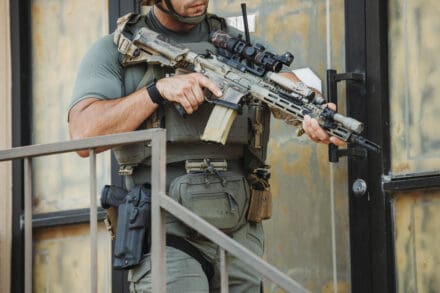
The ACM 150 Long Sleeve Field Shirt and Short Sleeve Field Shirt are your summer-ready solution that doesn’t compromise on performance. Lightweight and breathable, it’s designed with a blend of 55% Lenzing FR, 33% wool, and 12% nylon—giving you flame resistance, moisture-wicking, and all-day comfort even in the heat.

Whether you’re using it as a base layer or wearing it on its own, this shirt excels in hot-weather environments and transitions seamlessly across seasons.

Available in Heather Grey, Black, Charcoal, Commando, and Stone Grey. Sizes S–2XL.

Learn more at: www.first-spear.com.

NSA Naples Sailors Make History, Excel at European Shooting Competition

Friday, June 6th, 2025

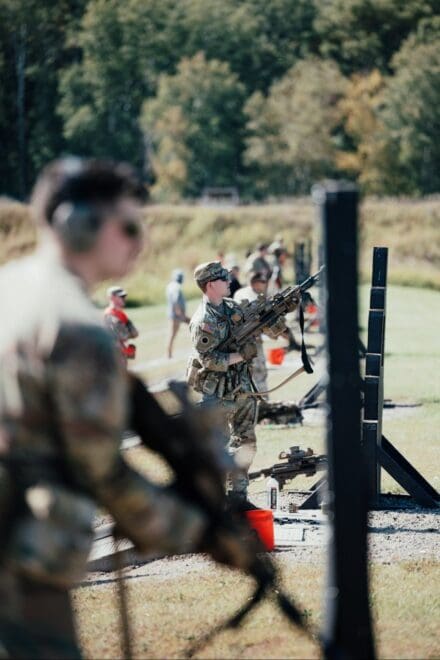
NAPLES, Italy – Sailors from the U.S. Naval Support Activity (NSA) Naples’ Security Department made history Apr. 16, 2025 by participating in the annual European Paratroopers 8th Small Arms Marksmanship Challenge in Naples.

250416-N-TY639-2311 NAPLES, Italy (April 16, 2025) Sailors attached to U.S. Naval Support Activity (NSA) Naples’ Security Department compete at the European Paratroopers Small Arms Marksmanship Competition in Naples, Italy, April 16, 2025. NSA Naples is an operational base, home to over 50 commands and 8,500 personnel, providing crucial support for U.S. and allied forces across Europe, Africa, and the Central Command’s areas of responsibility. From air and port operations to force protection and logistics, the base ensures combat readiness while prioritizing the well-being of service memebrs and their families. (U.S. Navy photo by Mass Communications Specialist 2nd Class Matthew Nass)

The four Sailors were the first-ever U.S. Navy participants in the competition’s eight-year history.

The multinational event brought together more than 30 military members from across NATO, including the United States, Italy, Greece, Sweden, Germany, Spain and Norway. The annual competition tests combat marksmanship and builds camaraderie and trust among allied forces.

“The event is about training but also building a brotherhood amongst these different nations,” said Col. Giuilio Festa, president of the European Paratroopers Association. “We usually only have members from the U.S. Army and U.S. Air Force; this is the first time we have members from the U.S. Navy. I want to thank them for helping set up and run this event.”

NSA Naples Security personnel served as the primary instructors and line coaches for all rifle courses of fire throughout the competition.

Chief Gunner’s Mate Richard Ashworth, NSA Naples Security Department Armory Supervisor, said the experience was rewarding.

“Interacting with the other NATO countries was a valuable opportunity. They were highly motivated to participate and also to learn,” Ashworth said. “The event was great. Everyone was receptive to the training that was given, and everything was very professional and well-coordinated.”

While all participants had prior firearms experience, the instructors from NSA Naples had to adapt their coaching to account for language barriers and differing national protocols.

In addition to instructing, the Sailors achieved impressive results. The team earned the European Paratroopers Association’s Gold Marksmanship Lanyard for each member, a prestigious recognition of shooting excellence. Gunner’s Mate 1st Class Christopher Marthini secured third place individually, and all four U.S. sailors finished in the top eight. They also earned marksmanship badges from Swedish and Norwegian forces, taking home two bronze and two silver.

By participating and refining their marksmanship skills, these Sailors boosted their readiness to respond swiftly and efficiently, providing vital support when the NSA Naples community needs it most.

“This year’s Navy participation exceeded expectation,” Festa said. “They played an important role, and I hope we continue to see more involvement from the Navy in the future.”

NSA Naples is an operational ashore base host to more than 50 separate commands and approximately 8,500 personnel. The base provides a forward-deployed operational platform to the Fleet, enables the warfighter, and supports the family. It supports U.S. Naval Forces Europe-Africa, U.S. SIXTH Fleet, NATO, and Combatant Commander’s strategic priorities by providing air and port operations, force protection, emergency services, logistical and administrative capabilities, and essential quality of life products and services to the Fleet, joint and allied forces to ensure stability in the European, African, and Central Command areas of responsibility.

By Petty Officer 2nd Class Matthew Nass