TYR Tactical

Archive for the ‘Guest Post’ Category

Black Triangle Announces the Midnight Creeper MK4

Tuesday, November 2nd, 2021

The Ultimate Non-Metallic Fighting Knife

Available November 26th, the Midnight Creeper MK4 is a much-needed modification to our most popular G10 knife.

An index point is a touch-based feature that tells the user that they are grabbing the knife the same way every time. So, what would happen if we took the MK1 Mod2 and added an index point to it? That is the question asked by Johnny Primo of Courses of Action. Some students at recent Courses of Action combatives classes happened to also be Black Triangle end users. A common theme among them was the inability to get a consistent grip on the handle. This feedback was just the information we needed.

We kept the same overall length of the MK1 but gave the handle a tune-up. The symmetrical finger choils and flared pommel give the user a secure and ambidextrous grip.

The sheath is flipped so the bevels face the body when drawing the knife. It keeps the knot away from the skin, thus eliminating a hotspot. This is another common suggestion from end users.

The flipped sheath and clip position allows a right-handed user to carry the knife on the appendix support-side in conjunction with an AIWB firearm. For those carrying strong-side, the clip orientation allows for the knife to be slightly canted to the rear, giving the user more comfort when sitting.

The MK1M2 is not going away, however for those already carrying a MK1, the MK4 is definitely the next level up. 

These additions to an already trusted and proven product makes the MK4 the ultimate non-metallic fighting knife.

Fibrotex – Past, Present… Future!

Tuesday, November 2nd, 2021

This video will whet your appetite for a big report tomorrow on some very exciting signature management technologies from FibroTex.

TacMed Tuesday – The Sonoma County Sheriff’s Office Bomb Squad is Prepared for Combat Trauma

Tuesday, November 2nd, 2021

In every mission encountered by the Sonoma County Sheriff’s Office Bomb Squad (EOD), there’s a possibility something could go wrong resulting in serious, potentially life-threatening injuries. With the help of Spencer Bottomley, a deputy at the department, the team upgraded their medical gear to better respond to these types of emergencies. Spencer was able to provide insight into the best gear for an EOD and ultimately, the team decided to add four new custom TacMed™ R-AID® Kits and place them in multiple vehicles. Now, these easily accessible kits enable team members to provide life-saving treatment until medics can access a safe scene.

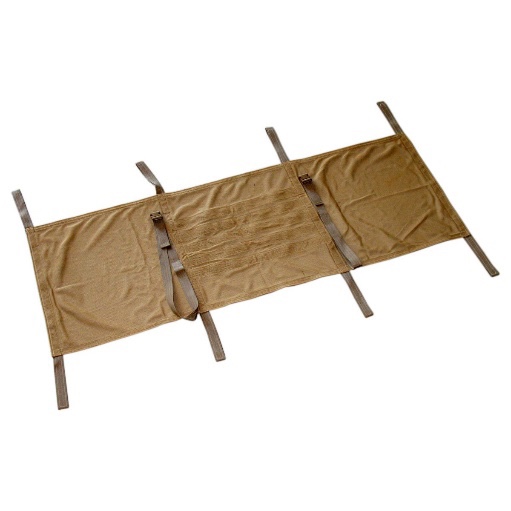
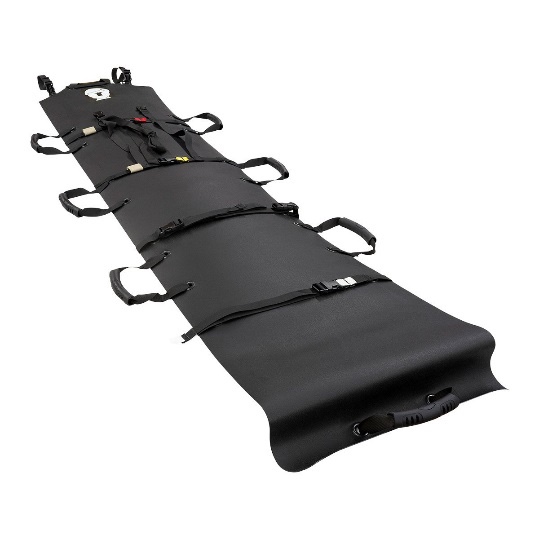
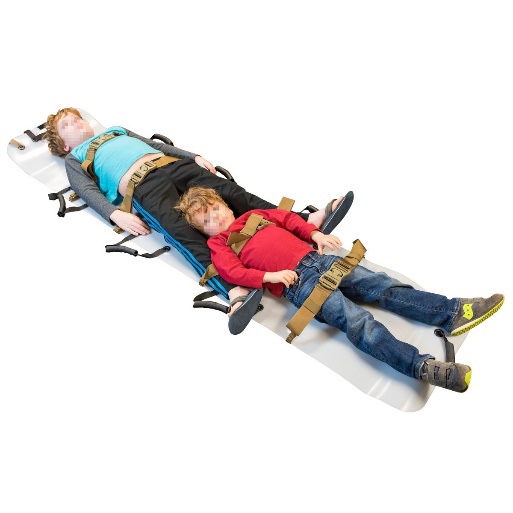
The TacMed™ R-AID® Kit is packed full of life saving gear to treat multiple casualties. For the department, the kits were customized from their original packing list to include the specific medical gear needed for their missions, such as the Phantom® Litter to quickly and easily move casualties to a secure location.

After the kits were acquired, Spencer led a training course for the entire EOD team on the kits’ components and how to stage components inside the kits for rapid use during an emergency. In addition to the EOD team improving their tactical medical capabilities, each deputy at the Sonoma County Sheriff’s Office is issued a tourniquet after completing first aid training. Typically, a deputy will carry the tourniquet on their duty belt or pocket for easy access during an emergency. “I carry a SOF® Tourniquet in my cargo pocket on duty every shift,” said Spencer. The Sonoma County Sheriff’s Office continues to demonstrate how deputy and community safety is a top priority with each new initiative. Thanks to Spencer and the rest of the department, the bomb squad is better prepared than ever to handle life-threatening injuries on the job.

AF Supports Historic Army Warfighter Exercise, V Corps Becomes America’s Forward-Deployed Corps in Europe

Tuesday, November 2nd, 2021

The 505th Command and Control Wing supported the U.S. Army’s Mission Command Training Program resulting in the validation of Victory Corps as a European Command allocated corps headquarters during the execution of Warfighter exercise 22-1 at Grafenwoehr, Germany, Sept. 27-Oct. 5.

The multi-component exercise, which had the main command post at Grafenwoehr, Germany, a rear command post at Fort Riley, Kansas, and a U.S. Air Force Air Component and Air Operations Center replication cell at Hurlburt Field, Florida, tested the V Corps’ ability to mission command large-scale combat operations, or LSCO, in a multi-national environment.

The mission command proficiency of 1,402 joint service personnel including Soldiers from U.S. Army Europe and Africa, V Corps, 3rd Infantry Division, 34th Infantry Division, and their respective subordinate units were tested and honed during the execution of WFX 22-1.



Warfighter exercises are distributed, simulation supported, multi-echelon, tactical command post exercises fought competitively against a live-thinking regional adversary in a complex environment to prepare units for future LSCO. 

“The warfighter [exercise] is rigorous, complex, and very time-intensive. It is a nine-day sprint in large-scale ground combat operations. It’s the only time our corps and divisions are collaboratively immersed against a near-peer competitor, where they’re forced to really understand and improve their wartime mission,” said U.S. Army COL. Robert Molinari, chief of operations Group A, Mission Command Training Program, U.S. Army Combined Arms Center.

A substantial part of any Warfighter exercise is replicating the air component; this mission is the responsibility of the U.S. Air Force’s 505th CCW, Detachment 1, based at Fort Leavenworth, Kansas. This total force integrated unit’s mission is to provide airpower expertise and exercise support to the U.S. Army’s MCTP and act as the U.S. Air Force’s Air Warfare Center liaison to the U.S. Army’s Combined Arms Center.

“This was probably the most significant air component replication for a WFX that we’ve done to date,” said U.S. Air Force Col. Michael Goodman, 505th CCW, Det 1 commander.  “Most WFX events utilize a corps to role-play the Combined Forces Land Component, but GEN. Cavoli, the U.S. Army Europe and Africa commander, took the opportunity to train V Corps, his assigned subordinate unit, directly as the CFLCC. 

Goodman continued, “The entire USAREUR-AF staff participated and imposed a level of discipline and realism that we’ve never seen during the WFX.  It was impressive and helped ensure that the aligned Airmen got the most realistic we’ve seen to date.” 

For WFX 22-1, 505th CCW, Det 1 members forward-deployed globally to multiple exercise locations integrating into the exercise control group, standing up the exercise’s replicated AOC, and acting as observer, coaches/trainers providing subject matter expertise in areas that include intelligence, surveillance, and reconnaissance, airspace management, tactical air control, and joint all-domain operations.

“V Corps did a great job. They gave 110% daily. They were receptive to coaching and observations and every single day, across the board, they got better,” said Molinari. “So, I think it was a fantastic opportunity for V Corps to really see themselves, to improve on, and to prepare for what the Army might ask of them.”

“Our purpose is to ensure we coach our tactical air control party, or TACP, members to improve not just their technical proficiency, but also their overall integration with their supported Army maneuver unit command teams and planners.”  U.S. Air Force Maj. Thomas Hopkins, 505th CCW, Det 1 chief observer and coach, Fort Leavenworth, Kansas. Hopkins made sure his team of coaches/trainers did not lose sight of their larger purpose during the event. 

Hopkins continued, “The bottom line is that we do everything we can to assist the Army’s MCTP in providing a training environment which enables the TACP units to leave the exercise a more ready and lethal enabler than when they arrived.”

The 505th CCW, Det 1’s main U.S. Air Force training audience were the Airmen assigned to the 4th Air Support Operations Group, Wiesbaden, Germany, and their subordinate units in the exercise.

“The men and women at the 4th ASOG did a phenomenal job under the leadership of Col. Dustin Dupuis, the 4th ASOG commander and also the V Corps air liaison officer,” said Goodman.   “Col. Dupuis and his team made significant gains validating new capabilities and authorities that will enable increased lethality of the joint force in LSCO.  It was huge win for the joint force and they made it happen.”

A team of 47 Airmen from the 505th Combat Training Squadron, Hurlburt Field, Florida, provided AOC replication during WFX 22-1 in coordination with the forward-deployed exercise control group from the 505th CCW, Det 1, and this team represented a full-spectrum air component replication to the U.S. Army training audience.  

The 505th Communication Squadron configured and maintained command, control, communications, computers, and intelligence, or C4I, and models and simulations, or M&S, systems, in addition to collaborative tools (chat, voice, email, etc.). 

“The support provided by the 505th CS allowed the AOC controllers to push real-time updates for air tasking orders and airspace control orders to theater representatives and ensured a valid common operating picture was in play,” said U.S. Air Force Lt. Col. Veronica Williams, 505th CS commander, Hurlburt Field, Florida. 

WFX 22-1 was a crucial exercise for V Corps in that it marked the final event in a yearlong effort to become a fully certified, operational, and combat-capable warfighting headquarters after their reactivation as a corps in October 2020. 

“The success of WFX 22-1 has provided the European region and our NATO allies a forward-deployed Corps ready and equipped to meet the demands of a near-peer conflict,” said U.S. Air Force Capt. Darrin Nottingham, 505th CS operations officer, Hurlburt Field, Florida. “The 505th CS performed admirably while upholding their squadron’s three main objectives: train, innovate, and communicate.” 

Providing air component replication to the joint force is one of the primary mission capabilities of the 505th Combat Training Squadron at Hurlburt Field, Florida. 

“As our strategic competitors present increasingly complex problem-sets, it is more vital than ever that our joint partners have a full understanding of the capabilities of airpower and the role of the air component in tackling emerging challenges,” said U.S. Air Force Lt. Col. Michael Power, 505th CTS director of operations.

Power continued, “The professionals at the 505th Combat Training Squadron are uniquely positioned to combine a deep experience in Air Force command and control procedures with a keen understanding of developing concepts to replicate the air component and provide an exceptionally realistic operational-level training environment.”

During the 8-day exercise, the 505th CTS’s team facilitated 232 sorties to present full-spectrum airpower, produced over 19 thousand airspace control measures, and published 43 air component planning documents to inform U.S. Army planners.

WFX 22-1 exercised the people, processes, and procedures to ready the joint force for LSCO against near-peer adversaries. 

V Corps will assume enduring mission requirements in support of U.S. Army Europe and Africa as a split-based headquarters with locations at Fort Knox, Kentucky, and Poznan, Poland. The return of the Victory Corps to Europe enhances security in the region and reassures our NATO and partner nations of the United States’ commitment to our European allies. WFX 22-1 was V Corps’ final certifying exercise in becoming the U.S. Army’s fourth corps headquarters and America’s forward-deployed corps in Europe.

The 505th CTS and 505th CS, Hurlburt Field, Florida, report to the 505th Combat Training Group, Nellis Air Force Base, Nevada, and the 505th CCW, Det 1, Fort Leavenworth, Kansas, report to the 505th CCW which is headquartered at Hurlburt Field, Florida.

Story by Deb Henley, 505th Command and Control Wing

Photos by PFC Devin Klecan

New From Sitka Arrowhead, The MLX Vest – MDWi

Monday, November 1st, 2021

PROTECTING THE CORE

Vests, love them or don’t, let’s agree they take up minimal room when packed and provide optimal performance when worn; making them a must-have cross functional piece.

Continuing to build on a core assortment for the Special Operations end-user, the newly added MLX Vest – MDWi from SITKA Arrowhead provides the optimal balance between warmth, weight and durability, without restricting mobility.

An active insulation mid-layer piece utilizing Polartec® Alpha® Direct insulation, the MLX Vest – MDWi  (Midlayer Vest – Midweight Insulated), weighs in at a mere 8oz and can be compressed down to the size of a 16oz ‘Tall Boy’ beer can.

Taking up minimal room when packed and providing optimal performance when worn, makes it a must have cross functional piece when loading your Recce Ruck or Assault Pack for operations, or even within your EDC Bag when conducting administrative travel.

Utilizing Brookwood AEROLITE H600 30d Nylon ripstop face fabric creates a lightweight, durable façade with a mechanical stretch that allows for movement focused fit. Combined with Polartec® Alpha® Direct Insulation it provides warmth even when wet and dry’s fast.

Features:
• Wet Weather Jacket Compatible – allowing vest to be functionally worn as insulation with a Wet Weather Protective Jacket
• Full Zip Center Front Closure – enhancing ventilation when mobile and the ease of donning and doffing
• Left Chest Zip Pocket – allowing for the secure carriage of mission essential items
• Lower Torso Hand Pockets – allowing for the convenient and secure carriage of mission essential items
• TAA Compliant and available in Black, Lead and Coyote

Find your nearest dealer here.

Project Origin Robotic Vehicles Join JRTC Rotation in Historic First

Monday, November 1st, 2021

DETROIT — In an historic first, U.S. Army Soldiers integrated a Robotic Combat Vehicle (RCV) surrogate into the opposing force during a recent rotation at the Joint Readiness Training Center at Fort Polk, Louisiana, in September. This event enabled the Army to gain valuable insight in how best to utilize robotic vehicles in combat and furthered its ongoing Campaign of Learning around RCV development.

During the exercise, Soldiers from the 1st Battalion (Airborne), 509th Infantry — known as Geronimo — used two Project Origin vehicles (RCV surrogates) in a simulated battle with the 3/101st (Air Assault). The Origin vehicles are an Army Development Command (DEVCOM) Ground Vehicle Systems Center (GVSC) prototyping effort and provides the Army with the ability to conduct rapid technology and autonomous behavior integration that Soldiers assess during multiple touchpoints each year.

While on-site engineers and technicians collected technical data, the Soldiers in the field further validated the combat benefits of adding robots to a manned-unmanned teamed formation and identified new capabilities desired for the next Project Origin Soldier operational experiment.

“With these units, the human survivability rate increases significantly,” explained Sergeant First Class Eugene Lackey (Pathfinder Company). “This system allowed us to close with and destroy the enemy safely from a distance. It [also enabled] us to the find the enemy before he could find us. It is a great tool and I wish we could have it for little bit longer to really see how we can change the way wars are fought.”

The feedback from Geronimo Soldiers adds to the Army’s growing library of information on the use of robots.

“Project Origin’s key competency is its ability to collect Soldier feedback and technical data, use this information to rapidly iterate both its software and physical payloads, and evaluate the changes in relevant tactical environments,” said Todd Willert, Project Origin project manager at GVSC. “The lessons learned during Project Origin experiments directly support the development of the Robotic Combat Vehicle and the Army’s forthcoming Ground Autonomy Software, user interfaces (Warrior Machine Interface), and modular architectures.”

GVSC and the Army’s Next Generation Combat Vehicles Cross Functional team, both based at the Detroit Arsenal in Michigan, and the Army Capability Manager-Infantry Brigade Combat Team (ACM-I), based in Georgia, worked together to integrate the Project Origin platforms into the JRTC rotation.

“JRTC stressed the systems to their breaking points, allowing us to identify problems that would undoubtedly arise in the future,” said MAJ Cory Wallace, RCV lead for NGCV CFT.

During the exercise, the Soldiers and the robots also endured a tropical storm, further adding to its complexity.

Among the highlights of the exercise, the Geronimo force used the Project Origin platform to block a key intersection for 36 hours, an effort that benefitted from Origin’s low heat signature while conducting long hours of battery-powered “silent watch.” In addition, Geronimo used the project Origin vehicles to deny helicopter landing zones and conduct route reconnaissance. Using the robots to conduct these operations – the two platforms were controlled by four operators and an NCO – allowed the Soldiers who would have been assigned those tasks to be assigned different missions.

“This validated the notion that if we assign the dumb, dirty, dangerous missions to the robots, we can re-assign our Soldiers to the high-priority complex missions and tasks,” Wallace said.

The Army has additional Soldier Touchpoints, with Project Origin and other RCV platforms, scheduled throughout 2022 as it prepares to make future decisions on the potential acquisition of RCVs.

By Dan Heaton

SCUBAPRO Sunday – UK Royal Marines

Sunday, October 31st, 2021

The Royal Marines are a maritime-focused, amphibious light infantry unit that can deploy on short notice to support the United Kingdom Government’s military and diplomatic objectives worldwide. They are designed for highly maneuverable operational situations. The Corps provides lead element expertise for the NATO Northern Flank and are optimized for high altitude operations as the United Kingdom Armed Forces’ specialists in cold-weather combat.

The Royal Marines were formed to serve as the infantry of the Royal Navy. On 28 October 1664, the first unit of what would become the Royal Marines was formed. The Duke of York and Albany’s Maritime Regiment of Foot was renamed the Admiral’s Regiment after the Duke of York and Albany’s Maritime Regiment of Foot was disbanded. In 1672, the title ‘Marines’ first appeared in records. The Marine Regiments were then disbanded and re-established whenever the United Kingdom’s overseas colonies were threatened. His Majesty’s Marine Forces were established in 1755 and placed under Admiralty authority at Chatham, Plymouth, and Portsmouth. For many years after that, the Marines were connected with these communities. They were given the title Royal Marines by George III in 1802. The Royal Marines engaged in the ill-fated Gallipoli landings during World War One. The Royal Marines fought in several battles on the Western Front. During the conflict, the Royal Marines were awarded five Victoria Crosses.

The Royal Marines fought against the Chinese in the two opium wars, the Crimean War and the Boxer Rebellion in China during the Napoleonic Wars and the War of 1812. The Royal Marines engaged in the ill-fated Gallipoli landings during World War One. The Royal Marines fought in a number of battles on the Western Front. During the conflict, the Royal Marines were awarded five Victoria Crosses. The Royal Marines’ artillery and infantry units were combined in 1923 to become the Corps of Royal Marines. During World War II, the commando role so closely identified with the Royal Marines was developed. The Royal Marines commando groups that had fought in Norway, North Africa, and Dieppe were combined with the Army commandos. In 1943, the Special Service Brigade was formed, and the overall command structure was designated as the Special Service Brigade. During WWII, there were four Special Service Brigades, and the Royal Marines served in each of them. During the conflict, nine Royal Marines Commandos units were formed, ranging from 40 to 48 men.

During WWII, these commando battalions took part in numerous wars, including Italy, D-Day, and Antwerp.

During World War II, the Royal Marines received one Victoria Cross. The Army Commandos were abolished in 1946, leaving the commando function to the Royal Marines. The Royal Marines served in the Korean War, Malaya, Suez in 1956, Northern Ireland, and the Falklands War in 1982 after 1945. Together with the Parachute Regiment, the Royal Marines were regarded as the Task Force’s spearhead in the effort to expel Argentine soldiers from the Falkland Islands. The Royal Marines fought at Mount Kent, Mount Harriet, and Two Sisters before ‘yomping’ into Port Stanley after San Carlos Bay. In the Falklands, the Special Boat Service (SBS) played a major, if more hidden, role, successfully attacking a key Argentinean stronghold at Fanning Head, which overlooked San Carlos Bay. Since the Falklands War, the Royal Marines have served in the Balkans, Sierra Leone, East Timor, Afghanistan, and Iraq.

SCUBAPRO Sunday is a weekly feature focusing on maritime equipment, operations and history.

Marine Corps Establishes the Information Development Institute

Saturday, October 30th, 2021

ARLINGTON, Va. —

The Deputy Commandant for Information established the Information Development Institute, the IDI Portal and available learning and development resources for information technology, cyber and intelligence civilian Marines reflected in MARADMIN 457/21 released on Aug. 31.

Recruiting, developing and training top talent with the right skills needed to fight and win in the information environment is a top priority for DC I.

Since the inception of the program to the beginning of FY22, more than 350 individuals, stationed in the US and aboard, assigned to various units have leveraged resources available to refine their skills and capability in support of the Marine Corps Team.

“As described in the Force Design Annual Update, we need to seek new approaches in training and education that will serve as a force multiplier,” stated Lt. Gen. Matthew Glavy, Deputy Commandant for Information. “Success starts with people. Developing and managing talent is a top priority for the Marine Corps. Information Development Institute is just one way DC I is enabling our civilian workforce to learn the skills needed in support of Force Design.”

The IDI provides a program for continuous development of Marine Corps civilians who deliver information systems, services, and products critical to the Fleet Marine Force. In practice, the IDI provides a centralized one stop shop for training and education opportunities for all Information Civilian Marines at scale.

Within the IDI, information civilian Marines have access to a learning network to include the IDI Pluralsight learning platform, technical training, learning partnerships and learning opportunities.

The newly established learning network is comprised of the IDI Pluralsight learning platform enabling unlimited access to over 10,000 on-demand technology courses and skill-based learning content organized specifically for work roles.

“Information Development Institute is just one way DC I is enabling our civilian workforce to learn the skills needed in support of Force Design.”

Lt. Gen. Matthew Glavy, Deputy Commandant for Information

“The learning platform has provided me with the flexibility to participate in both lecture format training and practical labs without the restrictions of a rigid schedule or location. It is this flexibility, mixed with the short lessons, that let me continue to learn when there are lulls in my daily work,” said Andrew Kosakowski, Information Systems Security Manager assigned to Marine Corps Information Operations Center, DC I. “Overall, I believe this learning platform is a good resource for developing new, refreshing old, and retaining current technical skills I do not use daily.”

Also part of the learning network is Marine Credentialing Opportunities On-Line to supporting credentialing voucher support for IT and cybersecurity civilians.

The IDI learning network is a centralized platform, accessed via the MarineNet eLearning Ecosystem.

Learning experiences and partnerships within the IDI enables industry exchanges and rotational opportunities that encourage cross training. Additionally, the IDI enables collaboration with academic institutions to bring degree-based programs of instruction.

In support of certification and technical training in security, networking, and applications skillsets, IDI has partnered with Naval Information Warfare Center and General Services Administration to provide courses.

“Our IT, cyber and intel civilian Marines are vital to the mission at DC I and enabling the force to operationalize information as a warfighting function,” said Jennifer Edgin, Assistant Deputy Commandant for Information. “We value the diverse skills our civilian force brings to the team and I am proud that we can provide them access to additional training and opportunities to continue to equip them with the skills for the future.”

All IT, Cyber and Intel Civilian Marines who would like to request access to an IDI course or Pluralsight subscription should request via the link: portal.marinenet.usmc.mil/IDI, or email IDI_Team@usmc.mil.

The referenced published MARADMIN: 457/21 can be found at the following link: www.marines.mil/News/Messages/Messages-Display/Article/2759437/announcement-of-the-information-development-institute-idi-learning-resources-fo

By Maj Gregory Carroll, Headquarters Marine Corps