Phantom Lights

Archive for the ‘Guest Post’ Category

FirstSpear Friday Focus – OEM Partner Series HuntRedi

Friday, February 14th, 2020

Today we have another edition of the FirstSpear OEM Partner series taking a closer look at an all new company FirstSpear manufacturers private label equipment for.

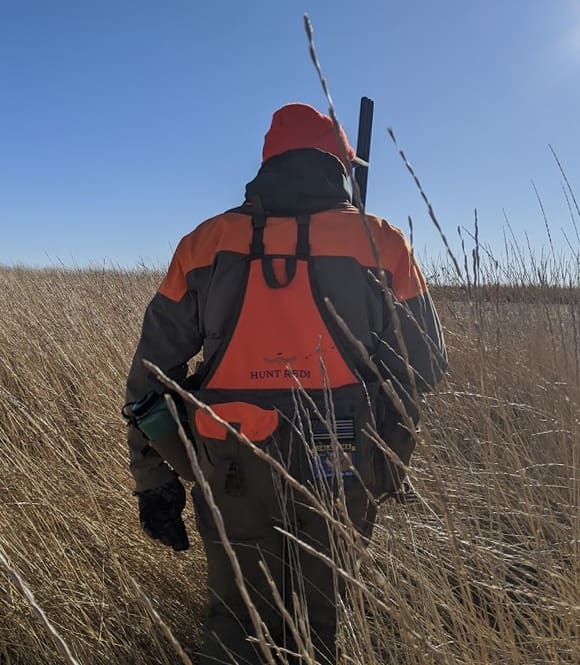
Today we are getting the first look at HuntRedi and the debut of their Flush Redi Series – Deviate Upland Vest. Available for pre-order very soon, subscribe to mailing list on link below.  

Why/How did HuntRedi begin?

During an annual South Dakota road trip to chase pheasants, we found ourselves frustrated with the lack of high-quality upland hunting gear providing extreme durability and high strength-to-weight ratio while also offering a level of configurability that would meet our personal preferences. The upland market simply seemed stuck in the past and after lengthy discussion with many “what if we could…” statements, the foundation for Hunt Redi was hatched and we were off to the races.
Why was the Hunt Redi Upland Series created?

As we discussed the various features we wanted in upland gear, it became apparent both of us had a lot of personal preferences that would not be easy to achieve without a high level of configurability. After noteworthy market research, we realized it was a common complaint with one reviewer loving gear with Velcro closure, another reviewer was frustrated because they didn’t like Velcro and preferred buckles, etc. So, we set out to find a platform that would provide an extremely solid foundation yet also meet our high configurability requirement.?
There are options for private label manufacturing all around the world, how did you find us and why did you ultimately choose FirstSpear OEM manufacturing?

Our first requirement was Made in the USA so that ruled out any offshore options. Upland bird hunting is an endeavor that exposes gear to extreme conditions and harsh cover throughout all regions of the United States, not to mention across the globe. As a result, we were really focused on extreme durability that would hold up to aspen thickets in the Northwoods, plantations in the South, hardwoods throughout the Midwest, Texas / Oklahoma brush, deserts of the Southwest, and chukar hills of the northwest. Upland hunting is also a sport of constant pursuit unlike many other types of hunting so weight reduction for long days in the field was critical. When you combine our functional and strategic requirements, FirstSpear seemed like a perfect fit.

We made contact with the OEM group after being referred by someone that previously worked with FirstSpear. The “small business” personalities we were met with from the start combined with the innovative technologies being leveraged to make gear for battlefields all over the world were a tremendous fit for what were trying to accomplish at Hunt Redi. We’ve not looked back and are extremely excited to bring the tip of the spear to the hunting industry!
Why was Made in the USA important to the brand?

It was simply never a question for both of us, we were unwavering in our commitment in US made products from the start. Putting aside that we simply wanted to support US companies / workers for a moment, we’ve both had long term careers in the tech industry and we believe success boils down to building long term partnerships, focusing on quality, and providing products we are proud to use. We believe focusing on USA made gear provides us with the best opportunity to achieve our personal goals.

Any new products on the horizon between HuntRedi and FirstSpear?

100%…a good college buddy of ours used to always say, “the man with the most tools wins”…we’re just getting started. In fact, we’ve got a few items already in the works with the FirstSpear team and more on the short list. We’ll see you all in the field.
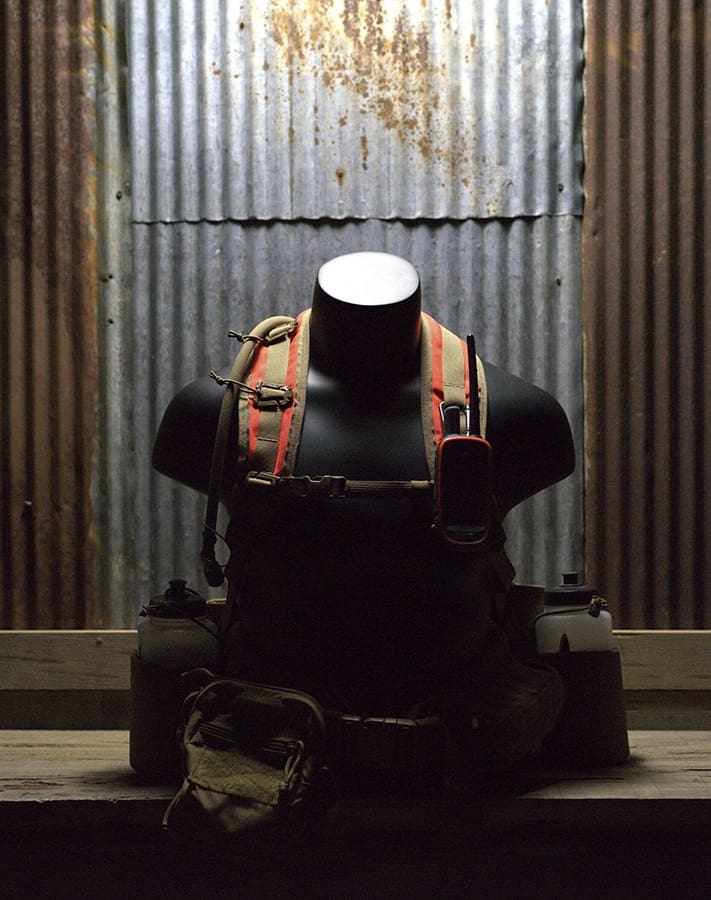
Deviate Upland Vest Specs:

Weight: 1lb 10.3 ounces + 10.8 ounces (regular belt) / 11.6 ounces (large belt)

NOTE: additional accessories will adjust weight based on selections

Size:

Regular Belt

34” L x 4.5” H x ¾” D

Large Belt

37” L x 4.5” H x ¾” D

Color: Blaze Orange / Coyote

Hunter Orange Exposure: 225.5 square inches

Closure: Side Release Buckle

FirstSpear® 6/12™ Laser Fused Modular Platform Technology attachment system

FirstSpear® 6/12™ Laser Fused Pocket Technology

FirstSpear® 6/9™ Modular Pocket Technology

Backward compatible with standard MOLLE/PALS

Up to 50% reduction in weight & significantly less bulk

Hill People Gear inspired yoke harness

Material: 500 denier Cordura

Designed, Sourced, and Handcrafted in the USA by FirstSpear®
www.first-spear.com

www.huntredi.com

Rare-Earth Element Material Could Produce World’s Smallest Transistors

Thursday, February 13th, 2020

RESEARCH TRIANGLE PARK, N.C. — A material from a rare earth element, tellurium, could produce the world’s smallest transistor, thanks to an Army-funded project.

Computer chips use billions of tiny switches called transistors to process information. The more transistors on a chip, the faster the computer.

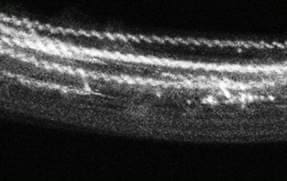
A project at Purdue University in collaboration with Michigan Technological University, Washington University in St. Louis, and the University of Texas at Dallas, found that the material, shaped like a one-dimensional DNA helix, encapsulated in a nanotube made of boron nitride, could build a field-effect transistor with a diameter of two nanometers. Transistors on the market are made of bulkier silicon and range between 10 and 20 nanometers in scale.

“This research reveals more about a promising material that could achieve faster computing with very low power consumption using these tiny transistors,” said Joe Qiu, program manager for the Army Research Office, an element of the U.S. Army Combat Capabilities Development Command’s Army Research Laboratory, which funded this work. “That technology would have important applications for the Army.”

The Army-funded research is published in the journal Nature Electronics. The Army is focused on integration, speed and precision to ensure the Army’s capability development process is adaptable and flexible enough to keep pace with the rate of technology change.

“This tellurium material is really unique. It builds a functional transistor with the potential to be the smallest in the world,” said Dr. Peide Ye, Purdue’s Richard J. and Mary Jo Schwartz Professor of Electrical and Computer Engineering.

One way to shrink field-effect transistors, the kind found in most electronic devices, is to build the gates that surround thinner nanowires. These nanowires are protected within nanotubes.

Ye and his team worked to make tellurium as small as a single atomic chain and then build transistors with these atomic chains or ultrathin nanowires.

They started off growing one-dimensional chains of tellurium atoms, and were surprised to find that the atoms in these one-dimensional chains wiggle. These wiggles were made visible through transmission electron microscopy imaging performed at the University of Texas at Dallas and at Purdue.

“Silicon atoms look straight, but these tellurium atoms are like a snake. This is a very original kind of structure,” Ye said.

The wiggles were the atoms strongly bonding to each other in pairs to form DNA-like helical chains, then stacking through weak forces called van der Waals interactions to form a tellurium crystal.

These van der Waals interactions set apart tellurium as a more effective material for single atomic chains or one-dimensional nanowires compared with others because it’s easier to fit into a nanotube, Ye said.

Because the opening of a nanotube cannot be any smaller than the size of an atom, tellurium helices of atoms could achieve smaller nanowires and, therefore, smaller transistors.

The researchers successfully built a transistor with a tellurium nanowire encapsulated in a boron nitride nanotube. A high-quality boron nitride nanotube effectively insulates tellurium, making it possible to build a transistor.

“Next, the researchers will optimize the device to further improve its performance, and demonstrate a highly efficient functional electronic circuit using these tiny transistors, potentially through collaboration with ARL researchers,” Qiu said.

In addition to the Army Research Office, the National Science Foundation, Air Force Office of Scientific Research and the Defense Advanced Research Projects Agency partly funded the work.

By U.S. Army CCDC Army Research Laboratory Public Affairs

‘milDrive’ Offers DoD More Secure Cloud Storage Solution

Wednesday, February 12th, 2020

WASHINGTON — The Defense Information Systems Agency has been offering “milDrive,” a cloud-based storage solution for desktop users, for nearly a year.

The cloud service already has about 18,000 users across 20 organizations, the program manager said.

“There’s quite a large user base in the queue right now that’s interested, and we are currently piloting with and developing a migration strategy for them,” said Carissa Landymore. “The need is definitely there.”

The milDrive service is available for users on DODIN, the unclassified Defense Department information network.

Users often store files on network drives so they can be shared with others within their organizations. The milDrive service gives users that ability, and it also allows them to access files from any common access card-enabled computer on the network and from their government cell phones and tablets. Typically, network shared drives only allow users to access files when they are on their home network.

Unlike other cloud-service solutions in use by some DOD agencies, milDrive allows users to store files that contain personally identifiable information, personal health information and “for official use only” information because the storage for milDrive is maintained by DISA, rather than by a commercial provider, Landymore said.

“From a security perspective, all the data is always encrypted, in transit and at rest,” she said. “So, it’s always providing that extra blanket of security.”

Also, unlike with typical network shares, milDrive users can grant access to their files to any milDrive user in the Defense Department, Landymore said. Users can even share files with other DOD personnel who don’t have milDrive access through a web-based interface. And unlike some web-based cloud service solutions, milDrive is thoroughly integrated into the desktop environment, which means users can create, read and manipulate files stored in the cloud using the software already installed on their desktop computers.

“It’s completely integrated and transparent on your desktop,” she said. “It’s the same traditional look and feel as Windows File Explorer and used like any other location to open or save files.

Landymore said DISA offers 1 terabyte or 20 gigabyte licenses for individual users. Both licenses cost less than $10 a month. Organizations can also order “team drives” starting at 1 TB. As with traditional network shares; milDrive “Team Folders” allow organizations the ability to collaborate traditionally with the added benefits of online and offline access, mobility and portability of group data they do not have today.

Guidance from the DOD chief information officer and DISA direction is going in the direction of the cloud, Landymore said. “MilDrive is going to help the department get there faster,” she said. “It’s going to help folks immediately migrate off their end-of-service-life equipment right onto another service that DISA is already invested into. We’ve made that investment to really help the department long-term, getting to a cloud solution and realizing our cost savings with economies of scale.”

Jeremiah Collins, the information technology services deputy director at Army Futures Command in Austin, Texas, said milDrive has provided the command with cost savings over traditional storage solutions and a reduction in workload for a limited information technology staff.

Army Futures Command stood up in July 2018, and Collins said the command has used milDrive as its storage solution from the start.

“When we were standing up the command, we really needed a storage solution that would support a mobile workforce beyond just the installation boundaries,” Collins said. “So, where teams are collaborating, no matter where they are located, they can reach back to those documents. Traditional network storage doesn’t allow for that. But with milDrive, anybody that has a CAC can access it from any web browser. That was monumental in our decision to choose milDrive.”

Additionally, Collins said, the low cost of storage was a deciding factor in the command’s decision to go with milDrive.

“The DISA milDrive was about a third of the cost of traditional storage,” Collins said. “It wasn’t even close.”

The cost of milDrive isn’t the only way the command saves money, he said. There’s also a reduction in workload by information technology support staff — something Collins said is important in Army Futures Command, where they have both limited space and a limited staff.

“For us, we don’t have the luxury of a lot of resources in our IT shop,” he said. “We have to be very diligent in what we assign for tasks. With milDrive, it’s simply provisioning a user to a milDrive account, which is exponentially easier for the staff here to execute based on our current resourcing thresholds.”

To achieve a seamless, transparent use of milDrive, software does have to be installed on a user’s computer. Until that software is installed, users can access files via a web-based application. Collins said initial use of milDrive at Army Futures Command was complicated by that requirement, but those challenges disappeared after the software was approved for use on their network.

“Quite frankly, ever since the application was installed, we’ve received zero complaints,” Collins said.

Landymore said organizations that want to make use of milDrive can check out the services catalogue on the DISA website. In addition, she said, DISA can help organizational IT staffs migrate data on existing storage services to milDrive.

By C. Todd Lopez

US Army Reactivates V Corps

Wednesday, February 12th, 2020

WASHINGTON — The Department of the Army announced today the activation of an additional corps headquarters, called Fifth Corps (V Corps), which will be located at Fort Knox, Ky.

The V Corps Headquarters will consist of approximately 635 soldiers, of which approximately 200 will support an operational command post in Europe on a rotational basis. The Corps Headquarters is projected to be operational by the fall of 2020.

“Combatant commanders know they can count on highly-trained and ready Army forces as they implement the National Defense Strategy around the world,” said Gen. James McConville, Chief of Staff of the Army. “The activation of an additional Corps headquarters provides the needed level of command and control focused on synchronizing U.S. Army, allied, and partner nation tactical formations operating in Europe. It will enhance U.S. Army Europe and U.S. European Command as they work alongside allies and partners to promote regional stability and security.”

The establishment of V Corps enables the Army to fulfill requirements of the National Defense Strategy. It also supports a U.S. European Command request for increased command and control capability, and will support U.S. interests, allies and partners in the region.

The V Corps’ history dates back to 1918, when the unit was activated during World War I during combat in France. Later, it took part in the World War II D-Day invasion and liberation of Europe.

Currently, the Army has three corps headquarters: I Corps, located at Joint Base Lewis- McChord, Washington; III Corps, located at Fort Hood, Texas; and XVIII Airborne Corps, located at Fort Bragg, North Carolina. V Corps will be the Army’s fourth headquarters.

Brigantes Presents – Brigantes Issue Essentials

Wednesday, February 12th, 2020

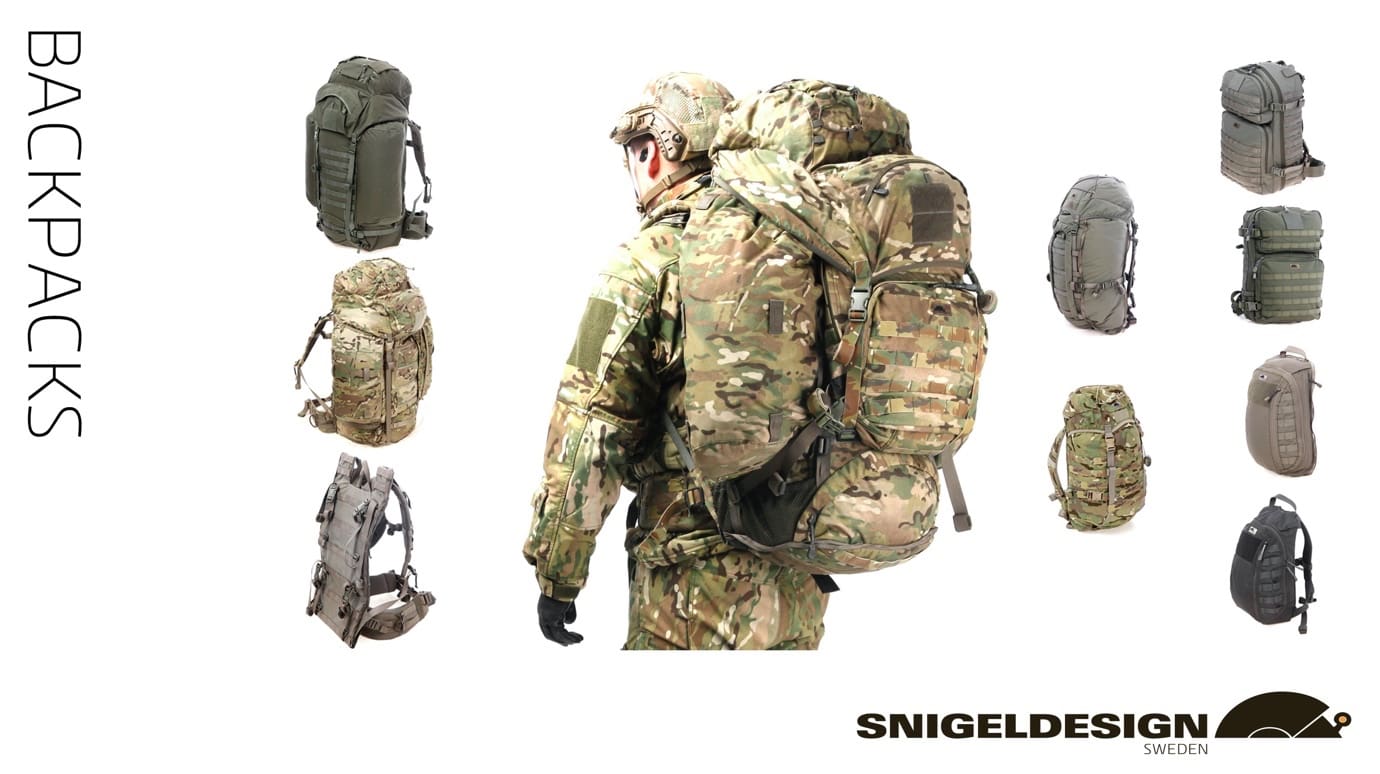
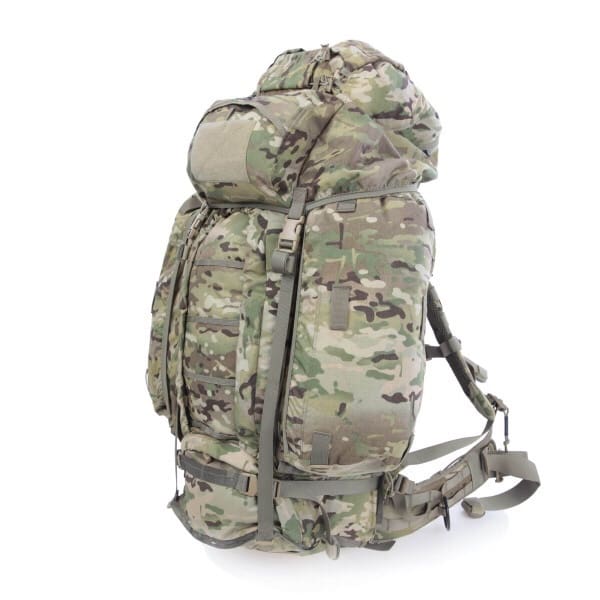
Each week we bring you products that should be on all military standard issue kit lists. This week it’s the Snigel 90L backpack system

Snigeldesign started their first backpacks back in 1977 and was directly aimed at military use.

Rough terrain and hard work required the most reliable and functional of solutions which naturally attracted the military user. Since those humble beginnings Snigeldesign has expanded to bring its innovative and functional approach to a large range of load carriage and protective products.

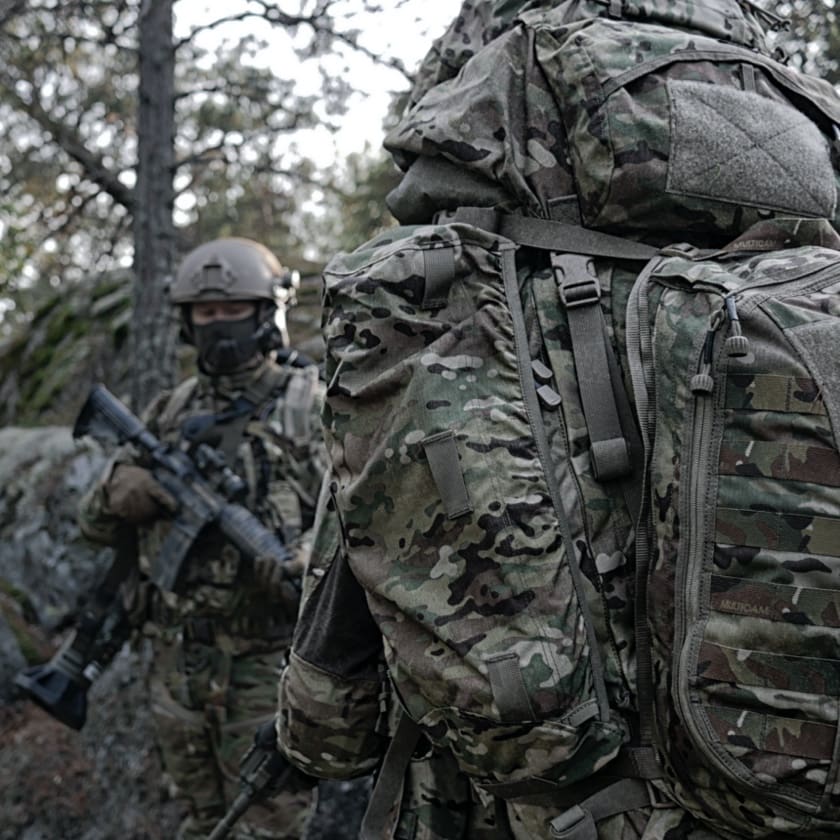
The 90 Litre Backpack is designed for the needs of forward elements and light role forces out in advance of the main body of troops.  It offers a huge range of options and flexible ways to carry all the mission essential equipment.  The back system provides an ultra-comfortable way to carry large loads for long patrols enabling the user to get where they need to be without compromise and fit to fight.

Enhancements from earlier versions of the 90L backpack:

• The outer pockets are fitted with a zipper instead of a hole band / buckle. Easier and faster to take off and to put them back.

• The hip belt is sewn with edge bands so it keeps the shape better.

• Fixed strap for side stabilization of the hip belt does not get lost and does not break as the rubber cord did.

• Change to a stronger 10 mm zipper from 8 mm

• The openings on the inside compartment in the lid are now both accessible when opening the lid. It is easier to access now

• A hole band at the back of the lid for attaching duffel straps, when the lid is to be used as a small backpack

For more information contact: interantaional@brigantes.com

Or for UK sales: warrior@brigantes.com

SureFire Field Notes Ep 54: Injured Shooter Carbine with Will Petty

Wednesday, February 12th, 2020

In this episode, Will Petty of Centrifuge Training LLC discusses techniques for injured shooters while running a carbine.

William Petty began his Law Enforcement career in 2003 in Albuquerque, NM. While there he served as a Firearms Instructor, an Emergency Response Team member and was also a member of the department’s shooting team.  In 2011, Petty relocated to Abu Dhabi, United Arab Emirates where he worked as a Counter Terrorism Instructor with the Critical National Infrastructure Authority. In 2013 (to present) he returned to the U.S. and resumed law enforcement with his department in Texas. While there he worked patrol and ran the firearms programs for several large regional Police academies. He has and continues to run contract courses establishing various programs and in-service material for major local, state and federal departments in the US and Canada.

centrifugetraining.com

www.surefire.com

10th Mountain Soldiers Test New Cold Weather Gear

Monday, February 10th, 2020

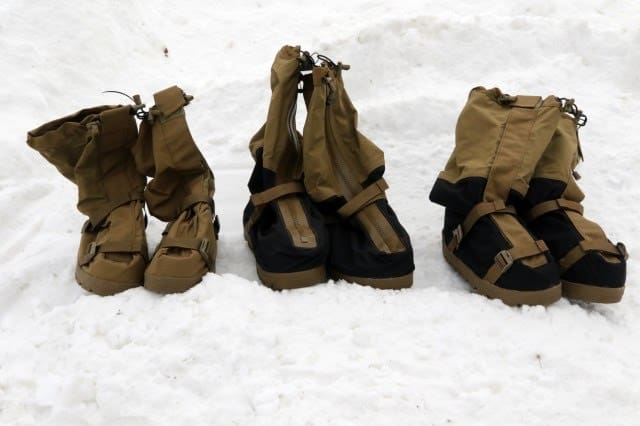
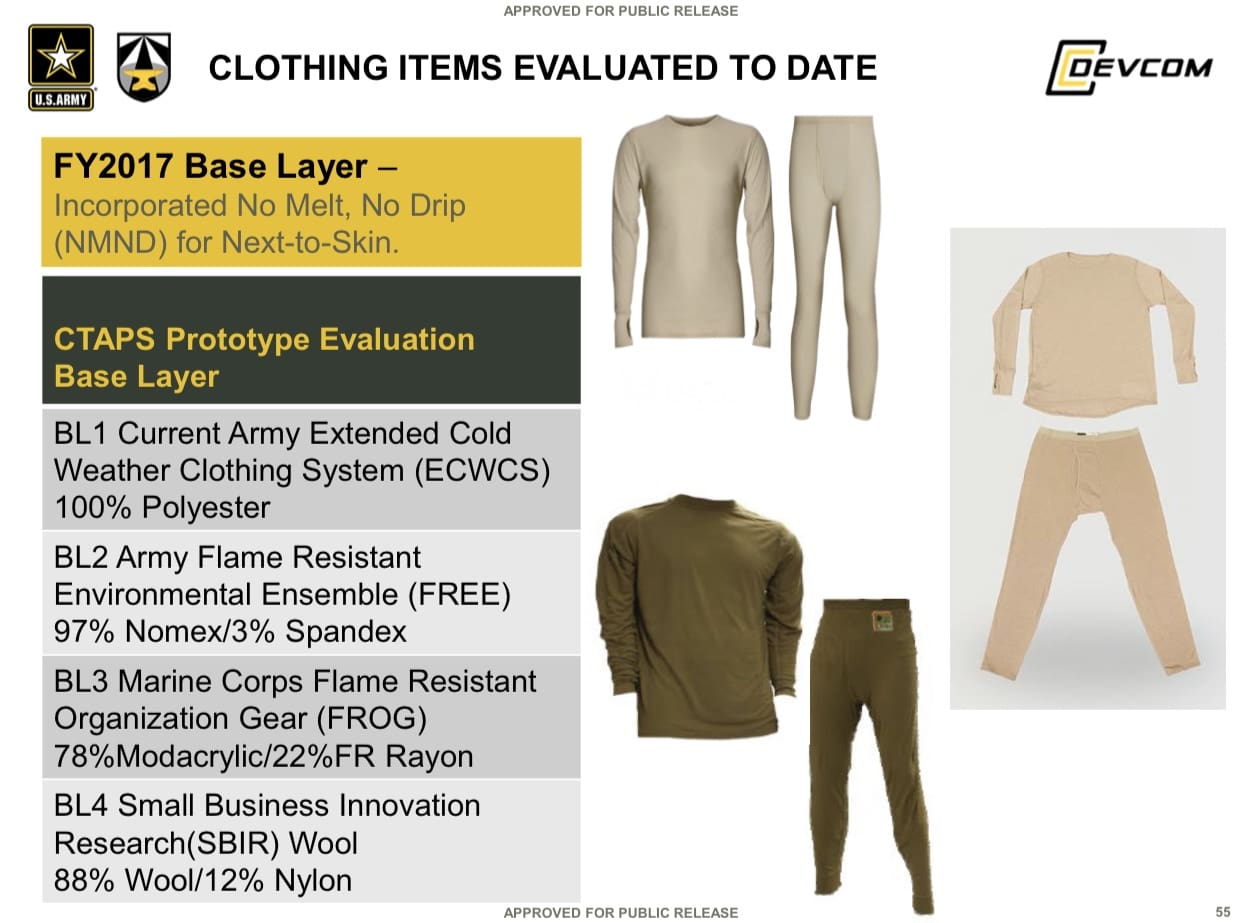
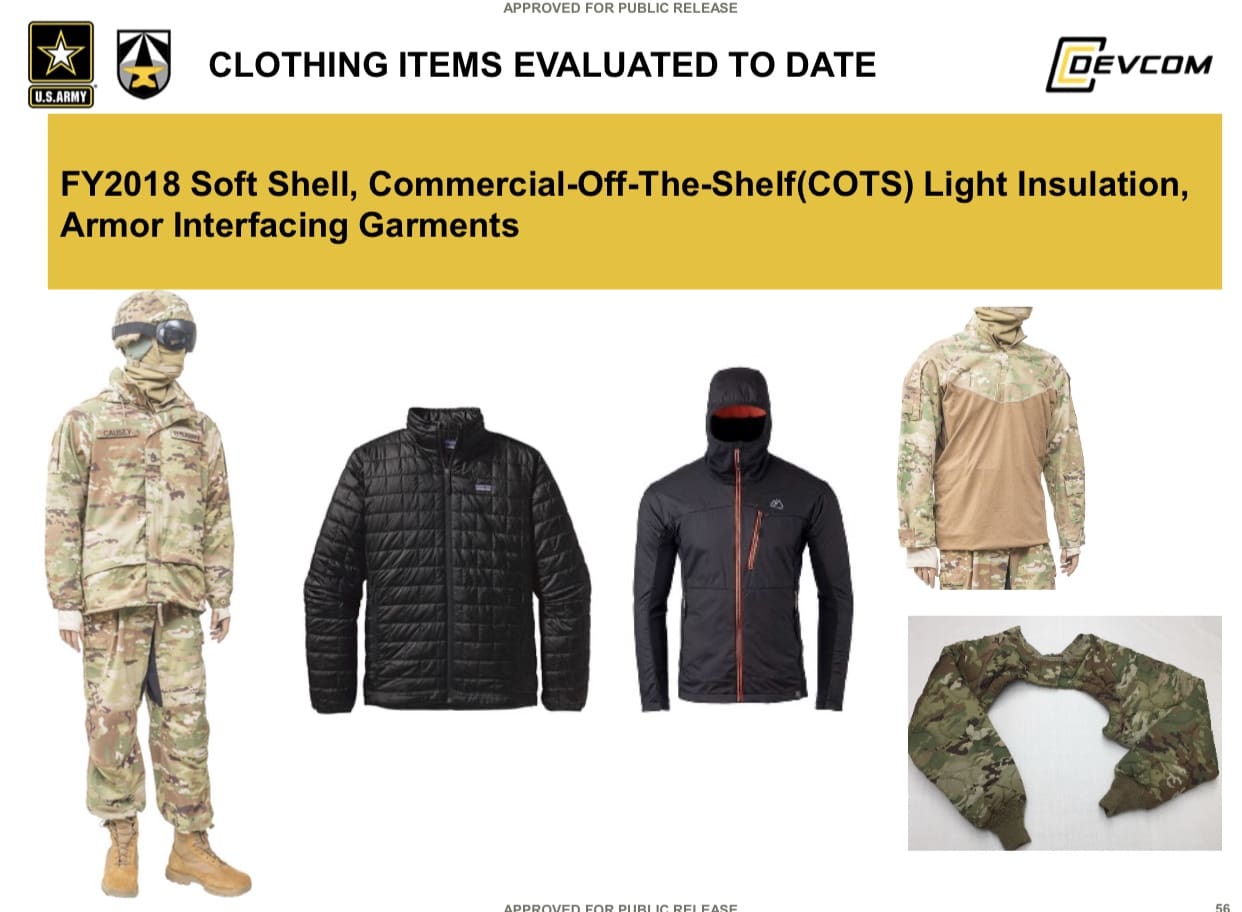
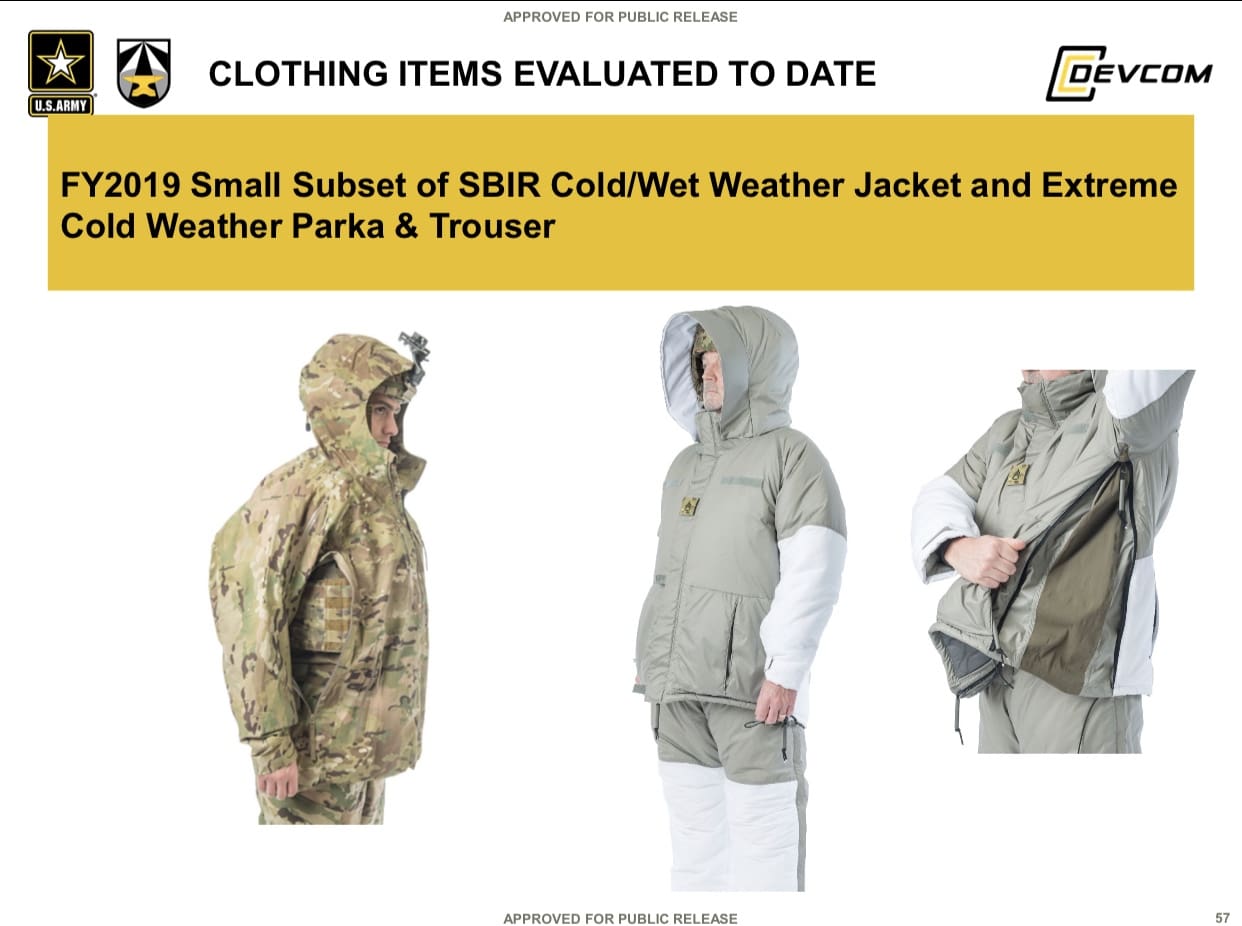
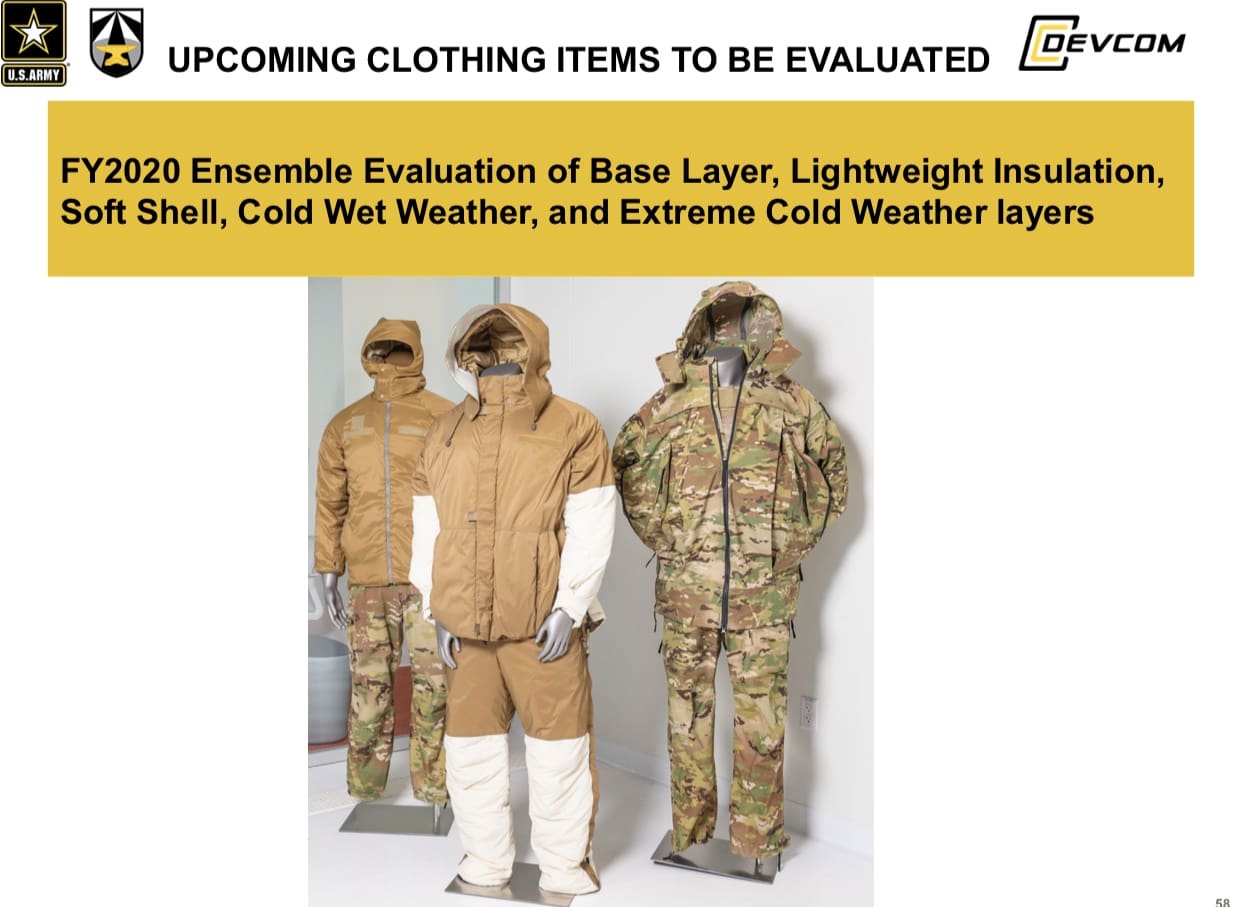
This article from the 10th Mountain Division discusses the testing of new Army cold weather clothing systems. It’s important to note that CTAPS is a material and not a design program. Natick has been evaluating different materials from industry but has specified the cut of the clothing components. In the lab, the Army’s effort is called Regionally Aligned Combat Ensemble – Arctic or RACE-A. After the article we’ve included Army Future Command slides depicting cold weather clothing evaluated over the past few years along with what’s next.

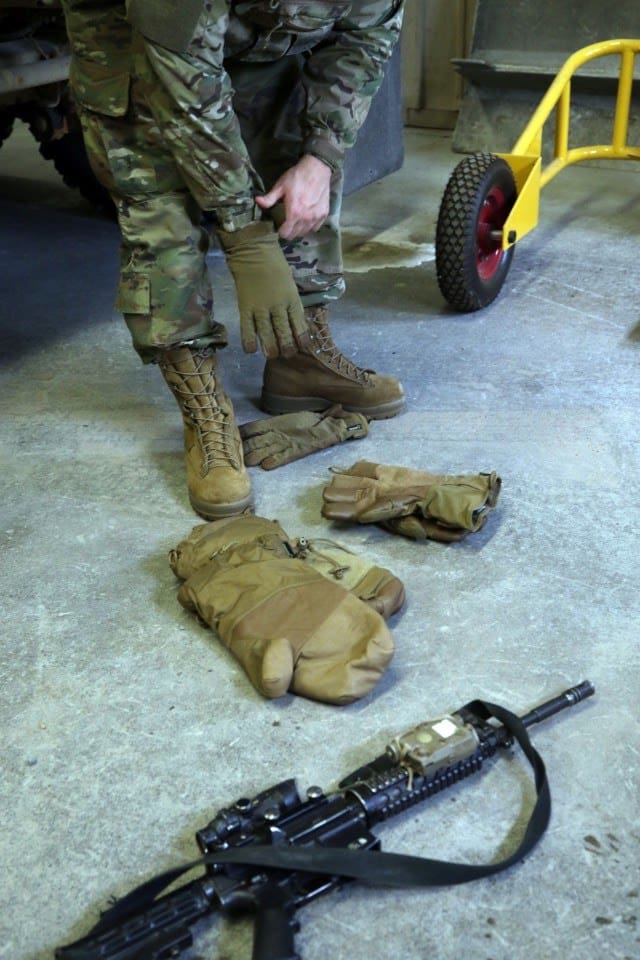
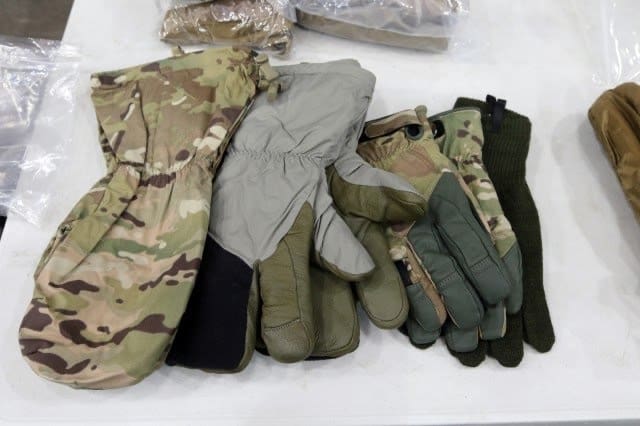
A select number of 10th Mountain Division (LI) Soldiers received new, prototype cold-weather gear at Fort Drum, N.Y. Jan. 23, 2020. Soldiers testing the gear will provide feedback on the durability, dexterity, tactility, ability to stay dry, and drying time so that any necessary improvements can be made.

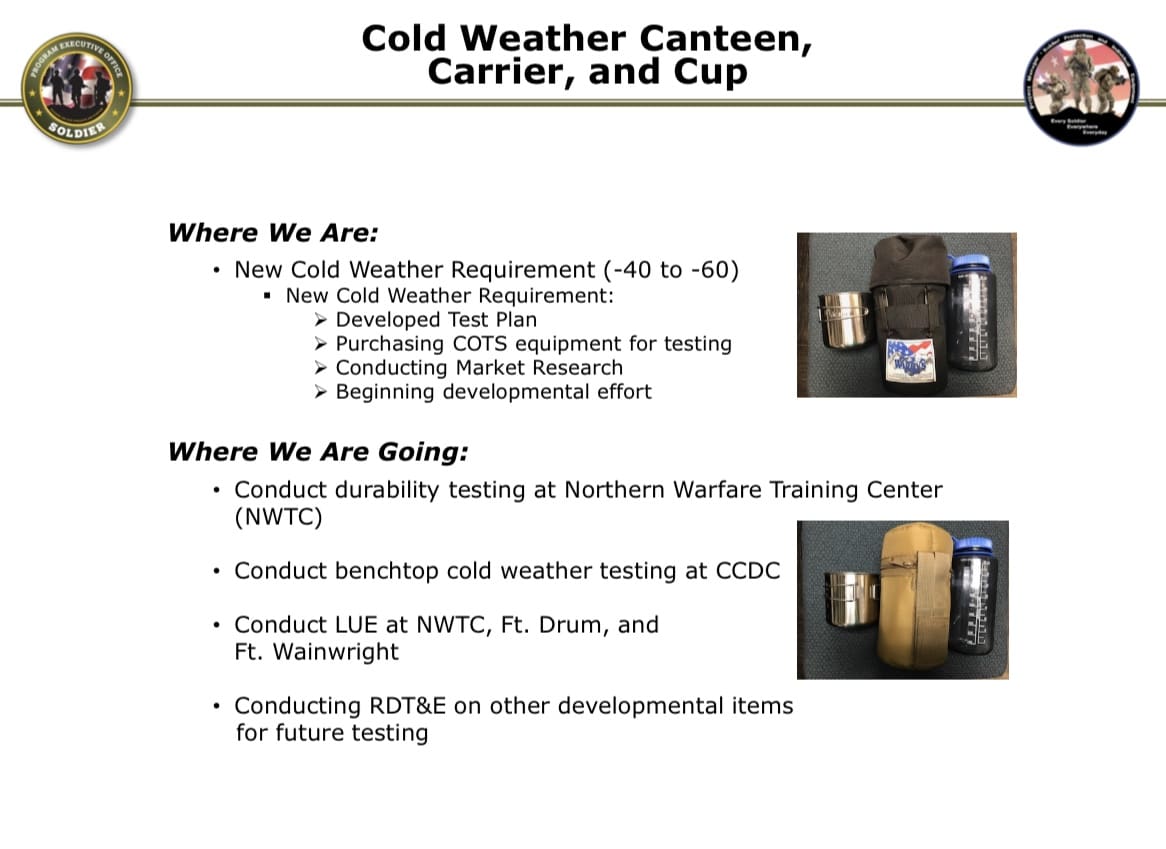
Among the gear issued were six different variants of Cold Weather Glove Systems, new cold weather boots, three variants of cold-weather over boots, a cold weather sock system, as well as a canteen and canteen cup with two different designs for a canteen holder.

The different glove systems were briefly tested when issued to see if Soldiers could properly load and fire a simulated round and apply a tourniquet to a simulated casualty in a timely fashion. Soldiers were instructed to wear the gloves outdoors as much as possible for the evaluation team to get an accurate program of record for the Cold Weather Glove Systems.

A few Soldiers also received the prototype Cold Temperature and Arctic Protection System, or CTAPS for short. CTAPS is an innovative multi-layer system that aims to keep Soldiers warmer in cold weather environments, spanning from 45 degrees Fahrenheit to -65 degrees Fahrenheit.

“Overall, everybody has liked what they’ve seen so far,” said Kate Young, a textile technologist with the Soldier and Clothing Configuration Management Team.

The next step is for the Soldiers to test CTAPS during training to get feedback from them after they’ve used the gear for a while, Young said.

CTAPS is designed to be lighter weight, more durable, and more comfortable for Soldiers. The system features a longer jacket and more high-waisted trousers to keep Soldiers warmer while moving and to aid in the ease of their movement. They also have no-melt no-drip next-to-skin layers to prevent skin injury in the event of a fire, and moisture management throughout all layers. CTAPS is intended to be more functional and an improvement over the Extended Cold Weather Clothing System (ECWCS).

“I feel that it’s sensible,” said Staff Sgt. John Philadelphia, one of the Soldiers who received CTAPS. “I feel comfortable, and I feel confident in it.”

By PFC Anastasia Rakowsky

Slides:

Information on new Cold Weather Canteen

SCUBAPRO SUNDAY – APNEA Snorkel

Sunday, February 9th, 2020

There are two schools of thought when it comes to carrying a snorkel when you dive in the civilian world, and I guess in the military world also. It is to carry or not carry a snorkel. You are taught to have one to save air when you are close to the surface for whatever reason so you can use it and not the air in your tank. When I first started diving in the teams, you had to have a snorkel on us. We would get issues a cheap old school “J” type one with the big orange stickers on it you had to peel off and then you would have to cut a couple of inches off of it and keep with you in case you had to work around piers or whatever so you could save O2. Well, I never used it and stopped carrying it as soon as I could. But that doesn’t mean I would have never used it or could have; I choose not to have it.

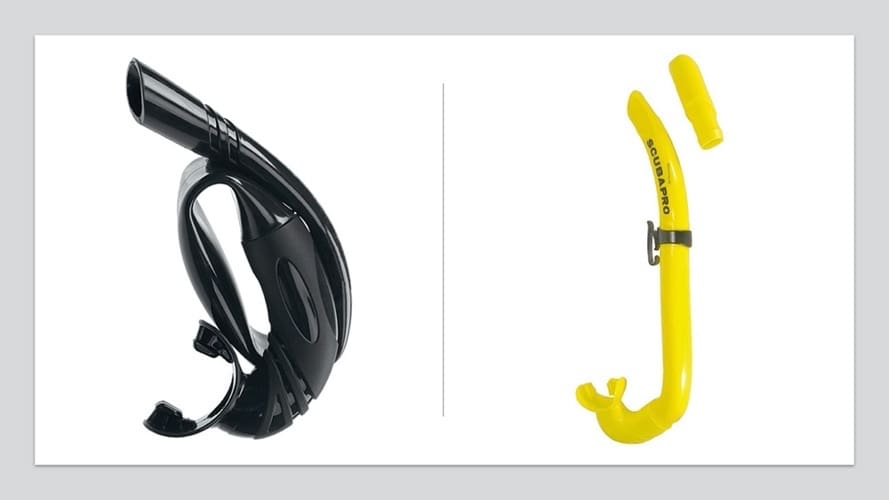
Like everything else in the world, technology is growing and growing. Once a problem is fixed, companies move onto the next one. So, the issues associated with the old “J” snorkel have been fixed; that is not to say that companies still do not make them have them; they are still around. But now there are all kinds of snorkels out there. There are several different types of snorkels Classic (J type), Simi-dry, Dry, and Flexible, to name a few.  

So why carry a snorkel? A snorkel helps on the surface when you are in rough water. You can keep your head in the water and not drink as much seawater when you are just floating waiting to be extracted. It is also useful when you are working in the water waiting for a helo pick up, and you are under its rotor wash, or when you are doing a K duck or a swamp duck. It is also helpful to have when you jumped into the water, and you have to undo some of your parachute lines that might be tanged in your fins or whatever.  It makes it easier to breathe on the surface without lifting your head out of the water if you have to swim to a boat or shore for some reason.  

Diving in the military is different than as a civilian as you would never leave your snorkel hanging on your mask during a dive. This is why we would cut it down a little so that we could tuck it away or you would hang it off the bottom of your LAR V with heavy rubber bands. But with today’s technology, most companies have one that you can roll-up.  For SCUBAPRO, it is the Apnea Snorkel, it was launched in 2015 for Apnea divers and won the SCUBALAB’s 2015 best buy.  

The SCUBAPRO Apnea Snorkel is a foldable freediving snorkel design. Made from a soft and flexible non-toxic silicone, SCUBAPRO Apnea Snorkel easily attaches to your mask strap when being used. When not needed, it can be rolled up and stowed away in a pocket. When it’s time to do some more stuff on the surface, it pops right back into shape. The Apnea’s upper barrel can be removed if you prefer to use a shorter pipe. Without question, this is an easy-to-use and very versatile surface breather. Functional yet straightforward traditional “J” Snorkel design. No valves that can leak. Snorkel is specifically for spearfishing and free diving. The contoured shape of the silicone mouthpiece and the air tube has been ergonomically designed to follow the profile of the spear fisherman’s face to reduce its visibility significantly during the dive. This flexibility is also advantageous when around piers or rocks.