SIG SAUER - Never Settle

Archive for the ‘Guest Post’ Category

Army Accelerates Delivery of Directed Energy, Hypersonic Weapon Prototypes

Saturday, June 15th, 2019

WASHINGTON — The Army is accelerating its efforts to field a directed-energy prototype system by fiscal year 2022, and hypersonic weapon prototype by fiscal 2023.

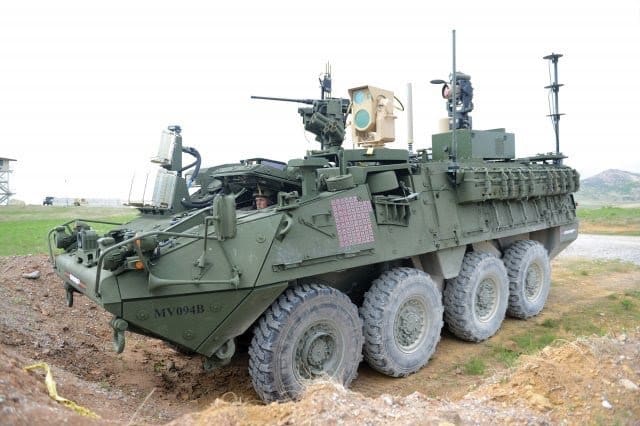
For starters, the Army is fast-tracking the development and procurement of the Multi-Mission High Energy Laser, or MMHEL system, said Lt. Gen L. Neil Thurgood, director of hypersonics, directed energy, space, and rapid acquisition.

The MMHEL is a 50-kilowatt laser retrofit to a modified Stryker vehicle, designed to bolster the Army’s maneuver short-range air defense capabilities, according to officials with the Army Rapid Capabilities and Critical Technologies Office.

The Army is slated to field a four-vehicle battery by late fiscal 2022, Thurgood said. The new system was meant to be maneuverable, while protecting brigade combat teams from unmanned aerial systems, rotary-wing aircraft, and rockets, artillery, and mortars.

Further, the Army will consolidate efforts with the other services and agencies to help improve directed-energy technology, the general added. While the Army is executing a demonstration of 100 kW high-energy laser technology on a larger vehicle platform, it is working with partners to exceed those power levels.

HYPERSONIC WEAPONS

In addition to the MMHEL, the Army is expected to field a four-vehicle battery of long-range hypersonic weapon systems the following fiscal year.

Four modified heavy expanded mobility tactical trucks, or HEMTTs, will be equipped with a launcher. Each vehicle will carry two hypersonic weapon systems — totaling eight prototype rounds, Thurgood said.

“The word hypersonic has become synonymous with a particular type of missile,” he explained. “Generally, hypersonics means a missile that flies greater than Mach 5 … that is not on ballistic trajectory and maneuvers.”

The hypersonic system will also rely on the Advanced Field Artillery Tactical Data System 7.0, which is currently available to artillerymen, for command and control.

“Within the Army’s modernization plan, there is multi-domain, and there is the Multi-Domain Task Force. Part of that task force [includes] a strategic-fires battalion and in that strategic fires battalion [will be] this [hypersonic] weapons platform,” Thurgood said.

“It is not long-range artillery. It’s a strategic weapon that will be used … for strategic outcomes,” he added.

RESIDUAL COMBAT CAPABILITY

Overall, the MMHEL and hypersonic systems will both move into the hands of Soldiers as an experimental prototype with a residual combat capability, Thurgood said.

“When I say experimental prototype with residual combat capability, and as we build the battery of hypersonics … that unit will have a combat capability,” Thurgood said. “Those eight rounds are for them to use in combat if the nation decides they want to apply that in a combat scenario. The same [applies] for directed energy.”

In addition to providing an immediate combat capability, Soldiers will have an opportunity to learn the new equipment and understand the “tactics, techniques, and procedures” required to use each system during combat, the general added.

Further, the Army will also receive valuable feedback to help shape potential broader production of each system after they transition to a program of record.

The Army has already initiated the contract process to develop the prototype hypersonic systems. Senior leaders plan to award vendors by August, Thurgood said.

With both systems, “what we’re trying to create [is an] an opportunity for a decision, based on actual use by a Soldier,” he said. “Does this thing do … what we needed it to do? Do we want to continue and make it better, or do we want to have other choices?”

By Devon L. Suits, Army News Service
Army Announces Expert Soldier Badge

Friday, June 14th, 2019

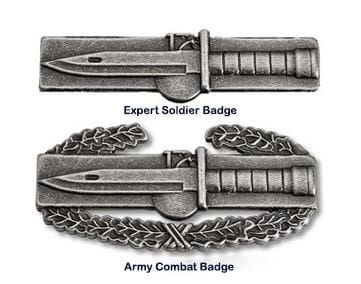
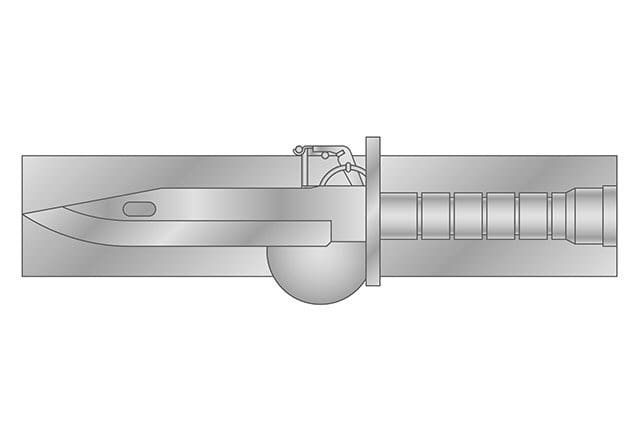
In conjunction with the U.S. Army’s 244th Birthday, the Army announced a new proficiency badge today, called the Expert Soldier Badge.

The ESB is designed to improve lethality, recognize excellence in Solder combat skills and increase individual, unit and overall Army readiness. The ESB is the equivalent of the Expert Infantry Badge and Expert Field Medical Badge but for all other military occupational specialties in the Army. Commanders will soon be able to use the badge to recognize Soldiers who attain excellence in physical fitness and marksmanship and a high standard of expertise in land navigation and performing warfighting tasks.

“The ESB will be an important component of increasing Soldier lethality and overall readiness to help achieve the vision for the Army of 2028,” said Sgt. Maj. of the Army Daniel A. Dailey. “The EIB and EFMB have supported the Infantry and medical fields with distinction, ensuring their Soldiers maintain critical skills, while recognizing the very best among them. The ESB will achieve the same for the rest of the Army.”

The Army will implement the ESB in early fiscal year 2020, with the standards and regulation to be finalized by September 2019. Earning the badge will test a Soldier’s proficiency in physical fitness, marksmanship, land navigation and other critical skills, and demonstrates a mastery of the art of soldiering.

The ESB training and testing will be extremely challenging, mission-focused, and conducted under realistic conditions. Those in the Infantry, Special Forces, and Medical career management fields are not eligible for the ESB.

“Like the EIB and EFMB, the ESB test will be a superb venue for individual training in units and the badge will recognize a Soldier’s mastery,” said Gen. Stephen J. Townsend, commanding general, U.S. Army Training and Doctrine Command. “And it will be just as tough to earn as the EIB and EFMB because the Soldier will have to demonstrate fitness, weapons proficiency, navigation and warrior task skill at the expert level.”

Standards for the ESB are still being refined but they will not be adjusted for age, gender or any other criteria. The test will share about 80 percent of the same warrior tasks as the EIB and EFMB, and is designed so it can be administered alongside and together with them. Brigade commanders will decide if and when to schedule the test so it best fits their training schedules.

Under the ESB test process, Soldiers will demonstrate mastery of individual skills through different evaluations over a five-day period. The standards for the ESB place candidates under varying degrees of stress that test their physical and mental abilities as they execute critical tasks to an established set of standards.

To qualify to take the ESB test, Soldiers must pass the Army Combat Fitness Test (ACFT), qualify as “Expert” on the M4/M16 rifle and be recommended by their chain of command.

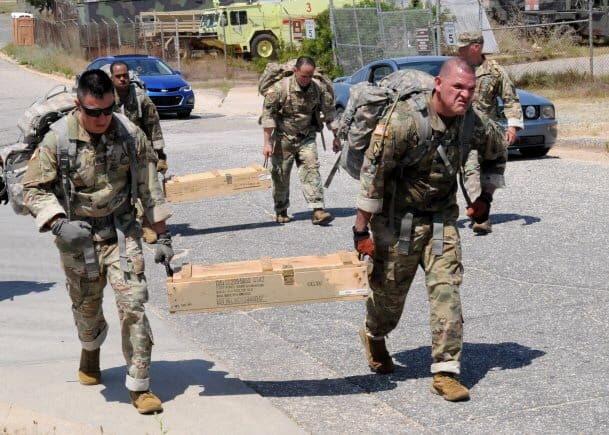
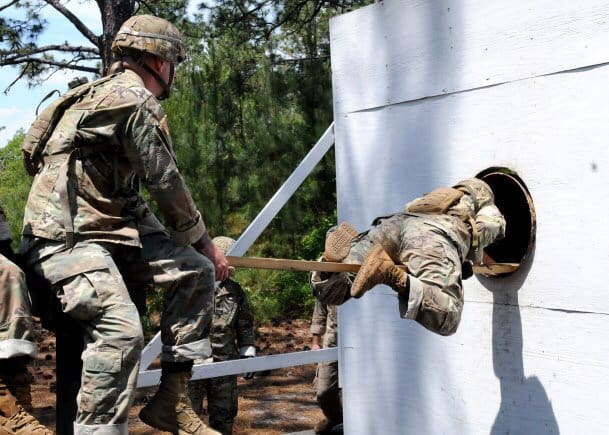
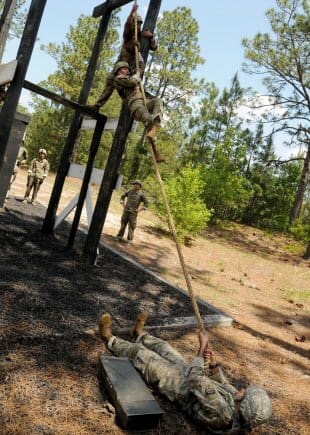
The test itself consists of another ACFT, day and night land navigation, individual testing stations, and culminates with a 12-mile foot march. ESB test stations include warrior tasks laid out in the ESB regulation and may also include five additional tasks selected by the brigade commander from the unit’s mission essential task list. Example tasks include:

? React to an Improvised Explosive Device (IED) Attack

? Construct Individual Fighting Positions

? Search an Individual in a Tactical Environment

? Employ Progressive Levels of Individual Force

? Mark CBRN-Contaminated Areas

“We worked tirelessly on the ESB to ensure we got it right,” said Command Sgt. Maj. Edward W. Mitchell, Center for Initial Military Training Command. “We wanted to provide commanders the opportunity to recognize their top Soldiers who have met the highest standard of performance in physical fitness, warfighting tasks and readiness.”

Each ESB task will be evaluated on a “go” or “no-go” basis. Pass rates during the ESB pilot testing were similar to that of the EIB and EFMB.

“The ESB is all about increasing the readiness of our Army. It will provide commanders outside the Infantry, Special Forces and medical communities the opportunity to recognize Soldiers who best demonstrate excellence in their fields,” said Command Sgt. Maj. Timothy A. Guden, TRADOC Command Sergeant Major.

“This is not a badge to award so that the entire Army now has an ‘expert’ badge to wear. As it is now, not every Infantryman or Special Forces Soldier earns the EIB and not every medic earns the EFMB. Keeping with the same mindset, this is a badge to award to those who truly deserve recognition as an expert in their career field; for those who have achieved a high level of competence and excellence in their profession.”

By U.S. Army Training and Doctrine Command Public Affairs

So You Want to be an SFAB Advisor? Here’s How…

Friday, June 14th, 2019

FORT BRAGG, N.C. — Soldiers who believe they have what it takes to join one of the six Security Force Assistance Brigades (SFABs) must first pass the 3-day Security Force Assistance Command Assessment and Selection Course that’s designed to ensure they meet the standards of a SFAB Advisor.

Assessment and Selection Course candidates undergo a process designed to test their mental, physical and teamwork skills to ensure they possess the attributes that the SFAB teams are looking for in an Advisor.

Some of these attributes include discipline, sound judgment, moral conduct, and the ability to remain calm and collected while seizing the initiative during mission uncertainty.

“What we are looking for is someone who is physically fit, works well in a team, who is intelligent, and comfortable making decisions while operating with a certain level of ambiguity,” said Sgt. Maj. Robert George, SFAC Assessment and Selection Sergeant Major.

The assessment process is something new candidates are curious about once they decide to join the SFABs.

“I heard about the SFABs while I was deployed in Afghanistan and when I came back some senior NCOs I worked with had joined and let us know more about them,” said Sgt. Skyler Lewis, SFAC Assessment Candidate and Signal Support Systems Specialist from 1st Battalion, 41st Infantry Regiment, 2nd Infantry Brigade Combat Team, 4th Infantry Division. “I looked more into it and then decided that, yes, this is for me.”

The assessment process starts with in-processing on day zero and then moves onto day one. Day one starts the non-stop process that lasts through day two. It begins with the candidates conducting an APFT, team events, a leader reaction course, a warrior skills test, MOS proficiency and ethical dilemma tests, peer evaluations, a subject matter expert interview, and culminates with a challenging foot march.

“They briefed us on what it was going to be like when we got here and it was a little different than I thought it would be and a lot harder – but it was worth it – I thought it was a good process and I had to stay focused and push hard through some of the events,” said Lewis.

The final portion of the assessment process is the selection board on day three, after which, the candidates find out how they did and if they were selected. If selected, they receive information about the reporting process and continue their SFAB Advisor training there.

The opportunity to continue to training, mentoring and advising others is one of the reasons Fort Benning Drill Sergeant Joshua Tobin felt he needed to go through the assessment course and become a SFAB Advisor.

“I have been training and mentoring Soldiers for the past 12 years and really getting more into it with the new privates at Fort Benning for the last 33 months. I feel that this opportunity is the same, but bigger, you are still training, mentoring, and advising, but this time it’s with our partners,” said Staff Sgt. Joshua Tobin, SFAC Assessment Candidate with 2nd Squadron, 15th Cavalry Regiment, 194th Armored Brigade.

The assessment and selection process is still relatively new and constantly adapts to the current needs of the SFABs and will continue to change and facilitate any of their future needs.

“How we assess the Soldiers has changed since I got here almost a year ago. We have changed and added events that better identify the attributes that make a good Military Advisor,” said George. “We will continue to change things to better identify candidates who will make the best military Advisors.”

The SFAB Recruiting and Retention Team continues to look for Soldiers who are interested in becoming SFAB Advisors in one of the five active-duty and one Army National Guard SFABs. For more information and details about joining, visit the SFAB Recruiting and Retention Team website at www.goarmy.com/sfab or contact them at one of the following: Officers (910) 570-5159 and Enlisted (910) 570-9975/5131 or email them at usarmy.bragg.forscom.mbx.g1-ag-sfab@mail.mil.

By SFC Mark Albright, Security Force Assistance Command

Shooter Symposium Wrap Up – Presented by SureFire

Thursday, June 13th, 2019

SureFire is the title sponsor of the finest firearms training event in the world, The Shooter Symposium. The Shooter Symposium is a one-of-a-kind training event in which 11 of the world’s top firearms instructors congregate to provide training over a three day period for 100+ likeminded attendees. Students will have the opportunity to train with up to seven of the instructors over the course of the weekend. Courses include handgun, rifle, low-light, night vision, medical and force-on-force combatives. On top of phenomenal training, the first day hosts a vendor show and live-fire range day along with several competitions where students will have a chance to win tens of thousands of dollars worth of prizes. The prize table will include SureFire suppressors, WeaponLights, holsters and many more tactical products from supporting brands. The 2019 instructor roster includes: Robert Vogel, Mike Pannone, Craig Douglas, Aaron Cowan, Dan Brokos, Jared Reston, Kerry Davis, Bill Blowers, Steve Fisher, Chuck Pressburg, Scott Jedlinski and Kyle Defoor has just signed on for The Shooter Symposium 2020! Learn more at:  www.shootersymposium.com The Ranch TX www.theranchtx.net


Instructor list:

Aaron Cowan of Sage Dynamics

Bill Blowers of Tap-Rack Tactical

Chuck Pressburg of Presscheck Consulting

Craig Douglas of ShivWorks

Dan Brokos of Lead Faucet Tactical

Jared Reston of Reston Group Critical Solutions

Kyle Defoor of Defoor Proformance Shooting

Kerry Davis of Dark Angel Medical

Mike Pannone of CTT-Solutions

Robert Vogel of Vogel Dynamics

Steve Fisher of Sentinel Concepts

Scott Jedlinski of Modern Samurai Project

Corps Begins Fielding Mobile Satellite Communication System

Thursday, June 13th, 2019

MARINE CORPS BASE QUANTICO, Va. —

The Corps recently began fielding a next-generation narrowband satellite communication system that assists warfighters in connecting to networks on the battlefield.

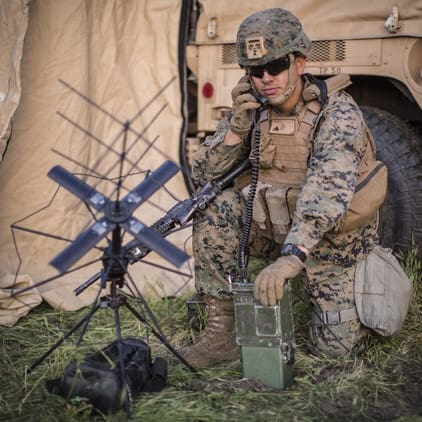
Fielded in the first quarter of 2019, the Mobile User Objective System provides satellite communication capabilities to mobile or stationary Marines. The system enables the warfighter to leverage cellular technology to increase access to voice and data communication while using the MUOS network.

“MUOS is another way for warfighters to communicate in a tactical environment,” said Eddie Young, project officer of Multiband Radio II Family of Systems at Marine Corps Systems Command. “The system brings SATCOM capabilities in various formats to Marines.”

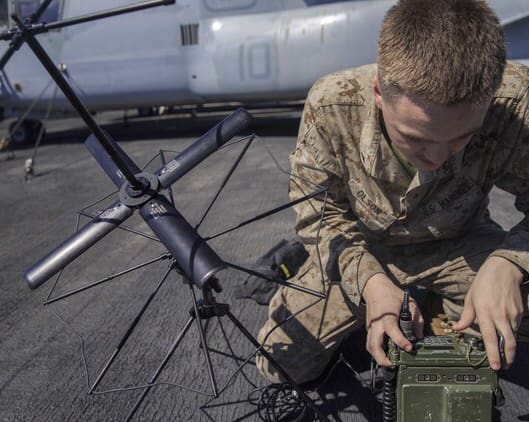
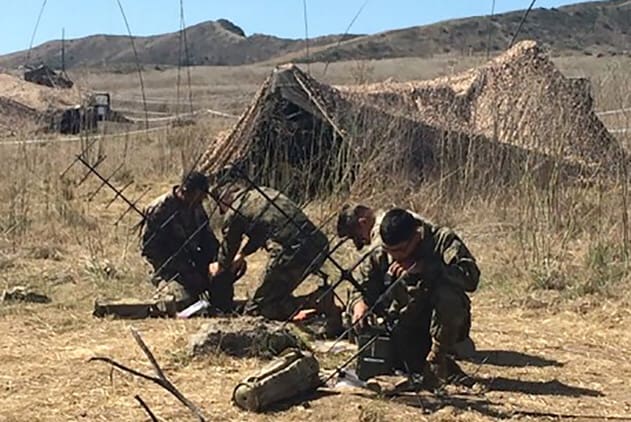
The MUOS capability encompasses updated firmware to the AN/PRC-117G radio system and one of three antenna kits. The antennas help Marines simultaneously access SATCOM networks and gives them secure and nonsecure internet access. MUOS also improves overall reliability in urban environments, challenging vegetation and other arduous conditions.

“MUOS is essentially software and an antenna capability augmenting existing hardware,” said Noah Slemp, systems engineer at MCSC. “It’s similar to adding an application to a cellphone.”

The first service to widely employ MUOS, the Corps is deploying thousands of antenna kits for the AN/PRC-117G radio system and hundreds of diplexers that enable vehicular systems to access MUOS satellites.

“The Marine Corps is leading all services in terms of getting MUOS to warfighters,” said Young.

Satellite communication has become increasingly important for the Corps in the 21st century. According to the Department of Defense, more than 50 percent of DOD satellite communication involves narrowband communication. Yet, this form of communication accounts for less than 2 percent of the DOD’s bandwidth, making it an efficient way to transmit information.

MUOS is particularly important because the SATCOM infrastructure of the legacy system is nearing its expiration, said Slemp. As a result, the Corps intends to incrementally replace the older capabilities with the MUOS waveform, enabling more Marines to access ultra-high frequency tactical satellite communications.

Prior to fielding MUOS, MCSC had to demonstrate to the Milestone Decision Authority that the system was safe, met technical performance and was ready to use by the warfighter. Since MUOS’s Field User Evaluation in 2017, Marines have raved about the benefits of the system.

“Our Marines find MUOS useful in completing their missions,” said Young. “We’ve received a lot of positive feedback thus far.”

The efforts of Young’s team in getting the system out to the warfighter have not gone unnoticed. In May 2018, at a Narrowband Working Group conference in Colorado Springs, Colorado, the Joint Staff J6 and the DOD Chief Information Officer recognized Young and Slemp for leading the services in employing MUOS.

The J6 and DOD CIO also emphasized the joint effort between the Multiband Radio II team and the Naval Information Warfare Center in using the Multiple Reconfigurable Training Systems, an interactive training aid that will be used to assist in the rapid fielding of MUOS.

“It was motivating to see that we were recognized for our efforts, because the team had put in a considerable amount of time and effort to make this happen,” said Young. “We recognize the warfighter needs this capability, and we’ve done everything we can to get it to them in a timely manner.”

Story by Matt Gonzales, MCSC Office of Public Affairs and Communication | Marine Corps Systems Command

Photos by LCpl Jason Monty, LCpl Tawanya Norwood & Eddie Young.

Brigantes Presents – High Angled Solutions – The Scarpa Maestro Alpine

Wednesday, June 12th, 2019

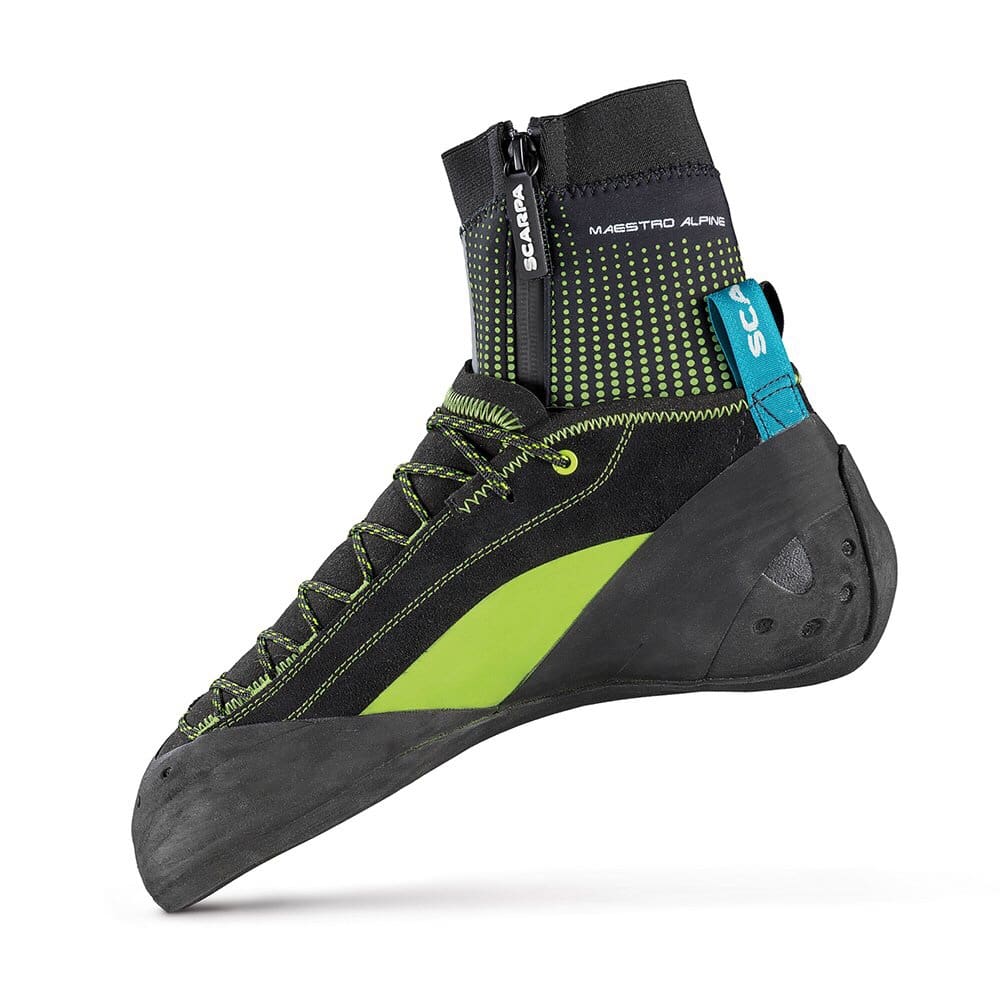
Designed for trad climbing at low temperatures (winter conditions), this version offers a high thermic insulation grade thanks to an additional internal layer and a thermic sock. The leather upper riding higher on the foot for extra protection.

It offers stability for standing on small edges and yet has enough flex for smearing. The Maestro Alpine has a straight and slightly downturned shape with a medium-to-low angled toe box. The shoe features a full-length leather base with seamless big toe panel and large seamless four-toe panel, which, allows the toe box to gently mould and shape to your foot.
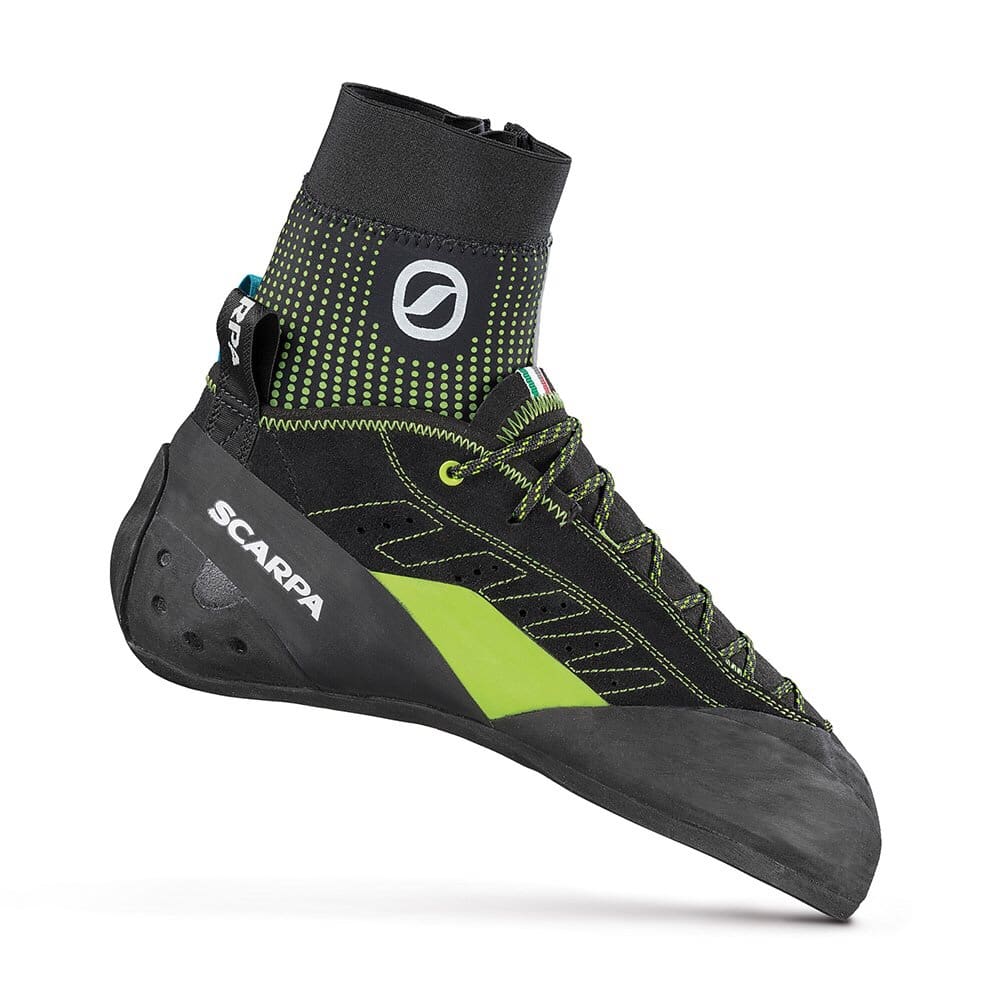
This unique product, developed in conjunction with Leo Houlding for an expedition to Antartica, is suited to those pushing the boundaries of big Patagonian walls and alpine faces in cold conditions and it’s IPC Tension system (integral power connection) is designed to offer strong support to the foot during prolonged use.


Blending Scarpa climbing and mountaineering R&D teams and know how, has created a new level in precision meets warmth! The chassis boasts all the attributes of the Maestro mid, which is a full length 1.1mm/1.4mm Talyn midsole, specially shaped, to give maximum support with flex. The special design allows for flexibility at the ball of the foot for smearing while maintaining support on micro footholds. The midsole actively spreads the force for sustained periods on technical face climbs.
Added to these features is the full length Vibram XS Edge rubber sole unit that gives excellent stability for micro crystals and edges. The 2mm Vibram XS Grip 2 rubber inlay in the heel unit gives further structural support and tension to the shoe while helping maintain comfort level.


Making the Scarpa Mastro Alpine the perfect climbing solution in footwear that offers comfort, durability and support out on the crag.

For more information contact international@brigantes.com

For UK sales contact warrior@brigantes.com

Vendors Deliver Air Force Flight Helmet Prototypes in Just 9 Months Thanks To AFWERX Vegas

Tuesday, June 11th, 2019

LAS VEGAS—U.S. Air Force fixed-wing aircrews at Nellis Air Force Base, Nev. are flight-testing new prototype helmets this summer, thanks in part to an accelerated acquisitions process enabled by the AFWERX Vegas Innovation Hub. In just nine months, more than 100 crowd-sourced user-suggestions and concepts resulted in product presentations selected from 38 companies. From these, three teams of partnered vendors were tasked with the production of prototypes.



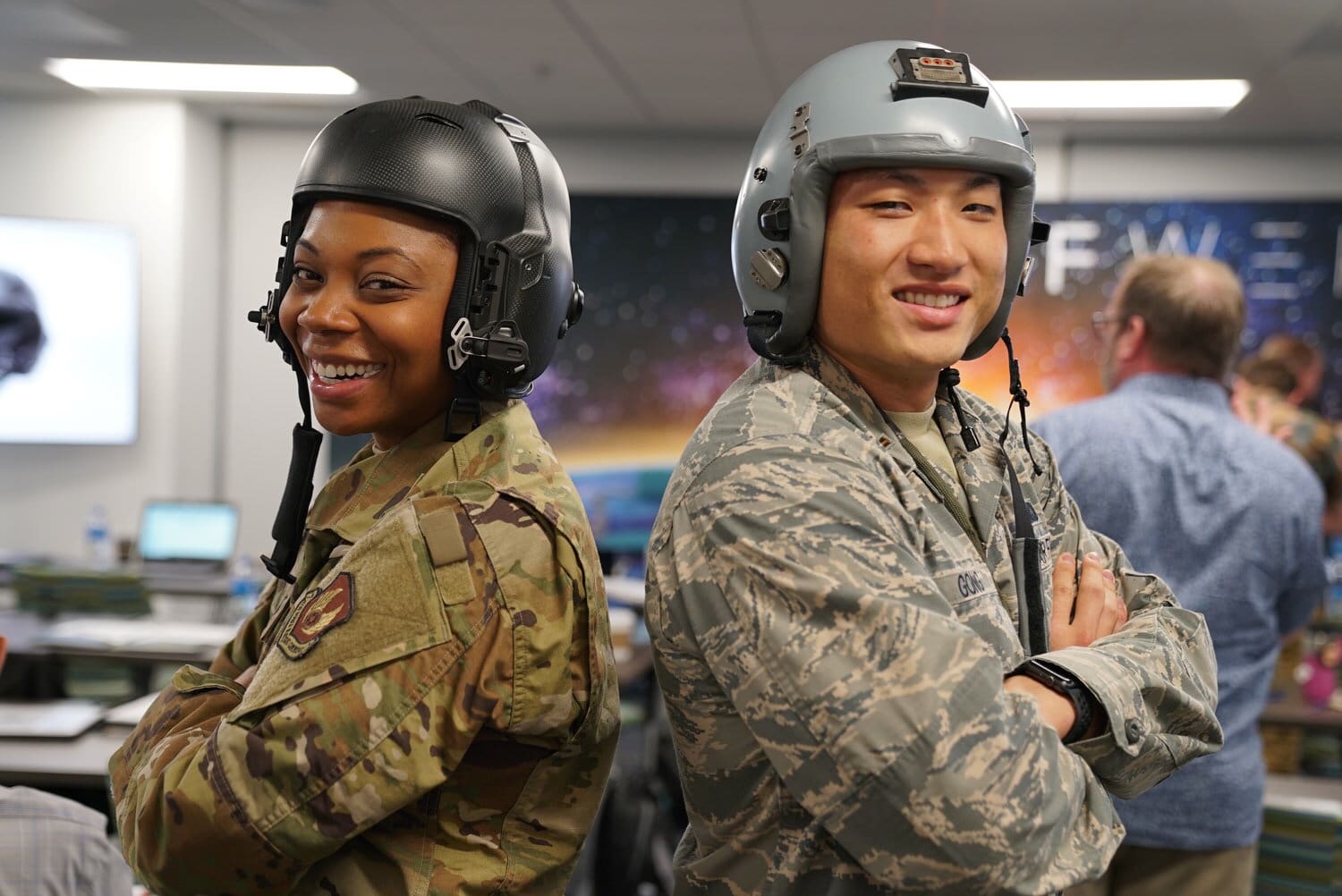
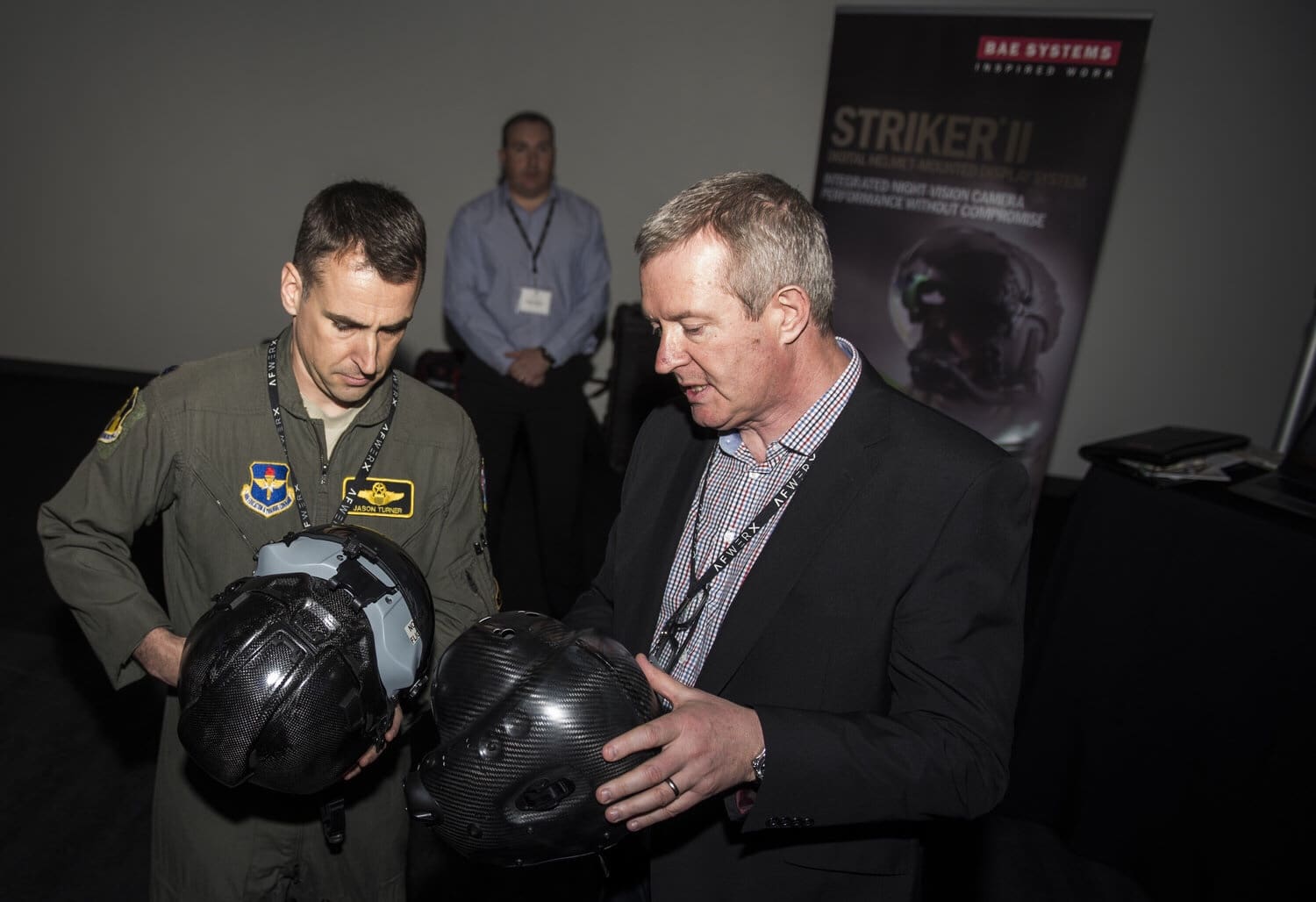
At an informal celebration at the AFWERX Vegas Innovation Hub earlier this month, U.S. Air Force personnel took delivery of four helmet designs that may each represent the next generation of fixed-wing aircrew equipment. In just nine months, the AFWERX innovations process generated tangible products for further Air Force testing and development. PHOTO: AFWERX Vegas

Four robust prototypes have now been delivered to the Air Force, ahead of schedule and ready-for-testing.

The fixed-wing aircrew helmet currently issued to the Air Force was last updated in the 1980s. Previous attempts at determining user specifications, and soliciting new designs from industry, had failed to gain much altitude. “Previously, it had taken the Air Force years to fully articulate a requirement and launch an RFP [Request-for-Proposal],” says Mark Rowland, an Innovation Actualizer at AFWERX Vegas. “It took us just a few weeks.”


After approximately two months of problem-definition workshops with stakeholders and experts, as well as an on-line design challenge soliciting ideas from the public, the AFWERX Vegas Innovation Hub hosted 35 non-traditional potential vendors of components and full-helmet solutions in a November 2018 showcase. From these, a total of 10 vendors were configured into three teams. Each was tasked to develop prototypes. PHOTO: US Air Force A1C Bryan T. Guthrie

The prototype helmets were developed with an eye toward decreased weight, improved thermal management and stability, customizable fit, and integration with night-vision and other systems.

“The current helmets worn by aircrews in most fixed-wing aircraft were […] not made to withstand and balance [all the modern technology] that we are putting on them,” explains 1st Lt. Naomi Harper, a program manager with the Air Force Life Cycle Management Center’s Human Systems Division. “If the weight on the helmets is off, the center of gravity is completely off, which can cause neck issues and pain for our aircrews.”

One of AFWERX’s innovation-acceleration secrets? Focus on finding “dual-use” or “Commercial Off-the-Shelf” (“COTS”) solutions that are already in production. Another secret? Involve non-traditional vendors—especially small businesses and start-ups—who may require comparatively little developmental funding to achieve next-level successes.

For vendors who may otherwise lack familiarity with the Air Force, AFWERX can serve as both a matchmaker and a catalyst. The military is a great potential partner, says AFWERX Vegas hub Deputy Director Colby Edwards, because it can often provide critical funding with little contractual commitment and without sharing Intellectual Property (IP) rights in development phases. The opportunity to serve the American warfighter is important, too.

“In the helmet-design challenge, we think AFWERX has helped save the Air Force millions of dollars and years of development, brought-in more competition, and generated more-innovative products,” says Edwards. “Even better—the impact to the warfighter will ultimately be improved effectiveness, safety, and comfort.”

“Now, the AFWERX Vegas team looks forward to seeing the project’s continued successes, as U.S. Air Force program offices and testers begin to work directly with these potential vendors,” he says.

To learn more about the AFWERX Challenge, visit: www.AFWERXchallenge.com

The AFWERX Vegas Innovation Hub was started in 2017 and is funded by the U.S. Air Force to support outreach to the business and academic communities. The location is one of three AFWERX Innovation Hubs—the others are in Austin, Texas and the District of Columbia. Each serves as a nexus for activities focused on delivering design solutions to Air Force problems faster, more effectively, and more efficiently than in the past.

The AFWERX Vegas team reconfigures its process to meet requirements for each Air Force design project. Often, in early stages, the team hosts ideation workshops and online challenges. Through such efforts, AFWERX optimizes participation of subject-matter experts from industry, business, investment, academia, and the military. Later stages can incorporate mini-tradeshows, “Shark-Tank”-like pitch meetings, side-by-side competitive “fly-off” events, and more.

As envisioned by U.S. Secretary of the Air Force Heather Wilson in 2017, AFWERX is intended to solve some of the toughest challenges that the Air Force faces in an “outside the fence” environment, through innovation and collaboration amongst our nation’s top subject-matter experts. The world is changing quickly—new technologies, new threats, and new opportunities.

To learn more about AFWERX, visit: www.afwerx.af.mil

Max Talk 25: Advanced Patrol Tactics: Satellite Patrolling

Monday, June 10th, 2019

This is the twenty fifth installment of ‘Max Talk Monday’ which shares select episodes from a series of instructional videos. Max Velocity Tactical (MVT) has established a reputation on the leading edge of tactical live fire and force on force training. MVT is dedicated to developing and training tactical excellence at the individual and team level.

Continuing with the theme on squad maneuver, this video is an introduction to the concept of ‘Satellite Patrolling’ as described in the MVT Tactical Handbook: Small Unit Tactics. Utilizing a sand table model with figurines, as a method of introduction to explain this advanced patrolling technique.

Detailed explanations can be found in the MVT Tactical Manual: Small Unit Tactics.

Max is a tactical trainer and author, a lifelong professional soldier with extensive military experience. He served with British Special Operations Forces, both enlisted and as a commissioned officer; a graduate of the Royal Military Academy Sandhurst. Max served on numerous operational deployments, and also served as a recruit instructor. Max spent five years serving as a paramilitary contractor in both Iraq and Afghanistan; the latter two years working for the British Government in Helmand Province, Afghanistan.

Website: Max Velocity Tactical

YouTube: Max Velocity Tactical

Excellence in Tactical Training.