SIG SAUER - Never Settle

Archive for the ‘Guest Post’ Category

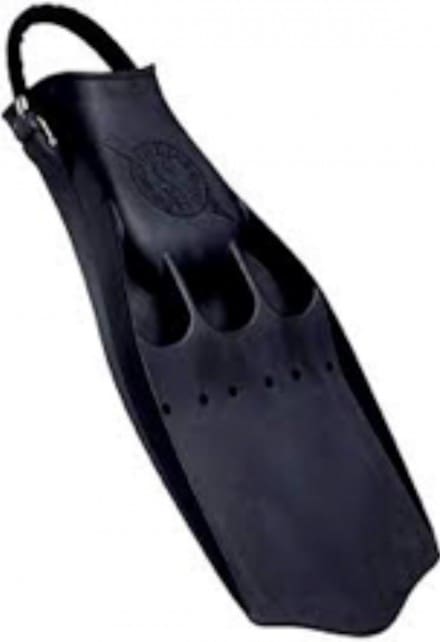
SCUBAPRO Sunday – Jet Fins

Sunday, August 26th, 2018

This famous fin, with its durable rubber construction and distinctively beefy shape, has been seen on dive boats, research vessels and in the world’s most remote dive locales since 1965, and it’s still the fin of choice among a host of professional divers the world over. The Jet Fin set the standard for power and durability when it was ?rst introduced over 50 years ago. Today, tech divers, deep divers, military divers, commercial divers and dive instructors, as well as old-school recreational divers, still strap on a pair of Jet Fins before hitting the water.
SCUBAPRO sold over 100,000 units in the first few years. That was an amazing feat in those days and set the standard for dive fins. We took the concept and proceeded to popularize the fin with the US Navy and other commercial diving operations. The fact that Jet Fins have been almost exclusively adopted by the Navy and the commercial diving sector speaks volumes about what type of diver would benefit from them – someone who needs thrust, durability, control and convenience. Its hard to not like a fin that Thomas Magnum and TC used when they dove on Magnum PI. Just saying.

Episode SO6 E11

93379657-9B87-46B5-BF93-BF323B57E076

F90CEC42-8851-4AB4-8766-432AB64D6B1D

-Rubber construction is known for its durability, promising a lifetime of use. The Jet Fins are molded from one piece of rubber which makes them very durable and vertically indestructible. This will cut down on any maintenance that you will have to do on the fins, or the likely hood that you might damage them, meaning you will have them for many years to come. Jet Fins are made by using only one single compound which is rubber, molded in one piece and therefore unable to have “component failure” being as there are no screws, welds or connections to break as happens so often with modern fins. The Jet Fins are also flexible enough to provide excellent thrust, stiff enough to transfer all the diver’s leg energy into pushing the water backwards and robust enough to take literally any harsh conditions a diver can throw at it.

-The Proven vented design. Just below the foot-pocket, allows water to flow through the blade, reducing drag on the weaker upstroke, while enhancing trust and power on the down stroke. Many divers have their pair of SCUBAPRO jet fins for decades and literally swear by them. They are perfect for the frog kick and other kicking maneuvers.

-The Jet fin is also very compact. This feature is a must in confined spaces like cave, wreck divers and piers. The Jet Fins are broad and short, which means divers, are able to avoid kicking each other and the ocean floor.

The Jet fin comes in, black, camo, red, orange, yellow, white green and pink. We can also make special orders if needed.
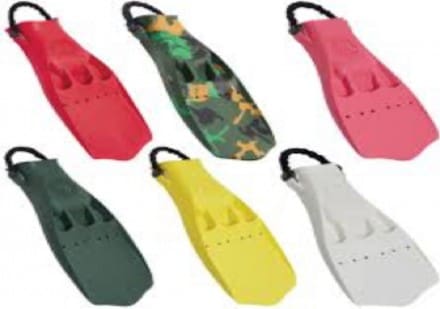
E8FB35D4-FF82-4255-9F68-87E01F772D3B

-The jet fins weighing about 5-7 lbs, and might not be suited for all divers but Mention “JET FIN” to virtually anybody who has a dive card or has gone to a military dive school and they’ll know exactly what you’re talking about. (I know memories of flutter kicks with them on, are running thru your head)

SCUBAPRO now offers two styles of Jet fins and two versions of heel straps.
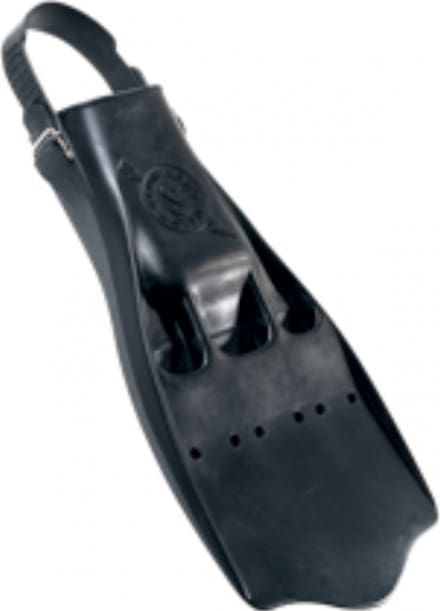
32DA5D0B-B698-4F1E-8B5B-E477E3E023E0

00B7CBC8-F484-4EEC-9577-3092102A5A49

The original adjustable fin strap and the stainless steel spring heel. The original fin with the standard adjustable fins strap is still Made in the USA. The other version comes with a rugged stainless-steel spring heel strap that can lasts forever and makes donning and doffing as easy as can be. The steel spring was invented by cave divers that needed a fin strap that could last in some of the toughest places on earth and was quickly adopted by the military and other professional divers worldwide. The spring can be put on any of the jet fins.

SCUBAPRO has two styles of Jet fins available. With or without a hole on the blade. Each fin includes a pairing hole that allows the fins to be hung or stored together, minimizing the possibility of misplaced or mismatched fins. It also make coming out of the water on a beach or climbing a ladder easier. You can also attach the fins to you wrists or back with the SCUBAPRO fin keepers or carbineer and 550 cord will work.
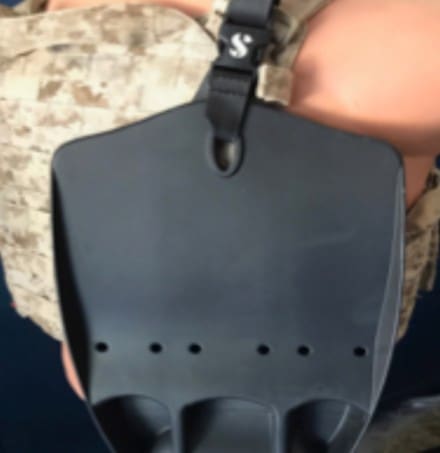
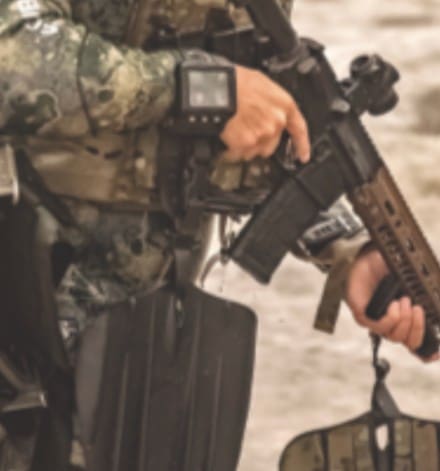
5EC02996-4D2B-4032-8412-ACAE50CD82D8

53C4A8F8-A635-42AA-8ADF-67D95F14A3BB

The Jets are renown for its power and its durability. They can last a life time and with proper care. They don’t really get sun damaged, salt eroded, chlorine discolored, travel battered, coral gouged or split. They are the strongest pieces of equipment that you will ever own. We had a retired master Diver that wanted to get a new pair as the ones that he had received in navy dive school in the 60s where getting a” little old” as he said. He called SCUBAPRO and asked about buying a new set. We told him we would give him a free pair. We asked if we could put the ones he has in our museum. He gave us a very polite “hell no I am not giving away my Jet fins”. We gave him a new set and he when home a happy man with two pairs of Jet fins.

When you’re diving with JET FINS, you are diving into a long line of history.
www.scubapro.com

Top 8 Questions Asked About Salomon Forces

Friday, August 24th, 2018

For 20 years, Salomon has revolutionized the footwear market. Building upon their mountain heritage, the company developed their innovations through experience in hiking, adventure racing, and trail running.  They also bring their iconic fit and performance to Forces, a line dedicated to the specific needs of military, safety and law enforcement professionals.

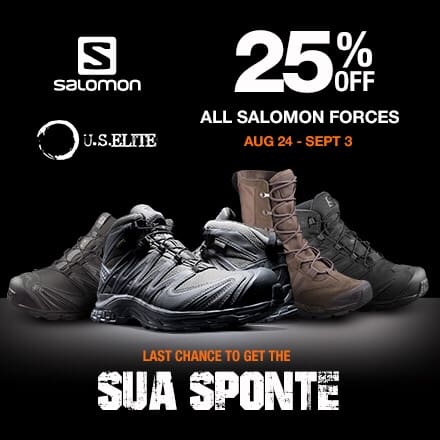
If you haven’t heard of Salomon, you should look into them, and soon.  From now until Labor Day (Monday, September 3), U.S. Elite is having a Salomon sale, where you’ll find these highly sought after shoes at 25% off. It will also be the last chance to get the exclusive Wolf Grey XA Pro 3D Mid GTX “Sua Sponte” before it becomes extinct. You may have questions before making a purchase, and lucky for you- we’re about to answer the top questions asked about Salomon Forces:

8. Who sells Salomon Forces shoes?

It’s true you can find Salomon footwear at your local outdoor/footwear shop – heck, you can probably even find it on their site. But if you’re looking for some bad-ass Forces, you’ll need to get them right from U.S. Elite. Aside from the exclusive Sua Sponte, U.S. Elite is always deeply stocked, with different models and sizes available. Salomon only allows a select few retailers to sell their tactical Forces line of shoes.

7. Who makes Salomon Forces and what makes them so special?

Salomon Forces originated from The Salomon Group, with its pedigree originating from Annecy, France. Their passion for outdoor sports, along with new technology and craftsmanship, gives them the drive to create progressive gear.  Salomon Forces are made for an elite group of customers, having the specific needs of military and LEOS in mind.

6. Which Salomon shoe should I buy?

Since there are so many great ones, U.S. Elite can recommend for different reasons.

We decided to break this up into categories so we can cover everything:

Everyday use: The XA Forces Mid (2018) or XA Pro 3D Mid GTX both offer comfort, flexibility and support for all-day use.  Both boots are also lightweight, so you won’t feel weighed-down when wearing them.

Shooting / Hunting: This depends on where you are going to be hunting.  If you’re going to be in a hot, dry climate, we’d recommend the Jungle Ultra.  On the other end, the Quest 4D would be better suited for a cooler climate.

OCR / Trail Running: The SpeedCross 4 were designed with trail running (and wider feet) in mind.  Their aggressive soles grip onto loose dirt and gravel, helping you to start off and stop when you want.  With a lining that’s highly breathable and abrasion resistant, these shoes deal with mud and puddles with zero issue.

CQC / CQB: The Speed Assault has the best of both worlds.  They include an aggressive grip like the SpeedCross 4, but have more ankle support and protection, more closely resembling what a mid-sized shoe would have.

Uniform Use: The Guardian is based off the Jungle Ultras, but are designed to meet the requirements of AR-670-1, which means you’re getting tried-and-true Salomon performance.

5. How do Salomon shoes fit?

From narrowest to widest, it would be:

Jungle Ultra / Urban Jungle Ultra

Guardian

XA Forces Mid

Quest 4D

SpeedCross 4

4. How should I wash Salomon shoes?

The best way to get your boots like-new again is to use a wet brush or cloth, and pairing that with a product like Nikwax will help maintain, condition and deodorize your boots.

3. How do I tie Salomon shoes?

One of the trademarks of Salomon Forces is the Quicklace system.  It cinches up fast and keeps your boots on your feet.  Just pull the lace tab up, slide the toggle lock until you’ve got the desired fit, then secure the excess length inside the lace garage, found on the tongue of the shoe. The system ensures a secure, comfortable fit, and is much less likely to snag on something than traditional laces.  If they do break, replacements are available.  You can also check out this video which is a guide to replacing the Quicklace, featuring Hugh from AmerSports.

2. Can I machine wash Salomon shoes?

Although you can machine wash pretty much anything, we don’t recommend doing this with your boots.  Check back to number 4- how to wash Salomon shoes for the best way to get them clean again.

1. Are Salomon shoes good?

Short answer – yes.  Soldiers and professionals need dedicated equipment to operate in hostile environments, beginning with footwear. In addition to year-round comfort, outstanding traction in changing terrain, footwear for military and law enforcement must be stable, durable enough for intense conditions, and provide complete weather protection.

Don’t forget to use coupon code “SOLSYS” to get free flat rate CONUS shipping.

Operating a 2A Business Online – Options

Wednesday, August 22nd, 2018

“My Facebook Page/Group was shut down.”

“My credit card processor shut me off.”

“Google won’t accept my AdWords budget.”

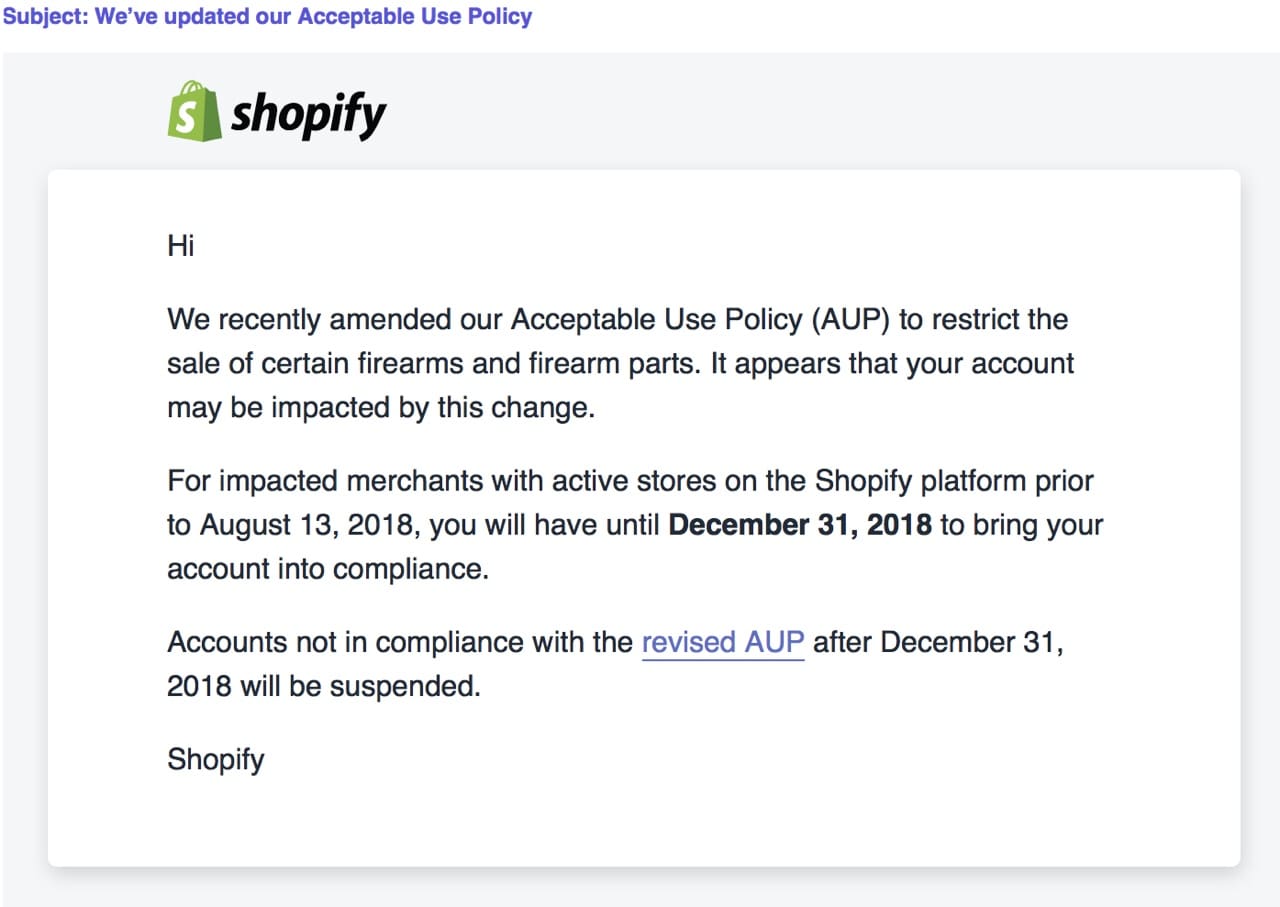
“Shopify modified their Acceptable Use Policy and turned off my website.”

All of these are common complaints we see online every day from businesses operating in and around the Shooting, Hunting, Outdoor, and Tactical (SHOT) market – particularly when there’s tools like firearms, knives, and accessories involved. What was once a wide open ‘Wild Wild West’ of the market, is now an increasingly controlled World Wide Web of regulations, rules, and policies. Not many of which are designed to support the SHOT market. Most of them are designed to mitigate liability and risk for the partners and vendors involved. And now that risk mitigation is being wielded to target the SHOT Market.

Shopify’s Acceptable Use Policy (AUP) update last week is not the first shot of the war. It is one more shot in another battle in a long series of battles. Since the beginning of commerce on the internet we’ve seen this. If it’s not the SHOT market, it’s drug-related content, 3D CAD files (Defense Distributed), the adult industry (watch the movie ‘Middle Men’), and a myriad of other targets.

Doing business online in the SHOT is achievable, but owners/operators need to be realistic and take an approach to mitigate our risk. In the chain of vendors and service providers needed to successfully operate a 2A business, all of them carry inherent risk. Hosts, credit card processors, software licenses, service providers: all of them can change their policy at any time and have a negative effect on your ability to do online business. These policy changes may not be because they dislike us, our products, or our customers. Rather, it may be a requirement of their financial institutions – banks, lenders, processors, investors, their insurance providers – many of whom dislike the inherent risk associated with commerce in 2A, or their leadership or board members – some of whom may push personal agendas in the course of their role, amongst many other factors.

For that reason, it’s important to have these conversations with our providers. Be upfront about our business with our online resources. Let them know what our businesses do, with whom, and what steps we’ve taken to mitigate their risk (your resources, your customers), and our risk – as a business owner/operator. And, ask them the tough questions: “Do you support my business – the legal sale of products in the 2A space?” If the answer is no – move on. If the answer is yes, ask them how they plan to deal with external pressure to exit the space. Ask them how they plan to notify us in the event they are ‘required’ to change their policies/terms that may negatively affect our business’ ability to conduct commerce online.

These questions and relationships can happen at many different levels in the spectrum of online business, depending on our approach to doing SHOT business online. For most of our businesses, this falls into one of three solutions:

Full Custom Development

Working with your team and that of a developer, payment and processor solutions, hosting, homegrown or licensed cart and other software, and likely a suite of marketing and management tools. This option provides the most flexibility for a SHOT business that has the business to support the diverse group of resources required to make it work.

Full Custom is often the most expensive and time intensive but allows for an environment where overall risk is greatly reduced by spreading it across multiple vendors and resources: if one fails, it can often be replaced with another that supports our industry. Solutions like this are perfect for companies looking to both mitigate risk, as well as having a diverse set of business rules and requirements.

Hosted Solutions

Yes: there are hosted solutions alternatives to Shopify that ARE SHOT and 2A friendly, including huge companies with stronger platforms and capabilities than Shopify has ever had. These SaaS (Software as a Service) companies provide nearly a one-stop-shop environment: pay the fee, plug-in your products, start doing business. Yes, that’s a generalization, but time-to-commerce is reduced significantly working with one of these providers.

With Hosted Solutions we operate in their environment, they maintain the hosting, software, and vendors required for us to do business. Using their services or outside resources, you skin the look and feel of the site and add your content and you’re off! From a risk perspective, like Shopify, some of these services can be an all-or-nothing endeavor: if they change a policy your business could be shut down.

It’s imperative, therefore, to have the discussion about policy changes up front with a Hosted Solution provider – will they work with you in the event of a policy change? Can they or will they explore other resource options to support you if, for example, their credit card processor was the weak link and opted out of 2A business? Again – there are some fantastic options out there but approach any relationship with a Hosted Solution provider with your eyes wide open and have a plan for contingencies. These solutions are optimal for brands looking for near-turn-key ecommerce solutions, preferably for brands not selling firearms, weapons, or accessories – soft goods and non-gun parts are a good fit.

DIY Solutions

If you’re good with rolling up your sleeves and terms like ‘CSS’ and ‘API’ don’t scare you, then a DIY solution might be for you. Or, if you can figure out how to navigate some of the online basics of buying a domain, finding a host, and installing plugins, it’s not hard to roll-your-own with little to no help. There’s a number of free shopping carts available. Some requiring little configuration, the others a degree in computer sciences. Depending on your skill and risk level, these could be a good fit for you, but often would be better suited to engaging a developer for a custom project.

Other options may be simpler and easier. One of the most expedient methods is to use WordPress – a widely adopted blog software – in combination with a cart plugin. WordPress powers a claimed 31% of the internet – and it’s a believable claim: their software is everywhere. Over time, companies have built a significant number of plugins to extend the capability of WordPress, including shopping cart software. These shopping cart plugins are available as free, licensed, and hosted options – all ‘plugging into’ the WordPress environment to allow you to operate an online store. Using the easy WordPress interface and finding a place to host your website are relatively straightforward processes. Adding in payment processors, fulfillment providers and other plugins can be a bit trickier, but generally achievable for most.

Building one of these sites takes some time and it opens us to some risk: If your cart plugin is dependent on a specific payment gateway, or any other service/capability, plugin or extension and that provider changes their policy, your business could be at risk. Therefore, a shopping cart plugin with a wide array of options to fulfill these roles and needs is advisable and will help mitigate your risk. Additionally, there’s the possibility of WordPress changing their policies and terms, and though that could be difficult to enforce with the broad proliferation of their software, it could happen. These solutions may allow you to diversify risk across more components and may cost less than a full custom solution or hosted solution, but they add time and resource requirements.

There is a solution for everyone. The options above can and do work. We work with iterations of them every day. Because we, as an industry, are not done or going away. They can’t push us out or shut us down. Using one of the solutions above, or a combination of them, can help mitigate our risk. Having a plan, however, will help further reduce our risk and ensure we’re ready for contingencies. Managing our risk with a plan isn’t a suggestion, it’s a requirement for a smart business owner. They have and will continue to make it harder and more difficult for us. More policies will change, likely not in our favor. More providers will fail us. But we’ve got a plan.


By N Hoffman.

US Army Evaluates UK’s Hung Up Parachutist Release Assembly

Sunday, August 19th, 2018

ABERDEEN PROVING GROUND, Md. — Jumping out of a plane may be a routine part of an airborne Soldier’s training, but if the equipment doesn’t function properly, it can be deadly.

“Generally, there are a handful of towed jumpers per year, which can be potentially dangerous situations,” said Samuel Corner, project manager for the U.S. Army Research, Development and Engineering Command Soldier Center Aerial Delivery Directorate.

Until recently, there were two ways to help a towed jumper, which occurs when the static line attached to the aircraft anchor cable becomes tangled with the jumper and/or the equipment and the parachute is not released — cut the jumper’s static line so the Soldier can deploy his or her reserve parachute or pull the Soldier back into the aircraft. Both scenarios are dangerous because the Soldier is dragged alongside or behind the aircraft until he is either released or pulled into the aircraft.

In March 2017, in an effort to eliminate the possibility of a towed jumper situation, the Aerial Delivery Directorate’s Airdrop Technology team submitted a project proposal to the U.S. Army Foreign Comparative Testing Program, which is embedded in RDECOM’s Global Technology Office, as part of their annual call for proposals. The proposal was selected, enabling the Airdrop Technology Team to purchase ten Hung Up Parachutist Release Assemblies, or HUPRA, from the United Kingdom company, IrvinGQ (formally Airborne Systems Europe) for tests and evaluation.

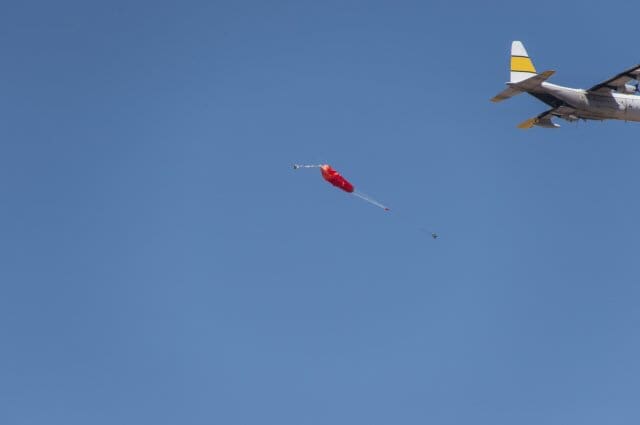
A simulated towed jumper scenario is created during U.S. Army testing with a mannequin that is towed behind an aircraft. The new system includes an emergency parachute that is released once the jumpmaster cuts the aircraft anchor line cable. (Photos Credit: U.S. Army photo )

The HUPRA, which includes an emergency parachute that is released once the Jumpmaster cuts the aircraft anchor line cable, is manufactured by IrvinGQ in the UK. The HUPRA is used by the UK as well as other nations on C-130 and other military aircraft.

By purchasing the system from the UK, the Army saved approximately $500,000 in non-recurring engineering costs and additional costs to develop, integrate and validate a new recovery system.

“Testing, which includes aircraft time and manpower to design validation tests, is very expensive,” Corner said. “We built on efforts of the UK by using their lessons learned to accelerate our process and decrease our costs.”

The tests, which were conducted at Yuma Proving Ground, Arizona, used mannequins that “jumped” out from the aircraft’s side doors and ramp. The testing was conducted on C-130 aircraft and divided into seven phases; minor changes were made to the system after the first phase was completed.

Before a Soldier jumps out of an aircraft, a Jumpmaster conducts a personnel inspection of the Soldier’s attaching, jumping and releasing equipment. Jumpmasters must complete a rigorous training program before they manage airborne jump operations.

A complete developmental test was performed on the Towed Jumper Recovery System (the Army name for the slightly modified HUPRA) at YPG, including aircraft procedures development, safety evaluation, rigging procedure development and performance testing.

One of the goals of the tests was to ensure the system recovered with an All Up Weight maximum of 400 pounds, slightly above the UK’s fielded version of the HUPRA systems capabilities. AUW includes the weight of the Soldier, the weight of the parachute system, which is approximately 40 pounds, and the weight of the equipment that Soldier needs for a mission — rucks, guns, ammunition, food and water.

While Standard Operating Procedures were developed based on the C-130 aircraft that was used during testing, another set of SOPs will be developed for C-17 aircraft, which is a much larger aircraft that the Army uses.

“The TJRS program has been positively briefed to the Army Airborne Board,” Corner said. “The next step is to work with the board and TRADOC to develop a formal requirement for a jumper recovery system. After that, the project will transition to PM Soldier Clothing and Individual Equipment, under PEO Soldier.”

The Foreign Comparative Testing program is a congressionally authorized program that is executed for the Army by the RDECOM Global Technology Office, which receives oversight from the Office of the Secretary of Defense, Comparative Technology Office. The FCT Program provides an avenue for Army engineers, scientists and program managers to acquire, test, and evaluate items and technologies from foreign industry allies and other friendly nations that may fill an Army capability gap or other urgent need.

By Argie Sarantinos-Perrin, RDECOM

SCUBAPRO Sunday- Knives

Sunday, August 19th, 2018

Dive Knifes

The general maintenance of your dive knife is easy and will not be hard as long as you get into a good habit of always raising the knife and scabbard in fresh water properly.

Post Dive care

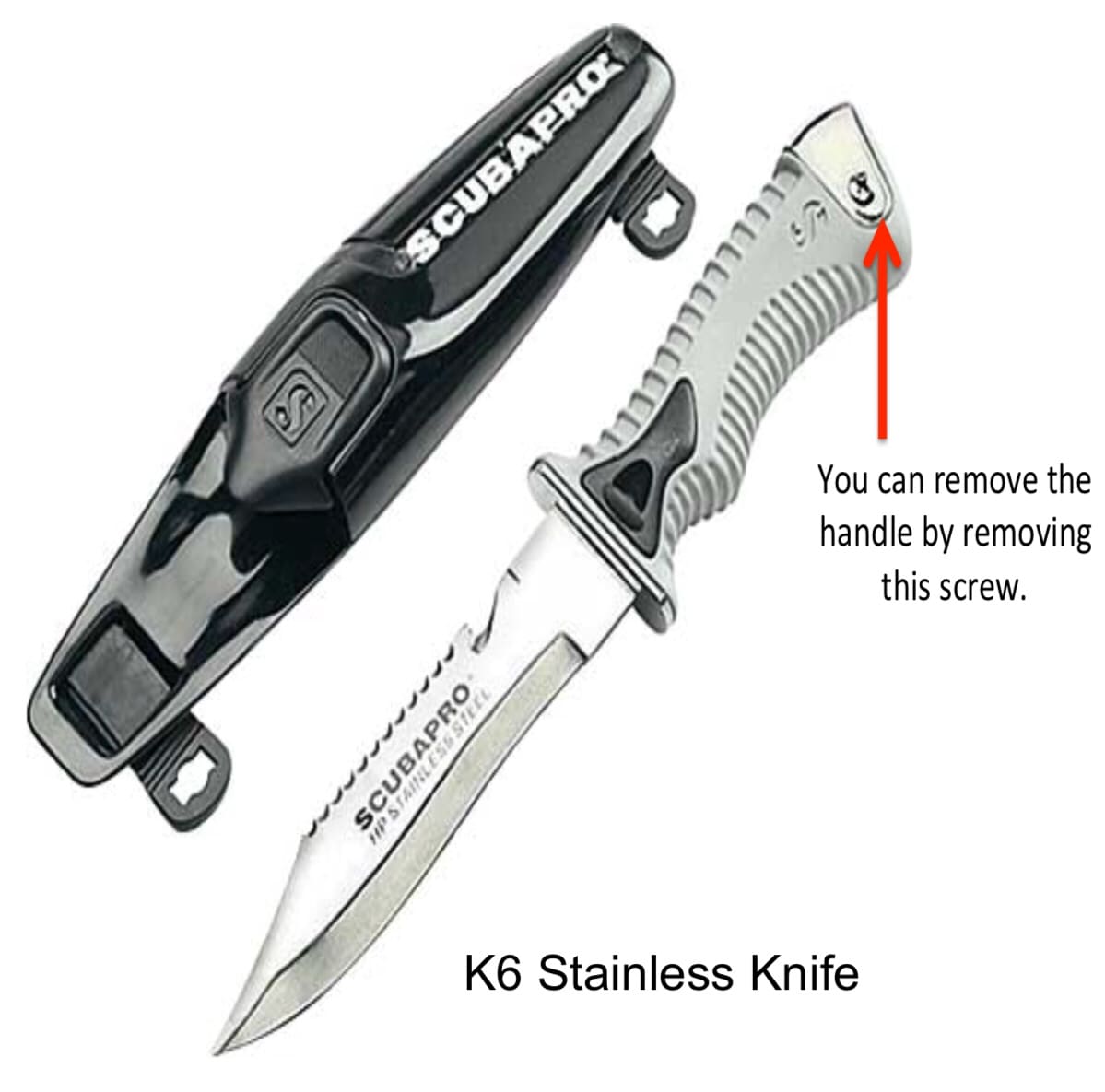
After diving, rinse the knife and sheath in fresh water. Wash the scabbard thoroughly to ensure no salty residue is left inside, remove the knife from the sheath and operate any moving parts while soaking. This helps remove sand and other debris that may have gotten inside. If not done properly when you put the knife back the remaining salt will cause the blade to rust. If the knife can be disassembled (usually by taking the handle off), take it apart and rinse the individual pieces in fresh water after every couple of dives or if you plan to store for a long time. This helps prevent salt buildup and corrosion from happening underneath the grip where you can’t see it. Dry all of the pieces thoroughly before putting the knife back together.

If you are done diving for the day you can apply a light coat of silicone to the blade to prevent corrosion, but don’t use a petroleum-based lubricant. Petroleum will attract dust and sand. Use a light oil designed for knifes for lubricating and storage. You will want to use a lightweight honing or mineral oil designed for knife care. If your knife does start to rust try and clean it as soon as possible. For very light corrosion, you may be able to wipe it off with just a towel or toothbrush. Again you can also use a cleaning cloth that is designed to help remove light rust marks. For more stubborn stains and rust, soak the knife in distilled white vinegar for about three – five minutes. Remove the blade from the vinegar and wipe it down. Again, a toothbrush will work nicely for removing the lighter stuff. An abrasive sponge can be used for tougher jobs but be careful not to scrub too hard because you could scratch the blade and you can also remove some of the outer coating and it will make it rust faster. Do not use a steel wool, as that will cause more rust to form later. The steel wool will leave small pieces of steel behind that will start to rust.

Rinse the knife in fresh water in the same manner as you would for post-dive care. Dry the knife thoroughly and apply a light coat of silicone to protect against corrosion.

K6 Stainless Knife

Storing your knife

You can store your knife in the scabbard once you are sure both the knife and scabbard are dry. For long-term storage you should store the knife outside the sheath/ scabbard.  If you have a leather sheath, that retains moisture and will cause rust.  You can store the knife outside the scabbard in a cloth that has some oil on it. They make cloths that are treated with mineral oil you can use or just spray some on one. Store the knife in a dive mask box or put the knife wrapped in the cloth in a Zip lock bag.

Sharping your knife

Dive knifes can be hard to sharpen as most have a straight edge and a serrated edge to them. So you cannot really use the easy methods, like a quick pull sharpener, that you just pull the knife thru. You can use a sharpening stone for the straight edge and a ceramic rod for the serrated edge.

1. With your knife at the correct angle, slowly draw the knife down and across the stone in a smooth motion, starting at the heel and finishing at the tip.

2. The number of times this must be done will vary depending on how dull your knife is. But what’s most important is that you do the same amount of pulls on both sides of the knife.

3. After five draws, flip the knife to the other side and repeat the heel-to-tip motion.

4. Repeat this process, but instead push the knife from tip to heel. Knives are used to cut in both push and pull motions, so it’s important to sharpen them in both directions as well.

5. Flip the stone over to the finer side, and complete steps again until your knife is sharp.

Serrated Edge sharping

There are lots of ceramic rods out there so I am just going to talk about one the Lansky rod. It is tapered so it will fit all sorts of sizes of serration bevels.

1. First size the bevel by taking the rod and place it in a serrated bevel so that the angle is the same. Run the rod from the top (side closest to the spine of the blade) to the bottom (the cutting edge) a few times in each serrated groove. Try and stay with the angle of the serration.

2. Knock off the burr by taking a fine grit sandpaper or sharpening stone and remove any burr from the flat side of the serrated grooves by making a few light passes. Be sure to only take the tapered rod to the width of each serrated groove so that it does not deform them. You don’t need to use a lot of pressure with this method.

3. If you don’t understand this look on YouTube there are a ton of ways to do this.

Titanium Dive Knives

Sharping a titanium dive knife is the same as a stainless steel, but there is a difference. Most companies recommend a diamond sharpener. You will have to make sure you know what type of titanium knife you have as some are only coated with titanium. If it is called military grade it should be pure titanium. Remember when sharpening to use a light touch, titanium is easy to deformed and excessive pressure in sharpening will roll the edge causing difficulties getting a sharp edge.

SCUBAPRO Professional Knife

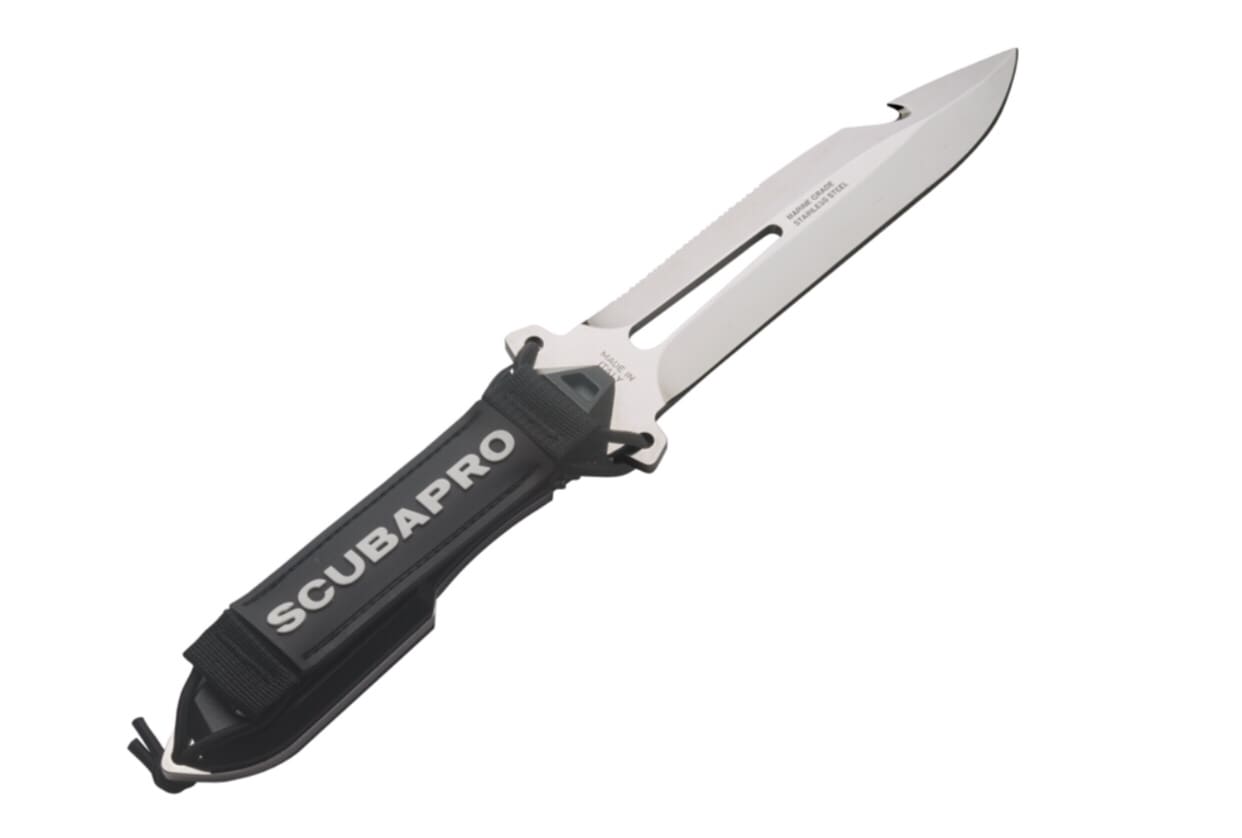
The SCUBAPROs TK15 is the first in a new series of Tactical dive knifes. It is built around a single piece of marine-grade stainless steel machined to achieve the ideal balance of strength and weight. Its surface is specifically polished to let water drain easily and prevent oxidation. The thickness of the stainless steel is consistent from one end to the other, creating a high level of stiffness. This is a traditional, heavy-duty, no-frills type of knife designed to handle all cutting jobs, large and small.

The blade is a generous 15cm/6in long and features a lower full-length smooth-edge and an upper serrated edge positioned close to the handle so you can maintain maximum control of the cut. A line cutter is positioned closer to the tip of the blade to enable you to easily hook lines, plus in this position it doesn’t weaken the blade. Also, a shackle key is built into the body of the blade, a great addition for boat divers.

Marine-grade stainless steel offers the best balance between cutting edge reliability and resistance to corrosion. This can be a difficult balance to achieve on the same piece of steel, but SCUBAPRO succeeded by adding a handmade polish finishing on the steel surface which promotes water run-off for long-term oxidation-free durability.

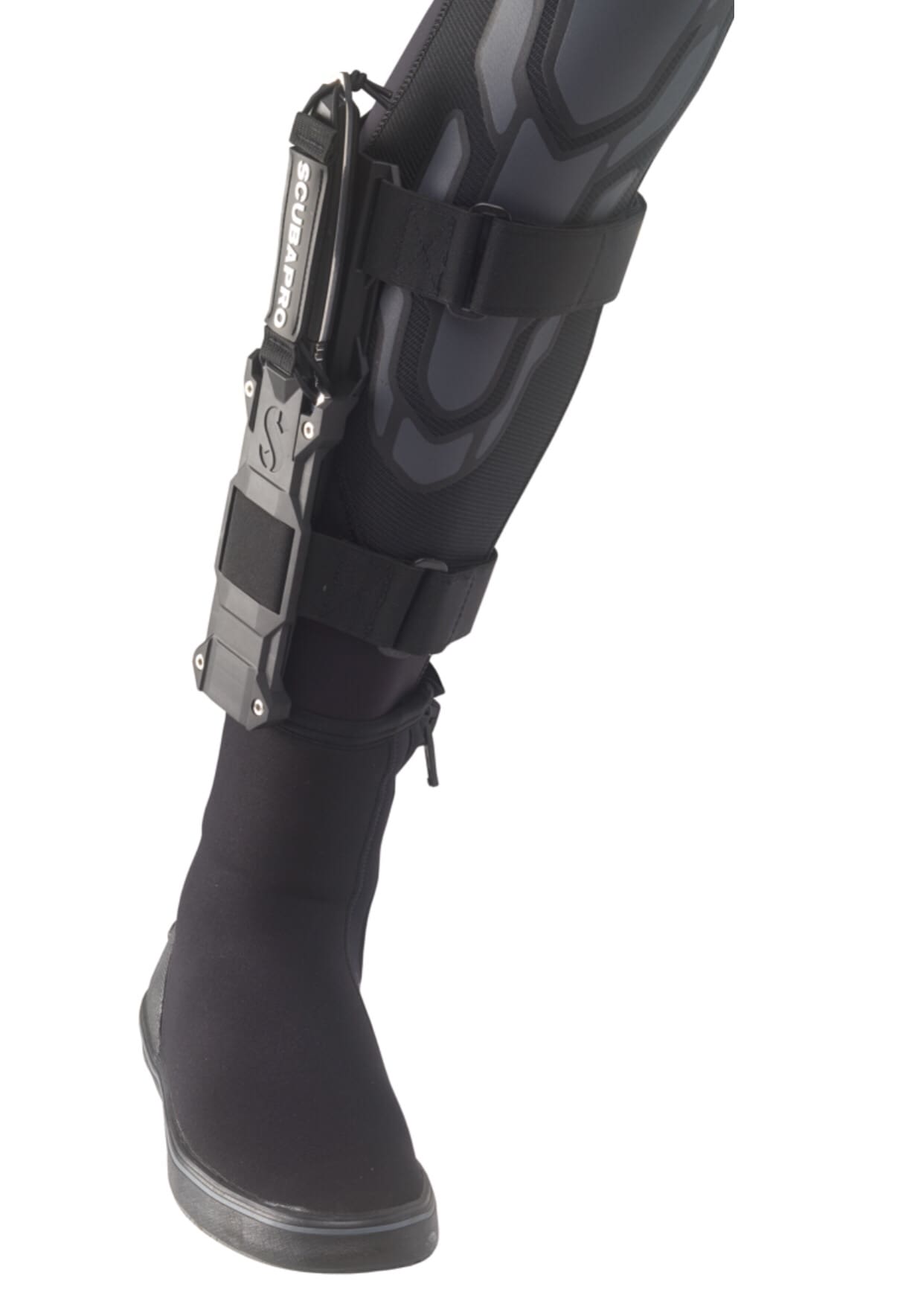
The TK15 comes with a heavy-duty handle that’s sized and shaped for solid gripping. The rugged sheath is made from fiberglass reinforced polyamide. The knife is kept in place by two teeth on the sheath matching the recesses on the handle. The sheath includes heavy-duty nylon straps for easy attachment and a SCUBAPRO branded hand cover with bungee to secure the knife to your hand under critical conditions.

www.scubapro.com

MCTSSA Tests Marine Corps Network to Make Cyber Systems Stronger

Sunday, August 19th, 2018

CAMP PENDLETON, Calif.—Command and control must be assured anywhere the Marine Air Ground Task Force operates, which requires in-depth testing to deliver success on the battlefield.

Cyber security experts and engineers from Marine Corps Tactical Systems Support Activity recently tested various systems within the Marine Corps Enterprise Network, or MCEN, to assess interoperability and cyber resiliency.

“MCTSSA started executing mission-based systems tests as a means to aid Marine Corps acquisition programs in security engineering and ensure our capabilities can perform in cyber-contested environments,” said Jimmy Clevenger, MCTSSA senior principal engineer for Cyber Security.

This mission-based system of systems testing is one of the functions of the MCEN Planning Yard.

The MPY evaluates proposed changes to the MCEN from a performance, interoperability, and cyber security perspective. The MPY testing takes a big-picture approach to validate network processes, provide baseline performance characteristics and conduct an adversarial cyber vulnerability assessment.

“The MPY capability is a great test and analysis service that informs leadership of the impacts imposed on the MCEN’s core services of transport, processing and storage,” said Clevenger.

MCTSSA conducted the cyber resiliency tests in April and May, and delivered a final report of the results to Marine Corps Systems Command programs of record as well as Marine Forces Cyberspace Command and Headquarters Command, Control, Communications, and Computers, United States Marine Corps stakeholders in June.

Specific testing measured the impacts and cyber resiliency of several command and control programs that are connected to the MCEN.

“We collected performance metrics such as network utilization and throughput,” said Paul Tice, MCTSSA technical director. “This enables us to measure the impact of future changes.”

These tests have expanded in size, scope and complexity as MCTSSA looked at different warfighting functions and the systems that support them.

Large scale network tests are a big undertaking, and under the direction of MCSC, MCTSSA formed a federation of technical organizations to aid in the detailed analysis, including: SPAWAR Systems Center (SSC) Atlantic; SSC Pacific; Naval Surface Warfare Center – Crane Division; and Portfolio Manager, Supporting Establishment Systems, Systems Integration Lab.

“System of systems tests are challenging, and we decided to take a crawl, walk, run approach as we developed the current capability here at MCTSSA,” said Clevenger.

MPY testing facilitates the maintenance of the MCEN by enabling a technical evaluation process of proposed hardware and software changes within the MCSC portfolio to determine the impact of those changes to the network.

“The goal of the MPY is to technically evaluate changes to the MCEN before they are introduced,” said Tice. “The idea is to determine whether a proposed change impacts the performance or security posture of the MCEN and recommend mitigation steps before the change is implemented.”

One of the side benefits is enterprise awareness of the changes happening to the network.

“Each program office is extremely busy delivering their particular product to the MAGTF, and often don’t have time to see what is changing in the other systems that share their environment,” said Tice.

This strategic look at the MCEN aids future planning and gives a better understanding of current network capability.

“We have established a measurement of the Marine Corps’ Aviation C2 systems’ impact to the MCEN and have preliminary formulas that can estimate the bandwidth required for these systems in a Tactical Air Operations Center role,” said Darren Spies, test director for MCTSSA’s Test and Certification Group. “For future planning efforts of the MCEN, this information will be useful when gauging further impacts of modifications made to existing systems or incorporating any future systems into the architecture.”

By evaluating the impact of various C2 tools on the MCEN, MCTSSA provides the data leaders need to deliver a C2 environment for tomorrow’s Marine Corps today.

MCTSSA, the only elite full-scale laboratory facility operated by the Marine Corps, is a subordinate command of Marine Corps Systems Command. MCTSSA provides test and evaluation, engineering, and deployed technical support for Marine Corps and joint service command, control, computer, communications and intelligence systems throughout all acquisition life-cycle phases.

Marine Corps Tactical Systems Support Activity personnel tested various systems within the Marine Corps Enterprise Network as part of the MCEN Planning Yard 18-1 event. MCTSSA started executing mission-based system of systems tests as a means to aid programs of record in security engineering and cyber resiliency. (U.S. Marine Corps illustration by Jennifer Sevier)

By Sky M. Laron, Public Affairs Officer, MCTSSA

Corps Strength – The Long and Short of it

Saturday, August 18th, 2018

I have a buddy who is an Army Ranger and Green Beret. A guy with multiple tours in Iraq and Afghanistan. Your typical SOF type, (at least in my experience) easy going, down to earth, smart as a tack and a one tough bastard, both inside and out. When he isn’t deployed, or deep in a training loop, I get him down here to be a guest speaker for my international leadership class. He’s a great speaker and the students love him. I love the fact that we get to hang out and catch up later over some chow and beer. As he’s still on active duty, I get to pick his 50 lb brain, especially on current ops, weapons and PT.

When it comes to PT we think a lot alike. More functional, than sports minded and definitely more outdoor, than gym stuff. He has shared a lot about his team’s PT routine and their other training. Much of it wasn’t a surprise, (other than the insane amount of live fire they do). But, one thing that surprised me on their PT program, was that they almost never do any long-distance running? In fact, he told me that they rarely ever run more than a ½ mile at once. The vast majority of their PT is combination workouts of short runs/sprints, functional movements with tires, sandbags, ammo cans and calisthenics. Intense, functional and in the dirt. Of course, as a matter of operational training, they do a bunch of humping with heavy packs, and on his own time he likes to lift weights. That shows, as he’s built like a linebacker at around 6’ 220lbs. Funny thing when I was a young Jarhead, most of the SOF I saw were all skinny? Now they’re almost all big, stocky guys? I guess it’s more Capt Crunch and Creatine, than Marlboro’s and Jack Daniels nowadays.

In any case I asked him, you guys don’t ever do any longer runs, 5-6 miles every once in a while? “Naw, almost never, some of the guys like to run, they do marathons and all that, but that’s their own thing. It doesn’t help us for what we need. What good is it to jog around in PT gear when in real life we’re carrying weapons, ammo, water, etc. and it’s all in full uniform and in the dirt? When we’re forward it’s humping hills, short dashes, climbing up, around and over crap, and always carrying gear (and sometimes people). We need to train here, for how we fight there. Besides, I hate all that long running, hurts my knees and it’s boring.” I was a typical response from him on any issue; Cut to the chase, let’s do what’s important and forget the bullshit.

Thinking back to my Marine infantry days, we did a lot of running. Many times we went over 10 miles at a pop and lot of it was pretty fast too, even in formation. It seemed that most times it was more of a manhood test than anything else, but I never questioned its value then, as it just seemed like a must do thing, to be in top condition. However, as I’ve grown older (and maybe a little wiser) I find less and less value in long running: just jogging along for mile after mile on the side of road. God knows I’ve done more than my share of it. Having run many marathons, triathlons and other road races, I’ve done training runs over 20 miles for those events. However, if your aim is to achieve a high level of all around “real world” conditioning, I think spending a lot of time on long runs is overrated and frankly probably counterproductive.

Besides being as what my buddy calls; “F’ing boring”, it yields little overall conditioning and can lead to repetitive motion injuries. Especially after you reach the level where you can easily run a 10k. Now I get the fact that it’s mindless and burns calories pretty well. I also get that many people don’t care about “functional fitness”. They just want something simple to keep in decent shape and maintain a good body weight. Running an hour everyday will do that, no doubt. However, if you’re in the military, a 1st Responder, or do have a desire for something better, you need to do more than just jog.

Not that running isn’t valuable, it’s extremely valuable and IMO necessary for conditioning. But, running will serve you better by mixing up the distance and intensity. Interval running that combines fast runs of up to a ¼ mile with jogging, or walking. Beach runs and hill sprints in different combinations and all of this made even better when combining it with some other movements. Besides, taxing and conditioning your body in a more realistic way, it’s almost impossible for this type of workout to become boring, as there is an endless variety of combinations you can dream up. I do at least one of these workouts a week and it’s never exactly the same way.

I shoot for an hour workout total, which is about 5 minutes of warm-up, 45 minutes of continuous running, calisthenics and functional stuff with tires, ammo cans and even some big rocks that are down near the beach here. In the end I probably run 2-3 miles total and all at fast clip, but never more than ¼ mile at once. I finish up with 10 minutes of stretching out and cooling down. A workout like this will hit every area of your body and builds strength, muscular endurance and aerobic fitness all at once. Certainly, much better overall than just jogging for the same amount of time and a whole lot less boring.

In the end, a lot of finding the right workouts for you is more about what you need (and want) vs. than what is just “mindless”. Mix up your running workouts and I’m sure you’ll see some good results. Besides if it works for SOF, I’m pretty sure it will work for the rest of us.

Headed north for a few weeks of climbing, hiking and relaxing. We’ll talk next month. Till then;

“Be Safe always, be Good when you Can.”

Semper Fi

MGunz

Widget Wednesday:  Supported Equipment

Wednesday, August 15th, 2018

6D06681B-7E82-4271-965B-00C683D91EDF

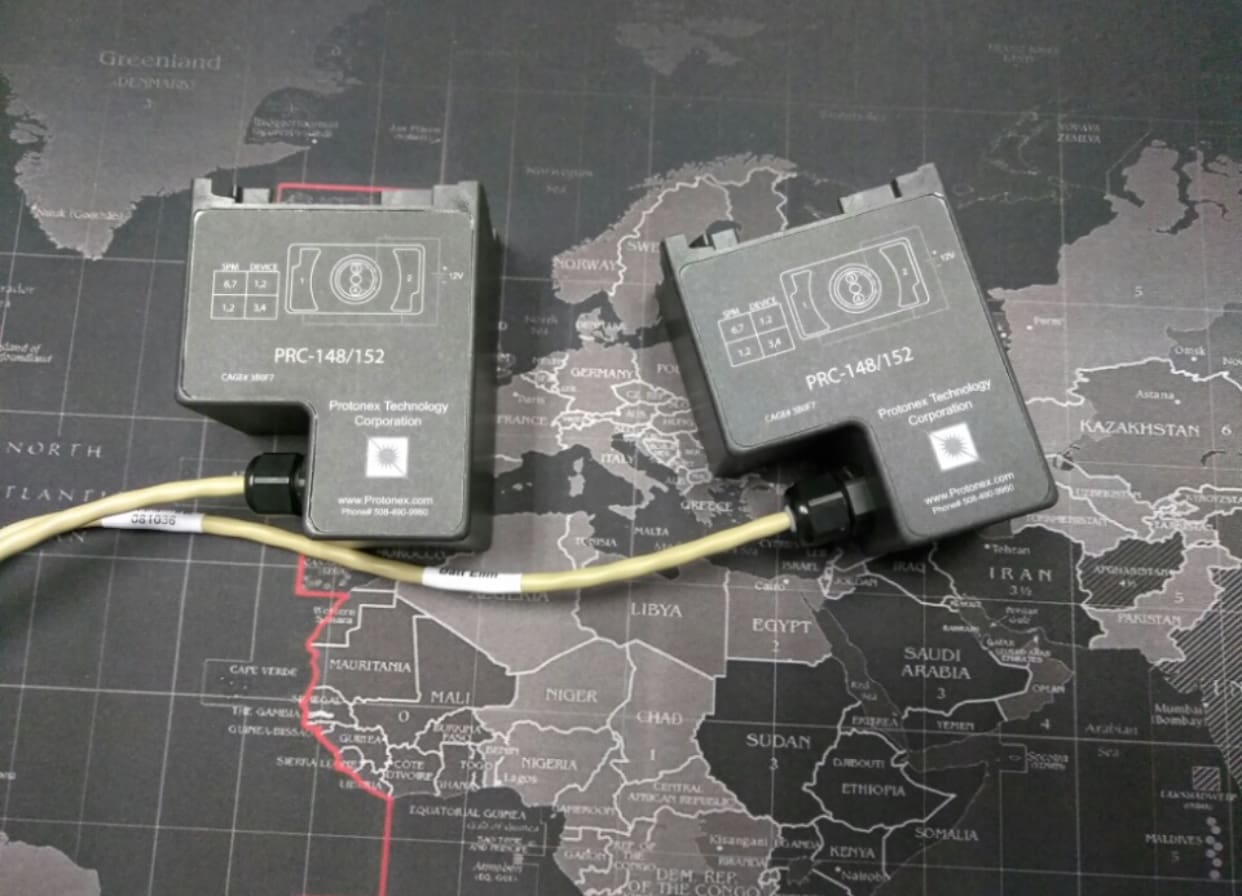
Over the past decade we have worked closely with Program Offices, Commands, and Units to develop a wide range of adapters and cables to bring true plug-and-play power capability to end-users.

770B6CBC-A42F-4DB3-97E6-6FD6516338C5

Our Power Management systems currently support more than 200 different types of electronic equipment, including:
• military and commercial primary and rechargeable batteries
• UAV and UGV systems (both platforms and control units)
• high-performance military radios
• military and commercial SATCOM systems
• laptop and tablet computers
• EOD equipment
• field medical equipment
• GPS systems
• Laser markers and designators
• Smart phones
• And more…

A3D08570-BBA3-48AF-9D8C-D0E7CFD65E1C

To see the full list of equipment that we can provide solutions for, check out the SUPPORTED EQUIPMENT page on our website at www.PTXnomad.com /supported-equipment /.

7C18C75B-C096-4384-95A7-F8364842BDE6

If you don’t see what you need, contact us at Team.Room@Protonex.com and we will lead you through the process of developing a bespoke solution.