Danner Reckoning GTX

Archive for the ‘Guest Post’ Category

New US Army Electronic Warfare Vehicle Tested At Ft Irwin

Friday, February 15th, 2019

FORT IRWIN, Calif. — The Army’s newest electronic warfare vehicle was tested at the Army’s toughest training ground, the National Training Center in Fort Irwin California in January.

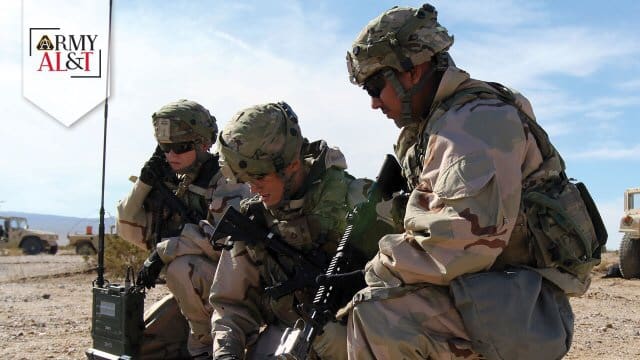
Electronic Warfare Soldiers from 3rd Armored Brigade Combat Team “Greywolf,” 1st Cavalry Division conducted electronic attack and electronic support operations during the month-long exercise using the Electronic Warfare Tactical Vehicle (EWTV).

“Our main purpose was to provide support by denying communications to the enemy, jamming comms,” said Sgt. First Class Cristian Holguin, the EWTV team leader. “In addition we were able to listen in on FM communications from the enemy and detect enemy electronic signatures to use for call for fire missions.”

The brigade received the Army’s first dedicated electronic warfare vehicle in September of 2018 in time to test it out during the Brigade’s external evaluation, Pegasus Forge III, at Fort Hood, Texas. The team then provided feedback to the team at the Rapid Equipping Force, which had developed the vehicle.

“It’s like version one of the system. And for being version one it is a very good system,” said Holguin. “The folks at REF listened to our feedback following Pegasus Forge and actually were making upgrades to the vehicle as we were on ground at NTC.”

According to Staff Sgt. Darron McCracken, a EWTV operator, the shortened timetable between Pegasus Forge and NTC presented a challenge to the team, but they were able to overcome them and help integrate the system fully at the brigade and battalion-levels.

“Initially the battalions were a little skeptical of the system. Not only was it an asset they had to provide forces to help protect, but it’s a pretty big vehicle as well,” he said. “But once they saw what it could do and they benefited from its effects, they recognized the benefits of the system.”

The near-peer enemy along with the terrain and elements that the Brigade faced at NTC made it an ideal environment to test the EWTV. Once the force-on-force fight was completed, the team conducted situational training that helped further test the capabilities of the vehicle.

“We worked on finding ways to better improve our jamming and detection capabilities,” said Staff Sgt. Francisco Becerra, a EWTV Operator. “For instance, we learned by raising the antenna two more inches we were able to getter better lines of bearing. These are things that you can’t necessarily test out in the middle of a fight.”
Measuring the performance of the vehicle at NTC was sometimes difficult to do since there was no immediate feedback through real time measures and sensors. According to Holguin it is something that NTC is working to improve, however they were able to validate and measure effects in other ways.

“There are two aspects of performance. Performance of the equipment and performance of the teams themselves,” Holguin said. “And I think we’ve accomplished more than we expected for integration and employment; having and using the EWTV validated our position as an effective asset on the battlefield.”

Greywolf was the first to test the vehicle in an austere environment against a near-peer foe, but they won’t be the last. The EWTVs belong to III Corps and are being moved to other units so that their teams can test them and add their inputs to improve the system.

“The intent is to take all of the lessons learned and build on it,” said McCracken. “Towards the end of the process we will have an SOP, something that is predictable and can be translated across the Army.”

When asked if, after testing it out at NTC, they felt it was an effective system, McCracken answered, “Absolutely. Absolutely.”

The new vehicle was developed to provide Army Electronic Warfare Teams with the ability to detect and attack in the electromagnetic spectrum from an operationally relevant range at the brigade combat team level. It was developed by the Rapid Equipping Force to give the Army’s Brigade Combat Team a dedicated electronic warfare vehicle.

By CPT Scott Kuhn

FirstSpear Friday Focus – New Stalker Vest Color Options

Friday, February 15th, 2019

On this Friday Focus we are taking a look at two all new colors for the Stalker Vest.

Built from FirstSpear’s all American merino wool ACM Warm 600 package. The unique design allows the sides to open up for ventilation but more specifically so the garment can be removed while wearing outerwear, backpacks, or even plate carriers.

Features left and right side pockets and a stand up collar with a large hand warmer pocket in the front.

Available now in black, black/heather, commando, and sand. 100% Made in the USA.

www.first-spear.com/stalker-vest

SPAWAR Systems Center Names Change to Naval Information Warfare Centers

Thursday, February 14th, 2019

SAN DIEGO (NNS) — Space and Naval Warfare Systems Command (SPAWAR) announced it will change the names of its Echelon III systems centers, SPAWAR Systems Center Atlantic in Charleston, South Carolina, and SPAWAR Systems Center Pacific in San Diego, to Naval Information Warfare Centers Atlantic and Naval Information Warfare Center Pacific, respectively.

The changes will be effective Feb. 18. The new language “Naval Information Warfare Center,” with the acronym NIWC, (pronounced N’ wick) will apply to the names of all Naval Information Warfare Center sites falling under NIWC Pacific and NIWC Atlantic worldwide.

SPAWAR Commander Rear Adm. Christian Becker made the announcement, Feb. 13, in his address to attendees at the WEST 2019 conference co-hosted by the U.S. Naval Institute (USNI) and the Armed Forces Communications and Electronics Association (AFCEA) at the San Diego Convention Center.

The name change demonstrates that information is a fundamental element of warfare, an essential concept of the Navy’s Design for Maritime Superiority 2.0.

Use of “warfare centers” in the names reflects the centers’ focus, core capabilities and importance in the full spectrum of warfighting. It also improves clarity of mission and purpose with stakeholders across the fleet and industry, and throughout the broader information warfare community and Naval Research and Development Enterprise.

The name Naval Information Warfare Center also aligns the centers with Naval Air Systems Command’s (NAVAIR) air warfare centers and Naval Sea Systems Command’s (NAVSEA) surface and undersea warfare centers.

The intent of the name change is to recognize the importance of the information warfare mission and does not signal a change in SPAWAR’s mission of identifying, developing, delivering and sustaining information warfighting capabilities.

“The advantage information warfare brings to the fight is at the core of our Navy’s ability to compete and win today and in the coming decades,” said Becker. “Recognizing our systems centers as Naval Information Warfare Centers reaffirms our commitment to accelerate the development and delivery of advanced warfighting capabilities to the fleet.”

SPAWAR identifies, develops, delivers and sustains information warfighting capabilities supporting naval, joint, coalition and other national missions. SPAWAR consists of more than 10,000 active-duty military and civil-service professionals located around the world and close to the fleet to keep SPAWAR at the forefront of research, engineering and acquisition to provide and sustain information warfare capabilities to the fleet.

Get more information about the Navy from US Navy facebook or twitter.

For more news from Space and Naval Warfare Systems Command, visit www.navy.mil/local/spawar.

By Space and Naval Warfare Systems Command Public Affairs

Widget Wednesday: Power to Prevail – The History of the Squad Power Manager

Wednesday, February 13th, 2019

Now part of the Revision Military® Nerv Centr® suite of products, following the acquisition of Protonex® in October of 2018, the Squad Power Manager™ (SPM-622) is an impressive piece of equipment with an interesting backstory.

The current (4th) generation of the Squad Power Manager is a rugged and easily-carried “multi-tool” of power constructed around a suite of intelligent power management algorithms. These built-in smarts enable the Squad Power Manager to run electronic equipment and recharge batteries simultaneously – with no user programming or input required. The SPM also has the capability of scavenging power from any source in the 4-34 Volt DC range – with a converter it can also harness AC power anywhere in the world as well.

The ruggedness, ease-of-use, dependability, and flexibility of the Squad Power Manager have made it a “must have” tool for troops on extended operations and/or deployed in austere environments. So much so, that the National Infantry Association honored the Squad Power Manager with a special feature in the Winter Issue of its official publication, “Infantry Bugler”. A PDF of the article can be downloaded or read online at RevisionMilitary.com. The entire Winter Issue of “Infantry Bugler” can also be read online at the National Infantry Association’s website.

For further details about the Squad Power Manager, visit RevisionMilitary.com.

Brigantes Presents – High Angled Solutions – Helix R2 Harness

Wednesday, February 13th, 2019

Choosing the right climbing harness is essential for both comfort and safety. But it can be difficult to find a comfortable and durable all-round climbing harness.

Step forward the Helix Renegade R2. Generous amounts of padding provide support and feature a mesh fabric for breathability. An internal load spreading plate gives effective lumber support and keeps the Renegade comfortable on hanging belays and long climbing days.

It features a fully adjustable waist and leg loops, which help the Renegade 2 fit over any layering system for use in all seasons. Slidelock buckles give a speedy and secure fit. A floating waist belt keeps the padding and gear loops centralised, ensuring comfort and keeping gear within easy reach.

Seven gear loops make room for even the biggest rack and are positioned to ensure gear remains easily accessible. Two Vault slots let you carry dedicated ice protection.

For long mountain trad pitches to multi day mountain epics, the Renegade 2 is a secure and comfortable all round harness.

For more information contact international@brigantes.com

For UK enquires contact warrior@brigantes.com


TacHacker – Clothing Mods by WNDSN XPD

Wednesday, February 13th, 2019

WNDSN XPD recently shared this TacHack on Instagram. They do some cool stuff so we thought it was worth a share. It’s written from their perspective.

In the spirit of the old Wndsn Tumblr how-tos and as an exercise in #HOBOTACTICAL gear mods, here is a simple enhancement to your typical field jacket:

Install a rectangle of velcro (the loop side) ON THE INSIDE of the jacket, above the inner chest pocket; I used a 4 x 6″ piece in the example.

Now you have a versatile PLATFORM for any piece of gear that comes with a VELCRO (hook) back; of course, you can just as well wear your morale patches in this COVERT way, but we can make it even more useful.

I enjoy my smuggler’s jacket from @edsmanifesto and the many pockets and storage options it offers, including the dump pouch. I have found that sometimes though, I’d like to have that pouch higher up, and even when loaded, hidden within the jacket. A piece of hook velcro installed on the back of a drawstring DUMP POUCH, and we can use the newly cretaed platform to attach the dump pouch high up and have its contents out of sight, within the jacket. Compare the pictures. ENJOY!

store.wndsn.com

Subscribe here for advance intel: wndsn.com/newsletter

Space Operators Provide TACPs Tactical Space Training

Sunday, February 10th, 2019

PETERSON AIR FORCE BASE, Colo. —

Deployed Tactical Air Control Party Airmen expect space effects to work; otherwise pilots get shot down, bombs miss targets, and soldiers die. TACPs may not know how space works, but if it doesn’t work well for America and its allies then its results devastating.

U.S. Air Force Tactical Air Control Party Airmen with the New Jersey Air National Guard’s 227th Air Support Operations Squadron coordinate close air support with U.S. Marine Corps aircraft during joint training on Joint Base McGuire-Dix-Lakehurst, N.J., Dec. 6, 2018. (U.S. Air National Guard photo by Master Sgt. Matt Hecht)

Space operators from the 16th and 4th Space Control Squadrons at Peterson Air Force Base are working to change the TACP community’s knowledge of space by developing the first Space Operations Course, Jan. 7-11. The course was an Airman initiative designed to give the TACPs a working knowledge of what space effects from three Air Force Space Command wings do to specifically impact their ground operations.   

The week-long course, organized by Airmen of the 21st Space Wing and the 13th Air Support Operations Squadron, allowed TACP Airmen a look into tactical-level space operations with regard to mission planning.

“There are two big reasons why we came together to create this course,” said Capt. Ray Reeves, 13th ASOS flight commander and course planner. “The first reason is that the TACP community is focusing on integrating operations across multiple domains at the tactical level, based on the Air Force Chief of Staff’s priorities. The second was based off experiences from my last deployment. On the way out of theater I went by the Combined Air and Space Operations Center and received a brief from the space team in theater. I was surprised to learn there were a lot of capabilities and information that their assets were providing and major effects they could have on the battlefield. At the tactical level within my area of operations, neither myself nor the ground team I was with know those capabilities existed, which could have impacted our operations on the ground in a positive manner.”

Tactical air control Airmen assigned to the 19th Air Support Operations Squadron, Fort Campbell, Kentucky and the 818 Operational Support Squadron, Pope Field, North Carolina perform exercise Talon Fury Dec. 12, 2019 at Whiteman Air Force Base, Missouri. During the exercise TACP Airmen’s job were in charge of calling in the B-2 Spirit Stealth Bomber to help provide air support to those who are on the ground. (U.S. Air Force photo by Senior Airman Thomas Barley)

Upon return from that deployment, Reeves began working with the 21st SW to determine what space brings to the fight and how they can work together to improve battlefield operations.

TACP Space Integration Course 19-01 provided 18 Airmen from 11 units operational knowledge of the 21st SW, 50th SW, 460th SW and the National Reconnaissance Office.

“Space is really at the forefront of deployed operations,” said Capt. Chelsea Moss, 16th SPCS weapons and tactics flight commander and course planner. “TACPs are the subject matter experts for air power for the Army. There wasn’t any formal instruction on space, so we wanted to be able to provide this course to show the importance of space in mission planning and support.”

Topics covered during the course included GPS, communicating in jammed environments, space support in monitoring Remotely Piloted Aircraft, space threats, Intelligence, Surveillance and Reconnaissance threats, and battlespace situational awareness.

“Particularly from the perspective of the 21st SW, we wanted to show how we monitor RPA links and how we can provide support,” said Moss. “We wanted to show what we do on a basic level and how TACPs can request space support from the Air Operations Center.”

“Working with our Airmen on the ground and showing them how space capabilities can improve their operations is crucial to maintaining our warfighting superiority,” said Col. Devin Pepper, 21st Operations Group commander. “The creation of this course is such an important step for both Air Force Space Command and Air Combat Command.”

Equipped with a better understanding of the symbiotic relationship between space and ground operations, TACPs can better integrate space into their training and operations.  

“I can’t put into words how important this is to the TACP community,” said Reeves. “When we start talking about the future fights and what we’re training toward – and we’re talking about major contested operations with a peer enemy – the ability to operate from multiple domains is going to be key to any success on the ground. By us learning what space can provide and being able to integrate it at the ground level, we are going to impact far more than just the TACP community. TACPs are aligned from the lowest tactical echelon in the Army to three-star headquarters, so if we can help integrate space across those echelons I believe we can have a Department of Defense wide impact.”

TACPs are embedded with Army units and are responsible for planning, integrating and executing Air Force operations worldwide. When properly trained and positioned they ensure the space-based effects are used and integrated to support ground maneuvers.

By Staff Sgt. Emily Kenney, 21st Space Wing Public Affairs

SCUBAPRO Sunday – Sea Sickness

Sunday, February 10th, 2019

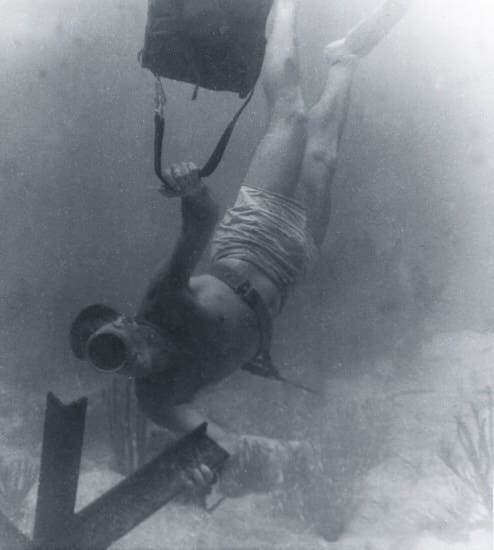
  Many people suffer from seasickness, especially during your first couple of times being on the water. Once you learn some of the basic tips for dealing with seasickness, it will become more natural and help you to move past having to take anything. A lot of the time, these remedies will be the easiest to implement because they require moving around on the boat.

 First stay ahead of it by taking meds before you go out on the boat. There are a variety of medications that are available to help prevent or treat motion sickness. They need to be taking 1-2 hours before you go out so plan ahead. Medicines for nausea are called antiemetic drugs. They include antihistamines such as Dramamine and scopolamine drugs, which come in pill or patch form and require a prescription.  

Focus on the horizon. By focusing, many people experience the extraordinary power of the brain to overpower the feeling of the waves. Get horizontal and close your eyes. Your ears control balance, but your eyes can deceive you. By adjusting your balance by 90 degrees from standing to laying down and keeping your eyes from paying attention to the rolling motion, your brain can work through the motion more easily.

Keep the fresh air coming. If you are sitting there with the engines running the exhaust air can start to make anyone sick, so try avoiding it as much as possible.

Move to the center of the boat. The rocking motion is typically significantly reduced where the center of gravity for the boat is more defined, so the motion will tend to not be as dramatic in the center of the boat if you are sitting there and can get into the water that will help also.  

      Eat Small Meals and Stay Hydrated. Eating smaller, more frequent treats and drinking water / Gatorade type drinks, will help by putting something in your stomach and also gives you something to do to help take your mind off it.

      Tilt Your Head Into Turns. Synchronizing your body with the motion may help reduce motion sickness. Turns and rotary motion tend to cause more severe motion sickness than travel in a linear motion.

      Look at the Horizon. Looking at the horizon will help you avoid sudden head movements. People who are prone to motion sickness tend to have more body sway while standing. Try to widen your stance to help reduce body sway. This is why people that have mTBIs tend to get motion sickness easier.

      Press on This Pressure Point. The point is located on the inner side of the forearm, about two inches (or three finger widths) above the crease of the wrist in between the two tendons.

     Ginger Root A widely used remedy for nausea, ginger root is often taken in the form of lozenges, tea, capsules, tablets, crystallized root, candies, or ginger ale.

      If you have tried all the above and you still feel sick the last thing you can try is sticking your finger in your mouth as far back as you can get it. Throwing up does help, and the bright side is it might make other people do it also. So you won’t be alone anymore.

If you get motion sickness or thing you will, remedies may be worth considering, especially if you are not able to take medication. If you are going to take meds is to try them before you step on the boat. If you have never tried it, it might make it worse if it makes you sick or sleepy. Good Luck and I hope this helps.