TYR Tactical

Archive for the ‘Guest Post’ Category

MILDEP Brings SOF Perspective to Acquisition Strategy to Deliver Now

Saturday, December 30th, 2017

By John Higgins, PEO IEW&S Public Affairs, December 29, 2017
IMG_5805
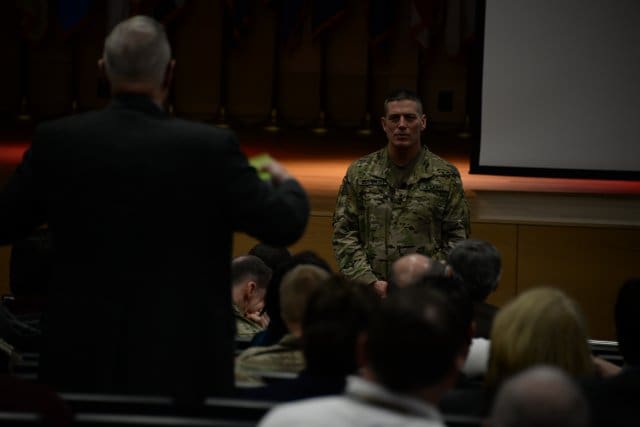
On Aberdeen Proving Grounds, Md., Program Executive Officer Intelligence, Electronic Warfare & Sensors (PEO IEW&S) joined by members of other PEO’s: Command Control Communications — Tactical (PEO C3T) and Assembled Chemical Weapons Alternatives (PEO ACWA) along with Joint Program Executive Office Chemical and Biological Defense (JPEO Chem Bio) hosted Lt. Gen. Paul Ostrowski, the Principal Military Deputy to the Assistant Secretary of the Army, for his Acquisition Streamline & Culture Initiatives brief, Dec. 20, 2107. (Photo Credit: John Higgins)

ABERDEEN PROVING GROUND, Md. — Program Executive Officer Intelligence, Electronic Warfare & Sensors (PEO IEW&S) joined by members of other PEOs: Command Control Communications — Tactical and Assembled Chemical Weapons Alternatives along with Joint Program Executive Office Chemical and Biological Defense hosted Lt. Gen. Paul Ostrowski, the Principal Military Deputy to the Assistant Secretary of the Army (Acquisition, Logistics and Technology), for his Acquisition Streamline & Culture Initiatives brief.

Ostrowski’s whirlwind tour took him to Huntsville, Ala., for time with PEO Aviation and PEO Missiles & Space, then it was off to Warren, Mich., home of PEO Ground Combat Systems and PEO Combat Support & Combat Service Support.

The purpose of the tour was to meet with Army Acquisition professionals and discuss plans for the future.

Ostrowski certainly had a plan. It’s a rare thing when a speaker can be said to be “electrifying” in the field of acquisition.

“We’ve been so brain washed in a way,” Ostrowski said to a well-attended auditorium, “to follow processes and that those processes were more important than product, which has put us in a position where we no longer than keep up with the threat and we no longer can keep up with the advances in technology with the speed at which they are turning.”

In Special Operations fashion, Ostrowski directly offered to “fly high cover,” saying “I’ve got your back. Because it’s on me. Which is exactly where I want to be, because we have got to change this thing.”

The first part of these dramatic plans actually began almost a year ago with the Section 809 Panel, assembled specifically to assess acquisition and identify areas of improvement. They presented their initial findings to the Armed Services committee in May of 2017.

Their fifty page paper ended with this conclusion:
“All these events exact a toll on the morale of the acquisition workforce. At some point people, motivated by their desire to serve the country and the men and women defending it, feel frustrated in their efforts to make a difference and do not feel empowered with respect to work processes. The workforce deserves a better system.”

To find that better system, Ostrowski directed his team to “Go to the Navy: they got this thing called an ACAT [Acquisition Category] IV, I want to know all the things about what an ACAT IV is and whether or not we can use something like that in our Army.”
An Acquisition Category IV was exclusive to the Navy and Marines until very recently. It designates either testing or monitoring of a product. Further, those ACAT IV items will be directly managed at the Colonel (O-6) or Civilian GS-15 level.

“I also said, ‘Look, I want you to go to SOCOM and I want to you pull up a thing called a SAMP, a Simplified Acquisition Management Plan,” Ostrowski continued. “Right now one size shoe fits all, weather you’re at ACAT I or ACAT III, in our Army? The documentation isn’t substantially different.”

A SAMP contains acquisition strategy, logistic support plan and a testing plan in roughly ten pages. The reason for this is the paper work is required by law, the there is no specified length.

Ostrowski pointed out that there are waivers that would allow Acquisition personnel to tailor their paperwork, not just to the military requirement but how an item is created and what its intended purpose will be. The issue, he said, was it was easier to do something the “process” way, then to get permission to do it the “product” way.

“That’s why I had to do a Corrosion Prevention Control Plan for a combat shirt. In case you’re wondering, a combat shirt doesn’t have any metal on it at all. It’s just cloth. But I signed it! Because it was easier to that than to ask for a waiver!”

Ostrowski then launched into a comprehensive plan that would allow for a greater degree of customization across the board in acquisition strategies. Ostrowski also addressed testing, and how to hold industry partners accountable to a greater degree of initial functionality, but also a greater degree of long-term improvement. That also means communicating with industry partners on their level, the lieutenant said. “We have to bring the testing community into acquisition reform,” he said continuing, “Acquisition is a team sport.”

A key element of this, is “fly before you buy,” and “buy down risk.” Ostrowski said. This means that rather than rush a product to Milestone B where there is a greater oversight for development, project managers should utilize a more deliberate process to eliminate as much risk as possible before entering the next Milestone gate. Ostrowski said that while this will cost us time in the short term, it will save us time and money in the long term.

These reforms are even more necessary now, as The Army now owns 835 programs, with Integrated Air Missile Defense, Lower Tier Missile Defense and Future Vertical lift the only three programs still under the Office of the Secretary of Defense.

Ostrowski identified an ambitious plan, however, he made it clear that he had put in the work to make it happen and would continue to put in the effort to do so.

“You have equipped the most lethal, the most force protected and the most situational aware Army that has ever walked the face of this earth.” Ostrowski said, reflecting on the accomplishments of the PEO community. “You should be very proud of what it is that you have done.”
Kit Badger on Using an Adjustable Gas Block To Address Over / Undergassed Rifles

Saturday, December 23rd, 2017

Kit Badger posted an article on how to tell if your rifle is overgassed or undergassed, as well as how to address it by tuning a Superlative Arms Adjustable Gas Block. As always, he created a video.

You can check the full post out at kitbadger.com/tuning-a-superlative-arms-adjustable-gas-block.

Marine Corps Fields “Game Changer” Biometric Data Collection System

Thursday, December 14th, 2017

MARINE CORPS BASE QUANTICO, Va. — In September, Marine Corps Systems Command completed fielding a new biometrics system to help deployed Marines identify and track the movement of individuals encountered on the battlefield, conduct entry control point operations, and determine who is a friend or foe.

Identity Dominance System-Marine Corps, or IDS-MC, is a simple and effective biometric data collection, matching, and transaction management system that is composed of a handheld device, known as the Secure Electronic Enrollment Kit, and a laptop computer with specialized biometric collection sensors and a badge printer.

IDS-MC replaces the Biometric Enrollment and Screening Device to assist with detainee management and questioning, base access, counterintelligence screening, border control and law enforcement operations. Unlike the BESD, IDS-MC’s transactional data management capability conveniently collects, shares, matches and stores identity information immediately, allowing the user to connect to the Tactical Data Network, manage and submit collected data and receive responses and feedback on submissions. This improves on the legacy system, which could take days to download data via a CD or DVD, and then Marines had to transmit that vital identity information from a separately connected computing system. This process was not only logistically cumbersome, but the latency in data submission and response receipt created force protection mission challenges for the Marine.

15064A65-57B8-4876-94CA-D8F15F20C17B
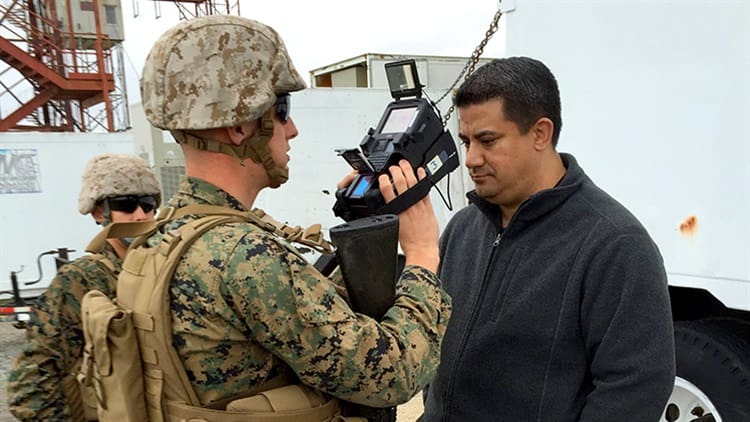
Marines conduct a field user evaluation for the Identity Dominance System-Marine Corps, or IDS-MC, in Dahlgren, Virginia. In September, Marine Corps Systems Command completed fielding of the IDS-MC, which is a new biometrics system to help deployed Marines identify and track the movement of individuals encountered on the battlefield, conduct entry control point operations, and determine who is a friend or foe.

“The IDS-MC is more convenient because it connects directly to the Marine Corps’ Tactical Data Network, allowing Marines to share data and submit biometrics and receive the responses effortlessly,” said Sarah Swift, Identity Operations Team lead for Biometrics and Forensics Systems at MCSC.

To develop the IDS-MC, the Identity Operations Team identified a need for a portable, easy-to-use system via feedback from Marines in the fleet. The system was created to directly address the specific needs of Marine Expeditionary Forces in a contested environment.

Using IDS-MC, Marines collect biometric data by capturing a person of interest’s fingerprints, iris and face images. That data can then be matched with pre-existing information onboard the system, either on a BEWL or other lists, such as an access control list used for base force protection. The IDS-MC also has the capability to capture location, biographical and any other reference data that may be useful to an intelligence analyst now or in the future.

The IDS-MC user submits biometric information to the Department of Defense’s Automated Biometric Identification System authoritative database via a web portal, allowing data to be shared across the Biometrics enterprise, and also aiding in the creation of the DoD extensive Biometric-Enabled Watch List, or BEWL. The BEWL contains an ongoing collection of biometric intelligence that helps users determine what actions to take immediately when they encounter a person of interest. Additionally, the Marine Corps Intelligence Agency Identity Intelligence Analytical Cell, or MCIA I2AC, reviews the IDS-MC user’s biometrics submissions and other collected biographical and reference data, and provides direct support to the submitting Marines, providing them analysis reports and intelligence products for potential Persons of Interest.

“The BEWL helps Marines match nefarious people they might encounter anywhere in the world to the ones listed in the database,” said Swift. “We support Marines by providing them the most up to date BEWL, and then they can collect a person’s biometrics. If it shows up in the system as a match, they’ll be notified with a pop-up on the device.”

“All of this provides the Marine Air-Ground Task Force with the ability to rapidly and efficiently identify people encountered in the battle space in support of targeting, military intelligence, law enforcement operations and force protection,” said Maj. Keystella Mitchell, project officer for IDS-MC.

In addition to identifying known threats, the system also collects information on potential future threats and stores it for future reference. If an individual is a match in the system, Marines are able to immediately receive that information and use it to inform on-the-spot decisions.

“It can be difficult to determine who the enemy is because they truly blend in with their surroundings,” said Mitchell. “The IDS-MC is a game changer and force multiplier as a connected system for the commander on the ground because they can identify the threat and take action much quicker than before.”

In addition to the planned fielding of the IDS-MC system, an urgent system quantity shortfall was identified by the Special Purpose Marine Air-Ground Task Force and Marine Corps Forces Central Command customers. This required an unplanned increase in the number of production assets which required a fielding re-prioritization strategy, additional rapid procurement and integration. The Identity Operations Team adapted its strategy, and within two months of validating the requirement, it fielded the additional systems.

The fielding of the IDS-MC system has led to a 154 percent increase in the biometric collections submitted to MCIA I2AC and resulted in 11 watch list hits in just the first month of fielding.

The IDS-MC is managed by the Identity Operations Team which falls under Command Element Systems at MCSC.

By Kaitlin Kelly, MCSC Office of Public Affairs and Communication

Kit Badger – VCAS Medic Sling By Blue Force Gear

Sunday, December 10th, 2017

4458C07E-9D95-4757-9FF6-6441B12DE8AB

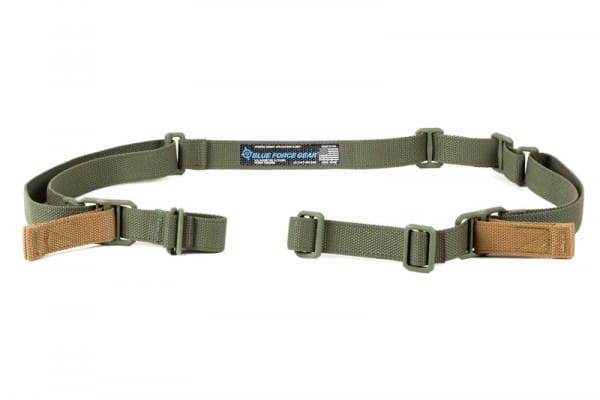
For a limited time, Blue Force Gear is offering the Vickers Medic Sling.

Kit Badger did a video review of the sling. For his full post, visit kitbadger.com.

Program Office Begins Fielding Upgraded LAV Anti-Tank Weapon System to Marines

Wednesday, November 22nd, 2017

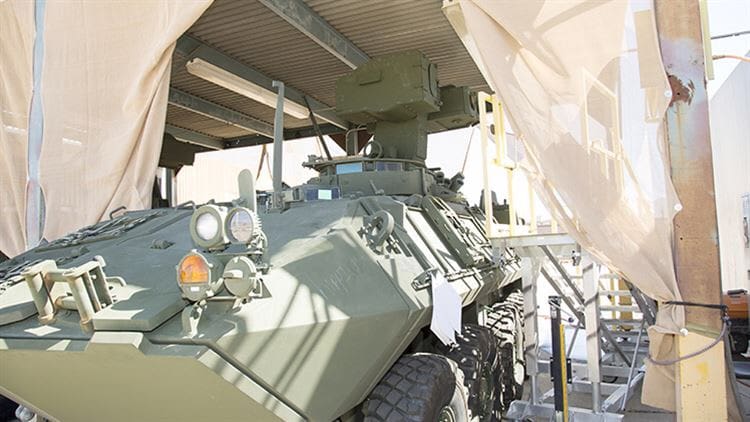
MARINE CORPS BASE QUANTICO, Va. — The Corps is upgrading the turret system on one of its longest-serving fighting vehicles–the Light Armored Vehicle-Anti-Tank.


A Light Armored Vehicle Anti-Tank Modernization A2 model sits under an awning aboard Marine Corps Logistics Base Barstow, Calif., June 15. Marine Corps Systems Command’s LAV-Anti-Tank Modernization program team completed its first fielding of four upgraded ATWS in September. (U.S. Marine Corps Photo by Keith Hayes)

In September, Marine Corps Systems Command’s LAV-AT Modernization program team achieved initial operational capability by completing its first fielding of four upgraded Anti-Tank Weapon Systems to 1st Light Armored Reconnaissance Battalion Marines at Camp Pendleton, California.

The ATWS fires tube-launched, optically-tracked, wire-guided, or TOW, missiles. It provides long-range, stand-off anti-armor fire support to maneuvering Light Armored Reconnaissance Companies and platoons, and observation capability in all climates and during periods of limited visibility.

The LAV-ATM program was established in 2012 to enhance the reliability, availability and maintainability of the vehicle’s turret system.

The team’s goal was to get a new turret system on the LAV-AT platform that was easy to maintain, reliable and effective, said Jim Forkin, Program Manager’s Office LAV-ATM team lead.

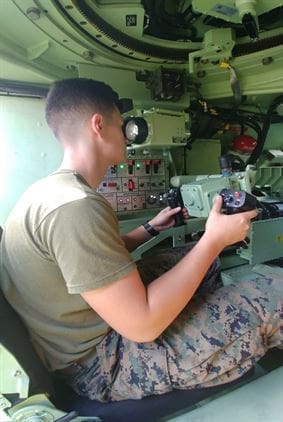
“Compared to the legacy version, the new turret is unmanned, it fires both wire-guided and radio frequency TOW missiles, and it can acquire targets while on-the-move with an improved thermal sight,” said Forkin.

It also has a Far Target Location system, new commander/gunner video sight displays, and an electric elevation and azimuth drive system, which helps rotate the weapon system onto the target.

“The turret is important because it protects Marines and gives them an enhanced capability that they didn’t have before,” said Chief Warrant Officer 4 Michael S. Lovell, Ordinance Vehicle Maintenance officer, PM LAV team. “The new turret on the LAV-AT helps us watch over other vehicles and target enemies with increased vision.”

The LAV-ATM team provides new equipment training to units receiving the ATWS upgrade. It lasts for two weeks, and the first week is focused on operators and the second week is on maintainer training. Continued training on the system can be conducted by the units using the embedded training mode.

IMG_5367
A Marine tests the enhanced vision capability–part of an upgrade to the Light Armored Vehicle’s Anti-Tank Weapon System–during new equipment training Sept. 18-29, at Camp Pendleton, Calif. Marine Corps Systems Command completed its first fielding of four upgraded ATWS in September. (Courtesy photo)

Thanks to advances in technology, Marines can initiate a built-in test to conduct a system check of the components that make up the ATWS to help the operator and maintainer diagnose and troubleshoot the system, a feature not previously available on the legacy turret, said Forkin.

The operator can also use an embedded training mode in the ATWS, which is software driven, to support individual and crew training by simulating the firing of the weapon system while viewing targets through the biocular display unit.

“This function is new to the LAV-ATM platform and will enhance sustainment training while in garrison or the field without wasting resources,” said Forkin. “With new technological advances, the overall design and functionality has improved.”

In addition to training in the field, anti-tank gunners and maintainers also train in a classroom setting environment with stations using existing 3D computer simulated technology leveraged by the U.S. Army to train their maintainers. This modernizes how the Corps trains its maintainers to meet the requirements to sustain the new ATWS.

By incorporating a blended training solution, all four existing Tactical Turret Trainers are upgraded with the ATWS and a 3D Diagnostic Turret Trainer, or DTT, is added. The DTT consists of two classrooms with eight student stations and one instructor station each. The Corps’ 3D DTT maintenance training system is unique to the ATWS and will be fielded in November.

“Using the 3D DTT, students will interactively conduct troubleshooting and remove and replace ATWS components in a simulated environment, which will be followed by training on actual hardware on the Tactical Turret Trainer and vehicles,” said Paul Kopjoe, Logistics Management specialist, PM LAV team at Program Manager’s Office LAV.

With a combination of an interactive 3D DTT, which allows the instructor to train multiple students at the same time, the ATWS Tactical Turret Trainer provides the student with the tactile feel of a real ATWS system. Benefits of DTT by other programs include the reduction in student attrition rates and the ability for maintenance tasks to be repeated numerous times, without risk of injury or wear and tear on equipment.

The U.S. Army Armament Research, Development and Engineering Center, or ARDEC, is the overarching Army agency used to acquire and develop the 3D DTT training products. The Gaming Interactive Technologies & Multimedia and the Automated Test Systems Directorate are the primary organizations within ARDEC that completed the majority of the work to help make this happen, Kopjoe said.

“Traditionally, training products are procured utilizing industry which can take 18-24 months just to get effort on contract,” said Kopjoe. “We were able to eliminate that time by utilizing existing Army resources, so that our Marines would be properly trained when the ATWS was fielded. This also allowed the ATM Team to meet the training needs of the USMC Ordnance School located at Fort Lee, Virginia.”

Fielding for the ATWS will be completed at the end of 2019.

“Marines who serve as anti-tank gunners will be able to do their job better,” said Lovell. “We’re providing a product that gives Marines an enhanced anti-tank capability improving their forward reconnaissance and combined arms fire power on the battlefield.”

By Kaitlin Kelly, MCSC Office of Public Affairs and Communication | Marine Corps Systems Command

The Corps’ Secret Agents Get Their Own 007

Wednesday, November 8th, 2017

MARINE CORPS BASE QUANTICO, Va. — The Marine Corps is equipping Marines with a new weapon, providing enhanced concealed carry capabilities at an accelerated rate and lower cost to the Corps.

IMG_5324
Individual Weapons project officer Gunnery Sgt. Brian Nelson prepares to draw the M007 concealed carry weapon. The M007 offers enhanced concealed carry capabilities, which includes a smaller frame, ambidextrous slide stop lever and flared magazine well. Marine Corps Systems Command recently fielded the M007 to Marine and civilian CID agents and members of Helicopter Squadron One. (U.S. Marine Corps photo by Jennifer Napier)

The Glock 19M–called the M007 by the Corps–replaces the M9 service pistol for personnel requiring a weapon that can be easily concealed.

The Marine Corps requires that all accredited Marine Corps Criminal Investigators, both civilian and military, be armed with a concealable pistol when on duty in civilian attire. This concealed weapon capability ensures those performing official duties–such as law enforcement or security personnel–are not readily identified as being armed.

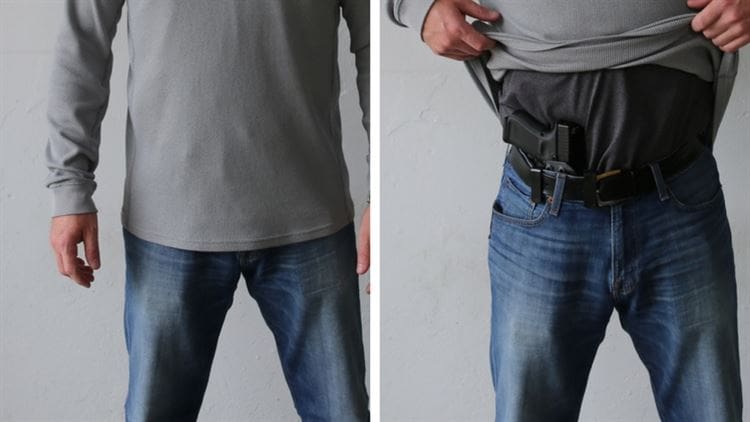
“The M007 has a smaller frame and is easier to conceal, making it a natural selection to meet the Marine Corps’ conceal carry weapon requirement,” said Gunnery Sgt. Brian Nelson, Individual Weapons project officer at Marine Corps Systems Command.

In coordination with the Federal Bureau of Investigation, which adopted the weapon in 2016, the Corps fielded the M007 earlier this year to Marines and civilians in the Marine Corps Criminal Investigation Division, as well as members of Helicopter Squadron One–also known as Marine One.

IMG_5325
Marine Corps Systems Command is equipping Marine and civilian CID agents and members of Helicopter Squadron One with the M007. The M007 offers enhanced concealed carry capabilities, which includes a smaller frame, ambidextrous slide stop lever and flared magazine well. The weapon’s smaller frame makes it easier to conceal, as demonstrated in the photo. (U.S. Marine Corps graphic)

Aside from concealability, the M007 has several physical improvements over its predecessor. The grip lacks finger grooves but has a textured frame, improving the ergonomics of the weapon and providing a consistently comfortable grip with traction for a wider range of users. The ambidextrous slide stop allows for both right- and left-handed use. The magazine release of the M007 can also be changed and the magazine well is flared, making the system easier to reload, said Nelson.

Collaboration between the product team at MCSC and the FBI played a key role in the Corps’ ability to hasten the otherwise lengthy acquisition process.

“The fielding of the M007 is an example of how we can streamline the acquisition process by reviewing another service or agency’s test data to see if it fits the Marine Corps’ need,” said Lt. Col. Paul Gillikin, Infantry Weapons team lead at MCSC. “We received the initial request for a new concealed carry weapon system in April 2016. By collaborating with the FBI, we were able to procure, establish sustainability plans and start fielding the weapon to Marines by May 2017.”

Typically, the acquisition process of a new weapons system–from the time the requirement is received by MCSC to the time the system is fielded to the fleet–takes months, if not years, to complete. By leveraging thorough test data performed by the FBI, MCSC’s team reduced their own testing time. The team also carefully planned to ensure the M007 is fully supported, sustainable, and meets all logistics and safety requirements, enabling MCSC to meet and deliver the concealed carry weapons systems Marines need in a relatively quick turnaround time, said Gillikin.

Program Manager Infantry Weapons, which falls under MCSC’s Ground Combat Element Systems portfolio, manages the concealed carry weapons program for the Marine Corps.

By Ashley Calingo, MCSC Office of Public Affairs and Communication

PEO Soldier Tests Modular Scalable Vest at Fort Carson

Monday, October 30th, 2017

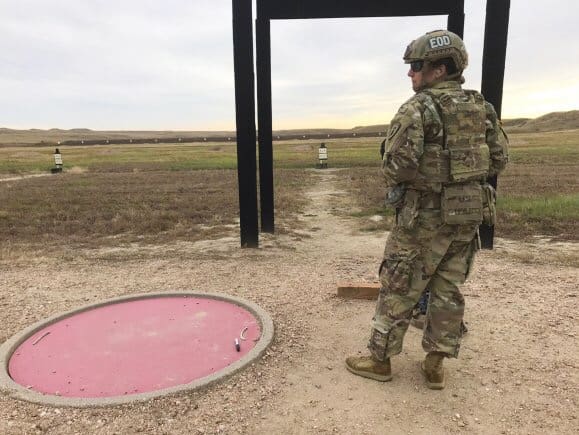
FORT CARSON, Colo – Soldiers with the 71st Ordnance Group (Explosive Ordnance Disposal) and 10th Chemical Hazardous Response Company participated in the final round of field-testing for the Army’s new body armor, the Modular Scalable Vest (MSV), during a weeklong series of evaluated tasks conducted here Oct. 16-20.


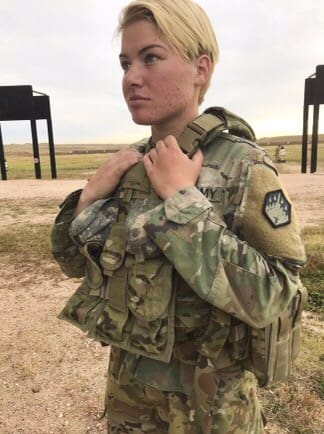
SPC Hannah Carver-Frey, a chemical, biological, radiological, nuclear specialist with 10th Chemical Hazardous Response Company, participates in the final round of field-testing for the Modular Scalable Vest (MSV) during a weeklong series of evaluated tasks at Fort Carson, CO, Oct. 18, 2017. Once this evaluation is complete, the vest will go into production and is expected to reach Soldiers in the field by summer of next year. (US Army Photo by SSG Lance Pounds, 71st Ordnance Group (EOD), Public Affairs)

According to the U.S. Army Acquisition Support Center’s website, the MSV is part of the Soldier Protection System (SPS) and is the Army’s next generation Personal Protective Equipment (PPE) system. The SPS is a modular, scalable, tailorable system designed to defeat current threats at a reduced weight in comparison to the Army’s existing PPE.


Damon Brant, a new equipment trainer from Project Manager Soldier Protection Individual Equipment at Prince George, VA, ensures the proper wear and use of a new body armor system by SPC Creed Cooney, an explosive ordnance disposal technician with 62nd Ordnance Company, during a weeklong field-test of the Modular Scalable Vest (MSV) at Fort Carson, CO, Oct. 18, 2017. Following the field-test, the vest will go into production and is expected to reach Soldiers in the field by summer of next year. (US Army photo by SSG Lance Pounds, 71st Ordnance Group (EOD), Public Affairs)

Stephen McNair, test manager for Project Manager Soldier Protection Individual Equipment (PM SPIE), a division of Program Executive Officer Soldier (PEO Soldier) at Fort Belvoir, was on-site to observe as Soldiers conducted an obstacle course, weapons training, don and doffing procedures, tactical vehicle access capabilities, and a ruck march.


Soldiers with in the 71st Ordnance Group (Explosive Ordnance Disposal) and 10th Chemical Hazardous Response Company participate in the final round of field-testing for the Modular Scalable Vest (MSV) during a weeklong series of evaluated tasks at Fort Carson, CO, Oct. 18, 2017. Once this evaluation is complete, the vest will go into production and is expected to reach Soldiers in the field by summer of next year. (US Army photo by SSG Lance Pounds, 71st Ordnance Group (EOD), Public Affairs)

“We have been working on this vest for the past five years and have since have gone through four versions of the vest and an additional two versions of the Soldier plate carrier system,” said McNair.

McNair said once the evaluation is complete, the vest will go into production and is expected to reach Soldiers in the field by summer of next year.


1LT Dawn Ward, a platoon leader with 663rd Ordnance Company and evaluation officer in charge, participates in the final round of field-testing for the Modular Scalable Vest (MSV) during a weeklong series of evaluated tasks at Fort Carson, CO, Oct. 18, 2017. Once this evaluation is complete, the vest will go into production and is expected to reach Soldiers in the field by summer of next year. (US Army photo by SSG Lance Pounds, 71st Ordnance Group (EOD), Public Affairs)

Debuting in 2008, the Improved Outer Tactical Vest’s modular design was carried over and improved upon for the MSV. Most of the pouch attachment ladder system (PALS) have been replaced with a rubber-like material with laser-cut slots. The improvement still allows Soldiers to affix mission essential gear to the vest, while reducing overall weight.

The MSV weighs approximately 11-pounds, based on a medium size vest without ballistic plates. Fully configured, the MSV weighs approximately 25-pounds, which is five pounds lighter than the IOTV.


Michael Spencer, a new equipment trainer from Project Manager Soldier Protection Individual Equipment at Fort Bragg, NC, demonstrates how the Modular Scalable Vest (MSV) can be separated into different configurations, during the final round of field-testing of the vest at Fort Carson, CO, Oct. 18, 2017. Once this evaluation is complete, the vest will go into production and is expected to reach Soldiers in the field by summer of next year. (US Army photo by SSG. Lance Pounds, 71st Ordnance Group (EOD), Public Affairs)

McNair said the big push to design a new body armor was based on “cutting down on the weight of a Soldier’s load.”

Many of the testers said the MSV was noticeably lighter than their current body armor.

“Compared to my IOTV, this vest is lighter and cooler, has a greater range of motion, and a better fit,” said 1st Lt. Dawn Ward, a platoon leader with 663rd Ordnance Company and officer in charge during the evaluation.

“It is a huge improvement over previous body armors,” Ward said.


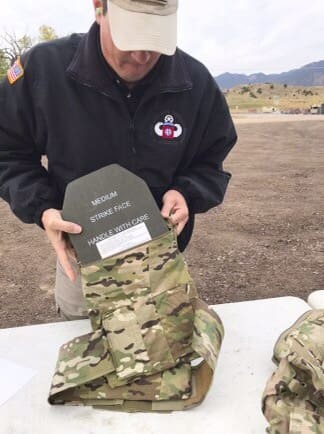
Michael Spencer, a new equipment trainer from Project Manager Soldier Protection Individual Equipment at Fort Bragg, NC, demonstrates how to transfer ballistic plates from the Modular Scalable Vest (MSV) to a plate carrier configuration enclosed within the MSV, during the final round of field-testing of the vest at Fort Carson, CO, Oct. 18, 2017. Once this evaluation is complete, the vest will go into production and is expected to reach Soldiers in the field by summer of next year. (US Army photo by SSG Lance Pounds, 71st Ordnance Group (EOD), Public Affairs)

In addition to saving weight, the MSV is scalable, which was made possible by a four-tier configuration. The tier system will allow the wearer to tailor the vest to better fit mission requirements.

The first tier enables the wearer to pull out the inside soft armor to be used as concealable body armor. The second tier is the soft armor with plates. The third tier is the vest with ballistic plates and soft armor.

The final tier is the addition of a ballistic combat shirt that has built -in neck, shoulder and pelvic protection and a belt system designed to relocate much of what Soldiers affix to their vest to their hips.


(Graphic credit: PEO Soldier)

Spc. Isaac Bocanegra, an EOD technician with 764th OD CO, said he prefers the MSV’s ballistic combat shirt over the IOTV’s yoke and collar set up because it gives him more range of motion.

“I currently wear the IOTV about twice each day and it is quite a bit heavier than this body armor,” said Bocanegra. “Having this new body armor would make my job so much easier,” he added.

McNair said the premise of the tier system is to evenly distribute the system’s weight and reduces stress on a Soldier’s upper body.

“It will be up to unit leadership to determine the level of protection required for wear,” said McNair.

The MSV retained the quick-release feature first used in the IOTV to allow for easy removal in emergency situations, but with a simpler and interchangeable design. Instead of a single pull-tab, the MSV has a buckle system that can be used in one of three ways; left shoulder, right shoulder, or both depending on the wearer’s preference.

Extended sizing options allow the MSV to be tailorable and more accommodating to most Soldier body types.

“The extended range allows Soldiers to be more comfortable while performing tasks with greater ease,” said McNair.

“I have an extra-small because it positions the plates where I need them to be and it has a tighter fit for me,” said Spc. Hannah Carver-Frey, a chemical, biological, radiological, nuclear specialist with 10th Chemical Hazardous Response Company.

In addition to developing the lighter weight body armor, McNair said that developers at PEO Soldier are also working on an improved protective helmet system. It too, will be lighter than current protective helmets and capable of stopping certain 7.62 rounds.

For more information about the MSV body armor, visit the U.S. Army Acquisition Support Center’s website at asc.army.mil/web/portfolio-item/soldier-protection-system-sps

For more information about the future of Soldier protective equipment, visit the PEO Soldier’s website at www.peosoldier.army.mil.

This article was written by SSG Lance Pounds and shared via the Army News Service.

Marine Corps Reaches Final Stages of Tropical Boot, Uniform Testing

Monday, October 30th, 2017

MARINE CORPS BASE QUANTICO, Va. —
The Marine Corps wrapped up its fourth and final field user evaluation for a prototype tropical utility uniform and boots in late September.

IMG_5145

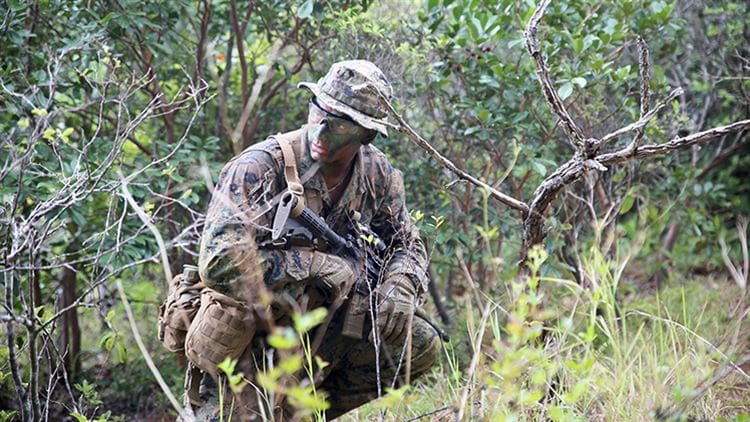
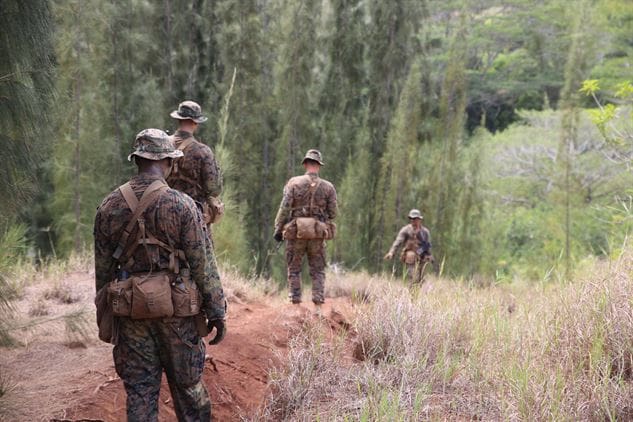
Between June and September, 400 Marines from 3rd Battalion, 3rd Marine Regiment put the new uniform and three types of boots to the test in a tropical climate. The testing was done in various locations on the island of Oahu, Hawaii.

“About four years ago, then Commandant Gen. James Amos directed us to explore tropical uniforms and boots for Marines,” said Todd Towles, program analyst for the Clothing and Equipment Team at Marine Corps Systems Command. “When he became commandant, Gen. [Robert] Neller followed up on the initiative, which brings us to where we are today.”

To date, MCSC has tested five different fabric types and four boots, downselecting to the single uniform fabric and three boot options that 3rd Battalion, 3rd Marines tested. The goal of the final FUE was to collect feedback about the durability, fit and function of the prototypes that will be included along with other data in a decision package during the second quarter of fiscal year 2018.

IMG_5146

“When our program office goes out [to conduct a FUE], we talk to the Marines about what we’re testing and why,” Towles said. “We ask them to wear the uniform every day, whether they’re in the field or a classroom. At the end of the FUE, we conduct surveys and focus groups where we inspect the uniforms and talk to the Marines about wear and tear, how the uniform feels on the body and whether or not they could conduct their mission. If it interferes with the mission or training, we want that feedback as well.”

The tropical uniform prototype is made from a lighter-weight material than the current Marine Corps Combat Utility Uniform. The fabric is also designed to dry faster and keep Marines cooler in warm climates than the current utilities.

“The tropical uniform is made with the same fiber blend—nylon and cotton—as the MCCUU, but the fabric construction and weight are different,” Towles said. “The tropical uniform is approximately 30 percent lighter than the MCCUU.”

IMG_5147

The uniform also has a slightly heavier, reinforced fabric in the elbow, knee and groin areas to provide higher abrasion resistance against the mountainous terrain and dense vegetation of tropical environments.

“I prefer to wear these over the [current uniform] because they have thinner, lighter material,” said Lance Cpl. Kyle Herzog, an infantryman with 3rd Battalion, 3rd Marines. “It’s hot and humid here, and the current ones are thick and not as breathable. Once it’s wet, it’s damp or wet for days at a time. The [new uniform] dries within an hour. For Marines stationed in this environment, new cammies are a must.”

IMG_5148

The boots—designed by three different manufacturers—are intended to have a self-cleaning outsole and dry faster than the current boot. They are also a half pound to one pound lighter than the current boot out of the box, and thus much lighter when wet, Towles said.

“We had several different types [of boots], and all of them dry much faster than the regular boot, and they’re really light, so that’s been a huge combat multiplier for us,” said Battalion Operations Officer Maj. Evan Ota.

Marines could know as early as 2018 whether a new tropical uniform and boots will make their way to the fleet. If so, Marines slated to deploy or already stationed in tropical climates will be the first to have access to the items. The tropical uniforms and boots will be owned by the Marine Expeditionary Force supply and issued for contingency operations. Uniforms and boots could be available for optional purchase by Marines, pending certification.

“What we see throughout the Pacific is it’s a very hot, humid and wet environment with a lot of jungle and mountainous terrain,” Ota said. “So, anything you can do to lighten the load, dry yourself out quicker, take care of your feet and take care of your body definitely adds to your combat effectiveness.”

Article and Photos By Monique Randolph, MCSC Office of Public Affairs and Communication | Marine Corps Systems Command