Lowa Zephyr Mk 2 GTX

Archive for the ‘Guest Post’ Category

SPARTANAT: News from Lindnerhof Taktik – IWA 2019  

Friday, March 15th, 2019

Since the last IWA, Lindnerhof experienced twelve truly exciting months: new products were developed and proven products were optimized further. In perfect time for the IWA 2019, Lindnerhof presents the novelties in the product portfolio of the provider of tactical gear.

New flagship: the plate carrier 25 with quick-release system
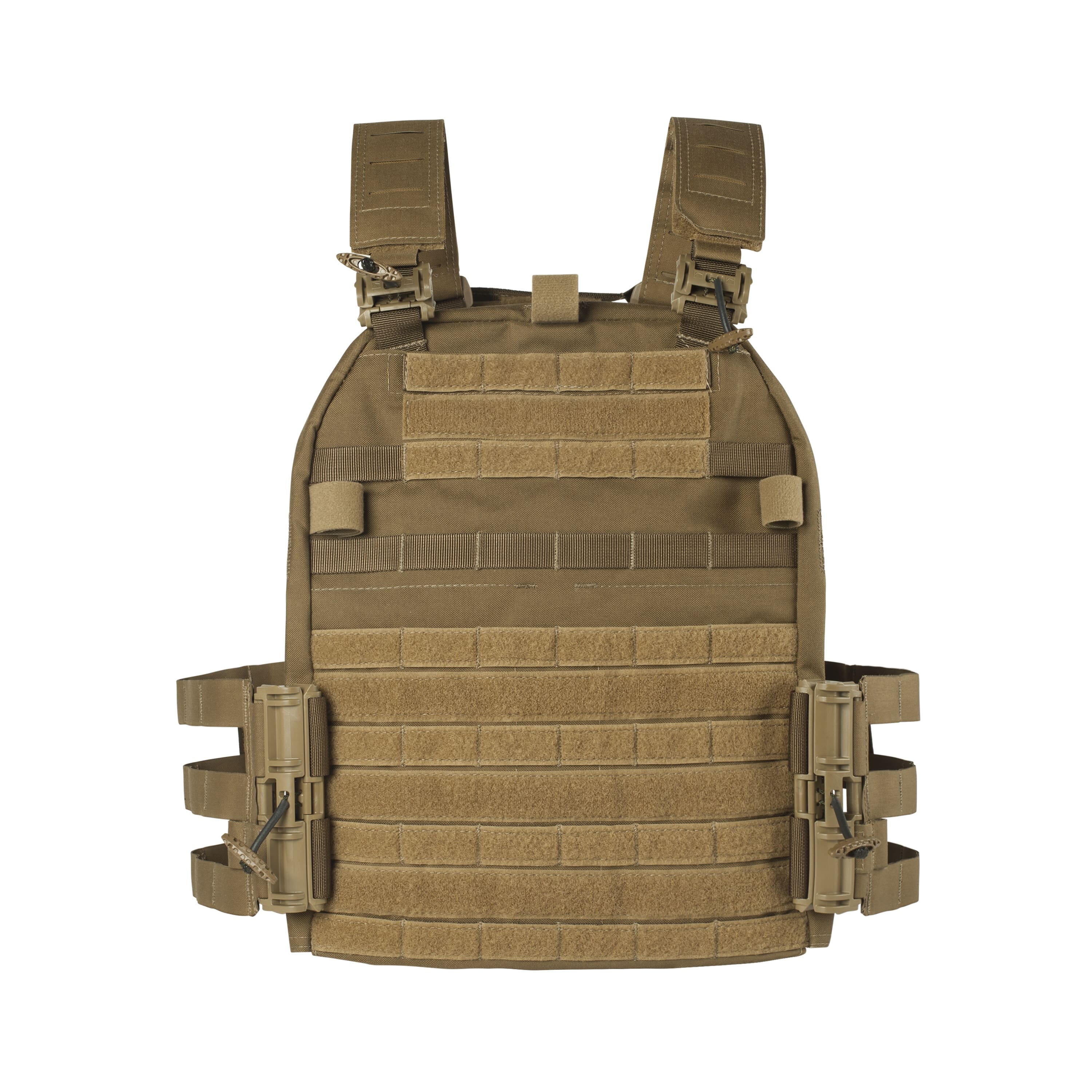
The new plate carrier is the further development of the proven plate carrier of the VI generation and combines the models L1 Evo and H1 Evo. It is made of the reliable outer fabric Cordura 500. The most important novelty here is the downsizing of the quick release system in the shoulder straps from 40mm to 25mm. This provides more wearing comfort in the everyday use. In addition, the width of the sewn strap was reduced to 20mm. In this way it is possible to achieve a weight reduction of approximately 20%.
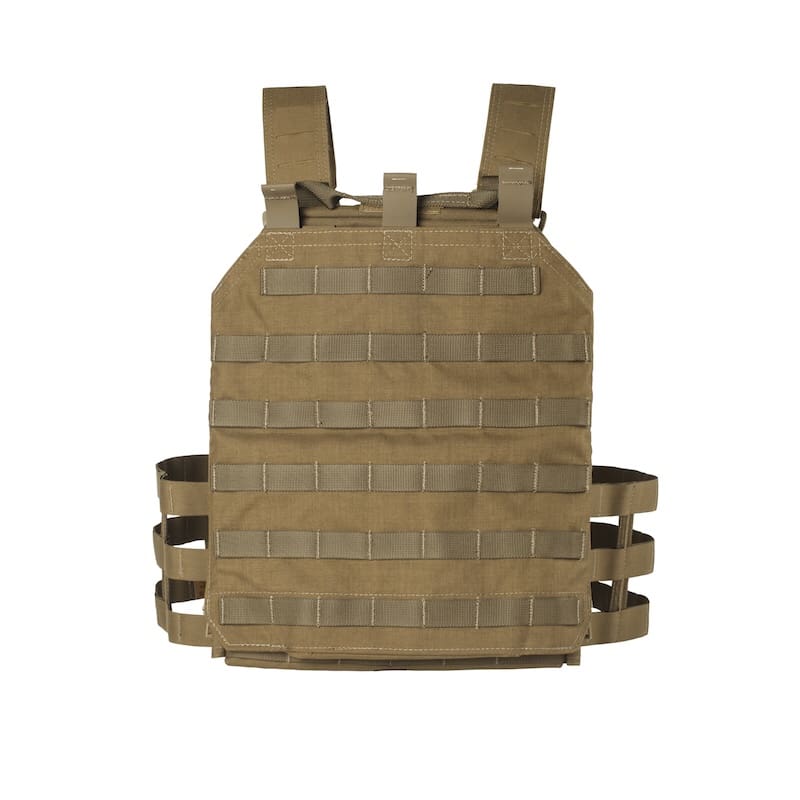
With the new model Lindnerhof responds to a customer’s request: the possibility to convert the plate carrier H1 Evo to a heavy protective vest and making it available also for classical plate carriers made of Cordura. Hanging the soft ballistics in the front and back is just as possible as adding shields for the neck and the upper arms.
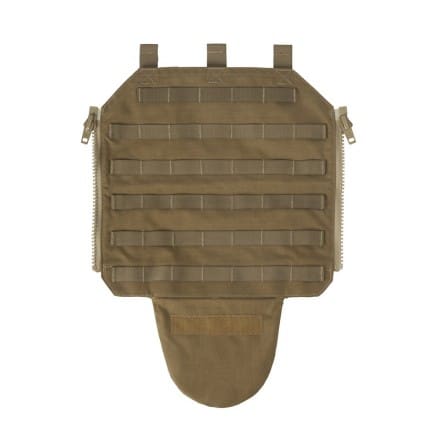
As first of its kind, the new plate carrier comprises a reversible zip on its back. In this manner it is possible to attach various modular back panels, thus enabling the fast exchange of the panel, depending on the type of activity.

Quickly exchangeable: modular back panel
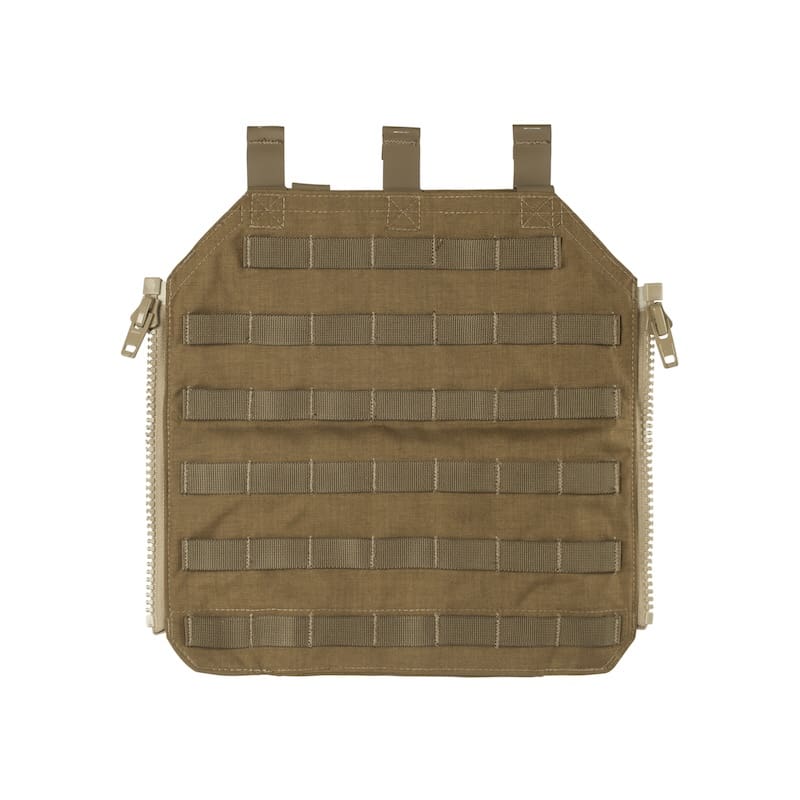
In conjunction with the new plate carrier, practiced users can attach the back panel within only five seconds.
img_5568.jpg

Thanks to the individual configuration, it is possible to quickly and appropriately react to the different tasks. The upper opening allows the take-up of a breaching tool. The fold-out extension allows the take-up of a bolt cutter.

Available again: Double magazine pouch G36, attachable with Velcro
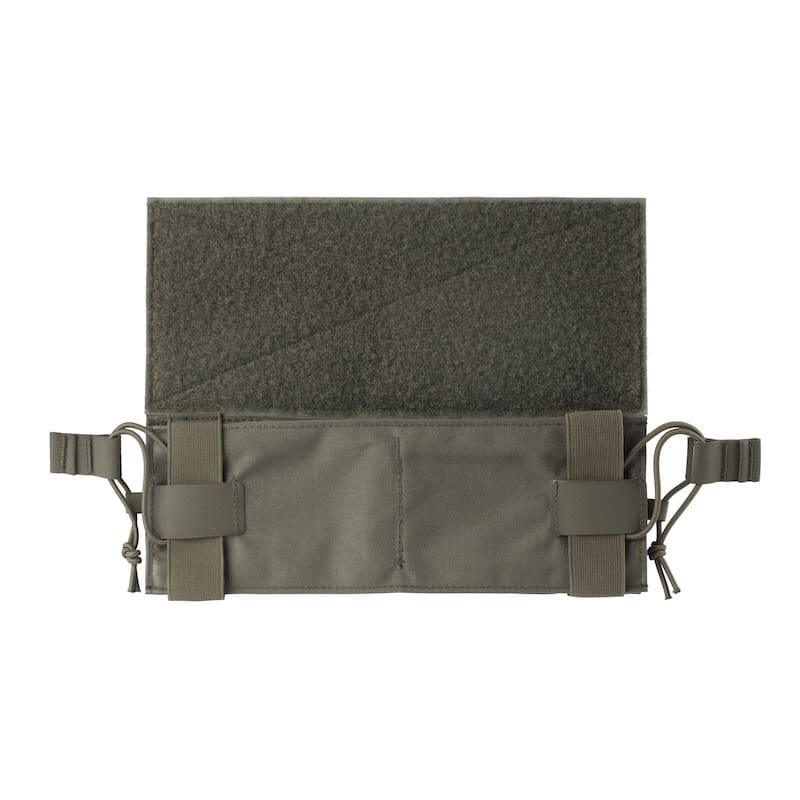
Because of the continuous high customer demand last year, the double magazine pouch attachable with Velcro is available again. The pouch has the advantage that it is possible to transport additional magazines without having to use up the MOLLE surfaces at the plate carriers or the vest. This ensures enough space for bags and other equipment.

The pouch can be attached in the conventional way in the front or rear lower area of the plate carrier. At the sides, two G36 magazines can be introduced. A rubber with puller serves as safety mechanism. The laterally provided rubber woven band serves for compression in case of non-use.

More space thanks to Velcro: Diagonal multi-purpose pouch, attachable with Velcro
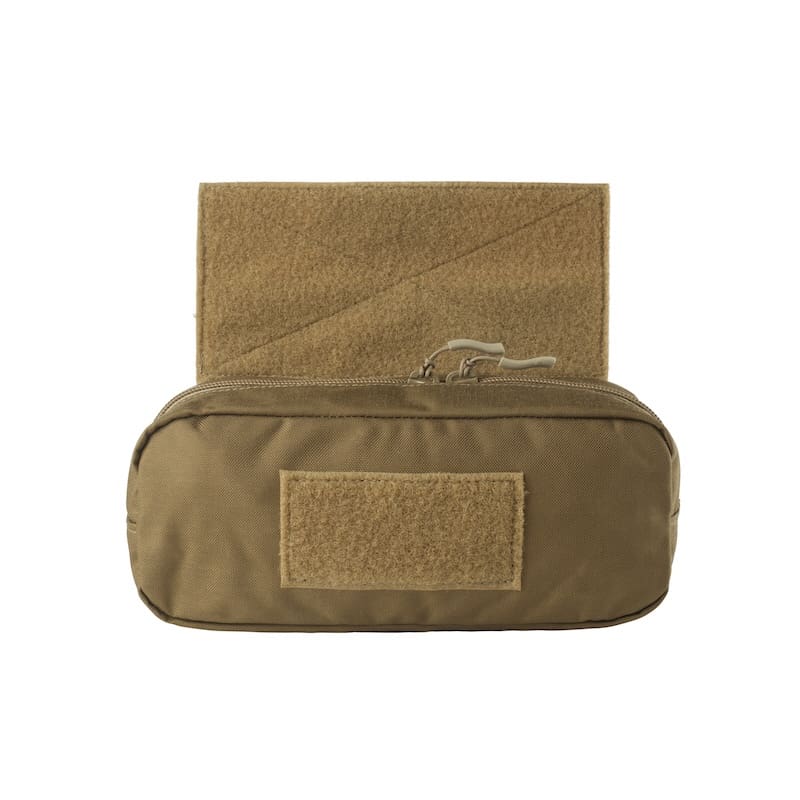
The advantages of the double magazine pouch with Velcro back were also used in another novelty. The diagonal multi-purpose pouch attachable with Velcro can particularly be attached at the front in the lower area of the plate carrier, which enables simple access to the pouch – even without looking.

By means of a zipper extending across the entire width, the pouch is opened and offers enough space for various parts of equipment and operating resources. At the contact surface of the inside, a large fleecy surface is provided, which facilitates both the affixing of equipment by means of Velcro panels as well as the organization of equipment and the targeted access. In addition, the outside is compatible with Velcro patches that can be affixed for identification tags. A discharge eyelet prevents that fluids collect in the bag.

Mature concept: Weapon fixation straps with hooks
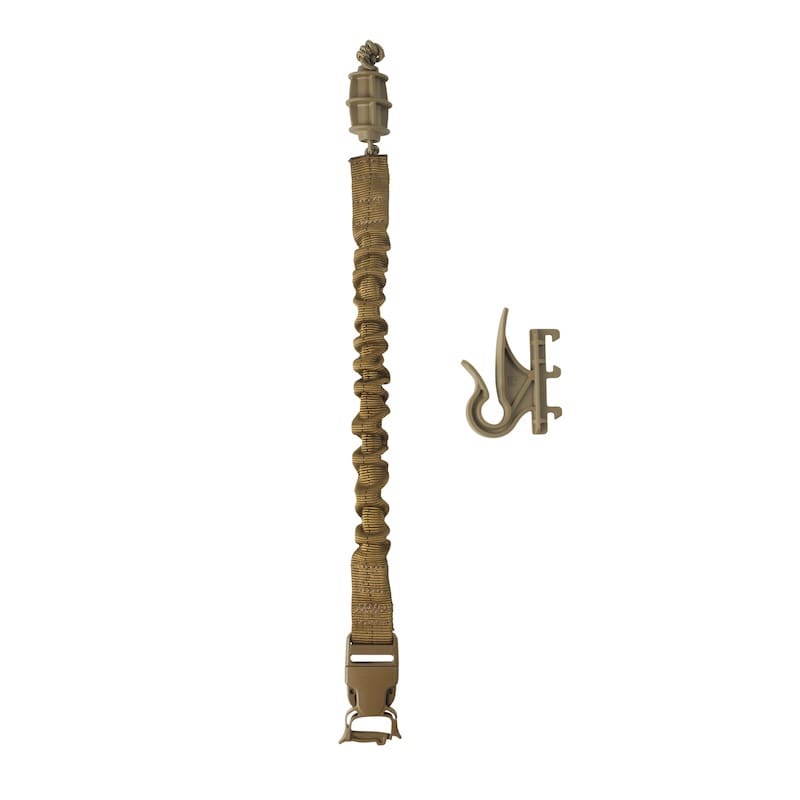
The new fixation strap for long firearms went through a long development process and an extensive testing phase. As a small supporting piece of equipment in the overall structure of tactical gear, however, it comprises very innovative novelties.

Contrary to its predecessor, the new version can be operated with only one hand. A buckle closure is provided at the end for a strong connection.

At the other end a small ball is provided, which Lindnerhof also refers to as “pineapple” and which – thanks to its characteristic form and grip – can be operated with gloves as well. In conjunction with a hook that is usually positioned at the front part of the plate carrier the strap can be opened and closed fast, one-handedly and without looking, which helps fixing or loosening the weapon easily. The ball was developed in such a manner that the bond is not loosened even in the event of extreme movements, such as jumping or crawling.

LINDNERHOF-TAKTIK GmbHwww.lindnerhof-taktik.de

www.spartanat.com

New Vehicle-mounted Electronic Tech Enables Marines to Combat Threats

Thursday, March 14th, 2019

MARINE CORPS BASE QUANTICO, Va. —

Marine Corps Systems Command plans to implement a new form of technology that allows the Marine Air-Ground Task Force to identify enemy activity.

The technology employs a vehicle-borne tool that enables Marines to discern what happens inside the electromagnetic spectrum. It connects several independent electronic capabilities into a single unit and allows Marines to manage threats and reactions from a central location.


“Marines are going to be able to make decisions on what they are seeing,” said Lt. Col. Thomas Dono, a team lead in MCSC’s Command Elements Systems.

Marines currently use systems to counter IEDs that block signals used by adversaries to remotely detonate explosive devices. The new technology is a man-packable and vehicle-mounted system, which will be able to be deployed on any Marine vehicle.

“This emergent technology combines a number of current capabilities into one system, thereby reducing the need for additional training and logistic support to manage multiple systems,” said Col. Dave Burton, program manager for Intelligence Systems at MCSC.

Once fielded, the system will enhance situational awareness on the battlefield.

“We will be able to do all of the functions of similar systems as well as sense and then display what is going on in the electronic spectrum,” said Dono. “Then we can communicate that to Marines for their decision-making process.”

MCSC is taking an evolutionary approach that allows the command to field the equipment faster and then gradually improve the capability as time progresses, Dono said. As the technology evolves, the Marine Corps can make incremental improvements as needed.

The Corps will work with Marines to test a variety of displays that track the electromagnetic spectrum, looking into each display’s user interface. The command can then determine if improvements must be made to ensure usability.


“It’s similar to what Apple does with the iPhone,” explained Dono. “They have many different displays and they want to make it natural and intuitive, so it’s not something that’s clunky, confusing and has to be learned.”

MCSC plans to field the vehicle-mounted system around the first quarter of 2020. When implemented, the equipment will continue to grow in capability to better prepare Marines to take on the digital battlefield.

“This system is important because it is going to allow Marines to operate inside the electromagnetic spectrum, make decisions and act upon that information,” said Dono. “That’s something they’ve never had to consider or think about in the past.”

By Matt Gonzales, MCSC Office of Public Affairs and Communication | Marine Corps Systems Command

Max Talk Monday: The RAID: Texas Class 2019

Monday, March 11th, 2019

This is the thirteenth installment of ‘Max Talk Monday’ which shares select episodes from a series of instructional videos. Max Velocity Tactical (MVT) has established a reputation on the leading edge of tactical live fire and force on force training. MVT is dedicated to developing and training tactical excellence at the individual and team level.

Max Talk: The RAID  is video footage of the RAID drill at the Texas Class 2019. This was a squad level (2 x fire team) live fire training exercise against a simulated enemy encampment / patrol base. It formed part of the ‘Attack Day’ which included hasty attack and raid simulated live fire scenarios.

MVT Tactical Manual

Max is a tactical trainer and author, a lifelong professional soldier with extensive military experience. He served with British Special Operations Forces, both enlisted and as a commissioned officer; a graduate of the Royal Military Academy Sandhurst. Max served on numerous operational deployments, and also served as a recruit instructor. Max spent five years serving as a paramilitary contractor in both Iraq and Afghanistan; the latter two years working for the British Government in Helmand Province, Afghanistan. 

Website: Max Velocity Tactical

YouTube: Max Velocity Tactical

SCUBAPRO Sunday – The Frogman

Sunday, March 10th, 2019

Movies have played a significant roll in and for the military world. From taking your mind off of things like Dumb and Dumber (and giving you great things to say” WE LANDED ON THE MOON?!”) or getting people to join the military. Some do better than others. The Green Berets by John Wayne was made to get people to believe in the Vietnam war.  It fell way short of that, but still a great movie, and it had a number one hit song “The Ballad of the Green Berets” by SSgt Barry Sadle, and it had a UDT/ Frogman playing one of the best parts in the movie. Sgt Muldoon was a Frogman in WW2 and yes a west coast guy. Apocalypse Now made as a protest movie against war, did a lot more to get people to join than any other film of that time.

The Frogman got more people to join the Navy than any other movie of its time. All and All it is an excellent movie for its time. You have to love going to war with a dive knife and a mask.

Maybe someday they will make moves like this again. Movies that talk about the thing that happened many years ago.

FirstSpear Friday Focus – Boot Super Sock

Friday, March 8th, 2019

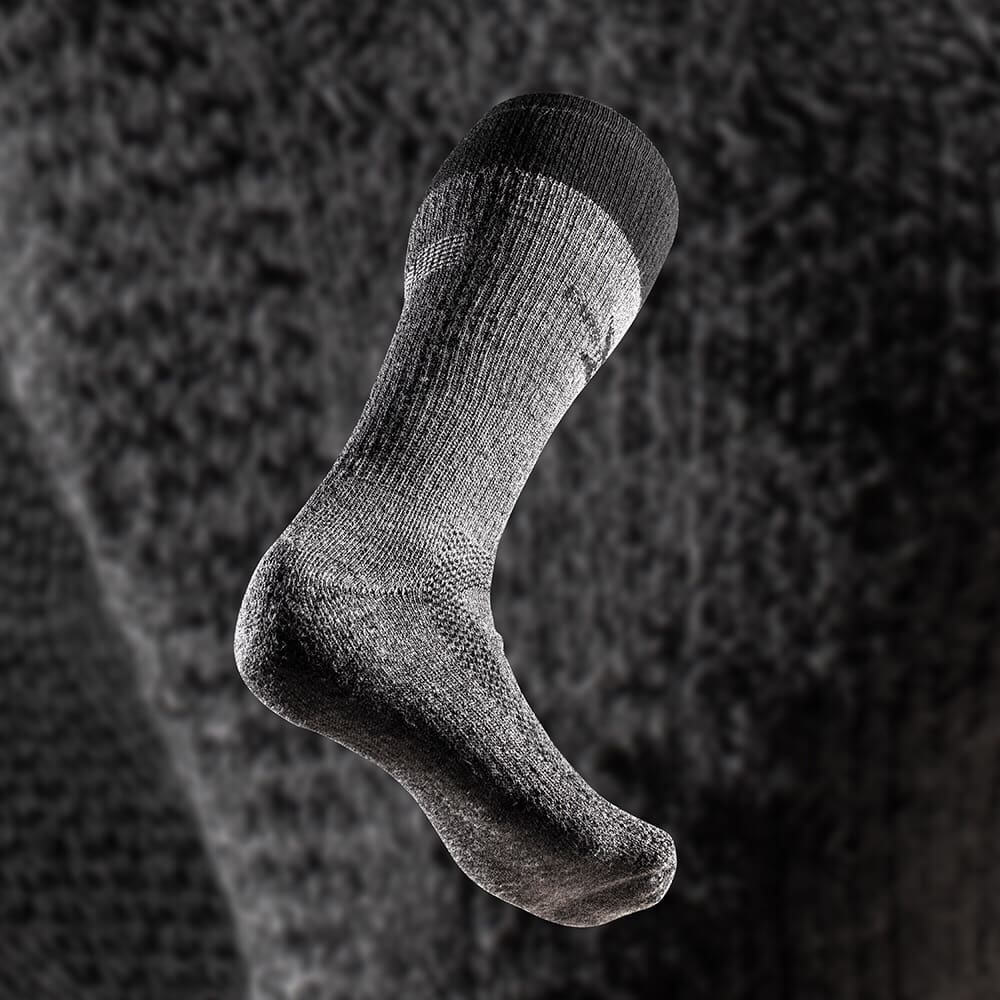
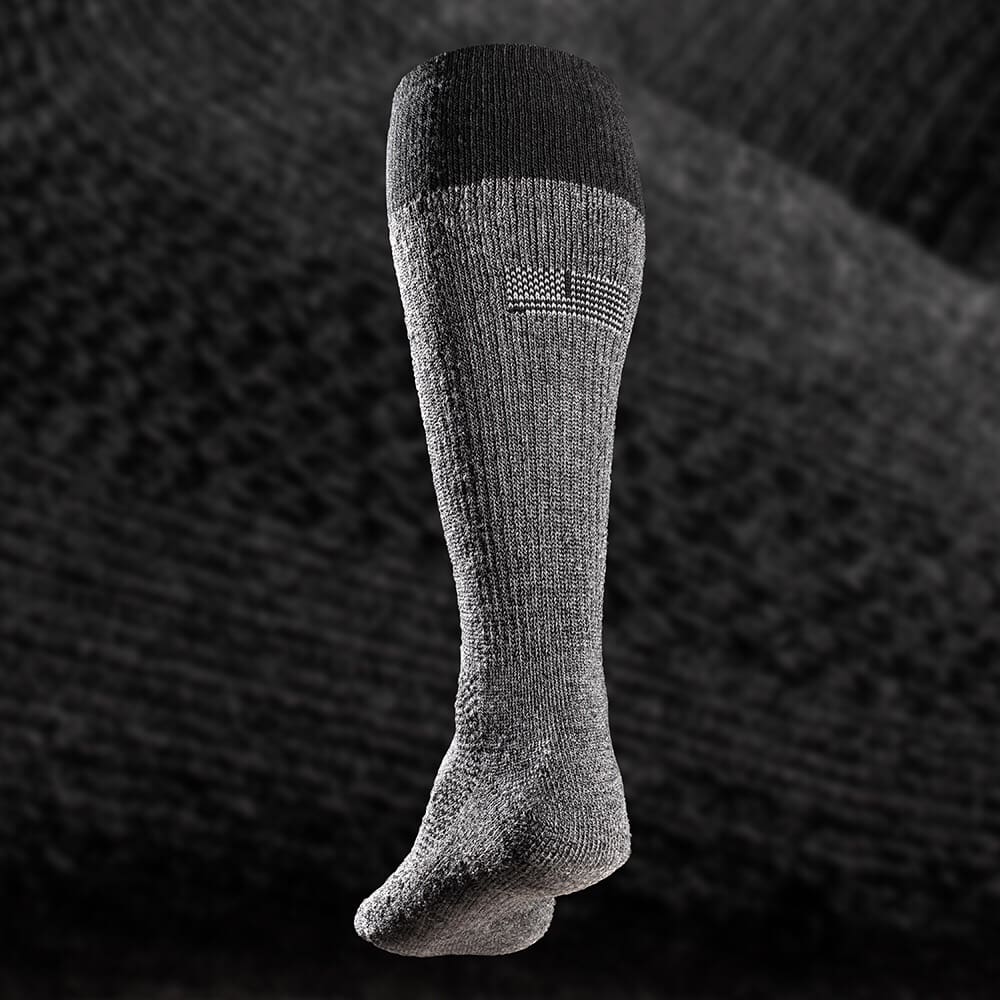
All new from the FirstSpear technical apparel line, meet the merino wool Boot Super Sock. Made in America with American Wool the BSS is a mid calf sock offering incredible comfort and warmth with impressive moisture wicking properties.

FirstSpear has also included a non-stocking non-standard run of the upcoming Every Day Sock which is a much lighter weight performance wool sock. Available in the non-stocking color in limited sizes and quantities while supplies last.

BSS

EDS

Marine Corps seeks ideas, information for Optical Communication Transmission System

Wednesday, March 6th, 2019

MARINE CORPS BASE QUANTICO, Va. —

Marine Corps Systems Command released a Request for Information March 5, to identify a non-developmental solution to provide a complete Line of Sight Optical Communication Transmission System.

A U.S. Marine with Special Purpose Marine Air-Ground Task Force-Crisis Response-Africa performs a radio check during a training event with German soldiers in Seedorf, Germany, Dec. 6, 2018. Marine Corps Systems Command released a Request for Information March 5, to identify a non-developmental solution to provide a complete Line of Sight Optical Communication Transmission System. (U.S. Marine Corps photo by Sgt Katelyn Hunter)

According to the RFI, released on the Federal Business Opportunities website, the OCTS system must be capable of providing a high-bandwidth transmission path used for voice, video and data communications.

For program officials, this capability will consolidate capabilities into a complete LOS transmission capability.

“The adage, ‘Move, shoot, communicate’ hasn’t changed, but how we communicate is rapidly changing,” said Maj. Eric Holmes, MCSC project officer. “Given the rapid pace of innovation in technology, the Marine Corps is currently evaluating maturing capabilities.”

Optical communications support greater bandwidth, and provide additional relief for frequency allocations in an already constrained spectrum.

“The Marine Corps is turning to industry to help rapidly develop and field this technology to protect vital command and control emissions from advanced adversaries,” Holmes said.   

Responses to the RFI must be received by 1 p.m. on March 19.

By Maj Kenneth Kunze, MCSC Office of Public Affairs and Communication | Marine Corps Systems Command

Brigantes Presents – High Angled Solutions – Helix Tactical Poles

Wednesday, March 6th, 2019

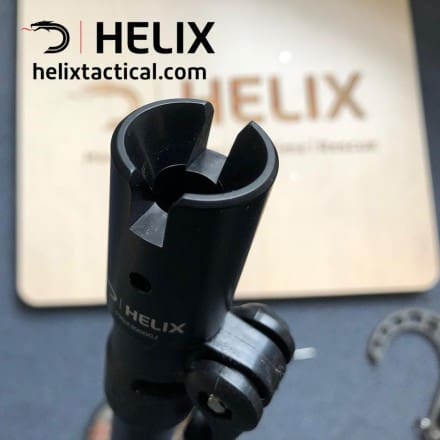
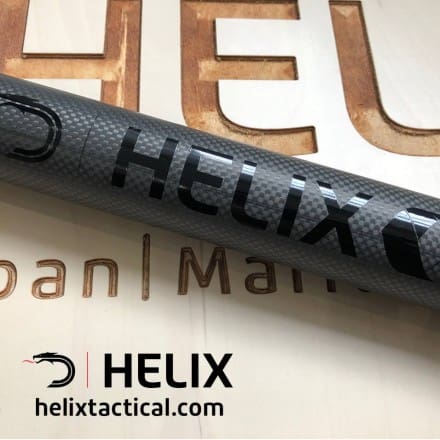
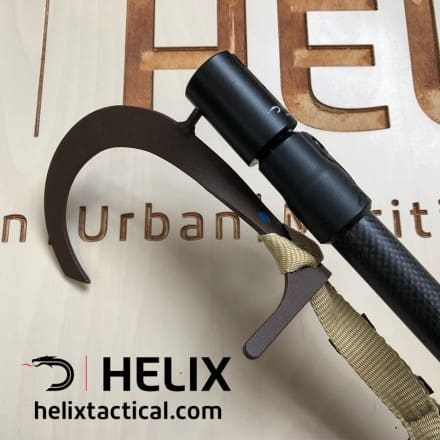
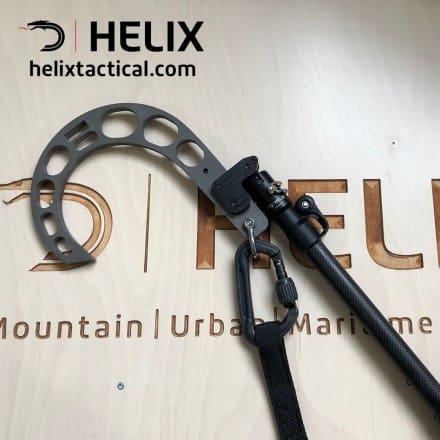
Take a look at these Helix Tactical Poles. These seven section poles are a lightweight solution to urban and maritime access issues.

C163ADED-5D38-423E-99DA-FC57E562E52B

370913FF-6BBB-4FEC-849B-590F9817E887

They are made from 3K carbon fibre and available in 4.5m and 8.5m lengths. The pole clamps are user adjustable and can be replaced if damaged. The poles have a 3K carbon finish which reduced the amount of vibration transmitted up the shaft to ensure a quiet and smooth use.

216BC051-EF7A-40FA-94FE-43F981D09AC0

7EFE8CF6-3409-4B70-9AA8-CFCC07192B60

The Helix Tactical poles are compatible with REBS hooks fitted with the PIGG system, which allows the pin to be pulled and the PIGG release will let go of the pole, leaving behind a clean anchor. They are also compatible with various other hook designs which used 4-5mm rods and as each one has a conical internal bore makes “fishing” to recover the hooks much easier.

For international sales contact international@brigantes.com

For sales to the UK contact warrior@brigantes.com

US Navy to Test Two-Piece, Flame-Resistant Organizational Clothing

Tuesday, March 5th, 2019

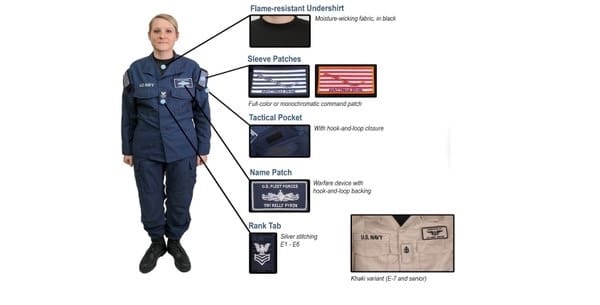
NORFOLK (NNS) — U.S. Fleet Forces (USFF) Command will begin a second round of testing later this year on a two-piece organizational clothing variant that offers flame resistance and moves the Navy one step closer to delivering Sailors a safe, comfortable, no-cost alternative to the Improved Flame Resistant Variant (IFRV) coveralls, with the same travel flexibility as the Type III working uniform.

USFF conducted the initial wear test on two-piece variants from May through September of last year and collected feedback from nearly 200 wear-test participants across surface, aviation and submarine communities about everything from colors and design, to comfort and options like buttons and hook-and-loop fasteners. The command also received feedback from more than 1,700 Sailors in an online survey about colors and design.

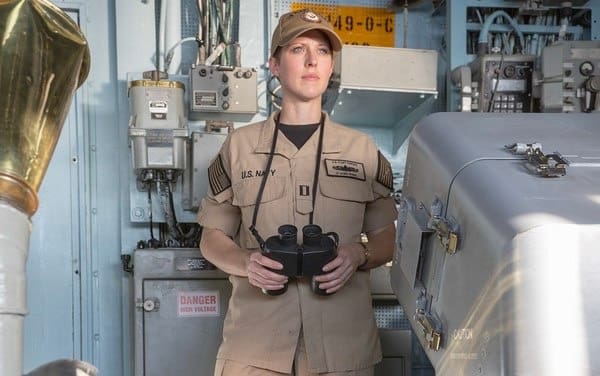
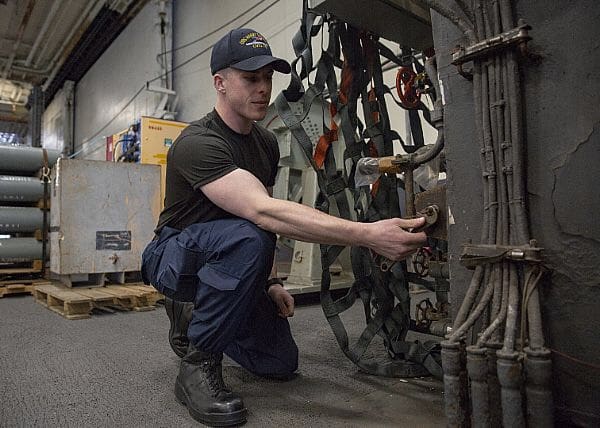
Fleet survey responses indicated that Sailors liked the functionality of the Type III but would like to see the design in traditional Navy uniform colors. More than 70 percent of E-6 and junior Sailors surveyed liked the navy blue blouse and trouser while a khaki version was the preference for chiefs and officers.

“Leaders are listening to the fleet when it comes to this design,” said USFF Fleet Master Chief Rick O’Rawe, a wear-test participant. “We have an obligation to keep our Sailors safe in inherently dangerous environments, but we also want to be mindful of their time. This is going to be something that’s safe, easy to maintain, and doesn’t require half-masting of coveralls when it’s hot or having to change clothes every time you leave the ship. Never again should we have to pass the words ‘all hands shift into the uniform for entering port or getting underway.’”

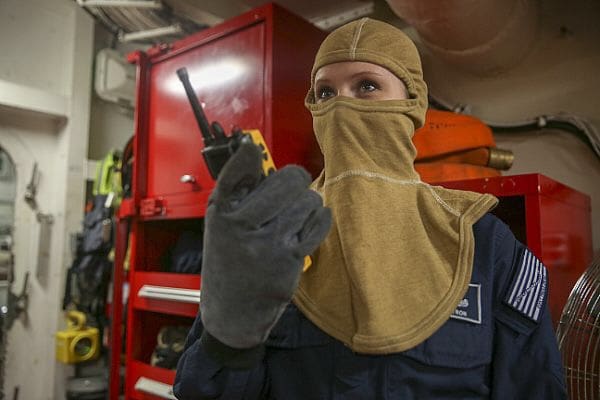
The updated design, which won’t require Sailors to sew on components, will be tested by 100 officers and enlisted Sailors to see how well it performs from wash-to-wear without ironing, and how it holds up to laundering. The two-piece variant will allow for de-blousing in extreme climates and challenging work environments. An undershirt will continue to be tested with a flame-resistant, moisture-wicking fabric in black.

“I have received so much feedback just from wearing the two-piece around the command every day,” said Yeoman 1st Class Kelly Pyron, a wear-test participant assigned to USFF. “The best part is that we’ll be able to transit from the ship and run errands in the two-piece; having one standard underway and in-port across the board will be much more convenient. I am excited to see the wear test moving into the next phase of evaluation.”

Once approved, the new prototype will serve as an alternative to the IFRV coverall for operational commands. The coverall may continue to be the prescribed clothing item for some Sailors in applicable work environments.

Pyron expressed, “If a clothing item, that I will not have to buy, can make my life easier while keeping me safe, I’m all for it.” 

By Mass Communication Specialist 2nd Class Stacy M. Atkins Ricks, U.S. Fleet Forces Command Public Affairs and Outreach