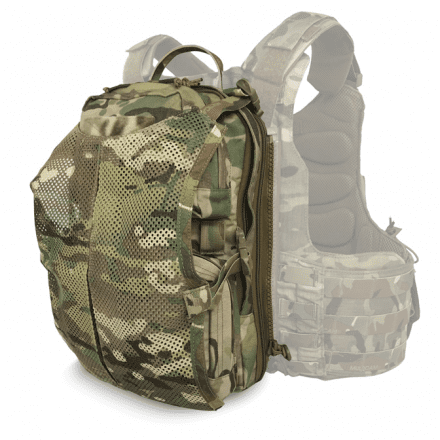
Salomon Forces Genesis MID GTX

Archive for the ‘Guest Post’ Category

SCUBAPRO Sunday – Wetsuits

Sunday, August 5th, 2018

Cleaning Your Wetsuit

Always clean and dry your suit as soon as possible. Rinse your wetsuit with fresh water. Its best to fill a bucket/tub/ trash can/ bath tube up with clean water and soak your wetsuit in that so it gets clean all the way thru. You can use a wetsuit shampoos and conditioners, PISS OFF and Sink the Stink are good and there are others out there. You can also use mild laundry soap or baby shampoo to clean wetsuits. Try to avoid peeing in your wetsuit; Urine is a hard smell to remove. Inspect your wetsuit for rips and tears as you are washing it.

Drying Your Wetsuit

After washing and rinsing your wetsuit, turn it inside out to help retain the flexibility on the outside of the wetsuit. Hang to dry on a wetsuit hanger or three to four plastic hanger, but don’t use a wire hanger. Wire hangers will cause the neoprene to stretch over the shoulders. The sun is your wetsuits worst nightmare as the UV rays can damage the neoprene and shortening the lifespan and the effectiveness of your suit.


 SCUBAPRO Dry suit hanger      SCUBAPRO Universal Hanger

Storage  

Store your wetsuit on a flat surface or on a wetsuit hanger. Avoid folding whenever possible to avoid creases. If stored folded it can leave creases and those will take away from the insulation properties. Avoid leaving your wetsuit in stuffed in a bag, or in a hot car, as it will reduce the lifespan of your suit.

Things that Can Damage Your Wetsuit

Hot water can ruin neoprene, causing it to lose some of its flexibility. Sun and UV rays cause neoprene wetsuits to age quickly. Dry your wetsuit in a shaded area. Chlorine or salt water will break down the neoprene. The crystals for the salt water will cut your suit. This is why it is important to rinse your wetsuit with fresh water after use in chlorine or salt water.

Things to Avoid

Do not use bleach or put your wetsuit in a washer machine or a dryer. Everyone loves getting into a dry wetsuit but the drier is real bad for it. (So maybe just long enough to make it warm if you feel like you have to) Avoid pulling your wetsuit over rings, watches or anything it could get caught on. Also just pulling it on can rip it. Avoid putting petroleum jelly on your suit. Petroleum products destroy the adhesive of the wetsuit seams and can penetrate the neoprene making it hard to repair. If you are trying to avoid chafing you can use Body Glide as that has been made to be wetsuit friendly. Using beeswax or zipper lubricant can prolong the zippers life and help keep them from snagging and tearing and it also helps them work better.

Repairing Tears and Rip

Inspect your wetsuit for rips and tears after each use. The rips and tears are much easier to fix when they are small, and will grow if they go unnoticed. Wetsuits can easily tear from things like watches, pier pillions and rocks. Small tears (around 1-2 inches long) can be easily repaired. Tears bigger than a few inches may require professional repair services. If the stitches or seams are torn it may also be a good idea to take your suit to a professional for repairs.

Things you should keep on hand

Storm sure Neoprene Queen, Aquaseal and E6000 fabric glue. These are good to just leave have in a small zip-lock container in your dive bag. It is better to stay ahead of a rip. There are also wetsuit repair kits available that contain everything you will need. If you are deployed overseas and cant’ get the a true wetsuit glue, then you can try a “bike tire repair kit” from any bike store (the glue used to fix a bike tire inner tube is basically the same) and is ok for “field repair” it is not recommended by any wetsuit companies but it is a good last resort if you having to dive for a couple hour in a ripped wetsuit and have no other options, like taking your buddies suit and saying “ wow you ripped your suit that sucks”

If you want learn a lot more about wetsuits watch the below video

Below is quick summary

• Rinse with fresh water after dives to remove the salt water
• Hang up inside/out for drying
• Do not dry under sunlight to prevent neoprene being damage (sun baking) – this one is the most important.
• Do not use laundry liquid to prevent neoprene being damage
• Do not put in dryers
• Do not Iron
• Do not Bleach
• Do not store too much folded to avoid wrinkles

All this information is on this label stitched inside your suits.

Wetsuits

Widget Wednesday: Aeryon SkyRanger R60 sUAS Field-Charging Solutions

Wednesday, August 1st, 2018

“Drones” continue to be a hot topic and an area of ever growing adoption by military and law enforcement organizations. However, keeping UAV / UAS batteries charged and flying during demanding operational tempos and/or in remote locations presents significant challenges. UAS operators needed a way to be able to take advantage of any accessible source of power; such as solar cells, car batteries, vehicle power outlets, or single-use batteries.

The SkyRanger R60 from Aeryon Defense is the standard-setting Group 1 VTOL sUAS for real-time, secure, aerial intelligence across a wide range of mission-critical applications for professional end-users. R60s are currently deployed with over 20 militaries worldwide, and in use with public safety and industrial operators in over 30 countries.

Working closely with Aeryon, we developed lightweight, high-performing adapters that enable an operator to rapidly charge SkyRanger R60 batteries in the field using the SPM-622 (Squad Power Manager), or ABC-812 (Adaptive Battery Charger). And thanks to our bi-directional, plug-and-play technology, R60 batteries can also be used as a rechargeable power source for other electronic equipment – helping to improve energy flexibility while also reducing a unit’s battery burden.

For further information about our UAV and UGV field charging solutions, visit www.PTXnomad.com or contact the Team.Room@Protonex.com.

Brigantes Presents – High Angle Solutions – Deuter Alpine Guide 35+ MultiCam

Wednesday, August 1st, 2018

Following two years of hard work Deuter Alpine Guide 35 in Multicam is now available.  Fresh into the warehouse this classic mountain rucksack has been updated and modified to suit the needs of operators in the mountain environment.

Using the Deuter Alpine, X-Frame back system the pack is one of the most stable and comfortable packs to carry.  The lid is extendable to accommodate expanded loads and allow for ropes or other pieces of hardwear.  In order to maximise functionality it has a long side opening zip, which allows you to access the full body of the pack without disturbing the load under the lid or having to completely empty the pack.

The hip belt is removable and uses the Vari-Flex system, which enables it to move with you when moving thereby improving comfort and performance. A double pull waist belt gives secure adjustment and the sternum strap helps the load to remain in the right place on your shoulders.

The pack comes with a removeable sit mat and is compatible with hydration bladders up to 3 Litres.  The sides of the pack provide ski loops and the front of the pack has points for two ice axes.

Overall this is the pack for mountain operations.  It has long been the go to pack for people working in the mountains and is the only option for the military mountaineer.

For more information contact tribe@brigantes.com

For international sales contact international@brigantes.com

(High Angle Solutions is a weekly series of articles focusing on military mountaineering solutions. It’s brought to you by UK-based Brigantes Consulting, in conjunction with several other brands, both here in the US and abroad. This week, it’s 

TSgt John Chapman to Posthumously Receive Medal Of Honor for Actions During Battle of Takur Gar

Saturday, July 28th, 2018

HURLBURT FIELD, Fla. (AFNS) — The White House announced July 27, 2018, that Air Force Tech. Sgt. John Chapman will be posthumously awarded the Medal of Honor Aug. 22, for his extraordinary heroism during the Battle of Takur Ghar, Afghanistan, in March 2002.


According to the Medal of Honor nomination, Chapman distinguished himself on the battlefield through “conspicuous gallantry and intrepidity,” sacrificing his life to preserve those of his teammates.

Making it look easy

Chapman enlisted in the Air Force Sept. 27, 1985, as an information systems operator, but felt called to be part of Air Force special operations. In 1989, he cross-trained to become an Air Force combat controller.

According to friends and family, Chapman had a tendency to make the difficult look effortless, and consistently sought new challenges. Dating back to his high school days, he made the varsity soccer squad as a freshman. Also an avid muscle-car enthusiast, he rebuilt and maintained an old Pontiac GTO.

Combat control would prove to be another instance of “making it look easy.”

Combat control training is more than two years long and amongst the most rigorous in the U.S. military. Only about one in ten Airmen who start the program graduate.

From months of rigorous physical fitness training to multiple joint schools – including military SCUBA, Army static-line and freefall, air traffic control, and combat control schools – Chapman is remembered as someone who could do anything put in front of him.

“One remembers two types of students – the sharp ones and the really dull ones – and Chapman was in the sharp category,” said Ron Childress, a former Combat Control School instructor.

Combat Control School is one of the most difficult points of a combat controller’s training program, from completing arduous tasks without sleeping for days, to running miles with weighted rucksacks and a gas mask.

“During one of his first days at Combat Control School, I noticed a slight smirk on his face like [the training] was too simple for him…and it was,” said Childress.

Following Combat Control School, Chapman served with the 1721st Combat Control Squadron at Pope Air Force Base, North Carolina, where he met his wife, Valerie, in 1992. They had two daughters, who were the center of Chapman’s world even when he was away from home – which was common in the combat control career field.

“He would come home from a long trip and immediately have on his father hat – feeding, bathing, reading and getting his girls ready for bed,” said Chief Master Sgt. Michael West, who served with Chapman through Combat Control School, a three-year tour in Okinawa, Japan, and at Pope AFB. “They were his life and he was proud of them…to the Air Force he was a great hero…what I saw was a great father.”

The Battle of Takur Ghar

In conjunction with Operation Anaconda in March 2002, small reconnaissance teams were tasked to establish observation posts in strategic locations in Afghanistan, and when able, direct U.S. air power to destroy enemy targets. The mountain of Takur Ghar was an ideal spot for such an observation post, with excellent visibility to key locations.

For Chapman and his joint special operations teammates, the mission on the night of March 3 was to establish a reconnaissance position on Takur Ghar and report al-Qaida movement in the Sahi-Kowt area.

“This was very high profile, no-fail job, and we picked John,” said retired Air Force Col. Ken Rodriguez, Chapman’s commander at the time. “In a very high-caliber career field, with the highest quality of men – even then – John stood out as our guy.”

During the initial insertion onto Afghanistan’s Takur Ghar mountaintop on March 4, the MH-47 “Chinook” helicopter carrying Chapman and the joint special operations reconnaissance team was ambushed. A rocket propelled grenade struck the helicopter and bullets ripped through the fuselage. The blast ripped through the left side of the Chinook, throwing Navy Petty Officer 1st Class Neil Roberts off the ramp of the helicopter onto the enemy-infested mountaintop below.

The severely damaged aircraft was unable to return for Roberts, and performed a controlled crash landing a few miles from the mountaintop. Thus began the chain of events that led to unparalleled acts of valor by numerous joint special operations forces, the deaths of seven
U.S. servicemen and now, 16 years later, posthumous award of the Medal of Honor to Chapman.

Alone, against the elements and separated from his team with enemy personnel closing in, Roberts was in desperate need of support. The remaining joint special operations team members, fully aware of his precarious situation, immediately began planning a daring rescue attempt that included returning to the top of Takur Ghar where they had just taken heavy enemy fire.

As the team returned to Roberts’ last-known position, now on a second MH-47, the entrenched enemy forces immediately engaged the approaching helicopter with heavy fire.

Miraculously, the helicopter, although heavily damaged, was able to successfully offload the remaining special operations team members and return to base. Chapman, upon exiting the helicopter, immediately charged uphill through the snow toward enemy positions while under heavy fire from three directions.

Once on the ground, the team assessed the situation and moved quickly to the high ground. The most prominent cover and concealment on the hilltop were a large rock and tree. As they approached the tree, Chapman received fire from two enemy personnel in a fortified position. He returned fire, charged the enemy position and took out the enemy combatants within.

Almost immediately, the team began taking machine gun fire from another fortified enemy position only 12 meters away. Chapman deliberately moved into the open to engage the new enemy position. As he heroically engaged the enemy, he was struck by a burst of gunfire and became critically injured.

Chapman regained his faculties and continued to fight relentlessly despite his severe wounds. He sustained a violent engagement with multiple enemy fighters, for over an hour through the arrival of the quick reaction force, before paying the ultimate sacrifice. In performance of these remarkably heroic actions, Chapman is credited with saving the lives of his teammates.

The upgrade to MOH

“John was always selfless – it didn’t just emerge on Takur Ghar – he had always been selfless and highly competent, and thank God for all those qualities,” said Rodriguez. “He could have hunkered down in the bunker and waited for the (Quick Reaction Force) and (Combat Search and Rescue) team to come in, but he assessed the situation and selflessly gave his life for them.”

Chapman was originally awarded the Air Force Cross for his actions; however, following a review of Air Force Cross and Silver Star recipients directed by then-Secretary of Defense Ash Carter, the secretary of the Air Force recommended Chapman’s Air Force Cross be upgraded to the Medal of Honor.

In accordance with Air Force policy whereby Medal of Honor recipients are automatically promoted one grade on the first day of the month following the award, Chapman will be posthumously promoted to the rank of master sergeant on Sept. 1, 2018.

Although Chapman will be awarded the Medal of Honor, family and friends have expressed his humility and how he would react today, if he were here.

“If John were to find out he received the Medal of Honor, he would be very humbled and honored,” said Chief Master Sergeant West. “He was just doing his job, and that’s what he would say at this moment.”

His widow, Valerie Nessel, has always known her husband was capable of such greatness, but asserts that John wouldn’t be anxious to be in the spotlight.

“[John] would want to recognize the other men that lost their lives,” said Valerie. “Even though he did something he was awarded the Medal of Honor for, he would not want the other guys to be forgotten – that they were part of the team together.”

“I think he would say that his Medal of Honor was not just for him, but for all of the guys who were lost,” she added.

In total, seven service members lost their lives during the Battle of Takur Ghar:
Petty Officer 1st Class Neil Roberts – U.S. Navy SEAL
Tech. Sgt. John Chapman – U.S. Air Force combat control
Senior Airman Jason Cunningham – U.S. Air Force pararescue
Cpl. Matthew Commons – U.S. Army Ranger
Sgt. Bradley Crose – U.S. Army Ranger
Spc. Marc Anderson – U.S. Army Ranger
Sgt. Philip Svitak – U.S. Army 160th Special Operations Aviation Regiment

“John would have, so I’ll say it for him. Every American who set foot on that mountaintop acted with great courage and selflessness, and deserves all of our praise and admiration for the sacrifices they made,” said Rodriguez.

By Staff Sgt. Ryan Conroy, 24th Special Operations Wing Public Affairs

Harvested HMMWV Parts Will Save Corps Millions, Increase Survivability of JLTV

Thursday, July 26th, 2018

MARINE CORPS BASE QUANTICO, Va. —

A harvesting effort by Program Executive Officer Land Systems and Marine Corps Systems Command could save the Corps millions and make one of its newest vehicles more survivable.

The Gunner’s Protection Kit, managed by Infantry Weapons within MCSC’s Portfolio Manager Ground Combat Equipment Systems, is currently installed on High Mobility Multipurpose Wheeled Vehicles. As a cost-savings measure, the kits will be removed from HMMWVs and installed on Joint Light Tactical Vehicles as they are fielded to the fleet next year. Using harvested parts instead of buying new potentially saves the Corps more than $100 million.

Logisticians and equipment specialists from Marine Corps Systems Command and Program Executive Officer Land Systems install a Marine Corps Transparent Armor Gun Shield on a Joint Light Tactical Vehicle May 1. The installation is part of a cost-savings plan to harvest Gunner’s Protection Kits and other equipment from older High Mobility Multipurpose Wheeled Vehicles and increase the JLTV’s survivability. (U.S. Marine Corps photo by Kristen Murphy)

“The harvesting strategy was developed by the JLTV Joint Program Office in 2012 as part of our efforts to meet affordability metrics for the program,” said Andy Rodgers, program manager for Light Tactical Vehicles in Program Executive Officer Land Systems. “Our collaboration with [Marine Corps Systems Command’s] Program Manager Infantry Weapons is key to that strategy.”

In the spring, logisticians and other program personnel from Infantry Weapons conducted a Proof of Principle, or PoP, going step by step through the process of removing a Marine Corps Transparent Armor Gun Shield—part of the GPK family of systems—from a HMMWV and placing it on a JLTV. The MCTAGS will be installed on the Heavy Guns Carrier JLTV variant.

Marines from 1st Battalion, 7th Marines prepare to load Joint Light Tactical Vehicles onto Landing Craft Utility boats in preparation for a JLTV Multiservice Operational Test and Evaluation amphibious landing March 2, at Camp Pendleton, California. As part of a cost-savings plan, the Marine Corps will harvest Gunner’s Protection Kits and other equipment from older High Mobility Multipurpose Wheeled Vehicles and install them on JLTVs to increase the new vehicles’ survivability. (U.S. Marine Corps courtesy photo)

The PoP will help the program office develop, verify and publish a modification instruction to guide the Corps through the installation process, said Kevin Marion, a logistics management specialist in Infantry Weapons.

“The PoP was successful,” Marion said. “We started with existing [instruction] manuals for the MCTAGS, and then added steps for putting it on the new vehicle. In addition to documenting the steps, it also gave us a chance to identify any parts that can’t be reused because the degree of serviceability is questionable.”

The JLTV program office has completed similar PoP efforts with the Improved TOW GPK, or I-TGPK, which will be installed on the Close Combat Weapons Carrier variant of the JLTV. The CCWC can be armed with TOW—tube-launched, optically tracked, wire-guided—missiles.

The JLTV is an Army-led light tactical vehicle program. It will partially replace the Army and Marine Corps HMMWV fleet, providing a more survivable vehicle, and closing an existing gap in payload, performance and protection. The JLTV comes in four variants with payloads ranging from 3,500 to 5,100 pounds of cargo, and can go more than 70 miles per hour as well as traverse over arduous terrain.

Although only two variants will be equipped with the MCTAGS or I-TGPK, all JLTVs will contain harvested radios, antennas and other communications equipment from HMMWVs.

“It’s our responsibility as MCSC to be good stewards of taxpayer money, so if we have equipment that is in good condition, we should go ahead and use it,” Marion said.

An advantage to Marines is the tactics, techniques and procedures will remain largely unchanged for the harvested equipment, so they already know how to operate it, Rodgers said.

The HMMWVs will be demilitarized and traded through the Equipment Exchange Program. This program enables the organization to work with commercial vendors who can sell or use the vehicles as they see fit.

“The exchange program is no cost to the government, and no money changes hands,” Rodgers said. “In exchange, the vendor buys equipment we may need like MCTAG covers or ring mounts for the JLTV, and they ship it wherever we need it.”

Once vehicle fielding begins next year, Marine Corps field service representatives will execute the harvesting plan for the units that receive them, Rodgers said. This is part of the program’s “total package fielding” plan.

“As we field the JLTV, we’ll collect the HMMWV, harvest the parts, install them and then return the new vehicles [to the units],” Rodgers said.

Fielding for the JLTV will begin in spring 2019 to the Marine Corps School of Infantry-West at Camp Pendleton, California; School of Infantry-East at Camp Lejeune, North Carolina; The Basic School at Marine Corps Base Quantico, Virginia; and Motor Transport Maintenance Instructional Company at Camp Johnson, North Carolina. Fielding to the operating forces will begin in the summer of 2019. In all, the Army plans to purchase 49,000 JLTVs and the Marine Corps will purchase 9,091.

By Monique Randolph, MCSC Office of Public Affairs and Communication | Marine Corps Systems Command

Frag Out! – TripleX – the harmony of multi-terrain camouflage pattern

Wednesday, July 25th, 2018

As long as armies exist, war fighters have been looking for best solutions to blend in with the environment; starting with natural objects or vegetation in designated area and ending with full spectrum of artificial colour and material usage for camouflage means. Different areas and different terrains dictate specific rules. Every fighter must use a wide range of skill sets to blend in with the environment. Modern war dynamic process requires that one uses a universal camouflage colour, pattern and material shape capable of providing concealment in every environment.

Development of multi-terrain pattern is always a compromise between different types of camouflage that will provide adequate concealment of the operators against various backgrounds of different terrains. An even more complex task is to develop a pattern which will provide sustainable concealment over different distances within certain type of terrain and will not become a one-color spot, turning the fighter into an easy target.

Seeing how many variables need to be taken into consideration, the most important question is, how to develop a one-for-all camouflage?

This question was on the mind of Igors Sitvjenkins from the moment he joined the Army in 1997. He started with designing an innovative layering system for his fellow soldiers. After 15 years as an officer, having worked with NATO groups and cooperated with top military brands from soldier systems sector, he decided to start his own business: Sole Source and look into the camouflage issue in a more scientific way.

The mix of scientific thinking, military experience and passion for the perfect camouflage resulted in a book called BOOS – “Book of operational sculpturing”, where Igors team established system requirements for all the products they developed. The book became the base for identification and understanding of customer requirements – a unique and innovative approach towards satisfying the customer with most adequate product choices. BOOS also includes details behind the creation of the new camouflage pattern called TripleX and has become the base for all products designed and sold by Igors and his partners’ new brand, 3rd Alternative.

TripleX multi-terrain camouflage pattern has been developed based on 7 years of thorough research. The goal was to create a universal pattern providing concealment in three main operational terrains – woodland, urban and mountainous, while also fit for the transitional terrains.

The biggest challenge presented itself in the actual camouflage color and contrast that helps to blend into the forest areas and mountainous terrain. Since camouflage is most effective at distances of above 50 m, the main focus was on the right colors of pattern elements. TripleX camouflage colors and their interaction truly allow for a multi-terrain coverage. The next factor was the shape, size and ratio of pattern elements. In TripleX a mix of elements with different colors is used: dominate greenish triplex element with star size 1.4 cm, brown triplex element with star size 1.4 cm, khaki triplex element with star size 0.8 cm and grey triplex element with star size 0.8 cm. Research shows that shapes in the range of 0.8-1.4 cm provide the best blend-in capability in different terrain, while not turning the pattern into a one spot color.

TripleX is based on Euclid’s geometrical element that allows to shape it in different irregular forms and build a pattern that has horizontal and vertical lines. This way, it blends into nature or urban environment while keeping it digital, with the ability to converge with surrounding elements and light.

TripleX frago 0

TripleX pattern – closer look. ROCK jacket ventilation laser cut holes

TripleX frago 1

TripleX pattern – general look mountain terrain

TripleX in WOODLAND terrain

A common mistake is the belief that forest is just dark green; that is why past generation of camouflage patterns intended to mimic woodland were most often dark green with black spots. There should be a proper mix of the colors and element shapes in order to provide appropriate concealment. In the TripleX multi-terrain pattern the main element is the greenish background with grayish coloring. This allows for the most effective blend into wooden areas, leaf tree areas as well as conifer tree areas, dense or sparse forests. The tone is called misty or “brume forest” and gives every fighter the freedom of movement in any forest terrain.

Another inspiration for the colours was the tone of wild animal fur in autumn, which when mixed with the grayish color provides the most optimal spectrum for concealment. With the focus on each element’s size ratio, the blend of colours reduces the possibility of appearing as spots or creating a shadow effect not in line with the environment.

TripleX frago 5

TripleX pattern – woodland terrain, close distance

TripleX frago 4

TripleX pattern – woodland terrain, close look (late autumn)

TripleX in URBAN areas

Tactical doctrine stresses that urban combat operations are conducted only when required and that built-up areas are isolated and bypassed rather than engaged in costly, time-consuming acts. Adherence to these precepts, though valid, is becoming increasingly difficult as urban sprawl changes the face of the battlefield. Major urban areas in various countries host industrial bases, transportation complexes, economic institutions, and political and cultural centers – the power and wealth of each country. The denial or capture of these centers may yield decisive psychological advantages that frequently determine the success or failure in a larger conflict. Villages and small towns will often be caught up in the battle because of their proximity to major avenues of approach or because they are astride lines of communications that are vital to sustaining ground combat operations. Urbanization is a complex, multifaceted process influenced by many factors including a nation’s cultural development, its economic resources, and its industrial capacity. Although its form varies from region to region, urbanization is characterized by a general pattern of changes in land usage and the spread of man-made features across natural terrain. Tactical terrain analysis has traditionally considered some elements of the urban environment such as the allocation of land to agriculture or forestry and the distribution of railway or road networks. However, the focus has been on natural terrain elements. In Europe and other urbanized areas of the world, increased awareness of the effects of man-made features on the overall tactical scheme is necessary. How urban terrain elements impact on operations is an important consideration in determining tactical options.

Expanding urban development affects military operations as the terrain is altered. The increased population and accelerated growth of cities have made the problems of combat in built-up areas an urgent requirement for the military, law enforcement, special security forces. This type of combat cannot be avoided. The makeup and distribution of smaller built-up areas as part of an urban complex make the isolation of enemy fires occupying one or more of these smaller enclaves increasingly difficult. Urban terrain is expected to be the future battlefield in Europe and Asia with brigade- and higher-level commanders focusing on these operations. The closeness of urban operations increases the likelihood that the enemy will detect operators of the unit.
Because some urban areas offer poor concealment and cover, the enemy is most likely to detect soldiers moving through urban areas. Camouflage effectiveness in urban terrain is therefore dictated by color of the pattern elements as much as their size ratio. The right mix allows to blur in and not stand out against the background of the built-up area. This is the reason why the TripleX pattern has universal colour tones that change in the overall visual spectrum based on background and light intensity.

TripleX frago 2

TripleX pattern – urban terrain, close distance

TripleX in MOUNTAIN terrain

With approximately 38% of the world’s classified as mountains, the Army must be prepared to deter conflict, resist coercion, and defeat aggression in mountains as much as in other areas. Mountains exist in almost every country in the world and almost every war has included some type of mountain operations. This pattern will not change; therefore, soldiers will fight in mountainous terrain also in future conflicts. Although mountain operations have not changed, several advancements in equipment and transportation have increased the soldiers’ capabilities. The identification and proper use of the cover and concealment provided by mountainous terrain are fundamental to all aspects of mountain operations.

TripleX frago 7

TripleX pattern – typical rocks, close distance, look from top

The ridge systems may provide covert approaches through many areas that are hidden from observation by the vegetation and relief. The difficulties a force encounters in finding available cover and concealment along ridges are fewer than those on the peaks, especially above the timberline. Uncovered portions of an approach leave a force exposed to observation and fire for long periods. The enemy can easily detect movement in this region. Although mountainous terrain generally permits excellent long-range observation and fields of fire, steep slopes and rugged terrain affect a soldier’s ability to accurately estimate range and frequently cause large areas to be hidden from observation. The existence of sharp relief and dead space facilitates covert approaches, making surveillance difficult despite such long-range observation. Mountainous terrain is where urban spectrum mixes with forest spectrum depending on types of rock and forests. That is why TripleX can provide concealment and blurring with the surrounding in high altitude mountain terrain, at the bases of mountains with vegetation or at the highlands.

TripleX frago 3

TripleX pattern – typical rocks, distant look

TripleX frago 6

TripleX in TRANSITIONAL terrain

Very often, the combat terrain is transitional and difficult to categorize as specific operational terrain. In any terrain and environment however, the capability of blending in is dictated by the light and shadow effects, and the intensity of light, regardless if artificial or natural. Main benefit of the TripleX camouflage is the light effect and reflection of the pattern. TripleX provides camouflage with chameleon effect, with different contrast depending on light intensity. When the surrounding background changes, TripleX does the same and changes contrast together with the environment in order not to stand out as too bright or too dark spots, especially during morning and evening light.
TripleX pattern – transitional terrain, open field, close distance

MULTI-TERRAIN application

The battlespace is evolving at high speed, making it increasingly difficult for soldiers to remain in hiding. Most dangerous are all kinds of technical observation and surveillance devices, from high resolution binoculars and thermal imagery to air and radar surveillance. That is the reason why camouflage color, material and pattern shape are crucial factors behind the freedom of movement in various environments.

All those reasons pushed Igors and his team to change the approach to camouflage and base the new pattern on the results of optical experiments. They succeeded in creating a blend of patterns and colours capable of providing almost ideal concealment in modern warfare environment. An added benefit is that all kinds of popular camouflage patterns are already set in our minds and visual memory, making the TripleX gear even more difficult to distinguish from the surroundings.

Within the different ranges, TripleX provides a disruptive effect in any possible terrain, providing every operator with concealment and a guarantee against fast detection by visual surveillance. Naturally, the maximum effect is gained when every part of the gear and clothing is of same pattern.

Air Force Recruiters Learn About Innovations for Next-Gen Special Ops

Sunday, July 22nd, 2018

WASHINGTON —

For the first time in the Defense Department, a series of career field specialties is using human performance monitoring and a data collection system, as well as specialized recruiters.

Air Force Staff Sgt. Robert Jette undergoes a body composition measurement test at the 350th Battlefield Airman Training Squadron at Joint Base San Antonio-Lackland, Texas June 28, 2018. Jette is a special operations recruiter based in Fresno, Calif. DoD photo by EJ Hersom

Because of high attrition rates in its special operations career fields — pararescue, combat controller, tactical air control party and special operations weather technicians — the Air Force stood up the 350th Battlefield Airman Training Squadron at Joint Base San Antonio-Lackland, and the 330th Recruiting Squadron at Joint Base San Antonio-Randolph in Texas. Recruiters also focus on the special operations support career fields: survival, evasion and resistance and explosive ordnance disposal.

Air Force Chief Master Sgt. Josh Smith, the special warfare preparatory course superintendent for the 350th BATS, has been a pararescueman, or PJ, for 25 years. He said his team was tasked to stand up the squadron within 121 days. They shadowed the Army’s and Navy’s special operations programs and used their best practices to model this new program, he said.

The team received “amazing support” from Naval Special Warfare at Great Lakes Naval Training Command in Illinois, Smith said. “And we’re using the same contract for our coaches, so some of their staff could help us set up the program here,” he added. “It’s been an amazing partnership between the two organizations.”

Pilot Course

On June 5, 2017, the first battlefield airmen preparatory pilot course ran through its first eight-week iteration. Smith said the course’s goal is to “create a program focused on creating that fitter, faster, stronger, more mentally resilient warfighter.”

He said one area the Navy would like to increase training on is psychology. “We really try to focus on that communication, team building, the character tributes of leader, integrity, professionalism, trainability and teaching them how to improve in those areas,” Smith said. “This generation knows how to text, but they need to work on communication.”

Smith said the team was tasked to improve production by 10 percent, but were able to improve it by 20 percent overall. They were able to eliminate the two-week pararescue development course, and tactical air control party candidates went from a 30 percent graduation rate to 66 percent.

Air Force Maj. Heath Kerns, 330th Recruiting Squadron commander and a special tactics officer, said the squadron pulled recruiters from 27 different squadrons across the Air Force who showed an aptitude and interest as well as other qualifications to head up this new squadron, specializing in recruiting for the three Air Force special forces career fields and its support career fields.

“Instead of worrying about 160 jobs, [our battlefield airmen recruiters] can get really smart on six jobs,” Kerns said.

The Air Force has learned that potential special operations recruits are not motivated in the same ways as recruits from the larger force, he explained. “They don’t care about the benefits or the money. They care about the challenge,” Kerns said.

“I wanted to know, ‘What’s the hardest thing in the world I could do?’ I wanted to become the most elite [and] challenge myself in the worst ways possible,” he said of his own motivation.

Kerns said the recruiters’ mission is to scout, develop and guide the future warriors for their combat calling. With this new program, the recruiters work hand-in-hand with the squadron ahead of time and have developers, retired operators, who will work with the recruits to make sure they can pass the physical training test and be ready for battlefield airmen prep before arrival.

Recruiter Training

To help recruiters understand what the course is like, about 90 of them attended a one-week version of the course, June 25-29.

“This week has been excellent training. Simple things like you normally swim with goggles, but now you have a face mask fogging up, and your nose isn’t used to having dead space, so it’s trying to breathe in but it’s not [able to],” Kerns said. “We can now absolutely understand that even though my applicant passed the test well in a different environment, he may show up here and freak out and his score may look bad. We understand the process now because we’ve lived it. It’s going to change the way our recruiters go back and work with the candidates.”

He said having the partnership with the active-duty community has also been helpful. “I reach out to my brothers and tell them, ‘If you want me to replace you with quality people, I need you to provide these things.’ It’s been a great partnership,” Kerns said.

A computer displays up to 300 data points monitoring the strengths and weaknesses of Air Force special operations recruiters during an after-midnight ruck march at the 350th Battlefield Airman Training Squadron, Joint Base San Antonio-Lackland, Texas, June 28, 2018. DoD photo by EJ Hersom

Recruiters are critical because they’re the first contact with candidates, Smith said. “If they’re not sending the correct candidates,” he added, “that will affect the capabilities of what will be produced out of this program.”

Cutting-Edge Technology

The squadron uses many cutting-edge innovative technology systems. By January, the squadron will have a 55,000-square-foot smart gym with an indoor track with an LED lighted system called a rabbit. The gym will know when the students enter via a chip in their smart watches. The cardio equipment will read the chips as well. The weight equipment will have tablets with video cameras where the students will type in their student number and record their workout, and then the coaches will critique and send them a message if they did anything wrong in their techniques.

The squadron is the first in DoD to use a digital functional movement screening called DARI for all candidates. The camera system identifies joint mobility and strength imbalances of 28 movement patterns.

The first class had 14 candidates who were identified to be at high risk for injury, Smith said, and within 10 training days, 12 of the 14 were injured in the way the computer had predicted. “For the next class, for those identified, we gave them homework,” he said. “They wear these compression shirts and shorts that link to their tablets to show that they’re doing the exercises for accountability. The injuries went down.”



The students wear a harness with a Zephyr biomodule sensor, which measures their core body temperature throughout the day, as well as 44 individual post-training event data analytics that provide in-depth understanding of individual and group data on heart rates, calorie burns, estimated core temperatures, physiological and mechanical training. It provides feedback on windows of trainability in endurance, speed, power, strength and coordination.

The squadron’s dietician is working with Google to implement an automated process of determining a candidate’s food consumption by providing a machine-learning vision system to digitally track food. It will compare a trainee’s performance calorie burn before and after meals for nutritional intake of actual calories consumed by taking a photo of the plate of food before and after the meal. The subject matter expert can address the disparities, Smith said.

Omegawaves

The most successful technology has been tracking omegawaves, Smith said. It directly assesses the central nervous system, direct current potential, autonomic regulation of the heart and heart rate variability and the cardiac system through and electrocardiogram. It provides feedback on windows of trainability in endurance, speed and power and strength and coordination.

The staff uses all of this technology, as well as contrast therapy, massage, cold tanks, movie theaters, a recreation room, hydrotherapy and float tanks for recovery and down time for the candidates.

Air Force Master Sgt. Maria Teresa Pineda and other special operations recruiters carry a large bag filled with sand during a class that allows recruiters to experience the 350th Battlefield Airman Training Squadron preparatory course at Joint Base San Antonio-Lackland in San Antonio, Texas, June 28, 2018. The ruck march and sand bag carry began at 2 a.m. and is one of the many challenges presented by the squadron to help recruiters understand what their recruits endure. DoD photo by EJ Hersom

The coaches and staff consist of nutritionists, psychologists, a physician assistant, athletic trainers, medics and many more who have a minimum of a bachelor’s degree. Most of them have a master’s degree in some type of exercise physiology and multiple certified strength and conditioning credentials, and some are Level 2 and 3 Crossfit instructors.

Some of the coaches are former National Football League and National Hockey League players, one was on the U.S. Olympic swim team, and NASA’s lead strength coach just applied to be a part of the program.

“I have the most amazing group of individuals who are the most brilliant minds throughout their different modalities,” Smith said. “This is what makes this program so successful.”

One instructor, who’s ranked in the top 100 in the world for the freestyle in swimming, even enlisted to become a combat controller and is now at Air Force basic training, Smith said.

Isaiah Harris, a former Atlanta Falcons linebacker, worked with the Chicago Bears for eight years and would take the players over to the Naval Special Warfare Team program at Great Lakes. He said all the coaches work together as a team to make sure each candidate is ready for graduation.

“The dietitian, that’s our student’s fuel, the mobility strength and conditioning coach, he ensures they’re ready to perform at the highest level at each evolution,” he said. “Administration, there’s so much paperwork that goes into each of our students. We all work together just like they will work with the Army, Navy, different embassies as our battlefield airmen.”

Maximizing Human Performance

“We all come from different backgrounds, and we [use a] best evidence, expertise approach and take the human performance broader spectrum and just max and optimize that for the students and operator staff here,” said Air Force Maj. Sean Wilson, 350th BATS human performance flight commander and physical therapist. “I know what to look for in the training because I’ve been with the operators downrange in combat. We maximize our rehab skills to get them back into training quicker. These guys are the root of our national defense.”

Taylor Starch, who has worked with professional NFL players, teaches the first DoD stand-alone mobility curriculum.

“Instead of someone getting to the age of 32 and they can’t bend over and touch their toes or they have so much pain and they have to see a chiropractor every day, I’m giving them a system they can take to their family and friends or units,” he said. “They can use it to take care of themselves the rest of their lives. This increases longevity of the force and makes sure these guys get fit, get strong, get mentally tough. But we don’t break them in the process, so they don’t spend their later years in pain. This helps increase healthy joints.”

“These candidates are a human weapons system, and they’re considered as such here,” said Patrick Wilson, program manager for innovations. He is a former career field manager for the Air Force’s security forces and co-creator of the battlefield airman concept.

“They are a weapon, and just like making sure my weapon was cleaned down range, the food you put into your body, the water you drink, the sleep you get, the technology we give you and how you leverage that and understanding your body and how it works [are all important],” he said. “The Air Force is breaking ground … through an investment in all these areas. It’s already starting to show a result, and it’s only going to get better. We are constantly improving our game. The results five years from now are going to be amazing.”

From the coaches to the subject matter experts and recruiters, Smith said the team continues to learn and reduce attrition rates by building a fitter, faster, stronger and more mentally resilient battlefield airman.

“We’re taking a holistic approach to it from the day they walk into the recruiter’s office until the day they graduate and walk across the stage with their beret,” he said. “At no point have we ever looked at this process in this way before, and that’s why this is becoming a more successful change in movement.”

By Shannon Collins  |  DoD News, Defense Media Activity

US Army Containerized Ice Making System

Tuesday, July 17th, 2018

NATICK, MA — The Army is closer to getting ice to Soldiers on the battlefield after recent field evaluations proved the Containerized Ice Making System, or CIMS, can successfully generate and bag 3,600 pounds of potable ice per day and keep 1,200 pounds of that in cold storage for future use.

The CIMS’ capacity to produce on-demand ice meets the field feeding, medical, and mortuary affairs needs of Soldiers fighting down range.

98CF97F0-BF59-4D9A-9E1C-DFEDC45BFF4D
Soldiers from the 3rd Expeditionary Support Command, part of the XVIII Airborne Corps’ combat service support element, pass bags of ice from the Containerized Ice Making System, or CIMS, during a training exercise held at Fort Brag in April 2018. The CIMS was developed by the Product Manager — Force Sustainment Systems, and can successfully generate and bag 3,600 pounds of potable ice per day and keep 1,200 pounds in cold storage for future use. The CIMS’ capacity to produce on-demand ice meets the field feeding, medical, and mortuary affairs needs of Soldiers fighting down range. (Photo Credit: Mr. Jeffrey Sisto (RDECOM))

“Ice is a valuable commodity on the battlefield,” said Will Feather, a mechanical engineer with Product Manager — Force Sustainment Systems’ Food Service Equipment Team, or PM-FSS FSET, and CIMS lead project officer.

“There is a cost and security benefit to the government if we can create an organic ice making capability that will enhance the Soldier’s day-to-day life by providing all the other support that ice creates, including cold drinks, medical applications, mortuary affairs uses, and increased morale.”

The CIMS is a TriCon-sized ISO container that produces ice on demand when provided the required power and water from a potable source. The ice is then bagged in 10 pound bags, heat-sealed, then moved to an internal holding location that can support 1200 pounds of stacked ice bags.

It can be opened on three sides and features a floor and walls that are fully insulated to minimize the heat transfer through the unit. The storage location features an integrated platform capable of monitoring the location of ice bags in order to intelligently and efficiently pack and store them.

The CIMS features three operating modes: Ice Production, Cooling, and Sanitation — which are selected from a digital menu displayed on a control panel mounted to an exterior wall of the TriCon.

The respective modes give users the choice to either produce approximately 150 pounds of ice per hour, simply store previously produced ice, or purge all the water from the system to prepare it for cleaning, maintenance, or cold storage.

The system can also monitor ice production rates as well as ice storage temperature data.
Originally developed by PM-FSS’ FSET to meet the requirements of the Force Provider Expeditionary (FPE) Capability Production Document (CPD), the CIMS provides an organic ice-making capability that will save the Army significant costs by producing ice for units directly on site rather than shipping it into theater, resulting in reduced logistical support requirements while saving on waste, fuel, and resources.

ECA06C95-9596-4A98-9380-BF1D0A70F5B6
The Containerized Ice Making System, or CIMS, was developed by the Product Manager — Force Sustainment Systems, and can successfully generate and bag 3,600 pounds of potable ice per day and keep 1,200 pounds in cold storage for future use. The CIMS’ capacity to produce on-demand ice meets the field feeding, medical, and mortuary affairs needs of Soldiers fighting down range. Two third generation prototype CIMS units were brought in to support the XVIII Airborne Corps’ 3rd Expeditionary Support Command during a training exercise held at Fort Brag in April 2018. (Photo Credit: Mr. Jeffrey Sisto (RDECOM))

Since 2016, the FSET has been working to test and enhance its functional capabilities with CIMS developer, Rocky Research, through a congressionally funded contract.
“Incorporating the CIMS into a unit’s combat support services would drastically reduce the need for resupply missions and the inherent risk to Soldiers transporting ice via vehicle convoys in support of ground combat operations,” said Feather.

At a spring warfighter training exercise held at Ft. Bragg with the XVIII Airborne Corps, two CIMS units were brought into the basecamp for Soldiers to have ice on demand, allowing their functionality and performance to be tested and analyzed in field conditions.

“XVIII Airborne Corps’ combat service support element, the 3rd Expeditionary Support Command, approached us to ask for the CIMS to support their WFX training mission and we were able to make it happen,” said Feather.

The WFX provided an opportunity for the FSET and partner organizations to view it in operation and observe its technical performance. This allowed the engineers to identify areas that required adjustments and optimization. Some identified areas included improving airflow in the storage compartment, and optimizing the heat sealing of the bagging system.

The exercise also raised important questions for combat support decision makers, such as, ‘who would be responsible for it, and how would it get to the battlefield?’

Fortunately, the CIMS is easily transported by military or commercial equipment, including flatbed truck, railway car, ship, forklift, or any other equipment capable of transporting an ISO container. It has been designed for downloading and uploading with the Force Provider ATLAS forklift, and can be easily deployed and operated where power and water sources are available.

The CIMS’ refrigeration unit is easily maintainable and utilizes low-loss, quick-disconnect refrigeration tubing for the ability to repair without brazing. Additionally, it is designed to be operated by non-Military Occupational Specialty (MOS) specific, or 92G, users.

“Through the combined efforts of our partners from Combat Support/Combat Service Support (CS-CSS), the Combined Arms Support Command (CASCOM), the Army Test and Evaluation Command (ATEC), the Natick Soldier Research Development and Engineering Center (NSRDEC), the Public Health Command, and Rocky Research, we’ve been able to successfully develop, test, and refine the capabilities of the CIMS,” said Feather.

The next step is to continue MIL-STD 810G representative testing of the third generation prototype, while developing an initial logistics package to include writing the technical and user maintenance manuals.

The continued testing will result in a Production Decision by ATEC in 2019, according to Feather.

“It’s our job to get ice to Soldiers in the most efficient way, and the CIMS design and capabilities are meeting the requirements to do that.”

At the publication of this article, Mr. William Feather has shifted to support the Ultra-Lightweight Camouflage Net System (ULCANS) program. Mr. Jorge Lopez-Jiminian is the current project lead for the CIMS.

By Mr Jeffrey Sisto, writing for PM-FSS and shared by Army News Service