Tropo Performance

Archive for the ‘Guest Post’ Category

MATBOCK Monday: Low-Vis Medical Pouch

Monday, April 7th, 2025

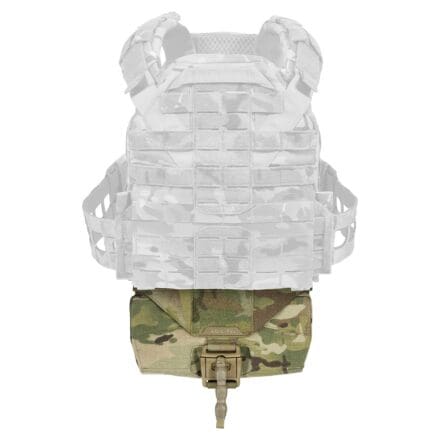
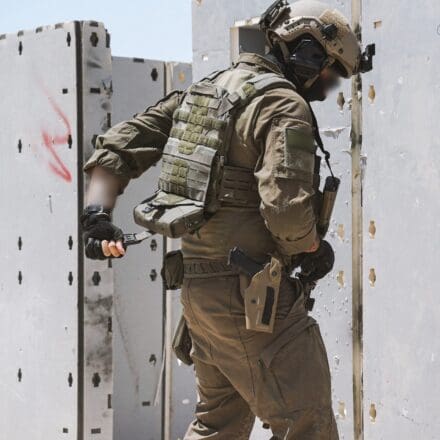
Designed around a customer request to hold the Phokus Research Low Vis trauma kit, our medical pouch is ready to hold your medical supplies out of the way and secure until you need it. Two flaps on either side allow easy access in a rush, and there are no complicated snaps, cables, or buttons, making it easier to repack and close while on the small of your back. The back of the pouch is made from our laser-cut Ghost material and has cuts to allow vertical or horizontal belt carry and two columns of molle-compatible slits for various clips and strips. The medical pouch can also be directly mounted to the Soteria belt cage using the horizontal belt pass-throughs. At a mere 1.6oz it’s simple, multifunctional, and clean.

Features:

-Slim design keeps the pouch close to the body and accessible

-Belt, molle, or direct mount to our Cage system, giving you multiple ways to carry

-Large loop field accommodates modular identification and medical information

Specs:

Dimensions: laid flat 8.25” x 6” x .25“ (21cm x 15cm x 0.6cm)

Weight: 1.6oz (45 Grams)

Volume: approx 61 cubic inches (1 liter)

Material: Ghost, Ghost Lite

For a quote, email sales@matbock.com or check it out here: www.matbock.com/collections/pouches/products/low-vis-trauma-kit-medical-pouch

Call to Action – WW II Veteran Turns 100

Sunday, April 6th, 2025

Via US Army WTF Moments on IG:

*** MAIL CALL (Saugerties, NY) ***

Paul Donlon is turning 100 on May 2nd. Served with 3rd ID in WW2.

He is also the older brother of Roger Donlon, the first Medal of Honor recipient of the Vietnam War. Let’s get some birthday cards to him.

Send to:

Saugerties VFW Post 5034

30 John St.

Saugerties, NY 12477

(In care of Paul Donlon)

Practicum Prepares Students for Division Assignments in Large Scale Combat Operations

Sunday, April 6th, 2025

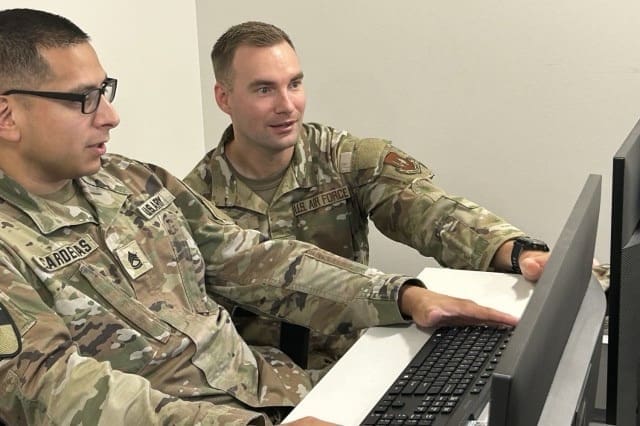
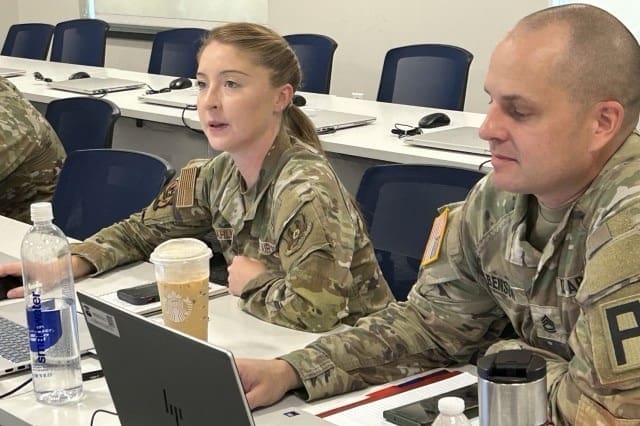
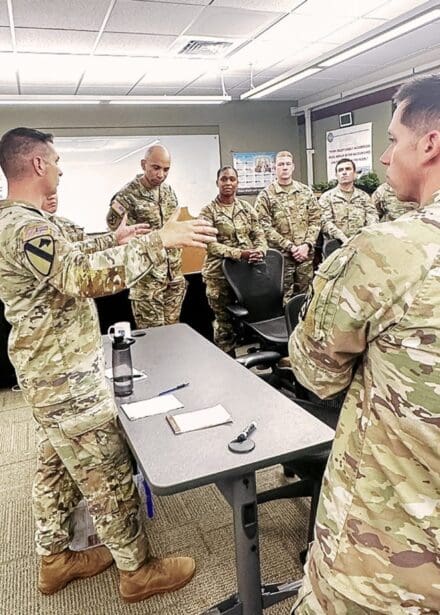
THE ARMY UNIVERSITY, FORT LEAVENWORTH, Kansas – Classrooms at the Command and General Staff College, organized to replicate a real division command post, were a flurry of communications and activity March 26-28, 2025, as students participated in a Division Offensive Operation practicum.

Significant time was devoted to conducting a targeting working group, which was a student led replication of division staff directing combat actions and setting conditions for division offensive operations in a large-scale combat operation.

Additionally, students benefited from on-the-spot mentoring from experienced leaders.

Department of the Army Tactics Instructors, Matt McKinley and Brian Leakey, bring decades of technical and education experience.

Two targeting warrant officers, CW4 Calvin Cameron and CW3 Jerry Burks, enhanced student understanding through candid conversation based on their operational experience with targeting.

Students who complete the practicum are prepared for their future roles as division staff officers responsible for providing recommendations to commanders to lead their organizations in combat.

“In our first field grade roles as junior majors, our job is to integrate operations at echelon within the division,” Cpt. Michael West, CGSOC student stated. “This past year has been an opportunity to learn from the different branches in our small group and understand how to synchronize information, planning, and execution preparation. Over the last three weeks, the opportunity to see this at the division level was good preparation before going into our next job.”

Students had specific roles and were responsible to identify and nominate targets for the division, corps, and joint assets to enable a division offensive operation 24-96 hours out from execution.

Planning and preparing the operation in detail, rehearsals in time and space, and constant communication across cells ensured synchronization of the overall operation across multiple echelons and divergent staff sections.

Maj. Stewart Tice filled the role of a division chief of staff and shared that the TWG allows participants to understand the various roles and functions in warfighting and how those processes integrate across time.

“We learned to conduct current operations while leaning forward to determine what we are doing next, or how we respond if something happens,” Tice said. “It’s thinking beyond where we were in our careers, focused on here and now; and thinking what we need to do today, to enable the brigade’s success tomorrow.”

To culminate the event, students presented an after-action review to leadership.

“Everything we do training wise is meant to replicate real-world experiences we will face when we go back to the force,” Maj. James Corbitt said. “This is a good, immersive exercise to see the way rotations are run, practice processes, and take feedback with the AAR, as it’s the major last part of the military operations process.”

Reviewing and assessing outcomes of actions and decisions as division staff during a large-scale combat operation captures lessons learned and reinforces the learning objectives.

“Before attending CGSS, I completed a broadening assignment with the Mission Command Training Program. I realized our discussions before execution were very similar to what takes place at MCTP, so this is a sign of success,” West stated.

By Jessica Brushwood, The Army University Public Affairs Office

Future of Army Test and Evaluation Shown at Global Force Symposium

Saturday, April 5th, 2025

REDSTONE ARSENAL, Ala. — The U.S. Army Test and Evaluation Command, ATEC, and the U.S. Army Redstone Test Center, RTC, presented at the Association of the United States Army’s Global Force Symposium and Exhibition on March 26, 2025 at the Von Braun Center in Huntsville.

The presentation, titled “Transformation in Aviation and Missile Test and Evaluation,” featured ATEC Commanding General Maj. Gen. Patrick Gaydon, ATEC Command Sgt. Maj. Bradford Smith, RTC Commander Col. Joseph Alexander and RTC Technical Director Kenny Chenoweth. Gaydon began by outlining ATEC’s mission: performs test and evaluation to inform Army senior leaders. While the panel discussed ATEC’s overall role, they also emphasized the evolving role of RTC in supporting next-generation military platforms.

“We are part of the Army enterprise that helps ensure our Soldiers have the capabilities they need to fight and win our nation’s wars,” Gaydon said. “When we send Soldiers to war, the equipment works, is effective and is safe for those Soldiers — and that doesn’t happen by accident.”

Gaydon explained that while ATEC is a direct reporting unit to the vice chief of staff of the Army, ATEC also directly supports Army Futures Command, established in 2018. “If we have to deconflict on the ranges, we look at the priorities that Army Futures Command sets for us,” he said.

Smith then detailed the ATEC enterprise, including RTC and other subordinate organizations.

“We have 8,100 people: 5 percent are uniformed service members, 47 percent are Department of the Army Civilians, and 48% are contractors,” Smith explained. “We recruit, retain, train and take care of those people. We conduct 2,300 tests annually, utilize 5.5 million acres — a third of the Army’s land mass, roughly the size of New Jersey.”

The presentation focused on RTC’s continuing shift to support testing next-generation systems, driven by the need for more advanced capabilities as the military integrates new technologies.

While RTC has long supported testing of legacy platforms, the organization is also pivoting to focus on future needs. This transformation was highlighted by Alexander, who noted RTC’s unique reimbursable business model.

“One of the unique things that makes us different, as a developmental test center under ATEC, is we are reimbursable. We don’t receive appropriated dollars; we have to generate work and create value, similar to our industry counterparts,” Alexander said.

Chenoweth, the senior civilian at RTC, has been a test engineer at RTC for more than two decades and discussed how the business model drives innovation.

“We conduct tests earlier in the acquisition cycle,” Chenoweth said. “By getting involved sooner, we can identify issues earlier, leading to faster fixes and better solutions. For example, with the Future Long-Range Assault Aircraft and [RTC Approach to Persistent Integrated Developmental Testing] systems, we developed tools that digitally trace test requirements to the tests and data verifying those requirements. This process, which used to take weeks, can now be completed in minutes, significantly reducing the time between testing and decision-making.”

RTC is adapting by developing new methodologies, integrating emerging technologies, and expanding its facilities.

The AUSA Global Force Symposium provides a forum for military leaders, industry experts, and academics to discuss military technology. The event is held annually in Huntsville.

RTC, a subordinate command of ATEC, is located on Redstone Arsenal. RTC provides technical expertise, facilities, and capabilities to plan, conduct, analyze, and report tests on missile and aviation systems, sensors, subsystems and components.





By Christy Barnett

Visit Ocean State Innovations & 1947 at the Michigan Defense Expo

Friday, April 4th, 2025

Ocean State Innovations and 1947 are exhibiting at the Michigan Defense Expo next week.

Please visit Booth A2 to learn more about our new products and services.

Exhibition Dates:

April 8-10, 2025

Location:

MaComb Sports & Expo Center

Building “P”

14500 East 12 Mile Road

Warren, Michigan 48088

FirstSpear Friday Focus: Cummerbund Roundup

Friday, April 4th, 2025

FirstSpear’s cummerbund offerings provide enhanced modularity, speed, and protection to support a variety of mission profiles. Each cummerbund is purpose-built to enhance FirstSpear’s plate carriers, providing mission-driven adaptability, protection, and rapid gear access.

RIGID CUMMERBUND

The RIGID CUMMERBUND is designed for rapid donning and doffing using 2” Tubes, ensuring compatibility with all Tube sizes. Built to integrate seamlessly with the Instant Access Back Panel, it enhances load carriage efficiency with an exterior 6/12 attachment field for modular pocket configuration. The interior loop field allows for the attachment of FirstSpear’s Ragnar pockets, providing additional storage options while maintaining a low profile.

ADAPTIVE CUMMERBUND

The ADAPTIVE CUMMERBUND is built for maximum flexibility, allowing users to quickly swap between land and maritime configurations using Tubes technology. With Tubes on the front, this cummerbund requires the TUBES™ RETRO-FIT CUMMERBUND, ATTACHMENT PANEL, enabling users to set their fit once without repeated adjustments. Engineered to support soft armor inserts, it provides mission-adaptive protection without sacrificing speed or efficiency and eliminates the hassle of hook and loop, allowing for near-instant transitions between operational setups.

OVERLAP CUMMERBUND

The OVERLAP CUMMERBUND enhances protection by providing additional soft armor coverage where the Tubes connect, ensuring greater security without compromising mobility. Designed for seamless integration with various FirstSpear carriers it optimizes load carriage efficiency. The interior allows users to keep magazines and gear close to the body, creating a streamlined profile ideal for confined spaces and dynamic operations. This cummerbund supports modular attachments through FirstSpear’s 6/12 technology, further enhancing customization, and was designed to benefit users needing expanded magazine capacity beyond front-loading setups while maintaining full vest functionality.

RETRO-FIT CUMMERBUND

The RETRO-FIT CUMMERBUND brings the advantages of 6/12 and Tubes® technology to carriers that use traditional hook and loop flap systems. Designed for seamless integration, it allows users to upgrade their load carriage platform without needing an entirely new vest. This cummerbund supports soft armor inserts and 6″x6″ hard plates, enhancing protection while maintaining a lightweight and modular design. Included in the kit is the OVERLAP CUMMERBUND and all necessary attachment components, making installation straightforward. With its innovative design, this cummerbund provides a secure, adaptable, and modernized fit for users seeking enhanced functionality in their existing carrier systems.

FirstSpear is the premier source for cutting edge-tactical gear for military, law enforcement and those who train.

For more information visit First-Spear.com.

Five Deployable Combat Wings Selected in Evolution of Force Presentation

Friday, April 4th, 2025

ARLINGTON, Va. (AFNS) —

The U.S. Air Force has identified the first five Regular Air Force candidate locations to build a Deployable Combat Wing Unit Type Code and is scheduling site surveys to begin in the coming weeks. Site surveys will determine the ability of these locations to build a DCW UTC, and findings will be submitted for final location approval.

The first five installations selected as candidates are the 19th Airlift Wing, Little Rock Air Force Base, Arkansas; 23rd Wing, Moody AFB, Georgia; the 366th Fighter Wing, Mountain Home AFB, Idaho; the 4th Fighter Wing, Seymour Johnson AFB, North Carolina; and the 20th Fighter Wing, Shaw AFB, South Carolina.

The change marks an evolution in how the U.S. Air Force deploys its forces from a crowd-sourced model to one in which Airmen from the same installation deploy together as part of a mission-ready Unit of Action built for today’s fight. It acknowledges the need for Airmen to train together and build team cohesion to arrive in theater as a lethal team ready to operate in environments that will likely be more contested than those of the past two decades.

“We are transitioning our Deployment Model to best meet the evolving national security environment,” said Air Force Chief of Staff Gen. David W. Allvin, in a recent memo to Airmen. “At the heart of this transformation is the creation of the Deployable Combat Wing Unit Type Codes – a shift in how we prepare for and execute deployments.”

After final approval in the strategic basing process, selected locations will be responsible for entering into the AFFORGEN cycle through their DCW UTCs beginning in 2025. Part of this process will involve increasing the population of Airmen assigned to each installation in order to ensure wings are able to meet their home station and deployed requirements and are manned to accomplish their respective missions.

The Air Force Personnel Center is postured to conduct permanent changes of station, maximizing volunteer opportunities, to provide the required manpower to these five installations pending final approval in the strategic basing process. Air Force leaders are calling for Airmen to lean into this organizational change and be eager to take on the challenges and rewards of shaping this new way of operating in defense of the nation.

In his memo, Allvin emphasized the need for “highly motivated Airmen,” ready to work together to, “enhance combat readiness,” and “deliver decisive airpower from day one.”

Airmen aligned to the DCW UTC will complete the Air Force Force Generation cycle together. The overall AFFORGEN model improves unit readiness through greater deployment predictability, improves pre-deployment training, and establishes certification requirements that demonstrate unit preparedness for specific missions.

DCW UTCs represent the next phase in the evolution of how the U.S. Air Force presents and deploys forces. As the model is phased in it is expected to replace the Expeditionary Air Base and Air Task Force. XABs are expected to sunset in fiscal year 2027 with ATFs anticipated to be phased out in fiscal year 2028. A phased approach with more than one type of unit of action is required to ensure near-continuous crisis response availability and sustained readiness for the force while DCW UTCs are under construction.

There will be follow-on information for Total Force and additional Regular Air Force locations released in coming months as the Air Force completes the strategic basing process for the first five DCW UTC candidates.

By SSgt Cheyenne Lewis-Roberts
Secretary of the Air Force Public Affairs

HCMH II Harness Bison Belt

Thursday, April 3rd, 2025

Designed as a collaboration between Helix Operations, Ferro Concepts, and DOM Systems HCMH II Harness Bison Belt builds on the Ferro Concepts Bison Belt, designed to be ultra-light and slim without sacrificing functionality.

For added comfort when wearing lighter clothing or carrying a heavy load, the DOM Padded Belt offers the perfect solution—enhancing comfort with minimal extra weight.

This bespoke system that allows operators to mount their gear without compromise, all while integrating seamlessly with the HCMH II harness system.

A comprehensive solution, delivering unmatched versatility and reliability for operators in the field.

helixoperations.com