BOSS-Xe from Wilcox Industries

Archive for the ‘Guest Post’ Category

Army Brigades Embrace Change, Test New Tactics

Thursday, November 7th, 2024

WASHINGTON — In eastern Europe, Soldiers with the 3rd Brigade Combat Team, 10th Mountain Division work alongside North Atlantic Treaty Organization allies as they transform into one of the Army’s newest formations — a light brigade combat team.

The change is part of the Army’s Transforming in Contact effort, where brigades are adapting their formations and getting new technology into the hands of Soldiers so they can experiment, innovate and be ready to fight on the modern battlefield. Soldiers can then provide real-world feedback allowing the Army to make necessary adjustments.

“Everything we do [with transforming in contact] is grounded in one simple principle and that is increased lethality for our formations,” said Maj. Gen. Joseph Ryan, Department of the Army assistant deputy chief of staff, G-3/5/7. “There is nothing that will survive contact better than more lethal, more agile, more strategically and tactically mobile formations.”
As part of the switch, the 3rd Brigade Combat Team, also known as Patriots, has focused on experimenting with organizational structure.

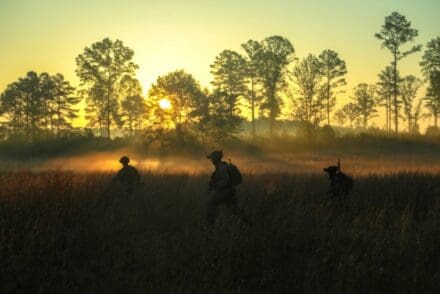
The brigade decentralized its sustainment support battalion to make it less vulnerable to detection and enemy fire. They also created three strike companies with ground reconnaissance scouts, short and medium-range drones, unmanned aerial weapons, mortars, counter-unmanned aerial systems and electronic warfare teams.
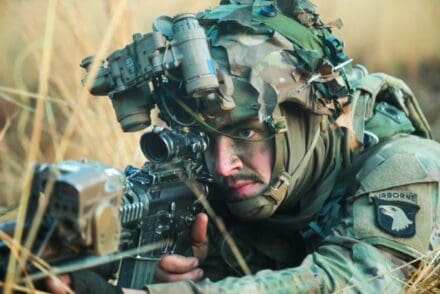
All three companies are training in Europe, and the brigade is gathering new equipment for them to test when they go on a Joint Multinational Readiness Center rotation to Bavaria in January.

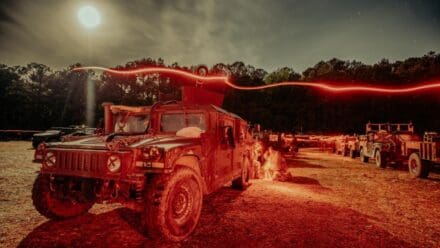
That wasn’t the only change. The Patriots are using a fleet of Infantry Support Vehicles to help Soldiers navigate complex terrain. The nine-seat utility vehicle helps the brigade as they transform into a light formation.

“That’s going to provide some really enhanced mobility for us, allow us to reposition troops, and equipment on the battlefield very rapidly in ways that light infantry formations haven’t been able to do over the ground up to this point,” said Col. Joshua G. Glonek, 3rd Brigade Combat Team commander.
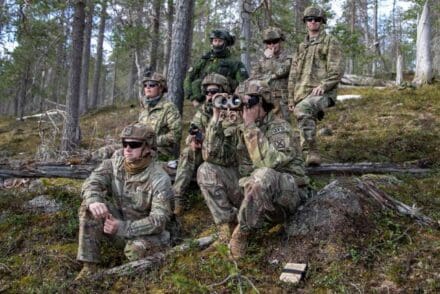
The Patriots are one of three brigades taking part in phase one of the transformation initiative that started in spring 2024. The 2nd Brigade Combat Team, 101st Airborne Division (Air Assault), also known as Screaming Eagles, is another.

The Screaming Eagles completed two rotations this year at the Joint Readiness Training Center in Fort Polk, Louisiana, as well as a 21-day field training exercise called Operation Lethal Eagle.

Throughout the year, the Screaming Eagles experimented with their structure as they became the Army’s first mobile brigade combat team, capable of increased agility to accommodate the service’s shift to large-scale operations.

That mobility comes from using approximately 200 Infantry Squad Vehicles to carry Soldiers and equipment.
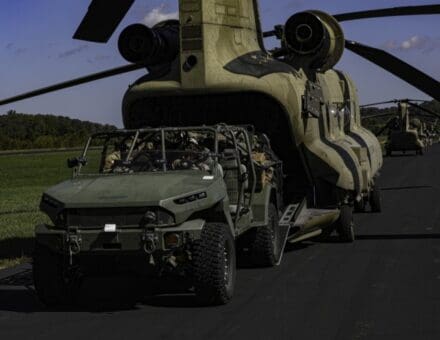
The 101st also added a multifunctional reconnaissance company for target acquisition, counter reconnaissance, and security and set up an anti-tank platoon as well as a robotics platoon for human-machine integration. These changes were incorporated into the brigade’s three infantry battalions.

Transforming in Contact not only applies to organizational structure but also experimentation with new technology.

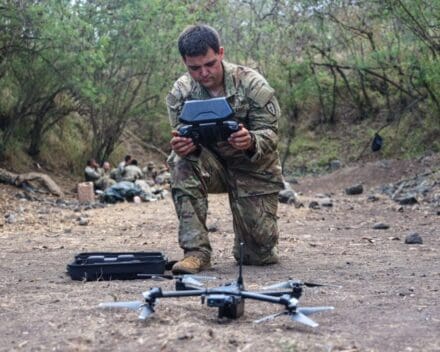
During their rotations at the training center, the Screaming Eagles used drones and electromagnetic decoys to draw enemy fire. They also experimented with multiple networked communication technologies during their field training exercise.
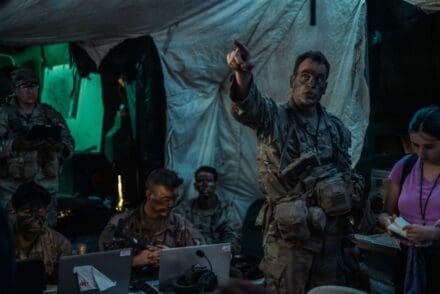
The Screaming Eagles passed what they learned onto the Patriots as they tested the improved command and control capabilities while on deployment.

Glonek said this is allowing the brigades to dynamically change the way they communicate and deal with enemy interference. It’s also allowing them to use command posts that are less detectable and more survivable.

He added the Patriots are in the process of adding unmanned aerial systems to every level of the brigade as they head into their upcoming combat training center rotation.

The 2nd Light Brigade Combat Team, 25th Infantry Division, the other brigade in phase one of the initiative, took part in the Joint Pacific Multinational Readiness Center rotation earlier this month in Hawaii.

The training tested the brigade and the Army’s ability to operate effectively across multiple domains, including land, air and cyber.
“We are using JPMRC and our warfighter exercise in December to validate our transformation in contact construct with the 2nd Light Brigade Combat Team along with those lessons learned from 101st Airborne and 10th Mountain Division,” said Maj. Gen. Marcus Evans, 25th ID commanding general. “Innovation never stops at our level. We are in a relentless pursuit of excellence and strive to get 1% better every day.”

Army Chief of Staff Gen. Randy George recently announced phase two of the transformation initiative will include two divisions, the 101st and 25th as well as two armored brigade combat teams, two Stryker brigade combat teams, and additional formations from the National Guard and Army Reserve.

This effort is set to occur in fiscal year 2025 and include every Army warfighting function.

By Christopher Hurd, Army News Service
Visit CMP Talladega Marksmanship Park

Wednesday, November 6th, 2024

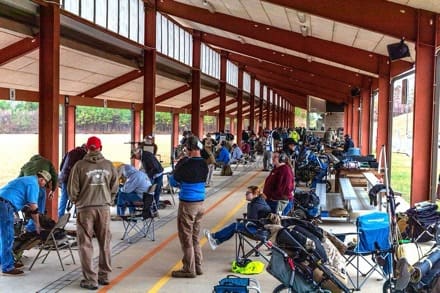
The CMP Talladega Marksmanship Park – “THE HOME OF MARKSMANSHIP” – is where responsible firearm ownership, safety instruction and accuracy training reside inside a beautiful 500-acre facility. Located two miles from the Talladega Superspeedway in Alabama, the CMP Talladega Marksmanship Park has something for all types of firearms and firearm owners. The park prides itself on its friendly, accommodating staff and the convenience of its outdoor electronic target line.

The cutting-edge electronic targets, located on Ranges 1 and 2, relay scores and report shots instantly to competitor and spectator monitors. Range 3 is equipped with turning pistol targets at 25 and 50 yards, while the versatile John C. Garand highpower rifle range offers 54 covered firing points and all-weather, electronically-scored targetry at 200, 300 and 600 yards. 

The park also features a 100-yard rifle range with the same innovative technology, plus an unknown distance range and 15 action pistol bays that are capable of accommodating a variety of competitions, including 3-Gun. 

For Shotgun enthusiasts, Talladega Marksmanship Park houses several structured areas featuring Trap, Skeet, 5-Stand Fields, a Wobble Trap and a 15-station Sporting Clays loop. Each area is maintained by CMP’s own shotgun experts and is furnished with top-of-the-line equipment for guests to enjoy.

The Archery Range at Talladega is located on the shotgun side of the grounds and outfitted with a 30×60-yard practice range and 20 lanes of life-size 3-D targets, specially painted to resemble live animals in their natural habitat. The foam Delta-McKenzie targets (typically used on the competition trail) are designed to fit along pathways tucked between the trees of Talladega’s terrain and may be arranged from 15 to 50 yards. The Archery Range is open to all experience levels, with a minimal age of 6 years to use. 

The crown jewel of the park is a 13,000-square-foot Club House, featuring a check-in and reception area, two multi-media classrooms, spacious lounge areas and a CMP Pro Shop with firearms, accessories and ammunition sales. 

Talladega Marksmanship Park is open daily to the public. Don’t be a stranger, come see us at The Home of Marksmanship!

thecmp.org/ranges/talladega-marksmanship-park

Chinese Way of War vs Military Culture: Topic of Latest CASO Panel

Wednesday, November 6th, 2024

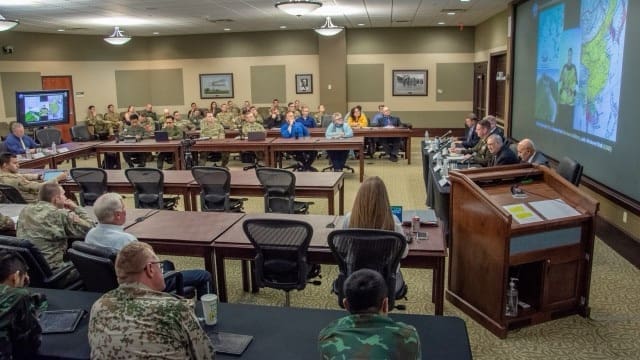
THE ARMY UNIVERSITY, FORT LEAVENWORTH, Kansas – The ongoing Russo-Ukrainian conflict continues to alter the geopolitical situation in Europe and the Indo-Pacific Command region.

The latest Cultural and Area Studies Office panel, recognizing the National Defense Authorization Act’s definition of China as a pacing threat, focused the discussion on the Chinese way of war and the People’s Liberation Army.

Dr. Mahir J. Ibrahimov, CASO Director, set the stage for the session by introducing the topic, and the Brigadier General Mark W Siekman, Deputy Commanding General, U.S. Army Reserve, Combined Arms Center, who provided senior leader opening remarks.

Panelists from various Command and General Staff College and Army University departments, analyzed whether or not a clear Chinese way of war is present within the PLA’s current state of their air, ground force, maritime and even historical background as a pacing threat, or if it is more of a cultural adaptation.

“If you’ve heard GEN Flynn, the current USARPAC commander, he would argue, China is the most consequential threat, in the more consequential theater, and in the most consequential time,” Siekman said.

Chinese recovery from Century of Humiliation 

More than a dozen unsuccessful conflicts, spanning more than 100 years, to include the Century of Humiliation, as discussed by Dr. Geoff Babb, Department of Military History, CGSC, can be described as a prologue to the PLA today.

“The Century of Humiliation does not belong to Chinese Communist Party but rather the people of China and is highlighted by the Chinese Communist Party and Xi Jinping,” he said.

Pre-People’s Republic of China, Babb discussed, faced humiliating defeats to Britain, France, and the United States, the later creating the foundational distrust between the U.S. and China that stands today.

The PRC is primarily focused on protecting borders and sovereignty which drives the military and economic decisions of leaderships like Xi Jinping’s, who faced turning a country’s dismal combat track record around.

The introduction of Communist China to the military environment created, what could be argued, a way of war vice a military culture to rejuvenate the nation.

“The Chinese are, in my opinion, strategically defensive and operationally offensive,” Babb said. “When that might change or is that changing is unclear, but they’re certainly building the military forces to be able to do that.”

The PRC’s influence of the PLA is not something to be overlooked, Babb pointed out, highlighting the New Golden Age with the implementation of the Belt and Road Initiative and Treasure Fleet, which combines merchant and military ideals, and the Restored Wall with A2AD.

Each of the three could suggest the PRC’s values and shared understandings, or culture, have created a bridge to the PLA’s way of war.

Three P’s and Two Hows to Understanding PLA’s Ground Force Modernization

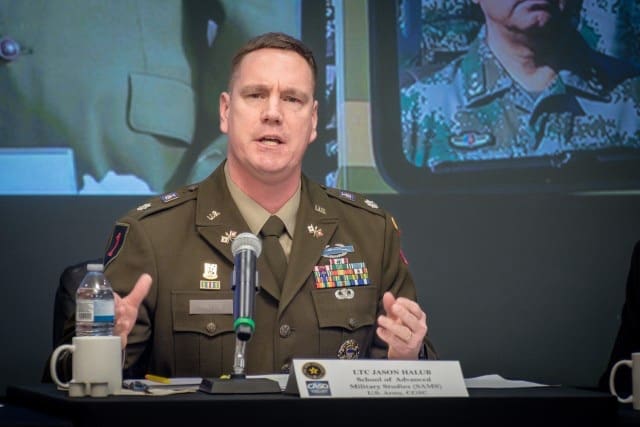
Proximity to politics, professionalization, and principles plus how the PLA is seeing itself in modernization and how we make sense of what PLA is trying to do was the framework for understanding the PLA’s modernization efforts presented by Lt. Col. Jason Haub, Advanced Strategic Leadership Studies Program, School of Advanced Military Studies.

The PLA, having seen nearly a dozen major reforms, was brought to its current theater command structure, thanks to Jinping spurring another massive reform in 2016.

Decisions like this for the PLA are dual tracked through the PRC and PLA, Haulb explained, making it difficult for the PLA ground forces’ modernization to remain a headline priority.

The most recent restructuring jeopardized the PLA ground force’s status within the larger PLA, suggesting a military culture shift, that could create barriers to the PLA’s attempted professionalization.

Further, these PRC driven military adjustments continue to cloud the clarity of what the Chinese way of war is.

“PLA ground forces are not the top priority in terms of modernization effort, and probably have some of the largest hurdles as they grapple with what is this new joint structure, joint theater command structure and how the PLA will fight,” Haub said.

Haub described PLA as a problem solving, learning organization, with a ground force that has a breadth of catching up to do to remain a near threat to the U.S.

“I think it is important to have the framework of a Chinese way of war but to also understand, when we put that aside, how we assess things for what they are and not simply limit ourselves to view things only through an overly sensitive cultural lens,” he said.

Air and space Chinese way of war 

China continues struggling with engine manufacturing and modernization, creating disproportionate aircraft improvements, that hold them back from competing equally with the U.S. air modernization effort.

This, however, is not enough to continue the narrative of the exponential U.S. – Chinese air/space gap.

“The capability gap is rapidly shrinking in both the air and space domains. It’s more concerning now in the air domain. Given a bit more time, it is quite plausible that the PLAAF will outstrip the U.S. Air Force in terms of numbers,” Dr. John Modinger, Associate Professor, SAMS, and retired Air Force said.

When it comes to above the ground combat, the Chinese have adopted, what Modinger described, as a “copying and pirating” approach to remaining a competitive threat.

Most air and space craft in the Chinese war portfolio are near identical mimics of American versions.

While not completely aligning with the definition of a Chinese way of war, Modinger offered that the number of crafts and satellites in the U.S. technology constellation is what separates the two nations.

“We see increasing evidence of the Chinese mirroring the United States,” he said. “Not going with their own way of war, but in fact paralleling our developments, if not stealing our technology.”

China goes so far with this technique as to recruit the pilots manning the top-of-the-line U.S. air and space crafts, Modinger explained.

Add to the air and space pot a 550% increase in the number of Chinese launched satellites, the gap above the clouds continues to shrink.

Space and air are competition lanes the U.S. continues to lead not just China, but the world, in terms of technology and use. However,  Modinger pointed out that the closing gaps should be noted.

“China will continue to increasingly drop from ‘near’ peer competitor to pacing threat or peer threat,” he said.

Chinese Maritime Triple Threat 

The Chinese PLA Ground Force is seemingly shackled from rapid modernization due to the cumbersome collaboration with the PRC, and the PLAFF must resort to looking off the U.S.’s paper to remain competitive in the sky.

On the sea, the Chinese way of war is harder to define due to a simple lack of actual combat tested instances.

Dr. John Kuehn, DMH, CGSC, began his discussion suggesting the Chinese fight at sea is primarily defensive.

“It is built on a doctrine of local area dominance, which is extensive anti-access, area denial systems,” he said.

In the way of war vice military culture lens, Kuehn suggested, overall, the Chinese lean culturally, strategically defensive, and operationally offensive.

The Chinese Navy is the most individualized, meaning not mimicking the U.S. counterpart, of those within the PLA in terms of size and regional location.

The Chinese Navy tonnage exceeds that of the U.S.’s but with a majority being surface ships.

The size and variety of maritime presence is largely a question mark of capability, Kuehn said, due to the Chinese naval history being river based.

Outside the riverbanks, the PLA Navy’s contemporary mission is the defense of the first island chain from Hokkaido in the north down to Singapore.

This fits the Chinese approach to security, to strategy, to warfare, which is using the weaker to undermine the stronger,” Kuehn said. “Use of mines. Use of coastal warfare. Use of non-belligerent tactics. Use deception. For the Chinese this looks like anti-cruise ship missiles, anti-ship ballistic missiles. Missile batteries ashore.”

Additional supplements to the Navy are the Chinese’s enormous Coast Guard and “bully” of maritime security, militia.

“The Coast Guard has some of the biggest cutters in the world,” Kuehn said. “They have at least 50 cutters that are big enough to be used as a second Navy.”

This trio of maritime protection using (illegally) water cannons, shouldering, intel collection and missile use makes the PLA Navy an aspect of Chinese combat power worth understanding.

“This is an area, where on continuum of conflict the Chinese has choices and they are already executing them with their very high handed and sort of bullying approach to maritime security especially in the South China Sea,” Kuehn said.

Whether the four areas of PLA modernization are seen as a clear definition of a Chinese way of war or a rather a semi-contemporary adopted military culture, the challenge Chinese military forces present to U.S. national security is one of importance and need of attention.

This panel is part of a seminar series discussing issues of operational and strategic importance to the U.S., which CASO in coordination with CGSC, universities, think tanks, interagency and other partners conduct every two to three months, which is also live streamed on CGSC’s Facebook page.

The full panel discussion can be viewed on the CGSC Facebook here: www.facebook.com/USACGSC/videos/2468414380022454/.

All past CASO panels are available for viewing on the CGSC YouTube page here: Cultural and Area Studies Office (CASO) – YouTube

By Sarah Hauck, The Army University Public Affairs Office

Team O’Neil’s Tactical Driving Tuesday – Night Driving with White Light

Tuesday, November 5th, 2024

Team O’Neil is a preeminent training facility for rally deiving and has bene ised for decades by Special Operations Forces for mobility training. In this week’s installment of their driving tip series, Instructor Wyatt goes over driving at night with white lights.

You can receive such training in person, by attending the Team O’Neill Tactical Driving Course at their facility in the White Mountains of New Hampshire. This five-day course includes driving under NODS and is available to military and other government agencies as well as civilians.

Tactical Tuesday: Advanced Layering with Vertx

Tuesday, November 5th, 2024

Stay ahead of the cold with Vertx’s cutting-edge fabric technology! The Merino Wool Base Layer from Vertx doesn’t just regulate temperature; it harnesses natural anti-microbial powers to keep odors at bay. Pair it with the Crucible Mid Layer, featuring PrimaLoft® Gold insulation, for lightweight warmth that breathes easy. Thanks to active vent technology, comfort is guaranteed—even during high-intensity pursuits. Whether you’re layering up for work or adventure, you’re shielded from the inside out.

Gear up with this unbeatable duo—explore the collection now at Vertx.

LAST CHANCE! Grab your 25% off sitewide at vertx.com with code BOO25 before their HALLOWEEN SALE ends at midnight!

Army Advances Human-Machine Integration Tests to Enhance, Fight with Combat Units

Tuesday, November 5th, 2024

WASHINGTON — Robots integrated into Army formations can help protect Soldiers and revolutionize warfare in multiple domains.

Human-machine integration forces can take on dangerous battlefield operations, including overwatch, or movement of troops to a point of tactical advantage, and the suppression of the enemy, said Brig. Gen. Chad Chalfont, commandant of the Army Armor School at Fort Moore, Georgia.

Those capabilities could help achieve the Secretary of the Army’s goal of “no blood for first contact,” where human machine integrated formations make platoons and companies better at maneuvering, communicating and surviving on a transparent battlefield. HMIF could shoulder risk normally assumed by Soldiers.

Army Futures Command, headquartered in Austin, Texas, is scheduled to host the Human-Machine Integration Summit IV at Texas A&M University, College Station, Texas, on Nov. 6-7, 2024, to inform academic, industry and government partners on HMI development and explore cost-cutting solutions.

The Army has been working with prototypes and performing exercises with the new technology including robotic combat vehicles, or RCVs. On July 24, the Comanche Troop of 1st Squadron, 7th Cavalry Division, completed training exercises with the RCVs as part of Army Futures Command’s RCV Pilot-24 exercise.

During the July exercises, Soldiers performed reconnaissance and security missions with the platoon using two control vehicles to navigate four robots, Chalfont said.

Chalfont said they learned they needed a third control vehicle for that platoon to operate effectively and to operate across different nets. They also learned techniques to better communicate within their platoon while also reporting up and out to their company commander.

The 1-7 Cavalry Troop, based out of Fort Cavazos, Texas, performed the exercise during a National Training Center rotation in September, but restructured the unit to use three control vehicles to control four RCVs.

The robotic combat vehicles were designed to act as scouts and combat escorts with a Soldier controlling the vehicle remotely. Those vehicles can also serve as decoys to protect Soldiers from enemy fire and assist the execution of multi-domain strikes. The Army originally had three RCV models in development but has since decided to focus on a single, lightweight variant.

Brig. Gen. Phillip Kiniery, Infantry School commandant at the Maneuver Center of Excellence at Fort Moore, said he wants to be able to take that infantry squad and maximize the cognitive and physical capabilities of that squad by putting the burden on the robot. He wants to increase the depth and duration by which an infantry squad can maintain contact with the enemy so that infantry squad leader can bring everything they have to bear as a system and overwhelm the enemy.

Col. Kevin Bradley, director of the Next Generation Vehicle Cross Functional Team at Detroit Arsenal in Warren, Michigan, said the Army has reached a pivotal time in its history where robotic technology could give U.S. forces a competitive advantage in maneuverability, like the period between World War I and World War II.

Bradley said just as the airplane, radio and tank were critical to unlocking maneuver in World War II, human-machine integration forces — the combination of robots, autonomy and their ability to reduce or offset risk — is the key to unlocking expanded maneuver in a transparent battlefield.

Chalfont cited the ongoing conflict in Ukraine as an example of the evolution of warfare, where Ukrainian forces have developed capabilities to fight against the Russian army. He said a cycle of adaptation is occurring in that conflict. The next question is what will forces do with that information and where does the adaptation occur?

Bradley said the Army will need to test to see if RCVs and other robotics platforms can keep pace or fight with a brigade combat team or an infantry brigade combat team.

Col. Scott Shaw, director of Maneuver Capabilities Development Directorate at Fort Moore, said the service absolutely wants Soldiers controlling multiple robots in the air and on the ground using the same device.

Shaw said the Army in some cases has a “two Soldiers to one robot” ratio and is very much working toward one Soldier controlling many robotic platforms.

He said that robots used in combat must have true maneuverability, be able to traverse different environments and be able to withstand some damage from enemy fires.

Col. Ken Bernier, project manager for future battle platforms at Detroit Arsenal said the Army will continue experiments integrating HMIF into its formations, eventually conducting a full operational test. Bradley said that after building the base platforms of the RCVs, the focus will shift toward technology and common control, including a focus on software.

By Joe Lacdan, Army News Service

Navy’s BIG IDEAS Challenge for the IW Community

Monday, November 4th, 2024

Do you have a big idea that can help our Navy solve a problem?

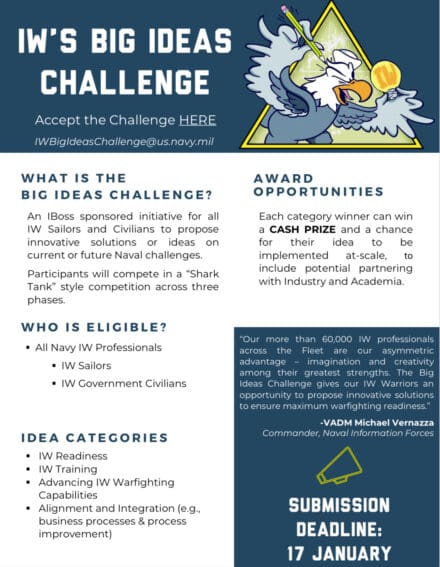
The Navy’s IBoss Vice Adm. Mike Vernazza is launching the Big Ideas Challenge, a “Shark Tank” style competition for IW Sailors and government civilians to propose innovative solutions to current and future Naval challenges. 

Naval Information Forces (NAVIFOR) is the Navy’s Information Warfare (IW) Type Command (TYCOM) responsible for manning, training, equipping, and certifying combat-ready IW forces to fight and win our Nation’s wars.  The IW domain extends from seabed to space; is critical to our Navy’s success in competition, crisis and conflict; and underpins all Naval warfighting capabilities!

Our 60,000+ IW professionals are our asymmetric advantage – IW warriors “think, act, and operate differently.”  This Challenge is an opportunity to unlock new ideas and bring fresh perspectives to meet current and future challenges through optimization, modernization and transformation.

Program Overview:

The Big Ideas Challenge creates a direct line to the IBoss for any IW Sailor or government civilian to propose and / or demonstrate their solution, big or small, for the IW enterprise.  Selected winners will have a chance to implement their idea at-scale and a potential partnership with private industry and academia.

There are four submission categories:

IW Readiness

IW Training

Advancing IW Warfighting Capabilities

IW Alignment and Integration (includes business processes and process improvements)

Submission deadline is 17 January 2025.

Following the deadline, a group of Phase I judges will select the top 10 percent to move forward into Phase II.

Phase II judges will select the top 2 candidates per category (8 total) to move onto the final stage: Pitch Day.

IBoss will judge the finalists during Pitch Day and award one winner per category.  Winners will be awarded a cash prize and honorary recognition.

Participants can access the Big Ideas Challenge submission portal here

If you have additional questions or concerns, please contact our team at IWBigIdeasChallenge@us.navy.mil

JROTC Cadets from Across the Country Take on the National Raider Challenge

Saturday, November 2nd, 2024

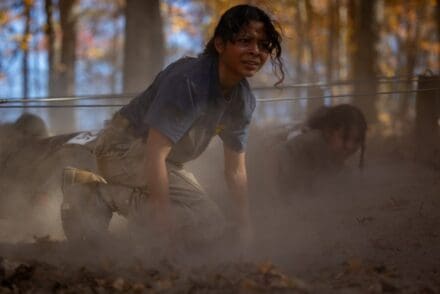
FORT KNOX, Ky. — As the early morning sun broke the dawn, hundreds of JROTC cadets moved to their start positions. Radio crackles could be heard across the starting lines, signaling the competition was about to begin. Nervous faces turned serious. On the command ‘Go!’ cadets broke into a sprint, striving to bring home the gold.

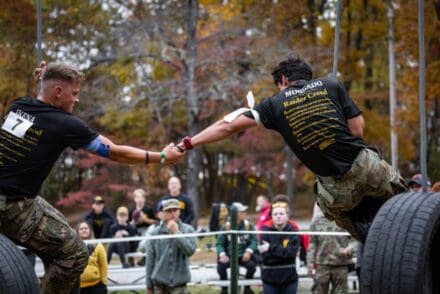
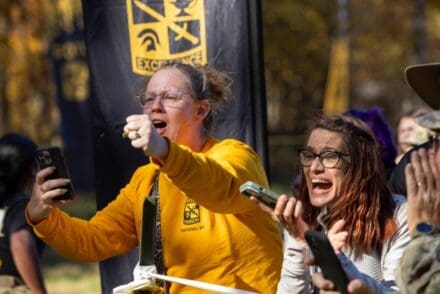
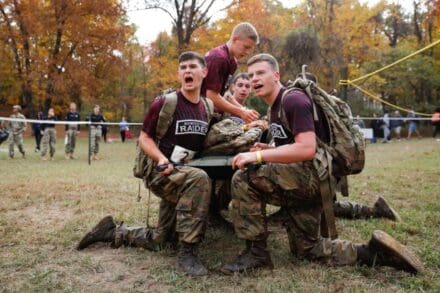
The JROTC National Raider Challenge, hosted by U.S. Army Cadet Command, brought more than 5,000 cadets from across the country to Fort Knox Oct. 24-27, 2024, to test their grit and attempt to bring home the title of National Raider Champion.

“This is an opportunity to see America at its finest, and these young people came to battle it out and they want to win,” said Sgt. Maj of the Army Michael R. Wiemer, the Army’s senior enlisted advisor.

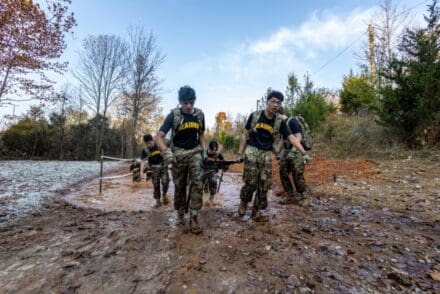
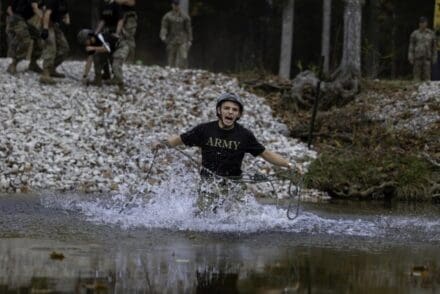
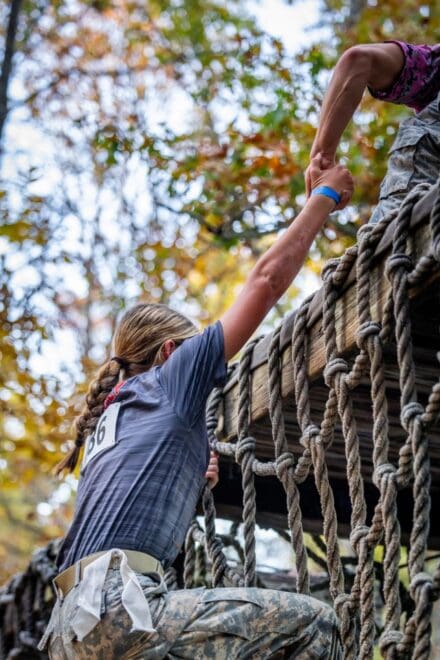
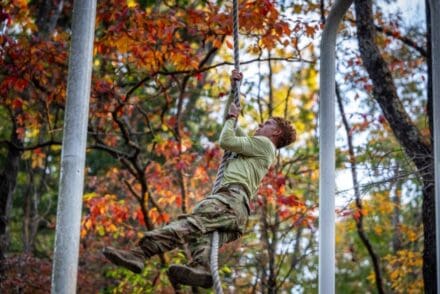
While this was an event for high school students, it was not for the faint of heart. The competition featured grueling obstacle courses, a 5K run and the infamous one rope bridge among other challenging tasks. Despite how overwhelming this competition may seem to some, JROTC cadets who have been training for months happily accepted the challenge.

“My team has been training since summer started,” said Cadet Stephanie Quintero-Hernandez from Palmetto High School, Florida. “We knew that we were coming to nationals, and we wanted to win. We’ve been working extra, even during the hurricanes. Nothing stopped us.”

The competition is divided into three divisions – Challenge, Masters and All-Service. The Challenge division competed on Friday and is comparable to junior varsity in other high school sports, with teams being made up of younger or less experienced cadets. The Masters division competed on Saturday and is the equivalent of varsity with teams comprised of primarily upper classmen who typically have years of raider experience. Competing alongside the Master divisions were JROTC programs from the Air Force, Navy and Marine Corps who were slated in the All-Service Division.

Once the Masters and All-Service divisions concluded, the top finishing teams nominated two cadets to represent their school in the Ultimate Raider challenge — a three-mile course broken up into an 800-meter sprint, a 14-station obstacle course, a 25-meter swim and a 2-mile run. The results from the Ultimate Raider Challenge are then combined with their overall scores from Saturday’s events to create the final standings for the competition.

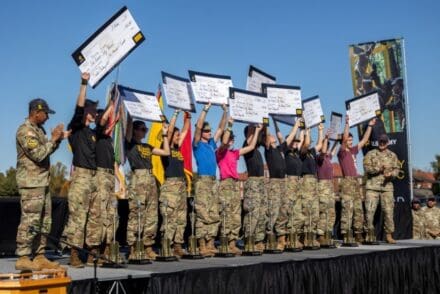
During the final awards ceremony, the top 12 finishers of the Ultimate Raider Challenge were presented a 4-year Army ROTC scholarship. These scholarships will allow the cadets to continue their education at their school of choice with an Army ROTC program, provided that they meet the minimum requirements and choose to serve as an officer in the Army.

“It’s events like this that show the true colors of these cadets and prove that they are ready to be the next generation of leaders for this country,” said Brig. Gen. Maurice Barnett, commanding general of U.S. Army Cadet Command. “We saw some true grit and determination from all of the competitors as they faced a pretty tough course — and they should be incredibly proud of themselves and their teams.”

In addition to the competition, cadets experienced a festival like atmosphere throughout the weekend. From performances by the Army’s ‘As You Were’ rock band to demonstrations from premier military units, there was plenty to entertain cadets and families. This event also gave cadets the opportunity to talk to multiple universities, helping them decide their paths after high school.

Competition Results

Masters Division

Male

1st Place — Leavenworth High School

2nd Place — Adairsville High School

3rd Place — Etowah High School

Female

1st Place — Leavenworth High School

2nd Place — Ozark High School

3rd Place — Warren County High School

Mixed

1st Place — Clarkrange High School

2nd Place — Georgia Military College Prep School

3rd Place — Smith-Cotton High School

All-Service Division

Males

1st Place — Hendersonville High School


2nd Place — Camdenton High School

3rd Place — Campbell County High School

Females

1st Place — Live Oaks High School

2nd Place — Logan County High School

3rd Place — Smith-Cotton High School

Mixed

1st Place — Walker High School

2nd Place — Concordia Lutheran High School

3rd Place — Rhea County High School

Challenge Division

Male

1st Place — George Rogers Clark High School

2nd Place — Manatee High School

3rd Place — Bluffton High School

Female

1st Place — Palmetto High School

2nd Place — Manatee High School

3rd Place — Claudia Taylor Johnson High School

Mixed

1st Place — Newsome High School

2nd Place — Northeast High School

3rd Place — Kenwood High School

By Ian Ives