Phantom Lights

Archive for the ‘Guest Post’ Category

MIL-STD-1553B: The Backbone of Modern Defense Tech

Friday, April 11th, 2025

For nearly half a century, MIL-STD-1553B has been the backbone of military and aerospace data communication, remaining indispensable thanks to its unmatched robustness, deterministic performance, and fail-safe architecture. As defense and aerospace systems evolve, this standard’s adaptability and reliability keep it at the forefront of the industry, proving that innovation isn’t always about replacing the old but enhancing time-tested foundations. Here, Jamal Hagi, RF engineer at connector specialist PEI-Genesis, explains how this standard is essential for innovative defense technology.

MIL-STD-1553B is a time-division multiplexing (TDM) data bus standard, first adopted by the U.S. Department of Defense in the early 1970s and initially used on the F-16 Fighting Falcon fighter jet. It soon became a de facto standard across military aircraft, ground vehicles, and maritime vessels and has since been adopted by all branches of the U.S. military, NATO, and NASA. Increasingly, it’s also finding applications in commercial aerospace and industrial environments.

A legacy of reliability

Operating at 1 Mbps, the 1553B bus employs a dual-redundant architecture, ensuring data integrity and continuity even in the event of a failure. Its low-frequency transmission, below 500 MHz, and two signal paths—a primary and a backup—provide a critical layer of reliability. The standard supports up to 31 remote terminals, including flight control systems, mission computers, and weapons systems, enabling synchronized and secure data exchange.

One of the key technical advantages of MIL-STD-1553B is its deterministic communication protocol. Unlike Ethernet-based systems, where packet delivery times can vary, the 1553B standard guarantees message delivery within a defined time frame. This predictability is essential in applications where timing precision and low-latency response directly impact mission success.

Moreover, the system topology includes not only the remote terminals (RTs) but also a Bus Controller (BC), which manages communication over the bus, and a Bus Monitor (BM), which observes data traffic without interfering. These components ensure seamless operation and data integrity across the system.

The System Controller (SC) oversees the entire system, ensuring proper coordination, while the System Monitor (SM) handles performance monitoring and diagnostics. This bus architecture is typically arranged in a daisy-chain configuration, with each terminal connected through the bus, facilitating efficient communication and data flow. The fail-safe redundancy architecture minimizes the risk of single points of failure, a critical factor in high-stakes environments.

Modern innovations

Despite its longevity, MIL-STD-1553B has not remained static. Modern implementations incorporate enhanced physical layer components, such as advanced transformer-coupled connectors and transceivers that offer increased signal integrity and reduced electromagnetic interference (EMI).

Twinax and triax connectors, like those offered by Cinch under the Trompeter brand, provide exceptional EMI protection and noise rejection through up to 90% shielding coverage and twisted-pair configurations. Similarly, Cinch offers a wide range of MIL-STD-1553 connectivity solutions, adapters, RFI caps, and terminators, as well as box bus couplers with 1–8 stubs and various fixed-length cable assemblies. These components are designed to meet stringent protocol requirements, ensuring low attenuation, precise impedance, and superior noise rejection—all critical for reliable data transmission in harsh environments.

In addition to connectors, MIL-STD-1553B cable assemblies are constructed with multiple layers of electrical shielding and environmental protection to withstand extreme temperatures, moisture, and mechanical shock. This combination of rugged design and advanced materials ensures consistent performance in mission-critical applications.

Furthermore, hybrid architectures that combine MIL-STD-1553B with higher-speed data protocols are becoming more common. These hybrid systems leverage 1553B’s reliability for critical command and control functions while offloading high-bandwidth data to faster channels. This approach preserves the robustness of the standard while addressing the growing need for data-intensive operations in modern defense systems.

Real-world applications

MIL-STD-1553B’s continued use across various platforms speaks to its versatility and dependability. In aviation, it forms the backbone of data exchange between flight control systems, navigation equipment, and weapon systems. Military ground vehicles rely on its robust architecture for onboard diagnostics and command functions. Even space exploration missions have adopted 1553B due to its proven resilience in extreme environments.

For example, missile systems use MIL-STD-1553 data buses to download targeting information from aircraft just before launch and coordinate information flow during flight. The International Space Station and lunar payload programs also leverage 1553B for common data links between space applications.

As the defense sector increasingly integrates AI-driven autonomous systems and advanced sensor networks, the deterministic nature of 1553B becomes even more valuable. Ensuring that decision-making algorithms receive precise, timely data from multiple subsystems is crucial for operational efficiency and safety.

The standard’s guaranteed message delivery within strict timeframes helps prevent data bottlenecks and ensures synchronized operation across complex systems. In AI-driven defense applications like unmanned aerial vehicles (UAVs) and autonomous ground systems, this reliability is vital for real-time decision-making and mission execution. MIL-STD-1553B’s ability to support multiple remote terminals ensures seamless communication between flight control, mission computers, and sensor arrays, creating a cohesive, integrated system ready for any operational challenge.

The future of MIL-STD-1553B

While newer data bus standards offer higher data rates and more advanced features, MIL-STD-1553B’s legacy of reliability and predictability ensures its ongoing relevance. Modernized implementations, such as advanced bus controllers and enhanced remote terminals, further extend the standard’s capabilities, allowing it to integrate with evolving digital infrastructure. These innovations not only maintain the standard’s robustness but also open opportunities for enhanced functionality in next-generation defense systems.

As a trusted partner, PEI-Genesis continues to support this evolution, providing state-of-the-art components that enhance the performance and longevity of MIL-STD-1553B systems. Our commitment to quality and customization ensures that a 50-year-old standard remains poised to support the next generation of aerospace and defense technology.

In an industry where failure is not an option, the enduring strength of MIL-STD-1553B—and the innovations keeping it relevant—serve as a powerful reminder that sometimes, the best way forward is to build on the foundations that have already proven their worth.

To learn more about the wide range of MIL-STD-1553 connectivity solutions offered by PEI-Genesis, visit www.peigenesis.com.

FirstSpear Friday Focus: Multi-Purpose Pack

Friday, April 11th, 2025

The FIRSTSPEAR MULTI-PURPOSE PACK is a highly versatile and durable pack originally developed as a medical bag for a U.S. Special Operations Forces element. It has since proven adaptable for a variety of uses such as a range bag, escape and evasion (E&E) pack, or a compact day-pack.

One of its standout features is the inclusion of five external pockets, offering ample organization and quick access to essential gear. A large hydration compartment ensures users remain mission-ready and hydrated during intense activity. The low-profile padded shoulder straps provide comfort during extended wear without adding bulk.

This pack’s design emphasizes discretion and utility, making it an exceptional choice for those needing low-visibility gear. Exterior compression straps help to stabilize the load and reduce the overall footprint of the bag, which is ideal for tactical or high-mobility scenarios.

The MULTI-PURPOSE PACK is especially valued for its ability to seamlessly transition between roles, catering to users who need flexibility in their gear. For those seeking a compact, low-profile pack with elite origins, the FIRSTSPEAR MULTI-PURPOSE PACK is a standout option.

FirstSpear is the premier source for cutting edge-tactical gear for military, law enforcement and those who train.

For more information visit First-Spear.com.

USSOCOM: Changing Operational Demands Require Acquisition Changes

Friday, April 11th, 2025

Worldwide threats put the U.S. at risk and sometimes demand attention from U.S. Special Operations Command. To best meet those challenges, U.S. military acquisition needs to change, said Army Gen. Bryan P. Fenton, Socom commander.

“The character of war is changing faster than we’ve ever seen,” he said today before the House Armed Services Committee’s intelligence and special operations subcommittee.

“The innovation cycle now turns in days and weeks, not months and years. Our adversaries use $10,000 one-way drones that we shoot down with $2 million missiles — that cost-benefit curve is upside down,” he said.

Fenton noted that this is the most complex asymmetric and hybrid threat security environment he has seen during his 38 years of service. Contending with these challenges demands more from special operations forces.

“[It] requires tough choices, forcing trade-offs, as we strive to balance an increase in operations readiness and the need for modernization,” he said.

Fenton explained that over the past two years, for example, demand for SOCOM capabilities by combatant commands has increased by more than 35%, while at the same time, SOCOM has dealt with years of flat budgets.

To meet the demands of increased mission requirements and increasingly complex missions, he said SOCOM needs to improve its acquisition process.

“Our current acquisition procurement system … I would just offer, it’s outdated,” he said. “It’s glacial. I think it works in years and decades.”

He added that the lessons learned from the conflict in Ukraine made it clear how the U.S. military acquisition process can be changed for the better.

“What we’re seeing through the lens of Ukraine needs to be an acquisition … and procurement system that is hyper-speed, supersonic,” he said. “Because over there, we’re watching the changes in minutes, hours and days, and that is a very stark contrast” to what the U.S. does.

Fenton said changes to the requirements process, including simplifying it, as well as changes to authorities, could help SOCOM quickly get what it needs.

“If I could say it so bluntly, take more people out of that system, get less hands on the requirements process,” he told lawmakers. “Go from operator to commander and then acquisition.”

Fenton also suggested how changes in funding could benefit acquisition within Socom.

Funding for systems comes in the form of operations and maintenance funds; research, development, testing and engineering funds; and procurement funds. The Defense Department can’t easily move money between those budget lines, and that could be simplified, he said.

“I think there’s a way to take a lot of that off, compress the multiple lines to just a couple, and really modernize there,” Fenton said.

The general also asked for greater flexibility in how the department contracts new systems, particularly the option to increase the length of multiyear procurements.

“Give us an opportunity to think through multiyear processes,” he said. “Two years might seem multiyear, I think, to all of us. Multiyear probably needs to be five to 10 years so we can move at the speed and evolution of what we’re seeing out on the battlefield.”

By C. Todd Lopez, DOD News

98-year-old Pilot Sees Skyraider Legacy Live on in AFSOC’s OA-1K Skyraider II

Thursday, April 10th, 2025

HURLBURT FIELD, Fla. —  

At 98 years old, retired U.S. Air Force Lt. Col. Bill Buice never imagined he’d see another Skyraider take flight.

Looking ahead, he smiled as the hum of the aircraft’s turboprop engine deepened as it drew closer.

Joined by his family and members of Air Force Special Operations Command, Buice watched as the first missionized OA-1K Skyraider II arrived at Hurlburt Field, Florida, April 3, 2025.

As the OA-1K Skyraider II taxied, Buice said the moment brought back a wave of memories. To him, this was more than a new aircraft—it was a tribute to the original A-1 Skyraider, the plane he piloted during the Vietnam War until the day he was shot down nearly 60 years ago.

***

Rolling in for a pass to inspect the area below, Buice heard a sudden explosion.

It was July 9, 1968, and Buice, call sign “Firefly 16,” and his wingman, “Firefly 17,” were providing cover for a formation of American helicopters flying in northern Laos, near the Vietnam border.

Looking through the canopy of his A-1 Skyraider, he spotted a fire on the left wing of his aircraft.

Buice dumped the hydraulic system pressure to extinguish the flames. It worked, but the wing had a gaping hole, and the magnesium casting continued to burn.

He pulled the aircraft into a climbing turn, looking for a place to land. His teammates warned him over the radio.

“Not in the valley, whatever you do,” they urged, warning the enemy could be there.

Knowing he would soon lose complete control of the aircraft, he reversed his rudder controls, forcing the A-1 into a faster roll. Inverting the plane, he pulled the ejection handle as soon as he could see the sky through the canopy.

“The canopy disappeared with a bang,” Buice recalled. “Then nothing.”

He saw the jungle rushing up. His airspeed increased and altitude dropped. He pulled the handle again.

The rocket fired, pulling him from the cockpit. His parachute deployed, slowing his descent. He crashed through the jungle, hitting a tree and injuring his shoulder and quickly realized he couldn’t move his right arm.

Hearing noise nearby, he used his left hand to reach for his pistol and call for help with his radio.

Moments later, an Air America helicopter arrived. Owned and operated by the CIA, Air America was a cargo and passenger airline that provided air support for the U.S. and its allies during the Vietnam War.

A pilot came down to help Buice onto the lift, but as they ascended, the weight was too much.

“I insisted that he join me for the trip up, but it was too heavy,” Buice recalled. “So I gave him my radio and pistol, and he stayed behind, hoping another chopper would get to him before the bad guys did.”

Buice was airlifted to Udorn Royal Thai Air Force Base, Thailand for urgent medical treatment. Ultimately, his shoulder injury would end his 20-year Air Force career.

For decades, Buice often thought about the man who had rescued him, wondering if he made it out alive.

***

Sitting beside Buice at the OA-1K delivery ceremony was Phillip Jennings, a retired Air America helicopter pilot—the very man who had saved him that day. Over the years, the two had reunited only a handful of times, making this moment even more special, Jennings noted.

“I knew from the moment I watched him get shot down that we would have to go get him,” Jennings said. “I’m elated to be able to be here to see him be recognized and honored. He was the real hero that day, saving the Air America helicopters from landing in the deadly gunfire that shot his A-1 down.”

Though the crash ended his flying career, Buice said he has always felt a connection to the A-1 Skyraider.

As a pilot, Buice liked the A-1 for it’s ability to fly for an extended period while also being able to carry a large payload of ammunition.

The OA-1K Skyraider II now carries on that role, equipped with advanced weapons systems for light attack and reconnaissance missions for AFSOC.

Taking a moment to look at the new aircraft, Buice reflected on what it meant for the next generation of Skyraider pilots.

“I hope they embrace the challenges, the accomplishments—even the fear and the adrenaline,” he said. “There will be a day when they can no longer do this. Today is not that day.”

Today, Buice lives at the Hawthorne House, an assisted living neighborhood in the Air Force Enlisted Village in nearby Shalimar, Florida. The Air Force Enlisted Village is a community for retired enlisted military members and their surviving spouses.

By SSgt Natalie Fiorilli, Air Force Special Operations Command Public Affairs

Gallatin Navigator Achieves “Awardable” Status on Department of Defense’s Tradewinds Solutions Marketplace

Wednesday, April 9th, 2025

WASHINGTON, April 8, 2025 — Gallatin AI, a venture-backed startup transforming defense logistics with cutting-edge artificial intelligence, announced today that its flagship solution, Gallatin Navigator, has achieved “Awardable” status through the Department of Defense’s Tradewinds Solutions Marketplace.

The Tradewinds Solutions Marketplace is the premier offering of Tradewinds, the Department of Defense’s (DoD’s) suite of tools and services designed to accelerate the procurement and adoption of Artificial Intelligence (AI)/Machine Learning (ML), data, and analytics capabilities. Gallatin Navigator was selected through a rigorous evaluation process that assessed the platform’s innovation, scalability, and potential impact on mission-critical logistics operations.

Gallatin Navigator is a next-generation logistics operating system designed to ensure U.S. and allied warfighters have the supplies they need, when and where they need them—even in contested or denied environments. The platform leverages advanced machine learning to forecast resupply needs, recommend optimized logistics & distribution plans, and provide real-time visibility across the operational theater. Unlike traditional systems focused on acquisition or bulk transportation, Navigator addresses the tactical edge of logistics, supporting brigade-level decision-making across all military branches.

“We built Navigator to close a critical gap in battlefield logistics—one that legacy systems can’t address. Being recognized by Tradewinds is a tremendous validation of the operational impact our platform can have,” said Brian Ballard, Chief Product Officer & Co-Founder of Gallatin. “Navigator brings predictive power, supply intelligence, and intuitive decision support to the units that need it most in contested environments.”

Government customers can access Gallatin’s product video submission by logging into the Tradewinds Solutions Marketplace at www.tradewindai.com.

Dive Into The Secret World Of The Legionaires

Tuesday, April 8th, 2025

Mysterious, legendary, formidable… The Foreign Legion always fascinates. But what lies behind the white caps?

This year, Fort Nogent opens its doors wide and immerses you in its world. To mark the commemoration of Camerone, enjoy 3 days of unique experiences (April 30, May 3 and 4) alongside the legionnaires.

THE BATTLE OF CAMERONE, A LEGENDARY STORY: On April 30, 1863, during the Mexican expedition, 60 legionnaires besieged in a hacienda heroically resisted 2,000 Mexican soldiers. Every year, this legendary battle, a symbol of loyalty to one’s word and sacred mission, unites the white caps around the “legion spirit.” The military ceremony, open to the public, will take place on Wednesday, April 30th at 11:00 a.m. and will be presided over by Lieutenant General Loïc Mizon, Military Governor of Paris.

AN IMMERSIVE EXPERIENCE AT THE HEART OF THE LEGION: After the ceremony, it’s time to celebrate:

Experience the adrenaline rush: military demonstrations, commando courses, and physical challenges.

Enjoy an XL fair: rides, attractions, and family fun.

Attend the Miss White Képi pageant, followed by the Legionnaire’s Ball, from 8:15 p.m. to 2:00 a.m.

Try your luck in the raffle: many prizes to be won!

On May 3rd and 4th, the Fort reopens its doors for two more days of celebration.

A MENU BY THIERRY MARX: This year again, Thierry Marx, Michelin-starred chef and loyal supporter of the Legion, invites you to discover a special, gourmet, and charitable menu. For only €12, you can enjoy a gourmet burger, a pastry, and an organic craft beer. The profits will be donated to the Legionary Mutual Aid, benefiting the wounded, bereaved families, and former legionnaires.

FORT DE NOGENT: A RECRUITMENT CENTRE: Since 1962, Fort de Nogent has been a key point for Legionary recruitment.

Each year, more than 3,000 candidates pass through its doors, but only 1,400 will join the ranks of this elite troop by 2025. The Foreign Legion is a fighting force composed of nearly 9,500 men, representing 12% of the Army’s operational strength. The Foreign Legion is a unique human force, representing nearly 150 nationalities.

Legionnaires serve under a so-called “foreign title” contract and are commanded almost exclusively by French officers. Since 1831, the Legion has been an elite troop of the French Army.

It is engaged in all external operations as well as internal missions to protect the national territory.

MATBOCK Monday: Low-Vis Medical Pouch

Monday, April 7th, 2025

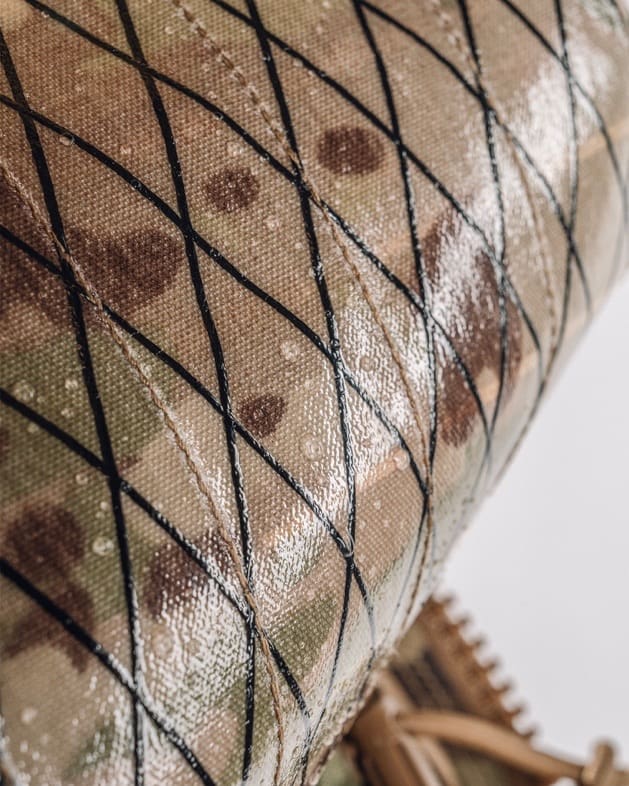
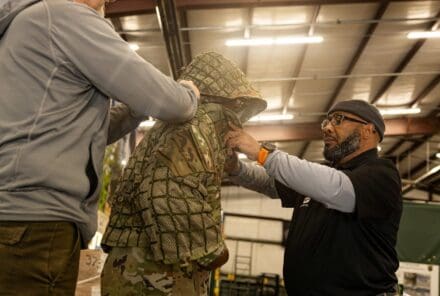
Designed around a customer request to hold the Phokus Research Low Vis trauma kit, our medical pouch is ready to hold your medical supplies out of the way and secure until you need it. Two flaps on either side allow easy access in a rush, and there are no complicated snaps, cables, or buttons, making it easier to repack and close while on the small of your back. The back of the pouch is made from our laser-cut Ghost material and has cuts to allow vertical or horizontal belt carry and two columns of molle-compatible slits for various clips and strips. The medical pouch can also be directly mounted to the Soteria belt cage using the horizontal belt pass-throughs. At a mere 1.6oz it’s simple, multifunctional, and clean.

Features:

-Slim design keeps the pouch close to the body and accessible

-Belt, molle, or direct mount to our Cage system, giving you multiple ways to carry

-Large loop field accommodates modular identification and medical information

Specs:

Dimensions: laid flat 8.25” x 6” x .25“ (21cm x 15cm x 0.6cm)

Weight: 1.6oz (45 Grams)

Volume: approx 61 cubic inches (1 liter)

Material: Ghost, Ghost Lite

For a quote, email sales@matbock.com or check it out here: www.matbock.com/collections/pouches/products/low-vis-trauma-kit-medical-pouch

Call to Action – WW II Veteran Turns 100

Sunday, April 6th, 2025

Via US Army WTF Moments on IG:

*** MAIL CALL (Saugerties, NY) ***

Paul Donlon is turning 100 on May 2nd. Served with 3rd ID in WW2.

He is also the older brother of Roger Donlon, the first Medal of Honor recipient of the Vietnam War. Let’s get some birthday cards to him.

Send to:

Saugerties VFW Post 5034

30 John St.

Saugerties, NY 12477

(In care of Paul Donlon)