As Vietnam heated up, the Agency’s need for eyes on the Laotian panhandle increased beyond the support that could be provided by Thai PARU and RTSF advisors. As a result, the CIA was forced to look for other solutions to communicate with its illiterate Lao Theung road watching teams targeting the Ho Chi Minh Trail.
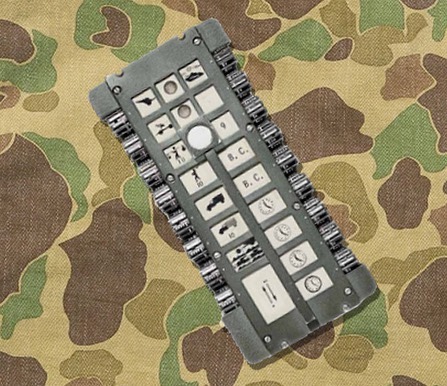
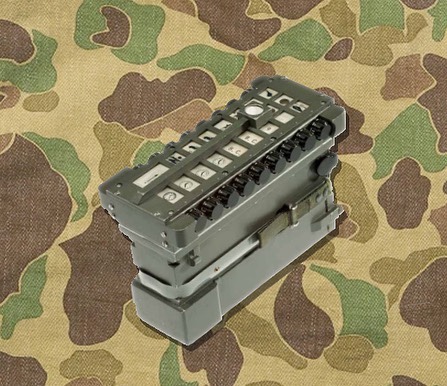
To tackle this problem, the Agency came up with a radio that used pictograms to communicate what a team saw. Crafted from a modified USAF survival unit, the Hark-1 or Hark Box was released early in 1967.
Note the depictions of armor, artillery, AAA, trucks, porters, soldiers, time of day, and direction of travel. The circular button at the center was used to transmit the tally of what was seen moving north and southbound on the trail to an airborne relay station. While the radio doesn’t appear to have a pictogram for elephants, it was given the affection moniker “the Elephant Counter” by Paramilitary Officers involved in the project. To avoid detection, the Hark road watching teams – sometimes numbering up to twenty-four road watchers on a target like the Mu Gia Pass – would be inserted via unmarked “Pony Express” CH-3s very far from their objective.

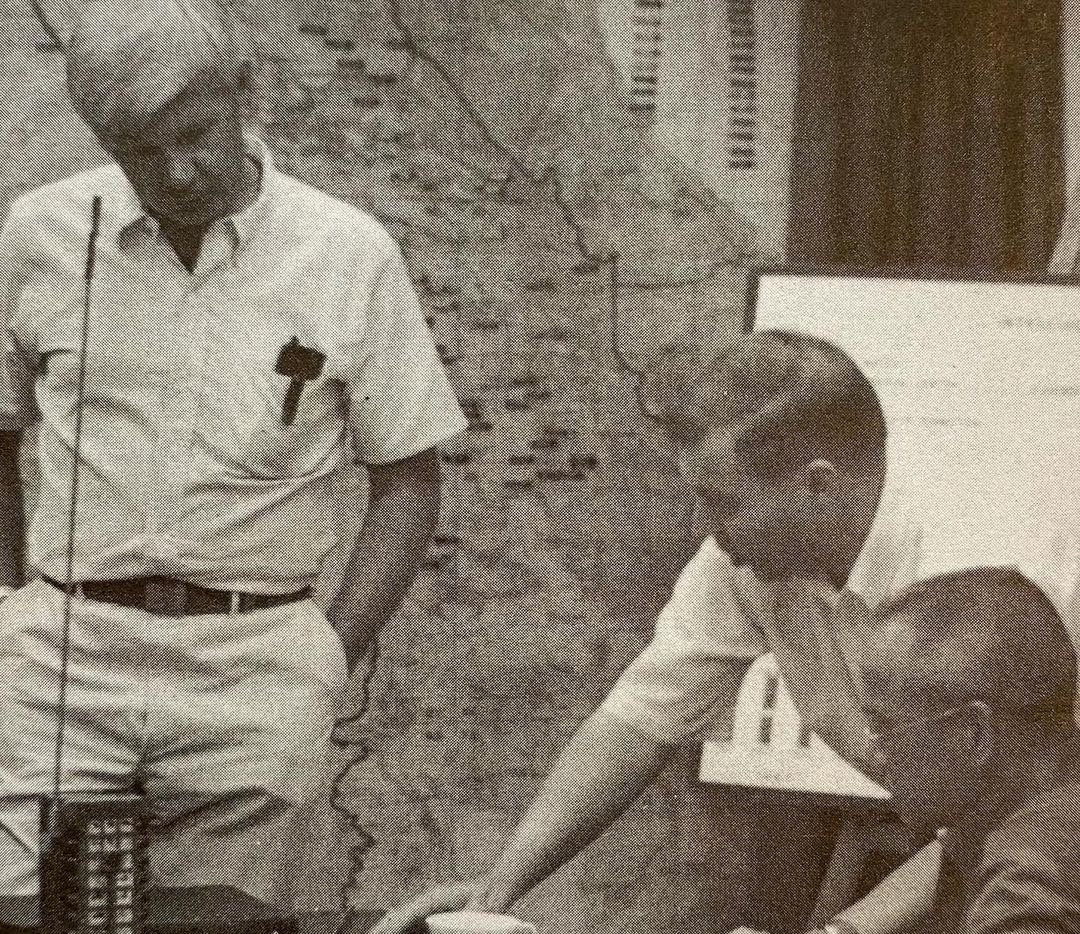
On the third slide you can see the Hark-1 with antenna deployed in front of Case Officer, Gene Norwinski during a briefing in Savannakhet. The project was wrapped up in 1969 having been overshadowed by a variety of Pentagon projects and new sensors and night vision capabilities like those present on the AC-130.

On December 24th, 1944, The Battle of the Bulge had started 8 days before with a massive push by the Germans to split the Allies in half and stop the use of the Belgium port of Antwerp. Many soldiers on both sides had become lost from their units and were looking for a place to stay. Three American Soldiers were lost around the area where the shack was. They saw the light from the small hunting cabin and the smoke from the chimney. They saw their chance to warm up. They knocked on the door and asked if they could come in. The German lady had a small chicken cooking for themselves but invited the Americans in to warm up and for the Christmas meal.
One of the American Soldiers was wounded, and the lady tried to make him comfortable. There was a language barrier for a time till one of the soldiers found out the lady could speak French as well as German. So, everything was going well, and the Americans were feeling right at home.
Then suddenly there was a knock at the door. The American’s went for their guns. The lady went to the door and answered it. There were four German soldiers who were also lost from their unit, and they asked the lady for shelter. The lady answered them with this, “Yes, you can come in for Christmas dinner, but I have other guests.” One German soldier remarked, “Americana.” She said, “yes, and that this was Christmas, and there would be no killing on this night.” She also told the Germans that they would have to lay down their weapons while they came in. She instructed the Americans to do the same.
There they were all in the room together, soldiers who a little while ago were bent on killing each other. Now, they were in a small room together with no weapons. Everyone could feel the tension in the air. It was very quiet for about ten minutes. Then one American soldier offered the Germans a cigarette. They obliged. One of the Germans who had medical training asked about the wounded American. He then began to help the wounded American and made him as comfortable as he could be.
By the time the meal was ready, the atmosphere was more relaxed. Two of the Germans were only sixteen, their corporal was 23. As Elisabeth said grace, Fritz noticed tears in the soldiers’ eyes, both German and American.
The truce lasted through the night and into the morning. Looking at the Americans’ map, the corporal told them the best way to get back to their lines and provided them with a compass. They asked if they should instead go to Monschau, the corporal shook his head and said it was now in German hands. Elisabeth returned all their weapons, and the enemies shook hands and left in opposite directions. Soon they were all out of sight, and the truce was over.
If you are in the Christmas spirit and want to watch a movie about the Battle of the Bugle, I would recommend Battleground. It was written by someone who was in the Battle of the Bugle. It is an all-time classic.
Sorry, I couldn’t find the whole movie. This is the preview.
On Christmas night 1776, George Washington led a force of American patriots across the Delaware River to attack the Hessian mercenary garrison at Trenton, New Jersey which was fighting for the British.
You’ve likely seen Washington Crossing the Delaware by Emanuel Leutze, painted in 1851, but modern artist Mort Kunstler created a much more likely depiction of events in his 2011 painting entitled, Washington’s Crossing.
It was audacious plan; take a force of 5400, including artillery, across a river at night in a storm in order to attack the enemy in his sleep. 2400 made it with 3,000 troops and the critical artillery stranded in the wrong side of the Delaware. Washington struck out toward his prey and attacked at 8:00 AM, fortunate that the defenders were groggy from their Weinacht’s Fest, surprising many still in bed.
Miraculously, only three Americans were killed, while over 1000 Hessians were captured with 22 killed and 98 wounded. Unfortunately, without his additional force, Washington was forced to withdraw. But the psychological victory fed faith in the revolution.
Consequently, George Washington crossing the Delaware in the middle of a stormy night in order to kill German mercenaries remains my second favorite Christmas tale.
My third favorite Christmas tale comes from the Battle of the Bulge.
December 22 1944 – Encircled by German forces at the Battle of the Bulge, the 101st Airborne Division, under acting commander Brigadier General McAuliffe received a message from German General Heinrich Freiherr von Lüttwitz delivered under flag of truce.
To the U.S.A. Commander of the encircled town of Bastogne.
The fortune of war is changing. This time the U.S.A. forces in and near Bastogne have been encircled by strong German armored units. More German armored units have crossed the river Our near Ortheuville, have taken Marche and reached St. Hubert by passing through Hompre-Sibret-Tillet. Libramont is in German hands.
There is only one possibility to save the encircled U.S.A. troops from total annihilation: that is the honorable surrender of the encircled town. In order to think it over a term of two hours will be granted beginning with the presentation of this note.
If this proposal should be rejected one German Artillery Corps and six heavy A. A. Battalions are ready to annihilate the U.S.A. troops in and near Bastogne. The order for firing will be given immediately after this two hours term.
All the serious civilian losses caused by this artillery fire would not correspond with the well-known American humanity.
His response was perfect.
To the German Commander.
NUTS!
The American Commander
Posted in History, Morale | Comments Off on My Third Favorite Christmas Tale – “NUTS!”
The Palawan massacre occurred on 14 December 1944, during World War II, near the city of Puerto Princesa in the Philippine province of Palawan. The Japanese Imperial Army massacred 139 of 150 American POWs. The Palawan compound was named Camp 10-A by the japanese, and the prisoners were quartered in several unused Filipino constabulary buildings. Food was almost nonexistent; the prisoners received a daily meal of wormy Cambodian rice and a canteen cup of soup made from camote vines boiled in water (camotes are a Philippine variant of sweet potatoes). Prisoners who could not work had their rations cut by 30%.
The Japanese unit in charge of the prisoners and the airfield at Palawan was the 131st Airfield Battalion, it was command of Captain Nagayoshi Kojima, whom the Americans called the Weasel. Lieutenant Sho Yoshiwara commanded the garrison company, and Lieutenant Ryoji Ozawa was in charge of supply. Ozawa’s unit had arrived from Formosa in 1942 and had previously been in Manchuria. There was also a Military police and intelligence unit, called the kempeitai at Palawan, they were feared by anyone who fell into their hands because of their brutal tactics.
In September 1944, 159 of the American POWs at Palawan were returned to Manila. The Japanese estimated that the remaining 150 men could complete the arduous labor on the airfield, hauling and crushing coral gravel by hand and pouring concrete seven days a week. The men also repaired trucks and performed a variety of maintenance tasks in addition to logging and other heavy labor
An attack by a single American Consolidated B-24 Liberator bomber on 19 October 1944, sank two enemy ships and damaged several planes at Palawan. More Liberators returned on 28 October and destroyed 60 enemy aircraft on the ground. While American morale in the camp soared, the treatment of the prisoners by the Japanese grew worse, and their rations were cut. After initially refusing the prisoners’ request, the Japanese reluctantly allowed the Americans to paint American Prisoner of War Camp on the roof of their barracks. This gave the prisoners some measure of protection from American air attacks. The Japanese then stowed their supplies under the POW barracks.
On 14 December, Japanese aircraft reported the presence of an American convoy, which was headed for Mindoro, but which the Japanese thought was destined for Palawan. All prisoner work details were recalled to the camp at noon. Two American Lockheed P-38 Lightning fighter aircraft were sighted, and the POWs were ordered into the air-raid shelters. After a short time, the prisoners re-emerged from their shelters, but Japanese 1st Lt. Yoshikazu Sato, whom the prisoners called the Buzzard, ordered them to stay in the area. A second alarm at 2 p.m. sent the prisoners back into the shelters, where they remained, closely guarded.
Suddenly, in a deliberate and planned move, 50 to 60 Japanese soldiers under Sato’s leadership doused the wooden shelters with buckets of gasoline and set them afire with flaming torches, followed by hand grenades. The screams of the trapped and doomed prisoners mingled with the cheers of the Japanese soldiers and the laughter of their officer, Sato. As men engulfed in flames broke out of their fiery deathtraps, the Japanese guards machine-gunned, bayoneted and clubbed them to death. Most of the Americans never made it out of the trenches and the compound before they were barbarously murdered. Still, several closed with their tormentors in hand-to-hand combat and succeeded in killing a few of the Japanese attackers.
Marine survivor Corporal Rufus Smith described escaping from his shelter as coming up a ladder into Hell. The four American officers in the camp, Lt. Cmdr. Henry Carlisle Knight (U.S. Navy Dental Corps), Captain Fred Brunie, Lieutenant Carl Mango (U.S. Army Medical Corps) and Warrant Officer Glen C. Turner, had their dugout, which the Japanese also doused with gasoline and torched. Mango, his clothes on fire, ran toward the Japanese and pleaded with them to use some sense but was machine-gunned to death.
About 30 to 40 Americans escaped from the massacre area, either through the double-woven, barbed-wire fence or under it, where some secret escape routes had been concealed for use in an emergency. They fell and/ or jumped down the cliff above the beach area, seeking hiding places among the rocks and foliage. Marine Sergeant Douglas Bogue recalled: Maybe 30 or 40 were successful in getting through the fence down to the water’s edge. Of these, several attempted to swim across Puerto Princesa’s bay immediately but were shot in the water. I took refuge in a small crack among the rocks, where I remained, all the time hearing the butchery going on above. They even resorted to using dynamite in forcing some of the men from their shelters. I knew [that] as soon as it was over up above, they would be down probing among the rocks, spotting us and shooting us. The stench of burning flesh was strong. Shortly after this, they were moving in groups among the rocks dragging the Americans out and murdering them as they found them. By the grace of God, I was overlooked.
Eugene Nielsen of the 59th Coast Artillery observed, from his hiding place on the beach, a group of Americans trapped at the base of the cliff. He saw them run-up to the Japs and ask to be shot in the head. The Japs would laugh and shoot or bayonet them in the stomach. When the men cried out for another bullet to end their misery, the Japanese continued to make merry of it all and left them there to suffer. Twelve men were killed in this fashion. Nielson hid for three hours. As the Japanese were kicking American corpses into a hole, Nielson’s partially hidden body was uncovered by an enemy soldier, who yelled to his companions that he had found another dead American. Just then, the Japanese soldiers heard the dinner call and abandoned their murderous pursuit in favor of hot food. Later, as enemy soldiers began to close in on his hiding place, Nielson dived into the bay and swam underwater for some distance. When he surfaced, approximately 20 Japanese were shooting at him. He was hit in the leg, and bullets grazed his head and ribs. Even though he was pushed out to sea by the current, Nielson finally managed to reach the southern shore of the bay.
He was one of 11 prisoners of war who escaped the December 1944 massacre on Palawan Island in the Phillippines, where around 140 soldiers died when the Japanese put them into trenches, dumped gasoline on them and set them on fire. He was later a key witness in the War Crime Trials of 1945.
This biography tells the story of Glenn (“Mac”) McDole, one of eleven young men who escaped and the last man out of Palawan Prison Camp 10A. Beginning on 8 December 1941, at the U.S. Navy Yard barracks at Cavite, the story of this young Iowa Marine continues through the fighting on Corregidor, the capture and imprisonment by the Japanese Imperial Army in May 1942, Mac’s entry into the Palawan prison camp in the Philippines on 12 August 1942, the terrible conditions he and his comrades endured in the camps, and the terrible day when 139 young soldiers were slaughtered. The work details the escapes of the few survivors as they dug into refuse piles, hid in coral caves, and slogged through swamp and jungle to get to supportive Filipinos. It also contains an account and verdicts of the war crimes trials of the Japanese guards, follow-ups on the various places and people referred to in the text, with descriptions of their present situations, and a roster of the names and hometowns of the victims of the Palawan massacre.
NEWINGTON, N.H., (December 7, 2021) – In partnership with the Best Defense Foundation, SIG SAUER is honored to commemorate the 80th Anniversary of the attack on Pearl Harbor with three one-of-a-kind, custom designed 1911 pistols: the Pearl Harbor Commemorative Pistol, the USS Arizona Commemorative Pistol, and the USS Oklahoma Commemorative Pistol.
“It was truly an honor to create these custom pistols and we are humbled to have the opportunity to partner with the Best Defense Foundation to salute these men and women of the greatest generation,” said Tom Taylor, Chief Marketing Officer and Executive Vice President, SIG SAUER, Inc. “The foundation is providing any World War II veteran that wants a measure of closure the opportunity to return to their battlefield and we hope these pistols will bring recognition to their efforts. From the shores of Normandy to Pearl Harbor, the foundation has made it their mission to honor these veterans’ sacrifice and we are forever thankful for their dedication to that mission.”
The unique distinguishing features of the commemorative 1911 pistols crafted by SIG SAUER Custom Works are:
1911 Pistol: The 1911 pistol was one of the most commonly issued pistols and carried by U.S. forces throughout World War II. Each of the commemorative 1911 Pearl Harbor pistols feature engravings designed in collaboration with Outlaw Ordnance customizations, and a Battleship Gray Cerakote® matte finish on the frame and slide. The pistols are chambered in.45 AUTO with an SAO trigger, Gold Dot Novak™ front sights and Wilson Combat™ serrated rear sights.
Pistol Grips: The custom grips on each of the pistols was designed and manufactured by Chad Schumacher at Allegory Goods, and is crafted from teak decking salvaged from the USS North Carolina. After the Pearl Harbor attack, the USS North Carolina was sent to the pacific to strengthen allied forces during the Guadalcanal Campaign, and was part of the offensive operations supporting the Battle of Iwo Jima and the Battle of Okinawa.
Pearl Harbor Commemorative Pistol: Engravings commemorate the date and time of the attack: December 7, 1941 at 7:55am where Japanese warplanes descended on the U.S. Naval Base at Pearl Harbor, and the address by President Franklin Delano Roosevelt to the U.S. Congress formally requesting a declaration of war between the U.S. and Japan where he began with “A day which will live in infamy.”
USS Arizona (BB-39) Commemorative Pistol: Engravings commemorate the USS Arizona which was hit by Japanese torpedo bombers which detonated in a munitions magazine, which violently exploded and sank the ship, losing 1,177 officers and crewmen. The USS Arizona Memorial at the Pearl Harbor National Memorial was dedicated on May 30th, 1962 to honor all those who died during the attack.
USS Oklahoma (BB-37) Commemorative Pistol: Engravings commemorate the USS Oklahoma which served in World War I and protected allied convoys across the Atlantic. During the Attack on Pearl Harbor, Japanese torpedo bomber airplanes hit the Oklahoma’s hull causing it to capsize. A total of 429 crew died as a result, others jumped to safety, were rescued through hatches or from drilling holes in the side of the hull.
Additionally, SIG SAUER is honored to release a short video to video to commemorate the 80th Anniversary of the Attack on Pearl Harbor and highlight the detail and distinguishing features of the commemorative pistols.
The commemorative 1911 pistols have been presented to the leadership of the Best Defense Foundation.
A full series of photos of the Pearl Harbor Commemorative 1911 pistols are available for viewing at sigsauer.com.
Posted in Advertiser, Firearms, History, Press Release | Comments Off on SIG SAUER Custom Works Commissions 1911 Pistols to Commemorate the 80th Anniversary of the Attack on Pearl Harbor
1 the state of being well known for some bad quality or deed.
Infamy is a word forever tied in my mind with the date of December 7th, 1941. Born in the late 60s, I grew up in a culture that spoke about the attack on Pearl Harbor and with a grandfather who fought in the Pacific theater. His generation remembered what had happened and the cost of that war and they weren’t afraid to acknowledge it.
While time has healed many wounds and forged new alliances, I will not forget what that day, 80 years ago means to my nation. It is a mark in time that will forever be etched in history.
Please join me in honoring the 2402 Americans who were lost on that day, along with the hundreds more, who were wounded during the attack. They suffered the opening salvo of a war that would engulf nations around the globe in conflict.
“Been to Disney World one too many times? Have we, Captain Ron?”
During the American Revolution, George Washington, while serving as head of the Continental army during the siege of Boston in 1775, started using pirates to help attack the British where they were most vulnerable on the sea. “Finding that we were not likely to do much in the land way, I fitted out several privateers, or rather armed vessels, on behalf of the Continent. With an offer of a percentage of spoils as an inducement, the call for citizen sailors to hijack inbound supply ships tapped the same vein of self-interest and comradeship that had led the colonies to seek independence in the first place.” Although private piracy proved detrimental to the Royal Navy, it ultimately helped turn the British public against the war.
“He said gorilla. Not guerrilla. Guer, go. HUGE difference kids,” Martin Harvey
A pirate is a seaman who threatens, seizes, or destroys any ship at high seas and often even harbors at the shore. Besides, they have been involved in many other criminal activities, such as piracy and the slave trade. Without any legal rights, the pirates are doing it for personal reasons. And they were regarded as criminals in all countries because those attacks were illegal acts. Piracy was punishable by death almost everywhere during the times when it was at its height. The critical difference between them and the privateers or buccaneers, about whom we can also claim that they were some sort of pirates, but not treated like criminals, is also the legality of their acts.
The U.S. allowed about 1,700 private warships to cruise the ocean, searching for British prizes during the Revolution, when a cash-strapped Congress could not launch an efficient navy of its own at the time. These revolutionary privateers carried congressional commissions, effectively legalized pirates, which outlawed attacks on neutral ships and prisoners’ mistreatment but otherwise allowed them free rein to rob and plunder. Most privateers were motivated by greed as much as by patriotism.
However, Washington was also outfitting a fleet of lightly armed schooners, and the debate over the navy took place in Congress. Although most members thought the idea of a navy insane, the Marine Committee was formed to oversee the production of 13 frigates.
Meanwhile, with its deep-rooted culture of fishing, shipbuilding, and ocean trade, Massachusetts considered whether to unleash its citizens by allowing state-sponsored privateering. Throughout history, governments at war have used the authority under international law to authorize independent operators to transport enemy merchant cargoes. There had already been incidents off the Massachusetts coast of scavenging looting crews abandoning ship down one side as local marauders clambered up the other side wielding clubs and cutlasses; the loot from these raids had to give them visions of bigger gains to come. To legalize privateering, the government would provide the colony with an instant navy for little to no cost.
In March of 1776, Congress followed suit and ordered that all British ships be considered “fair game for civilian warships.” After months of bitter debate on the general theme of business and patriotism, Philadelphia leaders embraced trade, going so far as to provide signed preprinted applications for commissions complete with blank spaces where names of ships, captains and owners could be inserted with minimal fuss. An early proponent of privateering, John Adams, appreciated, “I was always extremely interested in it.” Privateers had to pay monetary obligations to ensure their proper conduct under regulations. Although it is only fragmentary, incomplete information, more than 1,700 Letters of Marque were granted during the American Revolution. Approximately 800 privateers were commissioned and are frequently attributed with burning, looting, and capturing around 600 British ships.
Following congressional recognition of privateering, privateers flocked from Massachusetts, New Hampshire, and Rhode Island. Most had reputations for contraband, quirkiness, and eccentricity until this point. Most privateers just smuggled items throughout the Royal Navy’s blockade.
Weapons shortages resulted in delays in securing gunpowder, but some, like the Brown brothers, managed to solve the problem by converting their iron foundry to cannon-making. The Brown brothers were accused of charging ‘extortioners’ prices for guns for Congress’ frigates, giving preference to their vessels and advertising for crews with promises of quick fortunes, congenial captains, ample alcohol, and a thrilling opportunity to smite “the tyrant’s pilferers.”
Privateering was a natural fit for the brothers, and they immediately began cutting gun ports through the trade ships’ bulwarks and clearing holds to make room for more crewmen needed to sail the captured prizes home for auction. They were also named a member of the congressional committee that oversaw Congress’ frigates’ construction.
In 1777, the Ranger, an 18-gun sloop captained by a young John Paul Jones, sailed across the Atlantic with a vow “to draw off the enemy’s attention by attacking their defenseless structures,” a plan fulfilled the following spring in his daring hit-and-run raid on the British port of Whitehaven. However, Richard Grenville’s prediction that he would do infinite damage to their shipping was realized by the pirates he so loathed. While still skeptical of America’s ability to defeat them on the battlefield, the British were forced to concede one point about the rebel privateers that diplomats on the European Continent had noted in July 1776: “What is certain on the side of the Americans is their activity at sea and the ships of the Crown they are capturing.”.
In the Caribbean alone, whose position as the hub of Britain’s New World trade made it the primary hunting ground for at least a hundred New England privateers by May 1776, maritime losses reached over $2 million within a year. Royal Navy captains in the West Indies learned that a storm was approaching, but their superiors had no clue. “Time is running out,” they urged their companion, “for our journey to the English Channel.”
Before then, most American vessels carried goods such as tobacco and paper to trade for European munitions. The privateers among them were adventurous predators who might provision in French and Spanish ports but rarely sold prizes there (doing so violated those nations’ neutrality agreements with Britain), instead dispatching them back to America for appraisal and auction.
The first ship that sailed into Europe was the 16-gun Continental brig named Reprisal. Under its captain, Lambert Wickes, and carrying Benjamin Franklin to France to serve as an ambassador, the Reprisal sailed to Europe in December 1776 to join the endeavor to create an international alliance. Reprisal then set out to plunder the seas, capturing 13 merchant vessels before being chased into a French harbor by an enemy frigate.
Small privateers like Retaliation and most other ships were forced to flee before a frigate’s firepower, which could hurl a barrage of hurtling metal from up to two dozen 12-pound cannons mounted along each side. The frigate HMS Brune, for instance, destroyed a 12-gun schooner with a single broadside and significantly damaged a 9-gun schooner. In trying to treat the wounded among Volunteer’s crewmen, the boarding party found the vessel “so much damaged that we hardly had time to get them all on board before she sank.” Similarly, a Boston privateer, Speedwell, carrying 14 guns and 90 men, took a frigate’s broadside “between wind and water” (the portion of the hull usually below the waterline but exposed to the air the vessel is heeled over in the wind). The study revealed that “she was lost at sea immediately, and all her crew perished during the voyage.”
On May 17, 1777, another American captain, Gustavus Conyngham, sailed aboard Surprise with 25 men from the French port of Dunkirk and intercepted Prince of Orange, a mail steamer plying between Holland and the British port of Harwich.
In the late 1700s, British political and military leaders denounced the Revenge’s hit-and-run combat style and the many other warships now swarming European waters. For the people in Parliament, the pirates were an immoral group of terrorists to be exterminated. One report of the capture of a supply ship alleged that “rebels stripped the killed and wounded, robbed every article of clothes, bedding, and provisions belonging to the sick, burned the cutter and added every insult to the distress.” And any foe that would, “against the laws of God and Man,” fire on a vessel under a flag of truce deserved, it was declared in Parliament after one such incident, “all the horrors of rebellion,” by which was meant no mercy.
Privateers comprised two distinct ventures. A Letter of Marque permitted merchants to attack any hostile vessel they encountered along their commercial voyage. A privateer commission was issued to those who were commissioned to attack enemy merchant shipping. The primary objective was to engage a lightly armed commercial ship.
Privateers of every type of vessel were pressed into service. The largest 18th-century ship was the 600-ton, 26-gun ship Caesar out of Boston. Simultaneously, crew sizes were as little as a few men in a whaleboat and as high as 200 aboard a fully equipped privateer. Vessels designated for Privateering and Letters of Marque were launched from places up and down the east coast.
Privateers didn’t usually fly the black pirate flags; they flew a flag that looked very similar to the “Don’t tread on me flag.” Privateers that could effectively convince their opponent that the opposition was futile did the best. When that plan failed, it often resulted in extremely violent fighting with unpredictable results. Many of the pirates were captured or sank when the situation wasn’t going their way. Most did not raise the pirate flags that we know of today, but there were two basic types, Black and Red, if they did. The black was raised when you planned to raid the ship but didn’t plan on killing everyone and the Red Flag or “no quarter giving” or “the blood flag” meant they planned to kill everyone, and no mercy was to be given. It also didn’t always have to have a skull and bones. It was up to the captains what it would look like, and most pirates didn’t fly them. Those flags were used truly by pirates not necessarily by privateers.
Despite all the hardships, the crippling of British commercial shipping was highly effective, and fortunes destined to aid the founding of the new Republic were made. It is estimated that American privateers’ total economic damage was about $18 million, or about $302 million in today’s dollars during the war.
George Washington recognized early in the war that his best strategy was to “sink Britain under the disgrace and expense of war.” To survive against the formidable British military, countless small- and large-scale offensive operations needed to be conducted and maintained to keep the enemy off balance, under strain, and demoralized.
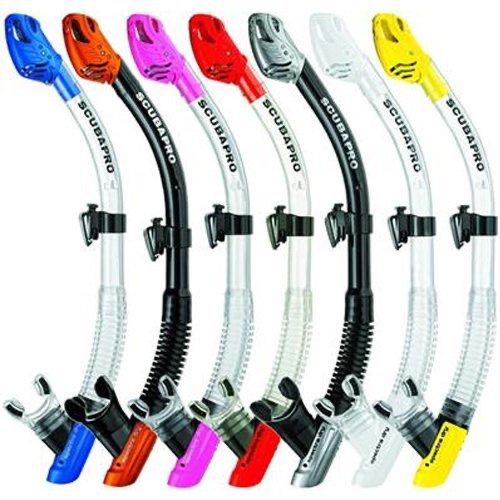
SCUBAPRO Sunday is a weekly feature focusing on maritime equipment, operations and history.