GORE-TEX Footwear at Tactical Distributors

Archive for the ‘Industry’ Category

GA-ASI Partnering With Spirit Defense For FQ-42 CCA Production

Saturday, October 24th, 2026

SAN DIEGO — 23 October 2026 — General Atomics Aeronautical Systems, Inc. (GA-ASI), the world leader in Uncrewed Aircraft Systems (UAS), today is announcing our partnership with Spirit Defense, a Boeing Company, to support airframe production of the new FQ-42 Vengeance Collaborative Combat Aircraft (CCA). In June, GA-ASI won a contract from the U.S. Air Force (USAF) to produce FQ-42. Spirit Defense’s role as a fuselage design-build partner brings together the company’s engineering and advanced manufacturing capabilities to support the program from design through production.

GA-ASI has been the sole manufacturer of its line of UAS — which includes MQ-9A Reaper®, MQ-1C Gray Eagle®, MQ-20 Avenger®, and MQ-9B SkyGuardian®/SeaGuardian — since the company’s inception in 1992. For the FQ-42 program, partnering with Spirit Defense is a strength multiplier for the company and the nation, offering manufacturing capacity and industrial depth to scale CCA production faster, while strengthening production resilience, and reducing the risk of single points of failure. 

“We’re excited to be working with Spirit Defense,” said GA-ASI President David R. Alexander. “We’ve established our proven design, development, and manufacturing capability for the FQ-42. With Spirit Defense we add capacity, which is exactly the kind of production resilience our U.S. Air Force customer is looking for with its CCA ramp-up. This kind of partnership represents the scalable industrial base the Air Force and the U.S. Department of War are looking for from industry.”

“We’re proud to bring deep manufacturing expertise and proven capabilities to this important program,” said Keith Schrader, president and CEO of Spirit Defense. “Our team understands the responsibility that comes with supporting critical national defense programs, and we’re ready to deliver for our customer and the warfighter.” 

FQ-42 is a purpose-built, uncrewed fighter, developed with USAF as part of ongoing investment in next-generation semi-autonomous combat aircraft. The jet’s modular design enables rapid integration of mission systems and mission autonomy software. GA-ASI’s software architecture, demonstrated through live flight tests on multiple airframes, provides the foundation for human-machine teaming in complex combat scenarios.

Potential CCA manufacturing partnerships don’t end here. Around the world, GA-ASI is in discussions with numerous international militaries interested in our Gambit Series of modular CCAs. The Gambit Series is a family of uncrewed combat jets, derived from our work on FQ-42, XQ-67A Off-Board Sensing Station, and MQ-20 Avenger, and optimized for roles such as electronic warfare, suppression of enemy air defenses (SEAD), Destruction of Enemy Air Defenses (DEAD) and stand-off precision strike, making it a versatile option for evolving security needs.

Nations interested in procuring aircraft from the Gambit Series also have an opportunity to insert indigenous manufacturing into those programs, as well as integration of their own sensors, weapons and other combat technologies.

Simo Mäkipaja Joins Milrem Robotics as Chief Sales Officer

Friday, October 23rd, 2026

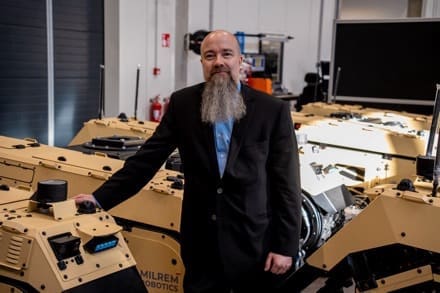
Milrem Robotics, the world’s leading developer of robotics and autonomous systems and system integrator, has appointed Simo Mäkipaja as its new Chief Sales Officer (CSO). With more than 25 years of experience in the defence and technology industries, Mäkipaja will lead the company’s global sales activities and support its continued international expansion.

Mäkipaja joins Milrem Robotics from Reaktor, where he served as Chief Sales Officer, Defence and Security. Previously, he was the co-founder and held the position of Director of Sales and Business Development at SensorFleet. Earlier in his career, he spent nearly 19 years at Finnish defence company Patria, progressing through engineering, project management and sales positions to become Senior Vice President of Business Development, Systems at Patria.

Throughout his career, Mäkipaja has led international sales and business development activities involving defence and government customers, as well as industrial cooperation with major systems integrators in Europe and North America.

“Milrem Robotics has established itself as a leading company in military robotics, with our systems already in service or part of robotics programmes in 21 countries. We have evolved from a provider of unmanned ground vehicles into a systems integrator offering complete robotic capabilities, including the command-and-control solutions needed to coordinate unmanned assets on the battlefield,” said Kuldar Väärsi, CEO of Milrem Robotics. “This evolution opens up new business opportunities but also requires a different approach to sales, partnerships and customer relationships. Simo’s extensive experience in international defence sales and business development will be instrumental in taking the company through its next stage of growth.”

As Chief Sales Officer, Mäkipaja will oversee Milrem Robotics’ global sales organisation, development of relationships with existing and prospective customers, and lead efforts to secure new international programmes. His appointment comes as the company increasingly focuses on delivering integrated robotic systems rather than individual unmanned platforms.

“Milrem Robotics has built an impressive portfolio of robotic systems and, importantly, has demonstrated their value in real military operations. The company is well-positioned to respond to the growing demand for unmanned capabilities, and I see significant opportunities to build on its existing customer relationships and expand into new markets,” saidMäkipaja. “I look forward to working with the team and our international partners to turn these opportunities into long-term business.”

Mäkipaja holds a Master of Science degree in Electrical and Electronics Engineering from Tampere University of Technology. He has also served on the boards of the Finnish Defence and Aerospace Industries association and UVS International.

Polaris Expands Call of Duty Collaboration as Polaris DAGOR Joins Modern Warfare 4

Friday, October 23rd, 2026

Longstanding collaboration continues to bridge real-world Polaris performance with one of gaming’s most iconic franchises

MINNEAPOLIS (October 23, 2026) – Polaris Inc. (NYSE: PII), the global leader in powersports, today announced the Polaris DAGOR is joining Call of Duty®: Modern Warfare 4 as a playable in-game vehicle. Building on Polaris’ growing presence within one of the world’s most recognizable gaming franchises, the integration marks the latest milestone in the company’s ongoing collaboration with Call of Duty®, bringing Polaris’ performance and capability to millions of players worldwide.

Following the introduction of the Polaris RZR Pro R in 2024 and Sportsman XP 1000 in 2025, DAGOR introduces players to a different side of Polaris’ off-road engineering: a lightweight military platform designed for rapid transport, maneuverability and mission-focused mobility in demanding environments. 

“What began as a key activation within our Virtual Meets Reality strategy has evolved into a broader partnership that allows us to bring the Polaris brand and our innovation portfolio to new audiences in immersive ways,” said Holly Spaeth, Vice President, Off-Road and Polaris Brand Marketing. “The addition of DAGOR expands that vision, giving players a broader look at our vehicle portfolio and a new way to experience the mobility, capability and performance engineered for demanding environments.” 

Polaris designers worked closely with Call of Duty®developers at Infinity Ward to help recreate the DAGOR’s appearance and capabilities in-game, continuing the collaborative approach used with previous vehicle integrations. DAGOR marks the third Polaris vehicle to join the franchise, following the RZR Pro R and Sportsman XP 1000. Since the first integration, the relationship has grown beyond in-game vehicles to include real-world fan experiences, connecting the worlds of gaming, powersports and sports.

Earlier this year, Polaris and Call of Duty® brought the partnership off the screen and into the real world at Fanatics Fest NYC through the “Path to Victory” activation, where attendees experienced Polaris RZR vehicles firsthand on a custom off-road course built in the heart of Manhattan.

“Our partnership with Polaris continues to give us new ways to bring authentic, real-world vehicles into the Call of Duty®experience,” said Cody Neal, Director of Global Partnerships, Activision. “The DAGOR is a natural fit for Modern Warfare 4 , bringing the capability, performance and distinctive design of a real military vehicle into the game in a way that feels true to both brands.”

The DAGOR is playable from day one in Call of Duty®: Modern Warfare 4, launching today, October 23, and arrives in Call of Duty®: Warzone ® with Season 1 on November 6.

In honor of Veterans Day and those who have served, Polaris and the Call of Duty ® Endowment will host an in-game community mission from November 11 through November 25. Once players collectively complete 5 million DAGOR rides across Call of Duty ®: Modern Warfare 4 and Call of Duty®: Warzone, Polaris will donate $25,000 to the Endowment, and one follower of the Call of Duty ®Endowment’s social media channels will be selected to go from the game to real life with a Polaris Adventures off-road ride experience.

For more information about Polaris and its portfolio of powersports vehicles, visit Polaris.com.

Axon Vision Accelerates US Growth Strategy with Expanded US Operating Presence and Strategic Leadership

Thursday, October 22nd, 2026

The next phase of the strategy builds on Axon Vision’s existing U.S. presence, adding local leadership and strategic advisory capabilities to support long-term growth in the U.S. defense market.
MCLEAN, Va, Oct. 21, 2026 — Axon Vision Ltd. (TASE: AXN), a developer of AI-powered perception and decision-support solutions for defense applications, today announced the next phase of its long-term U.S. growth strategy to build off the company’s initial growth and investments in the U.S. This includes the relocation of Co-Founder and Chief Technology Officer Ido Rozenberg to the U.S. and the establishment of the Axon Vision U.S. Strategic Advisory Board, including former senior U.S. military personnel.

These initiatives reflect Axon Vision’s strategic focus on the United States—the world’s largest defense market—and build on the Company’s existing U.S. operating presence and growing engagement with the U.S. defense ecosystem, including its strategic collaboration with Leonardo DRS and participation in multiple U.S. defense programs and technology initiatives. Together, they are designed to strengthen customer engagement, strategic partnerships, business development, and the Company’s ability to support U.S. customers, defense partners, and prime contractors, while supporting its long-term expansion in the United States.

Axon Vision Strategic Advisory Board comprises three founding members: General John H. Tilelli (Ret.), former Vice Chief of Staff of the U.S. Army; Lieutenant General Ray Palumbo (Ret.), former senior leader within U.S. Army Special Operations, JSOC, and the Department of Defense; and Mike Fleming, former Director of the U.S. Army International Technology Center–Mediterranean (ITC-MED). The Board will provide strategic guidance on U.S. market development, customer engagement, technology transition, product strategy, and long-term business growth, bringing collective expertise spanning operational military leadership, defense intelligence, acquisition, technology transition, and the defense industry.

General John H. Tilelli (Ret.) said: “I am honored to be asked to join Axon-Vision’s U.S. Strategic Advisory Board. Axon-Vision provides leading-edge technology to warfighters in a complex, AI-driven battlefield. I look forward to helping them expand their U.S. presence and deliver needed technology to the warrior.”

Lieutenant General Ray Palumbo (Ret.) said: “Axon-Vision’s advanced electro-optical, AI-enabled, and edge-computing capabilities can help address demanding operational requirements for U.S. and allied defense and security customers. I look forward to helping the company build enduring customer and partner relationships and deliver mission-relevant technology at scale.”

Mike Fleming said: “I’ve watched Axon Vision’s technology mature over the past eight years, and it’s remarkable to see how far it’s come. I’m looking forward to seeing what the team achieves next as they grow their presence across the U.S. defense market.”

Ido Rozenberg, Co-Founder and Chief Technology Officer of Axon Vision, said: “The United States represents the largest and most strategically important defense market in the world. As part of our expanded presence in this market, I relocated to the U.S. to lead the Company’s technology and business activities, enabling closer collaboration with customers and partners, a deeper understanding of evolving operational needs, and faster adaptation of our solutions to those requirements. Our objective is not simply to expand our presence, but to establish the relationships, capabilities, and local execution required to become a trusted long-term partner within the U.S. defense ecosystem.”

For further information, visit www.axon-vision.com

Allen-Vanguard Acquired by Defence Investment Specialist Operating Partners Group

Thursday, October 22nd, 2026

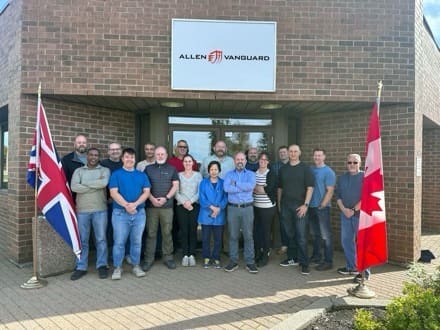
Allen-Vanguard, a global leader in Cyber Electromagnetic Activities (CEMA), has entered a new era with new owners, Operating Partners Group (OPG). Specialist defence investors OPG have taken ownership of Allen-Vanguard, expanding its defence technology portfolio to complement and reinforce its existing European businesses and increase its global force protection capability.

An established and well-renowned provider of RF solutions for well over two decades, Allen-Vanguard’s pedigree in delivering integrated, platform-agnostic EW sensors, counter-RCIED and counter-UAS solutions is unquestionable.

Allen-Vanguard solutions have traditionally been protecting personnel and vehicles in operational theatres, conflict zones or where there is an increased risk profile across the globe. With the deployment of their ‘SP3’ Transceiver, a wider range of EW sensors and solutions follows, growing the adaptable range of capabilities trusted by NATO nations, major aid agencies, governments and other non-governmental organisations on every continent. With agility, engineering rigour and an innovative approach, Allen-Vanguard continues to set the benchmark for countering the wide gamut of complex RF problems faced by modern forces.

OPG is a specialist defence investment firm whose portfolio comprises leading electronic warfare businesses across Europe. OPG is led by its Founder and Managing Director, Miles Graham, who brings more than 30 years’ experience across government, McKinsey consulting and private equity investing. He is supported by a team with deep expertise in defence, technology, investing and operations, which work hands-on with senior management to build long-term value.

Bobby Strawbridge, President of Allen-Vanguard, said: “Allen-Vanguard has a proud and successful history in delivering RF solutions for complex operational issues. Unfortunately, recent months have taken us through an unavoidable and difficult receivership process. We have appreciated the continued support of our employees, customers, suppliers and other business partners throughout the process, which has allowed us to emerge stronger. Looking to the future, I am pleased to report that we have secured new owners willing and able to invest in the long-term growth of the business.

OPG has the strategic vision, deep insight and necessary connections into current operational theatres to leverage an extensive ecosystem of similarly agile RF companies to reinforce Allen-Vanguard’s expertise and deliver a true capability multiplier. I am very encouraged that we have been able to find a positive way forward.”

Miles Graham, Founder and MD of OPG, said: “We are delighted to be investing in Allen-Vanguard, a brand with such strong and long-standing heritage. We have been hugely impressed by the team, their product range, technology roadmap and strong customer-focused ethos. Allen-Vanguard is an excellent addition to our electronic warfare portfolio. We see clear synergy with the agility and RF capability required to meet current operational demands and also see a real opportunity to bring IP and capabilities from across our existing businesses to Canada and global markets. Our backing will support Allen-Vanguard to build on its established force protection strengths and expand into adjacent areas such as signals intelligence. We’re excited to work with Bobby and the team as the business enters a new era.”

New Chapter for British Firepower: Rheinmetall Opens the UK Gun Hall

Thursday, October 22nd, 2026

Rheinmetall officially opened the new ‘UK Gun Hall’ in Telford in the presence of the British Defence Secretary, Wes Streeting, thereby marking the return of independent production of large-calibre weapons to the UK. The UK Gun Hall forms part of Rheinmetall’s wider investment of more than £200 million across its UK operations over the past five years, demonstrating the company’s long-term commitment to strengthening Britain’s defence industrial base. The investment complements Rheinmetall UK’s work on the Boxer Mechanised Infantry Vehicle, Challenger 3 Main Battle Tank programme and future land capability programmes. The ‘Gun Hall’ is a concrete example of the industrial partnership between the United Kingdom and Germany established under the Trinity House Agreement.
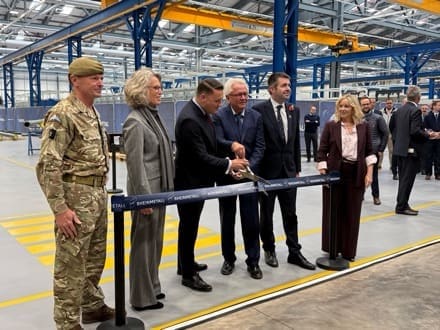
The facility is expected to support over 100 highly skilled people as production develops while creating opportunities for British businesses, strengthening domestic supply chains and delivering long-term economic value. Rheinmetall currently employs around 685 people in Telford, including 35 at the UK Gun Hall. This represents a significant long-term investment in Britain’s defence industrial base, supporting warfighting readiness and contributing to the government’s ambition to make defence an engine for growth.

The Gun Hall will manufacture 120mm and 155mm weapon systems, including those supporting Challenger 3 and future artillery platforms. The facility offers 11,500 m² of production space. At peak capacity, it can produce up to 245 barrels per year across both calibres, as well as more than 50 breeches annually. Designed to meet growing UK, NATO and international demand, the facility provides scalable manufacturing capacity that strengthens collective deterrence, enhances industrial resilience and reinforces Britain’s contribution to European and NATO security.

From concept to reality at pace, Rheinmetall transformed an empty facility into an operational manufacturing capability in just eight months. The achievement demonstrates Rheinmetall’s ability to respond rapidly to UK defence requirements and translate investment commitments into sovereign capability. During this period, advanced manufacturing equipment was installed and commissioned, specialist expertise was transferred to the UK workforce, and production commenced on schedule.

Production of breeches and breech blocks began in May 2026, followed by barrel production in June 2026, in line with programme milestones. The successful manufacture of the first UK-produced breech, breech block and barrels demonstrates the capability to manufacture these complex weapon components on British soil.

Looking ahead, Rheinmetall intends to introduce British steel from Sheffield Forgemasters into production, further strengthening domestic supply chains and supporting Britain’s steel industry.

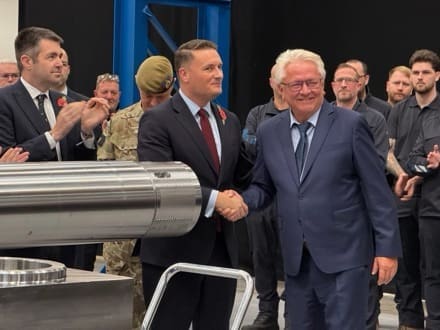
The facility was officially opened at a ceremony hosted by Armin Papperger, CEO of Rheinmetall AG, and the Rt Hon Wes Streeting MP, Secretary of State for Defence, bringing together representatives from Government, the Armed Forces and industry to celebrate the return of this critical manufacturing capability to the UK.
Central to the programme has been investment in British people and skills. UK employees undertook extensive training and knowledge transfer at Rheinmetall’s production facility in Unterlüß, Germany, gaining advanced expertise in precision manufacturing, quality assurance and specialist weapon production before bringing that critical knowledge back to Telford.

Rheinmetall has also recruited specialist skills from across the Telford region, demonstrating the strength of the local engineering and manufacturing sector. As production ramps up, Rheinmetall will continue to develop its workforce and work closely with UK small and medium-sized enterprises to build resilient, long-term domestic supply chains.

Wes Streeting, Secretary of State for Defence, said:

“Britain is back in the business of making the weapons that our Armed Forces need to defend the nation against our adversaries. From an empty site to full production in eight months, this is rapid reindustrialisation in action. One hundred skilled jobs in world-class manufacturing and the return of large-calibre weapon production to UK soil for the first time in twenty years – this is what defence as an engine for growth looks like.” 

Armin Papperger, CEO of Rheinmetall AG, said:

“Today’s opening is an important milestone for Rheinmetall and for the United Kingdom. In a remarkably short period of time, we have turned our commitment into a sovereign manufacturing capability that will strengthen Britain’s defence industrial base for decades to come. The UK has been a long-standing and valued partner for Rheinmetall, and today we are building on an already strong relationship. We are committed to investing in the UK for the long term, expanding our industrial footprint and working together to deliver the capabilities needed for the future. By combining Rheinmetall’s expertise with British skills, innovation and manufacturing, we are strengthening the UK’s sovereign industrial capacity, supporting the Armed Forces and contributing to the security of NATO and Europe.”

Rebecca Richards, Managing Director of Rheinmetall UK, said:

“The official opening of our UK Gun Hall is a landmark moment for Rheinmetall UK and for Britain’s defence industrial base. In just eight months, we transformed an empty facility into an operational manufacturing capability by investing in British people, British skills and British industry. From the outset, we have listened to what the UK needs and focused on delivering sovereign capability at pace. By transferring specialist knowledge from Germany and developing a highly skilled British workforce here in Telford, we are creating skilled jobs, supporting British businesses and building the industrial capacity needed to equip our Armed Forces while investing in the long-term prosperity of the UK.”

The UK Gun Hall is a tangible example of the UK-Germany industrial partnership established under the Trinity House Agreement. By combining Rheinmetall’s established manufacturing expertise in Germany with sovereign production capability in Britain, the programme demonstrates how allied industrial cooperation can accelerate delivery, strengthen resilience and enhance NATO’s collective security.

Together, these investments are strengthening sovereign capability, creating highly skilled British jobs, supporting UK businesses and supply chains, and demonstrating how defence investments can deliver both national security and national prosperity.


The Next Chapter: Smith & Wesson Announces Acquisition of Savage Arms

Thursday, October 22nd, 2026

MARYVILLE, TN. – Smith & Wesson Brands, Inc. (NASDAQ Global Select: SWBI), a leader in firearm manufacturing and design, today announced it has acquired Savage Arms, Inc., the 132-year-old Westfield, Massachusetts-based maker of legendary rifles and shotguns, from JDH Holdings, for $160 million in a stock and cash transaction. The acquisition brings together two of the most recognized and respected names in American firearms manufacturing – uniting Smith & Wesson’s strength in the handgun, revolver, and modern sporting rifle markets with Savage’s reputation for accuracy, innovation, and craftsmanship in the hunting and long-gun categories. This creates a compelling platform to generate sustainable, long-term growth.

“The acquisition of Savage is transformative for Smith & Wesson and contributes to our objective of becoming the undisputed market leader in the firearm industry,” said Mark Smith, President and Chief Executive Officer of Smith & Wesson Brands, Inc. “With this transaction, we have significantly expanded our presence in the hunting category, particularly in bolt-action rifles, which will enable us to better serve our customers. We are excited to combine Savage’s expertise and scale in the hunting category with our proven capabilities in the handgun and semi-auto rifle markets. We believe our teams’ core competencies will complement one another, translating into a stronger combined business”.

The combined company will immediately rank as the largest commercial firearms manufacturer in the United States, with a full-line product offering spanning handguns, revolvers, rifles, shotguns, and suppressors. Savage brings roughly $160 million annual net sales and a dedicated, skilled workforce of approximately 500 to the Smith & Wesson family, strengthening the combined company’s position at a moment when consumer demand for American-made firearms across every category remains strong.

Savage and Smith & Wesson already sell through many of the same dealers, distributors, and big box retail partners, and are trusted by an overlapping base of hunters, competitive shooters, and everyday sportsmen and women across the country. That shared customer base – and the supply chain, vendor, and distribution relationships behind it – creates immediate go-to-market efficiency and unmatched scale.


Few combinations in this industry carry the historical weight of this one. Smith & Wesson was founded in 1852 in Massachusetts; Savage Arms was founded in 1894, also in Massachusetts. Both companies have spent well over a century as fixtures of American manufacturing, innovation, and craftsmanship – arming hunters, sportsmen, and protectors across multiple generations. This is more than a financial transaction; it’s the union of two authentically American manufacturing stories, grounded in the same values of quality, durability, and performance that built this industry in the first place.

For more information, visit www.smith-wesson.com.

American Ingenuity at Work: The Army’s Strategic Capital Initiative

Thursday, October 22nd, 2026

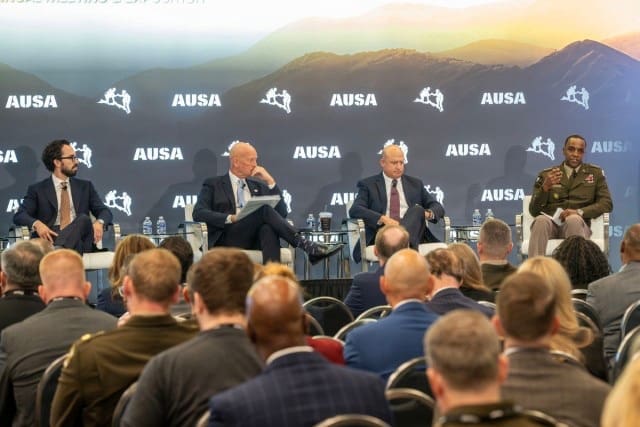
WASHINGTON — The Army is rewriting the playbook on how it partners with the private sector. At a contemporary military forum on the Strategic Capital Initiative during the Association of the United States Army 2026 Annual Meeting, senior Army leaders and commercial executives sent a clear, unified message: the Army is doing business differently than ever before.

The panel explored how SCI is bridging the gap between national defense and private capital focused on six strategic pillars. Panelists highlighted how the Army is cutting through red tape and rigid acquisition rules by actively leveraging commercial solutions openings, public-private partnerships and enhanced use leases to work at the speed of trust and capital.

Panel members echoed Acting Secretary of the Army Adam R. Telle opening remarks that the service “needs to build adaptable and symbiotic relationships with both industry and service partners to maintain a strategic advantage over the nation’s adversaries.”

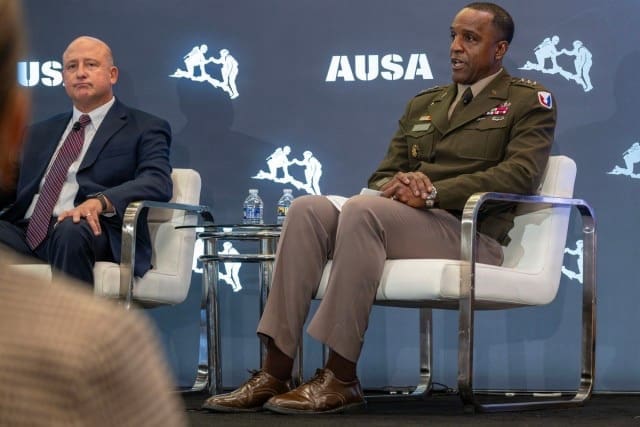
Lt. Gen. Gavin Lawrence, deputy commanding general and acting commander of Army Materiel Command, emphasized that AMC is leaning heavily into these innovative, particularly across the Army’s 23 organic industrial base sites.

“The government defines a problem, we send it out to commercial industry, and we let commercial industry do what they do best — innovate and bring solutions,” said Lawrence. “We’re not bounding commercial industry by our constraints. We give them the clearly defined problem, what it is important, and then let American ingenuity go to work.”

Lawrence outlined four critical lessons the Army and private industry must embrace to make these commercial solutions openings successful.

First, he noted that the Army has a responsibility to clearly define its requirements and problem sets, but conversely, industry must feel empowered to speak up if there is a lack of understanding. Ensuring clear conversations and a shared vision upfront prevents costly misalignments down the road.

Second, he highlighted the importance of understanding statutory guardrails and respecting the legal boundaries that distinguish government operations from the private sector. He said for example, within the organic industrial base, certain core functions are inherently governmental, and operations must comply with statutory regulations like the 50-50 rule, which dictates the balance of military and commercial depot maintenance work.

Third, Lawrence called for a clear, mutual understanding of the value proposition on both sides from the very beginning. He said, while the Army is focused on increasing production capacity, lowering acquisition costs and accelerating capability delivery to the warfighter, the military must also recognize that commercial partners have obligations to their stakeholders, including expectations for return on investment and profit.

Fourth, he emphasized the need to balance these guardrails without binding or inhibiting the innovation that commercial industry brings. He explained that the government must establish boundaries without over-constraining its partners.

‘We need to be working at the speed of trust, and trust is based on communication and understanding each other,” said Lawrence. “Speed absolutely matters, so if there is something we are not thinking about, help us get to the right place.”

Under the SCI framework, the Army is already utilizing commercial solutions openings to implement advanced manufacturing flexible lines to resolve parts obsolescence and enhance readiness. At Red River Army Depot in Texas, a partnership with Hadrian is establishing a flexible line for battery production to support drone dominance and manufacture tactical wheeled vehicle repair parts. Additionally, Anniston Army Depot in Alabama is collaborating with Siemens to onshore manufacturing capabilities for small unmanned aircraft system stator systems and produce parts for heavy armored fleets.

Industry panelists echoed the enthusiasm for this collaborative evolution. Chip Chattelier, vice president for business and technology strategy, FedEx Dataworks, commended the Army’s willingness to lean in.

“The single most effective way to accelerate private investment is to bring industry in earlier, even before putting pen to paper, to understand the ground truth of the mission,” said Chattelier. “By doing so, partners can move past reactive, static dashboards and implement ‘predictive logistics intelligence’ to anticipate supply chain disruptions and prevent readiness impacts before they happen.”

By Megan Gully