Aquaterro

Archive for the ‘International’ Category

SFC Energy AG and Polaris Government and Defense Collaborate to Equip NATO and NATO-aligned Defense Organisations with Advanced Fuel-Cell Powered Vehicle

Wednesday, May 14th, 2025

Brunnthal/Munich, Germany, 13 May 2025 – SFC Energy AG (“SFC”, F3C:DE, ISIN: DE0007568578), a leading provider of fuel cells for stationary, portable and mobile hybrid power solutions, has announced a key collaboration with Polaris Government and Defense (“Polaris”) at Special Operations Forces Week (“SOF Week”) in Tampa, Florida, USA. Polaris showcased a high-mobility tactical vehicle with the EMILY 3000 as an optional integrated power supply. This capability is specifically being offered to NATO and NATO-aligned defense organisations.

Installing SFC Energy’s EMILY 3000 in the Polaris’ MRZR vehicle platform provides a highly reliable power solution available for mission-critical applications. The methanol fuel cell-based system can power radios, surveillance systems, drone equipment, sensors, and other electronic devices – all without the need to run the vehicle’s engine. This enables extended operations while preserving camouflage and reducing both thermal and acoustic signatures.

The EMILY 3000 delivers a dependable and autonomous power supply for a variety of electronic and communication systems. Weighing only 12 kilograms (approximately 26.5 pounds), it increases power output on lightweight tactical vehicles without compromising mobility. Its high energy density enables for extended runtimes and minimises the need for refuelling during prolonged operations. One of its key advantages is its virtually silent performance, producing minimal acoustic and thermal signatures – making it exceptionally well-suited for covert operations.

The system supports the simultaneous charging and use of various battery types, including lithium-ion, lithium-polymer, and conventional lead-acid batteries. In contrast to traditional setups, it eliminates the need to run the vehicle engine or rely on noisy generators. This reduces fuel consumption, acoustic exposure, and the risk of early detection. Fully automatic in operation, the EMILY 3000 contributes to longer battery life and reduced vehicle wear by cutting down on engine use and maintenance.

Its flexibility also enables the system to function either as an onboard charger or as a portable, field-based power supply. Additionally, the EMILY 3000 and its fuel cartridges are military-certified, carry a NATO supply number, and are approved for air transport in accordance with UN3473 regulations – making them fully deployable in international operations.

By integrating the EMILY 3000, Polaris light tactical vehicles gain enhanced operational endurance and power autonomy – especially critical in scenarios where silence, reliability, and energy independence are key tactical requirements.

Dr. Peter Podesser, CEO of SFC Energy AG: “By offering the EMILY 3000 as an accessory option in Polaris vehicles, we are delivering a mission-ready, low-signature power solution tailored to the needs of modern armed forces. The Polaris MRZR is widely deployed by the United States and other NATO and allied forces worldwide for its exceptional off-road mobility and versatility. By including our innovative and field-proven fuel cell technology on this trusted platform, military forces can significantly enhance their operational range, energy autonomy, and tactical utility in real-world missions.”

Further information on SFC Energy’s Clean Energy and Clean Power Management solutions can be found at www.sfc.com.

Flintlock 2025: 20 Years of Enhancing SOF Readiness in Africa

Wednesday, May 14th, 2025

JACQUEVILLE, CôTE D’IVOIRE

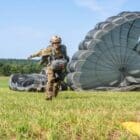
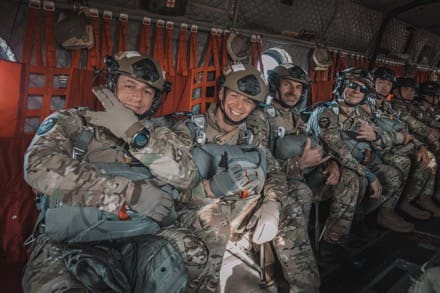
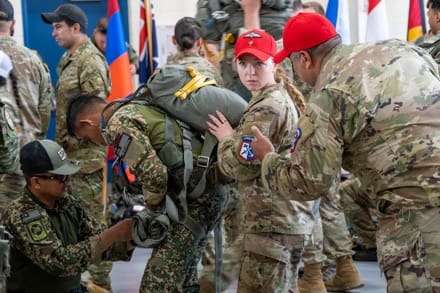
Flintlock 2025, U.S. Africa Command’s annual, combined special operations exercise, kicked off in Côte d’Ivoire today. From April 24 – May 14, Flintlock 25 will bring together approximately 500 personnel from more than 30 nations to strengthen collective readiness in response to shared threats.

“Twenty years of Flintlock and our resolve is stronger than ever. Together, with our partners and allies, we are forging lethal forces ready to deter aggression and win on the battlefield,” said U.S. Marine Corps Gen. Michael Langley, Commander of U.S. Africa Command. “U.S. Africa Command is committed to countering threats to the United States and working alongside our African partners as they play a leading role in providing for their own defense.”

This iteration, hosted by Côte d’Ivoire, reflects the dedication by African partners to address regional challenges independently while still working with international partners for global peace. The exercise will consist of academics, then shift to a staff and command post exercise.

Exercise scenarios are designed to strengthen partner nations’ collective abilities to counter violent extremist organizations, collaborate across borders, provide security, respect human rights and build trust with civilian populations. The exercise also bolsters information sharing between African, U.S., and other partner nation military and law enforcement organizations through an interagency fusion cell.

“Flintlock demonstrates our long-term commitment to improve partner-nation operational independence,” said U.S. Army Maj. Patrick Temperato, Flintlock lead planner. “Integrated operations planned on a foundation of shared values and interests are critical to reinforcing an extended network of like-minded nations capable of decisively meeting the defense challenges of today and tomorrow.”

For more information, visit www.africom.mil/what-we-do/exercises/flintlock.

Story by Staff Sgt. Zachary Wright 

Special Operations Command Africa

SOF Week 25 – Edgevolt Battery System from 3ME Technology

Tuesday, May 13th, 2025

3ME Technology is an Australian company which has been working on battery systems for the ADF for the past few years.

Recently, they created a new form factor which mimics the size and weight (22 kg) of a 5 gallon Jerry Can, providing 24V 2.4 kWh. This means single person lift.

Weatherproof, they can be used alone or connected in serial (up to 10) for higher power requirements. What’s more, they are hot swappable while in serial.

SOF Week 25 – Defendtex Optical Fiber Drone Guidance

Monday, May 12th, 2025

Australia’s DefendTex has been keeping a close eye on drone operations in Ukraine and introduced a fiber optic cable guidance kit for their family of Vengeance FPV drones.

Here you can see the canister mounted to a Vengeance drone sitting atop their Banshee robot.

SOF Week 25 – Secumar Secuvac

Monday, May 12th, 2025

The Secuvac from Secumar is a waterproof protection system for the evacuation of injured persons secured to a stretcher. It prevents contact with water and thus hypothermia.

www.secumar.com

European High-Tech Consortium Secures Funding from the European Defence Fund to Develop Multipurpose Unmanned Ground Systems

Saturday, May 10th, 2025

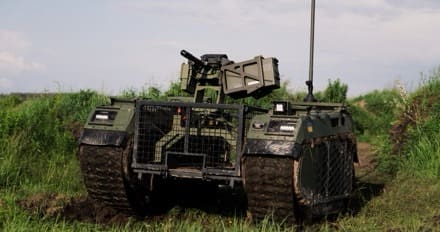
The consortium that successfully delivered the groundbreaking iMUGS (integrated Modular Unmanned Ground System) project in 2023 has secured funding from the European Defence Fund (EDF) for the follow-up project, iMUGS2, which aims to develop next-generation Multipurpose Unmanned Ground Systems (UGS).

The consortium’s €55 million proposal, submitted under the EDF’s 2024 call for collaborative defence research and development, was officially approved for funding of nearly €50 million in late April. This strategic victory highlights Europe’s commitment to enhancing its defence capabilities and technological independence through innovative and cooperative industrial development.

“Winning this EDF call is a crucial step in ensuring that Europe remains at the forefront of developing advanced unmanned technologies. Our consortium unites top-tier expertise from across the EU, and we are prepared to deliver a capability that enhances our armed forces’ operational effectiveness and safety,” said Raul Rikk, Capability Development Director at Milrem Robotics, the consortium lead.

Unmanned vehicles (UxVs) have emerged as one of the most significant innovations in modern military operations, as evidenced by their deployment during the war in Ukraine. Effective cooperation among UxVs, manned vehicles, operators, and soldiers is crucial for enhancing combat effectiveness. This collaboration aims to reduce casualties, minimise collateral damage, and lessen the cognitive burden on warfighters.

Using outputs from iMUGS and other European-funded initiatives, iMUGS2 aims to expedite research and move rapidly towards practical, deployable solutions. The enhancement of operational capabilities will be demonstrated through trials with military tactical units. The project will also focus on developing interoperability among European nations and incorporate lessons from recent conflicts, including the war in Ukraine, where several Consortium member systems are deployed.

“Our project aims to develop and deploy cost-effective, modular unmanned systems capable of supporting dismounted, mechanised, and motorised infantry in all European environments, including GNSS-denied areas and adverse climatic conditions,” Rikk added.

iMUGS2 has three primary outcomes. Firstly, it aims to develop, validate, and demonstrate cost-effective, combat-ready UGSs that support dismounted troops at various operational levels and provide practical value in different operations. Secondly, the project will establish operational concepts demonstrating how UGS and unmanned aerial systems (UAS) can enhance the capabilities of infantry battalions and cross-domain operations. Thirdly, the project will improve the modular and open architecture and Through Life Capability Management (TLCM) framework, which enables the efficient integration of autonomous functionalities with both legacy and new systems across unmanned and optionally manned ground platforms, including the conversion of manned vehicles.

About the Consortium

The iMUGS2 consortium has grown to include 29 partners from 15 European Union member states and associated nations, encompassing all initial project partners. The team consists of large corporations, mid-sized businesses, SMEs, and research organisations. Each partner contributes leading expertise in their respective fields, promoting a comprehensive vision throughout the project’s lifecycle. This diversity allows the consortium to tackle potential challenges and deliver strategic and effective solutions.



The iMUGS2 Consortium consists of the following entities: AVL List, Bittium Wireless, Czech Technical University in Prague, Cybernetica, Delft Dynamics, Diehl Defence, dotOcean, Elettronica, Escribano Mechanical and Engineering, FN Herstal, GMV Aerospace and Defence, Huta Stalowa Wola, Insta Advance,  Integrated Systems Development, John Cockerill Defense, KNDS France, KNDS Germany, Kongsberg Defence & Aerospace, Latvijas Mobilais Telefons, ?ukasiewicz – PIAP, Milrem Robotics (project coordinator), Netherlands Organisation for Applied Scientific Research, Nortal (Talgen Cybersecurity), Norwegian Defence Research Establishment, the Royal Military Academy of Belgium, Safran Electronics & Defense, Secura, Svensk Konstruktionstjänst, Systecon Konsult.

For more information, please visit imugs.eu.

Introducing the New FROG.PRO Pouch Lines: FAST Access and FLAP Protection, Designed for Mission Success

Saturday, May 10th, 2025

(GATTATICO (RE) – ITALY) – FROG.PRO®, the Italian reference brand for tactical tailoring, is finally ready to launch its new pouches. They will be available on their website starting from today May 9th 2025.

“At FROG.PRO, our mission has always been clear: deliver high-performance tactical gear that professionals can trust in any operational environment. Today, we are proud to unveil two new lines of pouches designed to meet the demands of modern military and law enforcement users across the globe.

FAST Line: speed and control in every movement.

The FAST line is engineered for those who operate under pressure and require lightning-fast access to their gear. These magazine pouches use elastic retention combined with an ergonomically designed high-grip puller, allowing quick and precise magazine extraction even in high stress scenarios.

Operators can further customize their setup by swapping the standard puller with a rubberized, enhanced grip variant, perfect for wet, muddy, or maritime conditions.

The FAST line represents a leap forward in rapid access design, ensuring users are always one step ahead.

FLAP Line: maximum retention, maximum protection.

When retention and protection are the priorities, the FLAP line delivers. These pouches feature a protective flap closure with velcro and/or buckle, offering added security and shielding from environmental factors like rain, mud, and debris.


This line includes pouches for:

• Rifle magazines
• Pistol and SMG magazines
• Grenades

Each magazine pouch includes a Tegris insert that maintains structural integrity and facilitates smooth reinsertion of the magazine, ensuring that even under stress, performance is never compromised. Drainage holes at the base prevent water buildup, supporting use in maritime and amphibious operations.

Expanded radio carry capabilities.

With communication being mission critical, FROG.PRO has also developed three new radio pouches:

AN/PRC Radio Pouch: Built for rugged military radios, with maximum durability and accessibility;

Medium Radio Pouch: Ideal for police departments using medium-sized comms;

Small Radio Pouch: Compact and low-profile for law enforcement or special duties with smaller radios.

Built with purpose: modularity, lightweight, and mission durability.

All new pouches are crafted from mil-spec LAHYCO, a composite fabric that is:

• Water repellent
• Flame Resistant
• NIR – Compliant

Fully molle compatible and modular, these pouches are designed to integrate seamlessly into a wide range of setups, chest rigs, belts, and plate carriers alike.

Handmade in Italy by skilled craftsmen, these products reflect FROG.PRO’s commitment to quality, performance, and innovation.

Mission-Ready, World-Proven.

Whether you’re conducting long range patrols in arid environments or engaging in CQB operations in complex terrain, these new pouch lines offer:

• Lightweight construction
• Extreme durability
• Maximum versatility

Available in MultiCam, Ranger Green, Coyote 498, and Black, they’re ready to serve professionals “wherever duty calls.”

Ready to upgrade your loadout? The new pouches are already available on www.frogpro.eu.

They offer free shipping to USA on orders over 200 EURO (about 220 USD).

UK Certifies Protector As First of Its Kind Remotely Piloted Aircraft

Thursday, May 8th, 2025

SAN DIEGO – 08 May 2025 – The UK’s Military Aviation Authority has issued a Military Type Certificate to the Royal Air Force’s Protector RG Mk1 uncrewed aircraft, also designated the MQ-9B, certifying that it has passed a rigorous airworthiness assessment and verifying it’s safe to operate without geographic restrictions, including over populous areas. This April 29 decision was a first-of-its-kind milestone for a large, unmanned aircraft system. It’s a huge accomplishment for the UK and a technological watershed in the history of unmanned aircraft systems. GA-ASI is the first manufacturer of large, unmanned aircraft to receive an MTC based on rigorous compliance with STANAG 4671, the NATO standard for unmanned aircraft system airworthiness.

Obtaining the MTC has been a goal of GA-ASI since the inception of the MQ-9B in January 2014. The company took its proven UAS platform, the MQ-9A, and added performance enhancing features while ensuring that the design was capable of meeting NATO’s STANAG 4671 Edition 2 airworthiness requirements. To meet those rigorous requirements, the aircraft incorporates numerous enhancements not found on other large UAS. These include lightning protection, fire protection, anti-icing systems and a fatigue-and-damage-tolerant building block design approach. All flight critical software was designed in compliance with the rigor of Do-178/254. Mission software is rigidly separated from flight critical software. These features not only address the aircraft’s airworthiness but also enhance its reliability and operational flexibility to levels unmatched by other UAS.

“Earning an MTC for MQ-9B was a herculean effort and a seminal achievement for our company,” said GA-ASI CEO Linden Blue. “We invested over $500 million as part of an 11-year effort to develop an unmanned aircraft that meets NATO’s rigorous airworthiness standards. This included three flight test aircraft, full component and system-level environmental testing to Do-160 and Mil-Standards (system level environmental testing at Elgin and Pax River), full scale static test airframe test to ultimate ground and flight loads, bird strike, hail protection and full-scale fatigue testing to three lifetimes (3x 40,000 notional aircraft flight hours = 120,000 hours total). Our engineers developed over 140,000 pages of detailed technical data verifying that the MQ-9B met those demanding requirements. I congratulate our team for this outstanding accomplishment, and I know our customers need this type certification, which will open civil airspace for their flight operations.”

The Royal Air Force continues to take delivery of new Protector aircraft at their home in the North of England at RAF Waddington. The UK has 10 aircraft of the 16 it has ordered.

“Achieving the award of a first in class Military Type Certificate has required years of dedication and perseverance and is a testament to the hard work of all involved. It is a privilege to be the first to be awarded an MTC for the Protector Air System,” said Gp. Capt. Neil Venables, Type Airworthiness Authority and holder of the Protector Type Certificate.

MQ-9B is the world’s most advanced medium altitude, long endurance UAS. MQ-9B includes the SkyGuardian® and SeaGuardian® models as well as the Protector operated by the RAF.

In addition to the UK, GA-ASI has MQ-9B orders from Belgium, Canada, Poland, Japan Coast Guard, Japan Maritime Self-Defense Force, Taiwan, India, and the U.S. Air Force in support of the Special Operations Command. MQ-9B has also supported various U.S. Navy exercises, including Northern Edge, Integrated Battle Problem, RIMPAC, and Group Sail.

For more information, visit www.ga-asi.com