Archive for the ‘Manufacturing’ Category
What Makes Kitanica Different?
Saturday, March 21st, 2026High Speed Gear Awarded United States Army Contract to Manufacture Advanced Drone Pouches
Wednesday, March 18th, 2026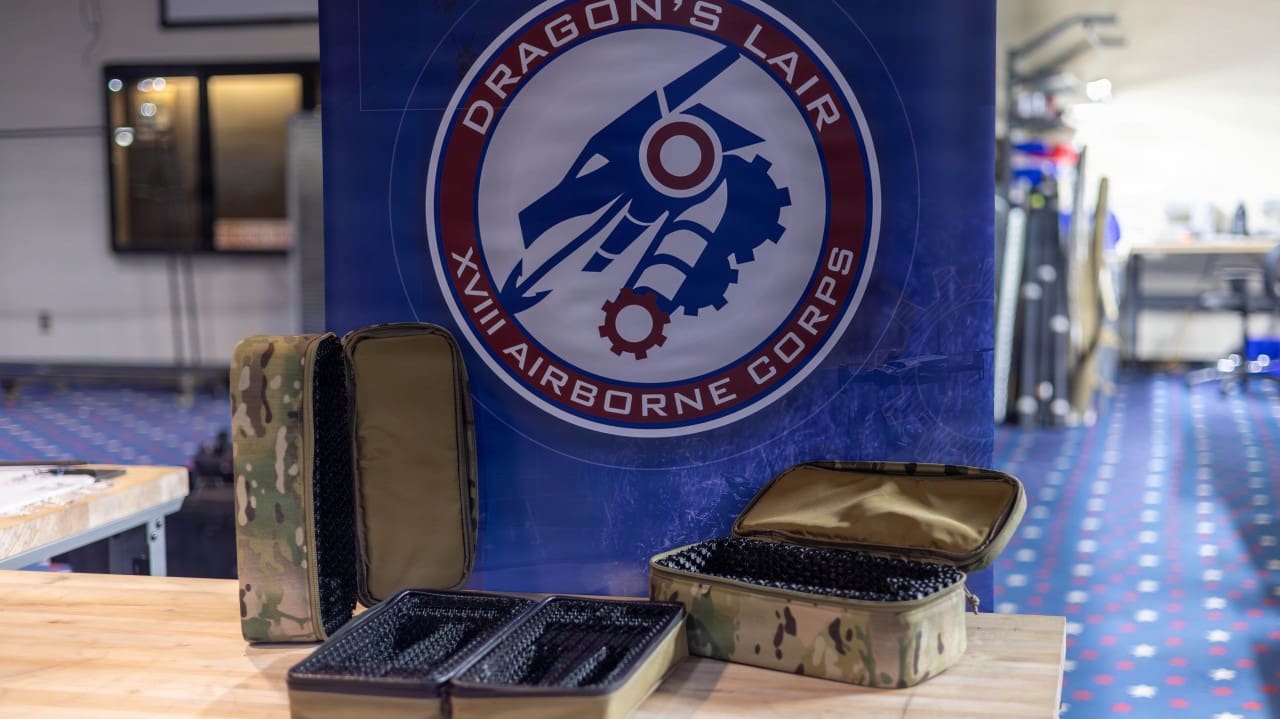
SWANSBORO, NC – March 17, 2026, High Speed Gear, a leader in American-made tactical load-carrying solutions, proudly announces it has been awarded a contract by the United States Army to produce specialized drone pouches designed to support modern unmanned aerial system (UAS) operations.
This contract comes as the Army accelerates the transition of frontline-inspired innovations into operational capability. Modular drone case systems, first developed by Soldiers through the XVIII Airborne Corps’ Dragon’s Lair innovation pipeline, are moving rapidly from experimentation to fielding under the Army’s streamlined procurement model.
Initial development was supported by the Airborne Innovation Lab, a collaboration between the U.S. Army Combat Capabilities DevelopmentCommand Army Research Laboratory and the Civil-Military Innovation Institute, which enables tactical experimentation and rapid prototyping with operational units to help turn Soldier-driven ideas into deployable solutions.
High Speed Gear’s drone pouches will serve as a trusted platform for securingand protecting small UAS assets across Army units, providing rugged, durable, and adaptable carrying solutions optimized for airborne and dismounted missions. Built with the same performance-driven philosophy that defines the HSGI brand, these pouches will enhance operational readiness and soldier efficiency on today’s dynamic battlefield.
Kip Guyon, CEO of High Speed Gear and former U.S. Army Officer, commented: “Supporting and equipping the United States Army is an honor, a privilege, and a responsibility we take seriously. Our team is dedicated to delivering rugged, dependable solutions that enhance readiness and protect the warfighters who protect all of us.
High Speed Gear looks forward to working closely with Army acquisition partners and innovation programs to deliver these critical drone pouch systems on schedule and at scale. This award builds on HSGI’s legacy of equipping U.S. and allied forces with battle-proven pouches and modular gear that support lethality, versatility, and mission success.
Over the past several years, High Speed Gear has intentionally expanded its manufacturing capacity, strengthened its supply chain, and invested in both people and technology to meet the growing demands of modern defense requirements. The company stands ready to support additional mission needs with the same discipline and precision that earned this award. As requirements evolve, the HSG team is prepared to scale, adapt, and deliver, not just as a manufacturer, but as a committed partner.
For inquiries, contact: Adam Garrison, Director of Gov Business Development: Adam.Garrison@highspeedgear.com
Army Forges Partnership with Pennsylvania Companies to Create Next Generation Small Arms Gun Barrel
Tuesday, March 17th, 2026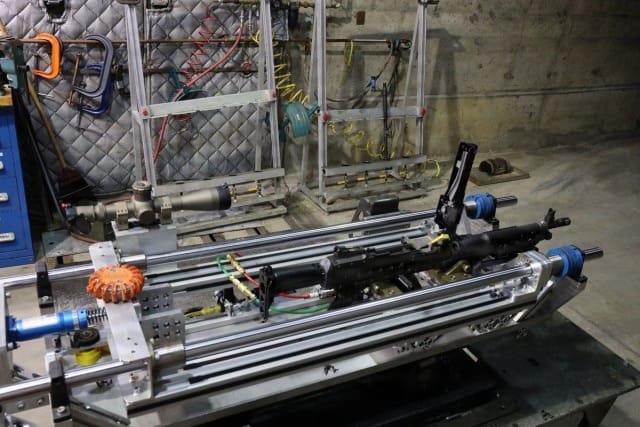
PICATINNY ARSENAL, N.J. – Army armament engineers here partnered with a pair of Pennsylvania companies, one with alloy expertise and the other with forging metals, to deliver a capable barrel for the Army’s next generation of small arms.
Carpenter Technology developed the alloy and Geissele Automatics (also known as GWYNEDD) developed the production techniques for the barrels, while the U.S. Army Combat Capabilities Development Command (DEVCOM) Armaments Center provided the expertise in gun technology to deliver an innovation that is key to meeting the required capability.
This novel barrel design, created as part of two separate CRADAs (Cooperative Research and Development Agreements) between the Armaments Center, Geissele and Carpenter, relies on the alloy, GNB 200, which provides Army small caliber next generation weapons with higher tensile strength and, with it, better wear resistance.
This advancement came after several projects focusing specifically on barrel technology over the past decade.
According to general engineer Daniel Cler, the design’s principal investigator, DEVCOM had tested several “high alloy barrel materials” over the decade, seeking to help alleviate pressure buildup, corrosion and mechanical wear as next-generation weapons maintain significantly higher-pressure than their legacy counterparts, this could in turn worsen barrel wear.
In the past several years, the U.S. Army has attempted to shift away from using hazardous heavy metals such as hexavalent chromium coatings, which is still renowned for its longevity, but is known to cause significant health problems in production when hexavalent chromium is in solution.
Seeking to replace hexavelant chrome coatings with barrel materials that provide good wear and corrosion performance without coatings, the Army has performed research into a plethora of different metals. However, many of these materials were too hard to cold hammer forge, a method that is the current manufacturing technology for most military small arms. Because of this, the Armaments Center was refocusing on hammer forging and materials that were compatible with the process when it signed both CRADAs in 2022.
GNB 200 is, per Carpenter Technology’s website, a “premium remelted alloy steel specially formulated for high temperature wear resistance.” According to Cler, GNB 200 is near the upper limit of what can reliably be cold-hammer forged.
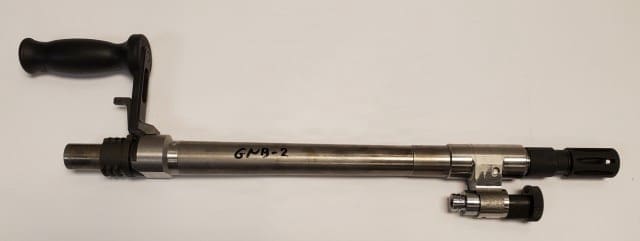
Carpenter Technology was already highly familiar with GNB 200, and as such provided samples for testing, along with several other materials. The Armaments Center gave guidance, processed information, provided support for analysis and result documentation and carried out accelerated wear testing for proposed alloys.
Work with Geissele focused on manufacturability and feasibility. Geissele cold hammer forged the barrels themselves, provided input and direction for coating alternatives and specifications, performed testing on barrels, and processed parameters on manufacturability. In this stage, the Armaments Center gave its expertise on barrel technologies, provided ammunition for testing and performed project oversight.
The parties involved tested the barrels in an M240L machine guns over the project’s third and final year, which ended in spring 2025. The material showed much better performance than the standard M240L barrel and now informs future Army next generation weapons.
GNB 200 continues to inform the next generation of Army small caliber weapons.Though the CRADA with Carpenter Technology has expired, DEVCOM renewed its CRADA with Geissele for another three years to continue development of barrel coatings.
A CRADA is a written agreement between one or more federal laboratories and one or more non-federal parties to work together on research or development.
The GNB 200 hammer forged barrel is not the only project made in collaboration with Geissele. The pair also collaborated on developing a new rifle profile which has been shown to further reduce wear and improve dispersion. This profile received United States Patent 12,203,716 B2 on Jan. 21, 2025.
Cler said he was most proud of seeing a project he worked on informed next generation systems. He also noted how important it is to have some influence upon the industry in the correct direction, though he lamented not being able to get involved earlier.
“CRADA’s are a good way to influence industry so that as systems are developed to meet Army requirements, industry is ready to jump in with better solutions that are more aligned with the Army,” he said.
By Tyler Barth
Orqa Signs Teaming Agreement with Red River Army Depot to Boost UAS Manufacturing
Monday, March 16th, 2026OSIJEK, Croatia, March 16, 2026 — Orqa has entered into a groundbreaking teaming agreement with Red River Army Depot in Texarkana, Texas, representing a significant step in advancing the U.S. Army’s rapidly expanding organic small Unmanned Aircraft System (sUAS) manufacturing capacity.

The agreement also strengthens Orqa’s recently announced Global Manufacturing Program.
This agreement builds on Orqa’s longstanding engagement with the Department of War and reflects a shared commitment to supporting the Army’s broader modernization efforts.
The recently signed National Defense Authorization Act represents a national effort to expand unmanned systems production capacity within existing Army depots. Orqa’s role in this initiative builds on the company’s established record of delivering advanced sUAS technologies and supporting operational requirements across multiple theaters.

The teaming agreement marks a significant step in Orqa’s continued partnership with the U.S. military. It reinforces Orqa’s position as a trusted provider of unmanned systems and components, including recent authorizations that enable the company to support Army programs in Europe.
Through this collaboration, Orqa plans to contribute to strengthening domestic production of unmanned systems. As Orqa expands its role in U.S. manufacturing, the increased production activity may also support growth within the company’s operations. “Made in America” Orqa platforms will be available to U.S. military customers and may also support allied nations through established security cooperation channels.
Srdjan Kovacevic, co-founder and CEO of Orqa, said, “We’re thankful for the opportunity to contribute to the increase of U.S. drone manufacturing capability. The resulting boost in capacity will add to the production we can already achieve at our headquarters, a figure that will grow significantly as our Global Manufacturing Partnership Program comes online throughout the year. This agreement is a clear vote of confidence in Orqa, our capabilities, and our products.”
DroneShield Establishes European Manufacturing Footprint to Advance Sovereign Counter-UAS Capability
Thursday, March 12th, 2026Sydney, Australia – 11 March 2026 – DroneShield (ASX:DRO), a global leader in counter-drone technology, today announced the establishment of counter-UAS manufacturing in the EU, marking a major expansion of the Company’s European industrial footprint and manufacturing capacity. The announcement follows increased momentum across the continent, with national military investments growing under the ReArm Europe Plan / Readiness 2030 initiative, accelerating the need for mature, scalable, and sovereign counter-UAS capability.
Under a new collaboration with an experienced and established manufacturer, production of European-made counter-UAS systems is now underway, with delivery scheduled for mid-2026. The contract manufacturer will carry out full turnkey assembly and component manufacturing, including PCB assembly, precision machining, cable and wire harness assembly, and associated assembly and testing labor. As part of this collaboration, DroneShield has established and will continue to grow a primarily EU-based supply chain, making this the Company’s only production line currently outside of Australia.
DroneShield’s European manufacturing footprint positions the Company more competitively for EU procurement opportunities, which increasingly prioritizes sovereign capability, regional production, and resilient supply chains, ensuring DroneShield can meet these expectations while delivering at scale and with reduced lead times.
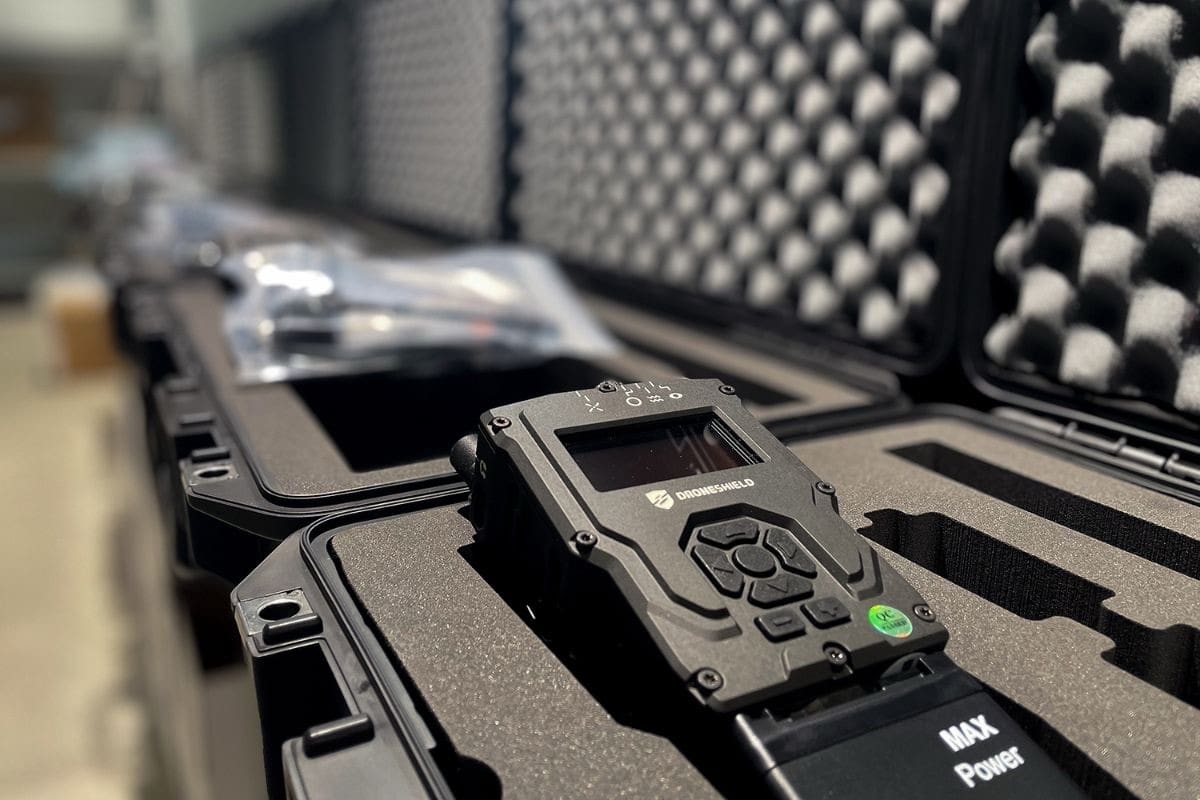
Image: DroneShield have established a European production line
Oleg Vornik, Chief Executive of DroneShield said, “Europe is undergoing a profound shift in counter-UAS preparedness. By establishing dedicated manufacturing in the EU, DroneShield is contributing to Europe’s sovereign capability while continuing to deliver rapidly and reliably for our European customers. The ReArm Europe Plan / Readiness 2030 initiative has highlighted the importance of localized, scalable production, and this new production line positions us to meet that demand.”
The establishment of counter-UAS production in Europe forms part of DroneShield’s global manufacturing expansion, which is planned to grow the Company’s combined total annual production capacity from approximately $500 million in 2025 to an expected $2.4 billion by the end of 2026. This uplift supports rising operational demand across Europe, and reinforces DroneShield’s commitment to strengthening industrial bases and diversifying global supply chains, as militaries, law enforcement and critical infrastructure operators expand and modernize counter-UAS capabilities.
Isembard Raises $50m Series A to Open 25 AI-Powered Factories Serving Aerospace and Defense
Tuesday, March 10th, 2026- Company manufactures components for aerospace, defense and robotics in factories powered by MasonOS, its proprietary agentic AI platform
- Round led by Union Square Ventures
- Supports 2026 growth from 6 to 25 factories in the United States, United Kingdom, Germany, France and Ukraine
Dallas and London | March 9th, 2026 — Isembard today announces that it has raised $50 million in Series A funding, less than 12 months after its Seed round. The capital will accelerate the company’s plan to open 25 factories by the end of 2026, expand its engineering teams while launching into Germany, France and Ukraine.
The round was led by Union Square Ventures, an early backer of Twitter, Coinbase, Etsy, Abridge and Twilio. New investors Tamarack Global and IQ Capital joined the round alongside existing investors Notion Capital and CIV. Angel investors include Alex Bouaziz (Founder and CEO of Deel), Andrei Danescu (Founder and CEO of Dexory Robotics) and Matt Briers (former CFO of Wise).
Component manufacturing is a market worth $1.8 trillion a year. Yet small businesses account for 95% of production and they are rapidly disappearing. The average owner is over 65 years old and 40% plan to retire within five years. This erosion of industrial capacity is colliding with surging demand from aerospace, defense, energy and robotics companies given re-shoring and spending increases on critical industries. Without decisive action, the widening gap between supply of factories and demand from customers risks hollowing out the industrial base of Europe and North America.
Isembard manufactures high-precision components for many of the world’s most demanding customers. The company operates its own and franchisee factories, differentiated by its proprietary software and AI system, MasonOS, which runs them. MasonOS integrates quoting, scheduling, supply chain, manufacturing, quality control and delivery into a single intelligent agentic operating layer, automating and continuously optimizing factory performance.
The company identifies exceptional operators – from manufacturing, the military, franchising and the wider economy – and equips them with its technology, brand, engineering standards and access to customer demand. Franchisees can launch new Isembard factories from the ground up or convert existing businesses into an Isembard factory. This approach enables rapid expansion of high-quality manufacturing capacity while preserving local ownership and strengthening sovereign industrial capability across the United Kingdom, United States and Europe.
Alexander Fitzgerald, Founder and CEO of Isembard, said:
“Manufacturing is the origin of our security, prosperity and sense of purpose as nations. This Series A enables us to open more factories, invest in MasonOS, support exceptional franchisees and recruit the best engineers across Europe and the United States. Our mission is to forge industrial acceleration.”
Rebecca Kaden, Managing Partner at Union Square Ventures, said:
“Isembard is redefining the process of owning and running a factory. By embedding deep operational expertise into an agentic OS, MasonOS lowers the barrier to operating high-performance manufacturing businesses and enables a networked, capital-efficient path to scale. At a moment when demand for advanced manufacturing is accelerating and interest in SMB ownership is rising, Isembard brings both forces together. We’re excited to partner with Alexander and his team as they expand access to factory ownership and rebuild industrial capacity across the West.”
X-Bow Completes Largest Privately-Funded Solid Rocket Motor Test by Non-Traditional Contractor
Wednesday, March 4th, 2026X-Bow recently successfully completed testing of the XB-34 Ballesta SRM, one of the largest privately-funded solid rocket motors ever tested by a non-traditional defense contractor.

The 34.5-inch diameter XB-34 demonstrates X-Bow’s range from tactical 2-inch motors to strategic-class SRMs. Working Monday-to-Friday and sometimes Saturdays, they’ve tested nearly 300 motors.
This venture-backed, dual-use non-traditional, SRM is 30-50% cheaper than comparable existing options with scalable production at the company’s 220-acre facility, capable of producing thousands of motors annually.
Transition to Production: In the last 5 months X-Bow has secured three production contracts:
$191M production contract for solid rocket motors;
$8.9M production contract for igniters to strengthen their vertical integration, and supply chain;
Another $8.9M production contract for yet to be announced motor.
This achievement positions X-Bow as a key player in addressing the SRM shortage affecting various defense programs, and positions X-Bow for affordable solutions to futuristic challenges such as space-based interceptors as part of Golden Dome.
MATBOCK Acquires Hawk Distributors, Inc, Expanding Advanced Manufacturing Capabilities Near Fort Bragg, NC
Monday, March 2nd, 2026
VIRGINIA BEACH, VA – 2 March 2026 – MATBOCK, a leader in military and tactical technology development, today announced its strategic acquisition of Hawk Distributors, Inc., a contract cut-and-sew manufacturing company based in Sanford, North Carolina. The facility is strategically located approximately 35 minutes from Fort Bragg, in the heart of North Carolina.
This acquisition establishes MATBOCK Manufacturing, a new division dedicated to expanding MATBOCK’s vertically integrated production capabilities. The move combines MATBOCK’s reputation for designing lighter, more effective tactical equipment with Hawk Distributors’ nearly two decades of proven production expertise.
Hawk Distributors, founded in 2012 by Air Force veteran Terry Earle, has a rich history of manufacturing high-quality soft goods, from tactical gear and military apparel to commercial products for major brands. Under the acquisition, the company’s 40,000-square-foot facility, its skilled and diverse workforce, and its leadership will be retained.
“The acquisition of Hawk and the establishment of MATBOCK Manufacturing is a critical step in our mission to support the warfighter,” said Sean Matson, Co-Founder and CEO of MATBOCK. “We are extremely excited about the current capabilities and the exceptional quality of work produced at the Sanford facility. This vertical integration allows us to control the entire product development lifecycle, from initial design to final production, ensuring every stitch meets our uncompromising standards. We are preparing to invest millions more to introduce even more advanced manufacturing technologies here.”
The Sanford facility is a robust production center, currently equipped with 110 sewing machines and two advanced, continuous-feed laser cutters with auto-alignment rollers.
Current services offered by MATBOCK Manufacturing include:
Contract Cut and Sew
Product Prototyping and Sampling
Technical Pattern Development and Grading
Past production highlights a diverse portfolio, including advanced tactical equipment (plate carriers, pouches, tactical packs), specialized apparel (uniforms, hoodies), rugged baggage (backpacks, range bags), and outdoor gear (tents, hammocks).
Within the next 2 weeks, MATBOCK will have four production Selective Laser Sintering (SLS) 3D printers to immediately increase production and capabilities.
Looking ahead, MATBOCK Manufacturing plans to aggressively expand its service offerings to become a single-source solution for complex manufacturing needs. Planned future capabilities include RF welding, production-scale 3D printing, CNC machining, and injection molding. This will further strengthen the domestic supply chain and provide government and industry partners with a reliable, innovative, and USA-based manufacturing partner.
For inquiries about our capabilities or to get a quote on one of our services, please reach out to oem@matbock.com. Check out www.matbockoem.com for more details.