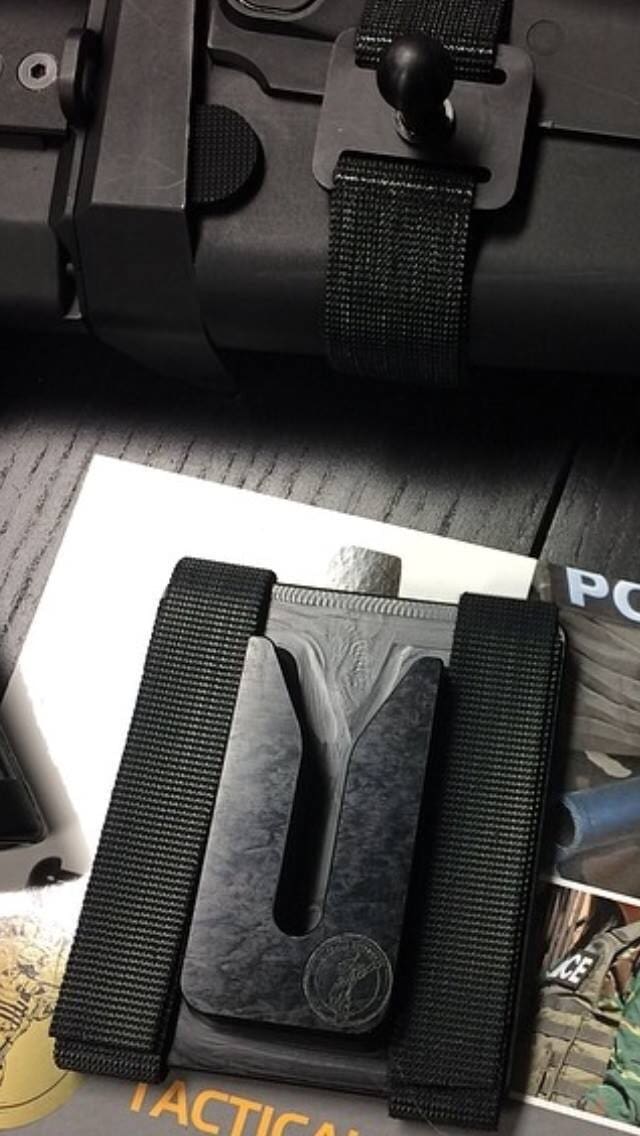
According to Tactical Universal Clip, they have been granted a patent by the US Patent and Trademark Office. Now, they get to learn what a patent really buys you. I’m grabbing my bucket of popcorn.


According to Tactical Universal Clip, they have been granted a patent by the US Patent and Trademark Office. Now, they get to learn what a patent really buys you. I’m grabbing my bucket of popcorn.
If you’re an international MultiCam customer, you’ve probably already run across a new company named 1947, LLC when they became the exclusive international distributor of MultiCam fabrics earlier this year. Founded in May, 2014 by two textile industry veterans, 1947 LLC develops and sources woven and knit fabrics globally. In fact, while they are a US company, they also maintain a Shanghai office that ensures their customers will receive the same quality and service they experience in the US.

No matter where you are, if you’ve been using MultiCam for any amount of time, the names at 1947, LLC won’t come as a surprise; Founders Ben Galpen and Ed Ricci as well as Vice President of Sales Bryan Boulis are well known. Not only is this team the international distributor for MultiCam, they are also responsible for new fabric development here in the US.
The firm has partnered with well known brand Texcel Industries to be their exclusive international and new business development partner. They also work with an ever growing list of new licensees to offer MultiCam fabrics.

What this means for the Multicam brand is expanded commercial fabric offering through additional licensed printers. This results in more inventory and options for consumers and fabric development opportunities for manufacturers. Not only that, you’re going to see new nontextile Multicam solutions coming very soon out of this arrangement.
National Molding has capitalized on the popularity of the weapon sling by offering two new sling hardware parts:
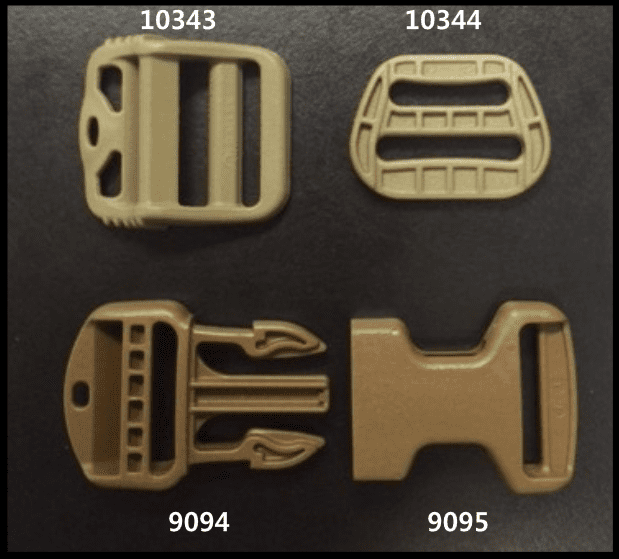
A 1.25″ tension lock with aggressive side ribs for positive grip, along with the ability to add a lanyard – #10343.
A 1″ to 1.25″ adaptor which features a 1″ slot and 1.25″ slot for simple transition between different webbing sizes – # 10344.
Both parts complement the National Molding 9094/9095 HD sling buckle. They are available in a variety of military colors and are 100% Berry compliant.
Arc’teryx produced this excellent video demonstrating how to care for your Gore-Tex garments. It’s great advice for all of your waterproof breathable outer garments, regardless of material.
It’s getting cold early this year. We originally published this article in February of 2010 but seeing as the weather is getting cold and times are tough we republish it each year. We know you pay a lot for your clothing and equipment and it is just as important to maintain it, as it is your firearm.
It looks like it’s going to be a LONG winter. During a recent shooting class I attended it started raining day one and by the middle of the second day it looked like a blizzard. Most of my fellow shooters were wearing waterproof breathable outerwear and several began to feel clammy and then damp the longer each day progressed. A couple of guys were wearing issue Gen I ECWCS parkas. Probably not the best garment available as Gore long ago decided that the basic design could not meet their “Guaranteed to Keep You Dry” standards. Of course these jackets were old. More than anything, they needed some maintenance.
The key to any modern outerwear is its Durable Water Repellent (DWR). There are quite a few treatments available and different manufacturers have their favorites but they are usually are based on flouropolymers. These are PTFE molecules that are applied to the surface and cured at high heat to make them adhere better and increase performance and have a fluorine atom at one end which is highly hydrophobic. Heat causes them to align themselves with their flourines exposed. Water tries to move away from the flourines resulting in beading. This allows the water to roll off without wetting the fabric. Interestingly, Quarpel (Quartermaster Repellent) was one of the first DWRs and used to treat field jackets and other military clothing items.
Since most of us can’t run out and purchase a new jacket every time this happens I thought it would be a good idea to share a few tips with you that will not only revitalize your garment’s DWR treatment but also extend the life of your clothing.
DWR treatments work best when they are clean. I realize this seems counter to what you think is right since a DWR generally lasts about 25 washings and tactical garments get quite a beating in the field, but you need to wash your clothing. The first thing is to avoid using liquid detergents as well as fabric softeners. Additionally, avoid optical brighteners as they are not good for DWR or IR treatments. There are wash in treatments you can purchase as well as spray on options to help renew your clothing’s DWR. However, wash in treatments may affect the breathability of your membrane. One of the best spray solutions available is Revivex from McNett and it is what I have used in the past. It also serves as a stain repellent. Revivex can also be applied to garments that never had DWR in the first place so if you have hunting or field clothing that you find yourself wearing in inclement weather regularly you may want to give it a once over. If you use a spray treatment be sure to evenly coat your garment while it is still damp after washing and to pay special attention to any seams.
There are two additional ways you can put some life back into your DWR. One is to put the garment in a conventional dryer on warm and the other is to iron it on low heat. If water fails to bead up on the surface of your garment you will need to retreat.
No matter which method you choose, proper maintenance of your foul weather clothing’s DWR will help keep you warm and dry and extend the life of your equipment.
D3O has introduced a new two-piece, integrated knee pad system. The outer shell is a hard plastic, protecting the knee from hard knocks and sharp objects. It also features a flat spot to make taking a knee a little more natural. Leveraging D3O’s Trauma Reduction and Unrivalled Shock Technology (TRUST) technology, the insert is made from two different 3D0 high performance materials for comfort and shock mitigation. The LITE foam offers cushioning and the D3O XT absorbs shock, particularly over the knee cap.
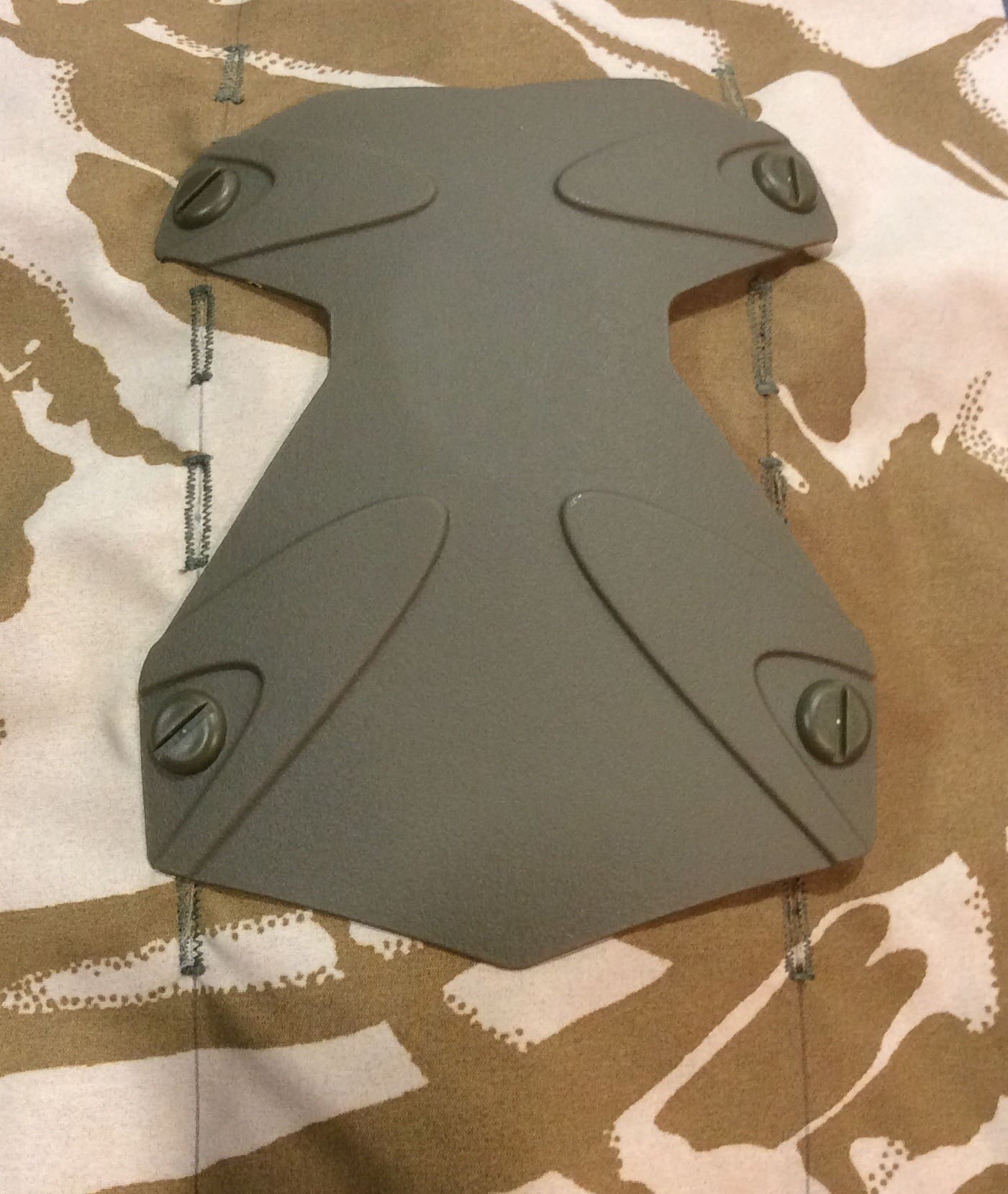
The pads can be worn in three ways. The insert alone inside a kneepad slot. The two components together inside a kneepad slot. Or, the insert inside the slot and the outer shell on the exterior of the slot. The four slotted circles you see at the edges are the tops of tabs that line up with slots on the insert. You twist them to lock them in place in order to keep the two pieces together.
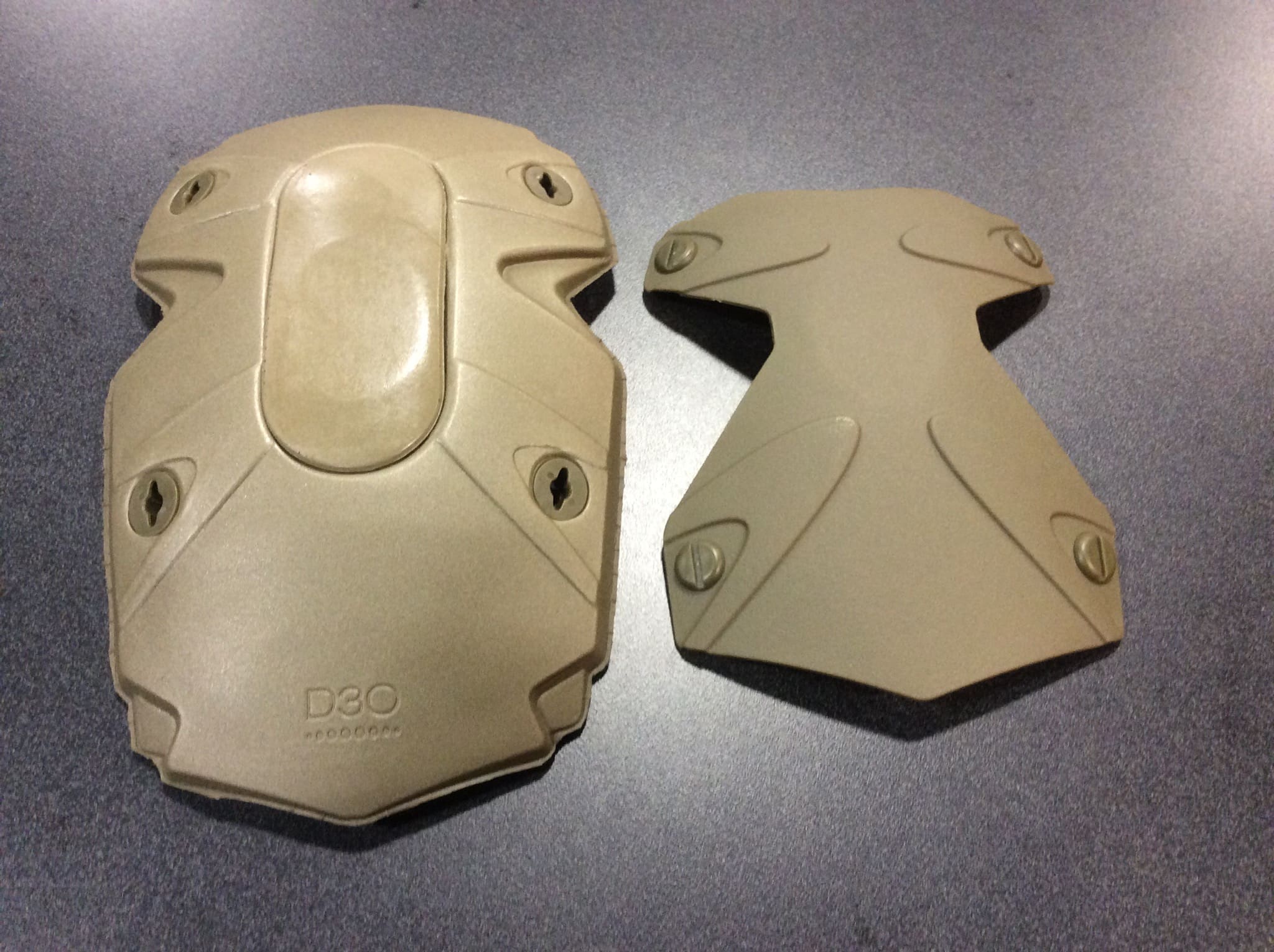
Available soon in the US through Tactical Distributors, it can be integrated into many existing trousers by wearing just the insert piece or the two components together, inside a kneepad flap. Additionally, new pants can be manufactured to accept the D3O pad system by sewing 14 small sized buttonholes in order to accommodate the interface. This will allow users to wear the hard shell outsert on the outside of the knee in order to protect the fabric as well as the knee and the holes offer custom fit.
This is very cool news from AustriAlpin regarding the introduction Of new powder coated colors. Thanks to the guys at Tactical Trim for passing this on to us.
After a development period of 8 months, the big day has finally arrived. AustriAlpin proudly presents the new powder-coated color range of the patented COBRA quick release buckle! The buckle color options of Sand, Coyote Brown, Tan 499, Foliage Green, Elephant Grey, Wolf Grey, White and Signal Orange will all now be finished with a new powder coating process. Buckles in the Black, Matte Black, Titanium Blue and Polished Metal will remain anodized and polished.
Why change? Why not stay with anodizing?
Our dedication to extremely high quality standards is the basis of the trust our customers put in us. Using the anodizing process it was very difficult and sometimes impossible to meet these high quality standards – especially with lighter tones and brighter colors we could not meet the color-match requirements, and the results were also often inconsistent.
Meanwhile, all over the world people are working on developing the best camouflage designs for their respective environments. In order to harmonize with these new camo designs and patterns, all accessories and trims should match the camo colors as perfectly as possible.
Why powder coating?
Powder coating guarantees a consistent and perfectly-even result so that all pieces will match the color standard all of the time.
The powder coating is also very durable and highly resistant to high temperatures and UV radiation. During the ISO cross-cut test for paint adhesion, the achieved rating was 0, which is the best possible test result.
The new color series is in production now; however, it will take until the end of 2014 to fully stock all models in every color.
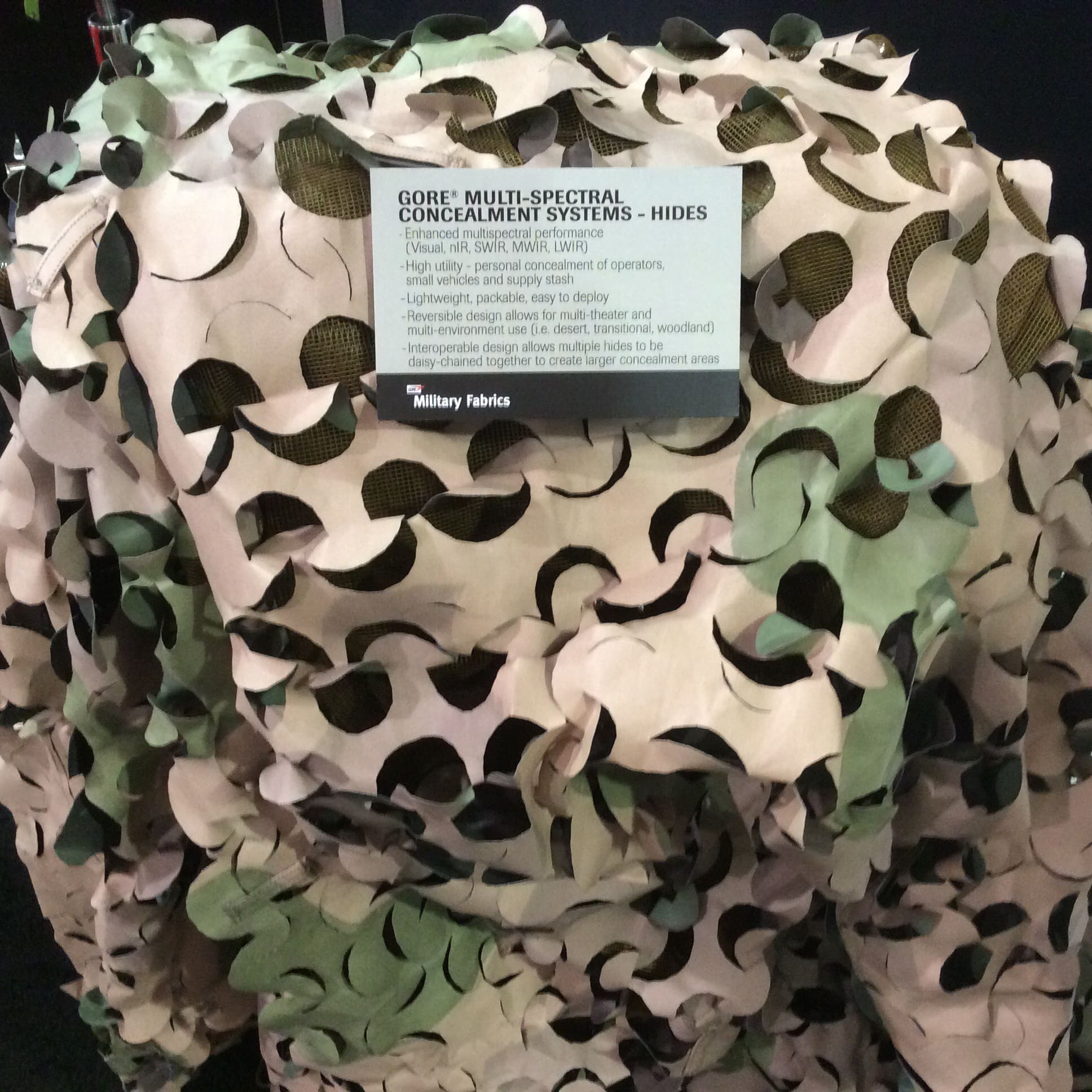
WL Gore is offering a new application of the MultiSpectral concealment technology used in the Turkey Suit we showed you last year. Now, they are offering hide systems that can be used to conceal a variety of emplacements and systems such as fighting positions and vehicles.
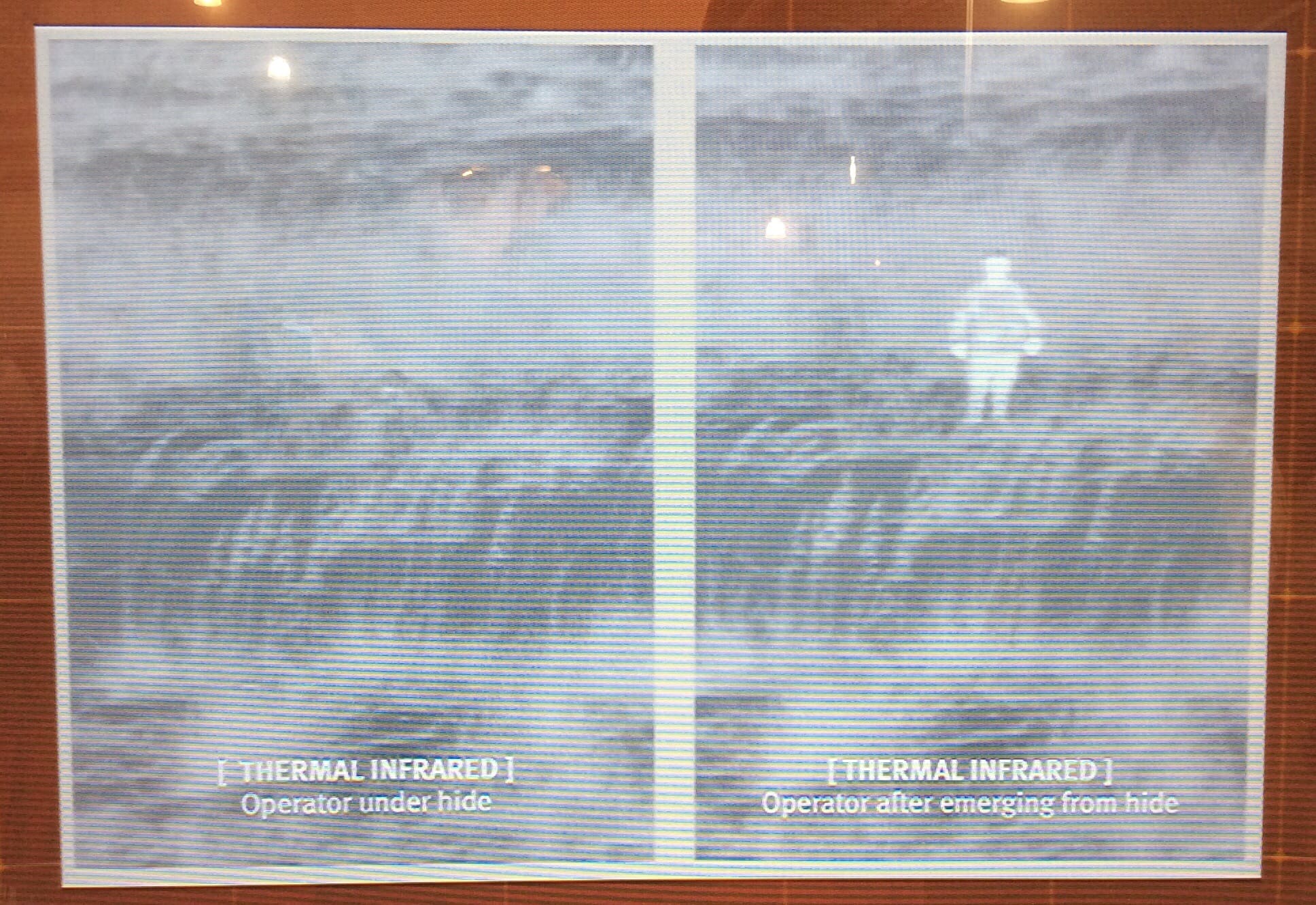
As you can see, the technology does a great job of concealing the user under thermal sensors (LWIR above) but it also offers visual, niR, SWIR and MWIR.
The hide systems are reversible and can be used for a variety of environments such as desert, woodland or transitional. Additionally, they can be daisy chained together to create a variety of configurations.
www.multispectralconcealment.com