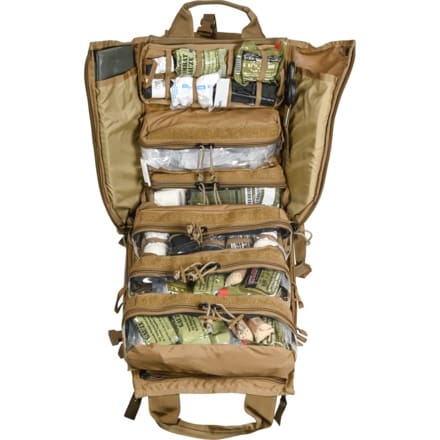
FirstSpear TV

Archive for the ‘Medical’ Category

Special Operations Aid & Rescue – Technical Austere Medical Evacuation Course

Wednesday, July 8th, 2020

The TAME course is right around the corner. It’s SOARescue’s first course since the start of things opening back up. If you’ve ever provided or will provide enroute Care in the non-standard environment this is the course for you. If critical care, flight and tactical medicine had a baby this is the course that would come of it. Seats still available. Contact us for payment plans or agency discounts. Some of what to expect:

-Basic flight physiology

-Gas laws/ effects on patients

-Operating around standard and non-standard evacuation platforms

-Unique aspects of providing care in an aircraft

-Basic hoisting and rope work related to movement of personnel and casualties

-Overview of Anatomy and Physiology

-Management of complex airways to include surgical intervention

-management of hemodynamically unstable patients to include the use of blood products and vasoactive agents

-Advanced respiratory management to include tube thoracotomy placement and management

-Ventilator fundamentals and practical application of strategy.

-Ventilator management of a complex patient.

-Pharmacology overview

-Utilization of medication pumps

-Advanced monitoring of patients and casualties.

-Obtaining and interpreting lab values

-Patient packaging and loading unloading

-Hand-off strategy and documentation

-basics of rope rescue

www.soarescue.com/events/technical-austere-medical-evacuation-tame-concord-nc-tame-nc-0720-02

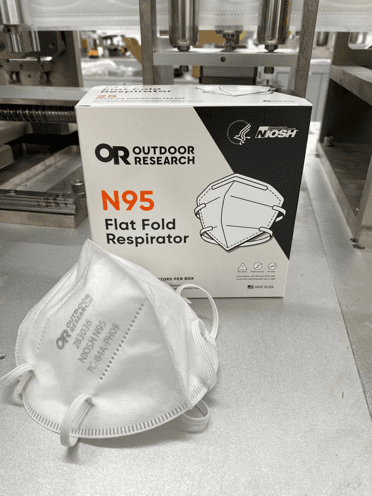
Domestic N95 Mask Production Expected to Exceed 1 Billion in 2021

Sunday, June 28th, 2020

WASHINGTON — Thanks to work by the Defense Department’s COVID-19 Joint Acquisition Task Force, U.S. industry is expected to greatly increase the production of N95 masks next year, the task force’s director said.

During a House Armed Services Committee hearing yesterday, Stacy Cummings told lawmakers that nationally, the U.S. was consuming about 50 million N95 masks each year. During the COVID-19 crisis, demand for masks increased substantially to about 140 million during a 90-day peak-use period.

DOD investments to help domestic industry ramp up production of those masks and other equipment will help ensure that in the future the U.S. will better be able to meet demand for personal protective equipment with domestic production, she said.

Based on the investments made by the department, Cummings told the House panel, an increase in production of 450 million masks a year will be attained by October, with a rate of more than 800 million masks per year by January.

“Starting in 2021, we anticipate our total domestic production to be in excess of a billion per year,” Cummings said.

Ellen Lord, the undersecretary of defense for acquisition and sustainment, told lawmakers that increasing domestic production capabilities has been a focus of the department.

“In order to decrease our dependence on foreign suppliers for medical resources, DOD has focused on increasing domestic industrial capacity and capabilities,” she said. “To that end, we executed some $284 million in industrial expansion efforts during the first two weeks of May 2020. Reconstituting domestic production or creating new production that shifted offshore years ago often requires capital expenditure, capital equipment expenditures, retooling and retraining of the workforce.”

Lord also said DOD has been focused on maintaining the health of the defense industrial base during the COVID-19 pandemic. The DIB includes a wide array of businesses that produce weapons, equipment and supplies for the U.S. military.

During the COVID-19 pandemic, businesses that make up the DIB suffered as other U.S. businesses did, Lord said. Should some of those businesses fail as a result of COVID-19-related disruptions, it might result in the department not being able to procure important defense-related supplies, equipment or weapons, she added.

Lord said the department is using $688 million of CARES Act funding to address impacts to the DIB by directly offsetting financial distress and providing investments to regions most severely affected.

She also said that increased communication between the department and the DIB were key in allowing defense officials to better understand where the industry was hurting most, and where the need existed most. When first she stepped into the A&S leadership role in 2017, she said, she set up quarterly meetings with DIB representatives to better assess their needs. The COVID-19 pandemic accelerated that communication.

“When the pandemic hit and we saw how catastrophic it could be to our defense industrial base, what we did was just really amped up those engagements,” she said. “So starting on March 17, we had our first [teleconference] with industry, and we broadened beyond just the three industry associations that we worked with, to really start including nontraditionals and others.”

The number of industry representatives involved in those meetings also increased, Lord said, “For multiple weeks, we had calls three times a week. One of those calls per week was focused on small business, and we listened to what the problems were,” she said. “As a result of that, … a lot of the leadership of A&S listened to what the issues were, and we tried to start taking the first small steps.”

Lord said as a result of that communication, the department worked to simplify how to do business with the military, including raising the threshold for micropurchases and increasing the progress payment rate from 80% to 90% for large businesses, and from 90% to 95% for small businesses.

“This change will infuse an estimated $3 billion in cash to all levels of the DIB,” Lord said. “Further, the department has partnered with the major primes to ensure this increase in cash makes its way throughout the supply chain.”

By C. Todd Lopez, Defense.gov

High Speed Gear Releases ReFlex Vehicle Mount

Tuesday, June 23rd, 2020


SWANSBORO, N.C. – June 23, 2020 – High Speed Gear® is proud announce the expansion of the ReFlex™ line with the ReFlex Vehicle Mount, a companion accessory for the ReFlex IFAK System.

The ReFlex Vehicle Mount is designed specifically to mount the Med Roll to the back of most detachable headrests. The elastic cinch strap design allows the Med Roll, or similarly-sized pouches/items, to be quickly pulled out to the side without disengaging the side-release buckle. This mounting platform can also hold a tourniquet with a 3” elastic loop for easy vehicle storage.

“This is just a logical accessory that brings the ReFlex IFAK System directly into the everyday,” said Bill Babboni, HSGI® vice president of sales and operations. “The ReFlex Vehicle Mount is exactly what you need to keep your medical gear within easy reach.

Med Mag PillPack from SOAR Rescue

Thursday, June 18th, 2020

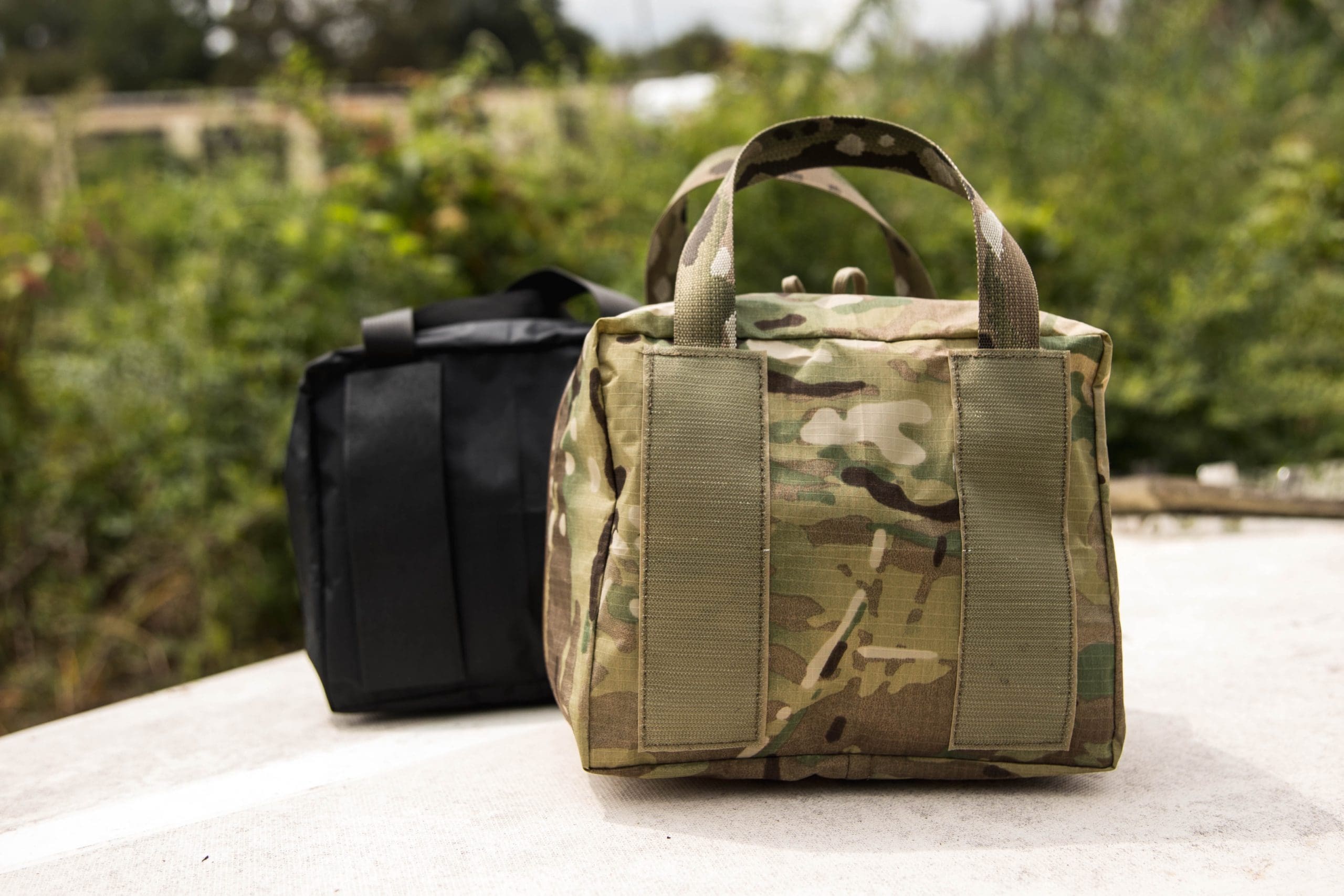
These days, almost everyone carries some from of IFAK, but the contents are generally focused on trauma. There’s not a lot of stuff you’ll use day-to-day, and even if there is, it’s all packed so tightly, you’d never get it all back together if you took out just a couple of tablets.

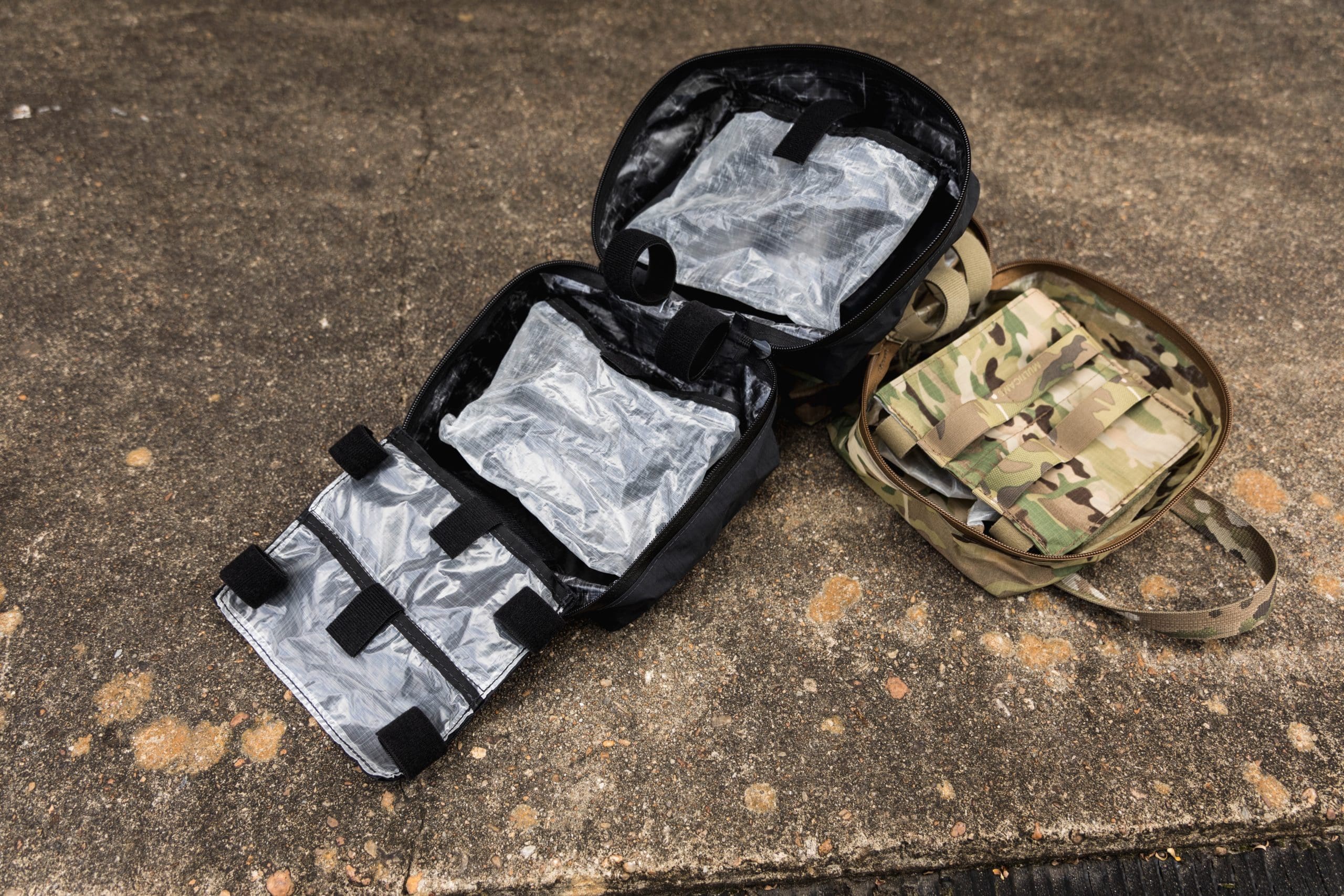
Enter the Med Mag PillPack from SOAR Rescue. It’s one of those things you didn’t know you needed until you had it. It’s packed with stuff you’ll need and meant to be used. The 10mil thick bag features a side, waterproof zipper for easy access. Plus, it’s sized to fit in an Ammo pouch, which is easy to get ahold of and tends to be a pouch chosen based on personal preference.

Contents
• Acetaminophen x 4
• Ibuprofen x 4
• Diphenhydramine x 4
• Loperamide x 4
• Bismuth Subsylicate x 2
• Multi-System Cold x 4
• Burn Cream x 2
• Triple Antibiotic Cream x 4
• Hydrocortisone Cream x 4
• Band-Aids x 4
• Eye Drops x 2

shop.soarescue.com/products/the-medmag-pillpack

ADS Inc – Remote Health Solutions – SDNA-1000 COVID-19 Saliva-Based Test Kit

Wednesday, June 17th, 2020

ADS Inc is the exclusive distributor of Remote Health Solutions’ SDNA-1000 test kit to the Department of Defense. it is the only FDA EUA at-home COVID-19 saliva-based test kit for sale directly to U.S. government entities.

KEY HIGHLIGHTS:
-The only FDA EUA-authorized Saliva -Collection Device for COVID-19 testing
Proven to stabilize and protect -COVID-19 RNA during specimen transport in all extreme
temperatures over 10 days
-Engineered to reduce at-home user and self-collection errors
-Sample collection is done through saliva (spit) as opposed to nasal swab
-97.50% sensitivity
-100% Positive Predictive Value (PPV)
-97.56% Negative Predictive Value(NPV)
-24-hour laboratory turnaround time (not including shipping time)

For a quote, visit www.adsinc.com.

SCUBAPRO Sunday – Heart Rate Monitor/ Body Temperature  

Sunday, June 14th, 2020

Why monitor your heart rate when you are diving? Measuring your heart rate using a heart rate monitor (HRM) is an excellent way to gauge the effectiveness of your workload because as you strengthen your body through exercise, you also strengthen your heart. Today just about every watch has an HRM to analyze and evaluate everything you do. Whether you are in the military, public service, or a working diver, you should be at a certain level of fitness so you can do your job.

So why not use this technology in diving as well? With the help of a heart rate monitor, you can keep an eye on the heart rate underwater and make your dives safer. By monitoring your heart rate, you can assess your workload. Furthermore, by measuring your heart rate, you can specifically train to increase your endurance in advance, and also you can use it to measure your output so you know how fast you are swimming and help track the distance you are covering. With the SCUBAPRO HRM, you can monitor your body temperature also. It is also great for diving in the winter, during long-duration dives, or even open ocean swims in the winter.

Increased exertion, while diving in deep water, improves circulation, which, in turn, increases the nitrogen uptake. The heart rate can also be used to calculate decompression times even more accurately and make diving even safer. That’s why the SCUBAPRO computers don’t just show depth, no-stop times, and the decompression schedule but also continuously inform the underwater athlete about his or her heart rate, i.e., his or her stress, which in turn is factored in when calculating other dive parameters. Exclusive to SCUBAPRO dive computers, the heart rate monitor, jointly developed with Polar (the world leader in the field of heart rate monitors), measures your heartbeat and body temperature during the dive that can then be factored into the decompression calculation along with your workload. This can results in safer diving because each diver is unique, and each dive location and situation are different. The HRM is also ideal for freedivers, measuring heart rate, and sounding an alarm if the heart rate drops below the set level.

Factoring your heart rate into your decompression calculations makes diving safer and a lot more fun. A lightweight waterproof ECG (electrocardiogram) transmitter is built into an elastic belt that straps around the chest, directly against the skin. This belt wirelessly transmits your heart rate data to your SCUBAPRO personal dive computer. Data is displayed on the screen, plus it is factored into your decompression calculations to create a more personalized dive plan and improve the quality of your diving. 

Engineered by divers for divers, the SCUBAPRO Aladdin 2 (A2) watch performs advanced functions in the timeless style above and below the surface. Galileo 2 is everything you need for an extraordinary underwater experience.

The unique integrated Heart Rate Monitor senses your effort, incorporates it into the workload calculation, and adapts the decompression algorithm. The result is safer diving, because the diver’s physiology reports it, and because each dive location and situation is different. The HRM is also ideal for Apnea divers, measuring heart rate, and sounding an alarm if the heart rate drops below the set level.

SCUBAPRO’s line of “smart” personal dive computers, including the Galileo 2 (G2), Galileo Sol, Galileo Luna, M2, Mantis 1, the Mantis, the Meridian, and the new A2 Dive computer are all designed with Human Factor DivingTM. All enable you to better track your time underwater and improve your diving by continually calculating and adjusting to new data based on your personal biometrics.  

SCUBAPRO and Human Factor Diving bring the world of biometrics and wearable technology to diving. SCUBAPRO’s personal dive computers are indispensable tools for divers of all skill levels, providing personalized data not available on any other dive computer.

Special Tactics Wing, AFRL Develop Smartphone App to Mitigate COVID-19 Risk

Thursday, June 11th, 2020

HURLBURT FIELD, Fla. – The Air Force Special Tactics community is known for looking at complex problems and finding new ways to accomplish the mission; when COVID-19 became a global pandemic, it was no exception.

Medical and Preservation of the Force and Family (POTFF) team members of the 24th Special Operations Wing, headquartered at Hurlburt Field, Florida, teamed up with the Air Force Research Lab to develop a way to monitor ST operators’ health status during the pandemic straight from their smartphones.  

The team quickly responded by taking an existing human performance software known as, Smartabase, which identifies health risks to the force, and adding a “COVID-19 Check In” feature to monitor pre-and post-deployment health.

“We recognized the need for real-time monitoring of the force and readiness impact from COVID-19,” said Col. John Dorsch, 24th SOW surgeon general. “COVID-19 screening was a natural extension of our efforts since it is another risk to force like others for which we are monitoring, such as TBI, musculoskeletal injuries, and PTSD.”

The app feature is designed as a daily survey where users input daily temperature, possible symptoms, risk factors, exposure as well as mental health state. All the data from the ST operators is collected and alerts medical and command teams if there is anything out of the ordinary that needs to be addressed.

“This ensures commanders have important information related to their operators and allows them to make the best decisions about who goes where and does what,” said Craig Engelson, 24th SOW POTFF director. “In the past they have had to coordinate with multiple departments and multiple systems to get the same information.”

The idea stemmed from the wing’s long-standing efforts using technology and innovation to maintain operator readiness as well as ensure Special Tactics teams’ ability to perform optimally on the battlefield for years to come.

“[Special Operations Forces] can’t be mass produced,” said Dorsch “Special Tactics is a small, but incredibly important and highly specialized combat capability.  This system helps protect this capability for combat operations, and our partnership with AFRL has been invaluable.  We must continue to leverage technology to help us solve the nation’s hard problems.”

Dr. Adam Strang, a human performance research scientist and AFRL’s director of the Signature Tracking for Optimized Nutrition and Training (STRONG) team, has been leading the back-end development of the database as well as finding new opportunities for improvement.

“As a scientist I like to lean forward and stay on the cutting edge,” said Strang. “Often that requires taking big swings and being comfortable with risk. Special Tactics functions similarly, which makes a good pairing.  Together we push the edge of technological capability in ways that AFRL could not accomplish alone.”

The technology proved successful in monitoring returning deployers, safeguarding families from health risks, as well as helping outgoing deployers meet specific country clearance requirements. The 24th SOW team also helped integrate the technology at the 1st Special Operations Medical Group at Hurlburt Field and 27th Special Operations Medical Group at Cannon Air Force Base, New Mexico to monitor pre-deployment health for almost 250 Air Commandos.

“In truth I believe that we are only scratching the surface of its capabilities,” said Engelson “As our providers and commanders integrate with the system even more, there is no telling how much more useful this system could become.”

Special Tactics is the Air Force’s ground special operations force that leads global access, precision strike, personnel recovery and battlefield surgical operations. For more info on Air Force Special Tactics visit our website www.airforcespecialtactics.af.mil or follow us on social media: Twitter: @SpecialTactics_ Facebook/Instagram: @Airforcespecialtactics

24th Special Operations Wing Public Affairs Office

Cold Weather Sock Systems and Foot Care by John Huston, Polar Explorer

Wednesday, June 10th, 2020

This is the first article in a series written by accomplished arctic explorer John Huston and presented by Point6, out favorite sock maker.
H1: Cold Weather Sock Systems and Foot Care
H2: Expeditionary Foot Know How for the Long Haul
H3: Feet are the Expedition
It might seem odd to post an article on cold weather socks in June, but now is the time for units to place orders for equipment needed this winter.


John Huston off the coast of Ellesmere Island in high Arctic Canada, May 2013. © John Huston

In this post we’ll get into how I manage my feet in the cold. We’ll take a look at sock systems, moisture control via vapor barrier liner socks, and discuss foot care in the cold.

Twelve years ago I was having a beer with a Norwegian polar explorer colleague of mine, who came out of Norway’s Marinejegerkommandoen (MJK). We were discussing my upcoming unsupported expedition to the North Pole. “You know,” he said, “when it gets down to it: Preparation is the expedition.”

This kernel of advice quickly became one of my operational pillars. It goes deep into my expeditionary philosophy that reaches back to the golden age of polar exploration at the turn of the 20th century…and it opens up an endless well of related topics that we can dig into down the line.

Some of those historic polar explorers are heroes of mine. Explorers from that era, like Roald Amundsen and Ernest Shackleton, were the astronauts of their time. They filled in the blank spaces on the globe and pushed technology and knowledge forward. And sometimes they really suffered. And sometimes they put on frozen boots in the morning. And sometimes they marched on bloody feet or lost toes to frostbite.


John Huston skijoring through Auyuittuq National Park, Baffin Island, Canada, April 2019. © Michael Martin

Early in my cold weather career, about 20 years ago, foot systems and foot care became an obsession. Happy feet = improved performance. Unhappy feet can land a person somewhere on the spectrum of reduced capacity from: effective but hating it to casualty.

So, ‘preparation is the expedition’ is prime and all encompassing, but ‘feet are the expedition’ isn’t far behind.  

For me, in the cold, feet need to be warm, comfortable, and healthy. When these three factors are in order a person doesn’t tend to think about their feet too much. When one of these factors is out of line the opposite is true.

The main ingredients to solving this equation are high quality merino wool socks, moisture management, and foot care routines.  

Merino wool socks provide all day comfort and excellent moisture management properties, and have the ability to perform for many days in a row. I’ve worn a lot of different socks for weeks at a time. Merino wool handles grime build up very well compared to synthetics which become odor bombs. My skin is happier in merino wool. When merino wool is wet, it maintains a good deal of it’s insulation value.

Fit and comfort are a big deal to me. The sock needs to feel good when I put it on and it needs to feel good after 12 hours of exertion and it needs be able to repeat that over and over. I love over the calf socks because they rarely slide down or bunch up. I almost frostbit my fingers trying to fix a bunched up sock in –40° and windy.

In most cases, depending on the temperature, duration of the activity, and humidity my foot layering system consists of the following from the inside out.

Foot/Skin

-Ultralight over the calf (OTC) merino wool sock. This is sometimes called a liner sock. Example: Point6 37.5 Ultra Light OTC.

-Vapor liner sock (VBL). This is a thin waterproof sock that keeps all foot perspiration on the innermost layer, which prevents the insulating socks and boot liners from getting wet. I’ve used everything from plastic bags to neoprene to silicon coated nylon taped-seam socks. Point6 is currently prototyping a new vapor liner sock. Plastic bags can work, but lack durability and comfort. Some people like neoprene, but my feet feel like they want to blister when I wear neoprene socks.


-Medium or thick merino wool sock (OTC, mid-calf, or 3/4 calf). The thickness of this sock depends on temperatures and how the sock system fits with my boots. Examples: Point6 37.5 Tactical Operator Heavy Mid-Calf

-Winter expedition nordic ski boot. This is another topic, but I’m a big fan of nordic ski boots with removable liners and extra space to allow for sock layering options and flexibility which promotes circulation.

Moisture management has a lot to do with warmth, comfort, and foot health. Feet sweat more than any other part of the body. A pair of feet contain approximately 250,000 sweat glands which can generate 8 oz of sweat per day. That number seems extreme and likely varies person according to person, but it’s pretty easy to see why people can end up with frozen boots in the morning. Most of that sweat has ended up in the fabric and insulation of their boots. In freezing temperatures, especially below zero, the moisture doesn’t get fully pushed (or breathed) into the air because it is too cold – the freezing can be in the boots themselves. This concept applies to clothing and sleeping bags as well.

This is where the vapor liner sock comes in – moisture control. During the day vaper liner socks add warmth because your insulation layers (outer merino wool sock and boot liners/boots) stay dry. Without a VBL those insulation layers will collect perspiration. Insulation works because it traps tiny pockets of air that retain heat. Insulation that contains water or ice is much less efficient and effective. For example, it is possible to warm up cold fingers in damp gloves, but it takes a lot more energy and a lot more work than in dry gloves. Same for feet. VBLs are often worth it to me just for the added warmth, not to mention the reduction in nightly drying chores.

On overnight trips (or even back when staying indoors) a sock system with vapor liner socks is much easier to dry than a ystem without the VBLs. Simply dry the liner socks and the inside of the VBL and you are good to go for the next day. Without the VBL it can take hours to dry outer wool socks, boot liners, and boots.

When I’m guiding I require that my clients wear VBL socks. That way I know their foot insulation layers are going to be dry during the day. And I know that they’ll easily be able to manage drying their socks during the evening. This is no small thing after a long ski day when people want to get into their warm sleeping bags as soon as they can.

Foot care routines are essential to maintaining happy feet. We dry our socks and feet every single night. I designate a thick pair of merino wool socks as sleeping socks that I only wear when I’m sedentary in camp. Every night I’ll put high quality natural hand cream on my feet. I like Burt’s Bees Almond Milk Handcream or Nourish Organic Argan Butter and avoid cream with petroleum products. Every third day we wash our feet with soap and warm water, using an extra mug and a small scrap of a camp towel. With these routines, a high quality sock system, and the right boots – all tested thoroughly prior to a major trip of course – my feet have been a non-issue for several thousand miles of Arctic and Antarctic ski expeditions. Part way through 60-day expeditions I’ve had teammates state that their feet have never felt more healthy, not even at home.

There is also a lot to be said for a good solid specific motion training regime that lets your feet and body know what is coming and allows time for it to adapt. We can discuss training in another post.

Sock systems and foot care routines are very personal. So make it a priority and take the time to experiment and get it right. You’ll enjoy happier days no matter what your endeavor.

Take care of your dogs and they will take care of you.

by John Huston, Polar Explorer

Brought to you by Point6, Merino Mastered