Tropo Performance

Archive for the ‘Optics’ Category

Dueck Defense – Red Dot Back Up Sight Base

Monday, June 27th, 2016

Barry Dueck designed the Red Dot Back Up Sight Base as a simple means to incorprate an RDS on to a pistol without going to a gunsmith. The mount slides into the rear sight dovetail.


FEATURES:
• CNC Machined in the USA from US Mill certified bar stock
• Nitride coated giving a super hard matte black surface finish that is highly corrosion resistant even in salt water environments
• Uses factory rear sight dovetail. No modification to your gun
• Optimal mounting height to clear Suppressors
• Compatible with most open top and red dot tactical holsters
• MADE IN THE USA

Next, Dueck Defense is introducing a version for the S&W M&P as seen in this photo by @kotactical on Instagram.

dueckdefense.com/shop/firearms/red-dot-back-up-sight-base-rbu

Night Vision Redux – Part 3 – The Chassis

Wednesday, June 22nd, 2016

A quick laymen review of the PVS-14 component layout tells a fairly quick story. The electronics (image tube and lower monocular housing/battery box) are the most complex and the most expensive segments of the device (see supporting graphic). This is good news, since you won’t want to tinker with these. In their issue state, both of these components are efficient as-is (unless damaged) and require no excessive skill to install/remove. These items are not the center topic, but come into discussion down the road.

Interestingly enough, the least expensive component and universal junction for the monocular itself is the chassis (upper monocular housing). From an industry cost perspective, this item is as cheap as they come. The legacy chassis is a simple molded plastic part that serves as the universal junction for the remaining complex components. The optics, image tube, battery housing, purge screw, o-rings and associated components all interface into, onto, or within this housing. Average cost to manufacture, about 20 bucks. The cost to install the pins, windows and various heli-coils (if they use them) equals the same or more cost. This is a general manufacturing estimate; different companies may vary with labor and methods.

The points be made are:
– You have rough part cost that equals as much as a good lunch.
– The cost driver to this component cost is mostly physical labor/burden.
– This critical part is the junction point to every other part that costs from 5-50X more (excluding fasteners, spacers, etc.)
– This part is essentially 18 years old and has never been improved beyond its initial design and manufacturing process, other than to manufacture it at an even lower cost.

To many it may appear that the plastic chassis (above, left) is being bullied in examination, but the facts are what they are. This is the most inexpensive key component and it’s mission is binary; to hold all the other stuff together. It does. If it can do that (much like a rifle lower receiver does), let’s make it do more since is it a relatively simple part. For reference, one of the main reasons a PVS-14 fails in the field is internal issues. Corrosion, fouled optics and impact/deformation rank highest in deadlined devices. The core issue is interface compromise. Either a lens seal, housing seal or thread surface allows moisture or dirty air inside the device.

Some of the easiest ways measure improvement of something are to add utility, ease logistics, increase longevity and improve performance. Looks might also help.

This chassis modification is an example of taking the lowest common denominator (plastic housing) with minimal function and expanding the reliability and usage, easing logistics and opening the modularity discussed in the first segment of this series. A standard PVS-14 has the following attributes (some not visible) which could argue for an “improved” device over replacing the device.

– Significant ruggedization of felt shock and recoil.
– Increased submersion well past 60′ exposed.
– Denser front windows to minimize impact cracks.
– Exacting surface features for interface.
– Full backwards compatibility with legacy components.
– Minimal weight increase of about an ounce.
– Ability to add a variety of new optics.
– Does not require full disassembly to repair optics or electronics.
– Looks cooler.

This is an example of how EO of the future may want to lean given the cost, logistics support matrix and utility lean designs we have had to present.

Night Vision Redux is a weekly series prepared with the assitance of DEP, the US subsidiary of Photonis. It is intended to educate readers about image intensification (I2) systems and ways they can be upgraded without having go purchase comoletely new systems.

New Nightforce Competition SR Fixed 4.5 x 24 Ready for Service Rifle Competition

Thursday, June 16th, 2016

The popularity of Civilian Marksmanship Program (CMP) and NRA service rifle matches, combined with recent rule changes, have resulted in the new CompetitionTM SR Fixed 4.5 x 24 riflescope by Nightforce.

NFO_CompSRFixed4_angle

The CompetitionTM SR Fixed 4.5 x 24 is purpose-built to comply with 2016 rules that, for the first time, allow the use of riflescopes having a maximum magnification of 4.5x, objective lens diameter to 34mm, and combined weight of optic and service rifle to 11.5 pounds.

NFO_CompSRFixed4_side

The new CompetitionTM SR Fixed 4.5 x 24 is built on a 30mm tube. It provides 100 MOA of both elevation and windage adjustment, in precise .25 MOA increments. The exposed adjustments feature large, easy-to-read engraving, and 20 MOA per revolution. Parallax is fixed at 200 yards, providing a parallax-free image for all service rifle and high power distances. The compact riflescope measures 9.9 inches in length and weighs just 15.4 ounces. It includes patented Nightforce ZeroStopTM technology that allows an instant, positive return to the shooter’s chosen zero setting, regardless of how many elevation adjustments have been made.

NFO_SR-1_Reticle

The SR-1 reticle was created specifically to maximize the new riflescope’s performance. This new, non-illuminated reticle has heavy posts at the 3, 6 and 9 o’clock positions, and a 10 MOA center circle with 8 MOA crosshair which will appear visually familiar to iron sight shooters. It is standard in the CompetitionTM SR Fixed 4.5 x 24.

NFO_CompSRFixed4_Mounted

Nightforce has also introduced the new Unimount™ SR, a rugged, lightweight mounting solution designed specifically to complement the new riflescope and provide the preferred “nose to charging handle” positioning preferred by most service rifle shooters. The Unimount™ SR will fit any 30 mm riflescope, offering 20 MOA of taper while producing the performance of steel at half the weight.

NFO_UnimountSR_Angle

The CompetitionTM SR Fixed 4.5 x 24 will retail at $1950 and the UnimountTM SR will retail at $260. Nightforce CompetitionTM riflescopes are engineered specifically to help shooters not just compete, but to win at any level.

For more information, visit www.NightforceOptics.com, call 208.476.9814, or email info@NightforceOptics.com.

Night Vision Redux – Part 2 – Component Costs

Wednesday, June 15th, 2016

Continuing with the the previous week’s narrative of use, potential modularity and general candidacy of the PVS-14 as a modular and scalable night vision device, a simple crayon explanation should be used as a common example of the device.

Modifying or upgrading a device needs to begin with understanding it, the key components, how they bind the device together, what they do, and what the practical cost are. As stated correctly, “the enemy of better is good enough”. This is a statement that needs to be regarded and examined thoroughly. 

The enclosed image is a poor mans exploded view of the key components of the PVS-14 monocular with relative commercial costs referenced. These costs are general and vary with the source and quantity, but were taken from the web today for a baseline reference. In this reference, please take a look at which articles drive major costs, are key features (or should/should not be) and may be potentially focus items for enhancement. Several items such as screws, o-rings and lens caps have been deleted for discussion. 

As you can see, many components on the PVS-14 are relatively inexpensive, although critical to its performance. Selective replacement of components can result in increased performance for a fraction of the cost of a new system. In the image you can clearly divide the components into electrical (typically serialized and complex) and non-electrical (less expensive and generally user adjustable).

By comparison, the M4 rifle is a solid although different technology. It has evolved from the M16A1 into recent form, then resulted into numerous sub-versions in the past few years. When the M16 service version was fielded, the key (not initial) improvements which drove the rifle into its changes of calibers, accuracy/ammunition improvements were highly influenced by a key addition. 

Night Vision Redux is a weekly series prepared with the assitance of DEP, the US subsidiary of Photonis. It is intended to educate readers about image intensification (I2) systems and ways they can be upgraded without having go purchase comoletely new systems.

Night Vision Redux – Part 1 – An Introduction

Wednesday, June 8th, 2016

This is the first installment in a series, being prepared with the assistance of DEP, the US subsidiary of Photonis, which will discuss how a standard AN/PVS-14 Night Vision Monocular can be upgraded to be not only lighter, but more powerful and more robust.  Potential upgrades also integrate improved optic lenses as well as tubes, which not only work during the day, but also see out of band. By the time we are finished, you’ll see how you can upgrade the standard PVS-14 seen on the left of this photo to the PVS-14+ to the right, at a lower cost than purchasing yet another new NVG.

The last 15 years or so have brought significant and well needed improvements to the US service arsenal, in the form of both new as well as the improved versions of the various instruments of combat/survival.

Terminology such as multi-role, multi-mission and the modularity axiom are widely used, along with the “SWaP-C” acronym, nearly to the point of fault in many instances. Surface ships are in-fact now modular, as are sub-surface craft. Airframes are now in a sense modular (or common) as are the most individually focused articles such as weapons, holsters and of course personal issue items. Adding to the concept of modular or configurable is that of scalable. More so than modular, moving things around or taking components on/off, scaling allows one to use what’s most required without the potential grief of having too much, or too little, capability or functionality. This is the KISS-effect, in action.

One of the areas that has traditionally not been modularized is individual optics. Optics are a little tougher to contend with in a non-permanent format, particularly Electro-Optics (EO). EO, and even Day View Optics (DVO) have evolved to be very versatile, and multi-mission, adapted to applications in various environments. What they tend to lack is much of the aforementioned modularity, and surely scalability. More troublesome is repairability. If it breaks, it’s generally going home; a long way away. There is very little an armorer or operator can do locally for sick EO, or DVO devices. Fortunately, DVOs in most cases are very robust and usually affordable enough to replace in the AOR, that they provide a useful, affordable lifespan. Additionally, if push comes to shove, operators can rely on back up iron sights or an aiming light.


An exception, the individual night vision workhorse of the US military (and many others) is the legacy AN/PVS-14 Night Vision Monocular. An interesting study, this monocular was fielded just before the Global War On Terror began. As of today, it remains in service in many of the same organizations whom early adopted it, but without the upgrades, enhancements or modifications other equipment has received.

In the next few weeks the descriptives of modularity, scaling, multi-mission and near-to-user repair will be addressed to evaluate if the over 1,000,000 service PVS-14s can be improved and utilized in ways other systems have been over the last decade.

Darley Defense Days – DI Optical USA

Thursday, June 2nd, 2016

DI Optical USA is a subsidiary of the Korean firm DI Optical. Machine gunners may recognize their DCL series of machine gun red dot sights. The DCL-110AD3X was created for the Army Mounted Machine Gun Optic.

They also offer miniature red dot optics which are prismatic sights. While heavier, this technology helps reduce parallex.

The smaller optic is the DCL-23 and the DCL-30 is the larger of the two. Both offer a 1.5 MOA red dot and have 3 nighttime and 7 daytime settings. The eye shield boots are rubber and they come with a 1913 compatible mount although the DCL-30 will accept LaRue QD mount. Also, the DCL-23 has a removable shim that allows it to be lowered for use with an SMG.

www.diopticalusa.com

Aviation Specialties Unlimited Offers Limited Time GSA Special On Ecliptus

Thursday, June 2nd, 2016

Ecliptus GIF_03

(BOISE, IDAHO– May 27, 2016) GSA customers can now capture the night with the new Ecliptus, night vision GoPro camera and for a very limited time, below the micropurchase limit for Government Card Holders. The Ecliptus will be available for $3,495—a $2,000 discount—during the month of June by Aviation Specialties Unlimited, Inc. (ASU) a Boise, Idaho-based night vision company on GSA Contract GS-07F-0345J.

“We have received great feedback on the Ecliptus product,” said ASU President Jim Winkel. “The Ecliptus is rugged, lightweight, and affordable. Because the Ecliptus offers the unique combination of remote video recording with night vision capabilities using the GoPro HERO 4 camera, it is very appealing for law enforcement agencies, special task forces, search and rescue crews and numerous other public service organizations. The GSA special introductory pricing makes it even easier to purchase.”

The Ecliptus can record both day and night. This allows video documentation and still images for security, training, sporting, wildlife research and media production in extremely low light scenarios that were nearly impossible to document previously.

“We know that many agencies may need multiple Ecliptus camera systems, but this GSA introductory price will assure that at least the first one can be ordered without a lot of complications while also adhering to government buying guidelines. Once agencies see the value of our new product, we will work with them to arrange bulk orders, purchase orders, etc.”

The Ecliptus weighs less than one pound, is integrated with the GoPro HERO4 and captures images at 12 megapixels with a burst mode at 30 frames per second. It captures night vision images utilizing an AN/PVS-14 objective lens, records in ultra-high definition (4X HD), and stores these images using a 16 GB SD card. Images and video can also be viewed in real time using WiFi-enabled smart devices. The camera modes can be controlled using the GoPro button controls and optionally from remote mobile devices. The MSRP of the new Ecliptus is $5,499.

For more information about the introductory price, to obtain specification on the Ecliptus or for assistance placing an order visit www.asu-nvg.com/ecliptus or call 208-426-8117.

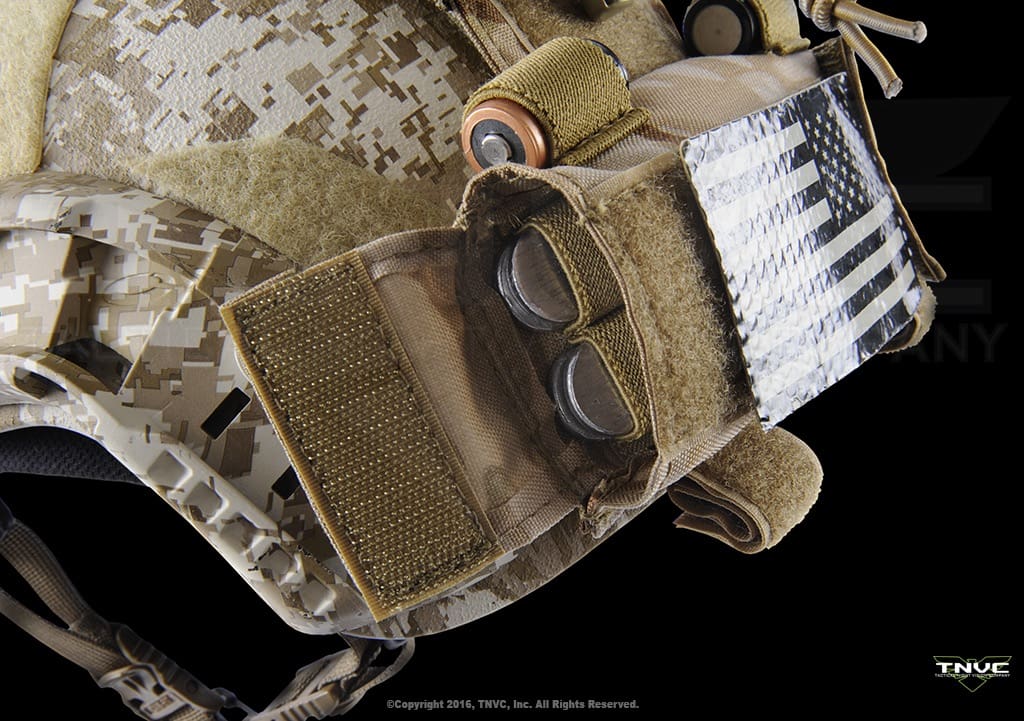
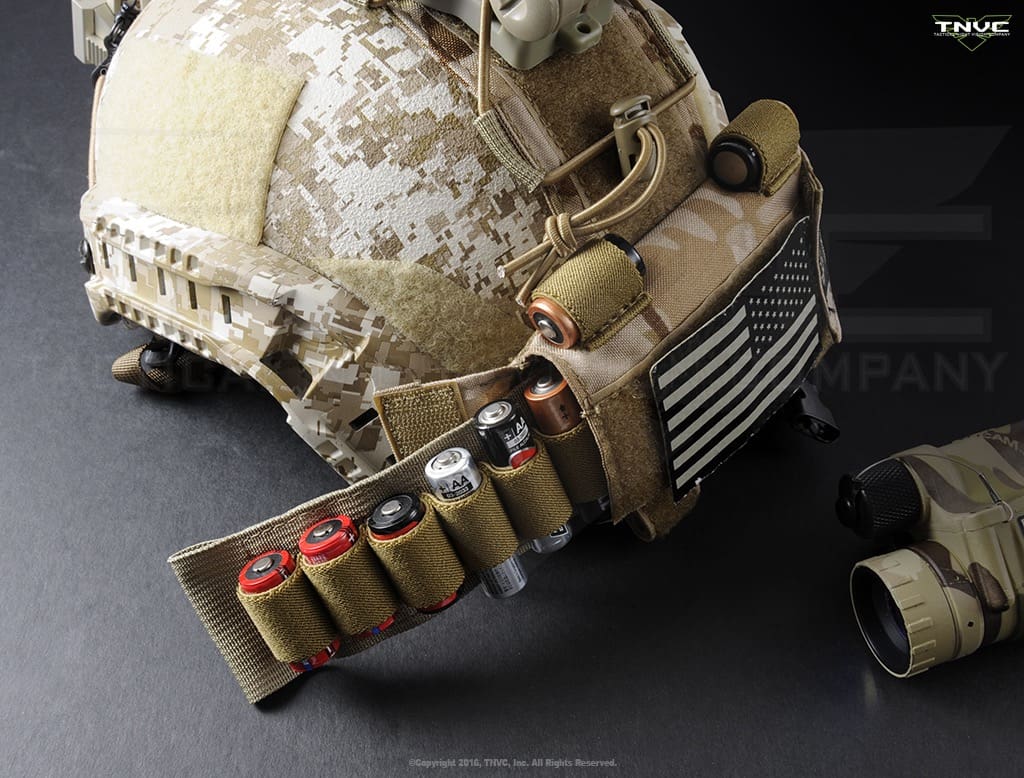
Financing Now Available From TNVC

Sunday, May 29th, 2016

How do you eat an elephant? One bite at a time.


TNVC is excited to announce our partnership with the First National Bank of North Arkansas to finally make the highest grade night vision and thermal gear more attainable than ever to U.S. citizens! Introducing: The TNVC Night Vision Financing Program. Your dream of owning the best night vision and thermal optics is about to become a reality.

TNVC caters to the professional market, only offering high end night vision gear that we would bet our own lives on, from the industry’s top manufacturers. And, while the majority of this equipment is available to civilians, it has always come at a price that has forced many prospective buyers to settle for foreign-made or lesser-quality systems. But not anymore. We have had many requests for layaway programs over the years. Customers on a budget did not want to settle for cheaper equipment, but could not always justify the total cost all at once. Our quick and easy financing program will put the same high-end night vision and thermal products used to defend our nation within reach. Low monthly payments and a low, fixed interest rate mean you will be enjoying your new high end gear right away!

Here’s how it works: All night vision and thermal gear available from TNVC is eligible for financing and all U.S. Citizens are pre-approved. Obviously, all ITAR laws and regulations apply. Simply choose the “Finance” option at checkout on the TNVC site and you will be directed to a secure page on the First National Bank of North Arkansas website to fill out your application. The credit review is done within 2 business days. Customers meeting the bank’s minimum credit requirements will be approved for immediate product delivery and monthly payments will proceed according to the loan term. Customers not meeting the minimum credit requirement will have their product placed on layaway until the loan is paid.


Night vision is an investment. You do not need to settle for low end gear. By popular demand, the new TNVC Finance Program will truly make darkness your ally.

www.tnvc.com