SIG SAUER - Never Settle

Archive for the ‘Profession of Arms’ Category

Space Force Unveils New Insignia

Tuesday, December 15th, 2020

Last week, Chief Master Sergeant Roger A. Towberman, Senior Enlisted Advisor of the United States Space Force showed off new collar insignia created for USSF members to wear on their service dress.

In a video address Towberman said, “This is how we’re going to space up the Air Force uniform while we’re wearing it.” However, he clarified that, “It doesn’t mean we’ll carry this onto a Space Force uniform when it’s designed.”

He also displayed his the new Space Staff Badge for those who have served on the Space Staff.

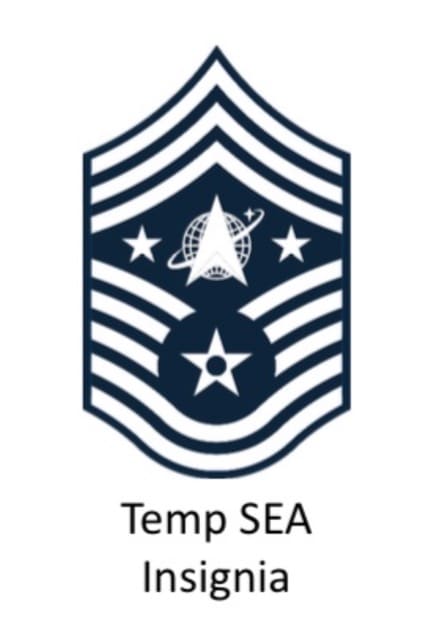
Here are some other examples of Space Force insignia. It includes the Space Force SEA rank insignia. The Space Delta plays a significant role in every example of their new insignia.

TRADOC Delivers New Doctrine to Equip Unit Leaders

Saturday, December 12th, 2020

Training and Doctrine Command’s Combined Arms Center kicked off the new decade prioritizing equipping the Army’s troop-level formations with new doctrine as the Army continues to modernize its formations and the way it fights.

It’s a surge effort to equip unit leaders across warfighting disciplines with the tactics, techniques and procedures to help them lead Soldiers and build lethal, cohesive teams.

The roll-out began in 2019 with an overhaul of all of the Army’s foundational Army Doctrine Publications such as ADP 3-90 (Offense and Defense), ADP 2-0 (Intelligence), ADP 3-19 (Fires), and ADP 4-0 (Sustainment).

The publishing blitz continued through 2020 and is set to carry into 2021 with more publications developed from the outgrowth of its doctrine overhaul. It aims to deliver specific and tailored guidance for the different warfighting disciplines with new Field Manuals, Army Technique Publications, Training Circulars and handbooks.

The Army even updated its doctrine about doctrine, publishing APD 1-01, Doctrine Primer, July, 2019. It says, “doctrine provides a coherent vision of warfare, and provides a common and standardized set of principles, tactics, techniques, procedures, and terms and symbols for the Army.”

“These revisions [to doctrine] make publications relevant to near-term operational environments and ensure Army doctrine is balanced to support Army forces conducting operations across the competition continuum and the range of military operations.”

After establishing its doctrinal foundation with its new ADPs and FMs, TRADOC turned its attention to publishing even more doctrine publications offering practical guidance such as ATPs for Soldiers and leaders operating at the lowest tactical levels.

“ATPs provide Soldiers with ways or methods to accomplish or complete a mission, task, or function.”

The Army’s most fundamental warfighting elements are squads, platoons, companies and battalions. TRADOC aimed much of its focus center mass at platoons to make the most difference.

Many senior leaders see mastery of fundamentals as essential to success on the battlefield. Platoon level publications help junior leaders train their Soldiers to gain that mastery.

Soldiers are considered members of a profession whose common language is doctrine. Leaders and Soldiers in a platoon are tied to together by that common language and framework. That’s why their knowledge of it is deemed so critical.

“The Army has expectations that when you show up to your first job, you have a certain baseline of knowledge. A large part of that comes from doctrine,” said Col. Richard Creed, Director Combined Arms Doctrine Directorate.

“Your Soldiers and NCOs expect you to understand what your role and responsibilities, what the doctrine says for the kind of organization you’re a part of.”

“It gives you a common point of departure. When you have a common baseline of knowledge, you can start at a higher level of learning. It allows you to communicate easier with those above and below you.”

In 2020, TRADOC published numerous ATPs to arm its leaders and units with the latest insight on a myriad and training and operations. Examples include, ATPs covering Infantry Small-Unit Mountain and Cold Weather Operations, Techniques for Multiple Launch Rocket System and High Mobility Artillery Rocket System Operations, and Materiel Management-Supply-Field Services Operations.

Training Circulars were also published to guide certification and qualification training for Field Artillery and Air Defense Artillery Soldiers and units.

“You need to know which doctrine applies to you. Some of it is branch specific and some job specific,” said Creed.

There are also several publications set to publish beginning in 2021. Medical platoons can expect, ATP 4-02.4 Medical Platoon, Aviation platoons – ATP 3-04.23, Engineer and Air Defense Artillery platoons a new handbook for their operations. Later in the year, units performing Electronic Warfare, Chemical-Bio-Nuclear-Radio-Explosives, and Military Police operations will see updated doctrine as well.

TRADOC’s doctrine push shows no sign of slowing. It stands to be an ongoing process of learning, modernizing, and revising its doctrine to keep Soldiers and leaders equipped with much needed guides to inform their training and support their operations. Commandants at the Army’s Centers of Excellence that represent the Army’s diverse warfighting disciplines are leading efforts to update publications within their purview.

“We revise doctrine continuously and we capture lessons learned. We take lessons learned about operations going on all over the world and we update and revise doctrine to account for those lessons,” said Creed.

Lt. Gen. James Rainey, Combined Arms Center’s Commanding General, took it a step further, saying he wanted feedback from junior leaders using the publications. He said he wants to know if leaders and units have what they need and to provide feedback if anything is missing from the Army’s doctrine catalogue.

TRADOC also reinforced its emphasis on strengthening Soldiers’ tactical and technical expertise with the development of a web-tool, called Army 21. It’s a web-based multimedia interactive learning tool that allows Soldiers to learn about their unit’s formations and their doctrine from an internet browser (CAC login required).

“Army 21 addresses what we see as a knowledge gap for our junior leaders,” said Col. Chris Keller, Director of Center for Army Lessons Learned. “Soldiers must understand how the Army mans, equips, and fights.”

“It delivers a one-stop resource to quickly learn and understand current Army organization and about the unique capabilities of our Brigade Combat Teams across the force.”

You can access the tool at atn.army.mil/getmedia/449fcb0e-3b11-404f-b012-f5c85b429fd0/a21 (CAC login required)

Here’s a video tutorial of Army 21.

By Maj Orlandon Howard, Public Affairs, U.S. Army Combined Arms Center

Finally! Department of the Air Force Removes Waist Measurement from Physical Fitness Assessment Composite Score

Monday, December 7th, 2020

WASHINGTON (AFNS) —

The Department of the Air Force announced physical fitness assessments will now resume April 2021 and will no longer include the waist measurement component.

To ensure social distancing practices remain in place during the ongoing COVID-19 pandemic, and to give Airmen and Space Professionals time to prepare, testing was delayed from October to January and is now further delayed to April.

While the waist measurement is permanently removed from the assessment, height and weight measurements will resume October 2021.

“We trust that our Airmen understand the standard of good physical health practices and we are all finding innovative ways to stay fit,” said Air Force Chief of Staff Gen. Charles Q. Brown, Jr. “We also trust that leaders will take the appropriate steps to keep their Airmen safe while making every effort to provide fitness options during the pandemic.”

Fitness assessment cells, fitness center staff, physical training leaders and members performing fitness assessments will adhere to physical distancing protocols and other local precautions as determined by installation commanders once assessments resume.

Commanders may delay official fitness assessments beyond April 2021 if necessary, based on the recommendation of local public health officials, the continuation of closed fitness centers and extended state-wide restriction of movement and gatherings.

Space Professionals will adhere to the physical fitness policy of the Department of the Air Force.

Airmen and Space Professionals may determine their next fitness assessment due date by visiting the Official Physical Assessment Due Date Matrix on myPers which will be updated and available Dec. 8. Fitness assessment due dates will primarily depend on the date and score of the last official test.

“Originally, we hoped to resume testing by January 2021,” said Chief Master Sgt. of the Air Force JoAnne S. Bass. “However, based on the number of cases nationwide, the right thing to do is focus on keeping our Airmen and their families safe. Delaying and reevaluating the PT test is the best option for our people.”

The test will still consist of a 1.5 mile run, 1 minute of pushups and 1 minute of situps. However, the composite score will be calculated with full points for the waist measurement portion until system changes can be made.

Department leaders are also looking to reevaluate certain testing criteria moving forward.

“Along with removing the waist measurement, we are also exploring alternative strength and cardio components to our current Air Force fitness assessment,” Brown said. “We believe these potential test structure changes will impact Airmen in a positive way and help with a holistic approach to health and fitness standards.”

For more information, Airmen and Space Professionals should contact their fitness assessment cells and visit the COVID-19 Fitness Guidance page on myPers.

Secretary of the Air Force Public Affairs

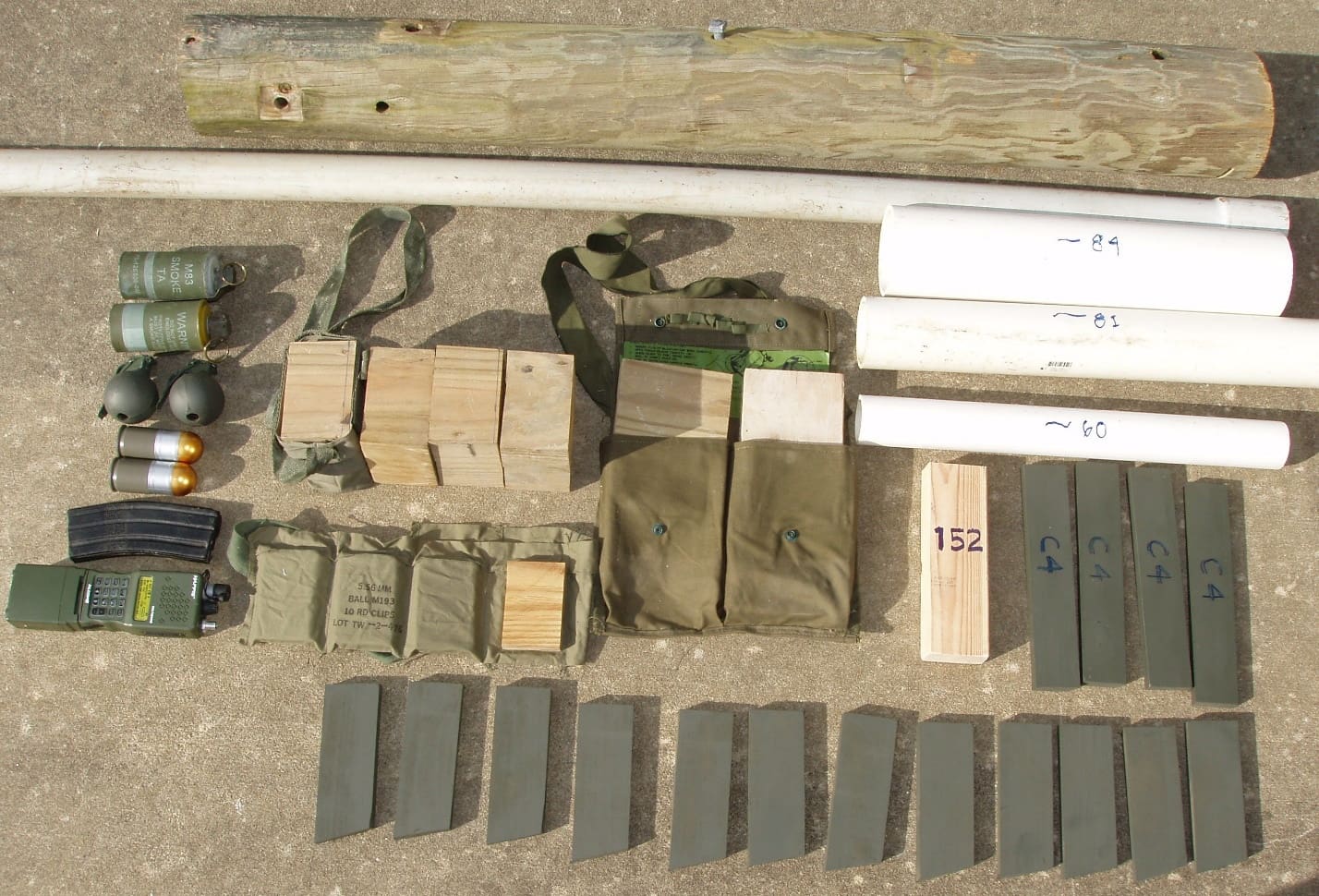
Marine Basic Module from Mission Essential Gear

Monday, December 7th, 2020

If you remember THULS then you’re already familiar with the concept of the new Marine Basic Module from Mission Essential Gear.

It’s been revised for FY2021 with updated information from various sources. It might have been written for Marines, but it’s a great aide memoire for any ground combat force.

www.megearco.com

AFSOC’s SOF DT Undergoes Transformation

Saturday, December 5th, 2020

HURLBURT FIELD, Fla. —

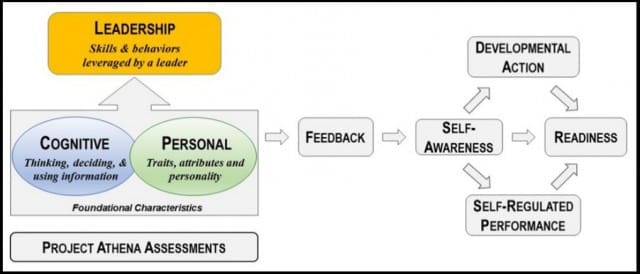
As Air Force Special Operations Command drives towards transformation to the “AFSOC of Tomorrow” by developing its human capital, the Special Operations Forces Developmental Team instituted a more rigorous evaluation and scoring process to give SOF officers more specific feedback and purposeful career development. This enhanced process kicked off this year with the Apr. 20-24, 2020 SOF DT.

 “Over the last five to seven years, development team scoring hasn’t changed,” said Maj. Brandon Webster, Chief, Command Force Development. “There was no clear path on how we wanted to develop an individual, and we wanted to give officers more options and transparency on the future of their career.”

Historically, the DT only scored records for officers who were being considered for promotion to Lieutenant Colonel. The new process now incorporates scoring to begin with Captains, allowing for feedback and mentorship at a much earlier point in an officer’s career.

“Looking at an officer earlier on allows us to be intentional,” said Webster. “We now have the ability to look at a Captain’s records and tell him or her where they stand against their peers, and what their career pathway could look like five to ten years down the road based on where they’re at right now.”

DT record scoring provides objective data for more informative assignment placement, hiring for special duty positions, flying assignments outside of an officer’s normal aircraft, and the addition of sub-developmental pathways.

 “Overall, we’ve revamped the entire DT process. We’re focusing a lot more time on the individual to provide substantial feedback and mentor our officers at all levels, beginning at the rank of Captain,” said Webster. “It is the DT’s responsibility to ensure the right officer is placed in the right job at the right time, with the right training, education, and experiences.”

The fall DT, held Oct. 19-23, consisted of group scoring for Captains, Majors, and graduated squadron commanders. Each officer’s developmental vector will follow a percentile format, giving members direct feedback on where they fall among their peers.

“Synchronizing our efforts provides senior leadership the ability to manage officers and strengthen our future force,” said Webster. “The transformation of the SOF DT is one-step closer to building the SOF officers we need for tomorrow.”

Story by Capt Savannah Stephens, AFSOC Public Affairs

Photo by SSgt Rose Gudex

The Navy’s New Fitness Test Is Here – What You Need To Know

Tuesday, December 1st, 2020

From MC1 Mark D. Faram, Chief of Naval Personnel Public Affairs

The Navy will hold a single, six-month physical fitness assessment cycle during calendar year 2021, allowing the service to resume fitness testing while limiting Sailor exposure to COVID-19. That cycle will also see the Navy rollout the forearm plank, which as a replacement the curl-up, and the 2000-meter row as a new optional cardio event.

The Navy will hold a single, six-month physical fitness assessment cycle during calendar year 2021, allowing the service to resume fitness testing while limiting Sailor exposure to COVID-19.

The cycle was announced in NAVADMIN 304/20, released Nov. 18. The message also detailed rollout plans for the forearm plank, which will replace the curl-up, and the 2000-meter row as a new optional cardio event.

“Shifting the PFA cycle to March allows Navy to execute the PFA after the primary influenza season, leveraging outdoor venues as the weather warms,” Vice Adm. John B Nowell, Jr., the chief of naval personnel, wrote in the message.

The shift also “acknowledges the fact that while vaccines and therapeutics are expected to be available, their timing and impact are unknown.”

July’s NAVADMIN 193/20 announced the spring 2021 restart of the normally semi-annual Navy Physical Fitness Assessments, after two cycles were canceled due to COVID-19. Out of an abundance of caution, the Navy decided to proceed with the single cycle option for 2021 as the COVID crisis shows no signs of abating yet.


The Navy will resume two testing cycles once conditions permit. The Department of Defense has long mandated all services conduct annual fitness testing.

However, COVID-19 mitigation measures in place since the spring allow services to waive the requirement as a force protection measure.  The message notes that permission will carry over to allow Echelon II Commanders to waive the 2021 cycle if COVID 19 prevents its safe execution.

Where conditions permit, the message said, all Sailors must participate in the single 2020 cycle, meaning exemptions for scoring excellent or above from the previous cycle will not apply.

Going forward, however, those who score excellent or outstanding on the 2021 PFA will be exempt from participation in the first PFA cycle of 2022.

The message also details how the new plank and 2000-meter row optional cardio events will fit into the physical testing process as well as how they’re expected to be accomplished and graded. It’s the first major change to the assessment since the Navy introduced fitness assessments in the early 1980s.

Sailors have long complained about the curl-up. As Navy researchers studied the exercise, they found it was not a true test of abdominal strength. Also, it did not prepare Sailors to better accomplish shipboard tasks. In fact, curl-ups have been linked to an increased risk of creating or aggravating lower back injuries.

The forearm plank, however, is a functional movement required in 85 percent of regular shipboard tasks, including pushing, pulling, lifting and carrying.

The forearm plank uses isometric contraction to activate key abdominal and trunk muscles, mimicking the main function of the abdominal musculature – to act as stabilizers to resist the spine from moving while strengthening the lower back.

Training for the forearm plank strengthens the body’s core, improves posture, and reduces the risk of lower back injuries throughout a Sailor’s career.

Because there is overlap in the muscle groups used for the push-up and the forearm plank, the decision was made to conduct the push-up event first, followed by the plank and cardio portions.

This sequence was used in the initial tests. Researchers found it allows for maximum performance on the push-ups while limiting residual fatigue during the forearm plank.

The cardio portion’s new addition will be a 2000-meter row on the “Concept-2 Rower.” The other options remain as the 12-min stationary cycle, 500-yd/450-m swim, and 1.5-mile run. 

A non-weight bearing, low impact exercise, rowing reduces stress on the legs, while providing a great full-body cardio workout as it works 80 percent of the body’s muscles. 

A big benefit of the Concept-2 Rower is that it’s space saving and thus able to be easily used on any naval vessel as well as at shore installations.

A detailed description of how each of the new events will be conducted can be found in NAVADMIN 304/20.  As previously announced, the Navy will give Sailors a one-cycle grace period for the forearm-plank. Though the event will be conducted during the 2021 Cycle, it won’t officially count until 2022.

Initial performance standards for scoring the forearm plank and 2000-meter row were developed by the Naval Health Research Center (NHRC) and are available to both individuals and command fitness leaders on the Navy Physical Readiness Program website at www.public.navy.mil/bupers-npc/support/21st_Century_Sailor/physical.

USAF Rated Preparatory Program Now Accepting Applications for FY21 Spring Class – Open to Enlisted

Thursday, November 19th, 2020

WASHINGTON (AFNS) —

Active duty Department of the Air Force officers and enlisted Airmen and Space Professionals interested in becoming a rated officer have until Dec. 31, 2020 to apply for the Spring 2021 Rated Preparatory Program.

This will be the third year that the Air Force has partnered with the Civil Air Patrol for this training. The 2021 class will take place at the Denton Enterprise Airport in Denton, Texas.

“The Rated Preparatory Program provides Department of the Air Force officers and for the first time enlisted applicants, who are interested in cross-training to a rated career field the opportunity to gain and strengthen their basic aviation skills,” said Col. Scott Linck, Aircrew Task Force deputy director. “This program will allow them to enhance their knowledge through developmental modules and acquire valuable flight time in order to increase their competitiveness as candidates for future undergraduate flying training boards.”

Applicants selected for the RPP will first complete an online self-paced ground course followed by a one-week in-resident course to introduce them to aviation fundamentals. Program participants will garner approximately seven to nine flight hours, ground instruction and additional training time in a flight simulator.

Officers who complete the program are required to apply to the next available Undergraduate Flying Training selection board. Enlisted participants who complete the program are required to apply to at least one of three Air Force commissioning sources: U.S. Air Force Academy, Reserve Officer Training Corps or Officer Training School.

Airmen who can meet the requirements below are encouraged to apply:

1. Any active duty officer who meets UFT board requirements.

2. Any active duty enlisted Airman or Space Professional who meets UFT board requirements and qualifies for a commission through one of the three commissioning sources (Reference PSDM 20-96 for further information).

3. Be a U.S. Citizen.

4. Be of high moral character and personal qualifications (members currently having open law violations or criminal investigations, previously convicted by court-martial or having received an Article 15 are ineligible to apply).

5. Have the unit commander’s approval and endorsement.

6. Have a current passing Physical Fitness Test score.

7. Have a Pilot Candidate Selection Method score prior to the RPP class start date.

8. Have less than 5 hours of total civilian flight time (applicants with greater than 5 hours of civilian flight time may apply, but will only be considered on a space available basis).

9. Officers: Obtain a U.S. Air Force Initial Flying Class I, 1A, Ground Based Controller or III flight physical prior to entry into the RPP.

10. Enlisted: Obtain an FAA Class III physical prior to entry into the RPP (Reference PSDM 20-96; consult a local Aviation Medical Examiner).

11. Complete an on-line self-paced ground course that will be provided prior to the class start date.

12. Be prepared to retake the Air Force Officer Qualifying Test and Test of Basic Aviation Skills at the first available opportunity upon completion of RPP, preferably within two to four weeks.

“When comparing applicant scores pre- and post-RPP, results show, on average, a 20% improvement in student AFOQT scores and a 35-point increase in PCSM scores,” said Maj. Sean Stumpf, Aircrew Task Force talent management branch chief. “Approximately 90% of officers who went through the program in 2019 and applied for UFT were selected. We are hoping for the same results from the most recent class that went through the program this summer.”

Interested applicants can find additional information on how to apply through the MyPers website.

USAF Vice Chief’s Challenge Creates New Document Templates, Saves Airmen Time

Friday, November 13th, 2020

Before I share the USAF story, I want to ask the obvious question, “Why didn’t this happen decades ago?”

For Air Force members, The Tongue and Quill is one of the most painful document ever devised by man and I believe was created simply so that those without any talent other than enforcing rules would have something to do.


Templates for commonly used documents should have already been created by those same shoe clerks who get upset if you didn’t put the signature block on a memorandum, in the exact spot, meticulously checking all of the measurements with their ever present ruler.

The Tongue and Quill was the bane of my existence at Officer Training School. In some ways the pain continued throughout my career in the Air Force as someone would tell you to check The Tongue and Quill for some odd format, only to find out that it was wrong.

Most of us made our own templates and then just rewrote over the last one and saved a new file, but having something Air Force-wide should have happened long ago.

Finally, based on the way this USAF story is written, I’ll lament that this seems to be the biggest innovation our Airmen could come up with to help us counter near-peer threats. Boy, are we in for a wakeup call.

ARLINGTON, Va. (AFNS) —

As teleworking and social distancing became a part of daily life, the Department of the Air Force was hard at work. Not only were Airmen delivering on daily mission requirements, they were also working hard to improve the department from within.

The 2020 Vice Chief’s Challenge launched in February with a focus on working faster and smarter, and finding innovative ways to give Airmen back their time.

“Competing in an environment dominated by near-peer threats requires that we unleash our Airmen to think differently and to put their tremendous talents to use,” said Air Force Vice Chief of Staff Gen. Stephen W. Wilson at the launch of the challenge. “Doing so will transform our Air Force to meet the rigorous demands of the next generation of warfare.”

Airmen were encouraged to participate in the challenge by submitting ideas via the Airmen Powered by Innovation platform to solve problems related to automation or elimination of menial tasks.

One idea stood out as simple and straight-forward, and required only a head nod from Wilson to get started. The idea was to create official templates for common Air Force documents such as memorandums, Air Force biographies, talking papers and more.

“We asked for our Airmen’s help in identifying and eliminating drains on their time that do not directly contribute to warfighting readiness — and our Airmen delivered,” Wilson said. “The support for this idea was overwhelming. And for such a simple idea, it was clear that we could start work immediately.”

The Department of the Air Force uses Air Force Handbook 33-337, The Tongue & Quill, to describe how official documents should be formatted and written. The handbook, which is a static file, was last updated in 2015, and includes images of what a properly formatted document should look like.

The average Airman typically makes a new document by opening the Tongue & Quill, reading the formatting instructions, opening their word processing software, and begins formatting a document before beginning the first sentence.

An Airman having to format a blank document is exactly the kind of “menial task” Wilson was referring to when he launched the Vice Chief’s Challenge.

Now, thanks to this idea submission, nine official templates are available for download on the service’s e-publishing website. This website is available online and doesn’t require a Common Access Card or other special login to gain access.

“Giving Airmen back the time they need to drive innovation and build our future is a warfighting imperative,” Wilson said. “No one knows better what processes or tasks weigh on our Airmen, than Airmen themselves. We’re excited to see what other innovative ideas come next.”

The next step is to push the templates to the Air Force standard desktop, which would make the templates available to Airmen when they open a new Word document on an Air Force computer. This system update is expected to be accomplished before the end of November.

By Secretary of the Air Force Public Affairs