Celebrate 20 years of the TLR-1

Archive for the ‘SOF’ Category

Air Commandos Co-Host SAWS, Champion Transformation and Partnerships

Wednesday, March 8th, 2023

FORT WALTON BEACH, Fla. —  

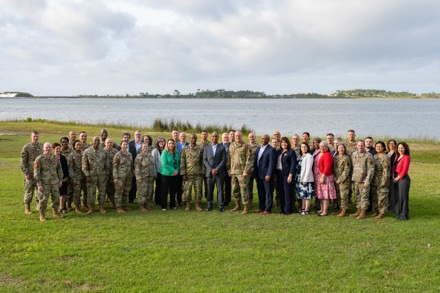
Air Force Special Operations Command and the Global SOF Foundation co-hosted the annual Special Air Warfare Symposium [SAWS] and expo at the Emerald Coast Convention Center Feb. 28 to Mar. 2, 2023.

The symposium featured speakers from across the special operations aviation community that included AFSOC senior leadership, defense officials, industry representatives as well as allies and foreign partners from more than 10 countries that were focused on integration and cooperation to remain relevant as the threat environment continues to evolve.

U.S. Air Force Maj. Gen. Wolfe Davidson, AFSOC deputy commander, delivered opening remarks to symposium participants.

“The threat environment continues to evolve across the globe and we now have contested environments in areas previously not considered high risk due to the continued proliferation of threat systems,” said Davidson. “This [symposium] is an opportunity to get closer to our industry partners who are doing greats things in technology and are critical as we look to adapt our tools to the fight we have.”

Military and industry speakers identified an on-going need to collaborate to prepare, prevent, and prevail against current and future adversaries over the course of the 3-day event.

“We must continue to adapt and look for opportunities to innovate and transform our Air Commandos to remain the most capable, most lethal Air Force in the world,” said U.S. Air Force Lt. Gen. Tony Bauernfeind, AFSOC commander. “AFSOC, alongside our industry partners, has been transforming…and we continue to look for opportunities and avenues, like the Special Air Warfare Symposium, to do so.”

The ongoing transformation of AFSOC involves a new force generation cycle, the implementation of mission command, the development of Special Operations Task Groups and Units as well as creation of multi-domain theater-focused squadrons.

“Although change can be difficult, irrelevance is worse,” said Bauernfeind. “We have a proud history and heritage of transformation to meet the mission…and we too shall rise to ensure our nation’s security.”

By TSgt Jonathan McCallum, AFSOC

AFSOC Selects MQ-9B Skyguardian for UAS Family of Systems Concept

Tuesday, March 7th, 2023

GA-ASI to Deliver Three Aircraft to First U.S. Customer


SAN DIEGO – 06 March 2023 – General Atomics Aeronautical Systems, Inc. is proud to announce a new contract with U.S. Air Force Special Operations Command (AFSOC) to provide three MQ-9B SkyGuardian® remotely piloted aircraft systems to its first U.S. customer.

AFSOC’s acquisition of MQ-9B builds on more than 20 years as a GA-ASI partner and more than 14 years flying the MQ-9A Reaper, operating more than 40 aircraft in harsh environments around the world.

MQ-9B will feature a key role in developing AFSOC’s new Adaptive Airborne Enterprise (A2E) concept, which envisions AFSOC projecting air power for special operations forces from beyond the horizon, using a family of large UAS and expendable, small UAS from permissive to denied environments.

“We’re very excited to continue our great partnership with AFSOC well into the future,” said David R. Alexander, president of GA-ASI. “MQ-9B is the ideal platform for inserting air-launched effects into potentially hostile environments. The MQ-9B’s combination of range, endurance, reduced manpower footprint, and overall flexibility will make it a true centerpiece of AFSOC’s future family of advanced UAS systems.”

MQ-9B represents the next generation of UAS, having demonstrated airborne endurance of more than 40 hours in certain configurations, automatic takeoffs and landings under SATCOM-only control, as well as a GA-ASI-developed Detect and Avoid System, among other upgrades. Its development is the result of a company-funded effort to deliver a UAS that can meet the stringent airworthiness certification requirements of various global military and civil authorities.

MQ-9B has garnered significant interest from customers throughout the world. After the UK Ministry of Defence selected MQ-9B SkyGuardian for its upcoming Protector program, the Belgian Ministry of Defense signed a contract for SkyGuardian. The Japan Coast Guard is currently operating MQ-9B in the SeaGuardian® configuration, which the Japan Maritime Self-Defense Force (JMSDF) also recently selected for its Medium-Altitude, Long-Endurance (MALE) RPAS Trial Operation Project beginning in April.

193rd Special Operations Wing Welcomes New Aircraft, Mission

Saturday, February 25th, 2023

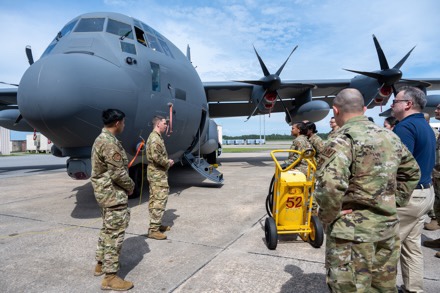
MIDDLETOWN, Pa. – The 193rd Special Operations Wing became the first Air National Guard unit to receive an MC-130J Commando II aircraft Feb. 2 as part of its mission conversion to a flagship mission of Air Force Special Operations Command.

“This is a monumental day for the 193rd, ANG, and AFSOC. The Commando II mission will ensure the 193rd SOW remains not only relevant but also at the forefront of the battlespace for years to come,” said Col. Edward Fink, 193rd SOW commander.

Led by the efforts of Lt. Col. Benton Jackson, unit conversion officer, the wing has been preparing for its mission conversion since 2021. Jackson believes the hard work of 193rd SOW Airmen and the support of the community led to the completion of this first step.

“Seeing the Commando II on our flight line is a tangible symbol of the progress we’ve made as a wing in bringing this versatile mission to central Pennsylvania,” Jackson said. “It’s an exciting time to be a part of this team, and I have the utmost confidence we have the right culture and people to continue with a successful mission conversion.”

For decades, the wing operated the EC-130J Commando Solo as part of the only airborne Military Information Support Operations broadcasting platform in the U.S. military. Col. Jaime Ramirez, 193rd Special Operations Maintenance Group commander, sees the move to the Commando II as a major shift in the unit, AFSOC and ANG.

“The Commando II is the special operations workhorse in that it performs many different types of missions and performs them well,” Ramirez said. “There is no doubt in my mind the aircraft that landed here today will be integral in any future conflict.”

Ramirez said the wing maintained the full operating capabilities of the outgoing aircraft while simultaneously preparing for the arriving mission.

“We were ready to maintain the Commando II well before it arrived, all while never losing a step in maintaining and launching EC-130s,” Ramirez said. “That only happens if you have the best people. I’d put our maintainers up against anyone.”

While the 193rd SOMXG is prepared to maintain the aircraft, the 193rd Special Operations Group is postured to fly them immediately. Col. Gordon Frankenfield, 193rd SOG commander, said his Airmen are very familiar with the aircraft and mission set.

“We’ve executed similar mission sets for years, which likely contributed to AFSOC trusting us with this critically valuable aircraft,” Frankenfield said. “Our goal from Day One has been to operate the Commando II with the same potency as an active duty unit, and our aircrews are trained and ready to make that a reality.”

Frankenfield sees the Commando II’s arrival in Pennsylvania as an important strategic move domestically and abroad.

“The 193rd now offers something the U.S. military didn’t have before,” Frankenfield said. Special Operations Forces based in the Northeast now have a crucial air asset in their backyard to build their combat readiness. Combatant commanders have a much more robust and versatile capability to project air power in different geographic regions.”

The aircraft’s arrival at night was perhaps appropriate given the nature of its mission. The Commando II flies clandestine – or low visibility – single or multi-ship, low-level infiltration, exfiltration and resupply of special operations forces by airdrop or air land and air refueling missions for special operations helicopters and tiltrotor aircraft, intruding politically sensitive or hostile territories.

“The Commando II is the embodiment of Agile Combat Employment and will present complex dilemmas to our adversaries. It’s a shadow in the dark and sends a clear message that the U.S. military owns the night,” Fink said. “The 193rd is ready today to add to the impressive lineage of the Commando II.”

By MSgt Alexander Farver, 193rd Special Operations Wing

SOFWERX – JSOU Geopolitical Mapping & Social Network Analytics Assessment Event

Thursday, February 23rd, 2023

SOFWERX, in collaboration with USSOCOM and the Joint Special Operations University (JSOU), will host an assessment event 25-27 April 2023, to find solutions for a Geographic Information System (GIS) generated Geopolitical Toolkit and associated Social Network Analysis to help SOF professionals assess and visualize where geopolitical flashpoints might emerge. 

The aim is a single operating picture that combines the GIS-generated Geopolitical Toolkit, leveraging data analytics to construct network models that inform SOF interventions.

Submit NLT 17 March 2023 11:59 PM ET.

events.sofwerx.org/map

Special Warfare, Air Force Recruiting Teams Develop Programs, Scour Nation to Attract Candidates

Wednesday, February 22nd, 2023

JOINT BASE SAN ANTONIO-LACKLAND, Texas (AFNS) —  

The capabilities that special warfare graduates provide are as needed today as ever before. That reality is the reason program leaders are working hard to attract a group of candidates who are broad, diverse and committed.

“For members of the Special Warfare Training Wing, 2022 was a historic year and I’m incredibly proud,” said Col. Nathan Colunga, SWTW commander. “Our training wing is postured to train all Americans and will ensure any candidate who comes through our doors, are offered the same opportunities to succeed and will be treated with dignity and respect.”

In 2015, the U.S. Air Force began integrating women into six special warfare specialty areas previously closed to women. Since then, a total of eight female special warfare Airmen have graduated from various training pathways.

The gain of the three women into the special warfare community within a calendar year is an unprecedented success for the Air Force.

“It is a strategic imperative that Americans know special warfare training is accessible to anyone who can meet the standards,” said Maj. Gen. Michele Edmondson, 2nd Air Force commander. “Of all the Air Force’s training programs, special warfare training has the highest attrition rate due to extremely high-performance standards.”

The future fight is going to be different from the past, requiring us to leverage the entire talent pool of skilled, qualified and diverse individuals our nation offers in order to assemble the teams America needs to meet future mission requirements,” she said.

To ensure Americans are aware of special warfare training programs, Air Force Recruiting Service made significant changes in the past two years. The agency invested in future special warfare trainees as early as possible to ensure no segment of the population is excluded from this opportunity.

AFRS activated the 330th Recruiting Squadron, a one-of-its-kind Air Force squadron, that recruits solely for special warfare career fields. Additionally, the Special Warfare Development program was established, which better prepares prospective candidates physically and mentally for the rigors of the training ahead. The program pairs candidates with current, former and retired special warfare Airmen known as “developers” for mentorship and guidance. This program is open to any aspiring candidate who can meet the standards set forth by the special warfare community, is cleared medically, and can attain the required security clearances.

“AFRS is scouring the nation to identify and connect with potential candidates who have the grit and aptitude, but also the physicality and mentality to become one of the elite Air Force special warfare Airmen as sixth-generation warriors,” said Maj. Gen. Ed Thomas, AFRS commander. “Once connected, our Air Force development program is keenly focused on preparing future Airmen, so each candidate has the tools necessary to be successful.”

Efforts do not stop at recruitment. Once candidates arrive at the Special Warfare Training Wing, each member is developed physically, mentally and spiritually to meet the rigors of the training ahead. Using a holistic approach, the training utilizes embedded human-performance professionals, special warfare instructors and support staff to optimize every moment of the specific training pathway with each individual candidate.

“We welcome and encourage diversity of background, experiences and thought for our forces because this is what our nation needs to meet the demands of the future mission construct and necessary force employment,” Colunga said. “We want every candidate who comes through our doors to succeed because we need every one of them. Once you arrive at the Special Warfare Training Wing, we will provide the tools and resources for success. But it is up to you to rise to the challenge.”

“The synergistic efforts of the Special Warfare Training Wing and AFRS laid the path for the extraordinary graduation successes of 2022,” Edmondson said. “And while the graduation of three female Airmen in one calendar year is a true testament to inclusion, innovation, hard work and transformative training, we still invite all those Americans who have the desire to be special warfare operators, to join our team.”

If you want to pursue a career in Air Force special warfare and wish to speak to a special warfare recruiter, please visit here.

Special Warfare Training Wing Public Affairs

Science and Technology Small Business Innovation Research 23.4 Pre-Release

Monday, February 13th, 2023

The USSOCOM Small Business Innovation Research (SBIR) and the Small Business Technology Transfer (STTR) programs will soon be accepting submissions for this Special Area of Interest:

PHASE I:

SOCOM234-001: Analyzing Narrative Evolution Across Social Networks 

Submissions Open 21 February 2023.

On 22 February, SOFWERX will host a virtual Q&A session for the area of interest. RSVP to the Q&A session on the event webpage.

Teaming for Tactical Drones: Rheinmetall and AeroVironment Join Forces to compete for NATO Special Forces Project

Friday, February 10th, 2023

Rheinmetall and AeroVironment, an American unmanned aircraft systems (UAS) manufacturer, have teamed to take part in a NATO special forces project. Group subsidiary Rheinmetall Technical Publications GmbH and AeroVironment have applied to participate in a procurement programme for a small UAS intended for special operations and infantry applications.

The system must be capable of operating in all conditions and environments, quick to deploy, hand launchable, have a maximum weight of ten kilos, and an operating range of 30 kilometres.


Rheinmetall and AeroVironment are ideally suited for developing and putting forward a compelling solution. AeroVironment is an industry leader in the design, development and production of unmanned aircraft systems. Its PumaTM 3 AE UAS is in operation with armed forces around the world, while its modular concept offers the optimum platform for a small UAS for special forces.

A certified aviation technology company, Rheinmetall Technical Publications is a systems house for tactical drones. Benefiting from decades long experience, Rheinmetall has the necessary expertise to introduce, support, and adapt drone systems to meet customer specifications.

Indomitable Valor: Special Forces Heroism During Tet Offensive

Wednesday, February 8th, 2023

FORT BRAGG, N.C. – Fifty-five years ago, on Jan. 30-31, 1968, the North Vietnamese Army, in conjunction with their Viet Cong allies, launched an ambitious country-wide offensive in South Vietnam. Hoping to break the will of the South Vietnamese military and stimulate a popular uprising against the pro-American South Vietnamese government, they committed more than 80,000 troops to the initial wave of attacks. Timed to begin during the Tet Mau Than holiday, which marked the start of the lunar new year, the offensive soon took on the abbreviated name of that holiday: Tet. Four Green Berets from the 5th Special Forces Group (Airborne) demonstrated exceptional valor during a five-week period in early 1968, immediately preceding and during the Tet Offensive.

U.S. Army Special Forces and the Escalation in Vietnam

The U.S. Army’s advisory role in South Vietnam began in the late 1950s with the deployment of Mobile Training Teams, including some drawn from the Army’s nascent Special Forces units. The advisory mission accelerated in the early 1960s due to U.S. President John F. Kennedy’s preferred counterinsurgency strategy, which leaned heavily on Army Special Warfare, particularly Special Forces. This strategy emphasized building the capacity of South Vietnam’s Armed Forces and other indigenous partners, securing the populace, and defeating the Viet Cong, the main Communist insurgent force. Special Forces was tailor-made for such missions.

In early 1965, the U.S. deployed its first conventional combat troops to Vietnam. Rather than advising, their mission was to decisively engage and defeat both the Viet Cong and the NVA operating in South Vietnam. Special Forces continued to play an important role and, although their numbers continued to grow, their overall share of the war effort decreased as conventional troop levels rose dramatically between 1965 and 1968.

More boots on the ground, coupled with more aggressive tactics, brought an increase in U.S. casualties. Still, Gen. William C. Westmoreland, the U.S. Military Assistance Command, Vietnam commander, entered 1968 hopeful about the progress of the war. President Lyndon B. Johnson shared Westmoreland’s optimism. Both men anticipated a successful conclusion to the war, despite increased casualties and a burgeoning anti-war movement at home.

The North Vietnamese were also optimistic, believing that their planned offensive would turn the tide of the war decisively in their favor. Throughout January 1968, the NVA and Viet Cong maneuvered into their positions. To distract U.S. and South Vietnamese forces, the Communists conducted diversionary attacks in the weeks leading up to the Tet holiday. One such attack took place east of the village of Thong Binh, South Vietnam, on Jan. 16, 1968.

Sgt. Gordon D. Yntema


U.S. Army Sgt. Gordon D. Yntema was posthumously awarded the Medal of Honor on Dec. 2, 1969, for valorous actions near Thong Binh, South Vietnam, Jan. 16-18, 1968. He was assigned to Detachment A-431, Company D, 5th Special Forces Group (Airborne), at the time of his death. (Photo Credit: U.S. Army)

During the ensuing battle, Sgt. Gordon D. Yntema accompanied two platoons of civilian irregulars to a blocking position east of the village of Thong Binh, where they were attacked by a much larger force of Viet Cong. Yntema assumed control of the element after its commander was seriously wounded and led a tenacious defense despite overwhelming odds. Out of ammunition and reduced to using his rifle as a club, he held his ground until succumbing to enemy fire.

Staff Sgt. Drew D. Dix


U.S. Army Staff Sgt. Drew D. Dix, 5th Special Forces Group (Airborne), was awarded the Medal of Honor on Jan. 16, 1969, for valorous actions in Chau Phu, South Vietnam, during opening days of the Tet Offensive (Jan. 31-Feb. 1, 1968). Dix later received a direct commission and retired from the U.S. Army in 1982, having attained the rank of major. (Photo Credit: U.S. Army)

Two weeks later, on the morning of January 30, communist forces attacked eight major South Vietnamese cities. The next day, fighting erupted almost everywhere across South Vietnam as the communists attacked more than 60 towns, 36 provincial capitals, and five of South Vietnam’s autonomous cities, including the capital city, Saigon. Chau City, capital of Chau Doc Province, was attacked by two Viet Cong battalions. Staff Sgt. Drew D. Dix, along with the South Vietnamese patrol he was advising, were called on to assist in the defense of beleaguered city.

Dix organized and led two separate relief forces that successfully rescued a total of nine trapped civilians. He subsequently assaulted an enemy-held building, killing six Viet Cong and rescuing two Filipinos. The following day, he assembled a 20-man force and cleared the Viet Cong out of a hotel, theater, and other adjacent buildings within the city. In the process, he captured 20 prisoners, including a high-ranking Viet Cong official. He then cleared enemy troops from the Deputy Province Chief’s residence, rescuing that official’s wife and children in the process.

Sgt. 1st Class Eugene Ashley, Jr.


U.S. Army Sgt. 1st Class Eugene Ashley, Jr., was posthumously awarded the Medal of Honor on Nov. 18, 1969, for valorous actions near Lang Vei, South Vietnam, Feb. 6-7, 1968. He was assigned to Detachment A-101, Company C, 5th Special Forces Group (Airborne) at the time of his death. (Photo Credit: U.S. Army)

A week later, on the evening of Feb. 6, the NVA launched a surprise attack on the Special Forces camp at Lang Vei, in the northwest corner of South Vietnam. With the camp’s surviving Special Forces advisors trapped in a bunker, Sgt. 1st Class Eugene Ashley, Jr., organized a rescue effort, consisting mainly of friendly Laotians.

Ashley led his ad hoc assault force on a total of five assaults against the enemy, continuously exposing himself to withering small arms fire, which left him seriously wounded. During his fifth and final assault, he adjusted airstrikes nearly on top of his assault element, forcing the enemy to withdraw and resulting in friendly control of the summit of the hill. Following this assault, he lost consciousness and was carried from the summit by his comrades, only to suffer a fatal wound from an enemy artillery round. Ashley’s valiant efforts, at the cost of his own life, made it possible for the survivors of Camp Lang Vei to eventually escape to freedom.

Staff Sgt. Fred W. Zabitosky


U.S. Army Sgt. 1st Class Fred Zabitosky, 5th Special Forces Group (Airborne), was awarded the Medal of Honor on March 7, 1969, for valorous actions east of Attopeu, Laos, on Feb. 19, 1968. He retired from the U.S. Army in 1977, having attained the rank of master sergeant. (Photo Credit: U.S. Army)

Later that month, on Feb. 19, Staff Sgt. Fred W. Zabitosky was part of a nine-man Special Forces long-range reconnaissance patrol operating deep within enemy controlled territory in Laos when his team was attacked by a numerically superior NVA force. Zabitosky rallied his team members and deployed them into defensive positions. When that position became untenable, he called for helicopter extraction. He organized a defensive perimeter and directed fire until the rescue helicopters arrived. He then continued to engage the enemy from the helicopter’s door as it took off, but the aircraft was soon disabled by enemy fire.

Zabitosky was thrown from the helicopter as it spun out of control and crashed. Recovering consciousness, he moved to the flaming wreckage and rescued the severely wounded pilot. Despite his own serious burns and crushed ribs, he carried and dragged the unconscious pilot through a curtain of enemy fire before collapsing within ten feet of a hovering rescue helicopter. Zabitosky would become the fourth Green Beret to receive the Medal of Honor for actions during the Tet Offensive period, joining Yntema, Dix, and Ashley.

These four Special Forces heroes were in good company. The mettle of the U.S. forces in Vietnam was severely tested during the opening months of 1968 in places such as Hue, Saigon, Lang Vei, Dak To, Quang Tri, and Khe Sahn. At every turn, the men and women of the U.S. military rose to the occasion, demonstrating indomitable valor and dealing the North Vietnamese and Viet Cong a crushing defeat. Combined, the Communist forces lost an estimated 72,455 soldiers between January and March 1968, compared with 15,715 allied dead, of which 4,869 were Americans.

A Turning Point: The Impact of the Tet Offensive

The ferocity of the Tet Offensive, and the resulting increase in U.S. casualties, alarmed both U.S. government officials and the American people. It also discredited the claims of progress from both military and political leadership. Anti-war protests intensified as more and more Americans came to share the assessment of popular news anchor Walter Cronkite that the war in Vietnam was unwinnable. President Johnson terminated his reelection campaign. The fighting continued under his successor, Richard M. Nixon, who adopted a strategy of “Vietnamization,” characterized by a gradual transfer of responsibility to South Vietnamese forces and a phased drawdown of U.S. troops.

On Jan. 27, 1973, nearly five years to the day after the start of the Tet Offensive, the United States, North Vietnam, South Vietnam, and the Viet Cong signed the Paris Peace Accords. The long U.S. combat mission in Vietnam ended two months later, on March 29, 1973. North Vietnam later resumed offensive operations, eventually capturing Saigon on April 30, 1975, thereby ending the war and uniting Vietnam under Communist rule.

Twenty-two Green Berets earned the nation’s highest award for valor for service in Vietnam, eight of them posthumously. In the 50 years since, time has not dimmed, nor will it ever dim, the glory of their deeds. Their valorous actions, often at the cost of their own lives, continue to inspire U.S. Army Special Operations Forces soldiers, the U.S. Army, and the nation.

For more information, visit www.arsof-history.org/medal_of_honor/index.

By Christopher E. Howard, USASOC History Office

Army Editor’s note: The article contributes background to the U.S. Army Center of Military History’s pamphlet referencing the U.S. Army Campaigns of the Vietnam War series, Turning Point, 1967–1968, by Adrian G. Trass.

About the author: Christopher E. Howard served four years in the U.S. Army as a psychological operations specialist before earning an M.A. in History from Appalachian State University. He joined the USASOC History Office as a staff historian in June 2018.