Phantom Lights

Archive for the ‘SOF’ Category

6th Special Operations Squadron is Reassigned, Provides New Support

Wednesday, November 2nd, 2022

CANNON AIR FORCE BASE, N.M. —  

The 6th Special Operations Squadron, previously the 27th Special Operations Group Detachment 1, was officially reassigned here, Oct. 6, 2022.

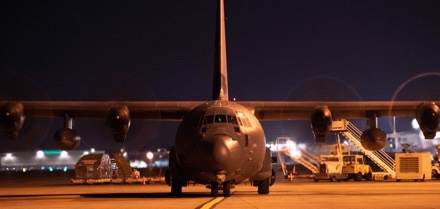
The 6 SOS is an MC-130J Commando II aircraft flying unit that fulfills the 27th Special Operations Wing’s commitment to the Air Force Special Operations Command’s new deployment model.

“We stood up Det. 1 in an effort to get to the AFSOC we need,” said Lt. Col. Michael Roy, 6th Special Operations Squadron commander. “Now we’ve been reassigned, we’re able to work with the Force Generation and stay fully mission capable.”

The squadron’s mission focuses on utilizing the Commando II aircraft for a variety of low-level air refueling missions for special operations aircraft. It also supports infiltration, exfiltration and resupply of special operations forces.

As a newly reassigned and relocated squadron, the 6 SOS is ready to grow and become their own established unit.

“It’s extremely humbling,” said Roy. “Being asked to command a newly relocated squadron has been exciting. We have experienced people who know what they’re doing. They’re excited about the future of forming our own heritage and culture at the 27 SOW.”

The relocation of the squadron makes it the last step in fully completing the FORGEN model. As AFSOC turns to the FORGEN model, it seeks to provide Airmen and their families the deployment and training predictability to ensure readiness, continue to develop our force, and maintain resiliency.

“For the past two decades, our mission has required Airmen to endure frequent, often last-minute, deployments,” said U.S. Air Force Col. Terence Taylor, 27th Special Operations Wing commander. “The Force Generation model provides an opportunity to invest equally in Airmen professional development, be more deliberate with training, and improve individual resiliency.”

By Senior Airman Vernon R. Walter III, 27th Special Operations Wing Public Affairs

SOFWERX – Support Truck Prototype Virtual Assessment Event

Tuesday, November 1st, 2022

SOFWERX, in collaboration with USSOCOM, U.S. Army Combat Capabilities Development Command Chemical Biological Center (DEVCOM CBC), the United States Navy, and the Accelerator for Innovative Minds (AIM), will host a Virtual Assessment Event (AE) 03-05 January 2023, leveraging their hybrid accelerator model to develop a proof of concept for an advanced manufacturing mobile workstation. This event will provide opportunities for direct dialogue with Warfighters, and Government Subject Matter Experts (SMEs) to lower the barrier to working with the DoD and accelerate disruptive technologies and processing to the field.

The objective is to design, manufacture, and test three mobile workstations that facilitate the transportation of at least four personnel and six server storage racks (42 Rack Units 19”x32”), workbenches, alternate access into the workstation, and provide a climate-controlled workspace with the ability to store and consume meals within the mobile workstation.

The mobile workstation allows teams of four personnel to drive to mission areas with multiple racks of equipment and hardware. The 20’ mobile workstation provides the ability to fabricate and modify aluminum mounting foundations. Additionally, the mobile workstation must supply multiple internal and external 20A 120 VAC power receptacles to power tools and test equipment.

More info here.

To participate, submit NLT 28 November 2022 11:59 PM ET.

SOFWERX x Joint Special Operations University Geopolitical Mapping & Social Network Analytics Collaboration Event

Monday, October 31st, 2022

Do you have expertise in geopolitical mapping and social network analysis?

SOFWERX, in collaboration with USSOCOM and the Joint Special Operations University (JSOU), will host a series of events in November to find solutions for a Geographic Information System (GIS) generated Geopolitical Toolkit and associated Social Network Analysis to help SOF professionals assess and visualize where geopolitical flashpoints might emerge. 

Warfighters will interact with potential solution offerors and further communicate operational needs and desirements. The goal is develop GIS-generated Geopolitical Toolkit (or atlas) and social network analysis to help SOF professionals assess and visualize where geopolitical flashpoints might emerge. The prototype must be baselined on the Campaign Plan for Global SOF Operations (CP-GSO). The aim is a single operating picture that combines the GIS-generated Geopolitical Toolkit, leveraging data analytics to construct network models that inform SOF interventions.

Request to Attend NLT 16 November 2022 11:59 PM ET

More information at events.sofwerx.org/map.

Explosive Ordnance Disposal Soldiers Sharpen Special Forces Support Skills in Danger Zone

Monday, October 24th, 2022

FORT CAMPBELL, Ky. – U.S. Army Explosive Ordnance Disposal technicians are sharpening their ability to operate with some of the nation’s most elite warriors in a bunker on Fort Campbell, Kentucky, called the Danger Zone Training Complex.

EOD Soldiers from the 52nd Ordnance Group (EOD) are leveraging the expertise of the training cadre at the specialized facility to prepare for deployments in support of U.S. Army Special Forces units and conventional ground forces.

The Fort Campbell, Kentucky-based 52nd EOD Group commands all Active-Duty U.S. Army EOD units east of the Mississippi River, including two EOD battalions and 14 EOD companies on Army installations in Kentucky, North Carolina, Georgia, Virginia and New York.

The 52nd EOD Group is part of the 20th Chemical, Biological, Radiological, Nuclear, Explosives (CBRNE) Command, the U.S. military’s premier all hazards command. The 20th CBRNE Command is home to 75 percent of the Active-Duty U.S. Army’s EOD technicians and Chemical, Biological, Radiological, Nuclear (CBRN) specialists, as well as the 1st Area Medical Laboratory, CBRNE Analytical and Remediation Activity, five Weapons of Mass Destruction Coordination Teams and three Nuclear Disablement Teams.

American Soldiers and U.S. Army civilians from 20th CBRNE Command deploy from 19 bases in 16 states to confront and defeat the world’s most dangerous hazards in support of joint, interagency and allied operations.

Master Sgt. Brandon K. Barenie from the 52nd EOD Group Training Cell said the Danger Zone training cadre includes two senior Army EOD noncommissioned officers and civilian contractors who provide subject matter expertise.

“We operate within and take tasking from the 52nd EOD Group S3 Operations Section yet may work directly with battalions and companies when appropriate,” said Barenie.

According to Barenie, the support team provides training in EOD, chemical, nuclear, maneuver unit integration, Special Forces support operations, exercise design, counter-Unmanned Aerial Systems and sensitive site exploitation, as well as threat guidance research, scheduling and coordinating training evolutions and constructing and fabricating training aids.

As the U.S. Army’s explosive experts, EOD technicians are trained to take on everything from a hand grenade to a nuclear weapon while conducting explosive mitigation missions in support of military operations around the world and domestic authorities across the nation.

U.S. Army EOD units from 20th CBRNE Command deploy to the U.S. Central Command and U.S. Africa Command areas of operations while supporting U.S. Indo-Pacific Command exercises and Defense Support to Civil Authorities missions for U.S. Northern Command.

Army EOD Soldiers respond when military munitions are discovered, both on and off post. In 2021 alone, Army EOD technicians from 20th CBRNE Command EOD units participated in 1,415 explosive mitigation missions on military installations and 276 missions off base.

Today, Army EOD technicians are training and preparing to support ground forces during large-scale combat operations against a near-peer adversary.

U.S. Army EOD Soldiers also routinely support the U.S. Secret Service and Department of State during Very Important Person Protection Support Activity missions by helping to protect the president, first lady, vice president and foreign heads of states.

Previously a critical communications and security facility called The Voice, the Danger Zone provides a unique venue for the EOD techs to hone their lifesaving and mission-enabling skills. The facility also provides advanced marksmanship and combat skills training to keep EOD Soldiers on target.

“These training opportunities enhance our group’s ability to employ technically and tactically proficient Soldiers in support of any combatant commander,” said Barenie.

By Walter T. Ham IV

SCUBAPRO Sunday – First Special Service Force

Sunday, October 23rd, 2022

Geoffrey N. Pyke, an Englishman, submitted Project PLOUGH to the British government in 1942 as an innovative operational concept. It caught the notice of Vice Admiral Lord Louis Mountbatten, Chief of Combined Operations. Pyke was offered a position on Mountbatten’s staff. Pyke’s 54-page report proposed commando force operations in Norway and Romania over the winter. Winston S. Churchill, the British Prime Minister, was enthralled by the concept. During a planning conference in London, he pitched the proposal to President Franklin D. Roosevelt and General George C. Marshall. Pyke hypothesized that a ten-thousand-man “North American Force” might encircle significant numbers of German troops in the seized countries by employing compact tracked vehicles to move quickly through the snow.

Because it was a one-way trip, Project PLOUGH was infeasible. It did spark the formation of the First Special Service Force (FSSF). A unique combined US-Canadian outfit. Based on the Project PLOW idea, a combined US-Canadian FSSF was activated at Fort William Henry Harrison, Montana, on July 9, 1942. Its structure was outlined in a binational legal agreement. Soldiers, equipment, and supplies were given by the United States Army, while the 2nd Canadian Parachute Battalion provided soldiers from Canada. From regiments to platoons, command positions were evenly distributed by country. Soldiers from the United States and Canada made up the units. Lieutenant Colonel Robert T. Frederick, a 1928 United States Military Academy alumnus, led the FSSF. Lieutenant Colonel John G. McQueen, a Canadian, served as Frederick’s executive officer. In the summer of 1942, a diverse group of volunteers came to Montana. It began a rigorous program of physical fitness, close combat fighting, airborne, demolition, mountaineering, amphibious, and winter warfare training. The FSSF was divided into three 600-man regiments, a service battalion, and a headquarters, with one-third of the Force being Canadian. LTC Frederick persuaded the War Department to employ the FSSF in recovering the Aleutian Islands after Project PLOUGH was canceled.

The Force led the attack on Kiska Island on August 15, 1943. Even though the Japanese had left, Kiska served as a crucial training ground for future operations. The combat-proven FSSF was deployed to Europe, notably to the Fifth U.S. Army in Italy (Lieutenant General Mark W. Clark). To break the German Winter Line, the Force took the 3,000-foot-high Monte La Difensa and La Rementanea mountain peaks, guarded by a Panzer Grenadier division, on December 2-3, 1943. Their relentless night patrols earned them the nickname “Devil’s Brigade” after they landed at Anzio on February 1, 1944. The FSSF led the Allied invasion into Rome on June 4, 1944, seizing vital bridges in preparation for the massive U.S. II Corps assault. In Rome, Colonel Frederick was wounded three times. Brigadier General Frederick, who had recently been elevated to Brigadier General, was assigned to head the 1st Allied Airborne Task Force during the invasion of Southern France. Colonel Edwin A. Walker of the United States Army acquired command of the 3rd FSSF Regiment. On August 14, 1944, he spearheaded the Force’s amphibious assaults on the Mediterranean islands of Port Cros and Levant. Operation DRAGOON allowed the Seventh United States Army (Lieutenant General Alexander M. Patch) to land safely in southern France. Five months later, on December 5, 1944, outside the village of Menton, France, the FSSF paraded one more time to commemorate the departure of the Canadians. After the FSSF was disbanded on January 6, 1945, American veterans formed the 474th Infantry Regiment (Separate). When the war in Europe ended in May 1945, the 474th was dispatched to Norway to disarm German soldiers.

The 1st Special Forces Regiment can trace its official U.S. Army history and accolades to the FSSF’s activation on July 9, 1942. The Force is represented by the S.F. Coat of Arms, embroidered on the S.F. Regimental colors. The shield was designed with the FSSF in mind. LTC Frederick created the V-42 fighting knife, which is included in the set.

The U.S. Army Indian Scouts first used the crossed arrows on the crest in 1890. During World War II, the Force wore them as a branch emblem. In 1960, the fighting knife and crossed arrows were added to the Regiment’s S.F. Distinctive Unit Insignia (DUI). The S.F. Shoulder Sleeve Insignia (SSI), often known as a “unit patch,” was adopted in 1955 and is shaped like the FSSF red arrowhead patch but with the words “USA” and “CANADA” embroidered in white. The Special Forces Regiment’s relationship with the First Special Service Force is still felt.

CV22 Osprey Recovered in Norway

Saturday, October 22nd, 2022

While participating in a training exercise in Norway, a CV-22B Osprey experienced an inflight emergency, requiring the pilots to land immediately. After six weeks of being grounded on the island of Senja, the 352nd Special Operations Wing’s Osprey was recovered via crane barge, Sept. 27, 2022.

The aircraft is now at a Norwegian military base where 752nd Special Operations Aircraft Maintenance Squadron maintainers will perform repairs to get the aircraft flying once again.

The Norwegian Armed Forces, along with the Norwegian Environmental Protection Office, developed the plans for recovering the Osprey in concurrence with the U.S. Air Force.

“It [was very] demanding,” said Royal Norwegian Air Force Command Sergeant Major Odd Helge Wang. “The challenge [was how] shallow [the area was], and the machine weighs 20 tons.”

Many obstacles stood in the team’s way to recovering the CV-22, including weather delays and the more sensitive hurdle of preventing damage to the local fauna.

“[We’ve brought] 430 tons of equipment in to carry this out, so there will be some wear and tear,” Wang said. “We have tried to do everything as gently as possible.”

Now nestled in a military hangar, the maintenance crews will work to repair the aircraft so it may fly again. When accomplished, the Osprey will return to its home station in the United Kingdom.

“I’m so impressed by all parties involved who came together to make this recovery operation a success,” said U.S. Air Force Lt. Col. Jeffrey Westerman, recovery mission commander for the 352nd Special Operations Wing. “This monumental operation wouldn’t have been possible without the hard work and dedication from our allies and our Air Commandos, and we are immensely grateful for everything the Norwegians have provided our team during the past weeks.”

By TSgt Westin Warburton, 352nd Special Operations Wing Public Affairs

Moog Inc to Support L3Harris and Air Tractor Sky Warden Team on USSOCOM Armed Overwatch Program

Tuesday, October 18th, 2022

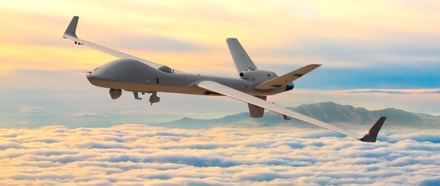
EAST AURORA, N.Y. – Oct 18, 2022 – Moog Inc. (NYSE: MOG.A and MOG.B) announced today that L3Harris Technologies has selected Moog’s Space and Defense segment to provide its weapon Stores Management System (SMS) in support of the U.S. Special Operations Command (USSOCOM) Armed Overwatch Program.

L3Harris’ USSOCOM award includes an indefinite delivery, indefinite quantity contract with a cost ceiling of $3 billion. The program calls for delivery of up to 75 manned, fixed-wing aircraft. Moog’s combat proven, modular, lightweight, and affordable SMS solution will be integrated on each aircraft to provide superior fire-control and mission set capabilities.

“We are honored to have been part of the L3Harris team’s pursuit, resulting in this award after many months of intense competition,” said Jim Riedel, Group Vice President, Moog Inc. “This is a testament to the Sky WardenTM teams’ commitment to the warfighter and the demonstrated ability to deliver a quality, well-engineered, integrated multi-mission platform. Agility, innovation, and collaboration with teammates have been key to providing this robust solution. Moog is committed to reliably delivering our SMS products in support of our U.S. Special Operations Forces.”

The flexible design of the SMS enables rapid integration and future upgrades to the sensors, avionics, and weapons ensuring value for future mission requirements in response to rapidly evolving threats. The Moog weapon SMS Armed Overwatch solution set entails the following:

– Enhanced Stores Management Computer (E-SMC) – Stores Interface Unit (SIU)

– Remote Power Unit (RPU-6)

– Dual Rail Launcher (DRL) for HELLFIRE® Missile

The SMS equipment will be manufactured by Moog’s Integrated Defense Systems business in Orlando, Florida. Production of new, fully modified Armed Overwatch mission-configured aircraft will begin in 2023 at L3Harris’ Tulsa, Oklahoma modification center.

“Moog’s modern and flexible stores management system seamlessly integrates with our mission management system for mission agility and flexibility,” said Luke Savoie, President, ISR, L3Harris. “Our teams are prepared to deliver enhanced overwatch capabilities through mutual collaboration and rapid integration of new weapons systems.”

From the “AFSOC We Have” to the “AFSOC We Need”

Wednesday, October 12th, 2022

HURLBURT FIELD, Fla. —  

HURLBURT FIELD, Fla. – This month, Air Force Special Operations Command, AFSOC, is transitioning the way Air Force Special Operations Forces, AFSOF, present to the joint force. 

Following September 11, 2001, AFSOC’s force presentation focused heavily on providing crisis response capabilities and countering violent extremist organizations, or CVEO, through the Joint Special Operations Air Component, or JSOAC, deployment model.

This model, while historically successful in conducting crisis response and countering violent extremist organizations during more enduring operations, does not provide the necessary attributes required to succeed in the new operational environment.
 
AFSOC’s focus on C-VEO and crisis response has evolved to also include campaigning in the gray zone, employing SOF-peculiar capabilities, and developing and advancing relations with our international partners and allies.


 
“While the JSOAC model was effective for conducting command and control, or C2, of SOF air assets in recurring fixed deployment locations, the JSOAC was manned through an individual augmentee approach that didn’t properly allow commanders and staff to train, certify and deploy specifically for their deployed mission,” said Maj. Gen. Wolfe Davidson, AFSOC deputy commander. “The JSOAC was not trained or equipped to conduct the joint warfighting functions necessary for effective and adequate mission command. We had to take a look at how we were presenting forces and ask ourselves, ‘Does this look right?’ And if it doesn’t, what does?”



 
Enter the Special Operations Task Group, or SOTG.

“This change in how we present forces is transformative and drastically enhances AFSOC’s ability to present options to compete with and deter our adversaries below the threshold of armed conflict and add more strategic options for our nation’s leaders,” said Davidson.

Adhering to the U.S. Special Operations Command Comprehensive review, as well as Air Force Chief of Staff Gen. CQ Brown Jr.’s, “Accelerate Change or Lose” priorities, these squadron-based, task-focused groups take a significantly different approach than their JSOAC predecessors in a variety of ways.
 

While deployed, the JSOAC previously provided impromptu support on an “as needed basis.” The SOTG, unlike the JSOAC, will instead offer forces designed uniquely for each mission.
 
Additionally, the JSOACs provided operational staffs who relied on spontaneous manning that didn’t train or prepare teams for deployments whereas the SOTGs are tactical units that are manned through the force generation cycle, meaning Air Commandos are training together as they prepare for deployments.

“This new construct will allow us to not only accurately articulate our forces but will also enable us to deliberately develop a more credible, capable, and precise force with these purpose-built teams.” said Lt. Col. James Caldwell, AFSOC C2 Implementation Planning Team lead. “Airmen and their families will have much more predictability regarding deployments and the training that’s required before deploying.”

This predictability is due to the design of force generation model, which consists of four, 150-day phases – individual training, unit training, collective training and validation, and the deployment phase. Commanders will also have more deliberate oversight on deployment preparations which ultimately will increase mission success and drive down the risk to mission.

In addition to this predictability, this new structure of force presentation will enable commanders to more effectively accomplish mission command, which is key as the operational environment continues to shift.

The SOTG at its core, will be a squadron-based, O-5-led unit that will focus primarily on integrating multi-domain SOF air power into joint operations. Once forward, the SOTG will command flight-based echelons called Special Operations Task Units, or SOTUs. Each SOTU will have a unique capability tailored to that AORs requirement. These units may offer but are not limited to AC-130J, MC-130H, Special Tactics, U-28 or even agile combat support.

“This restructure will bring us in alignment with how all other SOF tactical units present forces,” said Lt. Col. Shawnee Williams, AFSOC C2 Implementation Planning Team lead. “It also ensures that AFSOFs unique multi-domain contributions give the Joint SOF community a competitive advantage.

With the first SOTG set to replace a JSOAC this month, the offerings of SOTG capabilities will likely evolve, as they’re structured to support Theater Special Operations Command’s tailored needs in their respective area of responsibilities.

Air Force Special Operations Command Public Affairs