GORE-TEX Professional

Archive for the ‘SOF’ Category

The Anniversary of the Battle of Mogadishu

Saturday, October 3rd, 2020

Everyday marks an anniversary of a significant event in American military history, but today stands out among them.

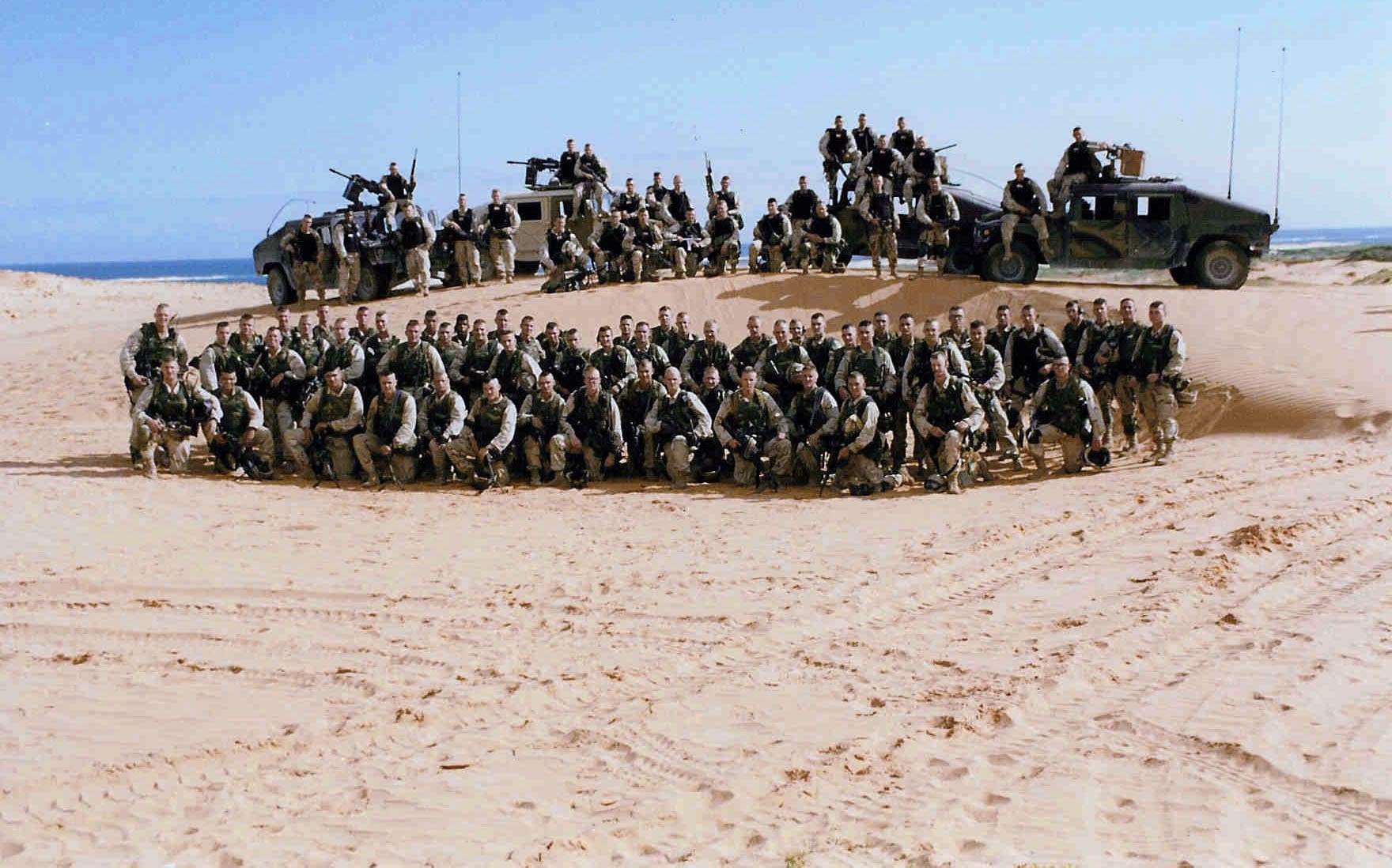
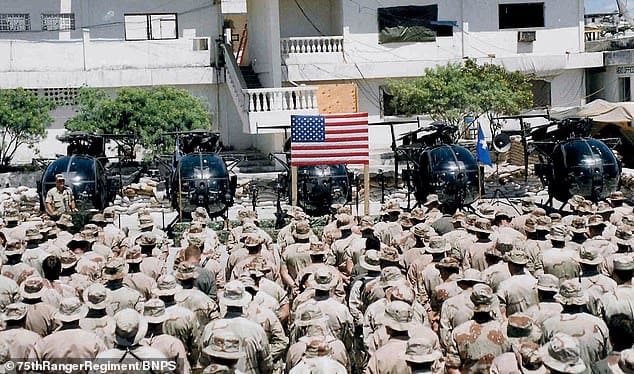
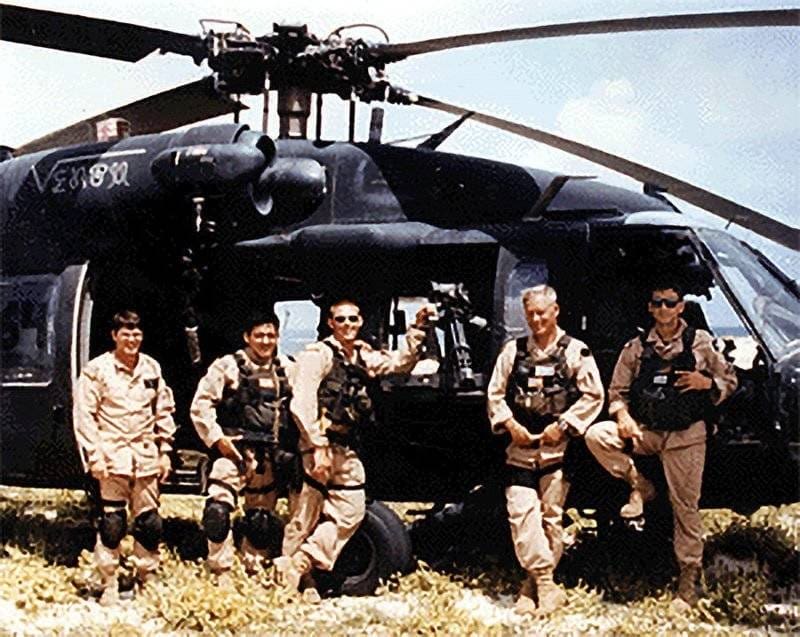
On this date in 1993, US service members were engaged in what is now known as the Battle of Mogadishu. A joint organization was formed named ” TF Ranger” to deploy to Mogadishu, Somalia in support of a UN-led humanitarian mission. Already having conducted operations for some time, on 3 October they raided the city’s Olympic Hotel in order to capture key leaders of the Aidid Militia.

Unfortunately, during the exfil portion of the raid, a battle ensued which claimed the lives of 18 Americans and wounded another 73. Additionally, CW3 Michael Durant was captured by the Aideed militia. Fortunately, Durant was later repatriated and went on to retire from the 160th.

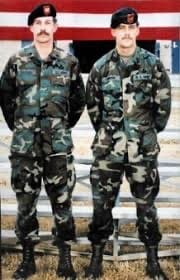
Of the men killed that day, two would be awarded the Medal of Honor, Delta Operators Gary Gordon and Randy Shughart, for their selfless efforts to protect Durant after his aircraft, callsign Super 64, was shot down.

If you are unfamiliar with the events, one of the best accounts of the battle is contained in the book, “Blackhawk Down” by author Mark Bowden. Much of the information was serialized prior to the book’s publication in the Philadelphia Enquirer. Later this was made into a movie bearing the same name.


Please take a moment to remember these men and their sacrifice.

Additionally, the 75th Ranger Regiment was created on this day in 1984, with the stand up of its 3rd Battalion. Thirty-five years later, the Ranger Regiment boasts boasts five battalions of some of the most elite warriors on the face of our planet.

USSOCOM Science and Technology Small Business Innovation Research 20.3

Friday, October 2nd, 2020

USSOCOM’s Small Business Innovation Research (SBIR) team needs solutions for the following special areas of interest:

Phase I:

SOCOM203-001 – Positioning, Navigation and Timing for Target Acquisition

SOCOM203-002 – Handheld Celestial Navigation System

SOCOM203-003 – High-Performance Multi-Platform / Sensor Computing Engine

SOCOM203-004 – Geospatially Integrated Cyber Situational Awareness

Direct to Phase II:

SOCOM203-D007 – Maneuver Level Laser Target Designator

SOCOM203-D008 – Deployable At-Sea Mid-Wave Infrared Emitter

SOCOM203-D009 – Interoperable Simulation and Gaming Mesh

Visit SOFWERX for more information.

17th STS Moves from 720th STG to 724th STG

Friday, October 2nd, 2020

The 24th SOW transitions responsibility of the 17th STS

FORT BENNING, Ga. —

The 24th Special Operations Wing transitioned responsibility of the 17th Special Tactics Squadron from the 720th Special Tactics Group to the 724th Special Tactics Group during a re-assignment ceremony at the 17th STS headquarters, Fort Benning, Georgia, Oct. 1, 2020.

“Today we recognize the end of a tremendous era under the 720th Special Tactics Group and the start of an exciting opportunity as part of the 724th Special Tactics Group,” said Lt. Col. Travis Deutman, commander of the 17th STS. “Reassignment is nothing new for the 17th.”

In August of 2013, the squadron, originally known as the 17th Air Operations Support Squadron, was re-designated as the 17th STS by then-Col. Robert Armfield, the 24th SOWs first wing commander. This time around, Col. Matt Allen, the current 24th SOW commander, presided over the ceremony and the presentation of the new guidon.

 “The 17th STS continues to forge its voice as one of the premiere units within Air Force Special Operations Command and the United States Air Force,” said Allen. “I want to thank the individuals within this unit who have built this legacy of honor and valor.”

The primary mission of the 17th STS is to provide Special Tactics Tactical Air Control Party Airmen to the U.S. Army’s 75th Ranger Regiment for unconventional operations and the transition will provide further opportunities to continue supporting the regiment.

“We look forward to continuing steadfast fires and reconnaissance support to the Ranger mission and its objectives,” said Deutman. “Reassignment to the [724th Special Tactics Group] will realize synergies, efficiencies and unite of command to push our operational alignment with the Ranger Regiment to the next level.” 

The 724th STG is one of two subordinate groups under the 24th SOW, which provides training and technical assistance in the development of tactics, techniques, and procedures to ensure standardization across the AFSOC Special Tactics community. 

“The [17th STS] has always been part of the family, but this will put them in the right organizational construct to become even more effective,” said Col. Mark McGill, commander of the 724th STG. “It’s all about optimizing our ability to train as well as generate mission effectiveness and this is a necessary step to actualize that.”

The 17th STS is geographically separated in three locations so the unit can train and deploy alongside all five of the U.S. Army Special Operations Command’s 75th Ranger Regiment battalions. The squadron is headquartered at Fort Benning, Georgia, alongside the Regimental Headquarters, 3rd Ranger Battalion, Regimental Special Troops Battalion, and Regimental Military Intelligence Battalion. Two operational detachments are located at Hunter Army Airfield, Georgia, alongside the 1st Ranger Battalion, and Joint Base Lewis-McChord, Washington, alongside the 2nd Ranger Battalion. The unit’s physical locations will remain the same through the transition. 

“While a lot might be changing, I can guarantee the commitment, professionalism and excellence of the 17th STS members will remain,” said Deutman.

Another aspect which will remain is the application process for future ST TACP candidates looking to join the 17th STS’ community of warriors. The 24th SOW will continue to host assessment and selection iterations for Special Tactics TACPs at Hurlburt Field, Florida, hand-selecting the most skilled operators to carry out the wing’s special operations precision strike mission.

“You have furthered the reach of America’s combat power,” said Allen. “You’ve held at bay violent extremist organizations and state actors as they challenge us from abroad, and you have kept a promise to Americans … especially to our joint teammates, that no matter where they are on the battlespace, they will never be outmatched.”

Air Force Special Tactics is U.S. Special Operations Command’s air-ground integration force and the Air Force’s ground force specializing in Global Access, Precision Strike, Personnel Recovery and Battlefield Surgery operations. 

For anyone wanting more information on how to join the 17th Special Tactics Squadron, email SDScreening@jdi.socom.mil

By Lt Alejandra Fontalvo, 24th Special Operations Wing

Green Beret Anniversary

Monday, September 21st, 2020

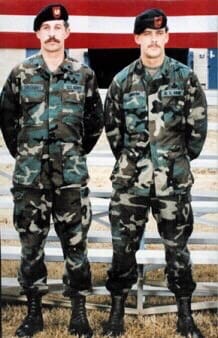
On 21 Sep 1961, The Green Beret became the official headgear of the US Army Special Forces.

An Imprecise History of the US Army Security Agency Special Operations Detachments

Sunday, September 20th, 2020

Organic to each of the US Army’s Special Forces Groups are small teams of Signal Intelligence specialists operating in teams called Special Operations Team – Alpha or SOT-A. These in turn are supported by fewer still SOT-Bs. I served on a SOT-A from 1990-96 in 2nd Bn, 3rd SFG(A). The SOTs-A are the direct descendants of the United States Army Security Agency Special Operations Detachments (USASASODs).

While other SOF components have stood up SIGINT support elements over the past decade, SF has had the dedicated capability since before the Vietnam War.


Photograph: The 403rd SOD courier run – Plei Ku to Kontum – 1968 (Photo: INSCOM)

What follows is an “imprecise” history of thier existence from an ASA veteran website.

AN IMPRECISE HISTORY OF THE USASASODS

In the history of mankind, there are fleeting moments of time where, by fate or good judgement on the part of someone, a group of people are brought together at the most appropriate time and place or places to form extraordinary military units.

One such fleeting moment of history, was the formation and life cycle of an extraordinary military unit called the United States Army Security Agency Special Operations Detachment, more commonly referred to as the ASASOD.

One may ask why the ASASODs were called extraordinary and not elite. There are many elite military organizations such as the Roman Legions, Merrill’s Marauders, Rangers, Special Forces, SEALs, etc., however, there are few extraordiary units such as the ASASODs.

Why were the SODs extraordinary? Certainly, the timing was there and so were the places. But, the thing that really made the SOD an extraordinary unit was the people… good Special Forces soldiers…good technicians…loyal, dedicated, brave men…but, most of all, trusted and true friends.

The first SOD was originally formed at Vint Hill Farms Station, VA and relocated to FT Bragg, NC during the summer of 1960 with the 5th and 7th SFG(A)s. Later in 1960, units were organized and located in Okinawa with the 1st SFG(A) and Bad Toelz, GE with the 10th SFG(A). These original SODs were then designated as the 1st (1st SF), 2d (10th SF), 3d (7th SF), and 4th (5th SF) Operational Detachments of the 80th USASA Special Operations Unit (80th USASASOU).

In 1962 these Operational Detachments of the 80th SOU were redesignated as USASA Radio Research Units (RRUs); the 10th RRU (400th SOD) 1st SFG(A), and the 11th RRU (401st SOD) 8th SFG(A) was created, 12th RRU (402d SOD) 10th SFG(A), and the 13th RRU (403d SOD) 5th SFG(A).

During 1963 the units were again redesignated to the final designations we know them as today; the 400th ASASOD, 1st SFG(A); 401st ASASOD, 8th SFG(A); 402d ASASOD, 10th SFG(A); 403d ASASOD, 5th SFG(A) until Jan 64, 7th SFG(A) until Jan 65, and then to the 3d SFG(A) until the 403d’s deployment to RVN with the 5th SFG(A) in 1966.

The SODs remained the same from 1966 until the post-Viet Nam stand down of Special Forces during the early 1970s. With the stand down of the 5th SFG(A) in Viet Nam, the 403d was deactivated and was never again reactivated. On deactivation of the 8th SFG(A) in Panama, the 401st was deactivated for a short while and later reactivated with the 7th SFG(A) at Ft Bragg, NC. In 1974, on deactivation of the 1st SFG(A), the 400th was redeployed from Okinawa to Ft Bragg with the 5th SFG(A). The 402d redeployed from Germany with the 10th SFG(A) to Ft Devens, MA.

The official end of the USASASODs as United States Army Security Agency units came with the deactivation of HQs, USASA and conversion to Combat Electronic Warfare Intelligence (CEWI) organizations in December, 1976. However, even after the designation of USASA, the SODs continued to carry the ASASOD unit designations into the early 1980s when they were redesignated as Combat Intelligence Companies.

By the late 80s, the CBTI Cos were broken apart into Battalion level Military Intelligence Detachments in addition to a Group-level MID. The SOT-As went to the Bn MIDs, three a piece, along with a single SOT-B per Bn. The Group retained the TCAE.

RADM HW Howard III Relieved RADM Collin P Green as Commander, Naval Special Warfare Command During Recent Change of Command Ceremony

Saturday, September 19th, 2020

NAVAL AMPHIBIOUS BASE CORONADO (NNS) – (Sep. 11, 2020) Rear Adm. H. W. Howard III relieved Rear Adm. Collin P. Green as Commander, Naval Special Warfare Command (NSWC) during a change of command ceremony at Naval Amphibious Base Coronado, Sept. 11, 2020.

U.S. Army General Richard D. Clarke, commander, United States Special Operations Command (USSOCOM) was the presiding officer.

“But on all days, today, September 11th, we all remember an event that changed many things for our country. And for our special operations forces, it changed our course, it changed many of our joint force individuals, and changed many families for years to come. And I would ask everyone to keep that foremost in your mind today, as we recognize the import of today’s event,” said Clarke. “For 19 years, SOF has been the tip of the spear operating around the globe to protect our American people, our interest and our way of life. From the beginning the Navy SEALs and the entire NSW team has been an absolutely essential part of that effort. …The incredible ethos of teamwork and excellence established in the tradition of this command firmly holds true today.”

Green assumed command of NSWC in July 2018 and in his next assignment, he will serve as chief of staff, U.S. Special Operations Command.

Howard arrives as Commander, NSWC from his most recent assignment as Commander, U.S. Special Operations Command Central located at MacDill Air Force Base, Fla.

NSW Command is committed to its Sailors and the deliberate development of their tactical excellence, ethics, and leadership as the nation’s premiere maritime special operations force supporting the National Defense Strategy.

NSW is the maritime component of U.S. Special Operations Command, and its mission is to provide maritime special operations forces to conduct full-spectrum operations, unilaterally or with partners, to support national objectives.

Courtesy Naval Special Warfare Command

Lose Something?

Thursday, September 17th, 2020

Maybe he was sitting on his helmet so his balls didn’t get blown off and forgot to put it back in before exiting the aircraft.

Fail Forward: Lessons Learned from a Career AF Special Tactics Operator

Monday, September 7th, 2020

HURLBURT FIELD, Fla. —

Editor’s note: This commentary was written by a career Air Force Special Tactics operator and expresses his personal opinions based on his experiences. 

In the Air Force Special Tactics community, we live our lives by certain immutable truths. You may have heard of them – “SOF forces cannot be mass produced”, “Slow is smooth; smooth is fast”, “Two is one; one is none.”

To the initiated, these (and many more) are repeated so often that you learn to recite them without even blinking. They become part of your own self-talking training, in mission preparation and in combat. Almost like a mantra, you find yourself repeating these things to yourself. “Calm down – when we break the plane of the door, go opposite the guy in front of you. Watch your muzzle. Protect the team. Bleeding, airway, get them out. De-conflict fires from friendly positions. Sights, slack out, press. Be aggressive.”

After nearly two decades in the Air Force, I have trained, tried and failed so many times that I’ve accumulated a near endless stream of consciousness that is simultaneously conscious and muscle memory. All of these lessons- hard learned and through both failure and victory- came to light during the After Action Report process. We commonly refer to the information gleaned in these sessions as “lessons learned”. Get done with the mission, take care of weapons, sensitive items, and reset. Then, when everything is fresh in your mind, explore what was good, bad, ugly and perfect. Formalize those lessons and most importantly, don’t allow the same mistakes you made last time.

I value that process. A saying I’ve gotten used to using is that “Our [standard operating procedures] are written in blood.” Meaning- we have lost many, and we owe it to those men and women to make ourselves better, every single rep. I’d like to share my three ‘“lessons learned”. I won’t claim to be an expert. What I can say, is that I wish someone would have taken me aside as a younger Airman and told me these things. If anything, I hope that my failures and missteps can help someone avoid my mistakes.

Failure is always an option.

While I understand the intent behind the cliché phrase, “Failure is not an option”, it’s simply false. I have failed many times in my career. I’ll fail many more. I expect my team to fail. In training and unfortunately, in combat. I wish it was different. If it was, I would have friends back, less regrets, less “I wish that day didn’t go like that” statements in my life.

In the end, you must try to avoid failure; but at the same time you have to accept and strive to train so close to your limit that sometimes you fall short. You must test and sometimes exceed your limits to know what your limits are. And sometimes you’ll fail.

What’s my lesson learned? How you lead through failure is far more valuable to me and my teams than a perfect run. How we deal with failure, with tragedy, with heartbreak and boredom and disillusionment and being unmotivated- in those times we find out what our mettle really is. If you’re going to fail, make it count. Learn from it. Avoid that failure in the future, and don’t be afraid to fail. Always learn, always grow … and always continue to push your limits for the better.

You can still be unique and part of a highly functioning team.

Air Force Special Tactics attracts the widest range of all personality types, hands down. We actually select out for individuals, capable of making individual decisions that further the mission of the team, the squadrons and entire organizations.

Tree hugging, slack lining, hackey sack playing ‘hippies’. Death metal listening, big weight moving, aggressive hyper alpha males. Quiet graduates of Ivy League schools that have diverse stock portfolios. Ultra long distance runners. Powerlifters that hate cardio. Guys and gals that sold everything they own and lived in their van prior to joining and becoming part of the ST team. We value ALL of these personalities.

Often times, people have approached me and said, “I don’t feel like I fit in” or even worse, “I’m not getting along with so and so- we are so different.”

On my first deployment, I was in exactly such a scenario. I attended two weeks worth of training with a fellow operator; we just couldn’t get along. It got heated multiple times. Months after the initial training, a very wise Team Leader of mine called me out when I was lamenting my interactions with that other operator.

He drew a small box, about 3 inches by 3 inches wide on a huge whiteboard. He then drew two dots, in opposing corners.

“So,” he said, “You’re these two dots. Couldn’t be further apart. Diametrically opposed, yeah?”

I don’t remember my exact response, but it was a pretty solid, “Exactly.”

“That box you’re both in contains all the people that have volunteered multiple times and have wanted nothing more than to support and defend the Constitution and have willingly accepted the possibility they might die doing so. Outside of this box, the entire 15 foot by 5 foot white board, represents the rest of humanity. You have more in common with this person you dislike for no good reason than you do with 99.9% of humanity. Maybe grow up.” 

What’s my lesson learned? It’s ok to be yourself and to be a valued member of Special Tactics. Whether it’s as an operator, Combat Mission Support, a surgeon on a Special Operations Surgical Team, a First Sergeant, a chaplain- we all make the team of professionals we have today, together. We value and foster our differences. Embrace that and don’t let a preconceived notion about someone else- or even worse, yourself- get in the way of what’s important. The team. The mission.

Keep an even keel.

I was about six months out of completing my two plus year training requirements to earn my beret. We were doing some training, but got the call that a Philippine sailor was gravely ill at sea, and I was going to be part of the rescue team to go get him. After multiple mid-air refuelings, I was hoisted from an HH-60 onto a moving super tanker, assessed and stabilized my patient, packaged him in a litter and we were both hoisted back up. I then cared for my patient until we transferred care to a waiting team in Ireland, about 4-5 more hours in the aircraft. My patient lived.

The sense of pride and accomplishment I had was undeniable. It was a lifetime of effort justified in one 24-hour period. The rescue was given an award that year.

Fast forward to 2015, somewhere in a combat environment.

In support of a huge operation, my team learned that a U.S. Army special forces soldier had been severely wounded by small arms fire. We immediately transferred him to the far-forward operating room- which was just a building close to the fighting- and the surgeons did everything they could do. Unfortunately, it was just one of those ‘perfect’ wounds that was unsurvivable.

My close friend and element leader and I knew what had to be done. We had to prepare this fallen soldier for his Angel Flight and it had to happen before his team came back. We placed the flag appropriately and did everything we could to honor him.

That event haunts me to this day. I can still feel that emotion and smell those smells when I think about it. I told the trauma surgeon at the time, “I think this one might have really done some damage. I’m not real sure how many more of those I got left.” I have never been so devastated; the whole team took it very, very hard.

What’s my lesson learned? This career- this life- holds the highest of highs and the lowest of lows. In order to be successful, you can’t swing too hard in either direction. hubris and complacency lies on one end of the spectrum; inescapable darkness lies on the other end. It’s not advisable to spend too much time at either end.

As it stands, I’m still learning now. While my team position has changed, so have I. Some pitfalls I can avoid thanks to a lifetime of “lessons learned”, but the reality is, there are still more to learn. More importantly, the only way we can move forward as an entire enterprise is to share these lessons learned with one another and learn from each other. Good, bad, ugly, perfect.

There is no better job in the Department of Defense than Air Force Special Tactics, I firmly believe that.

But even if you find yourself in a different career, branch, command, profession- I hope that you’re taking your own “lessons learned” and making yourself a better human, citizen, or member of your team.

“First There, That Others May Live.”

Commentary by Special Tactics operator, 24th Special Operations Wing, 24th Special Operations Wing

Photo by TSgt Sandra Welch