Tropo Performance

Archive for the ‘UAS’ Category

US Army Conducts Live-Fire Test of High-Powered Microwave for Exercise Balikatan 2025

Thursday, May 8th, 2025

The 1MDTF soldiers were joined by members of the Philippine Air Force, 960th Air and Missile Defense Group, who participated alongside their partners as part of the Subject Matter Expert Exchange (SMEE) program, and U.S. Marines with the 3rd Littoral Anti-Air Battalion’s Ground-Based Air Defense Battery who employed the Marine Air Defense Integrated System (MADIS) during this multi-day live-fire event.

“This is a great opportunity for joint training alongside our short-range air defense counterparts from the U.S. Marines,” said U.S. Army Capt. Bray McCollum, battery commander of 1-51 ADA’s Integrated Fires Protection Capability (IFPC) battery.

This is the first time the Army’s IFPC-HPM has been employed in the Indo-Pacific and tested in a tropical environment. This advanced equipment supports the U.S.-Philippine Alliance through enhancing combined military cooperation and advancing our shared commitment to a secure, stable, and free Indo-Pacific region for all.

The IFPC-HPM is a Directed Energy (DE) weapon system that emits a beam of microwave energy that can disrupt, disable, or destroy Unmanned Aerial Systems (UAS). The IFPC-HPM is the first material released DE weapon system specifically designed to counter groups and swarms of drones. The 1st MDTF was the first unit to field the HPMs in February 2024 and has since been conducting tests across a range of environments.

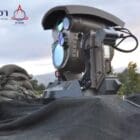
In another first for the Indo-Pacific region, the IFPC-HPM and FS-LIDS were used together in a complementary system. FS-LIDS is another counter-UAS capability that has been operationally deployed in the middle east for the past decade. Together with the IFPC-HPM it can be used for the sensing, tracking, and disabling of UAS while allowing IFPC-HPM operators to gain positive identification of the UAS target using its electro-optical infrared camera. Both systems can be used to disable the targets. This creates a layered defense of non-kinetic effects to defeat small UAS.

“During this test, we were able to demonstrate that we can successfully defeat drone swarms in a tropical environment using layered effects,” said McCollum.

The results of the test will be analyzed by the Rapid Capabilities and Critical Technologies Office (RCCTO) who manage the development, prototyping, and testing of the Army’s Directed Energy weapons. The results will be used to improve the effectiveness in countering UAS swarms and help inform the Army’s future force requirements.


Members of the Armed Forces of the Philippines learned about the IFPC-HPM and FS-LIDS as part of the SMEE program, strengthening their partnership with the U.S. and giving them the skills that could enhance their role in national defense.

“This is a great opportunity to show our Philippine Allies the cutting-edge capabilities that the U.S. Army has in development,” said McCollum, “This training demonstrates our commitment to strengthening our ties with our Indo-Pacific allies and partners.”

As a theater-level unit and joint force enabler, assigned to the Indo-Pacific, the 1st MDTF plays a vital role in synchronizing long-range precision fires layered with long-range precision effects to create multiple dilemmas and neutralize adversary anti-access and area denial networks. The MDTF’s proven innovation, agility, and lethality have led the Army to direct five full MDTFs in strategically significant locations worldwide.

Balikatan is a longstanding annual exercise between the U.S. and Philippine armed forces designed to strengthen the alliance, showcase the capable combined force, and demonstrate the commitment to regional security and stability.

By MAJ Ian Sandall, 1st Multi-Domain Task Force

US Army Trains with Latest Maritime Domain Awareness Capabilities Alongside Philippine Partners During Balikatan 25

Wednesday, May 7th, 2025

SAN ANTONIO, Zambales, Philippines — The 1st Multi-Domain Effects Battalion from the 1st Multi-Domain Task Force conducted drone, high altitude balloon, and electromagnetic warfare training alongside Philippine counterparts at Palawan and Naval Station Leovigildo Gantioqui during the annual 2025 Balikatan exercise.

The battalion is honing its skills on reconnaissance, surveillance, target acquisition and non-kinetic effects using ground-based EW systems, ultra-long endurance, solar powered Unmanned Aerial Systems (UAS), and High-Altitude Balloons (HABs).

A key highlight of the training includes extending network communications for retransmission of signals between multiple aerial capabilities.

“These long-range high endurance UAS are capable of establishing network connectivity between multiple aircraft at long distances,” said Maj. Malcolm Royer, Electronic Warfare Sensing Company commander. “We’re continuing work to extend that range.”

Prior to Balikatan 2025, the unit was at Yakima Training Center in Washington, conducting Static Focus 3, the Army’s first battalion-level All-Domain Home Station Training exercise. This training, held from March 3-14, 2025, was the first time Soldiers were able to operate all MDEB capabilities in a completely live environment. The soldiers were able to bring this knowledge with them to Balikatan 25.

“Static Focus is our annual training and risk reduction exercise to build multidomain teams with capabilities for all domain operations from every company across the MDEB,” said U.S. Army Lt. Col. Joe Mroszczyk, 1st Multi-Domain Effects Battalion Commander, “Our Soldiers are identifying best practices and training our headquarters elements to operate at dispersed locations ahead of doing the same in the Philippines.”

During Exercise Balikatan 25, the unit trained alongside members of the Philippine Air Force, conducting multiple training balloon launches and UAS sorties. They also coordinated with PAF airspace controllers to deconflict airspace for both Philippine and U.S. air traffic, supporting reconnaissance for the HIMARS live-fire operations conducted by their sister Long Range Fires Battalion. This seamless coordination supports the combined U.S.-Philippine force land-based counter maritime capabilities.

As part of the training, the unit mounted a UAS launch cradle onto the roof of a Philippine Air Force vehicle, showcasing the potential for future collaboration with the PAF in conducting fixed-wing launches from an airstrip.

This type of collaboration with the Armed Forces of the Philippines during Balikatan 25 enhances our interoperability and helps strengthen our partnership and commitment to peace and security in the Indo-Pacific.

Balikatan is a longstanding annual exercise between the U.S. and Philippine armed forces designed to strengthen the alliance, showcase the capable combined force, and demonstrate the commitment to regional security and stability.

By MAJ Ian Sandall

SOF Week 25 – Anduril Industries Pulsar-L EW System

Tuesday, May 6th, 2025

No larger than a 3kw portable generator Anduril Industries’ new Pulsar-Light is a software-defined Electromagnetic Warfare (EW) system designed primarily for counter drone operations, combining detect, ID, track, and defeat all in one box.

Deployable in two minutes, Anduril is fielding two configurations of Pulsar-L:

– Airborne, designed for airborne EW missions

– Expeditionary, built for every warfighter

Like other versions, Pulsar-V (vehicle), Pulsar Alpha (airborne) and the fixed-site emplacement, this new Light model can be operated independently or integrated with Lattice. It is also compatible with other C2 and Common Operating Picture solutions, including TAK.

US Army, Philippine Air Force Test Counter-Drone Systems at Balikatan 2025

Tuesday, May 6th, 2025

SAN ANTONIO, Zambales, Philippines — The 1st Multi-Domain Task Force recently conducted tests of their Integrated Fires Protection Capability High-Powered Microwave, or IFPC-HPM, and Fixed Site-Low, Slow, Small Unmanned Aerial System Integrated Defeat System, or FS-LIDS, in a combined joint integrated air and missile defense live-fire exercise at Naval Station Leovigildo Gantioqui, April 28, 2025.

The 1st MDTF Soldiers were joined by members of the Philippine Air Force, 960th Air and Missile Defense Group — who participated as part of the Subject Matter Expert Exchange program — and by U.S. Marines with the 3rd Littoral Anti-Air Battalion’s Ground-Based Air Defense Battery who employed the Marine Air Defense Integrated System during this multi-day live-fire event.

“This is a great opportunity for joint training alongside our short-range air defense counterparts from the U.S. Marines,” said U.S. Army Capt. Bray McCollum, battery commander of 1-51 ADA’s Integrated Fires Protection Capability battery.

This is the first time the Army’s IFPC-HPM has been employed in the Indo-Pacific and tested in a tropical environment. This advanced equipment supports the U.S.-Philippine alliance through enhancing combined military cooperation and advancing our shared commitment to a secure, stable, and free Indo-Pacific region for all.

The IFPC-HPM is a directed energy weapon system that emits a beam of microwave energy that can disrupt, disable or destroy unmanned aerial systems. The IFPC-HPM is the first material released directed energy weapon system specifically designed to counter groups and swarms of drones. The 1st MDTF was the first unit to field the HPMs in February 2024 and has since been conducting tests across a range of environments.

In another first for the Indo-Pacific region, the IFPC-HPM and FS-LIDS were used together in a complementary system. FS-LIDS is another counter-UAS capability that has been operationally deployed in the Middle East for the past decade. Together with the IFPC-HPM it can be used for the sensing, tracking, and disabling of UAS while allowing IFPC-HPM operators to gain positive identification of the UAS target using its electro-optical infrared camera. Both systems can be used to disable the targets. This creates a layered defense of non-kinetic effects to defeat small UAS.

“During this test, we were able to demonstrate that we can successfully defeat drone swarms in a tropical environment using layered effects,” said McCollum.

The results of the test will be analyzed by the Rapid Capabilities and Critical Technologies Office who manage the development, prototyping and testing of the Army’s Directed Energy weapons. The results will be used to improve the effectiveness in countering UAS swarms and help inform the Army’s future force requirements.


Members of the Armed Forces of the Philippines learned about the IFPC-HPM and FS-LIDS as part of the Subject Matter Expert Exchange program, strengthening their partnership with the U.S. and giving them the skills that could enhance their role in national defense.

“This is a great opportunity to show our Philippine allies the cutting-edge capabilities that the U.S. Army has in development,” said McCollum, “This training demonstrates our commitment to strengthening our ties with our Indo-Pacific allies and partners.”

As a theater-level unit and joint force enabler, assigned to the Indo-Pacific, the 1st MDTF plays a vital role in synchronizing long-range precision fires layered with long-range precision effects to create multiple dilemmas and neutralize adversary anti-access and area denial networks. The MDTF’s proven innovation, agility, and lethality have led the Army to direct five full MDTFs in strategically significant locations worldwide.

Balikatan is a longstanding annual exercise between the U.S. and Philippine armed forces designed to strengthen the alliance, showcase the capable combined force, and demonstrate the commitment to regional security and stability.

By MAJ Ian Sandall

GA-ASI Statement on USAF CCA Program Updates

Monday, May 5th, 2025

SAN DIEGO – 01 May 2025 – The CCA program represents a groundbreaking new era in combat aviation, and we remain on schedule to test and fly YFQ-42 in the coming months. Over the past three decades, GA-ASI has pioneered more than two dozen different unmanned aircraft types for the U.S. and its allies, including multiple unmanned combat jets flying today, and logged nearly 9 million total flight hours. Our work on YFQ-42 will further expand the field of unmanned aviation, and we remain excited for the future.

We congratulate the Beale AFB community on its selection to support this new era of air dominance, and we look forward to partnering with you as the program progresses. To that end, I’m pleased to announce that GA-ASI will give the Beale community a sneak peek later this summer, with an exhibition of our full-scale YFQ-42 model on display at the Beale Air and Space Expo beginning June 7.


David R. Alexander

President

General Atomics Aeronautical Systems, Inc.

Palladyne AI and Red Cat Announce Successful Completion of Cross-Platform Collaborative Drone Flight

Thursday, May 1st, 2025

New testing milestone leverages three autonomous heterogeneous drone platforms for the first time

SALT LAKE CITY–Palladyne AI Corp. (NASDAQ: PDYN and PDYNW) (“Palladyne AI”), a developer of artificial intelligence software for robotic platforms in the defense and commercial sectors, and Red Cat Holdings, Inc. (NASDAQ: RCAT) (“Red Cat”), a drone technology company integrating robotic hardware and software for military, government, and commercial operations, today announced a significant testing milestone in their ongoing collaboration—the completion of an autonomous, cross-platform collaborative flight involving three diverse heterogeneous drones.

During this most recent testing, which leveraged Red Cat’s Teal 2 and Black Widow drones and the Palladyne™ Pilot AI software, each platform operated using onboard edge computing and constrained communication protocols without reliance on centralized infrastructure to communicate. The system enabled real-time, distributed detection and tracking of multiple dynamic and static ground objects—including humans and vehicles—in different regions of interest, providing a single operator with comprehensive situational awareness. The two companies previously announced a successful two-drone flight operation in January 2025, and Palladyne AI announced a single-drone testing scenario in December 2024 to autonomously identify, prioritize, and track terrestrial targets.

“This new testing milestone represents significant progress in our joint mission with Red Cat to enable multi-drone interoperability and autonomous collaboration for the defense sector,” said Matt Vogt, Chief Revenue Officer, Palladyne AI. “We are proud to have successfully completed this three-drone flight and believe our joint, cross-platform, autonomous solution will be a game changer for U.S. military personnel and drone operators. With this major step forward, we are excited about what Palladyne Pilot will bring to our government and defense customers as well as to our target non-defense civil customer base.”

“Successfully expanding from single to three-drone operations reflects not only the reliability of our drones and Palladyne’s AI software, but also the capability of onboard systems to independently handle complex missions,” said Geoff Hitchcock, Chief Revenue Officer of Red Cat. “For warfighters, this provides greater situational awareness while requiring fewer operators in the field to manage multiple assets. This latest test is a meaningful step toward making multiple, collaborative autonomous systems more practical and effective in real-world defense scenarios.”

The Palladyne Pilot software is commercially available. For more information, please visit www.palladyneai.com/pilot.

GA-ASI Delivers MQ-9A Block 5 Extended Range UAS to USMC

Wednesday, April 30th, 2025


New UAS Delivered to VMX-1

SAN DIEGO – 29 April 2025 – General Atomics Aeronautical Systems, Inc. (GA-ASI) delivered an MQ-9A Reaper® Unmanned Aircraft Systems (UAS) to the U.S. Marine Corps (USMC). The new MQ-9A Block 5 Extended Range (ER) UAS was delivered on April 22, 2025, and will be operated by Marine Operational Test and Evaluation Squadron 1 (VMX-1), a USMC operational test squadron based at Marine Corps Air Station, Yuma, Arizona.

The new MQ-9A UAS will be used by the USMC to perform operational tests and evaluations, as well as create Marine Aviation tactics, techniques, and procedures through experimentation as the Marines fully implement MQ-9A as a critical part of the Marine Air-Ground Task Force (MAGTF).

“The Marine Corps is building out its ISR capabilities with this new aircraft,” said GA-ASI President David R. Alexander. “We are excited to see what VMX-1 does in terms of operational test in preparation for pushing new capabilities into the field.”

The MQ-9A ER is designed with field-retrofittable capabilities, such as wing-borne fuel pods and reinforced landing gear, that extend the aircraft’s endurance to more than 30 hours while further increasing its operational flexibility. It provides long-endurance, persistent surveillance capabilities, with Full-Motion Video and Synthetic Aperture Radar/Moving Target Indicator/Maritime Mode Radar. An extremely reliable aircraft, MQ-9A ER is equipped with a fault-tolerant flight control system and a triple-redundant avionics system architecture. It is engineered to meet and exceed manned aircraft reliability standards.

To date, GA-ASI has delivered 18 MQ-9A UAS to USMC. The USMC awaits delivery of two additional aircraft by the end of this year.

Marine Corps to Deploy Counter-Drone Systems Across Units in 2025

Monday, April 28th, 2025

MARINE CORPS BASE QUANTICO, Va. —

The proliferation of small Unmanned Aircraft Systems presents a significant tactical challenge for modern military forces. As adversaries across the globe increasingly mature and employ low-cost sUAS for reconnaissance, surveillance, and attack missions, it is imperative for the Marine Corps to enhance its capability to counter these threats in a dynamic, contested, and distributed environment.

This year, the Marine Corps will field dismounted counter-sUAS capabilities across the entire MAGTF, which will allow deployed Marines to effectively conduct self-defense against threat sUAS. The Marine Corps will maintain operational superiority and safeguard Marines, maritime forces, and the Joint Force against this evolving threat in diverse operational environments.

The technologies being fielded will allow Marines to detect, track, identify, and defeat adversary sUAS with both kinetic and non-kinetic means.

These systems will be lightweight, easy-to-use, easy-to-train, military occupational specialty agnostic, and to the maximum extent possible use weapon systems organic to individual units. 

Small UAS pose significant risks due to their agility, low signature, and ease of employment. These systems can disrupt operations, compromise security, and destroy critical assets, and result in loss of life. The Marine Corps must therefore prioritize the development and integration of organic CUAS solutions, consisting of both mounted and dismounted capabilities, that provide a comprehensive protection against these emerging threats. Effective countermeasures are essential for safeguarding personnel and critical assets ensuring mission success. 

Current Ground Based Air Defense capabilities that are being fielded today predominantly focus on mounted platforms organic to the Low Altitude Air Defense Battalions and the Littoral Anti-Air Battalions, which encompass the entire air defense continuum up to and including defeating manned aircraft and cruise missile threats. Those dedicated air defense assets are not always practical or available at scale to support individual unit operations. The fielding of organic-CUAS capabilities will address this gap by providing essential self-defense equipment while not detracting from the operator’s primary duties. 

This decentralization of defensive measures aligns with the Marine Corps’ emphasis on maneuver warfare and dispersed operations, ensuring that all elements of the MAGTF can operate effectively in all environments. 

Furthermore, continuous evaluation and adaptation of these systems will be crucial to keep pace with evolving sUAS technologies and tactics. By addressing this need, the MAGTF will enhance its defensive posture, safeguard its operational integrity, and ensure mission success in an increasingly complex threat environment. 

By CD&I Staff | Marine Corps Combat Development Command