Troop Performance

Archive for the ‘UAS’ Category

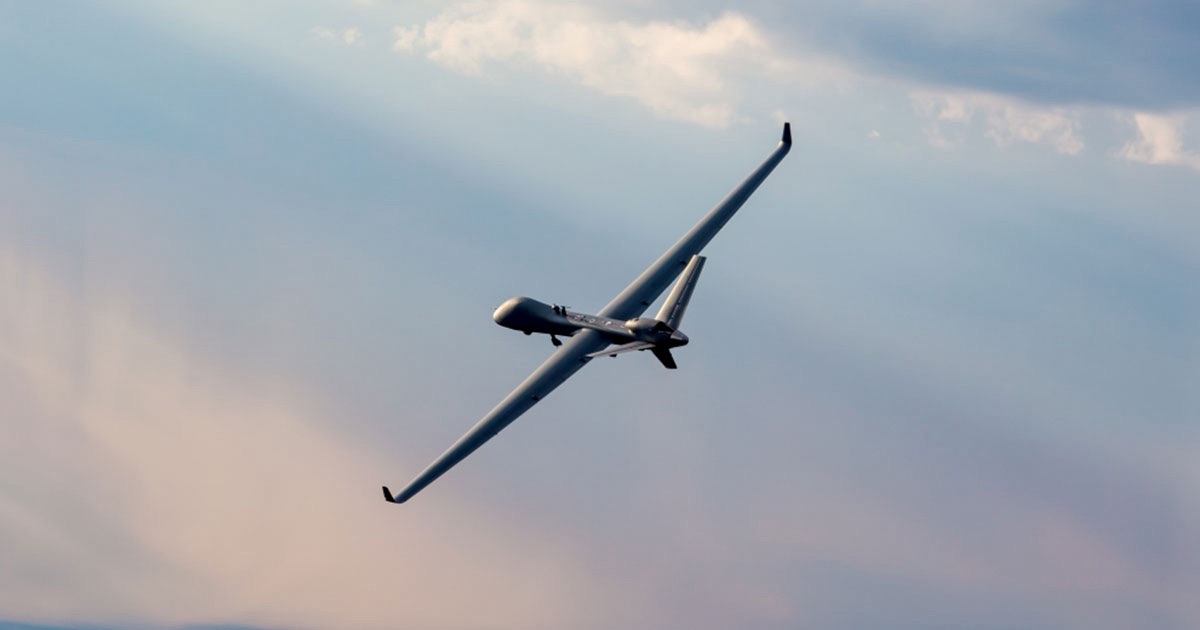
Government of Canada Orders the MQ-9B SkyGuardian RPAS from GA-ASI

Thursday, December 21st, 2023

SAN DIEGO – 19 December 2023 – The Government of Canada has signed a contract to purchase a fleet of MQ-9B SkyGuardian® Remotely Piloted Aircraft Systems (RPAS) from General Atomics Aeronautical Systems, Inc. (GA-ASI). The order includes the associated Certified Ground Control Stations and support equipment from GA-ASI. The first delivery is expected in 2028.


The SkyGuardian RPAS is interoperable with Canada’s domestic missions and its continental defence missions through NORAD, as well as with Canada’s closest allies – including the Five Eyes Alliance (FVEY) and NATO – for seamless integration with current and future Canadian defence, civil air, and ground assets.

“Canada’s vast territory and complex terrains, including in the Arctic, require a cost-effective multi-mission RPAS solution that can endure long periods on station, fly in harsh weather environments, and safely operate in all airspaces,” said Linden Blue, CEO of GA-ASI. “MQ-9B SkyGuardian delivers those critical capabilities. GA-ASI and Team SkyGuardian Canada are honored by this opportunity to become a key partner to Canada for the very long term in delivering these no-fail defence and security outcomes.”

Team SkyGuardian Canada is a coalition of leading Canadian businesses – including CAE, MDA Ltd., and L3Harris Technologies – that are working with GA-ASI on MQ-9B development, delivery, and sustainment. Canada’s investments in the RPAS Project and Team SkyGuardian Canada are a direct reflection of Canada’s vested domestic interest in pursuing leading-edge RPAS technologies.

GA-ASI has had a long, successful, and proud history with Canadian industry that continues to grow. Nearly every system that GA-ASI has delivered throughout its more than 30-year history has contained some level of Canadian content, including sensors, propulsion equipment, and training/simulation systems and services. CAE, MDA Ltd., L3Harris, and GA-ASI are committed to delivering the world’s premier RPAS capability to Canada while creating domestic economic benefits and work opportunities.

MQ-9B is the next generation of RPAS, delivering exceptionally long endurance and range, with auto takeoff and landing under SATCOM-only control, and will be able to operate in unsegregated airspace using the GA-ASI developed Detect and Avoid system. First customer deliveries of MQ-9B began in 2022 to the U.K. Royal Air Force, and contracts have been signed with Belgium and the U.S. Air Force, in support of Special Operations Command. The Japan Coast Guard is currently operating the MQ-9B for maritime operations, which the Japan Maritime Self-Defense Force (JMSDF) also selected for its Medium-Altitude, Long-Endurance (MALE) RPAS Trial Operation Project. MQ-9B has additionally supported various U.S. Navy exercises this year, including Northern Edge, Integrated Battle Problem, and Group Sail.

“We look forward to working with our Team SkyGuardian Canada partners to deliver our industry leading RPAS for Canada’s dynamic mission requirements. GA-ASI is the world leader in reliable, cost-efficient, and sustainable remotely piloted aircraft systems. These aircraft perform advanced interoperable and systems-of-systems operations for our valued customers around the world – all at a fraction of the carbon footprint impact as traditional manned systems performing similar missions,” added Blue.

Tactical Resupply UAS Ready for the Fleet

Wednesday, December 13th, 2023

Naval Air Station Patuxent River, Md.

The Navy and Marine Corps announced Initial Operational Capability (IOC) for the TRV-150C Tactical Resupply Unmanned Aircraft System (TRUAS) Oct. 27 at Marine Corps Base Hawaii.

The first six production systems arrived last week at the Marines Third Littoral Logistics Battalion (LLB-3) in Kaneohe Bay, Hawaii, which means that LLB-3 is sufficiently manned, trained and ready to deploy with the TRV-150C.

“This achievement means the fleet is ready and fully capable of deploying and using this game-changing system, which will enable Marines to perform forward deployed contested logistics missions,” said Gregg Skinner, Navy and Marine Corps Small Tactical Unmanned Aircraft Systems program manager (PMA-263), whose Unmanned Logistics Systems-Air (ULS-A) team oversees the TRUAS program.

Prior to declaring IOC, support staff from the Air Test and Evaluations Squadron Two Four (UX-24) from Naval Air Warfare Center Webster Outlying Field in Maryland arrived at MCB Hawaii along with an instructor from the Training and Logistics Support Activity Pacific, to conduct final operator qualification with LLB-3. After reviewing the differences between prototype and production systems, the trainers and operators successfully completed 36 training flights to ensure that the unit was ready to deploy.

PMA-263 awarded the production contract for the TRV-150C in April 2023 following a rapid prototyping initiative that brought the system from inception to the fleet in less than four years.

“This was a total team effort in accomplishing this milestone in record time,” Skinner said. “Special thanks to the PMA263 Team, Training and Logistics Support Activity Pacific, Air Test and Evaluations Squadron Two Four (UX-24), and the Survice Engineering Company (TRUAS prime contractor) for their hard work and dedication aimed at getting this much needed Force Design 2023 capability in the hands of the Warfighter.”

TRUAS is a land based, autonomous UAS that provides organic logistics to Marine squads through automated launch, waypoint navigation, and automated landing and payload drop. The system provides battlefield logistics capability to distribute critical supplies at Expeditionary Advanced Bases, where the risk to manned aircraft would deny manned aviation resupply operations out to the last tactical mile.

“The contested logistics environment challenges the ability of our Marines to distribute necessary supplies to the right place at the time of need,” said Col. Aaron Angell, Logistics Combat Element Division director.  “TRUAS gives a logistics unit the organic ability to immediately respond with a precision ground launched air delivery system.  This is leap-ahead technology that we will learn to continue to shape future unmanned aerial logistics platforms.”

-NAVAIR News

Italian Air Force Flies New MQ-9A Block 5 RPA from GA-ASI

Wednesday, December 6th, 2023

Delivery of New Block 5 and GCS Part of Mid-Life Modernization of ItAF’s RPA Fleet

SAN DIEGO – 05 December 2023 – On Nov. 9, 2023, the Italian Air Force (ItAF) made its first flight of a new MQ-9A Block 5 Remotely Piloted Aircraft (RPA) built by General Atomics Aeronautical Systems, Inc. (GA-ASI). The new RPA was delivered to the ItAF, along with a new Mobile Ground Control Station (MGCS), as part of a Mid-Life Modernization (MLM) update to the ItAF fleet of RPAs from GA-ASI. The aircraft and MGCS are part of a Foreign Military Sale.

The Block 5 RPA provides a significant increase in electrical power generation, auto takeoff and landing capability with improved landing gear and datalinks, and the latest version of the GA-ASI Lynx® Multi-mode Radar.

“The Italian Air Force has long been a leader in using the MQ-9 Reaper to support a wide range of Intelligence, Surveillance, and Reconnaissance (ISR) missions in Italy, over the Mediterranean, and in support of NATO operations,” said GA-ASI Vice President of International Strategic Development Jaime Walters. “The delivery of this new Block 5 and MGCS will help to update the Italian Air Force’s existing fleet.”

The ItAF’s current fleet of RPAs from GA-ASI consists of four Block 1s and two Block 15 MGCSs.

GA-ASI and USMC Complete First MQ-9A WTI Training Class

Monday, December 4th, 2023

MAWTS-1 Graduates Will Be Employed as MQ-9A Experts

SAN DIEGO – 30 November 2023 – General Atomics Aeronautical Systems, Inc. (GA-ASI) and the U.S. Marine Corps (USMC) teamed up to conduct flight training for Marines that was completed on Oct. 29, 2023. The seven-week course on the operation of MQ-9A Block 5 Unmanned Aircraft System was given to Marine Aviation Weapons and Tactics Squadron One (MAWTS-1) at Marine Corps Air Station Yuma, Arizona. The students participated in Weapons and Tactics Instructor (WTI) Course 1-24, which is a comprehensive course designed for selected pilots and enlisted aircrew that incorporates Marine Corps planning along with implementation of advanced air and ground tactics.

WTI, recognized as an advanced, graduate-level program, provided standardized, advanced tactical training, and played a crucial role in developing and employing aviation weapons and tactics both over land and in maritime environments. The Marines were trained using a GA-ASI-supplied MQ-9A, and the graduates of WTI will now go on to be the experts in MQ-9A Block 5 employment in their squadrons.

The training is a critical part of the Marine Air-Ground Task Force (MAGTF) Unmanned Expeditionary (MUX) Medium-Altitude, High-Endurance (MALE) program meeting Full Operational Capability (FOC). GA-ASI is a committed partner in helping the USMC meet this critical program milestone.

“We congratulate the new graduates of WTI and Semper Fi,” said GA-ASI Vice President of DoD Strategic Development Patrick Shortsleeve. “GA-ASI is proud to support the training of the MAWTS-1 aircrews in the use and utility of the MQ-9A platform.”

Renowned for its fault-tolerant flight control system and triple-redundant avionics system architecture, the MQ-9A UAS embodies the industry’s highest standards of reliability and performance, surpassing those of many manned aircraft.

GA-ASI has delivered nine MQ-9A UAS to the USMC so far. Four of these MQ-9A aircraft are actively engaged in operational missions, playing a vital role in supporting mission-critical Marine Corps objectives. The USMC awaits delivery of 11 additional aircraft, which will fulfill their goal of three squadrons by 2025.

WhiteFox Defense Introduces Scorpion 3: Light Weight Man-Portable C-UAS Solution for Airspace Security

Friday, December 1st, 2023

Scorpion 3 Hand-Held Drone Detection Solution is Designed for Reliable Situational Awareness


WhiteFox Defense Scorpion 3 is a lightweight, portable drone detection solution.

SAN LUIS OBISPO, Calif., – As regional conflicts such as in Ukraine and Israel continue to pose significant challenges to security and stability, the demand for advanced solutions to mitigate the threats posed by drones has reached a critical juncture.  WhiteFox Defense Technologies, a leading provider of cutting-edge counter-drone solutions, announces the release of Scorpion 3, a lightweight, portable drone detection solution. Customer testing has shown that Scorpion 3 offers efficient and reliable situational awareness in any dynamic environment and can be coupled with WhiteFox mitigation solutions. The Scorpion 3 hand-held drone detection system is designed for security forces to protect personnel and critical infrastructure and preserve airspace sovereignty.

“After personally seeing Scorpion 3 used in Ukraine, I can confidently say that it is a game-changer in the world of Counter UAS solutions,” said Luke Fox, CEO of WhiteFox Defense.  “It not only provides robust protection from unauthorized drones but does so in a manner that is simple to use, cost-effective, and remarkably portable. We’re committed to securing the skies, and Scorpion 3 is a testament to that dedication.”

With an intuitive user interface and an array of specialized features, Scorpion 3 ensures comprehensive airspace awareness and security, making it the go-to Portable Counter UAS solution.

“Scorpion 3’s capability to swiftly and accurately detect unauthorized drones in any environment is a critical advancement in airspace security,” said Manu Srivastava, Chief Revenue Officer of WhiteFox Defense. “By introducing this innovative solution, we provide our customers with the most powerful and adaptable tool for safeguarding their operations.”

Unwanted drone intrusions can disrupt critical mission operations and pose significant security risks. Scorpion 3 automatically detects drone threats by creating a protective dome around the user. If an unauthorized drone enters this space, Scorpion 3 promptly detects, identifies, locates, and tracks the drone location and the precise location of the drone operator for immediate situational awareness and threat assessment. This empowers law enforcement, tactical units, and security personnel to focus on defending critical assets without delay.

For further information on Scorpion 3 and how it can elevate your organization’s airspace security, please visit our website at www.whitefoxdefense.com.

Australian Prime Minister Anthony Albanese with DroneGun Mk4

Monday, November 27th, 2023

• Australian Prime Minister Anthony Albanese pictured with DroneShield DroneGun Mk4 portable counterdrone system at the White House complex in Washington DC.

• Australian Government supports DroneShield as a sovereign solution provider as global tensions continue to escalate, reflected in the aid package.

• $10.4 million of DroneShield equipment included under the latest $20 million aid package from the Australian Government to Ukraine, announced in late October 2023.

DroneShield (“DroneShield” or “the Company”) is pleased to share the ongoing support by the Australian Government for its cutting edge counterdrone capability, including the image of the Australian Prime Minister Anthony Albanese with DroneShield DroneGun Mk4 handheld counterdrone system, at the White House complex in Washington DC. 

Last month, DroneShield’s counterdrone equipment was selected for deployment to Ukraine under the latest Australian Government aid package. The total value to DroneShield is $10.4 million (out of the $20 million package to four Australian companies). Full delivery and payment under this contract is due to occur prior to end of this year.

Australian Prime Minister Anthony Albanese holding DroneShield DroneGun Mk4, a handheld counterdrone system, with DroneShield US CEO Matt McCrann (far right), at the White House complex in Washington, D.C.

Oleg Vornik, DroneShield CEO, commented: ”DroneShield continues to receive strong support from both Australian and US Governments, being our two home bases. This image of the Australian Prime Minister holding our flagship product is a showcase of this support. Most work we do, is under strict confidentiality due to the nature of our customers, and its pleasing to see this public endorsement of our work, as global tensions and hostile use of drones continue globally.” 

Unmanned Aerial Systems, Emerging Technology Showcased at Annual Maneuver and Fires Experiment

Monday, November 27th, 2023

By SGT Luis Santiago, 24th Theater Public Affairs Support Element

FORT SILL, Okla.– Nearly 30 government organizations and industry partners from across the defense enterprise gathered to identify, integrate, and leverage new tactical capabilities using cutting-edge technologies during the annual Maneuver and Fires Integrated Experiment, simply known as MFIX, from Oct. 23 to Nov. 3, 2023.

Established in 2014, MFIX is the primary live experiment spearheaded by the Fires Battle Lab, under the Fires Capabilities Development and Integration Directorate or Fires CDID based at Fort Sill, Okla. MFIX is part of a series of experimental events as part of the U.S. Army’s overarching effort to remain at the forefront of technological innovation and warfighting ability for the Army of 2030 and beyond to maintain superiority over any potential adversary.

The two-week event brought Department of Defense partners and defense industry leaders from across the U.S. to experiment on various programs of record with emerging technology to seek possible solutions in today’s operating and complex environment.

Soldiers from across different Army organizations, to include the famed 1st Armored Division, took part in this year’s MFIX to provide industry partners with the Soldier’s perspective.

As part of MFIX, Soldiers directly handle and experiment with new and improved technologies and give direct feedback to industry, government partners to gather key insight and reduce the time it takes to get technology into the field and in Soldiers’ hands to operate in the field.

“Every technology gets an assessment based on Soldiers’ touch points, and we have our report, which is an analysis and observation, based on the collected data points,” said Robert Muniz, a Fires Battle Lab targeting expert. “The industry partners will come in, and they have new technology that gets assessed for a year and the end state of all of this is to reduce the time it takes to get technology into the field and in Soldiers hands.”

As the primary orchestrator of the event, the Fires Battle Lab aims to foster innovation and facilitate the rapid integration of promising technologies into the Army’s capabilities.

“This year’s MFIX featured several new technologies, including unmanned aircraft systems, advanced fire control systems, laser technology, and a defeat system against intelligent UAS detection,” Muniz added.

In previous years, the participants were immersed in a simulated combat environment, allowing for the real-time analysis and assessment of various technologies and strategies. However, this iteration of MFIX was used as an observational period as the Army runs a series of exercises designed to coordinate data collection, communication, and decision-making leading up to U.S. Army Futures Command’s centerpiece event ‘Project Convergence-Capstone 24 (PC-4)’ being held in early 2024.

“This year is a little bit different,” said Muniz. “The Soldiers we have this year have been used more as data collectors and observers on the system,” Muniz continues. “In previous years, Soldiers got new equipment training, they got an understanding of the capability of each technology or what each system can do, and they used it at MFIX.”

Project Convergence is rebranding as a culmination of several exercises across the force as the event shifts from tactical level to theater level operations with full divisions and a focus on global military integration for command and control. The testing conducted at MFIX is just one small part of a concerted effort to incorporate knowledge gained from training ventures as part of the PC-4.

Army Col. Osvaldo Ortiz, chief of the Army G-3/5/7’s mission command division, told reporters during a June 2023 media interview that “all those exercises are going to inform what the Army Futures Command is going to get after at PC-4 capstone.”

As the U.S. Army continues to train for potential near-peer conflicts, exercises like MFIX allow industry and government partners to offer state-of-the-art solutions as the Army changes the way it organizes, equips, and fights.

” The goal of MFIX is for [Soldiers] to get an understanding of what these new technologies can do, and they’ll have an understanding of what it will be able to do in the future,” said Muniz.

GA-ASI Demonstrates Short Takeoff/Landing of UAS on UK Carrier

Friday, November 24th, 2023

Mojave Flights for the Royal Navy Highlight UAS’ Ability to Operate From Warships

SAN DIEGO – 17 November 2023 – General Atomics Aeronautical Systems, Inc. (GA-ASI) conducted a first-of-its-kind demonstration of its short takeoff and landing (STOL) capability on the HMS Prince of Wales, a Royal Navy aircraft carrier, using the Mojave Unmanned Aircraft System. The demonstration took place on November 15, 2023, when the Prince of Wales was underway off the East Coast of the U.S., and the Mojave was controlled by an aircrew within a control station onboard the ship. The demonstration included takeoff, circuits, and approaches and ended with a landing back onto the carrier.

“We applaud the Royal Navy’s foresight in embracing this unprecedented capability for its carriers,” said GA-ASI CEO Linden Blue. “We knew our STOL capability would enable a UAS to safely take off and land on the Prince of Wales. Seeing our Mojave operate successfully in this environment opens myriad new ways our aircraft can be used to support multi-domain naval operations.”

Mojave is a short takeoff and landing UAS demonstrator originally developed to prove STOL operations at unprepared landing sites. While Mojave shares common systems and components with GA-ASI’s Gray Eagle model, a STOL wing set option is likewise being planned for the larger, more capable MQ-9B aircraft, which includes SkyGuardian®, SeaGuardian®, and the new Protector RG Mk 1 currently being delivered to the UK Royal Air Force. The MQ-9B version, called MQ-9B STOL, is being considered by the Royal Navy and other navies that operate aircraft from large flat-deck warships without catapults and arresting gear.

Royal Navy Director Develop, Rear Admiral James Parkin, whose team planned the trial, said: “The Mojave trial is a European first – the first time that a Remotely Piloted Air System of this size has operated to and from an aircraft carrier outside of the United States. The success of this trial heralds a new dawn in how we conduct maritime aviation and is another exciting step in the evolution of the Royal Navy’s Carrier Strike Group into a mixed crewed and uncrewed fighting force.”

Equipping UAS with STOL capability provides greater versatility and allows the aircraft to operate in areas previously deemed unsuitable for UAS operations, including landing onto and taking off from an aircraft carrier. MQ-9B STOL will be capable of carrying the same payloads and conducting the same missions as the SkyGuardian and SeaGuardian, including maritime surveillance, Anti-Submarine Warfare (ASW), Airborne Early Warning (AEW), and surface strike.