GORE-TEX Professional

Archive for the ‘weapons’ Category

Program Manager Individual Weapons Issues Request For Information To Industry For 7.62mm Interim Combat Service Rifle

Friday, June 2nd, 2017

For the last couple of months we’ve been talking about the US Army’s 7.62 rifle requirements.

For quite awhile it looked like they were going to leverage the M110A1 Compact Semi Automatic Sniper System program by purchasing additional Heckler & Koch G28s like they are doing for the Squad Designated Marksman Rifle’s directed requirement for 6069 rifles. Unfortunately, the CSASS weapon would need some changes for the ICSR role. For instance, it’s semi automatic and we understand that was a major sticking point. Consequently, they’ve released a Market Survey to industry in order to identify companies capable of producing a rifle which meets their requirements.

This slide was briefed by PM Soldier Weapons at the recent NDIA Armaments Conference and shows the ICSR as a directed requirement and has been in development for awhile.

IMG_2148

Desired Attributes of Interim Combat Service Rifle:
• The rifle must be a Commercial Off The Shelf (COTS) system readily available for purchase today. Modified or customized systems are not being considered.
• Caliber: 7.62x51mm
• Available barrel lengths, to include 16 and 20 inch barrels, without muzzle device attached.
• Muzzle device capable of or adaptable to auxiliary devices for:
— Compensation of muzzle climb
— Flash suppression
— Sound Suppression
• Fire Control: Safe, Semi-automatic, and fully automatic capable.
• All controls (e.g. selector, charging handle) are ambidextrous and operable by left and right handed users
• Capable of mounting a 1.25 inch wide military sling
• Capable of accepting or mounting the following accessories.
— Forward grip/bi-pod for the weapon
— variable power optic
• Detachable magazine with a minimum capacity of 20 rounds
• Folding or collapsing buttstock adjustable to change the overall length of the weapon
• Foldable backup iron sights calibrated/adjustable to a maximum of 600 meters range
• Weight less than 12lb unloaded and without optic
• Extended Forward Rail

This requirement was initially driven by a need to defeat a threat at 600m, but Army Chief of Staff GEN Mark Milley’s recent testimony to the Senate Armed Services Committee indicates that the proliferation of inexpensive armor which defeats out 5.56mm ammunition by our adversaries to be the current culprit. GEN Milley testified that the Army had developed a 7.62 round which will defeat that body armor. The ICSR is intended to fire that cartridge.

While the RFI mentions the production 10,000 rifles, remember, that’s a nice round number and not indicative of the actual requirement. Basis of Issue has been tossed around, ranging from four per squad to pure fleet fielding for IBCTs.

Naturally, this move to a full and open competition also means that the ICSR may not be the same rifle already selected for use as CSASS and SDMR. From a logistics standpoint this seems unwise to have two different (three if you count the legacy M110s) 7.62mm rifles in service at the same time with few, if any, compatible parts.

We’ve already discussed how the basic load goes from 210 rounds for 5.56mm to 104 rounds for 7.62. Now, consider a 12 lbs rifle with additional optic and other accessories, further driving the weight up. In addition to the load bearing burden, there is another issue at hand which must be considered. Not only is the rifle and ammunition heavier, it’s also more arduous to shoot, and that’s just on semi. The Soldier must hold the weapon on target and deal with the increased recoil impulse. Anyone who shoots both 7.62 and 5.56 regularly will tell you that they just don’t shoot as much 7.62 at a time as they do 5.56. When we add full automatic fire into the equation, we begin to enter relatively unknown  territory. Even when the US Army last issued a 7.62 rifle, the M14, only one Soldier per squad had a full automatic rifle (M14E2) which was configured slightly differently than the semi auto M14 carried by his squad mates. Go back further to the days of the M1 Garand and its .30-06 M1 cartridge and you find a completely different weapon for full auto fire, the M1918 Browning Automatic Rifle.


However, finding a COTS, fully automatic 7.62 rifle will be a challenge. Aside from FN’s Mk17 SCAR Heavy and HK417, there aren’t many others. We suspect the Army will end up looking at a bunch of AR10esque “COTS” guns which coincidentally have just recently been modified to fire full auto. They’ll be reliable guns in semi auto fire, but unproven for long-term full auto use.

Granted, it’s easier to get to an intermediate cartridge (6.5mm family) with a 7.62 platform, if that’s the actual, ultimate goal. The impending release of the Small Arms Caliber Study and USASOC’s current evaluation of 6.5 rounds will certainly inform such a move, but it’s still years off.

Based in these factors, there are many who would understandably prefer to just wait it out for the development of an intermediate cartridge and build a gun around that.

 However, as we recently wrote, the US military currently finds itself at the nexus of a US small arms renassiance. Requirements exist. Solutions, although not perfect, exist. And most of all, political will exists to resource the acquisitions. Rarely do we find ourselves in this position, so we must capitalize on the opportunity. Hopefully, the Army fully considers the full impact of fielding this weapon and make wise choices.

To read the full Sources Sought Notice, visit www.fbo.gov.

Stag Arms to Dramatically Increase Manufacturing and Distribution Footprint 

Friday, June 2nd, 2017

We are about to see some next-level manufacturing begin to enter the market from Connecticut gun maker Stag Arms – as the company has announced that it has been acquired by White Wolf Capital, LLC, a private investment firm that began operations in late 2011 and is focused on management buyouts, recapitalizations and investments in leading middle market companies in the Defense Industry and Manufacturing market segments.

With this acquisition, Stag will have access to a higher level of distribution and contracting vehicles through White Wolf, who have a strong history of building companies in the firearms, manufacturing and distribution lanes (to name a few).

Stag will also be able to expand their R&D capabilities through this new line of capital; developing new platforms and products with a higher degree of innovation and engineering for the end user.

Since its inception over a decade ago, Stag has remained at the forefront of innovation; first by offering 100% American made, left and right-handed MSR platforms, and then by designing new models and features based on customer recommendations.

Most recently, Stag’s team has been working overtime developing a new .308 and a new 9mm Carbine; further proving that the company maintains a forward thinking mindset to deliver the best possible products to their customers.

It’s thanks to their understanding and attention to their customers wants and needs, that they developed their left-handed platforms to use a mirror imaged upper receiver, and have the ejection port reversed for left-handed shooters. The safety selector control is also on the right side of the lower receiver, to ensure maximum capability.

Unlike many other “black gun” manufacturers, Stag truly stands behind their products and their customer service.

“One of the main reasons we were so excited about Stag, was largely in part because of their reputation with their customers,” stated Elie Azar, Managing Director of White Wolf. “We have always known Stag to maintain a foundation of reliable products and customer service, no matter what the situation.”

Stag Arms is known for its mil-spec quality. The products that come off the company’s assembly line are built to perform in virtually any given situation; from defensive to hunting, competitive and 3-Gun competitions. Further attesting they genuinely pay attention to each of their customer’s wants and needs.

The company quickly became a market leader and one of the largest MSR manufactures in the United States, with their model commonly known as the “Stag-15.” Their specialty models intended for 3-Gun competition and varmint rifles in .223 Rem., as well as chambering guns in .300 Blackout has kept them at the top of the market.

While the details of the transaction with White Wolf Capital have not been disclosed, Stag will now operate under a new FFL out of its New Britain, Conn., facility. And it’s with this new chapter that Stag will be able to manufacture newer and more innovative products to the industry, and dramatically expand their footprint with a fresh new Leadership and Management team.

White Wolf Capital is no stranger to the firearms industry, having previously acquired Aero Precision, Ballistic Advantage, VG6 Precision and Fall Machine, Co., to name a few.

Azar added, “We are very excited to add Stag to our portfolio of outstanding companies in the firearms industry. Stag is an iconic brand with a well-deserved reputation for product excellence and world-class customer service. We look forward to partnering with Stag’s strong management team and employees to grow the Company through new and innovative product offerings. In addition, we are delighted that Mark Malkowski, Stag’s founder, has agreed to remain engaged with the Company as a consultant. Mark’s deep knowledge of the industry will be invaluable as we build upon the excellent foundation that he put in place.”

Malkowski commented, “It is with great enthusiasm that I hand off ownership of Stag to the White Wolf team. I feel fortunate to be able to transition the business I started from scratch to a team that shares my philosophy and passion for the industry and who recognizes the exceptional capabilities of Stag’s dedicated employees.”

All of Stag’s rifles come with an industry leading lifetime transferable warranty and an infinite shot guarantee on the barrel.

This new opportunity with White Wolf Capital allows the company to continue providing their customers with the best products the industry has come to know and love. Over the last 13 years, Stag has offered high quality, low cost rifles, and this acquisition will only reinforce that dedication to providing extraordinary craftsmanship at a great price point. We can expect to see great things coming from Stag!

www.stagarms.com

Photos of the GLOCK 19M Internals

Friday, June 2nd, 2017

A reader of SSD was kind enough to share these photos of the internals of the GLOCK 19M.

Lithgow Arms Is Bringing The F90 Atrax Semi-Automatic Rifle To The US Market

Friday, June 2nd, 2017

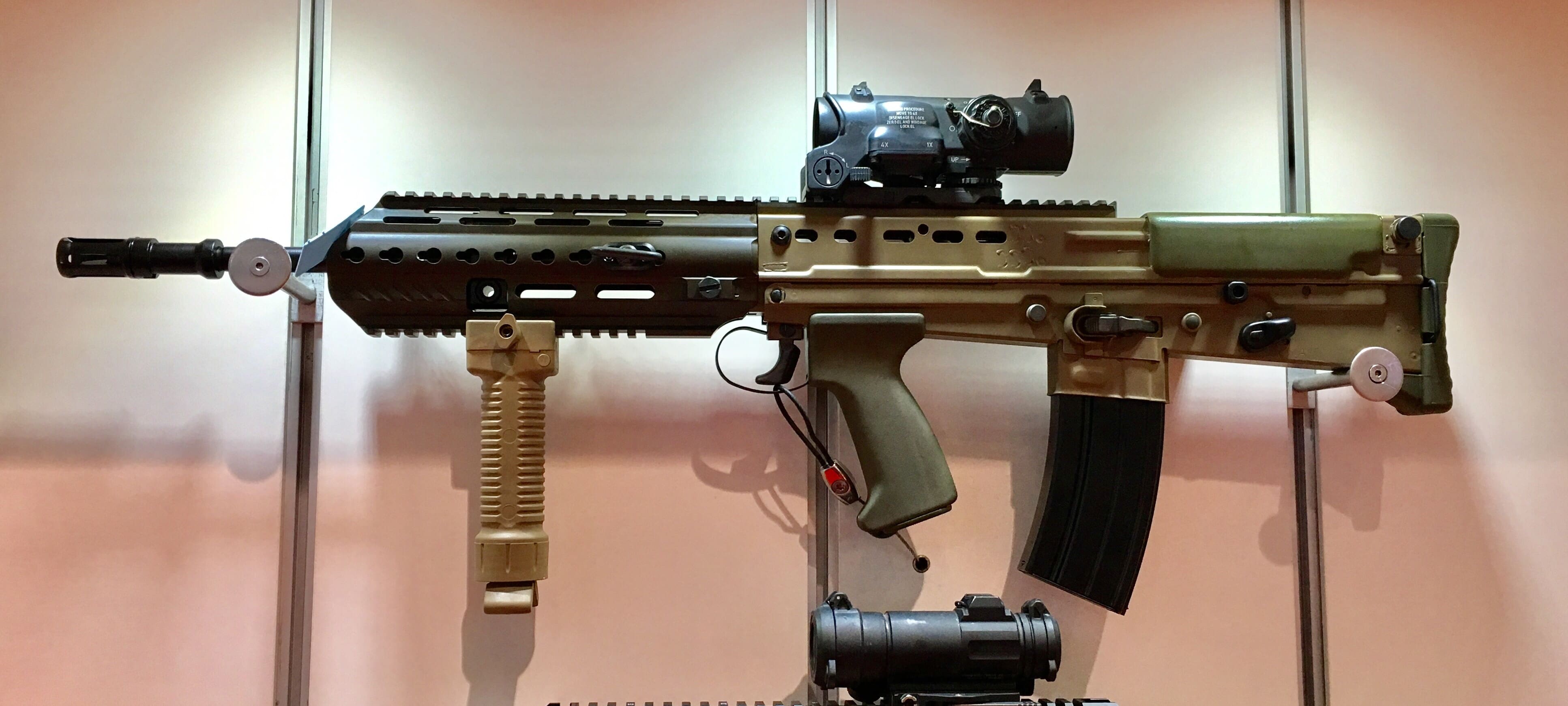
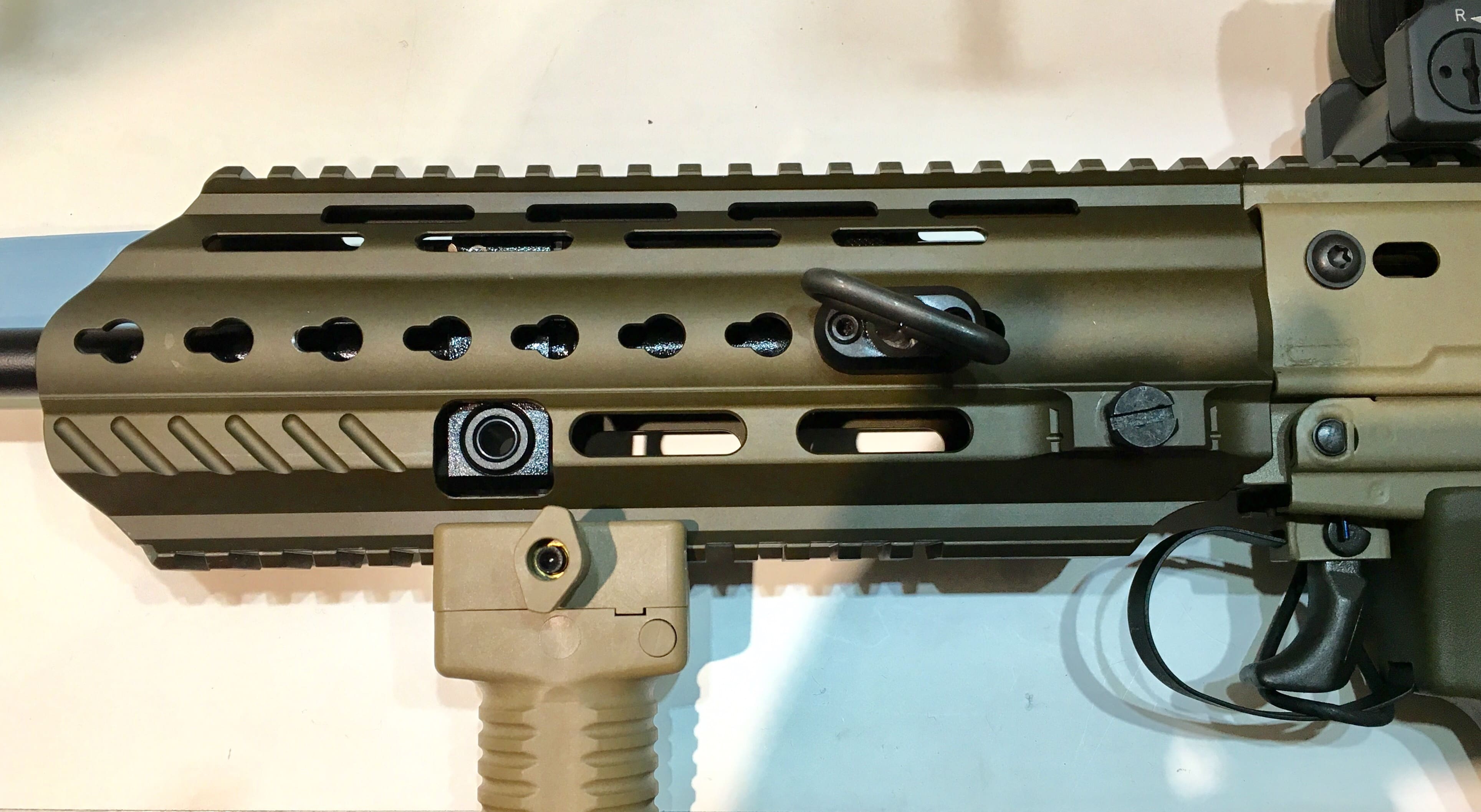
F90-7

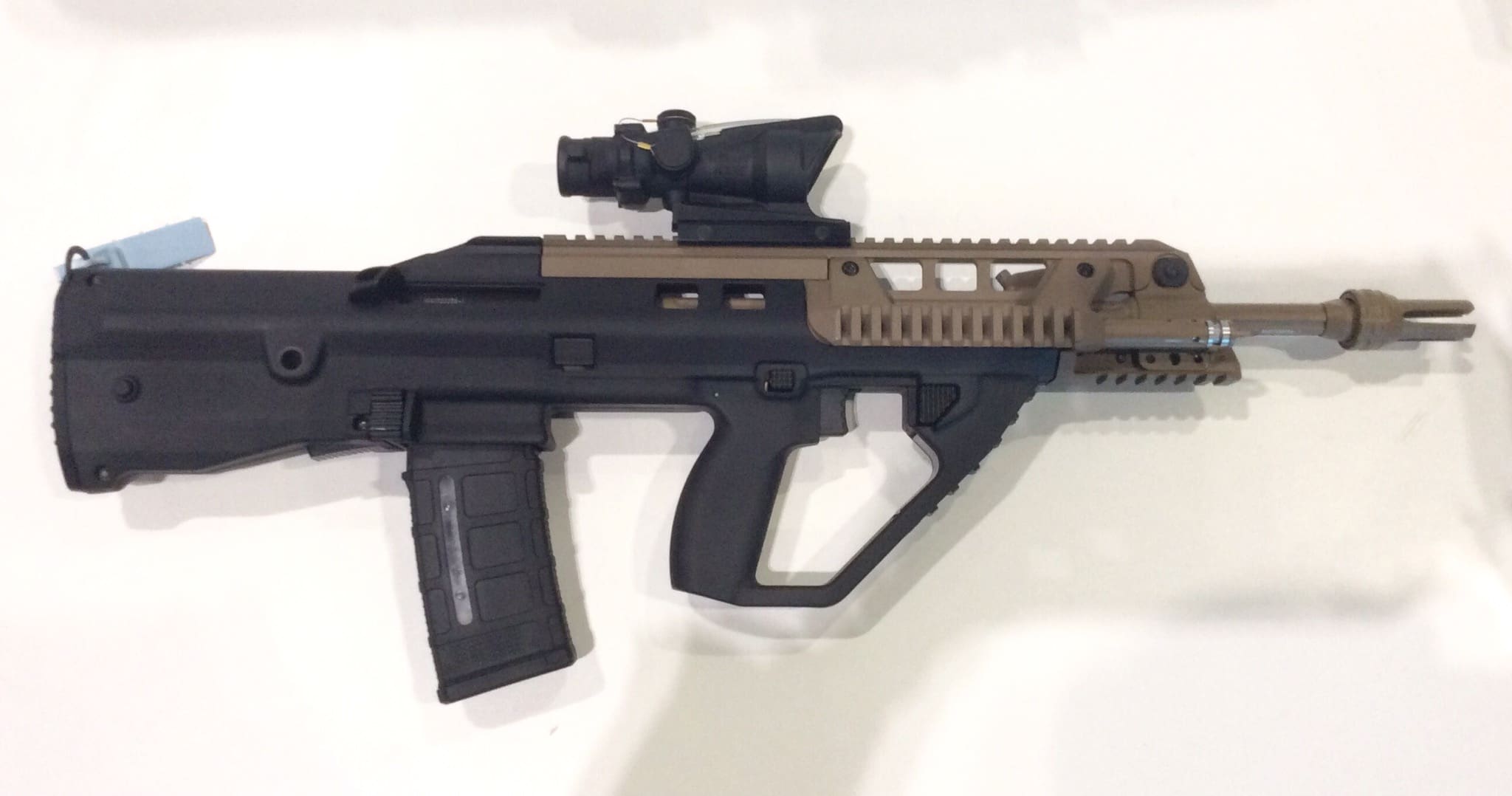
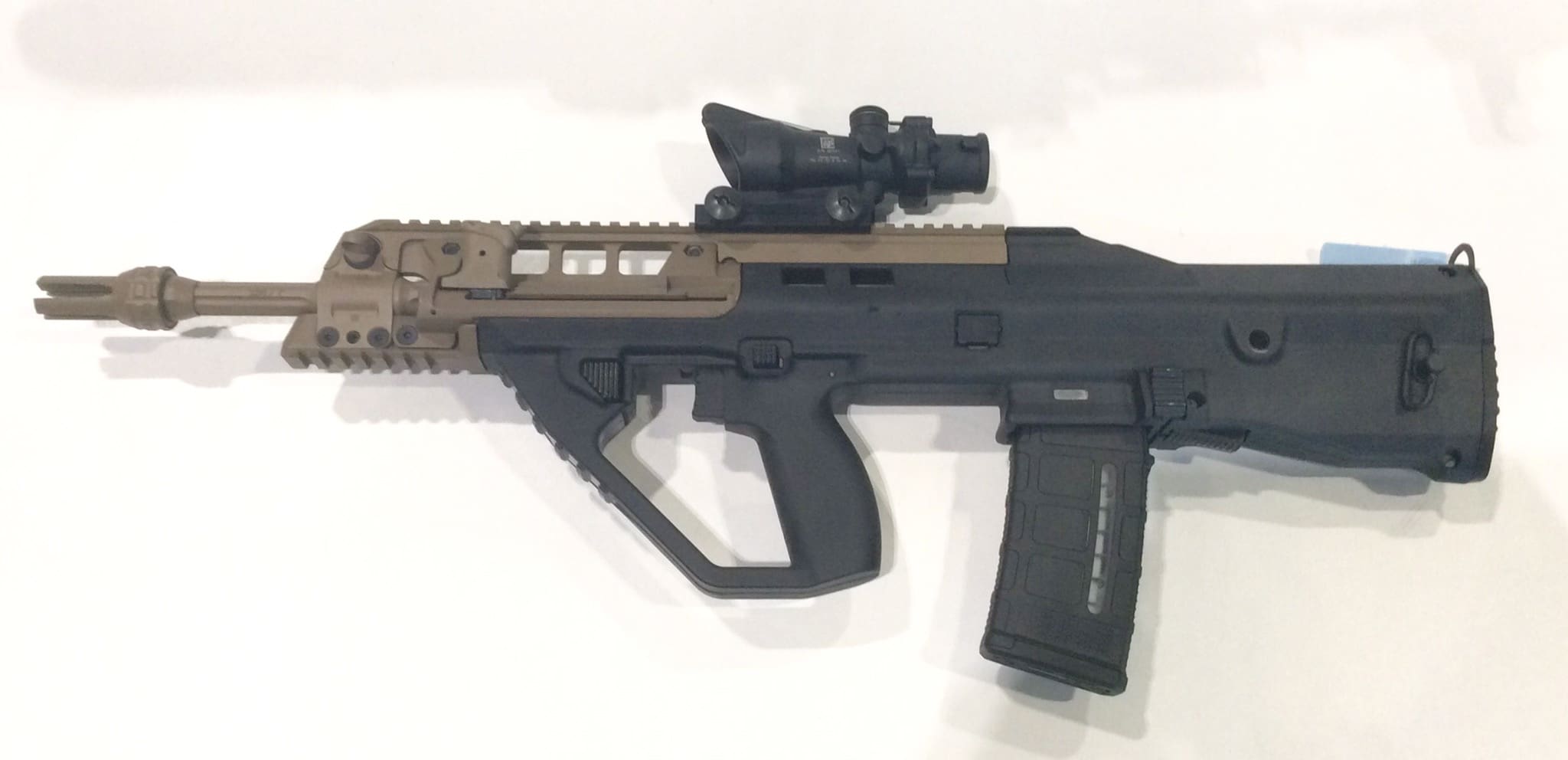
The F90 is the export variant of the F88 Austeyr, itself a modernized Steyr AUG A1 developed for use with the Australian Army. Lithgow Arms is bringing the F90 to the US in a semi-automatic configuration for the civilian market. The F90 will feature ambidextrous and/or reversible controls, Picatinny rails at the 12, 3, and 6 o’clock positions, and a 1:7 twist, cold-hammer forged barrel.

The F90 is currently in production, with an expected ship date sometime in September. You can pre-order it now at www.lithgowarms.com

CANSEC 2017 – GLOCK 17M/19M Available for Agency Order in Canada Through Rampart International

Thursday, June 1st, 2017

The title says it all. Agencies and departments in Canada may place orders for the 17M and 19M through Rampart International.

I had the opportunity to shoot the Glock 17M during Rampart Internationals range day earlier this week. you can’t base a review on firing a single magazines worth of ammunition but I like the pistol. In addition to firing it myself I observed others as well. Here’s a photo of a 17M with a standard 17 model for comparison.

IMG_2091

Most glaring is the ambi slide lock. Although they wouldn’t let me photograph the internals, once you get your hands on one you’ll notice some similarities to the 42/43. Additionally, this is a two pin gun and will only be offered in 9mm variants. However, I wouldn’t say it’s too much conjecture to anticipate these changes being rolled into a Gen 5 line in the future.

Cosmetically, you’ll note a new, slightly darker and tougher coating on the slide, rounded business end like on the compacts and they’ve gotten rid of the finger grooves on the grip. Additionally, they’ve integrated a slightly flared magwell molded into the grip.

I’m looking forward to purchasing one of these, once they become available.

Size Does Matter – An OpEd by Frank Plumb

Thursday, June 1st, 2017

As some of the close friends of the company know I have a history with the U.S. Senate. That for more than a decade, I have advocated for more lethality in our small arms with Congressional leadership and their staff. This is the first time I have publicly acknowledged this. I do not consider myself a pivotal player in the Special Operations community. But this is the time to speak up. The next cartridge, the next bullets, the next 30 years of small arms is being decided. It is being decided as we speak.

As a CEO of a firearms manufacturer, a Green Beret, a medic, a sniper, and an engineer. I forget my unique perspective. I have enough experience in each discipline to truly understand what we need in more lethal systems. It is time for those in the shadows to emerge a tiny bit. So that we might engage in honest conversation with each other. The time is now, as a nation, as a military, we must get our new cartridge right. But what can we do right now?

So, for me, it all goes back to a firefight in 2003. My ODA was engaged in a close to mid-range multi direction ambush. I remember very specifically engaging several enemy that had just been blown out of their position by another gun truck. I dropped every bit of a full 5.56 magazine of fast, controlled, and aimed shots into them. They did not drop immediately as I had expected. I thought I was missing them. But members of another ODA would verify later I had put several shots into each of them. This firefight would verify to me that 5.56×45 has lethality issues.

This shock of the results of that August night fundamentally altered how I saw small arms. It put me on a mission to bring a higher level of lethality to our forces. I have studied reports that discuss 5.56 lethality, and over penetration issues. I have treated critically injured patients who have been shot with a massive variety of small arms. I have spoken with men far more combat experienced than me. One thing has become abundantly clear to me. In the arranged marriage of combat marksmanship, Energy Transferred into the target is the Queen and Shot Placement is the King.

What the projectile does once it enters the body is secondary only to where it enters the body. That a projectile that transfers the bulk of its energy into the enemy combatant is key. Once a projectile enters the human body, if it exits, it means there was energy that was wasted. A bullet that can fragment, yaw, or a combination thereof inside the body is ideal in my opinion. We should seek to insure every possible joule of energy has been transferred into the target.

When a projectile enters the human body what type of tissue it strikes is paramount. I have seen small caliber bullets deflect off and skip around bone. I saw a convenience store owner shot in the head from under 10 feet. It entered his skin at an angle, deflected off the frontal bone of the skull, transverse around the skull, under the skin, and exited out of the occipital region. I have seen a person shot multiple times at close range with 7.62×39 and live. I know of a retired General and a NSW SOMTC instructor who have been shot in the chest with 5.56 and lived. I have seen the work of 7.62×51 rifles and machine guns. I have never seen anyone shot in the chest, head, or abdomen with 7.62×51 and live. 7.62×51 inflicts injuries that are usually never survivable.

The way a bullet destroys muscle, solid organ and soft organs is different. This is based off the cavitation effects of the projectile once it enters. Imagine looking down on a boat moving through water. It leaves a wake behind it. The size, shape, and speed of the boat determine the size of the wake. Think of the boat wake as projectile cavitation.

Since Humans are about 70% water I feel this is a very accurate metaphor. Look at the wake of a speed boat, like the type that are raced in the open ocean. They leave clean small wakes by comparison to their size. It the pursuit of speed, they reduce drag, they transfer as little energy into the surface of the water as possible. This is akin to how a 5.56 projectile works. Clean and fast through the air often means clean and fast in the target. According to Army studies a 5.56 bullet needs 4.75 inches of body penetration to Yaw. This Yawing is critical to the 5.56 round being lethal. It is how it transfers its energy into the target. If the 5.56 round fails to yaw, it often fails to kill. That August night in 2003 makes a lot more sense now.

Now look at the wake of a battleship. They sit low in the water, muscling the water out of the way. They push forward with brute force. They plow the ocean. It does not mean they are inefficient, they are designed to sit low and power through the water. Only when compared to the open ocean race boats they are considered inefficient. 7.62×51 rounds act in the same manner. They seem to plow through the air, which becomes very evident when they go transonic. In this same manner they plow through human beings. Those who have fired a M240 machine gun at the enemy and seen the work it does. Or who has placed the crosshairs of his Leupold on an enemy insurgent and pulled the trigger. They all will tell you 7.62×51 kills the first time.

Now concessions will need to be made for enemy armor. Do not think for one second that Near-Peer adversaries are not fielding equivalent body armor systems. This is why I am a fan of the HK 417, M110 and the FN SCAR® (Mk.17). Even though 7.62×51 almost never stops in a human body, they have joules to spare. The flexibility of the cartridge and its many variations like 180 grain AP, 175 grain 118LR, 110 TAP, and others allow the modern 7.62×51 based rifle more lethality and flexibility right now. But 7.62×51 is not the future. The future is for my next blog post.

Regardless of what you’ve heard, yes size does matter.

Frank Plumb is a US Army Special Forces veteran and CEO of Handl Defense. This first appeared on Handl’s website.

Squad Up – Grey Ghost Precision

Thursday, June 1st, 2017

This video for Grey Ghost Precision was created by TacGas.

What Exactly Did Chief of Staff of the Army GEN Mark Milley Say To the SASC Regarding Small Arms?

Monday, May 29th, 2017

GEN Mark A Milley is the finest Chief of Staff our Army has seen in recent memory. He gets it. The story goes that earlier this year he sat all of the Army’s Program Executive Office’s and told them that the acquisition system is taking too long. PEOs are too focused on the process and not on getting the product to the troops. It’s no coincidence that late last year we began to see numerous “directed requirements” from senior Army leaders, instructing the PEOs to figure out how to procure certain capabilities. In some cases, they are pieces of equipment which will be used in new ways and in other instances they are items already in use by SOCOM. One of those directed requirements plays a serious, behind the scenes role, in GEN Milley’s testimony.

GEN Milley

After GEN Milley’s testimony on May 25th before the Senate Armed Services Committee on the state of the Army, a couple of press reports detailing what GEN Milley said regarding the direction of Army Small Arms caught my eye. As they contained some nonspecific information, I decided to share what he actually said in his testimony.

Below is his prepared testimony:

Our Soldiers remain the backbone of every Army capability, and our infantry units must be equipped with modern weapons. We request support to increase readiness by completing M4A1 Carbine pure-fleet fielding, developing Next Generation Squad Weapons, procuring anti-tank weapons, such as the Javelin and tube-launched, optically tracked, wire-guided (TOW) anti-tank guided missiles, and beginning procurement of the Lightweight Command Launch Unit for Javelin. Additionally, we seek congressional support for a variety of simulators and virtual training devices to significantly increase the repetition and experience base of our Soldiers and leaders at the tactical level in individual, collective, squad, and small unit operations given intense, complex, combat scenarios.

As you can see, the Army’s official budget position is that it wants to continue fielding the M4A1 (which is in 5.56mm) and develop Next-Generation Squad Weapons. What should raise everyone’s eyebrows is the emphasis on anti-tank weapons. GEN Milley has been very vocal about the Russian threat, stating, “The greatest capability remains Russia.” However, he also acknowledged that North Korea is the most immediate threat.

SASC

During the Q&A with the committee, GEN Milley was a bit more forthcoming about threats, countering them, and the M4. Although, he often spoke in generic terms, he did offer a couple of revelations.

Senator Angus King (I, ME) asked GEN Milley specifically about the M4 and whether the Army needed a new weapon. GEN Milley responded that the Army has concerns about body armor penetration. He said, “We recognize the 5.56mm round, there is a type of body armor it doesn’t penetrate. We have it as well. Adversarial states are selling it for $250.” He went on to say, “There’s a need, an operational need. We think we can do it relatively quickly,” and went on to say, “The key is not the rifle, it’s the bullet.” GEN Milley sated that they’ve done some experimentation at Ft Benning and they have a solution. When asked by Sen King if it would require a new rifle, GEN Milley responded, “It might, but probably not.” GEN Milley went on to explain that the “bullet can be chambered in various calibers, it can be modified to 5.56, 7.62.” We believe he is referring here to the Enhanced Performance Round projectile found in the M855A1.

M855A1

GEN Milley specifically mentioned a 7.62mm round later in his testimony to Ranking Democrat Jack Reed of Rhode Island when asked if this new cartridge would be interoperable with NATO. GEN Milley stated he believed it was, but would prepare a formal answer for the committee. GEN Milley also informed Senator Reed that the new 7.62mm round could be in production within a year or two. GEN Milley went on regarding the choice of 7.62mm, testifying, “This idea that in the Army, that everyone needs the same thing all of the time is not necessarily true. There are some units, some infantry units, that are much more likely to rapidly deploy than others and conduct close quarters combat, that we would probably want to field them with a better grade weapon that will penetrate this body armor that we are talking about.”

While he didn’t come out and say it, based on what we know has been going on, we believe he meant the M80A1 paired with the H&K G28. This testimony falls right in line with what we heard months ago and wrote about in early April regarding Army interest in fielding a 7.62mm Interim Service Combat Rifle. Additionally, there is currently a Four-Star level directed requirement for 6,069 G28s configured as Squad Designated Marksman Rifles to be fielded to the BCTs. The 7.26mm NATO G28, which is a Squad Designated Marksman Rifle variant of the Heckler & Koch 417, developed for the German Bundeswehr, came to the attention of the Army thanks to its selection as the M110A1 Compact Semi Auto Sniper System. Additionally, the Army is quite satisfied with the performance of the M855A1 cartridge and by extension, its 7.62mm counterpart, the M80A1.

As we mentioned last week, there are multiple weapon solutions, currently fielded and readily available. The services just need to make a decision and move forward. Based on what’s currently on the table, they will field a “Better” capability than what they currently have at their disposal. Even GEN Milley agrees. When Senator King asked him if there was an off the shelf rifle which could be an upgrade to the M4, Milley replied, “Yes, there are several out there.”

Bottom line, the Army is asking for money to pure fleet to the M4A1, but it’s also letting Congress know that it’s open to a new service rifle. However, as the testimony went on, this position took an interesting turn.

Senator Joni Ernst, (R, IA) echoed Senator King’s concerns about the M4 and mentioned that it does not penetrate Russian body armor. A retired LTC, she served in the Army Reserve and Iowa Army National Guard as a logistics officer; commanding the 185th Combat Support Battalion at Camp Dodge. She stated there is a need to prioritize small arms in this year’s National Defense Authorization Act.

Senator Ernst asked if that, once the Army has settled on a caliber, would prefer a new, purpose-built weapon or an off-the-shelf solution. GEN Millie responded, “I don’t know that the two of those are mutually exclusive. There are systems out there today, on the shelf, that with some very minor modifications could be adapted to munitions that we’re developing at Fort Benning that could be used to penetrate these SAPI plates that our adversaries are developing.” He went on to amplify his answer, “It’s not necessarily an either or proposition on that one. I think there’s weapons out there that we can get, in the right caliber, that can enhance the capability of the infantry soldier.” Senator Ernst was pleased to hear that MCOTS solutions were an option in light of potential savings.

Everything we are seeing happen on the acquisition side demonstrates the Army’s interest in the G28, but during this next round of questions, there was an unexpected answer. Senator Ernst brought up MG Scales’ testimony to the Airland Subcommiitee which we recently shared. She mentioned MG Scales’ testimony, referring to a weapon which could fulfill the role of rifle and light machine gun, asking which is more important. GEN Milley responded that they complement one another. Now, here is the bombshell. GEN Milley said, “I think what’s he’s (MG Scales) talking about is the Marines are adopting the M27. We’re taking a hard look at that and are probably going to go in that direction as well, but we haven’t made a final decision on it. Infantry squads, infantry platoons they’ve got to have an automatic weapon for suppression. They’ve got to have the individual weapon as well. So you need both, it’s not one or the other.”

Once again, the budget priorities of M4A1 and Next Generation Squad Weapon follow the spirit of the service chief’s testimony. What’s more, the comments regarding the 7.62mm cartridge follow what we see going on behind the scenes. However, the revelation that the Army is considering the 5.56mm M27 is quite a surprise considering he mentioned a new 7.62mm round earlier. Perhaps he means the M27 as a future 5.56mm weapon for non-Infantry forces, as he was quite specific that the Army doesn’t intend to pure fleet the 7.62 solution, but rather field it to Infantry formations.

Regardless of specific systems requested, our opinion is that the US military’s greatest challenge is the Budget Control Act of 2011 which has hamstrung efforts to not only modernize, but just recapitalize capabilities worn out by over a decade of constant warfare. To make matters worse, continuing resolutions stymie efforts to spend consistently through a budget cycle, resulting in last minute purchases. Additionally, over the past eight years, the Army had to reduce end strength by over 100,000 Soldiers. This reduction included removing 17 brigade combat teams from the Army. Considering we go to war with the Army we have, these cuts were short sighted. When the Army talks about the ability to “Fight Tonight”, there’s no way to develop a replacement for that lost capability overnight. It will take years to rebuild what the last administration dismantled. GEN Milley testified that it would take three years to but a Brigade Combat Team together from scratch. As a hedge, the Army plans to stand up five Security Force Assistance Brigades in the near-term, which are made up of leadership structure, essentially chains of command, with no line troops. They will be used to advise allies and serve as a standing force structure for new troops to fall in on during mobilization, similar to the COHORT units of the 80s. Such plans withstanding, concerns of a “Hollow Army” are valid and there are those who are comparing our current situation to the early 80s recovery from the damage done to the military by the Carter administration. Unfortunately, the President’s budget calls for no increase in end strength and current operational demands are consuming readiness as fast as the Army can produce it. This means that as quickly as Army units are deemed at the highest readiness level, they are committed to use, which will degrade their readiness. With this challenge, it’s no wonder modernization has taken a back seat.

All of the services have a lot of rebuilding to do, in terms of both personnel and equipment. Just as daunting a task is to build capability for future threats. We have to be able to do both, simultaneously. Hopefully, Congress will have the wherewithal to consistently appropriate the funds needed to ensure America’s Army remains the world’s most dominant land warfare force.