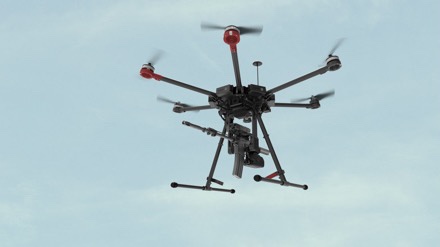
G24 Mount from Wilcox Ind

SCUBAPRO Sunday – Kokoda Track Campaign WW2

November 7th, 2021

I posted this last year and I wanted to do it again. Australia is the only country that has fought alongside the U.S. in every major conflicted since WW1. Sorry I didn’t post it last weekend.

The 3rd of November is Kokoda Day or Kokoda Track Day in Australia. The Kokoda Track Campaign was mainly fought between the Australians, and the Japanese, with the Americans helping at first with supplies and then with troops. The Australian troops had to save Port Moresby from being captured by the Japanese because Papua New Guinea would have been a great staging point for Australia’s invasion.

The Australian forces fought exceptionally well in the harsh and unforgiving jungle of the Kokoda Track. More than 600 Allies were killed, and about 75% of the allied troops got sick, with diseases like malaria, dengue fever, and dysentery. The campaign consisted of a series of battles fought between July and November 1942 in what was then Australian Papua New Guinea. The Australian Army halted the furthermost southward advance by Japanese forces in Papua New Guinea and then pushed the enemy back across the mountains.

Kokoda was one the most significant battles fought by Australians in the Second World War, first because it was fought so close to home, second because it was kind of Australia’s birth as a prominent player on the world stage. The Kokoda campaign saved Australia from possible invasion from the Japanese. Port Moresby held a tactical position, and preventing the Japanese from reaching it was vital. The battle was fought over five months, and the odds were stacked heavily in favor of the Japanese. They outnumbered the Aussies 5-1, had much better equipment, and a lot more of it, and at the time, they were considered by many the best jungle fighters in the world. The astounding feats performed by the diggers soldiers to hold off the Japanese and turn them back lead to the growth of Australia as a nation.

The Kokoda Track started as many small trails used as mail routes and to supply settlements around Kokoda. The military modified it. It became the main route that linked Ower’s Corner, 40 kilometers north-east of Port Moresby, and the small village of Wairopi, on the northern side of the Owen Stanley mountain range. But it was a lot more than 40 kilometers within walking distance because you had to take the jungle into account. The soldiers were challenged by steep, treacherous inclines, deep valleys, dense jungle, a debilitating climate, and drenching rain that frequently turned the ground into that jungle mud that sticks to everything just by looking at it.  

CPL ‘Bull’ Allen was born in 1916 in Ballarat, Victoria. Bull spent his early years with his brother and sister in an orphanage. Bull joined the Second Australian Imperial Force in April 1940 as a stretcher bearer assigned to the 2/5th Battalion. Allen saw action in the Western Desert in 1941 and proved to be dependable, although he was sent to the hospital in early April with “anxiety neurosis.” He rejoined his battalion for the Syria-Lebanon Campaign, where he treated wounds all night under fire near Khalde on July 1, 1941, and then walked 10 kilometers the next morning to reach transport.

Bull’s next adversary in the jungles of New Guinea would be the Japanese, after fighting the Italians, French, and Germans. Allen would be officially recognized for his gallant work as a stretcher-bearer in January 1943, while engaged in defensive operations in Wau. He was given the Military Medal after carrying out many of his fellow soldiers under heavy Japanese fire. (A medal comparable to the Bronze Star in the United Kingdom and Commonwealth.) Bull Allen would be on Mt Tambu with US troops on the 30th of July 1943 as part of the Wau-Salumua campaign. During the battle, Allen moved forward and transported no less than twelve American soldiers to safety. Bull was eventually given the Silver Star for his actions, with the citation reading, “Private Allen’s bearing and untiring efforts in caring to the injured and assisting with rations and stores were an inspiration.”

According to the contemporary diggers “He returned after a second trip. Get in touch with your pal. Jesus Christ is the Son of God. You believe you’ll be able to return this time. They’re wagering on it. He returned after a second trip. That guy deserved a whole case of medals. He had 12 holes in his shirt, his hat and his shirt and that jerk went in and out of there 12 times.” As of 2013 there have been calls for him to be awarded the Victoria Cross.

The Australians fought against all odds and without the help of Great Britain. It was fought mainly by Militia (reserve) troops or “chocolate soldiers” as the Australian Imperial Forces (AIF) called them because they were poorly trained, and it was said, “they would melt in the heat of battle.” At the start of the war, Australia sent its best troops, the AIF, to the middle east to help the brits. So, Australia stood up a Militia Battalions to serve in

Australia, to help protect the homeland. The 39th was only to be used on mainland Australia, but the government used a loophole saying that Papua New Guinea was a territory. Hence, they sent the 39th Militia there to help protect the island. This was one of the hardest fought battles in WW2 by anyone.

I have attached a couple of links so you can read about this.

As many military units are getting back into the jungle, this is full of instrumental lessons learned and is an excellent piece of history that should not be forgotten by any side. Stop for a minute or raise a beer to the diggers and all the people that have made the ultimate sacrifice for freedom everywhere and have gone before us. Long Live the Brotherhood.

kokodacampaignww2.weebly.com

SCUBAPRO Sunday is a weekly feature focusing on maritime equipment, operations and history.

Bianchi Leather Announces New Weathered Series Finishes for Holsters

November 7th, 2021

The new weathered finish brings that perfectly worn in feel to classic Bianchi designs.

Jacksonville, Florida – Bianchi®, a brand of The Safariland Group, a leading global provider of safety products designed for the public safety, military, professional and outdoor markets, today announced the availability of a new leather finish for select holster designs. The weathered series line of holsters offers a broken-in look to classic Bianchi holsters.

“For more than 60 years, Bianchi has worked to perfect leather holsters,” said Eric Gasvoda, Vice President and General Manager for the Safariland Group duty gear division. “Bianchi Leather is the benchmark for fit and finish, but these finishes have been limited to a classic tan and glossy black. This new era of Bianchi will continue that never-ending devotion to quality and usher in innovations in design and new options for materials and finishes. The new weathered series is just the beginning.”

The Professional is a comfortable inside-the-waistband design made from full-grain cowhide leather. This classic concealed carry design provides a comfortable shield between the pistol and the body and protects clothing. A heavy-duty spring-steel belt clip securely anchors the holster to the waistband or belts up to 1.75” wide. The Professional now comes in tan, black, and the new weathered tan finish.

The Remedy offers ease of access in an outside-the-waistband design. The Remedy rides high on the belt and is easily concealed. The open-top holster is built for semi-automatics and small frame revolvers. Designed for hip or rear hip carry, the Model 57 is a timeless holster and is available in tan, black, and the new weathered tan finish.

Both holsters are available now in the weathered finish with additional models coming soon to the series.  For more information visit the new Bianchi Leather website: bianchileather.com.

Hurricane Hunters Testing New SATCOM Capabilities

November 7th, 2021

KEESLER AIR FORCE BASE, Miss. (AFNS) —  

For the Air Force Reserve’s 53rd Weather Reconnaissance Squadron Hurricane Hunters, stationed at Keesler Air Force Base, the ability to transmit data in flight is tantamount to mission success.

As one of their WC-130J Super Hercules powers through a hurricane, a loadmaster is in the back, preparing and launching dropsondes that collect atmospheric data.

The aerial reconnaissance weather officer sits adjacent, quality checking the figures from the dropsonde, as it plummets to the ocean’s surface, and from the stepped frequency microwave radiometer attached to the wing of the aircraft.

From there, all pertinent information that can help forecasters better predict the storm’s intensity and track is sent directly from the aircraft to the National Hurricane Center, Florida, or the Central Pacific Hurricane Center, Hawaii.

To accomplish all of this, the 53rd WRS’s 10 WC-130Js are equipped with satellite communications capabilities.

While for years the squadron’s 10 aircraft have been able to send the atmospheric data collected from the dropsondes and SFMRs, new technology is being tested that will allow more real-time information for the NHC concurrent with the National Hurricane Operations Plan’s requirements of radar reflectivity imagery and high density, three-dimensional Doppler radial velocities of the tropical cyclone core circulation.

Ed Bodony, Center Test Authority test director at Robins AFB, Georgia, and 1st Lt. Makiah Eustice, flight engineer for the CTA, made the trip to test a protocol satellite communications system that will allow those on the ground to see high-definition video of radar footage from flights as they fly through a storm.

“With our current system, we’re able to send data we collect in intermittent bursts throughout the flight,” said Lt. Col. Tobi Baker, 53rd WRS ARWO. “This new SATCOM system will allow us to send data continuously, including sending video of the radar imagery we’re seeing on our screens on the aircraft to the people on the ground.”


For this initial testing portion, Bodony and Eustice as well as representatives from the companies behind the technology, first conducted a ground test.

“We tested for compatibility and functionality to make sure it’s not going to harm any other parts or functions of the airplane’s normal systems like taking off, cruising, and commanding,” Eustice said.

Eustice also said they tested to make sure the system could transmit data and be received on the ground.

The setup used for testing is called the C-130 X-Band Multi-Purpose Hatch System Solution SATCOM System and includes a hatch mounted satellite antenna, a portable base kit, and a laptop.

The 18-inch electronically steerable parabolic antenna, enclosed in what is called a radome, is inserted and protrudes from the escape hatch on the flight deck while connected to the base kit in the back of the aircraft, which consists of a power distribution unit, power supply, tactical switch, modem, and router.

“The equipment used for these tests is not exactly what the final product will be like,” Bodony said. “What we’re using for testing is what’s called a ‘roll on, roll off’ setup, because of the relative ease of putting it on and taking it off of the aircraft. If all goes well, and the 53rd (WRS) moves forward with this technology, a permanent design will be constructed and installed.”

Following the ground test, the crew took flight.

“Everything went well,” Bodony said. “This two-day process was just to qualify and confirm that the equipment works. Next is operational testing. A different crew of engineers will come in and they’ll test its capabilities in an actual storm environment.”

Of course, unlike other weapons systems and testing, it’s difficult to plan operational testing when it’s dependent on the weather, so the unit will have to wait for a storm to develop to complete the process.

“This has been in the works for a long time,” Baker said. “Right now, we’re able to send the radar imagery we compile from flights in a video file after the fact. That’s great for research purposes, but being able to send the video in real time will be beneficial for those people on the ground putting out the watches and warnings as it will give them a better idea of what’s going on in and around the eye or center of a storm.”

By SSgt Kristen Pittman, 403rd Wing Public Affairs

TacJobs – Space Force Supra Coders

November 6th, 2021

The United States Space Force Software Development Immersive (a.k.a. Supra Coders) cohorts are now open for applications. Please note completed applications for the next available cohort, Blended Software Development Immersive #1 (BSDI #1), are due 18-Nov. The program is open to Guardians who understand the basics of modern software development and want to further develop their experience working with USSF product teams.

Visit supracoders.us/blended-sdi to apply today.

Apocalypse Now, The Devil In The Details

November 6th, 2021

If you follow my IG account @solsys you know that Apocalypse Now is one of my favorite movies. I’ve seen it dozens of times in its various forms and own several books on the making of the motion picture. Hell, as a kid I even had the soundtrack on cassette, complete with the dialogue excerpts which I used to intertwine in mixed tapes. Naturally, anytime I can pick up some new trivia I jump at the chance.

A new book entitled Apocalypse Now: The Lost Photo Archive was released last month by a War Correspondent named Chas Gerretsen who served as a still photographer on the set of Apocalypse Now.

This post is as much to encourage you to buy his book as to point out a detail I had never noticed before.

I’m sure many of you have seen this photo:

The term “Apocalypse Now” is never uttered in the movie, but rather is seen way back in the scenery, overwhelmed by the “light and space” of the whole thing, like an undercurrent, fueling the insanity. But take a closer look at the renegade Green Beret Captain’s shotgun.

Sure, there are scalps hanging from the front sling swivel, we’ve seen that. Check out the stock. It’s carved with a lizard. Oddly enough, Jim Morrison aka the “Lizard King” sings “The End” which opens this epic.

How many carved shotgun stocks are we going to see after this makes the rounds? Sure, we’ve seen carved gun stocks before, but it’s usually a pheasant or a hunting scene. But with old M500s and 870s are all over the place, maybe some old fashioned trench art will catch back on.

By the way, Scott Glenn, a former Marine, played that role, no lines, just standing around looking menacing.

Buy the book, it’s full of great photos like this.

Special Warfare Training Wing: First USAF Organization to Host a Special Operations Forces Training “Shura”

November 6th, 2021

Joint Base San Antonio – Chapman Training Annex, Texas —

The Special Warfare Training Wing is the first U.S. Air Force organization to host a Special Operations Forces Training “Shura”, a gathering of senior leaders from SOF-generating commands under U.S. Special Operations Command and its allied counterparts around the world held Nov. 2-4, 2021 at Joint Base San Antonio-Lackland.

Over the years, senior leaders of SOF-generating commands have routinely held SOF Training “Shuras” to cross-pollinate best practices and to build lethal SOF warriors capable of solving the nation’s most complex problems in austere environments.

For the SWTW, hosting this iteration of the SOF Training “Shura” represents a natural evolution stemming from decades of its predecessor organizations training Special Warfare Airmen for service in special operations around the world, a critical mission set that has not stopped and is now more important than ever in the age of strategic competition.

“Our relationship with the special operations community is important for the SWTW,” said Col. Mason Dula, SWTW commander. “A third of our graduates are destined for service inside a USSOCOM component, and learning from our SOF-training counterparts helps reinforce the imperative that our Special Warfare graduates will be expected to seamlessly interoperate with joint special operations forces, the day they graduate from our pipelines.”

Members attending the SOF Training “Shura” discussed a wide variety of topics affecting the SOF world, including pre-accessions, recruiting and development, training pipeline standards and more, while reinforcing partnerships to ensure a unified approach towards the USSOCOM SOF Operating Concept 2030, aimed at preparing SOF operators for the future fight.

Two widely discussed topics included the various Assessment and Selection models that different SOF-generating commands utilize and the integration of human performance technology as SOF warriors of the future are built – both of which the SWTW has been accelerating change in since its inception in Oct. 2018.

In Jan. 2019, the SWTW instituted its very own 4-week Assessment and Selection (A&S) to carefully select potential Air Force SW operators based on character and attributes, replacing the previous Indoctrination course that focused primarily on physical attributes.

“Many people think that A&S is just about selection, when in reality, it promotes a learning culture,” said Col. Robert Taylor, Special Warfare Training Group commander. “A&S focuses our cadre, training, and operational forces as best we can on the core attributes of an individual.”

Interwoven in the A&S model of the SWTW and every other aspect of the wing’s imperative to build SW Airmen of the future is its Human Performance Support Group, the first of its kind in the USAF, which fuses cutting-edge science and technology into each step of the process as SW Airmen are built from the ground up at the SWTW.

“We instill human performance principles that SW Airmen can apply throughout the duration of their careers and beyond,” said Col. George Buse, Special Warfare Human Performance Support Group commander. “Our team helps set the foundation for building resilient warriors who are physically harder, mentally sharper, and spiritually stronger.”

At the end of the SOF Training “Shura”, all parties left with new knowledge that will go on to affect the kinetic battlespace of the future.

“Hosting the SOF Training ‘Shura’ is important for SW culture because we are a learning organization,” said Col. Dula. “Like the operational forces inside Air Force Special Operations Command, the SWTW has a responsibility to ensure that we understand and anticipate changes inside the joint SOF community and adjust our training pipelines accordingly to produce graduates ready to execute the nation’s special operations immediately upon arriving to operating forces.”

Members of the Special Warfare Training Wing provide initial training for all U.S. Air Force Special Warfare training AFSCs, to include, Combat Controllers, Pararescue, Special Reconnaissance, and Tactical Air Control Party Airmen.

To learn more about SW Airmen or other U.S. Air Force Special Warfare career opportunities, go to: https://www.airforce.com/careers/in-demand-careers/special-warfare.

By 1st Lieutenant Xiaofan Liu, Special Warfare Training Wing

DroneShield Releases the 6th Edition of its C-UAS Factbook

November 5th, 2021

DroneShield Ltd (ASX:DRO), the pioneer and global leader in C-UAS/counterdrone sector, is pleased to share the 6th edition of its C-UAS Factbook.

Covered topics include various types of UAS threats, C-UAS technologies, and other key considerations.

The Factbook can be viewed here.

‘Buy Now, Pay Later’ with Credova Financing Services at Primary Arms

November 5th, 2021

HOUSTON, TEXAS – Primary Arms now offers order financing with Credova, a ‘Buy Now, Pay Later’ option that emphasizes quality of service, accessibility, and convenience for online retail.

With Credova, financing a purchase at Primary Arms is easy. Customers can offset the full price of a major order by breaking it into smaller monthly payments, often with no interest for up to three months (depending on offer details). Applications take only minutes, with financial approvals arriving in seconds. Unlike many financing services, Credova doesn’t impact your credit score, as applicants are pre-qualified without a hard inquiry. With Credova, financing your order has never been more convenient, and with Primary Arms offering discounts on over 15,000 leading tactical and outdoor products, you can find great deals on your next purchase.

“With Credova, our customers have more freedom than ever in choosing how they shop,” says Max Cowsert, Primary Arms’ Chief Merchandising Officer. “We’re thrilled to offer this feature-rich financing option to our customers. Credova’s fast processing and streamlined application system are perfect for today’s market. It’s great to partner with a financing company that, unlike others, is eager to work with and advocate for businesses that support the 2nd Amendment.”

For more information on Credova at Primary Arms, visit the Primary Arms financing page, where you can read about all the features and FAQs for the new service.

For other news and announcements, follow Primary Arms Online on social media, including Instagram, Facebook, and Twitter.