

NATICK, Mass. — There is a delicate balance between training Soldiers rigorously and training them safely.
Warfighters can lose valuable training days due to unit leaders taking overzealous safety precautions, and as a result, they cannot learn and practice the necessary skills to become a ready and lethal force. However, warfighters training rigorously while forgoing safety can lead to disastrous consequences such as heat illness. These consequences can cost the U.S. military valuable training time, money and operational readiness.
Heat illness is a particular concern during warmer months, but that does not mean warfighters have beat the heat as soon as summer has ended. Surprisingly, heat illness can happen year round due to a combination of factors, not just heat and humidity.
“Body heat production from physical activity is the number one factor that causes body core temperature to rise,” said Laurie Blanchard, a biomedical engineer from the U.S. Army Research Institute of Environmental Medicine, or USARIEM. “Hot environments add to body heat gain, and hot and humid environments and heavy clothing make it more difficult to get rid of body heat. Put them all together, and you have a recipe for heat illness.”
To help solve this problem, Blanchard and other USARIEM researchers have been developing a mobile application that can help unit leaders understand how these factors affect military readiness so they can mitigate risk and optimize training.
The Heat Strain Decision Aid, or HSDA, is a tablet- and computer-based app that can help unit leaders and mission planners quickly determine a Soldier’s risk of heat illness during training or operational scenarios. HSDA’s simulations of heat stress, according to Blanchard, support the safe work time tables found in current Army heat injury prevention doctrine, Technical Bulletin Medical 507, or TB Med 507.
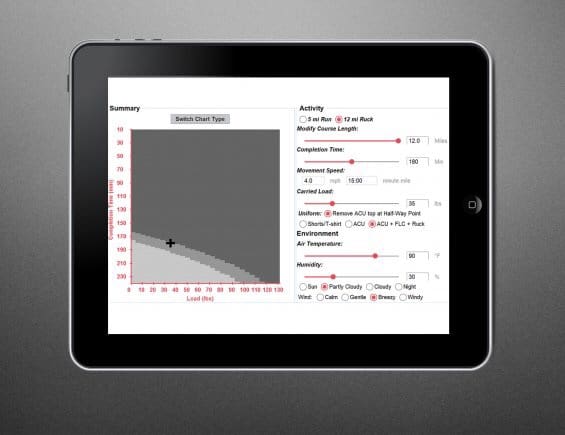
By pressing a few buttons and toggling a few settings, unit leaders can use the science-based guidance on the tablet- and computer-based Heat Strain Decision Aid, or HSDA, to quickly determine a troop’s risk of heat illness during training or operational scenarios. HSDA was developed by U.S. Army Research Institute of Environmental Medicine, or USARIEM, researchers based on over 30 years of studies on heat illness, hydration and core body temperature in simulated and realistic training environments. (Photo Credit: U.S. Army photo by Mallory Roussel )
“HSDA contains equations that predict how body core temperature changes during and after training and how changes in clothing, activity and environment affect the specific rise and fall of body core temperature,” Blanchard said. “This mission planning tool gives unit leaders objective, science-based guidance that can be found in TB Med 507, the Army’s current heat illness and hydration guidance, in a way that is easy and useful for developing prevention and mitigation strategies against heat illness.”
When unit leaders open HSDA on a tablet or computer, they can adjust warfighters’ activities, clothing, the environmental conditions and the intensity and duration of the exercise simply by pressing a few buttons and toggling a few switches. HSDA does the rest of the work by displaying a chart to the user that estimates how likely troops will experience heat illness during a training or operational scenario.
HSDA even shows leaders when warfighters would be most likely to experience a heat illness during the span of an exercise. For example, a unit leader using HSDA could see that Soldiers would be most likely to experience a heat illness during the first hour of a three-hour loaded ruck march.
“One of the advantages of using HSDA is that unit leaders have a tool that helps them visualize how different mitigation strategies can affect their risks of heat illness,” Blanchard said. “Users can manipulate HSDA’s settings to see how changing uniforms, the length and pace of an exercise and the load carried can increase or decrease heat illness risk.
“Even in those cases where the distance, pace and load cannot be altered, such as for a required training event at a specialty school, HSDA can help users plan effective treatment strategies for expected heat casualties, like providing extra ice sheets, closely watching trainees and planning medical evacuations in advance.”
USARIEM researchers developed the user-friendly software interface for the app warfighters know today. Yet the math behind HSDA has existed long before apps were even invented. According to Blanchard, USARIEM developed HSDA from over 30 years of research on heat illness, hydration and body core temperature. Researchers were able to build and validate the equations within HSDA by conducting hundreds of field studies on thousands of subjects in a variety of environments.
Researchers conducted even more laboratory studies at Natick Soldier Systems Center in the Doriot Climatic Chambers, a unique facility that can simulate an extreme range of global weather conditions, from hot deserts to the chilly Arctic. Blanchard and other researchers measured Soldiers’ body core temperatures as they marched on treadmills while carrying external loads and wearing a wide range of clothing, from Army physical training uniforms (shorts and a t-shirt), to Army Combat Uniforms, to insulating chemical, biological and ballistic protective gear.
This year, USARIEM briefed the HSDA app to the Training and Doctrine Command’s Heat Illness and Prevention Subcommittee. USARIEM received several requests for a copy and is now working with the U.S. Army Medical Materiel Development Activity to make HSDA available to download.
Since spring 2018, USARIEM has transitioned a current version of HSDA to the 1st Special Warfare Training Group (Airborne) at the U.S. Army John F. Kennedy Special Warfare Center and School and to the U.S. Air Force 352nd Battlefield Airmen Training Squadron, who both specifically requested to use the app to mitigate heat illness during training. Under an international agreement, USARIEM has also developed a version of HSDA for the U.K. Institute of Naval Medicine, who incorporated the app into their training centers as a tool to reduce the incidence of heat injuries.
“Unit readiness is dependent on rigorous military training,” Blanchard said. “However, training without taking safety precautions, especially during warmer months, can lead to heat illness, heat stroke and even death. These injuries can have significant medical costs, can have long-term medical implications and can force lost training days, impacting unit readiness and individual Soldier careers.
“We have been able to design current versions of HSDA for specific military groups at their sites. Transitioning the app to U.S. and international warfare training groups has allowed us to collect valuable feedback that we can incorporate into HSDA to make it a more robust app that all warfighters can use.”
By Mallory Roussel (USARIEM)
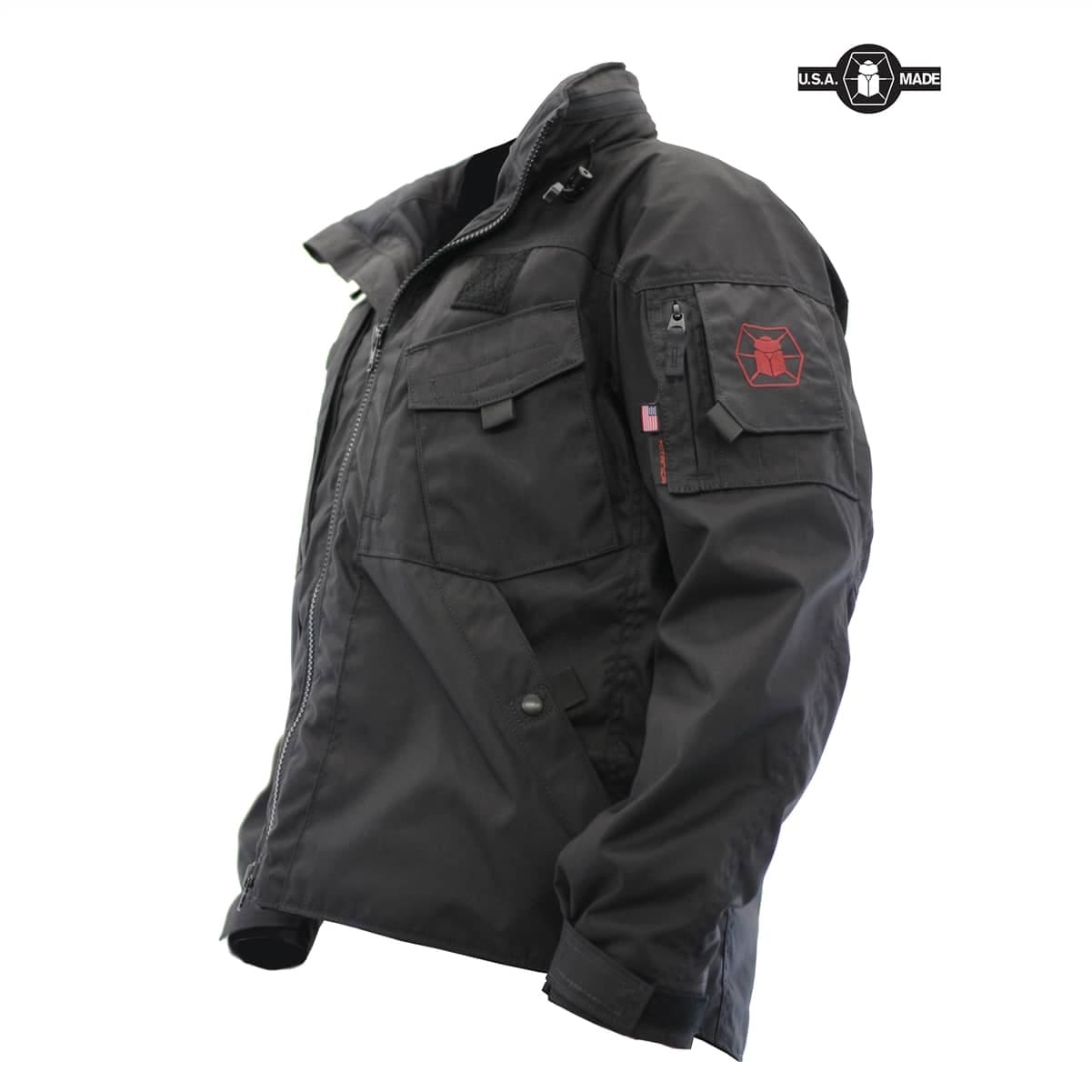
Take a quick tour of some of the features of Kitanica’s classic MARK VI Jacket. It’s made in the USA from 330D Cordura. Also seen is the RSP Pant.
The MARK is also available in A-TACS AT-X Snow Camouflage.
Newington, N.H. (November 15, 2018) – SIG SAUER, Inc. is pleased to announce the expansion of the Legion Series of firearms with the introduction of the P938 and P238 micro-compact pistols. Legion is an exclusive product line developed by SIG SAUER based on input from elite shooting professionals, and designed to exceed the expectations of the serious shooter.
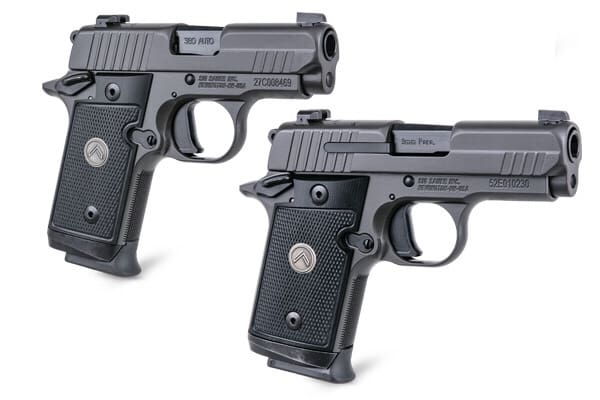
“The introduction of these two micro-compact pistols to the Legion Series was driven by our Legion members whom have been asking us to expand this product line,” began Tom Taylor, Chief Marketing Officer and Executive Vice President, Commercial Sales, SIG SAUER, Inc. “With the addition of the Legion series P938 and P238 pistols, not only have we have expanded our Legion series of pistols, we have also introduced an entirely new category of pistols to Legion with the micro-compact.”
The Legion Series P238 (.380 AUTO) and P938 (9mm) micro-compact pistols are both hammer-fired pistols, equipped with X-RAY3 Day/Night Sights. These pistols are all-metal with a Legion-gray coated slide and frame, a precision machined aluminum trigger, custom high-checkered black G10 grips with a Legion medallion. Like all Legion Series pistols the P238 and P938 feature a reduced and contoured elite beavertail, which allows for a higher grip, but a reduced profile, thus eliminating printing. The Legion Series P238 and P938 pistols come standard with three 7-round magazines.
SIG SAUER’s Legion is an exclusive members-only access program available to owners of the SIG SAUER Legion Series of firearms. Upon registration of any Legion Series firearm, members receive a complimentary thermo-mold carrying case, a challenge coin matched to the firearm, exclusive access to Legion gear and merchandise, and receive exclusive communications from SIG SAUER and the Legion.
The P238 Legion Series Micro-Compact:
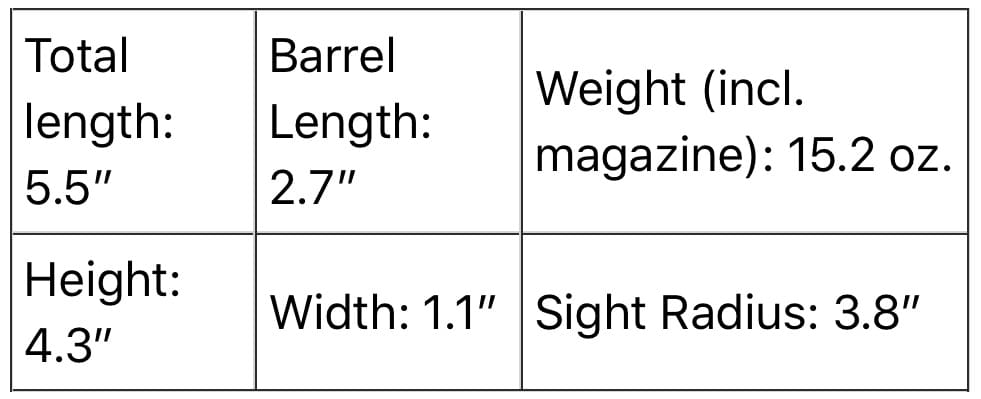
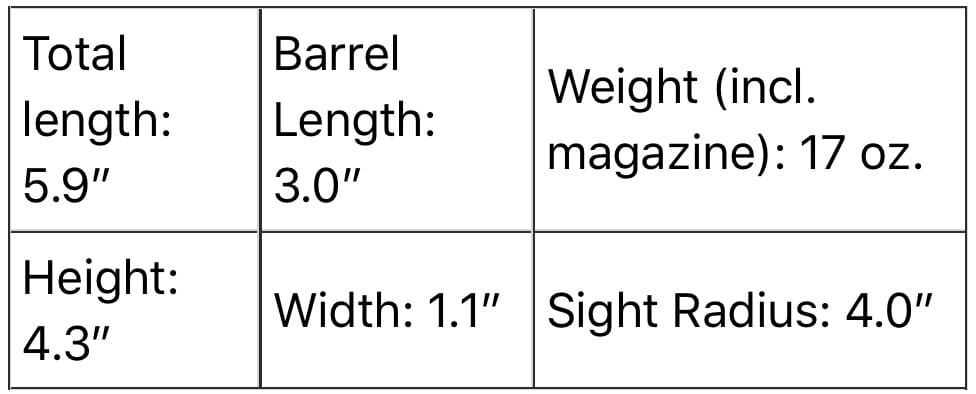
To learn more about the complete Legion series of firearms from SIG SAUER visit sigsauer.com/legion.
Adoption of the back-to-the-future Green Service Dress Uniform has been a multi-year project for Sergeant Major of the Army Dan Dailey. Now that the Army has formally announced adoption of the World War Two-inspired uniform, they don’t want it to be referred to by its original nickname.
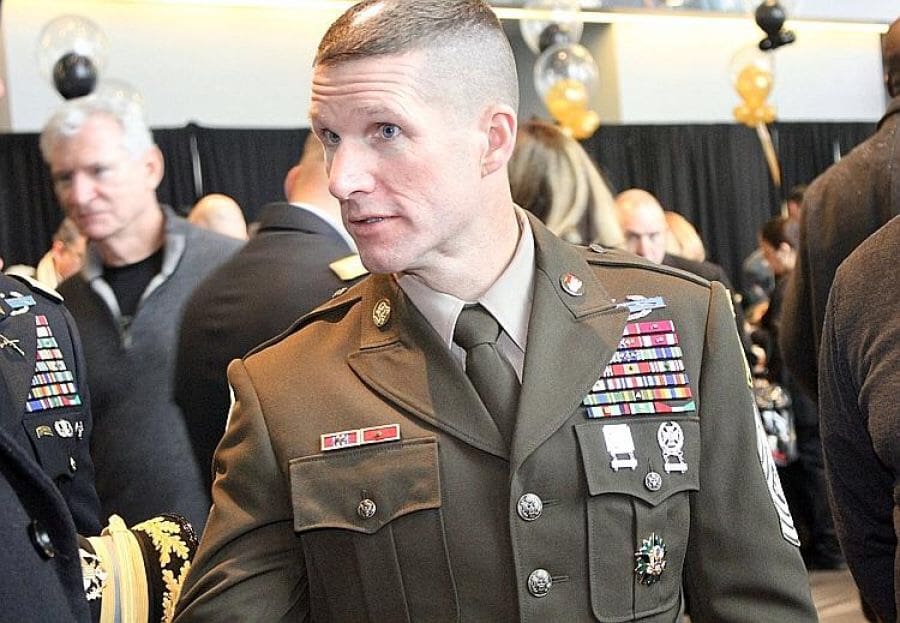
Rather than “Pinks and Greens” which stems from the hues of the fabrics used to tailor the original private purchase uniform reserved for wear by officers, the Army will refer to the updated style as “Greens” which unfortunately is the same name used for the dark green business suit adopted in the 50s to replace this one.
Instead, I recommend the Army call this uniform the “OG” which was long used by the Army to denote the color Olive Green, but also gives a nice tip of the hat to the “Original GIs” who wore this uniform while crushing the enemies of freedom.

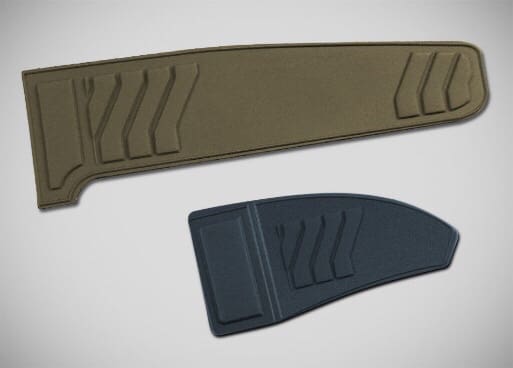
For a limited time only, MMI Textiles, in partnership with Flexsystems® USA, will be offering a promotion for SSD readers to get you ready for SHOT Show 2019. With SHOT Show 2019 fast approaching, this is the perfect way to get those Made in the USA/Berry Compliant cuff tabs, zipper pulls, labels, patches, and more for the products you’ll be showing off during SHOT Show 2019.
From now until November 30th, receive 250 free parts with the order of 5,000 of any Flexsystems parts through MMI Textiles.
Here are some examples of what MMI Textiles offers:
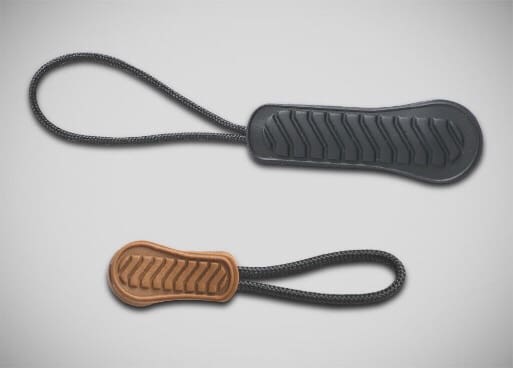
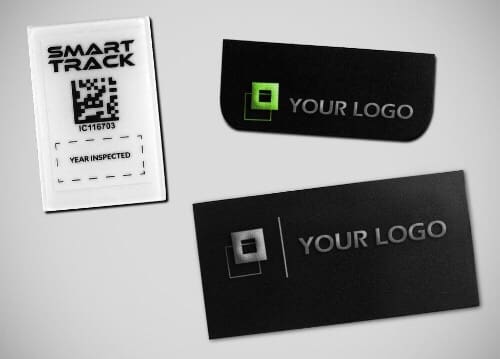
Contact your MMI Textiles sales rep directly or contact MMI via their site to take advantage of this offer while it lasts!
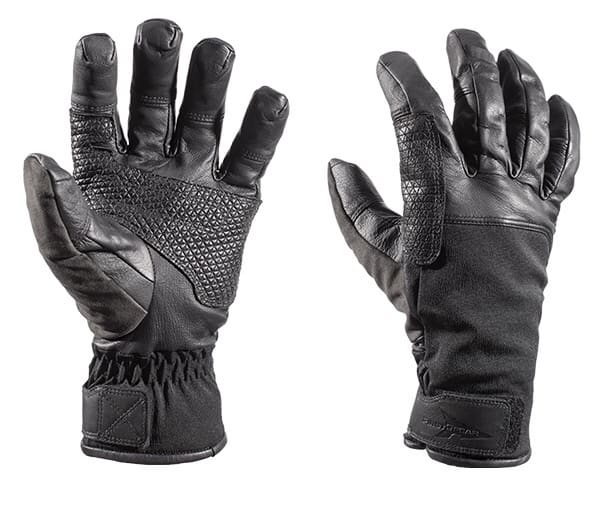
Just in time for winter FirstSpear has announced the all new new Cold Climate Glove is now available for purchase.
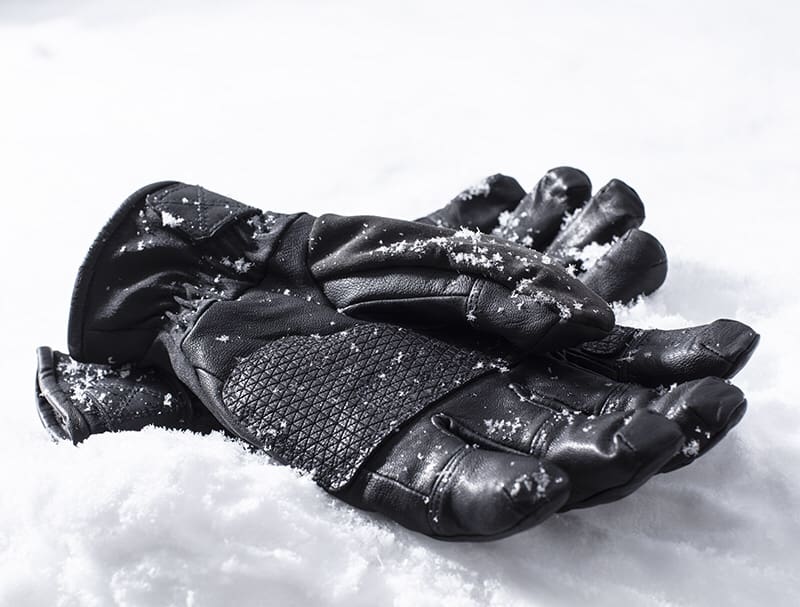
As with all FirstSpear equipment this is simply not your average winter glove. Built with a keratin leather palm patch, Primaloft Gold insulation, and a waterproof breathable insert. Incredibly warm with excellent dexterity allowing basic trigger control.
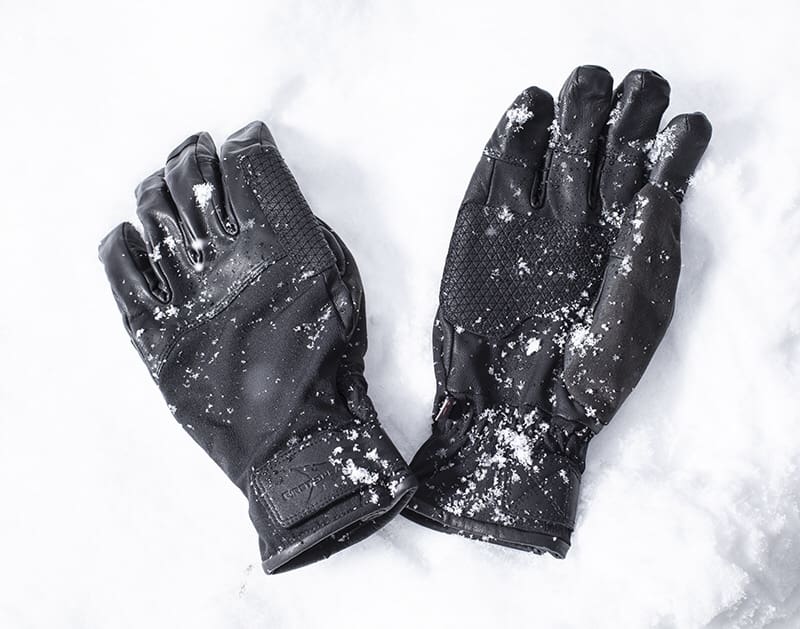
Additionally, they removed the insulation from the upper half of the Trigger Finger to increase basic trigger manipulation and make it easier when using a Touch Screen. In fact, Touch Screen sensitive index fingers and adjustable wrist cuffs come standard on this premium cold climate glove from FirstSpear. Available and now shipping in sizes small – 2X.
www.first-spear.com/technical-apparel/handwear/cold-climate-glove-ccg-7370
WASHINGTON — The Army Rapid Capabilities Office, or RCO, does things differently. It has to. It’s mandated in its charter and embedded in its culture.
So when it came time for the small acquisition shop to find a way to speed up signal detection, it knew it wouldn’t seek answers using traditional methods.
Instead, the RCO studied commercial models for getting answers quickly and created a “challenge” that gave industry, academia, scientists and other agencies the opportunity to go head-to-head in a competition, with prize money awarded to the top three performers.
The challenge focused on using artificial intelligence and machine learning to speed up the rate at which electronic warfare officers, or EWOs, could sift through the congestion and noise that comes with signal detection. With an ever-increasing number of signals flooding in from satellites, radars, phones and other devices, the signal detection process is no longer efficient in understanding the vast amount of data presented to EWOs on the battlefield.
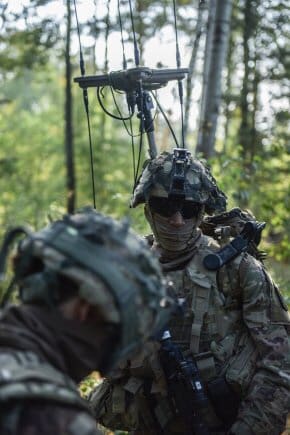
Soldiers with the Combat Electronic Warfare Intelligence Platoon, Delta Company, 54th Brigade Engineer Battalion provide signal intelligence to help the 173rd Airborne Brigade during Saber Junction 18, held in September 2018 in Germany. As more and more signals are captured by satellites, radars and other devices, the signal detection process is no longer efficient in understanding the vast amount of data presented to EWOs on the battlefield. (Photo Credit: U.S. Army photo by Spc. Josselyn Fuentes)
Within four months of setting up the Army Signal Classification Challenge, the RCO knew mathematically who had the best-performing algorithm.
The challenge also had an unexpected result. By offering an unorthodox method for garnering participation in what would have been a traditional request for information, or RFI, the RCO challenge resulted in the top three prize winners spanning the unconventional by including a federally-funded research and development center, an independent group of Australian scientists and a team from a big business.
“By structuring this as a challenge instead of an RFI, we were able to model what industry does and create something much more hands-on,” said Rob Monto, director of the RCO’s Emerging Technologies Office. “We invited anyone with a possible capability to participate and posted it on Challenge.gov and FBO.gov. This is very similar to the commercial model of posting on Kaggle.com, where data sets are sent out to communities of data scientists who want to compete against one another to determine who has the best solution.”
The RCO’s online challenge offered synthetically generated data based on what could be seen in the electromagnetic spectrum, and challenged participants to prove they had the best artificial intelligence and machine learning algorithm for performing “blind” signal classification quickly and accurately. The challenge was strictly performance-based and open to anyone. Because it was all online and completed in four months, it came with very little cost or burden placed on those participating.
“The response was overwhelming,” Monto said. “We had more than 150 participants from across traditional and nontraditional industry partners, universities, labs and government. As an incentive, we offered $150,000 in prize money.”
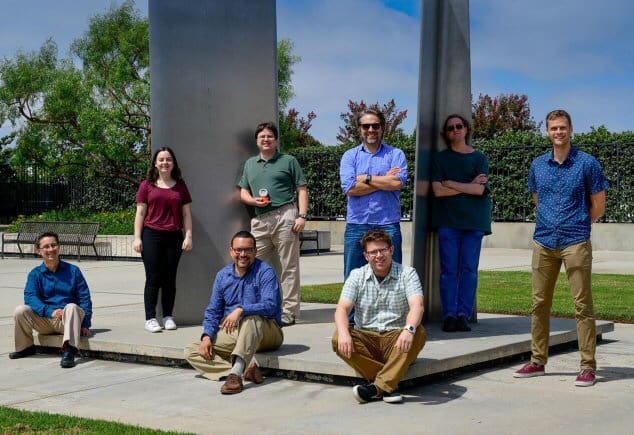
Team Platypus from The Aerospace Corp. won first prize in the Army Signal Classification Challenge over the summer of 2018. The team includes (front row, from left) Eugene Grayver, Alexander Utter and Andres Vila; and (back row, from left) Donna Branchevsky, Esteban Valles, Darren Semmen, Sebastian Olsen and Kyle Logue. (Photo Credit: Photo courtesy Elisa Haber, The Aerospace Corp)
The RCO announced winners on Aug. 27, 2018. First place and $100,000 went to Team Platypus from The Aerospace Corp., a national nonprofit corporation that operates a federally-funded research and development center. Second place, with an award of $30,000, went to TeamAU, made up of a small team of independent Australian data scientists. And third place, with a prize of $20,000, went to THUNDERINGPANDA of Motorola Solutions.
“Having a specific problem that can be worked on by industry, academia and private citizens is a great way to establish and build a community of innovators for this technology area,” said Dr. Andres Vila, an engineering specialist at The Aerospace Corp. and a member of Team Platypus. “This challenge, which extended for approximately three months, was the right balance of having time to formulate a unique and robust solution but also not so long that the team lost urgency to find that award-winning approach.”
The challenge proved a better way to assess industry’s capabilities, instead of using a more traditional RFI and white paper approach, Vila said, calling it “spot on.”
“The challenge arrived at a great time as we were just kicking off this research and the Army had a well-formed problem set and, most importantly, data,” Vila said. “This competition gave us the chance to take our latest innovations and prototypes and apply them to this new customer-curated, hard problem. These types of customer-sponsored competitions provide very focused challenges that give us the confidence that we are using the best technology available to meet their mission needs.”
THE PROBLEM SET
The idea for the challenge stemmed from the RCO’s partnership with the Project Manager for Electronic Warfare and Cyber, within the Program Executive Office for Enterprise Information Systems, which recently delivered new electronic warfare prototype systems in response to an operational needs statement from U.S. Army Europe. Soldiers are using the equipment to implement electronic protection for their own formations, to detect and understand enemy activity in the electromagnetic spectrum and to disrupt adversaries through electronic attack effects.
However, in enhancing the signal footprint for EWOs, the prototype systems also brought more data to an already complex electromagnetic spectrum. Through the challenge, the RCO wanted to determine if artificial intelligence and machine learning, or AI/ML, could assist them in digesting that data and sorting through what is and isn’t important.
“We knew industry was already making leaps and bounds in applying AI/ML for image recognition and video recognition, but found that there was very little work being done in this specific area of signal detection,” Monto said. “What we discovered in a very short period of time is that AI/ML could in fact be applied to a data set that could translate to being integrated into an electronic warfare system on the battlefield.”
The idea is to create this application as a layering effect, where artificial intelligence and machine learning does one subset of signal classification for the EWOs, then layers other applications that are more encompassing onto that to give the EWOs a wider range of what they can identify, said Monto.
While the EWOs would remain as the lead for identifying signals of interest and analyzing their impact, the use of artificial intelligence and machine learning could help them quickly and accurately detect patterns, identify signals of significance, filter out unwanted signal noise and paint a picture of the electromagnetic spectrum.
THE CHALLENGE
The RCO’s Army Signal Classification Challenge began April 30 and closed Aug. 13. After opening registration online, competitors were given access to the training data set, consisting of over 4.3 million instances across 24 different modulations, which included a noise class. (The noise class represents “white” noise to replicate the real-life environment that signals would be detected in, rather than a pristine lab environment.) The effort sought solutions that could perform “blind” signal classification quickly and accurately. Blind signal classification requires little to no prior knowledge about the signal being detected in that specific instance. Instead, the solution would automatically classify the modulation, or change of a radio frequency waveform, as a first step toward signal classification.
The challenge gave participants 90 days to develop their models and to work with the training data sets. That was followed by two test data sets of varying complexity that were the basis for judging submissions. The first data set was released 67 days after the challenge launch, with a solution submission window of 15 days. A second, more complex test data set was released 84 days after the challenge launch, with a shorter submission window of only seven days.
Participants’ scores were based on a combined weighted score for both test data sets. Competitors could see how well they were performing against their peers through a participant leader board that showed scores in real time.
For first-place winners Team Platypus — which participated in the Defense Advanced Research Projects Agency’s Software Defined Radio Hackfest 2017 and whose name references platypuses’ ability to detect electrical fields with their bills — the challenge lined up perfectly with its core research in artificial intelligence and advanced signal processing.
“We really enjoyed the challenge process, which included the hard problem curation, providing training data and a specific scoring algorithm,” Vila said. “To do this with the highest level of confidence, we had to use a multipronged approach. We built statistics and metrics inspired by communication principles, and we also developed deep learning classifiers that work directly on the raw data. We ended up using several state-of-the-art AI techniques to achieve the winning submission.”
Their technology includes an algorithm trained to identify what kind of signal is present in the midst of a congested radio frequency environment, much like Soldiers would find in an urban core or battlefield where both friendly and enemy radio communications are being detected.
WHAT’S NEXT?
By structuring this effort as a challenge and not going through the traditional RFI process, the RCO proved it could take an industry model and move fast. For its efforts, it is substantially closer to identifying a potential solution that could be applied to battlefield electronic warfare capabilities in the very near future. It also showed the RCO could harness the promise of artificial intelligence and machine learning by applying it to a specific problem. The amount of interest and quality of performance, including from nontraditional organizations, was remarkable.
Now the RCO is quickly moving forward to the next step, with two possible options. First, the RCO could initiate a second, more intense challenge and open it up to only the top performers in the first challenge. Or, the RCO could begin to immediately move the algorithms into the hands of Soldiers through software enhancements to their existing electronic warfare equipment. This would enable the Soldiers to give immediate feedback and enable the Army to incrementally build capability.
Over the next several months, the RCO will begin to advance what was learned from the challenge, potentially prototyping the leading artificial intelligence and machine learning algorithms into Army electronic warfare systems.
For more information on the Army RCO, go to rapidcapabilitiesoffice.army.mil.
By Nancy Jones-Bonbrest, Army Rapid Capabilities
NANCY JONES-BONBREST is a public communications specialist for the Army RCO and has written extensively about Army modernization and acquisition for several years, including multiple training and testing events. She holds a B.S. in journalism from the University of Maryland, College Park.
This article will be published in the January – March 2019 issue of Army AL&T.