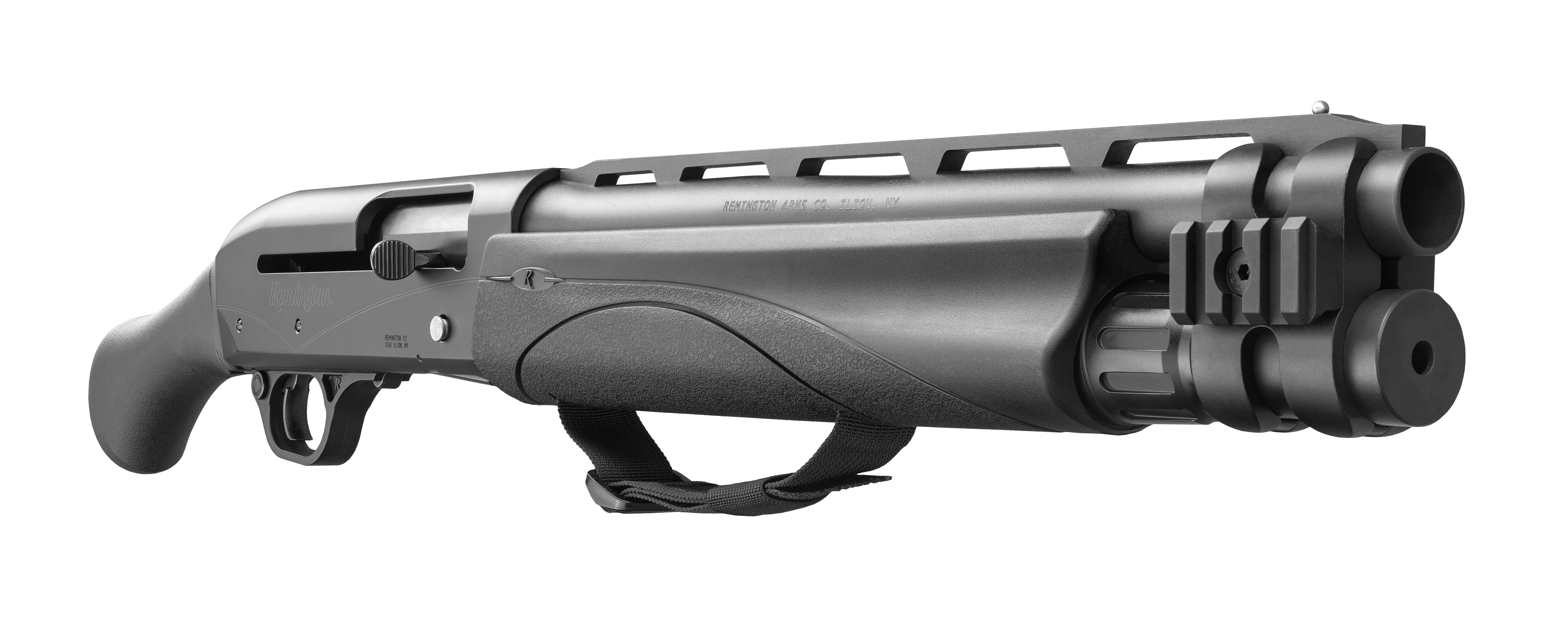
Ilion, NY – Remington’s advanced, patented gas-operated system now available with a 13” barrel and a Birdshead pistol grip.
The V3 Tac-13 is based off the revolutionary VersaPort gas system. The Remington V3 Tac-13 flawlessly cycles all 2 ¾ to 3-inch 12 gauge loads while reducing recoil to a level previously unheard of in autoloaders.
Features & Benefits:
• Birdshead Pistol Grip Allows for more ergonomic hold to help control the firearm and reduce recoil for the shooter.
• Hand Strap User adjustable to help control muzzle flip and improve handling characteristics.
• Lightweight Aluminum Receiver For easy, comfortable transport anywhere
• 13” Light Contour Barrel is compact and easy to carry anytime its needed
Additionally, its self-cleaning gas piston system greatly reduces time required for cleaning. With fewer parts than conventional gas systems, not only is cleaning easier but there are fewer parts to maintain.
OTTAWA, ON – RAMPART International Corp., Canada’s leading supplier of operational equipment to Law Enforcement, Military, and Special Forces operators is thrilled to announce a new partnership with The Safariland Group. Safariland is a leading global provider of safety and survivability products designed for Law Enforcement, Military, professional, and outdoor markets.
“The entire RAMPART team is very excited to be working with The Safariland Group in Canada,” said RAMPART President Mike Klein. “Safariland’s unmatched selection of brands and thousands of product options will allow RAMPART to better serve our end users with some of the world’s finest equipment. RAMPART is well-known in Canada for our exceptional service, dedication to the end users and premier brands; we could not ask for a better partner. The Safariland Group’s commitment to their customers is an exceptional example in our industry; we are very proud to have been chosen as their newest partner.”
Scott McLean, Safariland Vice President of International Sales, said, “We are very pleased to have RAMPART join the Safariland team as we expand our distribution network in Canada. RAMPART’s keen awareness and understanding of Military and Public Safety user requirements align perfectly with Safariland’s mission to help save lives by providing exceptional products and support to those who serve. We look forward to a highly successful partnership with Rampart in support of our Canadian growth strategies.”
RAMPART will also be offering test and evaluation products to end users combined with specialized product training to ensure maximum exposure for Safariland products.
Safariland products will be available to agencies starting October 15th, 2018. Select products will be available online and through the SHIELD program over the coming weeks.
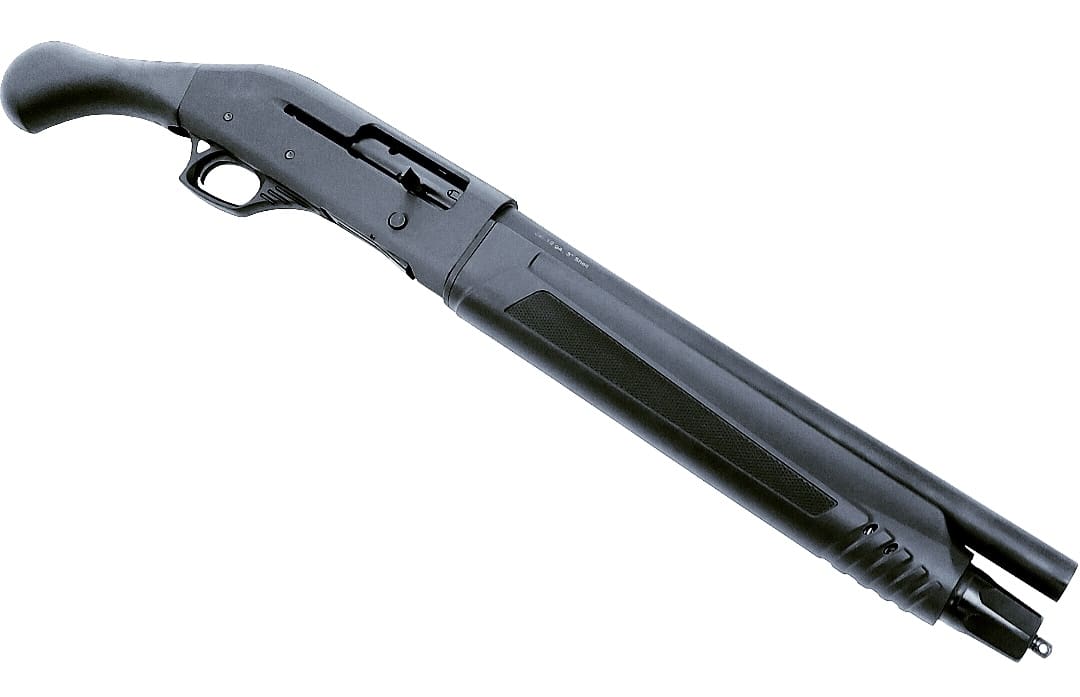
Eric Lemoine, owner of Black Aces Tactical (BAT), an American manufacturer best known for its patented custom shotguns shotgun accessories, and price point suppressors, is excited to announce the release of the company’s new affordable Pro Series S Shockwave Semi.
Said Lemoine, “Black Aces Tactical has been working for months quietly behind the scenes to develop a No NFA/ No AOW Semiautomatic Shockwave that is capable of running both low and high brass reliably. Our parameters include first and for most a Non NFA classification. There is no way around it, our customers demands the Non NFA classification. Next, the weapon has to be affordable. When customers think “Shockwave”, immediately what comes to mind is an affordable weapon. A $1000 Non NFA weapon simple will no do.”
Starting at only$449 retail, the shooter now has an opportunity to own what is a coveted item, and to own it for a price that fits almost any budget. Slated to ship mid November, the Pro Series S features:
• No NFA/No AOW
• 6061 T6 Aluminum Receiver
• 14″ Barrel
• 26.5″ Overall Length
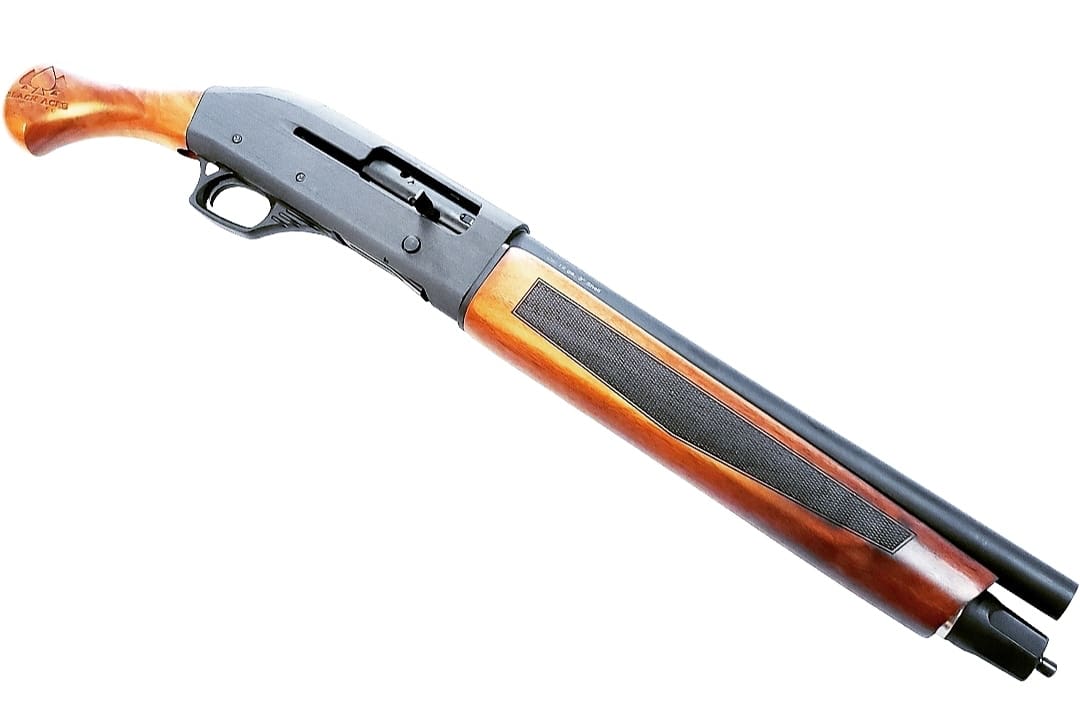
• Choice of Black Synthetic and optional Walnut Furniture
• 4+1 capacity
• Cycles both light and heavy loads
Said Lemoine, “Our industry has entered into an interesting time. It seems that within the narrow scope of 12 gauge, there is a full blown arms race quietly being waged and as a consequence the customer is now offered more choices than ever before. We are honored to be a driving force and influencer in this ever expanding industry.”.
The Pro Series S will be offered in two trim levels initially. The more cost effective of the pair is priced at $449 and features black synthetic furniture. As an upgrade, a walnut furniture model is available at $574. Both models are covered by the Black Aces Tactical lifetime warranty.
WASHINGTON — Several prototypes of a next-generation squad weapon were advanced forward for testing and a request for proposal was sent out, said Chief of Staff of the Army Gen. Mark A. Milley during a news conference at the Association of the U.S. Army’s Annual Meeting and Exposition, Oct. 8.
A weapons squad of U.S. Soldiers assigned to the 3rd Cavalry Regiment and deployed in support of Combined Joint Task Force — Operation Inherent Resolve fire two M240B machine guns during a live-fire training exercise near Al Asad Air Base, Iraq, Sept. 26, 2018. The Army is currently testing a prototype for a new squad weapon. (Photo Credit: U.S. Army National Guard photo by 1st Lt. Leland White)
Test firing of the weapon prototype indicates that it has an accurate range far in excess of any existing military rifle today, he said.
Additionally, it fires at speeds that far exceed the velocity of bullets today and it will penetrate any existing body armor or body armor expected to exist over the next 25 years, he added. This sophisticated weapon also has a sight system that integrates into Soldiers’ gear that incorporates the latest in information technology.
Producing such a highly capable weapon is clearly in the realm of the possible, Milley noted, after speaking with engineers designing the prototypes. Right now, feedback from the prototypes looks like it will fire 6.8mm rounds.
Because the weapon is so capable and so sophisticated, “not surprisingly, we expect it to be expensive,” he said. “So we’re probably not going to field the entire Army with this weapon. We’ll prioritize to those Soldiers in all components who are in close combat quarters-type duties such as Infantry, Armor, Cavalry, Rangers, Special Forces, combat engineers.”
Soldiers with the 173rd Infantry Brigade Combat Team (Airborne) hold their position during a live-fire portion of the Saber Junction 18 exercise at Grafenwoehr Training Area, Germany, Sept. 12, 2018. he Army is currently testing a prototype for a new squad weapon. (Photo Credit: U.S. Army photo by Pfc. Matthew Marcellus )
The Army is looking to buy somewhere in the range of 100,000 of these weapons initially and may expand that later on, he said. The Army hopes to have them out on the range at Fort Benning, Georgia, hopefully by next summer.
“We look forward to it. It’s exciting. But we don’t want to speak too much about its technical capabilities because our adversaries watch these things very closely, so we prefer to keep the technical details out of the news,” he said. “The bottom line is we’re committed to a new rifle and a new squad automatic weapon.”
By Mr. David Vergun (Army News Service)
SSD Editor’s note: I cannot stress enough that the 6.8 round being looked at by the Army for NSGW is NOT the 6.8 SPC investigated by USSOCOM in the early 2000s. It is an entirely new capability.
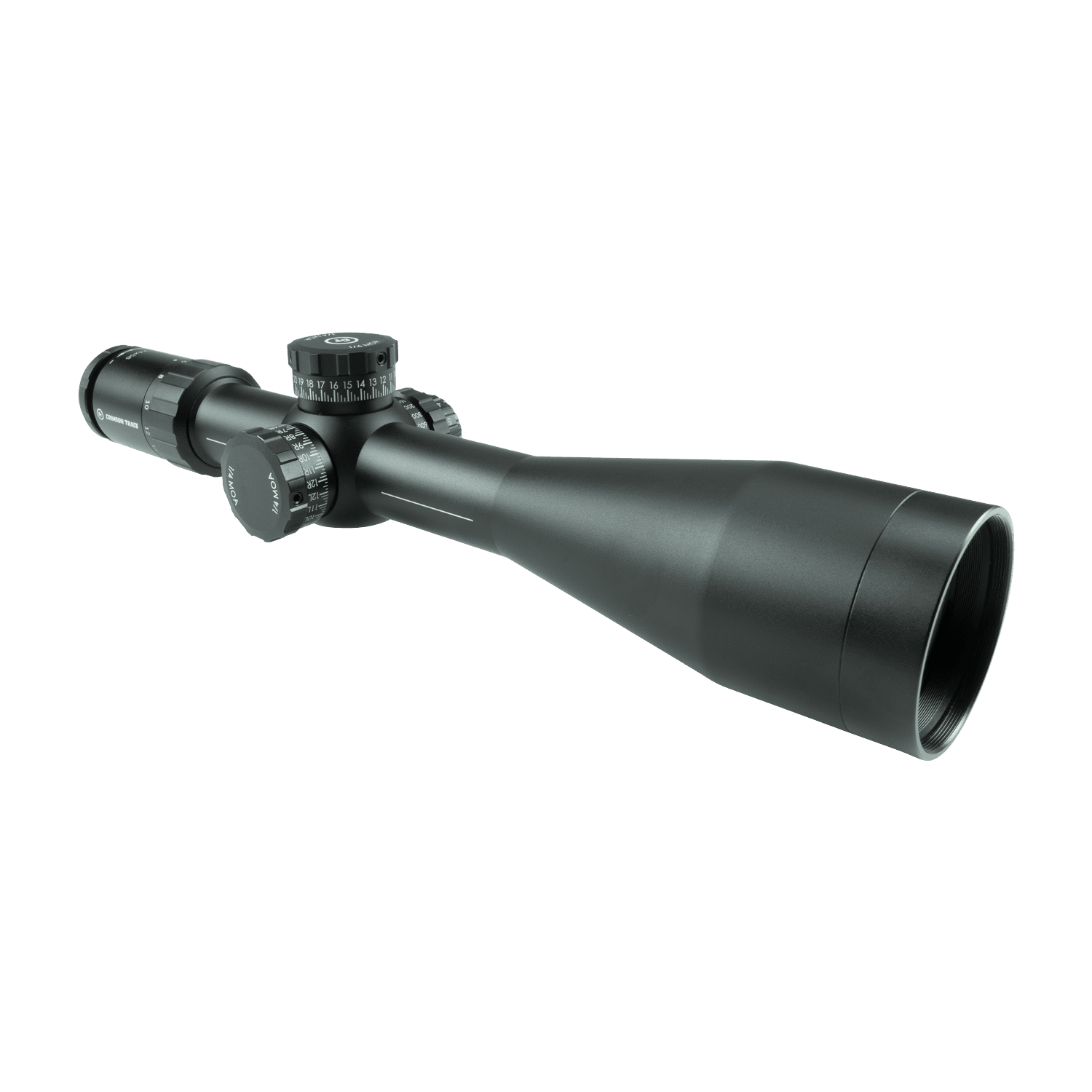
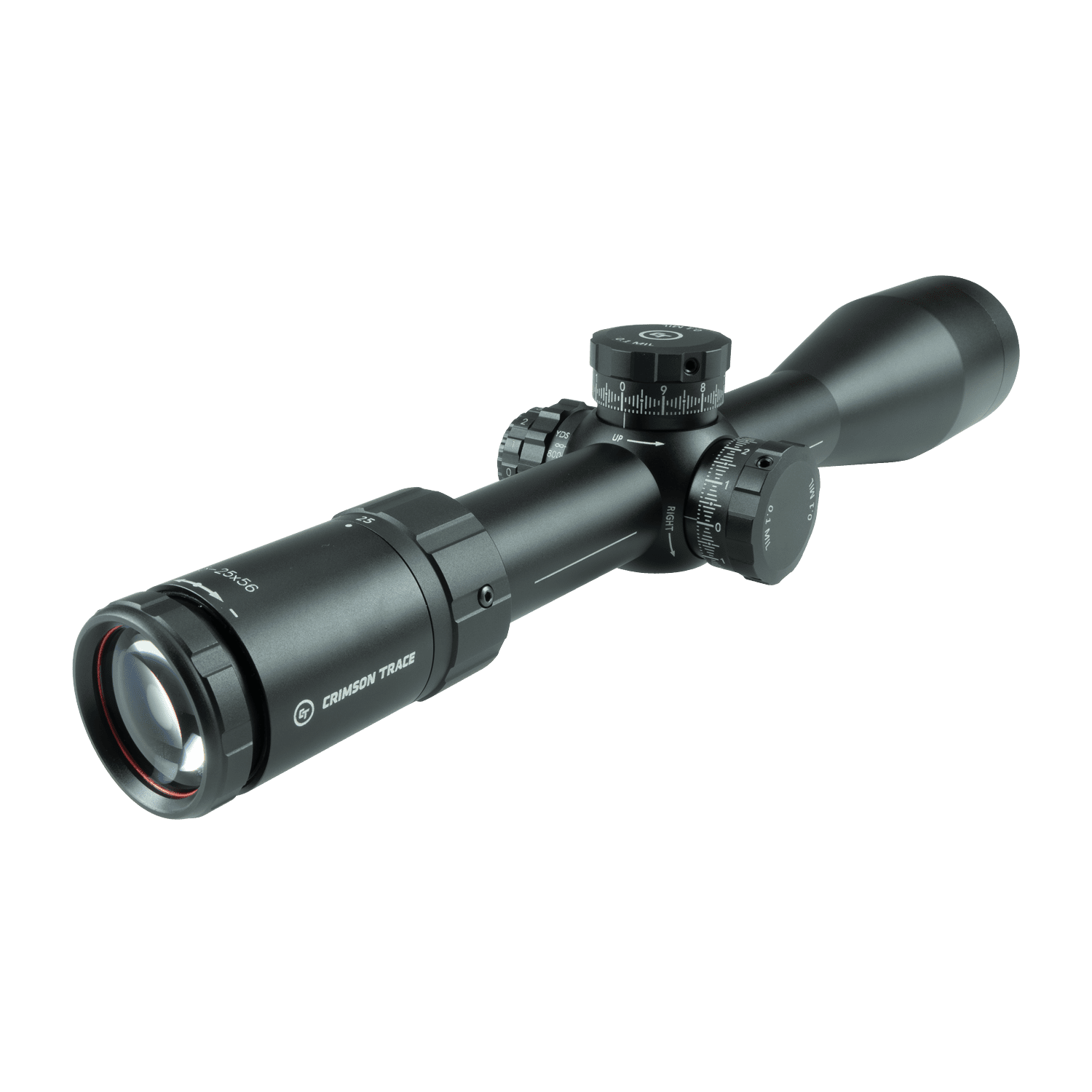
(Wilsonville, OR) – America’s Top Brand of laser sights, Crimson Trace®, today announced the release of 11 new riflescopes designed to meet the needs of tactical, long range, hunting and recreational firearms enthusiasts. This new custom-designed riflescope line ranges from a 1-4X24mm in the sporting line up to a 5-25X56mm long-range tactical riflescope. Riflescopes designed for short, medium, and long range applications are included in each of the three series and numerous custom reticles are offered.
“We’re extremely excited to enter the large and diverse riflescope market with these feature packed products,” said Lane Tobiassen, President of Crimson Trace and American Outdoor Brands Corporation’s Electro-Optics Division. “Consumers can expect the same high-quality engineering and design that Crimson Trace has been providing for nearly 25 years.”
Each riflescope incorporates advanced exterior and interior components designed by Crimson Trace engineers in Oregon. Other features include advanced ED fully multi-coated Japanese glass with illuminated custom reticles in the first focal plane to ensure consistent sizes. The new riflescopes incorporate seven custom-designed reticles with specific purposes and applications.
Each riflescope offers a range of magnification options and provides generous eye relief. The line includes models with 30mm and 34mm one-piece tubes with objective lenses in diameters ranging from 24mm to 56mm. All new riflescopes include specially designed turrets, making adjustments easier when wearing gloves. All riflescopes are equipped with flip-up caps on the ocular and objective lenses to protect the glass and help keep the riflescope clean. Subdued internal components reduce glare and bright spots resulting in improved vision and a clearer image. The line also includes a 3-9X40mm riflescope with an illuminated reticle and 34mm tube and two 1-8X28mm riflescopes with 34mm tubes.
All Crimson Trace riflescopes are fog-, shock-, water- and dust-proof. The illuminated reticles can be adjusted to varying intensity levels of illumination to accommodate surrounding light conditions and user preferences. Each riflescope includes the lens caps, owner’s manual and reticle manual, any required adjustment tools, and a lens cleaning cloth. All riflescopes are packaged in the new red Crimson Trace packaging with the distinct CT logo. Manufacturer Suggested Retail Prices begin at $499 and range up to $1,999. All Crimson Trace riflescopes are covered under a full lifetime warranty and the company’s Free Batteries for Life program.
These riflescopes will be available across America in Fall 2018. Full details on the new riflescopes and other products can be found at www.crimsontrace.com. To complement its traditional sighting systems for firearms, Crimson Trace plans to continue expanding its offering of laser sights and tactical lights that America’s firearms owners have come to trust for a wide assortment of firearms.
Crimson Trace professionals take pride in delivering to consumers a wide assortment of innovative laser sights, lights and optics. The Oregon-based company has equipped America’s gun owners, law enforcement officers, and military units around the globe with the largest selection of award-winning products. Full details are at www.crimsontrace.com or are available by calling 800-442-2406.
This is the ninth installment of ‘Max Talk Monday’ which shares select episodes from a series of instructional videos. Max Velocity Tactical (MVT) has established a reputation on the leading edge of tactical live fire and force on force training. MVT is dedicated to developing and training tactical excellence at the individual and team level.
It is based on Max Talk 017 which discusses the necessity to train beyond the flat range in order to attain an effective warrior mindset / skillset. ‘Two way ranges’ (i.e. combat) present unique challenges in terms of tactical problem solving and decision making that must be trained and prepared for. Utilizing hasty attack live fire training footage for training purposes.
Max is a tactical trainer and author, a lifelong professional soldier with extensive military experience. He served with British Special Operations Forces, both enlisted and as a commissioned officer; a graduate of the Royal Military Academy Sandhurst. Max served on numerous operational deployments, and also served as a recruit instructor. Max spent five years serving as a paramilitary contractor in both Iraq and Afghanistan; the latter two years working for the British Government in Helmand Province, Afghanistan.
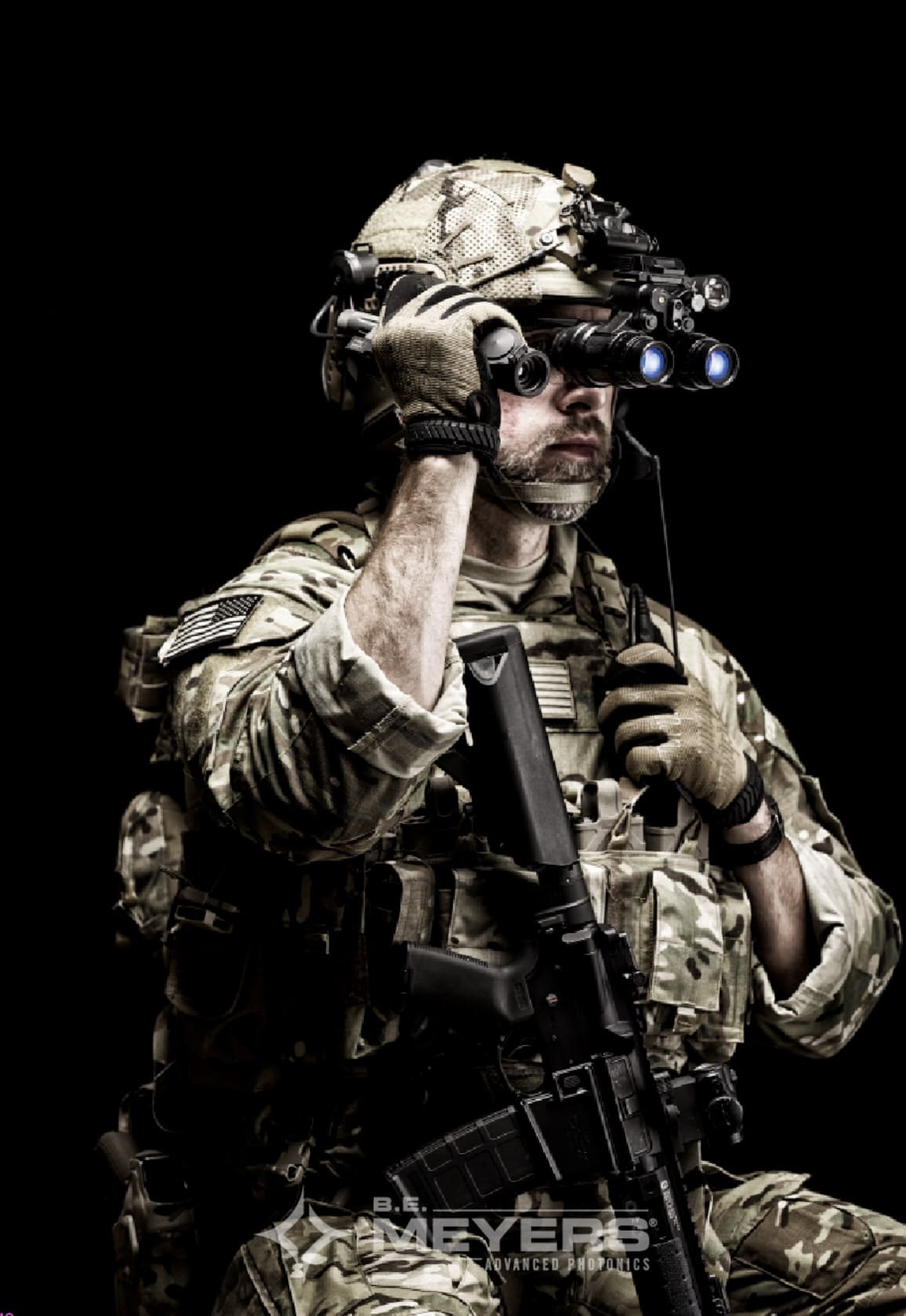
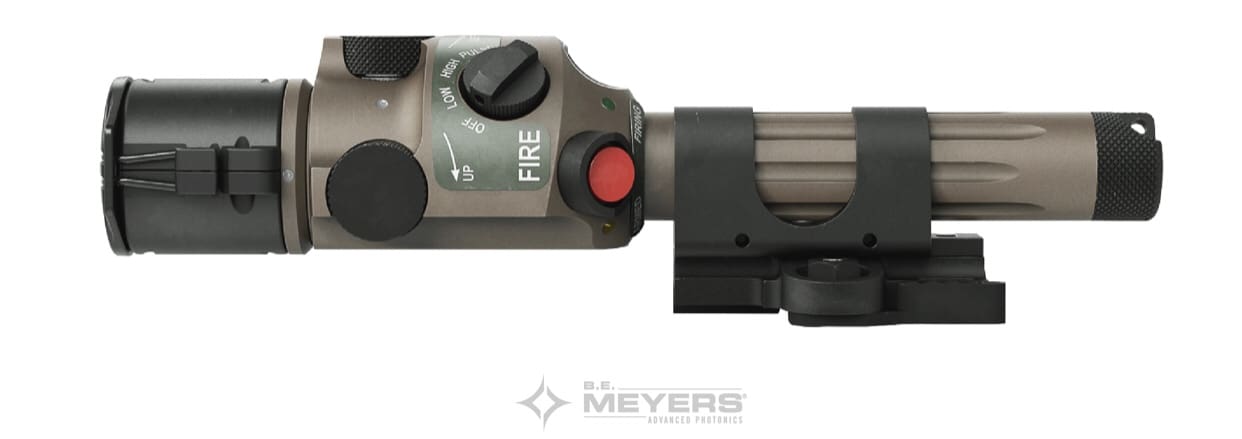
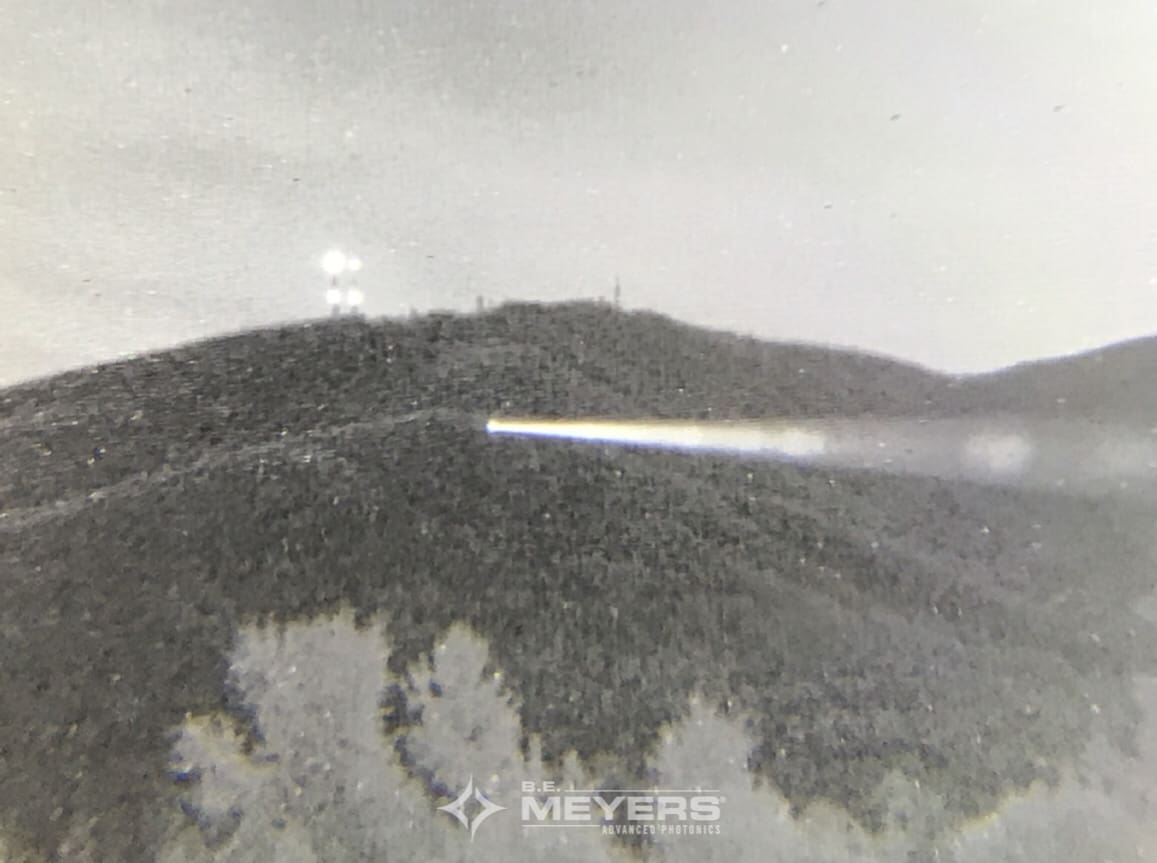
October 15, 2018 (Redmond, WA) – B.E. Meyers & Co., Inc. has released two Class 4 IZLID® Ultra Short Wave Infrared (SWIR) laser Pointers and Illuminators in 1064 nm and 1550 nm. Featuring the highest power of B.E. Meyers & Co.’s SWIR IZLID® family, the IZLID® Ultra 1064 nm/1550 nm is a powerful beam with up to 1 Watt of out-of-band Pointing and Illumination capabilities, facilitating effective Air to Ground Integration marking and communication. While compatible with a variety of SWIR systems currently in use with Special Operations Forces (including E-COSI), the IZLID® Ultra SWIR variants are undetectable by most common Near Infrared (NIR) night vision devices.
The IZLID® Ultra NIR
The IZLID® Ultra SWIR variants can be used as handheld devices or rail-mounted on a weapon platform. These lasers retain the same rugged, dependable features of the IZLID® Ultra (NIR) that has become the standard JTAC tool for night Close Air Support, and Close Combat Attack scenarios. The beam size and intensity of the IZLID® Ultra family makes it easily distinguishable from other laser pointers on the battlefield.
SWIR IZLID® Ultra variant
B.E. Meyers & Co. will be showcasing all of its products at the Air National Guard Weapons and Tactics show (ANG WEPTAC) on October 16-17, 2018, at the Darley Defense Suite in the DoubleTree Hotel in Tuscon, AZ.
The IZLID® Ultra SWIR variants are compatible with E-COSI and other out-of-band SWIR viewers.
For more information about B.E. Meyers & Co., Inc. and their products visit www.bemeyers.com.
Fibrotex USA was selected earlier this year to manufacture the next generation of Ultra-Lightweight Camouflage Net System for the US Army. Fibrotex USA is the US subsidiary of the Israeli multispectral concealment specialists Fibrotex. They have chosen Outdoor Venture Corporation of Stearns, Kentucky as their manufacturing partner. This move will bring about 350 jobs to one of the poorest counties in Kentucky. McCreary County was once home to an OVC facility which manufactures tents but the plant was closed years ago. Fibrotex USA will help revitalize it and also construct an additional building on the site. ULCANS manufacturing is set to begin in the summer of 2019.