XC3 Weaponlight

US Army Containerized Ice Making System

July 17th, 2018

NATICK, MA — The Army is closer to getting ice to Soldiers on the battlefield after recent field evaluations proved the Containerized Ice Making System, or CIMS, can successfully generate and bag 3,600 pounds of potable ice per day and keep 1,200 pounds of that in cold storage for future use.

The CIMS’ capacity to produce on-demand ice meets the field feeding, medical, and mortuary affairs needs of Soldiers fighting down range.

98CF97F0-BF59-4D9A-9E1C-DFEDC45BFF4D
Soldiers from the 3rd Expeditionary Support Command, part of the XVIII Airborne Corps’ combat service support element, pass bags of ice from the Containerized Ice Making System, or CIMS, during a training exercise held at Fort Brag in April 2018. The CIMS was developed by the Product Manager — Force Sustainment Systems, and can successfully generate and bag 3,600 pounds of potable ice per day and keep 1,200 pounds in cold storage for future use. The CIMS’ capacity to produce on-demand ice meets the field feeding, medical, and mortuary affairs needs of Soldiers fighting down range. (Photo Credit: Mr. Jeffrey Sisto (RDECOM))

“Ice is a valuable commodity on the battlefield,” said Will Feather, a mechanical engineer with Product Manager — Force Sustainment Systems’ Food Service Equipment Team, or PM-FSS FSET, and CIMS lead project officer.

“There is a cost and security benefit to the government if we can create an organic ice making capability that will enhance the Soldier’s day-to-day life by providing all the other support that ice creates, including cold drinks, medical applications, mortuary affairs uses, and increased morale.”

The CIMS is a TriCon-sized ISO container that produces ice on demand when provided the required power and water from a potable source. The ice is then bagged in 10 pound bags, heat-sealed, then moved to an internal holding location that can support 1200 pounds of stacked ice bags.

It can be opened on three sides and features a floor and walls that are fully insulated to minimize the heat transfer through the unit. The storage location features an integrated platform capable of monitoring the location of ice bags in order to intelligently and efficiently pack and store them.

The CIMS features three operating modes: Ice Production, Cooling, and Sanitation — which are selected from a digital menu displayed on a control panel mounted to an exterior wall of the TriCon.

The respective modes give users the choice to either produce approximately 150 pounds of ice per hour, simply store previously produced ice, or purge all the water from the system to prepare it for cleaning, maintenance, or cold storage.

The system can also monitor ice production rates as well as ice storage temperature data.
Originally developed by PM-FSS’ FSET to meet the requirements of the Force Provider Expeditionary (FPE) Capability Production Document (CPD), the CIMS provides an organic ice-making capability that will save the Army significant costs by producing ice for units directly on site rather than shipping it into theater, resulting in reduced logistical support requirements while saving on waste, fuel, and resources.

ECA06C95-9596-4A98-9380-BF1D0A70F5B6
The Containerized Ice Making System, or CIMS, was developed by the Product Manager — Force Sustainment Systems, and can successfully generate and bag 3,600 pounds of potable ice per day and keep 1,200 pounds in cold storage for future use. The CIMS’ capacity to produce on-demand ice meets the field feeding, medical, and mortuary affairs needs of Soldiers fighting down range. Two third generation prototype CIMS units were brought in to support the XVIII Airborne Corps’ 3rd Expeditionary Support Command during a training exercise held at Fort Brag in April 2018. (Photo Credit: Mr. Jeffrey Sisto (RDECOM))

Since 2016, the FSET has been working to test and enhance its functional capabilities with CIMS developer, Rocky Research, through a congressionally funded contract.
“Incorporating the CIMS into a unit’s combat support services would drastically reduce the need for resupply missions and the inherent risk to Soldiers transporting ice via vehicle convoys in support of ground combat operations,” said Feather.

At a spring warfighter training exercise held at Ft. Bragg with the XVIII Airborne Corps, two CIMS units were brought into the basecamp for Soldiers to have ice on demand, allowing their functionality and performance to be tested and analyzed in field conditions.

“XVIII Airborne Corps’ combat service support element, the 3rd Expeditionary Support Command, approached us to ask for the CIMS to support their WFX training mission and we were able to make it happen,” said Feather.

The WFX provided an opportunity for the FSET and partner organizations to view it in operation and observe its technical performance. This allowed the engineers to identify areas that required adjustments and optimization. Some identified areas included improving airflow in the storage compartment, and optimizing the heat sealing of the bagging system.

The exercise also raised important questions for combat support decision makers, such as, ‘who would be responsible for it, and how would it get to the battlefield?’

Fortunately, the CIMS is easily transported by military or commercial equipment, including flatbed truck, railway car, ship, forklift, or any other equipment capable of transporting an ISO container. It has been designed for downloading and uploading with the Force Provider ATLAS forklift, and can be easily deployed and operated where power and water sources are available.

The CIMS’ refrigeration unit is easily maintainable and utilizes low-loss, quick-disconnect refrigeration tubing for the ability to repair without brazing. Additionally, it is designed to be operated by non-Military Occupational Specialty (MOS) specific, or 92G, users.

“Through the combined efforts of our partners from Combat Support/Combat Service Support (CS-CSS), the Combined Arms Support Command (CASCOM), the Army Test and Evaluation Command (ATEC), the Natick Soldier Research Development and Engineering Center (NSRDEC), the Public Health Command, and Rocky Research, we’ve been able to successfully develop, test, and refine the capabilities of the CIMS,” said Feather.

The next step is to continue MIL-STD 810G representative testing of the third generation prototype, while developing an initial logistics package to include writing the technical and user maintenance manuals.

The continued testing will result in a Production Decision by ATEC in 2019, according to Feather.

“It’s our job to get ice to Soldiers in the most efficient way, and the CIMS design and capabilities are meeting the requirements to do that.”

At the publication of this article, Mr. William Feather has shifted to support the Ultra-Lightweight Camouflage Net System (ULCANS) program. Mr. Jorge Lopez-Jiminian is the current project lead for the CIMS.

By Mr Jeffrey Sisto, writing for PM-FSS and shared by Army News Service

DoD Announces Combat Tent Contract Award to Litefighter Systems

July 16th, 2018

F7723713-BA2C-4C22-BEC7-A7681D125099

Litefighter Systems LLC,* Roswell, Georgia, has been awarded a maximum $10,627,440 firm-fixed-priced, indefinite-delivery/indefinite-quantity contract for combat tents. This was a competitive acquisition with three responses received. This is a one-year base contract with four one-year option periods. Locations of performance are Mississippi and Georgia, with a July 12, 2023, performance completion date. Using military service is Marine Corps. Type of appropriation is fiscal 2018 through 2023 defense working capital funds. The contracting activity is the Defense Logistics Agency Troop Support, Philadelphia, Pennsylvania (SPE1C1-18-D-1065).

*denotes small business

Grey Ghost Precision Announces New Color Offerings for SPG43 Slides

July 16th, 2018

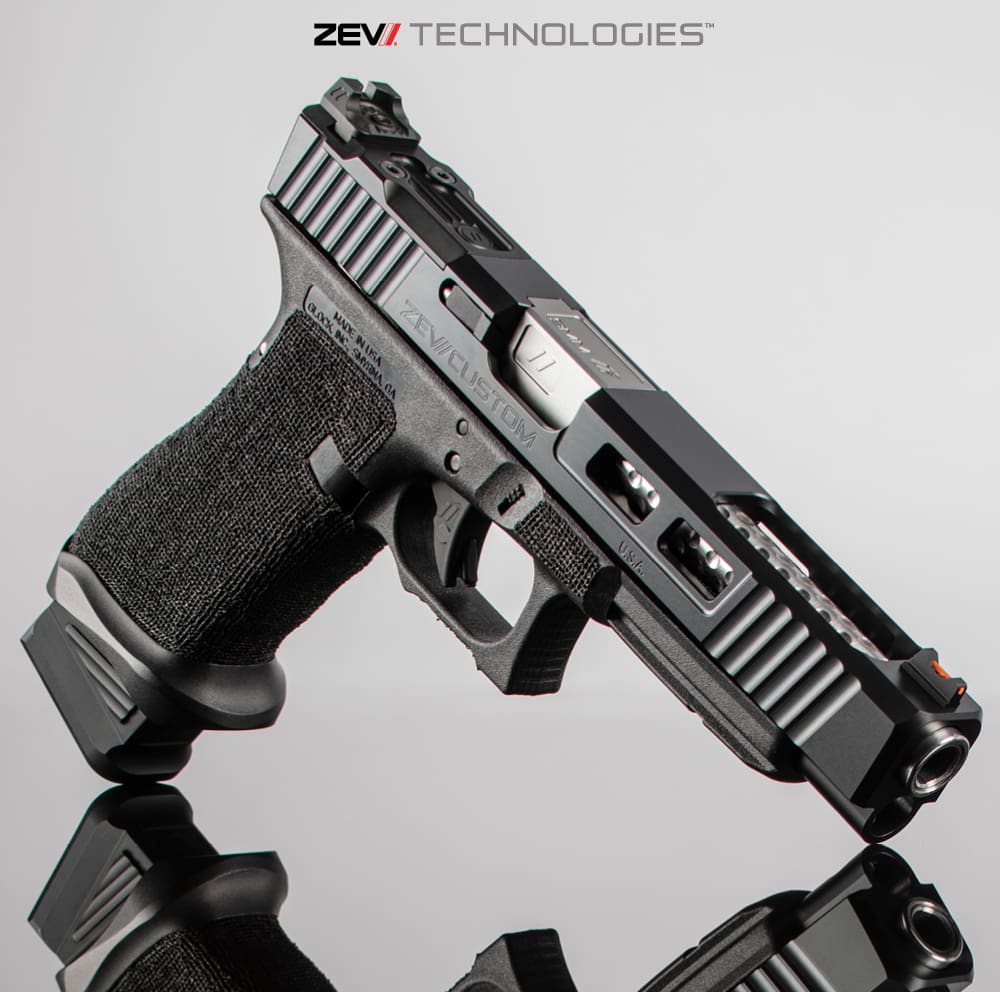
Lakewood, WA – Grey Ghost Precision, leading manufacturers of accurate, reliable, and attainable weapon systems, is excited to announce the that they are now offering three new Diamond-Like Coating (DLC) color options to their SPG43 GLOCK43 Slides.

GGP announced the release of their SPG43, the first true aftermarket upgrade slide for the G43 at SHOT Show 2018, in Las Vegas, NV. Precisely machined from a billet blank of American made, certified 17-4PH Stainless Steel with critical tolerances held to +/- .003”, the SPG43 has withheld the reliability and accuracy that Grey Ghost Precision’s products have been known for within the industry.

60AFA428-2EB0-4684-8ED5-B78303CE1D95

The initial line of SPG43 slides were originally only available in a DLC signature Grey color; and are now offered in Black, Bronze and Flat Dark Earth, in addition to Grey for both V1 and V2 versions.

381BE4E9-E0C2-4153-9A2D-044CA7CDFB5B

DLC was chosen for its high levels of strength, hardness and corrosion resistance, along with its inherent lubricity which lends itself to reducing friction between metal surfaces.

“We are excited to bring more DLC color options to our customers,” stated GGP Vice President of Firearms, Jason Curns. “With the explosion of aftermarket options for the G43, it was important for us to give our loyal GGP customers more choices to build the G43 of their personal specifications.”

As is the case with every other product that comes out the door at Grey Ghost Precision, the SPG43’s attention to detail, fitment and mindset for the end user is paramount. The team spends no time, wasted on production – partnering with only the best in the industry, receiving feedback on exactly what the end users are looking for in a concealed carry pistol.

SPG43 SPECS
• Made from American 17-4PH Stainless Steel
• All critical dimensions held within +/-.003dz
• Strategically placed patterns for ease of use and function
• Coated with choice of Black, Grey, Bronze or Flat Dark Earth color options in DLC
• Ready to accept all GLOCK or aftermarket OEM G43 components
• Ready for GLOCK or OEM components to install right away

The Grey Ghost Precision SPG43 is available for pre-order now for end of July delivery. Visit www.greyghostprecision.com for more details.

FN Down-Selected To Produce Two Prototype Options For US Army Next Generation Squad Automatic Rifle Program

July 16th, 2018

(McLean, VA – July 16, 2018) FN America, LLC is pleased to announce that the company has been awarded contracts to produce two prototypes under the Prototype Opportunity Notice (PON) 1 for the U.S. Army’s Next Generation Squad Automatic Rifle program, commonly referred to as NGSAR. The company can confirm earlier speculation that one of the submissions is a lightweight machine gun and the other is the FN HAMR™, a heat adaptive modular rifle.

The Army has specified a need for a prototype rifle weighing less than 12 pounds, including a 20-percent reduction in weight of ammunition and fire control unit. To deliver against the two awarded contracts, FN has partnered with industry-leading organizations such as Federal Cartridge Company (FCC) to utilize emerging technologies to enhance lethality of FN’s NGSAR contenders and offer a complete systems solution.

Throughout history, FN has played a pivotal role in designing and delivering machine guns to the U.S. military, including the FN M249 SAW, and is poised to deliver a solution that is truly next generation.

For more information about FN’s military product line currently under contract, please visit www.fnamerica.com.

Magpul Introduces Eyewear

July 16th, 2018

Today, Magpul introduces an entirely new product category, eyewear. But when you consider their expertise in injection molding and their ever growing clothing line, eyewear looks like the perfect bridge.

3E63760E-0536-4C8A-993C-22F45E9FBA68

Naturally, they’re protective in nature, but Magpul wanted to offer something you’ll want to wear, no matter what you’re doing.

61520CA3-283B-4295-974F-1EB77C227A6D

The first three styles are The Terrain, The Explorer, and the Summit. Add to that Black, Gray, and Tortoise Shell frame colors along with a variety lenses that have different polarization, color and mirroring for the various conditions you’ll encounter; whether driving to work, fishing on your favorite stretch of river, or on the shooting range.

Magpul offers full ballistic and safety rating and protection for active use with the Terrain (the larger full performance sport option) and the Summit (the smaller full performance sport option), and pulled it back just a bit with something a little more traditional with the Explorer (still full impact protection, but with less of a frame wrap).

There are currently 27 different options and by August they should all be available for sale.

Most of the stock went to Magpul dealers, so check with your preferred retailer.

Crimson Trace Upgrades For MSRs

July 16th, 2018

(Wilsonville, OR) — Crimson Trace®, recognized as America’s Top Brand of laser sights and lights in a shooting sports industry survey of shooters and hunters, offers numerous lighting upgrade options to owners of modern sporting rifles (MSRs) and most rail-equipped long guns.  The easy-to-install laser sights and lights can be used on a wide assortment of firearms that are held for self- and home-defense purposes, and for hunting in numerous states. The great news is the options can be found in more than 2,800 dealers across America—or quickly ordered online.

F7218D75-7C2D-4DE6-8131-1485F7E450E7

Leading the way in long-gun upgrades are the new Crimson Trace Tactical Lights. These innovations include the CWL-102 white LED light, which delivers up to 500 lumens and can be activated with a tap-on/tap-off tail cap or via a remote on/off activation pad attached to the light with a linking cable. That activation pad can be placed in position on the firearm with Velcro straps or a stick-in-place strip. Another similar light model, the CWL-202 provides up to 900 lumens of output. These lights are impact resistant and water resistant up to a depth of 1 meter. Models are available to fit standard rails or the M-Lok®/Keymod accessory slots.

Crimson Trace also offers the award-winning LiNQ® wireless laser sight and light solution. This remotely operated green laser sight and bright light is designed to securely attach to any MSR that is equipped with a M1913 Picatinny or Weaver accessory rail. The compact module of the LiNQ laser/light system houses a green laser sight and powerful 300-Lumen LED white light. The replacement activation grip controls the module through a secure singular closed system. That module can be operated in four modes: light only, laser only, laser and light, and laser and strobe light. The grip and the module are pre-paired at Crimson Trace’s state-of-the-art factory when packaged for shipping, and FREE mounting tools and batteries are included.

Another popular MSR upgrade is the Crimson Trace MVF-515™ laser sight. This Modular Vertical Foregrip has a bright 200-Lumen LED white light partnered with a red or green laser sight. The user simply mounts the MVF-515 laser sight on a lower rail (Picatinny or similar) on the rifle’s forend, tightens the mounting screws, and then adjusts the unit for windage and elevation using the FREE included tools. The sturdy grip is constructed from 6061-T6 aircraft aluminum and is popular with law enforcement units from coast to coast as well as military units around the globe.

Another MSR laser sight and light upgrade option is the Crimson Trace Rail Master® Pro™ laser sight and light system. These red or green laser sights are paired with a 100-Lumen LED white light and offer several operation modes, including: laser only, light only, laser and constant light, or laser and strobe light. These lightweight and compact laser sight and light products utilize M1913 Picatinny or Weaver style accessory rails and feature tap-on/tap-off activation.

An additional upgrade option is a Crimson Trace Rail Master® with a red laser (CMR-201), green laser (CMR-206), or a 100-Lumen LED white light (CMR-202). The Rail Master universal laser sighting system can be easily installed, has tap-on/tap-off activation, and will automatically power off after five minutes of inactivity. Manufacturer Suggested Retail Prices for the CMR-201 Rail Master begin at $159.

Crimson Trace strives to make laser sights standard equipment on concealed-carry and personal-defense firearms. The Oregon-based company has equipped America’s gun owners, law enforcement officers, and military units around the globe with the largest selection of award-winning laser sight and tactical light products. Full details are at www.crimsontrace.com or are available by calling 800-442-2406.

Jim Foreman Joins MATBOCK as Sales Team Lead

July 16th, 2018

MATBOCK is proud to announce the addition of Jim Foreman as the Sales Team Lead.  Jim retired in 2018 after serving 27 years in the SEAL Teams. During that time he rose through the ranks in various leadership roles to include Squadron Master Chief and Operations Master Chief for a 2k member command. His last 15 months were spent at NAB Little Creek as the Training Master Chief overseeing leadership and training for east coast based SEAL Teams. As the Training MCPO Jim wrote the SEAL SOP handbook, a 100-page manual outlining basic SEAL tactics as well as explaining the roles and responsibilities of both junior and senior leaders. This handbook is now being issued on both coasts. Jim has completed 18 deployments and has been awarded several awards to include the Silver Star, 8 Bronze Stars, Purple Heart and 5 Presidential Unit Citations.

MATBOCK President Zach Steinbock said, “We couldn’t be prouder to have Jim Foreman join our growing team and help bring our gear to the guys still on the battlefield.  Jim’s wealth of tactical and leadership experience is absolutely invaluable and we are excited he has chosen a second professional career with us.”

Jim can be reached by email at jim.foreman@matbock.com.

General Staff Requirement (GSR) New Assault Rifle

July 16th, 2018

So often in media, we see a blurb about an acquisition program and a year or so later we see a follow up story announcing a winner.  What happened during that year?  This article is my attempt to provide insight into the goings-on of an acquisition program.

In the summer of 2016 I had the great fortune to participate in the summer weapons trials in Pakistan.  This was part of a $1.3B USD acquisition program that would select the future battle rifle for Pakistan.  The program required the initially purchase of rifles from the original equipment factory with manufacturing and licensing rights to third party sales eventually shifting to new facilities being constructed in Pakistan.  Of the handful of US companies registered to attend, I found myself to be the lone representative from the United States.  Our offering was a 7.62 NATO, AR10-type rifle with a piston operating system.  I arrived in early June for a brief two-week trip and ended up leaving two months later.

As this is a firearms related blog, I’ll focus primarily on the testing aspects of the trials, but I would like to start off with some general thoughts.

Pakistan was the United States’ key ally in Southwest Asia during the Cold War.  President John F. Kennedy solidified this relationship by giving Pakistani President Mohammad Ayub Khan a hero’s welcome in 1961. Fifty-five years later, as China’s influence in Pakistan grew with the construction of the New Silk Road and Gwadar Port, the US shifted its interests from Pakistan to India.  It is anticipated this area will soon dominate global trade.  As a participant in the General Staff Requirement (GSR) New Assault Rifle solicitation I had opportunity to visit Pakistan.  During my time there, my friend Adnan acknowledged this shift but said the US and Pakistan will again be close because the peoples of both countries like to fight and share the warrior ethos.

Entry to President Ayub’s home

I was continually impressed with the general knowledge of global politics possessed by even the common person.  
An individual might live in abject poverty, but they were keen to discuss the upcoming US election.  I was constantly being asked about my opinion of Clinton and Trump.

Typical roadside

I was impressed by the warmth of the Pakistani people and their friendliness.  I had the privilege to meet and form friendships with both the son of the former president of Kashmir and the husband of the former Bangladesh princess.  We shared fantastic conversations.

Amer and Adnan, great guys

Pakistan is a very poor country.  I showed up with the expectation that we could procure some of the basic tools needed to service the weapons during testing.  Just run down to Walmart.  Nope! For example, not even basic Allen wrench sets were available.  I informed my host Shameel, he should have told me all they have is dirt and water and to bring everything else.

When I arrived in Pakistan, the US embassy was on lockdown. I was the only American walking around.  It was a little disconcerting to see NGO, Embassy, and military types riding around in armored Land Cruisers I was just in a stock Toyota Corolla, but low vis works.  From my military and defense sales experiences, not having any US government back up or support was a bit unnerving at times.  That is when having good friends is vital.

Shameel and I at PAKORD Base, tremendous business associate. 

On to the trial…

The weapons trial consisted of numerous tests; below is a partial list:
• Technical briefings
• Hot chamber cook-off
• Iron sight accuracy
• Optics accuracy
• Penetration
• Hot and cold environmental chambers
• Interchangeability
• Endurance
• Pluff mud
• Sand test
• Mud

Each of these tests took place at different military installations and with varying numbers of participants.  
The following companies were invited to participate in the trials:
• Beretta
• Kalashnikov
• Sig Sauer
• Mechanical and Chemical Industry Corporation (MKEK)
• CZ
• PWS
• FN Herstal
• LWRC Intl
• Zastava Arms
• Anderson Manufacturing Inc
• HK
• Hanwha
• Denel Land Systems
• Colt
• Steyr
• Armalite

Several of the companies had already completed the accuracy and environmental testing during the winter trials.  For the duration of the test only three companies were present; CZ, MKEK, and the company I represented.  Each weapon OEM and/or Pakistani representative paid for their participation in the trials including; travel, accommodations, use of military facilities, ammunition, etc — very different from the US or European approach where the military pays for the official testing.

Following is a summary of several of the tests, separated by facility with key observations notes.

Islamabad

The capital city of Islamabad was our operational hub from which we traveled to the various test facilities.  I took receipt of weapons from the freight forwarders and conducted an inspection as the weapons were inventoried into the Pakistani armory.  All participants conducted preliminary briefings on capabilities and waited for the requisite stamps and signatures for access to the military bases.

PAKORD Base

Cook-off test. Firing 120 rounds as quickly as possible, last 20 rd magazine is inserted into the weapon and a round is chambered.  To the best of my knowledge only the FN SCAR and HK G3 cooked off.

Accuracy at 100m.  Three rifles firing three ten shot groups apiece.

Ammunition conditioned to 21°C (69.8° F).  At least two of the three groups must be less than 3.5moa or a 102mm circle.  In all accuracy testing the most accurate weapon was the US AR10 style rifle.


Team CZ with their test fixture

Accuracy at Effective Range.  400m firing iron sights.  600m firing optical sight.  Three rifles firing three ten shot groups apiece.

Ammunition conditioned to 21°C (69.8° F).  On the range were MKE, CZ, and myself.  MKE was assigned two of the top shooters in the Pakistan army.  

CZ brought their factory sponsored competitive shooters. Representing the US was just me wishing I had spent more time using iron sights and blaming Drake and Magpul for my inability with their Pro Sights.(Actually, Drake and Magpul are great people.) My take away is that shooting groups for accuracy using iron sights is challenging especially when using the equivalent of M80 ball ammunition.  There was considerable variability inherent in the ammunition.

Range Facility after the grass was cut.  When we first showed up it looked like a field of straw.

Monsoon rains made for muddy conditions.  Seeing the black cobras crossing the roads kept me cautious when walking around.

Penetration at Effective Range.  

Shooting 10 gauge (3.42m) steel plates measuring 1.5m x 1.5m.  600m firing optical sight.  Three rifles firing three ten shot groups apiece.  
8 out of 10 shots from 2 out of 3 groups from each weapon must pass through the plate.  During winter trials none of the rifles was able to consistently penetrate the plate.  

MKE and CZ started with mixed results, but all my shots penetrated the plate.  I had set my rounds in the sun and when they were hot to the touch I made my shots.  MKE and CZ quickly followed my example and were soon penetrating the plate with every shot.  It was interesting to see the lack of temperature stability for the powder/primer combination.

Extreme Climate Test.  Hot.  360 rounds loaded into magazines and three test weapons were conditioned at +60°C (140°F) for 12 hours.  All the test weapons performed without issue except for the US weapons, all of which had the bolt catch fall out of the weapon during testing and one of which launched the muzzle break down range.

Cold. 720 rounds loaded into magazines and three test weapons were conditioned at -40°C (-40°F).   Two cycles of 120x rounds fired from each weapon.  All the test weapons performed without issue except for the US weapons which would not chamber a round and did not fire a single shot.

Interchangeability Test.  Ten weapons broken down and placed into ten trays.  The first weapon started in tray one.  The second weapon started in tray two and ended in tray one.  

The third weapon started in tray three and ended in tray two.  The other weapons followed.  Breakdown as follows: (1) Barrel and Receiver (2) Bolt Assembly (3) Bolt Carrier/Cam Plate (4) Pistol Grip (5) Trigger Mechanism (6) Gas Tube Assembly (7) Piston Assembly  (8) Recoil/Return Spring  (9) Magazine  (10) Butt Stock

The components in each tray were assembled and ten shots fired.  There weren’t any function issues amongst the competitors, but fitment was tight on several of the CZ weapons.

Endurance Testing.  Condition of the weapons; cleaned and oiled.  Multiple series of 120 round intervals.  First magazine, five single shots and the remained fired in 3 to 5 shot bursts, with a rate of fire of 85 rounds per minute.  Subsequent magazines fired in 3 to 5 shot bursts, with a rate of fire of 85 rounds per minute.  After the 120-round sequence, the weapons cooled to within 2°C (35.6°F) of ambient, and then another interval was fired.  Weapons were cleaned and lubricated every 1,200 rounds.  

Accuracy at 100M, muzzle velocity, and rate-of-fire were tested at the beginning and end of each cleaning and lubrication cycle.  Only CZ and FN participated in the endurance testing with varying results.

Base Gharo

Mud Immersion Test.  Condition of the rifles; bolt closed on an empty chamber with a loaded magazine inserted and the muzzle capped.  The SSG took the rifles into the tidal pluff mud and rolled them in the mud until they were completely covered.  

MKE and CZ rifles along with Serbian and Chinese AK’s were able to get one or two rounds fired before jamming. The US weapon wouldn’t even chamber a round.  The Russian Kalashnikov AK ran without issue.  The SSG operators commented that when conducting operations where they know they will pass through pluff mud the only weapon they will carry is the AK.


SSG Range built by US Seabees

Pluff Mud.  I wish I had better photos capturing how much mud covered the weapons.

Sukkur

Sand Test.  Condition of the weapons, the muzzles were capped, and a round chambered.  The weapons were buried under two feet of sand and left to bake for one hour.  The temperature was 56°C (133°F) in the shade.  After the requisite bake, the weapons were dug up and test fired.  The US weapon wouldn’t fire.  The CZ and MKE rifle along with the Serbian and Chinese AKs were able to get one or two round fired before jamming.  The Russian Kalashnikov AK ran without issue.

Can you identify all the weapons?

Vladimir Onokoy, leader of the Kalashnikov trial team (another solo representative)

Mud Test.  Condition of the weapons; the muzzles were capped, and a round chambered.  Only the Chinese and Russian AK’s fired.  The Chinese AK had a single jam and once cleared continued to run.  The Russian Kalashnikov AK ran without issue.

Conclusion: No rifle passed all the tests without issues; however, the FN SCAR was the only rifle that was finalized, officially accepted, with licensed manufacturing approved.  

However, since the completion of the trials, Pakistan has purchased 140,000 AK 103 rifles.  The number of SCAR rifles purchased is zero – too expensive.

Takeaways: The AR10-type weapon is inherently accurate especially when compared to other service rifles, but the design leaves it very susceptible to dirt and debris.  Adding a piston system to the AR15/10/M4/M16 does not improve the reliability of the system in harsh environments due to design limitations.  Considering these trials, it is interesting to ponder weapon testing requirements of the United States and the small arms currently being used and purchased by the Services.  The selection approach of the United States may need to be rethought.  If you operate in harsh conditions where maintenance and cleaning may not be available, and you absolutely must have a rifle that fires every time you pull the trigger, then the Russian Kalashnikov AK is the answer.  Otherwise, keep your weapon clean and don’t let it get dirty.

Aside from all the technical and performance components of a procurement, you can’t discount the dynamics that money and politics play in winning a solicitation – which might be a subject better off discussed over a beer.

Keep an eye out for a subsequent article detailing how to test the functional accuracy of your rifle using lessons learned in Scandinavian and Pakistan testing.  Stop believing the marketing hype and get to know your rifle.

John Kennedy is a co-founder of www.proofmarkllc.com, a firearms accessories design and manufacturing company.  John was a contractor in OEF and OIF, with a background ranging from nuclear fuel production to ballistic protection.  He currently consults on risk management and global defense.