0903 – Flight 175 crashes into the south face of the South Tower of the World Trade center.



0903 – Flight 175 crashes into the south face of the South Tower of the World Trade center.

MSNBC-National Geographic still screenshot; 9/11 2001 terrorist attacks on New York City.
0846 – Flight 11 crashed into the north face of the North Tower of the World Trade Center.

America is at war.
0850-0854 – Flight 77 is hijacked.
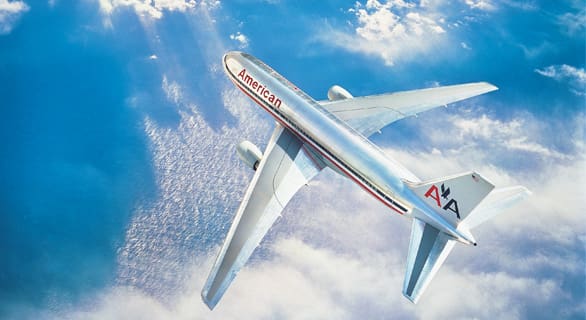
0814 – United Airlines Flight 175, a Boeing 767 carrying 56 passengers and nine crew members, departed from Logan International Airport, bound for Los Angeles International Airport, with five hijackers onboard.
0820 – American Airlines Flight 77, a Boeing 757 carrying 58 passengers and six crew members, departed from Washington Dulles International Airport in Fairfax and Loudoun Counties, Virginia, bound for Los Angeles International Airport, with five hijackers aboard.
0842 – United Airlines Flight 93, a Boeing 757 carrying 37 passengers and seven crew members departed from Newark International Airport, bound for San Francisco International Airport, with four hijackers aboard.
0842-0846 – Flight 175 is hijacked.
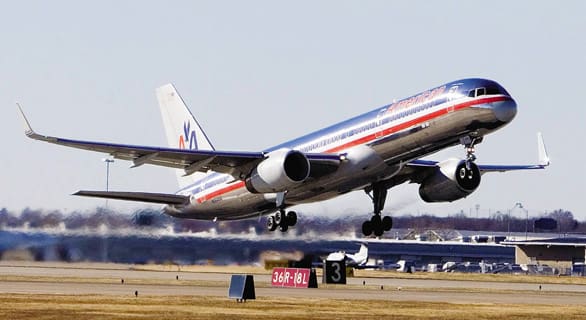
0735 – terrorists Atta and al-Omari board American Airlines Flight 11, along with the rest of the Flight 11 hijackers.
0759 – American Airlines Flight 11 departs towards Los Angeles International Airport.
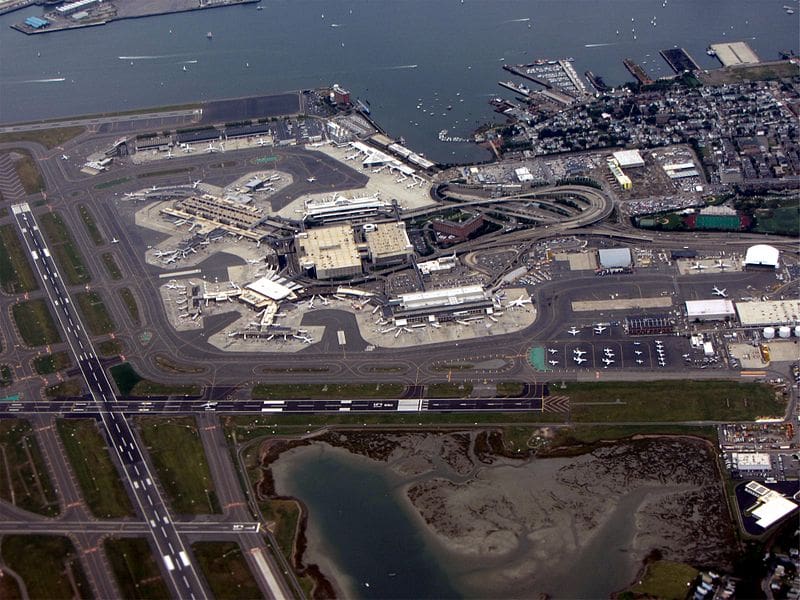
0600 – terrorists Mohammed Atta and Abdulaziz al-Omari traveled to Logan International Airport from Portland International Jetport in Portland, Maine.
0652 – fellow terrorist Marwan al-Shehhi called Atta at Logan to confirm the plans of the attack.
Berlin-based TACWRK is holding a Raffle with three Arc’teryx Uni’corn, seen below, as the prizes.

You’ve still got until the 13th of September to participate in this Raffle and donate to this worthy cause which will benefit several charities, including GDK, Bundespolizei-Stiftung, Bundeswehr Sozialwerk, Kampfschwimmer Association, SOC-F.
To enter, visit www.tacwrk.com/en/brands/unicorn.
Kit Badger recently posted a video after shooting a 3 Gun competition. It is about the rationalization that comes from the hard line tactical side, which he was once a part of. The thought process is that because it’s a game, there’s no reason to do it. Read his article at this link and wayxh this video to see what he thinks now.
What do you think?
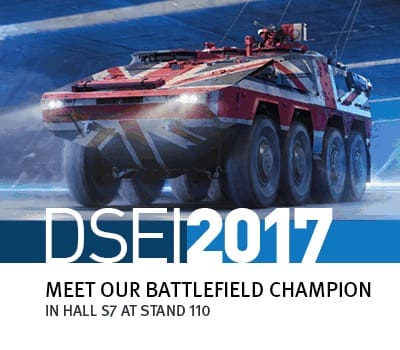
In Europe and around the world, armed forces and law enforcement agencies are modernizing their equipment in the face of new security threats. Seeking a robust and reliable partner, many turn to Rheinmetall. One of the world’s leading systems makers, the high-tech specialist for mobility and security will be on hand at the DSEI defence show in London from 12 to 15 September.
Rheinmetall’s longstanding main battle tank expertise forms a prime focus this year. This expertise extends from combat performance upgrades and modernization programmes to full-scale production as an original equipment manufacturer. Moreover, Rheinmetall is a global leader in the development and manufacture of state-of-the-art tank main armament and ammunition as well as simulation and training technology. Among other things, at DSEI Rheinmetall is displaying its future main battle tank advanced technology demonstrator (MBT ATD) as well as the DM11, the Group’s state-of-the-art programmable multipurpose tank round, which is already in service with a number of NATO nations.
Moreover, the Boxer* is now returning to the United Kingdom, where it will be on display at the Rheinmetall stand (S7-110). The UK was an early partner in the industrial consortium that originally developed the Boxer Multi-Role Armoured Vehicle (MRAV). In the meantime, three NATO nations have opted for this versatile, well-protected, combat-proven family of vehicles. The Boxer has also demonstrated its outstanding operational effectiveness in comprehensive performance trials conducted by the Australian Defense Force. The Boxer is considered to be a promising contender in the British Army’s Mechanised Infantry Vehicle (MIV) procurement programme.
Network-enabled operations form another prime focus. As a systems supplier, Rheinmetall specializes in incorporating soldiers, sensors, effectors, drones and tactical vehicles into highly effective “systems of systems”.
In a joint venture with Rohde & Schwarz, Rheinmetall is competing as general contractor for two major Bundeswehr projects: MoTaKo (German military shorthand for “Mobile Taktische Kommunikation” or mobile tactical communication), and MoTIV, which stands for “Mobiler Taktischer Informationsverbund”, or mobile tactical information network. The two projects will culminate in the German Army’s future digital combat command system – “German Army 4.0”, as it were.
At Rheinmetall’s Stand S7-110, a MoTaKo/MoTIV command post brings additional troops, vehicles and components into the command-and-control loop via a mobile communication node, creating a common operational picture in a tactical scenario. Among others things, the items on display include:
TacNet command system: The TacNet command system forms the nerve centre of networked systems. Flexible inclusion of additional troops, sensors, effectors or platforms is possible at all times.
Soldier systems: Rheinmetall possesses comprehensive expertise in the world of soldier systems. Prominent examples are “Infanterist der Zukunft – Erweitertes System” (IdZ-ES; infantryman of the future – extended system) which is operational in the German Army as well as Argus which is under procurement by the Canadian Armed forces. The new soldier system Gladius 2.0 is debuting at this year’s DSEI.
RS556 assault rifle: The 5.56mm x 45 cal. modular multipurpose RS556* rifle is designed for maximum reliability and ease of use. It can also be equipped with an optional 40mm build-on RS40* grenade launcher.
PanoView: “PanoView” is another example of Rheinmetall’s approach to network- enabled warfare. This innovative system features sensors mounted on the outside of an armoured vehicle which transmit real-time images to goggles worn by the vehicle commander. In effect, the commander can see right through the armour, drastically improving situational awareness. Moreover, the system imports tactical situation data, e.g. marking the location of friendly and enemy elements on the ground. In addition, Panoview can be used to process virtual situation maps.
Multi Mission Unmanned Ground Vehicle (MM UGV): Deployed in conjunction with infantry components, unmanned systems enable rapid reconnaissance and engagement. Rheinmetall’s Multi Mission Unmanned Ground Vehicle features a modular design. This enables integration of different mission kits for a wide variety of different operational tasks: it can be configured as transport vehicle, a sensor platform for surveillance and monitoring, for example, or as a weapon carrier. Remote control and autonomous operation are both possible.
Vehicle Systems: Rheinmetall also adds the infantry group’s main weapons systems to the network, e.g. the Puma* infantry fighting vehicle and the Boxer* 8×8 wheeled armoured vehicle, configured for a combat role with the two-man LANCE turret.
Rheinmetall’s Vehicle Systems division is the Group’s centre of excellence for products ranging from trucks to tactical wheeled vehicles and main battle tanks. Europe’s foremost supplier of army systems maintains an extensive portfolio for tactical land mobility, exemplified by top-performing trucks like the TG and HX families, the Boxer* and Fuchs/Fox wheeled tactical vehicles, the Kodiak armoured engineering vehicle and the new medium- weight Lynx family of tracked combat vehicles. In addition to this, the Group’s expertise in turret technology further enhances the portfolio. Examples here include the LANCE turret and the turret structure for the UK’s Ajax reconnaissance vehicle. Besides the Boxer 8×8 wheeled combat vehicle Rheinmetall is showcasing an HX77 truck equipped with a protected cabin at DSEI.
Underscoring Rheinmetall’s “Leadership in Cannon Design”, the new Sea Snake-27 is a 27mm automatic cannon for maritime applications. Comprehensive force protection solutions for personnel and platforms, infantry fire control devices, laser light modules, ammunition concepts, advanced air defence concepts and simulation technology round out the array of Rheinmetall products on display at this year’s DSEI. We look forward to welcoming you to our stand S7-110.














































































































