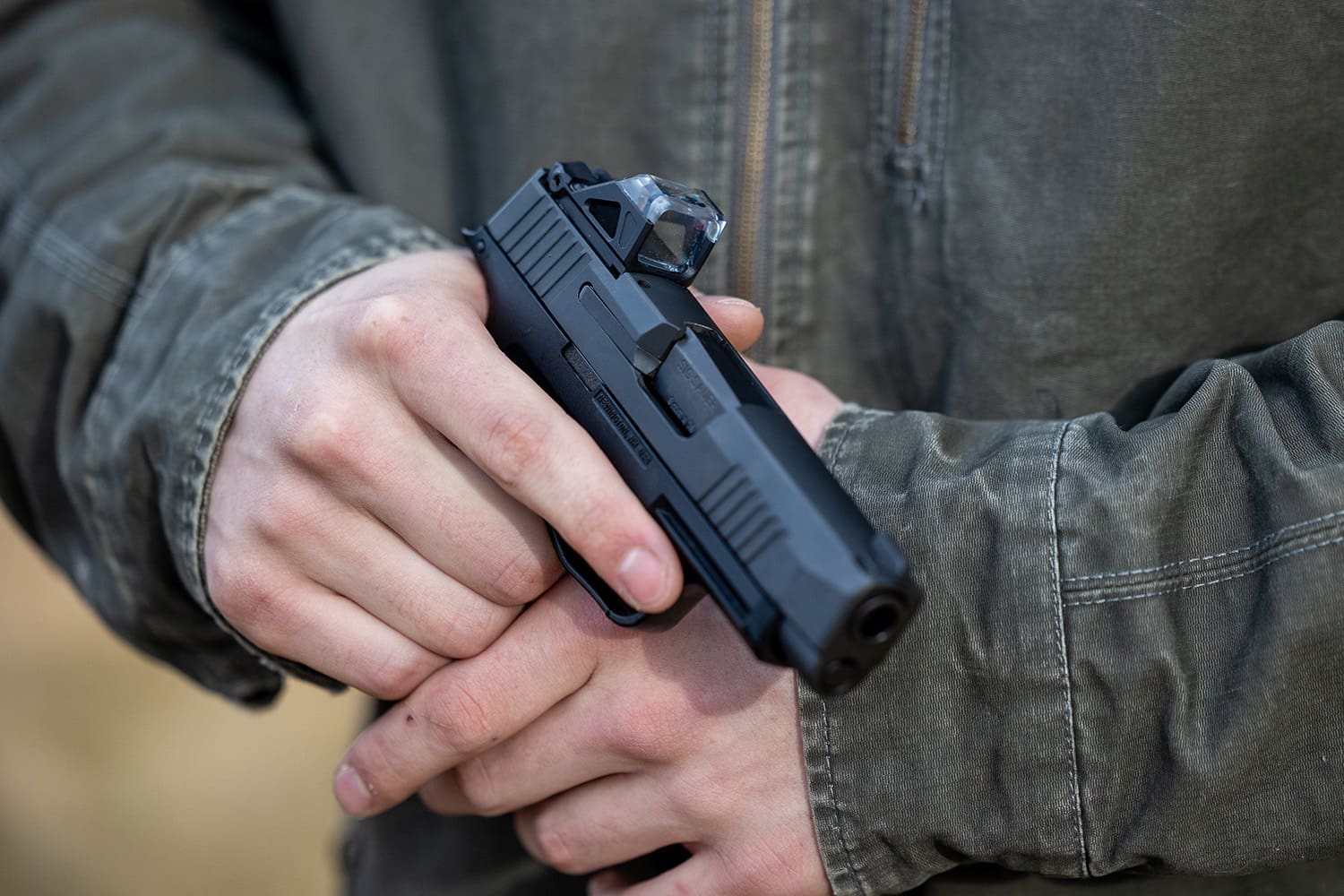
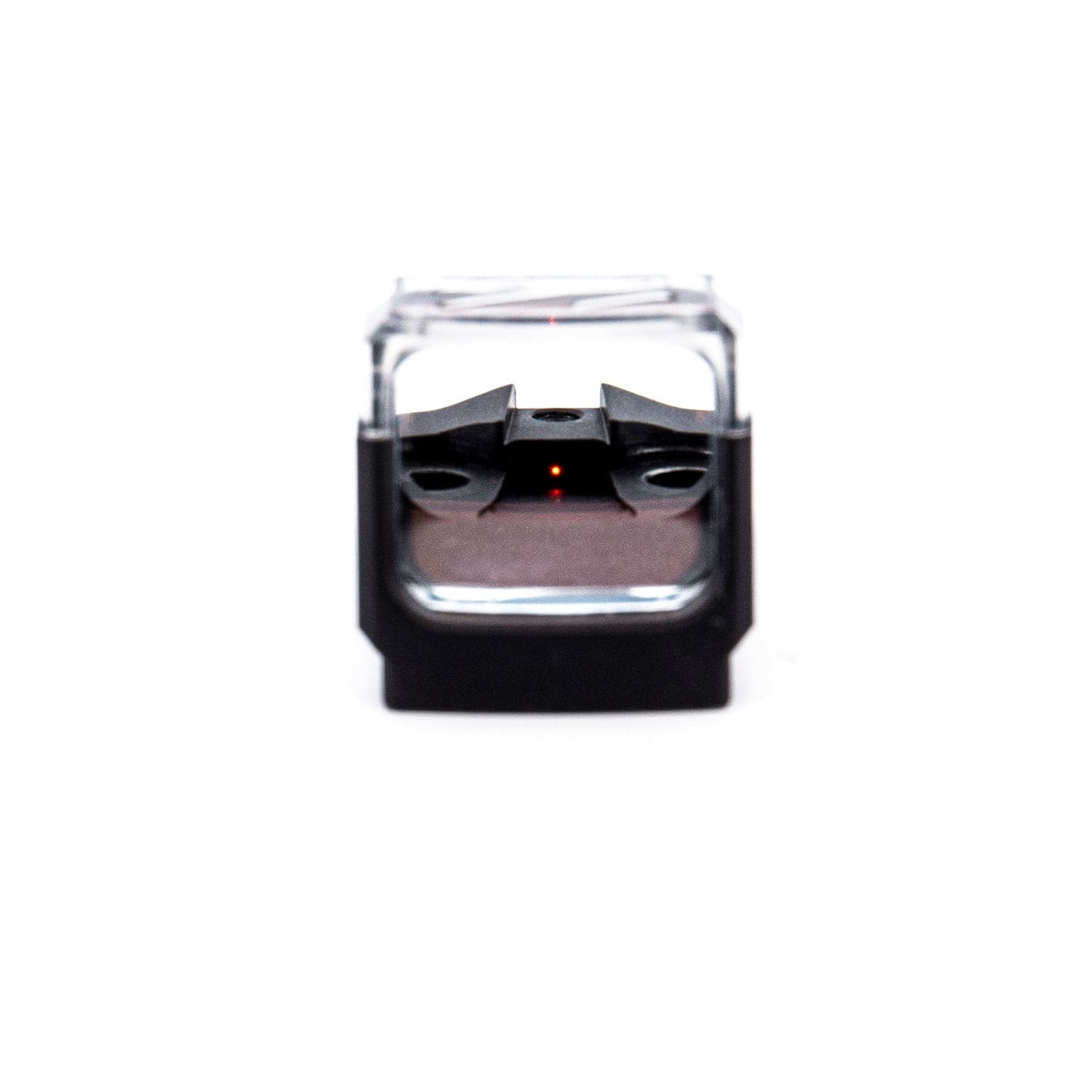
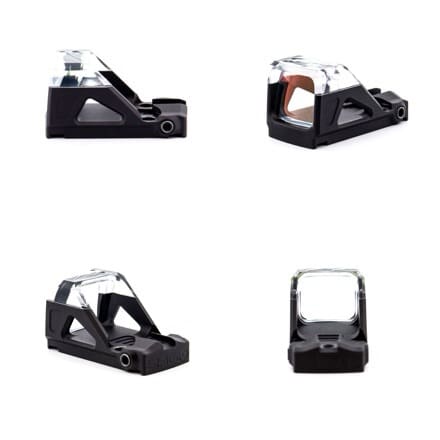
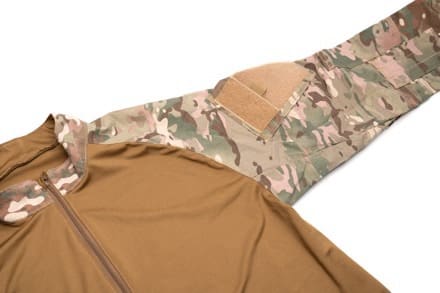
Our project MEGA is moving forwards. Where are we at now, and why is this project so important?
Read more in the article: www.varusteleka.com/en/articles/project-mega-gtfo-of-china-3/692
Our project MEGA is moving forwards. Where are we at now, and why is this project so important?
Read more in the article: www.varusteleka.com/en/articles/project-mega-gtfo-of-china-3/692
Redstone Arsenal, AL – The U.S. Army’s Future Tactical Uncrewed Aircraft Systems (FTUAS) Product Office has officially taken receipt of the Textron Systems’ MK 4.8 HQ Aerosonde system, marking a significant milestone in the program’s rapid prototyping effort. This achievement follows a comprehensive two-year development and testing process, which included extensive technical testing, ground and flight acceptance testing, and a joint effort between the vendor and the United States Government (USG).

The delivery of the system, formalized through the DD-250 process, transfers ownership to the USG. The FTUAS team will now proceed with New Equipment Training (NET) to qualify instructors and operators at the Redstone Test Center on the MK 4.8 HQ Aerosonde system. This training is expected to be completed by late January 2025.
Upon completion of NET, the FTUAS team will embark on a USG-led developmental testing cycle, which will culminate in the program’s capstone event. This testing effort will occur in parallel with the ongoing efforts to evaluate production proposals for award, anticipated in the fourth quarter of fiscal year 2025.

The FTUAS program will provide Brigade Combat Teams (BCTs) with an organic capability for reconnaissance and surveillance operations, enabling them to collect, develop, and report actionable intelligence. This will allow BCT commanders to maintain dominance during Multi-Domain Operations. The FTUAS system boasts transformational capabilities, including vertical take-off and landing, on-the-move command and control, and Soldier-led, field-level maintenance. Its Modular Open Systems Approach enables rapid capability insertions, ensuring the system keeps pace with evolving technology.
The Program Executive Office (PEO) for Aviation, located at Redstone Arsenal, AL, is responsible for modernizing the Army Aviation fleet of crewed and uncrewed aircraft. PEO Aviation’s Uncrewed Aircraft Systems Project Office is dedicated to rapidly fielding innovative UAS capabilities to Army formations, maintaining the Army’s asymmetric advantage over peer adversaries in large-scale combat operations.
Courtesy Story from Program Executive Office, Aviation
Photos by David Hylton
The Scrubland Special Reconnaissance Patrol Pack (SRP Pack) is now available.

This pack was designed by current serving Australian SF members and tested to its limits on multiple selection courses and in all conditions on multiple deployments.

It offers seven external pouches with extra room to customize your pack four columns of PALs webbing on each side. It also features bottom access to your sleeping gear which easily fits the issued sleeping bag and bivvi bag.

There is also an internal divider that can be unzipped to make a single internal compartment.

The pack’s frame straps work on both metal or plastic frames.
All accessories are sold separately so if you just need a new pack or you need a whole new set up then you can tailor your order to suit.
– Aprox 60-65L
– Made from 1000d Cordura
– YKK zippers
– Easily Replaceable buckles (if needed)
Prices in Aus $
– SR Patrol pack $680.00
– Frame Straps $139.95
– Frame pad metal/plastic $69.95
– Frame pouch $49.95
– Hydration pouch $69.95ea
– Pack utility pouch set $99.95 (set is 1x vertical and 1x inverted)
All Orders via DM at their IG account www.instagram.com/scrublandco/profilecard.
*Contents not included
Dynamic Principles’ SLPC 2.0 Is finally here!

According to the manufacturer, the SLPC was born out of the need for a lightweight, low profile carrier that retains as many features from their Dynamic Plate Carrier as possible, providing the user with concealability and utility in the smallest package possible.

Featuring removable QASM buckles for placard compatibility, laser cut sides for cable management, four (4) full rows of MOLLE to allow to (2) mounting ride heights for EUD adapters. On the rear bag, full MOLLE webbing for pouch attachment, three (3) rows of loop for ident patches and laser cut rear loop for cummerbund attachment.
The folks at Qore Performance have dubbed these plate bags “Alien FaceHuggers” which is less like a bag and more like a clamshell. It all wraps up on itself to accommodate a wide variety of plate sizes and cuts with perfect fitment.

These bags forego the loop loc shoulder strap system from their other carriers/chest rigs with a laser cut hook/loop shoulder strap to achieve the lowest profile possible for increased comfort when concealing the carrier under clothing.

Sold as a set of front and rear bags, the design is unique and cannot be dropped into their other systems. However, it will accept other cummerbunds as well as their QD cummerbund or SLPC 2.0 Elastic Cummerbund as well as your favorite placard.

As Dynamic Principles says, “Run it slick, or run it thicc. It will do both.”
SLPC 2.0 Plate Bags fit:
Small Sapi Plates of any thickness
Small Swimmer Plates of any thickness
Medium SAPI Plates of any thickness
Medium Swimmer Plates of any thickness
10×12 SAPI Plates of any thickness
10×12 Shooter Plates of any thickness
10×12 Swimmer Plates of any thickness
Large Swimmer Plates of any thickness
Offered in Black, Ranger Green and MultiCam.
Get yours at dynamicprinciples.us/store/p/slpc-20.
Last week, we showed you the Athletic Vest Carrier from RTS Tactical. This time, we’ll introduce you to their Uniform Vest Carrier.

Built for everyday duty, the Uniform Vest Carrier is compatible with both, soft and hard armor, and can be used in conjunction with one another. The Uniform Vest features a hard armor zipper for easy access, cable management loops for a streamlined setup, and a double-layered elastic cummerbund for a secure and comfortable fit. Designed for full 360-degree coverage, even under the zipper, this vest prioritizes both protection and practicality.
RTS Tactical shared this statement with us:
In today’s world, the brave men and women who serve and protect—our law enforcement officers, security professionals, and first responders—face an increasingly complex and dangerous landscape. They confront threats that are constantly evolving, demanding gear that can keep up with everyday challenges. Ill-fitting and uncomfortable body armor hinders movement, compromises safety, and simply isn’t an option when lives are on the line. That’s why RTS Tactical is driven to empower these everyday heroes with the highest-quality, tactical gear, including customizable soft armor body panels designed for the perfect fit. We believe in keeping manufacturing in the US and pushing the boundaries of innovation, we equip those who serve with the confidence and courage they need to face any obstacle. Because, when our heroes stand fearless, we all stand stronger.
Although the Uniform Vest was created for Law Enforcement Officers and other Security Professionals, RTS Tactical also makes armor solutions for First Responders, Military Personnel, and Civilians.
Visit their website: www.rtstactical.com

Contact the sales team: sales@rtstactical.com

Call RTS Tactical: 786-769-2759

What might sound like an insult to many is actually great news for those in the know.

Frogskin camouflage was developed by the US military during World War II and most famously used by the Marines during the island hopping campaign across the Pacific Theater.

Like with other historical patterns, Platatac has taken this classic and applied it to their most popular designs like the Peacekeeper Mk5 chest rig, SD Duffel, Kurtz Shirt, and Jaywick Shorts, with more coming in early 2025.
To learn more and order yours, visit: info.platatac.com/platatac-frog-skin
REDSTONE ARSENAL, Ala. – As the Army pushes forward with its modernization agenda, the Army Modernization and Equipping Conference provided the sustainment enterprise a critical opportunity for leaders to align efforts, prioritize resources and drive momentum behind the equipment initiatives that will shape the Army’s future.
The conference, held at Redstone Arsenal Dec. 9-12, 2024, serves as a semi-annual opportunity for equipping stakeholders to review, confirm and plan equipment displacement over the next three fiscal years.
“The solutions to the problems we are going to talk about this week will help us maintain combat power in an Army that’s tier modernized,” said Lt. Gen. Chris Mohan, deputy commanding general and acting commander of Army Materiel Command. “We can’t be afraid to try and do something different to help our units.”
The AMEC kicked off with opening remarks from leaders at AMC; U.S. Army Forces Command; the Assistant Secretary of the Army for Acquisition, Logistics, and Technology; and Training and Doctrine Command. Attendees were briefed on updates to a variety of initiatives impacting equipping, including Rapid Removal of Excess, an update on equipment cascade process, an overview on the Operational Readiness Program, and a preview of changes coming to demand planning prediction.

“The magnitude of change the world is facing is staggering,” said Lt. Gen. Stephen Smith, deputy commanding general of FORSCOM. During his opening remarks, he emphasized that his focus for the conference was to support 2-year-out supply and equipping predictability for company commanders who need to concentrate on building and maintaining their unit’s readiness.
One year since the kickoff of the R2E pilot program, leaders at the AMEC agreed that it has been a vital addition to the Army’s divestiture efforts. More than 435,000 pieces of equipment — ranging from tactical vehicles to computer monitors and printers — have been collected at the Army’s 14 Modernization Displacement and Repair Sites alone since October 2023.
Earlier this year, R2E became a global program available to Soldiers of all components at each Army installation.
“We want every Soldier to have the opportunity to participate in R2E, but more importantly, we want their units to take steps to prevent needing to use R2E again,” Mohan said.
With hundreds of thousands of pieces of equipment on their hands, AMC’s R2E team’s next step is to determine what needs to be repaired, disposed or demilitarized; if they can harvest parts from turned in equipment; the cost and timeline for repair; and their plan to prioritize these efforts.

AMC turned over the floor to Tank-automotive and Armaments Command for a brief on ORP, a new initiative aimed at ensuring units have the highest level of operational readiness as they leave training rotations to head into deployment. The process flow starts with using data and analytics to predict equipment that will fail while units are training; then AMC will send experts from the Organic Industrial Base, called fly-away teams, to both fix equipment and train Soldiers how to better maintain it.

“There’s a lot on the shoulders of our young maintenance Soldiers to keep their unit’s equipment ready,” Mohan said. “Our fly-away teams and the ORP algorithm are informing the future of maintenance and how we will fight and win wars.”

Leaders from FORSCOM also emphasized that commanders appreciate the extra hands for repair, but the training that the fly-away teams provide is invaluable. Although it’s a new initiative, data has shown that participating units have held steady operational readiness since ORP began.
AMC plans to use data collected from ORP to better inform Class IX equipment demand planning, a concept briefed to AMEC attendees by AMC’s Supply Chain Management Division.
In the past, the Army has forecasted equipment demand using only historical data. Between the COVID-19 pandemic, a surge in operations and presidential drawdowns for support to Ukraine and an increase in operation tempo, supply chain vulnerabilities were exposed.
The Army has implemented a variety of solutions aimed at reducing lead time of equipment and better predicting demand. Recently, a demand planning workshop was held with action officers from across the Army sustainment enterprise to develop an all-encompassing model that predicts demand and incorporates equipment cascading as determined by the AMEC.
“We’re taking a wholesale approach to this change in supply availability,” said Mohan.
AMC plans to use artificial intelligence and machine learning, as well as historical data and input from unit commanders and supply Soldiers to predict demand of Class IX parts moving forward. Another workshop will be held in the new year aimed at presenting current findings and refining the existing concept.
Day two of the AMEC saw attendees dive deep into the nuances of equipment cascade of tactical vehicles while days three and four had attendees organized into breakout groups on equipping and Transform in Contact activities.
This iteration of the AMEC had the largest number of participants from the most commands and equipping stakeholders across the Army to date – an indicator to senior leaders of the importance of maintaining momentum toward solutions to rising equipping problems across the total force.
“What I see today is that we are making incredible progress on solving these problems across the Army,” said Lt. Gen. Robert Collins, principal military deputy to ASA ALT and director of the Army Acquisition Corps. “It’s more important than ever that we stay synced.”
By Lindsay Grant