GORE-TEX Professional

HCMH II Harness Bison Belt

November 20th, 2024

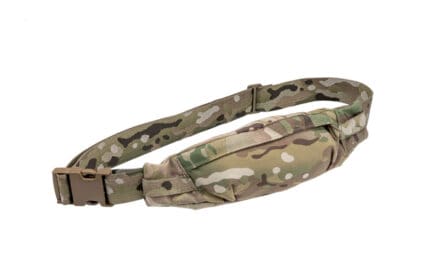
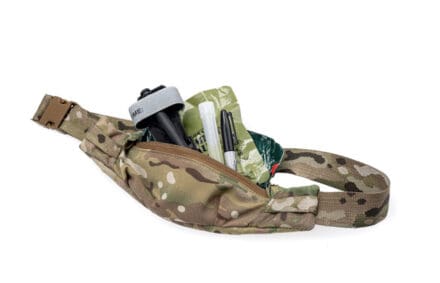
A collaboration between Helix Operations, Ferro Concepts and DOM Systems, the HCMH II Harness Bison Belt gives operators the ability to carry belt kit while using the HCMH II harness system.

The HCMH II Harness Bison Belt is based on the well-regarded Ferro Concepts Bison Belt which was designed to be very light and slim. According to Helix, the DOM Padded Belt is the best solution they have found to add comfort when wearing thin clothing or carrying a heavy load and with minimal additional weight.

Available from Helix Operations.

What Is Space Force Fit?

November 20th, 2024

EL SEGUNDO, Calif. (AFNS) —

Military service members are expected to be fit – it’s all a part of making sure a fighting force is ready for duty and the U.S. Space Force is no exception.

Guardians may spend more time tracking satellites and space debris and staying alert for hostile missiles than engaging in hand-to-hand combat, but that doesn’t mean they can slack off when it comes to physical training. As the newest military service, the U.S. Space Force is taking a more holistic health approach to fitness standards.

“Regular exercise isn’t just about building physical strength; it’s about optimizing our potential,” said Chief Master Sgt. Jacqueline Sauvé, Space Systems Command senior enlisted leader. “Research consistently affirms that exercise isn’t merely a routine; it’s a vital component fostering resilience, mental clarity and holistic health. From safeguarding against cardiovascular risks to bolstering mental well-being, fitness is a mission imperative.”

When the Space Force was first established in December of 2019 without its own formal health and fitness program, it relied mostly on the Air Force’s standard Physical Fitness Assessment test, which includes a plank, crunches, hand-release and conventional push-ups and a 1.5 mile run, or shuttle run to gauge the fitness levels of Guardians.

Early in 2020, the Space Force began the development of a service-specific human performance capability for its Guardians — the Holistic Health Approach, which consists of continuous fitness, performance health optimization and capacity-building. The HHA is intended to increase short and long-term health outcomes for the force by meeting Guardians “where they are” and showing them what “right” looks like.

“It’s a more comprehensive and malleable approach to overall health and wellness, to include physical fitness and public health and prevention,” said Christine Heit, U.S. Space Force Headquarters holistic health approach lead. “For decades, the U.S. Department of Defense has pushed out one-size-fits-all programs that do not take into account differences in individuals. Continuous Fitness is the U.S. Space Force’s developing approach to quantify and qualify important fitness metrics that are unequivocal markers of health, in an enduring, persistent and year-round manner. These metrics are cardiorespiratory fitness, purposeful physical activity and body composition.”

“Wearable fitness technology, such as fitness trackers, helps to make this possible and is now at a point where it can be employed for just such a purpose,” said Carl Sheppard, U.S. Space Force Headquarters holistic health and senior human performance advisor.

“By being able to appraise fitness in an ongoing continual manner, the goal is to leverage physical fitness requirements to actually improve, optimize and maintain health,” Sheppard said. “As opposed to wielding it as a hammer or being constrained by arbitrary test standards.”

“Performance Health Optimization includes the U.S. Space Force Body Composition Program and lifestyle medicine principles,” Heit said. “That allows us to not only have metrics rooted in science for health but also to teach our Guardians ways to make lifestyle changes to increase overall health. Our priority is for Guardians to be healthy and we make concerted efforts to build skills with Guardians to help them be successful.

“To assess body composition, the space Force uses waist-to-height ratio (WHtR). More well-known and often used measures of body composition include body mass index and body fat percentage models such as tape testing and skin-fold testing,” Sheppard said. “While useful in certain public health and athletic settings, these approaches fail to identify the most important aspect of body composition as it relates to health and injury: where is the fat?”

“What we know from scientific literature is that excess abdominal fat, especially when it is stored deeper in the abdomen next to our organs, is a much more significant indicator for the risk of acquiring obesity-related preventable disease and injury, than body fat percentage alone,” Sheppard said. “This accumulation of abdominal fat is referred to as ‘central adiposity’ and WHtR is a very sensitive test to identify it.”

The public health message is simple: “Keep your waist circumference to less than half your height,” said John Hofman, certified strength and conditioning specialist at Los Angeles Air Force Base, the headquarters of Space Systems Command.

“Air Force physical assessments are once or twice annually depending on a person’s score,” Heit said. “People were observed cramming for an assessment, working only in the weeks leading up to the test. The Space Force wanted to develop a science-based mechanism for fitness and health outcomes that promoted consistent physical activity rather than episodic preparation.”

“As a result, the Space Force partnered with the Air Force Research Laboratory to conduct a two-year study using portable wearable fitness devices, which started in June of 2023,” Heit said. “Guardians can voluntarily opt-in to the study and be exempt from the Air Force physical fitness assessment as long as study criteria are met: 600 exercise minutes a month, monthly cardiorespiratory fitness readings and engagement with the AFRL study team. There are also plans to connect increased physical fitness to improved cognitive performance and mission readiness.”

In addition, Space Force is also implementing Guardian Resilience Teams at every U.S. Space Force base, with a virtual team to help geographically separated units and remote Guardians. These teams will include a holistic health integrator, certified strength and conditioning specialist, licensed mental health provider and physical therapist.

“The purpose of the Guardian Resilience Teams is to make sure U.S. Space Force service members have the kind of support they need not just to be physically fit,” Hofman said. “But also, mentally and emotionally ready to perform at the highest level.”

“I like to tell people, ‘We’re just trying to manage stress — enormous stress,” Hofman said. “How do you do that? Well, there’s no real magic pill — it’s eating right, it’s sleep, it’s exercise.”

It’s safe to say Hofman understands the toll stress can take. He spent more than 15 years as an expert tactical strength and conditioning specialist for both law enforcement and fire/rescue. He has won numerous awards, including an Emmy Award for Branded Content in 2021 for Did You Know: ‘Silent No More’ an officer suicide-prevention video, as a member of the California Peace Officer Standards and Training Team. He also played college football and competed for 12 years on the U.S. canoe and kayak team, where he competed in two Olympic trials.

“Space Force wants to make sure our Guardians are getting positive reinforcement and positive feedback to make healthy choices for themselves,” Hofman said. “’Fit for duty’ is always the most common question — what does that mean? Does it mean that because you can run a mile and a half in under 12 minutes and do lots of pushups you’re fit for duty? I don’t think so.”

To Hofman, ‘fit for duty’ isn’t just one physical component, but a comprehensive set that takes the whole person into account. Biofeedback from portable wearable fitness devices and bloodwork can help tailor workouts to exactly what an individual needs — but Guardians may need some help in interpreting the data, Hofman explained.

“For example, if someone is always stressed out, long, slow running is a good way to reduce the cortisol (stress hormone),” Hofman said. “Maybe someone likes to do a lot of boot camps and high-intensity training. This will spike the cortisol, so we can educate them on proper recovery tactics to help bring it down so they can sleep better.”

People are more likely to stick to a workout routine if they enjoy it, so Hofman said he often begins consultations by asking the Guardians what they like to do and going from there.

“Do you eat well? I don’t mean eat perfectly,” Hofman added. “We don’t need to add more stress to eating. Eating shouldn’t be that complicated. We don’t look at diets — we look at habits.”

“The Guardian Resilience Team also has a licensed mental health professional to help Guardians with their mental health, and a physical therapist to help them deal with pain – someone with chronic pain is not going to function at their peak mental and physical ability,” Hofman said. “Chronic sleep problems also take a physical toll on the body and mind and can interfere with a Guardian’s efforts to eat well and exercise.”

“By using a more well-rounded, holistic approach, you’re creating a feedback loop,” Hofman said. “You provide the resources to educate and help to explain what this information is, to keep that loop going. You’re providing resources so they can take accountability for their well-being and you’re there to support them versus, here’s a check box, you’re done.”

“We want Guardians to be aware of what they’re doing — and make those corrections and make healthy choices for themselves,” Hofman said. “We peel back the onion, and now we have a well-rounded individual fit for duty.”

“Our Guardians need to be mentally and physically ready to meet the unique demands of Space,” said Tim Stearns, DrPH, MPH, Los Angeles Air Force Base Guardian resiliency team lead. “When our Guardians are empowered, educated, and given the skills to be successful, they become the most lethal version of themselves and that’s exactly what the HHA does!”

“Guardians are encouraged to participate in fitness activities they enjoy with proper body mechanics, technique, and form resulting in stronger Guardians,” Stearns said. “A physically stronger Guardian is a more resilient Guardian, and a resilient Guardian is a Guardian ready to dominate in the Space Domain and in life. Coach Hofman improves the quality of lives of Guardians by creating a positive relationship with physical fitness that will endure throughout their military career and beyond.”

Story by Lisa Sodders, Space Systems Command Public Affairs

Photos by Van D. Ha

NFM Launches NEW Corporate Web Site!

November 19th, 2024

From a small Norwegian vision in 1996 to a global leader in advanced personal protection, NFM has always supported the needs of modern soldiers. Today, we’re excited to introduce our brand-new corporate website -a dynamic group hub that brings our journey, values, and innovation closer to you. To give you an overview of our entire organisation.

Our new corporate site offers a fresh, streamlined experience with dedicated sections for each of our divisions and global offices, cutting-edge technology insights, and product innovations. Whether you’re exploring our R&D capabilities or our sustainability initiatives, we’ve crafted the site to be your ultimate guide to NFM Group’s world of excellence in protection gear.

Explore Our New Site for:

NFM Group’s capabilities

Subsidiary companies

Management team

Projects and initiatives

News and updates from the whole group

nfmgroup.no

ISTEC Delivers First Batch of Weapon Integration Mounts for the New USAF Grey Wolf Helicopter

November 19th, 2024

ISTEC Services Limited, the British company with 35 years of operationally proven experience in the design, manufacture and supply of complex weapon integration solutions for military platforms, is delivering the first production shipsets (a shipset is a left and right gun mount pair) for the new United States Air Force (USAF) Grey Wolf Helicopter. The USAF Grey Wolf helicopter is a Boeing led programme for the replacement of the famous, but aging, UH-1N Huey helicopter and is built on a Leonardo MH-139A platform. ISTEC has recently delivered the first shipsets to Leonardo and the USAF took delivery of the first low-rate production Grey Wolf helicopter in August 2024.

The Grey Wolf offers significant improvements in terms of speed, range, and payload capacity compared to the Huey. It also features modern avionics, defensive systems, and a more robust airframe, making it suitable for a wide range of missions. The ISTEC weapons mount contract was originally awarded in 2018 and following prototype design and customer testing, to ensure the maximum arcs, ease of use and air safety compliance, final design approval was granted in 2020. Full production started in 2023, and following the delivery of the first shipsets, the remainder of the contract will be aligned with the wider programme delivery schedule.

ISTEC has extensive experience in providing weapons integration solutions for the Land, Sea and Air domains. However, there were many additional elements to the Grey Wolf project such as an external mounting frame that required significant additional design input from the ISTEC team. All the Grey Wolf components are manufactured with a ‘cradle to grave’ traceability process to ensure all raw materials sourced are to aerospace release, with full audit back to the mill, regular composition testing to ensure material alloying elements are above specification and thereby ensuring that the gun mounts meet the rigorous manufacturing standards required to be classed as airworthy and type certified.

Mick Coulson, Manager Director at ISTEC said, “This has been a significant project for ISTEC, supporting a major helicopter replacement programme for the USAF, that we have been privileged to have been involved with from the very start. ISTEC is well known for our universal gun mount systems, especially on vehicles and ships, but I am extremely proud of the design and engineering expertise that has gone into producing this aviation specific system for the Grey Wolf, clearly demonstrating the universal benefits of using our weapon integration systems across all domains.”

Qore Performance Unveils ICEPLATE Backpack Gen 3: Cooling, Heating, and Hydration For All

November 19th, 2024

Knoxville, TN—Qore Performance, Inc. is proud to announce the launch of the ICEPLATE® Backpack Gen 3, an ultra-minimalist environmental inoculation tool that delivers cooling, heating, and hydration to individuals on and off duty in any climate. Whether on the job or out adventuring, ICEPLATE® Backpack Gen 3 helps end-users maintain peak performance and comfort in every environmental condition.

While the versatile, all-in-one system works year-round, ICEPLATE® Backpack Gen 3 is highly differential for anyone who faces temperature extremes—industrial workers, military, law enforcement, first responders, Search And Rescue, outdoor enthusiasts, and more. It provides unmatched thermoregulation and hydration, keeping users cool in the heat or warm in the cold, all while staying hydrated.

“We designed ICEPLATE® Backpack Gen 3 to meet the needs of armed professionals, industrial workers, and civilian adventurers alike—those who push through tough conditions to realize their full potential every day,” said Doug Burr, Head of Strategic Partnerships at Qore Performance. “Whether in a scorching drive-thru, freezing warehouse, on a new desert trail, on patrol, or out landscaping, this backpack ensures you’re hydrated, temperature-optimized, and ready to perform at your best.”

Key Features of the ICEPLATE® Backpack Gen 3:

Cooling, Heating, and Hydration Anywhere: Carrying a single ICEPLATE® Curve, ICEPLATE® Backpack Gen 3 delivers powerful cooling or heating with the drinking water we are already carrying in any environment, making it ideal for a wide range of work and recreational scenarios.

Engineered for Austere Environments: Designed to withstand harsh conditions like conflict zones, drive-thrus, warehouses, construction sites, oil fields, and more, ICEPLATE® Backpack Gen 3 helps workers stay safe, productive, and efficient by weaponizing temperature to create a competitive advantage where none previously existed, but in an ultra-thin, flat form factor that makes for easy maneuvering in confined spaces.

Seamless Chest Rig Integration: ICEPLATE® Backpack Gen 3 effortlessly connects with chest rigs for tactical users, offering cooling, heating, and hydration without compromising mobility. Its easy integration replaces traditional harnesses for those carrying field essentials.

Ergonomic, All-Day Comfort: With a body-conforming design and minimalist profile, ICEPLATE® Backpack Gen 3 offers superior weight distribution, reducing fatigue and enhancing mobility for prolonged use in harsh environments.

Durable and Lightweight Construction: Made from ultralight laminate, ICEPLATE® Backpack Gen 3 is built for extreme durability and long-lasting performance in rugged conditions, ensuring reliable temperature regulation wherever the job takes you.

The ICEPLATE® Backpack Gen 3 Advantage:

ICEPLATE® Backpack Gen 3 is Qore Performance’s most accessible thermoregulation and performance-enhancement solution, providing essential cooling, heating, and hydration for those who need it most. Whether facing brutal heat or a frigid cold, this backpack is designed to keep users safe, comfortable, and performing at their peak—no matter the environment.

As part of Qore Performance’s innovative IceAge Ecosystem, ICEPLATE® Backpack Gen 3 continues the company’s mission of enhancing human performance in extreme environments. It’s more than just a backpack—it’s a tool that helps you conquer the most challenging conditions.

For more information, visit the ICEPLATE® Backpack Gen 3 Product Page.

Team O’Neil’s Tactical Driving Tuesday – Avoiding Rollovers

November 19th, 2024

The whole point of mobility is to get you where you are going, safely. That means staying on the road. This week’s lesson from Instructor Wyatt discusses avoiding rollovers.


If you’re in need of in-person training like this, sign up for the Team O’Neill Tactical Driving Course at their facility in the White Mountains of New Hampshire. This five-day course includes driving under NODS and is available to military and other government agencies as well as civilians.

The Urban Ghost Series by Vertx—a New Era of Discreet, Low-Profile EDC

November 19th, 2024

Introducing the Urban Ghost Series: The Pack & Sling by Vertx

In today’s unpredictable world, staying prepared without standing out has never been more important. With the Urban Ghost, what you carry stays your secret. It’s time to evolve from the “Grey Man” to something even more elusive my—a Ghost. The Urban Ghost Pack and Urban Ghost Sling empower you to confidently navigate your day, blending seamlessly into your surroundings while keeping all your essentials secure and ready.

Unseen. Unassuming. Unrivaled.

The Urban Ghost Series redefines what it means to carry discreetly. Designed for those who value both function and subtlety, these bags ensure your gear remains hidden but accessible, helping you stay ready for the expected and the unexpected.

Why the Urban Ghost?

Unassuming Design: For those who value discretion and functionality—these bags offer maximum concealment in a minimal size so you can seamlessly blend into urban commutes, travel, and crowds.

Unseen Functionality: Featuring quick-release buckles and a thoughtfully engineered internal organization, the Urban Ghost packs provide instant access to your gear when it matters most.

Unrivaled Quality: Built with a rugged ripstop exterior that resists wear and tear, these lightweight yet durable bags are quality-tested to handle whatever challenges you face.

Two versatile styles, both available in three stealthy colors: It’s Black, Shock Cord, and Mountain:

Urban Ghost Sling (10L): Compact and agile, perfect for streamlined EDC needs.

Urban Ghost Pack (20L): Spacious yet discreet, with room for additional essentials and tech.

Learn more at vertx.com and be the first to carry the Urban Ghost.

Soldiers Provide Input on Microsensor Tech Developed in Partnership with ROK

November 19th, 2024

ABERDEEN PROVING GROUND, Md. — This year, the U.S. Army Combat Capabilities Development Command Chemical Biological Center hosted a Soldier touchpoint event at Aberdeen Proving Ground in Edgewood, Maryland to test out new unmanned drones equipped with a set of microsensors developed in conjunction with the Republic of Korea’s Agency for Defense Development, or ROK ADD. Soldier touchpoints are one of the first major milestones in testing a potential technology to be fielded.

The microsensor effort began as a partnership between the Center and ROK ADD in 2018 to successfully meet the stringent form-factor requirements set forth by the customer. Kevin Wan, a DEVCOM CBC chemical engineer and project manager for the microchemical sensor effort, called in ROK ADD for assistance with the 3-gram sensor size requirement while his team focused on suitable use cases. Both centers pushed to complete their collaborative effort in time for this upcoming user assessment.

“The design space was quite limiting to begin with, so we worked with our Korean partners to get this working on a three-gram payload,” said Wan. “The hornet drones are great at intelligence, surveillance and reconnaissance missions, but adding chemical-sensing capabilities would further its use cases — this is what we primarily wanted to focus on.”

The effort came to a head on July 31, 2024, when the center hosted Soldiers from the U.S. Army Reserve’s 455 Chemical Brigade, headquartered in Sloan, Nevada, as well as their partners from ROK ADD, which serves as their DEVCOM equivalent, in an exercise where all participants could give concerted feedback on the drones and sensors.

Initial funding for the project came from DEVCOM Soldier Center in Natick, Massachusetts, which had the need for a sensor weighing no more than three grams. This form factor would specifically fit on the Black Hornet III, a currently fielded minuscule drone platform weighing in at 38 grams. The project received funding from the Assistant Secretary of Defense for Industrial Base Policy International Cooperation Office’s Coalition Warfare Program and other organizations.

Wan and his team shifted their focus on the sensor’s early warning detection capabilities against a chemical threat — whether it may be a nerve or blister agent. They then focused their efforts on redundancy and reliability to increase detection. “Having two independent sensors provide the same response would increase the confidence of detection,” said Wan. “That redundancy and reliability coupled with a low limit of detection for early warning is critical to us and our Soldiers.”

To test their prototypes, DEVCOM CBC invited CBRN specialists to learn how to fly these drones and run a simulated scenario involving piloting the Black Hornets into various tents in an enclosed space with one of the tents housing a simulated agent. Cpl. Brittney Batimana, one of the Soldiers involved, said that the new drones would increase Soldiers’ safety and mission success.

“It’s pretty simple — once you get comfortable with the camera’s point of view, it’s easy to identify your targets,” said Batimana. “Our job is to identify and decontaminate hazards: this is just another way for us to always stay prepared if a situation were to ever turn chemical.”

The collaborative effort between the two centers was evident throughout the Soldier touchpoint and mirrored the success of this joint development process. “We love to work together with our partners,” said Wan. “Highly competent and highly intelligent. What we both want to see going forward are more use cases and increasing the library of threats that can be detected.” This sentiment was further echoed by Dr. Myung Kyu Park, Wan’s ROK ADD counterpart and micro chemical sensor project manager: “We do very well together — [they] worked very hard to see that these sensors work.”

Increasing the library of substances to detect would include various explosives, narcotics or industrial chemicals, furthering the drone’s use cases significantly beyond the intelligence, surveillance and reconnaissance realm. With the success of the Soldier touchpoint exercise, Wan and his team know that the form factor lends itself to an even wider variety of scenarios.

By Parker Martin