TYR Tactical

USSOCOM’s Curious Unmanned Aerial System Procurement for SOCCENT

March 17th, 2025

In a rare move, USSOCOM in support of Special Operations Command Central, a Theater Special Operations Command, has released an intent to a award a single source contract for a combat capability to be used by forces which rotate into their theater.

The actual commercial system is never named, but specifically, the requirement is for First Person View drones. Those of you who have been following the Soldier Systems Digest newsletter know how supportive I am of fielding these systems en masse, so any requirement gets me excited.
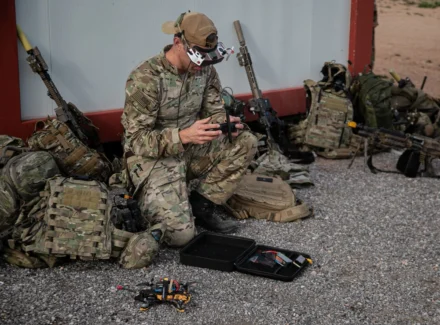
FPV drones are not new to Special Forces. They’ve begun to integrate the capability into their formations and conduct a course at the JFK Special Warfare Center and School called Robotics and Unmanned Systems Integration Course (RUSIC) to train operators to use these drones. Additionally, many receive training from Oak Grove Technologies in the specialty. In the photo above by SGT David Cordova, a 10th Group Green Beret prepares to launch an FPV drone to be used for a raid operation during Exercise Trojan Footprint last year in conjunction with Greek special operations forces near Nea Peramos, Greece. Soon, there will be a new Warrant Officer MOS in USASOC which specializes in robotics, drones, and other new warfighting technologies.

A few things stick out about this procurement.

First, it’s not normal for a TSOC to procure systems which will be used by gained forces. It happens, but it’s generally rare cases such as communications or command and control. TSOCs aren’t manned and equipped to operate and maintain ISR and lethality systems. Those are provided by gained forces from the SOF service components as well as conventional units with unique capabilities.

In fact, the J&A used to substantiate the procurement points out that the command has limited UAS capabilities and is reliant upon external agencies to provide specialized assets.

Below are several points of interest in the J&A:

Currently, the absence of dedicated Unmanned Aerial Systems (UAS) for cave clearing operations forces reliance on Military Working Dogs (MWD) or partner forces, significantly increasing risk to both personnel and mission success. This approach presents several challenges:

Hazardous Environments: Caves present confined, complex spaces with limited visibility and unpredictable terrain, increasing the danger to personnel and potentially hindering MWD effectiveness.

Specialized Threat Detection: Identifying hidden threats like explosives, booby traps, and concealed enemy combatants requires specialized equipment and expertise, limitations that UAS technology can address.

Communication and Coordination: Maintaining clear communication and coordination within a cave environment is crucial but challenging, potentially leading to delays and miscommunication.

To mitigate these risks and enhance operational effectiveness, we propose the acquisition and deployment of a dedicated UAS solution.

Enhanced Situational Awareness: FPV UAS provide real-time visual intelligence from within the cave, enabling operators to assess the environment, identify threats, and make informed decisions.

Reduced Risk to Personnel: Deploying UAS instead of personnel for initial reconnaissance and threat assessment significantly reduces the exposure (redacted) and MWD teams to potential hazards.

Improved Communication and Coordination: UAS equipped with communication relays enhance coordination between teams inside and outside the cave, facilitating smoother operations and faster response times.

This equipment enables ODAs to gain a visual on the risks present on an obscured objective, prior to engagement. Without this capability, ODAs accept undue to risk to the force by entering an objective without detect and defeat capabilities.

This heavy-lift capability, combined with its compact drone body, enables the system to operate effectively in confined spaces, such as those encountered in cave clearing operations. The system’s First-Person View (FPV) guidance system provides real-time video feed, allowing for precise navigation and control, which is essential for safe and effective operation in complex environments.

The other issue is the use of a Sole Source Contract. The drafter of the requirement certifies that the desired system is the only single source which is reasonably available and further asserts that the “JUAS platform presents a distinct combination of capabilities that make it the only viable solution for our specific needs.”

There are loads of ways to acquire the exact capability they desire without going for a J&A which will assuredly receive lots of scrutiny from industry.

Lastly, by publishing an open notice, it alerts everyone (bad guys included) that they currently have a capability gap and that they are closing it.

I’m glad they are getting the gear. Hopefully, they’ll come up with a means to train forces in its use and sustain the capability with manning and training as well as material life-cycle management. In the end, it would be great to see this capability grow across the SOF enterprise as well as into General Purpose Forces, but that means a serious look at force structure as well as the full DOTMLP-F spectrum.

US Army Announces Mountaineering Badge

March 17th, 2025

In ALARACT 06/2025 released on 13 March 2025, the US Army announces the Mountaineering Badge to recognize proficiency in mountaineering operations. However, as proficient as you might be in military mountaineering, its award is limited to graduates of the Army Mountaineering School which is run by the Vermont National Guard.

Currently, course graduates are awarded the famed Ram’s Head badge, which is only authorized for wear by National Guard Soldiers. When Sergeant Major of the Army Weimer announced that the Army would be introducing the badge to the total force during AUSA last fall, he stated that it would be a completely new badge and that the service would not adopt the Ram’s Head Device.

According to the message, the design of the badge has still not been determined but that the Army Institute of Heraldry will release the design within 60 days and it will be available for sale at Military Clothing Sales stores within 120 days.

Overwatch and Milrem Robotics Announce Strategic Collaboration to Advance Unmanned Defence Capabilities

March 17th, 2025

Overwatch, a British aerospace and defence business specialising in the design and manufacture of unmanned aerial vehicles (UAVs), and Milrem Robotics, the world’s leading robotics and autonomous systems developer, have signed a collaboration agreement to drive product development, production, and sales of cutting-edge unmanned defence solutions worldwide.

Under this collaboration, Overwatch and Milrem Robotics will undertake joint research and development assessments to explore possibilities for integrating capabilities, payloads, and effects between Overwatch’s UAVs and Milrem Robotics’ unmanned ground vehicles (UGVs), with the aim of developing highly interoperable unmanned systems.

Both parties will engage in collaborative test and evaluation efforts to advance operational capabilities and deliver enhanced performance under realistic mission conditions.

“Overwatch is thrilled to embark on this strategic collaboration with Milrem Robotics,” said Drew Michael, CEO of Overwatch. “By leveraging our respective strengths in UAV and UGV technologies, we aim to deliver unparalleled unmanned defence capabilities to meet the evolving needs of our customers worldwide.”

“We look forward to working closely with Overwatch to expand our product portfolios and address emerging market demands,” said Kuldar Väärsi, CEO of Milrem Robotics. “By combining our expertise and jointly exploring R&D and testing, we expect to develop integrated solutions that will significantly enhance operational effectiveness and mission success for our clients,” he added.

The companies will also coordinate marketing activities to promote each other’s products beyond their domestic markets, opening up new business opportunities across global defence sectors.

SkyFi Partners with GoTAK to Set New Standard with TAK Plugin Delivering Real-Time Satellite Imagery to End-User Devices

March 16th, 2025

Austin, TX & Virginia Beach, VA – SkyFi, an Earth intelligence platform, today announced a strategic partnership with GoTAK, the end-to-end provider of plug?and?play situational awareness solutions. This collaboration will result in the development of a TAK (Team Awareness Kit) plugin that integrates high?resolution satellite imagery directly into any ATAK EUD (End-User-Device) on-demand.

Under GoTAK’s new “FORGE (Fused Operations with Rapid Generative-AI & Engineering)” program, the company has been selected to develop a fully featured, high-performance plugin that will seamlessly deliver satellite imagery from SkyFi’s extensive data library and on-demand tasking services. The integration is designed to empower tactical operators, law enforcement, military personnel, and first responders with immediate access to critical geospatial intelligence—directly on their EUDs—thereby enhancing situational awareness and decision-making in dynamic field environments.

“Through our FORGE program, GoTAK has consistently delivered bespoke, mission-critical solutions at breakneck speeds,” said Matthew Del Salto, CEO of GoTAK. “Partnering with SkyFi to integrate real-time satellite imagery into the TAK ecosystem is a natural extension of our commitment to innovation. This plugin will provide military, government, public safety, law enforcement and civilians with unprecedented access to vital geospatial data right when they need it most.”

“Speed and precision win in the field. This partnership with GoTAK ensures tactical operators can access and leverage high-resolution satellite imagery exactly when the stakes are highest, eliminating delays between insight and action. With this integration, SkyFi is arming decision-makers with the ultimate competitive advantage—rapid geospatial intel at their fingertips,” said Luke Fischer, Cofounder and CEO of SkyFi.

Airbus U.S Space & Defense and Aerostar Expand Their Existing Collaboration with Contributions from Persistent Systems

March 16th, 2025

Today, Airbus U.S. Space & Defense and Aerostar announced an expansion of their Cooperative Research and Development Agreement (CRADA) to include additional capabilities from Persistent Systems, LLC (“Persistent”).

This expansion culminated in the launch of a second joint Internal Research and Development (IRAD) stratospheric test flight that will enable continued testing of hardened communications systems. These can be used to support ISR sensor collection and network extension missions from the stratosphere, which both companies are working to operationalize. Aerostar offers a series of stratospheric High Altitude Balloon Systems and Airbus is leading the field of stratospheric fixed wing systems with its Zephyr HAPS (High Altitude Pseudo Satellite / High Altitude Platform Station).

Launched Feb. 6, 2025, from Sioux Falls, S.D., IRAD Flight HBAL717 is currently operating over the Pacific Ocean. This flight includes an Aerostar Thunderhead Stratospheric Balloon system, satellite communication terminals hardened by Airbus U.S. engineers, and Persistent’s networking system and over-the-horizon Cloud Relay™ technology.

“Each of our companies brings something special to the table and we’re united in the quest to operationalize the stratosphere in a complimentary fashion,” said Fabian Kluessendorf, Airbus U.S. UAS Engineering Director. “Ultimately, the goal of this flight is to test the integration, encryption, backhaul, and routing of ISR traffic to government cloud systems from anywhere on the globe. On top of this it will pave the way for trusted payload-automation using onboard AI/ML capabilities. Our technology will be tested and qualified for operations through a long-duration stratospheric flight.”

Prior to the flight, a cross functional team of engineers from all three companies worked together to rapidly prototype variants of their hardware for future stratospheric balloon or fixed-wing flights.

“Stratospheric platforms are the most cost-effective, long-duration, persistent flight vehicles in service today. Aerostar continues to invest R&D dollars into integrating warfighter-relevant end-to-end solutions for resilient communications and ISR collection in critical, contested theaters,” said Russ Van Der Werff, Aerostar’s VP of Stratospheric Solutions.

“Persistent Systems is proud to partner with Airbus and Aerostar to integrate, test, and deploy advanced network solutions in support of the Warfighter. By leveraging both our Cloud Relay technology and Wave Relay® mobile ad hoc network (MANET), our government end-users will gain enhanced ISR and network-extension capabilities,” said Tom Jennings, Director of Business Development at Persistent Systems. “The swift and effective collaboration between Airbus, Aerostar, and Persistent Systems underscores the commitment and agility of all stakeholders, and we are look forward to continued partnership and innovation.”

Airbus, with the Zephyr platform designed and manufactured by its subsidiary AALTO, is a leader in stratospheric fixed wing aircraft; Aerostar has long tenure of balloon stratospheric operations for U.S. government customers; and Persistent is a leading vendor of scalable MANET devices and networking solutions for interoperability.

Shell Shock Technologies Revolutionizes Military Logistics with Lighter Ammunition, Delivering Unprecedented Cost Savings and Efficiency

March 16th, 2025

Innovative Ammunition Technology Enhances Transport Capacity, Cuts Fuel Costs, and Reduces Maintenance Burdens for U.S. Military.

Eubank, KY (March 2025) – Shell Shock Technologies, LLC. (SST), a leading innovator in the ammunition industry, recently unveiled groundbreaking findings demonstrating the significant operational efficiencies of its lightweight ammunition. Following the December 2024 release of “Weight Reduction of Lighter Weight Ammunition & Its Impact on Troops and Aircraft/Vehicles,” SST’s latest analysis highlights how a 30 percent reduction in ammunition weight translates to streamlined logistics, lower transportation costs, and substantial military savings.

Increased Transport Capacity and Cost Savings

SST’s lightweight ammunition enables more efficient transportation logistics. Traditional .50 caliber ammunition requires approximately ten pallets per transport vehicle, costing nearly $4,000 per trip. SST’s lighter ammunition increases payload capacity to fourteen pallets per vehicle, effectively eliminating the need for every fourth vehicle. This reduction in convoy size leads to fewer shipments, lower fuel consumption, and decreased risks associated with transport missions.

Moreover, for surface transport, every third 20-foot International Organization for Standardization (ISO) shipping container—costing around $22,000 per container—would be eliminated, further reducing military logistics expenses.

Aircraft Fuel Savings and Extended Range

The weight reduction extends beyond ground logistics. A 30 percent decrease in ammunition weight translates to a 9–15 percent reduction in fuel costs per aircraft mission. Given the U.S. military conducts approximately 200,000 aircraft missions per year, this equates to over $1.16 billion in annual savings.

Additionally, aircraft carrying lighter ammunition can remain on station longer, reduce refueling needs, and experience extended range capabilities. Lower weight also reduces wear and tear on airframes and engines, leading to decreased maintenance costs over time. Since fuel accounts for 40–50 percent of aircraft operational costs, reducing payload weight directly enhances efficiency and financial savings.

Maintenance and Equipment Longevity

Reducing ammunition weight has profound implications for maintenance and equipment longevity. The lower payload weight decreases stress on military vehicles, aircraft, and material handling equipment. SST’s collapsible lightweight ammo can (CLAC) further enhances logistics by reducing packaging weight and allowing for a fully loaded can (100-round belt) to decrease from 35 lbs. to approximately 26 lbs. This leads to longer-lived assets, lower operational strain, and fewer maintenance requirements, ultimately increasing overall military readiness.

Environmental and Reusability Benefits

In addition to cost savings and operational efficiencies, SST’s innovations contribute to environmental sustainability. The prototype CLAC is collapsible, reusable, and fully recyclable, reducing waste and procurement costs. These enhancements provide logistical advantages while aligning with the military’s ongoing sustainability efforts.

“Shell Shock Technologies’ innovative ammunition solutions not only provide a tactical advantage but also revolutionize military logistics,” said Peter Foss, Managing Partner and CEO of Shell Shock Technologies. “By reducing ammunition weight, we are enabling our armed forces to optimize transport efficiency, cut fuel consumption, and extend the lifespan of critical military assets. This is a game-changer for both cost savings and operational readiness.”

Shell Shock Technologies remains at the forefront of ammunition innovation, providing solutions that improve battlefield effectiveness while significantly lowering the financial and logistical burden on the military.

Keep up with Shell Tech’s advanced ammunition on the website.

QD Hose Adapter for Nalgene Bottles

March 15th, 2025

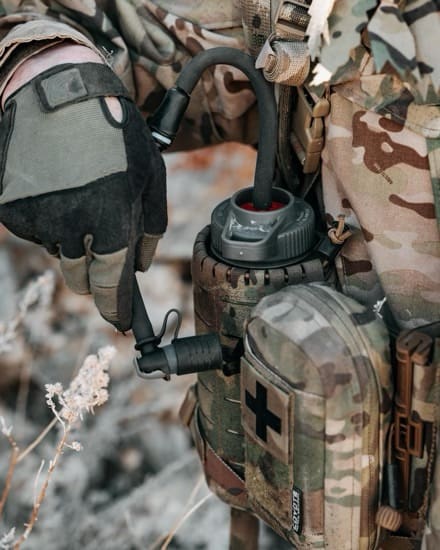
Coyote Tactical Solutions offers a QD Hose Adapter for 32oz / 48oz wide mouth Nalgene bottles.

It’s easy to use. Just replace the cap of your current bottle with this one, cut provided drink straw to desired length (32oz or 48oz bottle), and then cut the hose to your desired length.

Yeah, you can get something kinda like it somewhere else, but I’m sharing this one. No connection at all to these guys but I like what I see.

www.coyotetacticalsolutions.com/products/quick-detach-hose-kit-wide-mouth-nalgene

HUXWRX Safety Company Contributes $40,000 to Support the American Suppressor Association

March 15th, 2025

Millcreek, UT — The American Suppressor Association (ASA) is proud to announce that HUXWRX Safety Company has contributed $40,000 to support its fight to protect and expand suppressor rights across the country. As a valued sponsor, Huxwrx is playing a key role in ensuring ASA can continue its vital advocacy efforts at both the state and federal levels.

“At HUXWRX Safety Company, our commitment to innovation is matched by our dedication to responsible firearm ownership,” said Darrell Marrow, Senior VP of Sales at HUXWRX Safety Company “Supporting ASA’s mission to educate the public and advance suppressor rights reflects our core values, and we’re proud to contribute to such a significant cause.”

HUXWRX Safety Company is renowned for its cutting-edge technology and high-quality products that serve the needs of the Second Amendment community. The company provides superior suppressors and firearm accessories that not only enhance the shooting experience but also underscore its commitment to the rights and safety of firearm enthusiasts nationwide. As a human exposure workshop, Huxwrx is dedicated to building products optimized for customer safety and health without compromising efficiency or performance. The team is deeply passionate about its mission, delivering exceptional products and top-notch customer support while upholding American manufacturing values by producing all its suppressors in Millcreek, Utah.

“The increase in support from HUXWRX Safety Company is an absolute game-changer for ASA,” said Knox Williams, Executive Director of ASA. “Their contribution will directly bolster our legislative and educational initiatives, helping us break down misconceptions about suppressors and advocate for common sense pro-suppressor reform. At the end of the day, suppressors are hearing safety devices that every law-abiding American should have the ability to own.”

ABOUT THE AMERICAN SUPPRESSOR ASSOCIATION

Founded in 2011, the American Suppressor Association has been instrumental in promoting the rights of suppressor owners nationwide, advocating for legal reform, and educating the public about the benefits of suppressors. ASA’s successful campaigns have resulted in the legalization of suppressors in three states, the use of suppressors while hunting in 19 states, the defeat of numerous attempts to impose state level bans, and the dramatic improvements to NFA transfer time.