SSFN’s LandCamo ADB fabric is now available for purchase on the LandCamo website. ADB SERE on 100% COT and ABD MAMMUT on 35% PES / 65% COT are the two patterns currently being offered. To order, contact info@landcamo.si.


SSFN’s LandCamo ADB fabric is now available for purchase on the LandCamo website. ADB SERE on 100% COT and ABD MAMMUT on 35% PES / 65% COT are the two patterns currently being offered. To order, contact info@landcamo.si.
3/14/14 – Today, Mission Spec is announcing the addition of the M81 Woodland pattern to their gear lineup. Both the Mission Spec Essentials Only Carrier (EOC) and the Mission Spec Shoulder Savers will be immediately available in M81.
Mission Spec plans to produce its gear in several new patterns including (but not limited to) Kryptek Highlander, Kryptek Typhon, and Ranger Green.
Today, Mission Spec is also releasing the brand new MKII version of their Shoulder Savers. The new MKII version is a more simple design than the original but offers the same shoulder fatigue relief for use with plate carrier systems.
Available for purchase now from Mission Spec:

EOC – http://missionspec.com/products/essentials?only?carrier?eoc/

Shoulder Savers – http://missionspec.com/products/shoulder?savers/
Roy Lin of Weapon Outfitters attended the recent Long Range Operators Challenge that was held near Colville, Washington, March 7-9, as a non-participant. This AAR consists of his observations at the event, including the weapons he saw were used, the challenges the participants faced, the participants themselves, and his overall experiences.

A few months ago, I heard about the Long Range Operators Challenge from Tarrol Peterson. Tarrol is a retired Army sniper, who’s had a long and interesting career from going to Somalia with 10th Mountain to being the OIC at the US Army Sniper School. Given his past experience organizing the annual US Army International Sniper Competition as well as his experience working with industry, this competition seemed intriguing.

The competition was designed to challenge shooters equally: the rules required two man teams to utilize whatever equipment they had on hand to engage targets of varying unknown distances in unknown terrain. Seems a simple enough challenge on paper, but field conditions in the north east corner of Washington definitely complicated things. Due to the unpredictability of Washington in Spring, there was a massive amount of snow dumped onto the match location the week before. Additionally, over the course of the match, fast moving low clouds, rain, and quickly shifting wind also proved to be challenges for the participants.


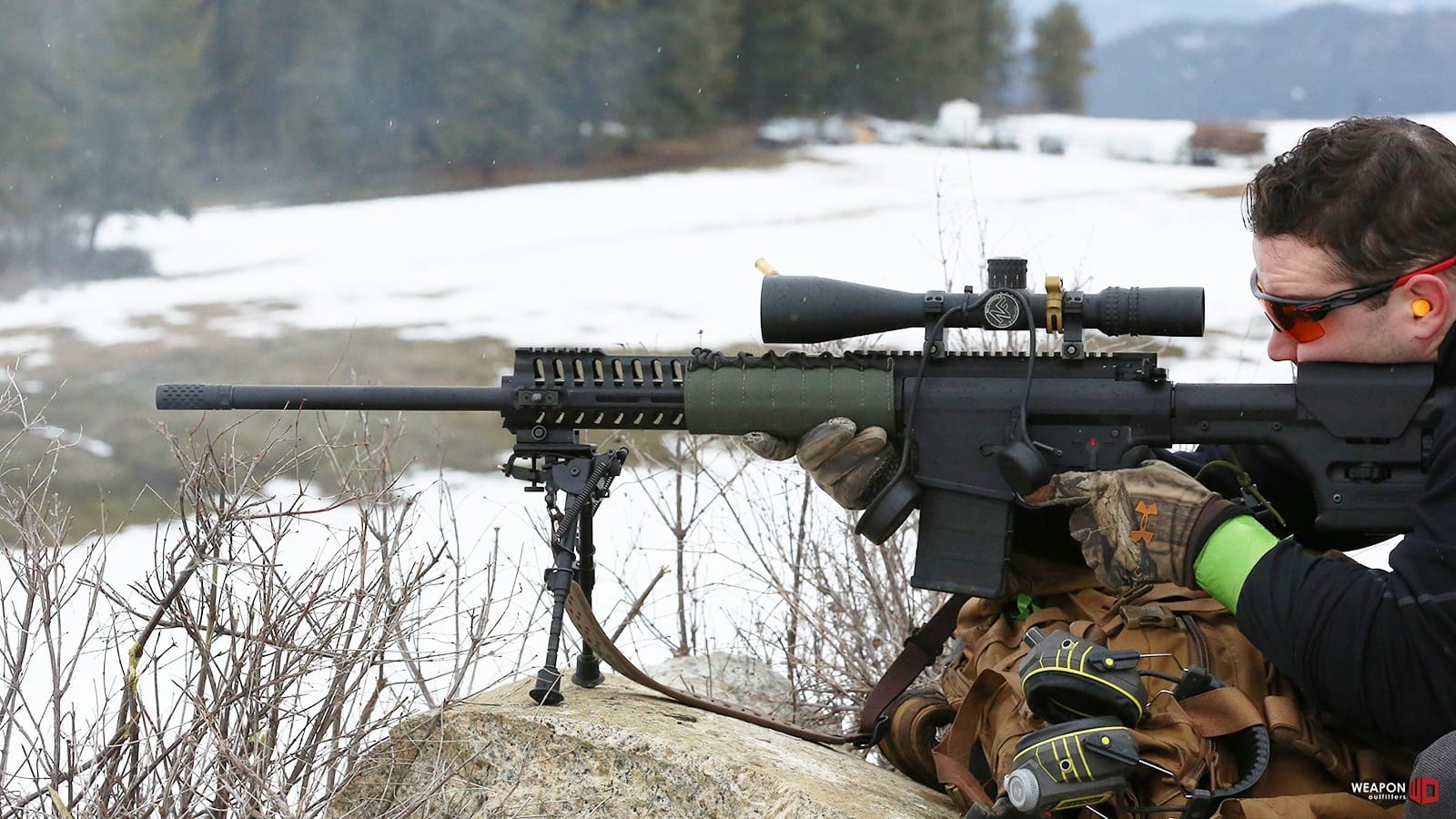
Participants in the competition consisted of US Army members from around the country, international military observers, and civilian teams. Equipment was diverse and a pleasure to see tested. Some teams ran issued equipment such as an M24 (“Where did you manage to get that!?” a RSO and young retired sniper remarked), and a refurbished Mk110 SASS. Non-issued equipment quickly got exotic and expensive. Among the weapons in use I observed: a Nemo Arms semi automatic 300 Win Mag rifle, a Desert Tactical Arms bull pup sniper rifle, a Primary Weapon Systems Mk2 (piston AR-10 variant), and a GA Precision GAP-10. Remington 700s of all flavors from the vanilla to the extensively customized were also in use.


Of note was the civilian teams seemed to have a lot more high speed rifles and gear when compared to the military teams. It made sense given their lack of restriction to military ammunition and equipment supply and logistics. In particular, it became clear that competitors who were able to use more specialized long range rounds had a very large advantage at longer ranges. Civilian long range enthusiasts are free to experiment with ammunition, rifles, gunpowder, primers, and reloading techniques to extract out accuracy that would be hard to issue en masse to military forces.


Teams were required to carry all their equipment between stages, and distance between stages could be deceptively long with elevation changes, snow, wind, and light navigation required. I’d estimate distance between stages to be 400 yards on average: not enough to make this a wholly physical event, but not so easy as so one could lug around needless equipment. Snow shoes were not absolutely required, but definitely helped on a number of stages. Some competitors did well simply with hiking boots, Gaiters and jeans… I went for the whole 9 yards myself with the Salomon Boots, Patagonia Goretex pants, and Arc’Teryx Alpha LT on top of synthetic base layers.

Targets consisted of AR-500 steel targets in a variety of sizes from small head sized boxes to more traditional USPSA “popper” sized targets at longer ranges. A single laterally moving target on a rail system was also featured, used to maximum effect to challenge shooters. On the first day, it was placed at 485 yards away, moving at roughly 3-4 mph. The lateral movement was an insurmountable challenge to some, and an easily conquered one for those with the equipment and experience to hit moving targets. Each stage was manned by experienced long range enthusiasts of all types, who’ve gone to countless long range matches and served as stage directors as well as target spotters. The personnel intensive nature of this competition was necessary, given the difficulty of spotting and scoring long range shooting matches.


One stage, sponsored by Glock, required shooters to engage pistol targets while moving with a slung rifle, before engaging with rifle targets. Participants were allowed the use of the new Glock 41 long slide .45 ACP pistol. Match volunteers built a fire near this stage, and it became an unofficial break/rest area for support staff who got to handle Silencero suppressors, as well as an M24 outfitted with a Gemtech suppressor BE Meyers was kind enough to bring out.

The first Long Range Operator’s Challenge was a great event that brought military and civilian long range shooters together, and allowed us to compare and note differences and advantages brought on by different techniques and equipment. I observed that civilian outdoor equipment was largely preferred even by the military teams. As a whole, trained military teams seemed to have an advantage with techniques, and had superior spotter support and fieldcraft in general. Civilian teams had largely superior rifles and ammunition, with all other factors being about equal.
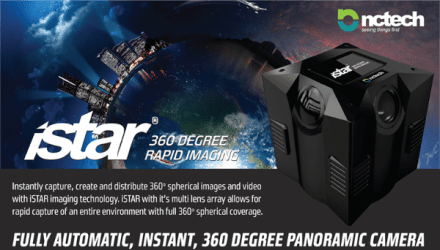
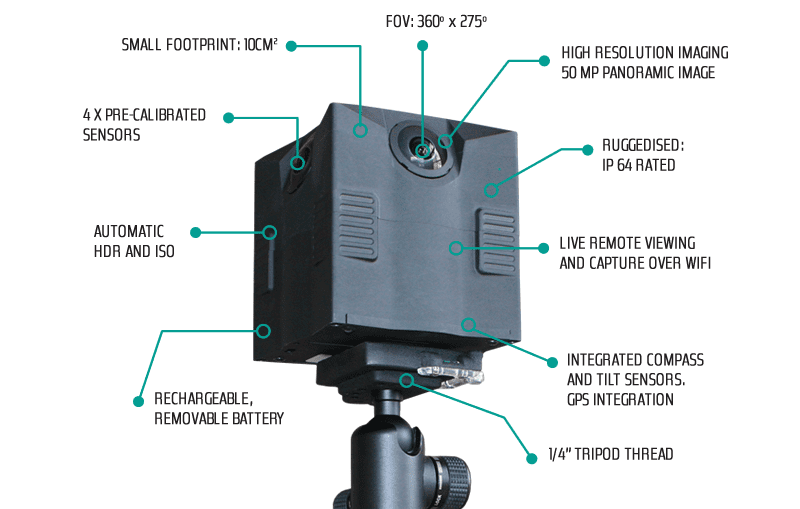
The iStar 360 Rapid Imaging Camera is a man portable device capable of capturing 360 degree spherical images and video. The body of the iStar is made from hard anodized aluminum with an IP64 protection rating. The iStar features integrated compass and tilt sensors, with potential for GPS integration. Four pre-calibrated 10 megapixel sensors allow for an effective 50 megapixel output, and the device requires only 4-6 seconds to capture full 360 degree image, with automatic HDR and ISO. The iStar utilizes a rechargeable lithium ion battery with approx. 6-8 hours of operational life.
The iStar has the potential for military use in rapid reconnaissance, tactical response planning, pre-visuialization, and threat assessment, and has already seen use with specialist units in the British military.
Thanks to FireBase-Alpha for the tip.

Platatac is offering their Soldier integrated Combat Cobra belt in PenCott patterns for a limited time – less than 15 belts of each color and size are available for purchase. Manufactured from MILSPEC high breaking strain para tape and tube tape, and featuring a single row of PALS webbing and an aluminum Cobra Buckle, the SICC is great for running a pistol holster and mag pouches, multiple utility pouches for general use, or just holding up a pair of pants. It’s also compatible with a padded first line belt such as Platatac’s Young Gun Belt or 3S Belt.
Made in Australia. Available in PenCott BadLands and GreenZone.


www.platatac.com/platatac-soldier-integrated-combat-cobra-sicc-belt-pencott-patterns-limited-edition
Based on what’s going on in the Crimea, LAV thought SSD readers might be interested in this video his crew shot for TAC-TV. It features an interesting set of shooting confidence drills that are reportedly practiced by the Russian FSB which is the current name of what was once the infamous KGB..
DO NOT TRY THIS AT HOME. The drills depicted here are particularly dangerous and shared for educational purposes only.

In honor of St. Patrick’s Day, Blue Force Gear is offering the ‘Special Green Sling’, built on the VCAS – Vickers Combat Applications Sling. As with the VCAS, the ‘Special Green Sling’ features 1.25″ front webbing with the standard Acetal Quick Adjuster, 1.5″ back webbing, and a quick release buckle sewn to a Long Loop Adapter for emergency release.
The ‘Special Green Sling’ is being offered at a price that is roughly 30% off a standard VCAS and for a limited time only.


www.blueforcegear.com/special-green-sling