Michael Pena from DRIFIRE takes time to talk with ADS Inc. TV about the new Flight Deck Jersey and their all new Combat Ensemble!!
See more from DRIFIRE at: adsinc.com/drifire


Michael Pena from DRIFIRE takes time to talk with ADS Inc. TV about the new Flight Deck Jersey and their all new Combat Ensemble!!
See more from DRIFIRE at: adsinc.com/drifire
Think of the new ASAP (left) from Mystery Ranch as a one day assault pack. Here you can see how it compares to its big brother, the 3-day assault. It’s a narrow design that isn’t any wider than your back.
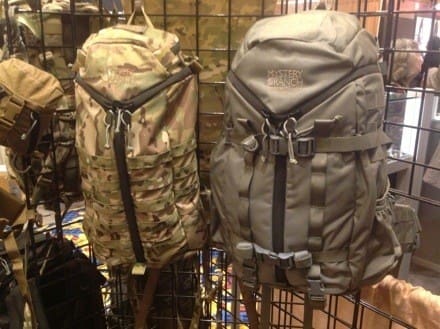
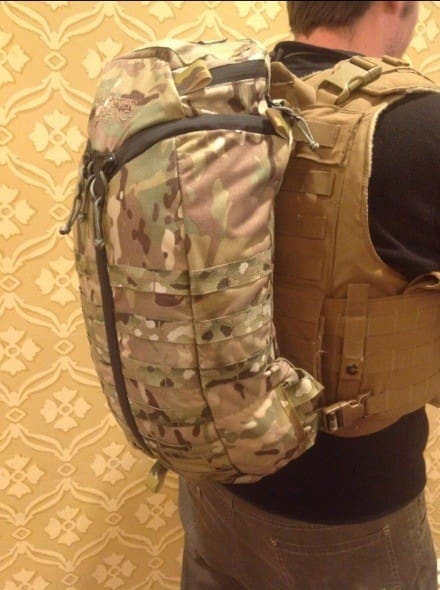
What’s more, in addition to the standard frame, you can attach it directly to the rear of your armor carrier with quick attach buckles offering 1100 cu in of carrying capacity to your fighting load.
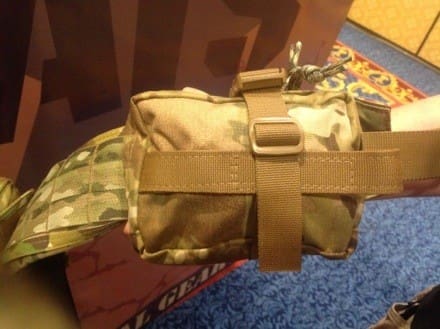
ATS Tactical has introduced the SOF Bleeder Pouch, Tearaway. They developed this pouch as part of a kit for a military customer and its essentially a tearaway medical pouch that is horizontally mounted on the war belt. It’s intended specifically to carry bleeder control items.
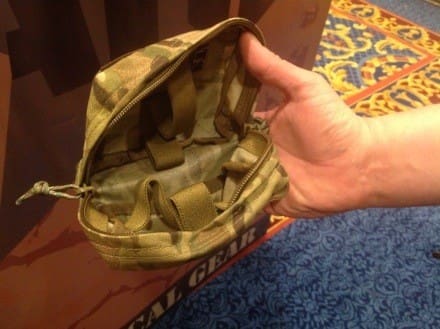
One you open it up it incorporates elastic loops to organize your kit.
This is the Sentry helmet that debuted last year along with the new Moto Mandible and Moto Visor. These are add-ons to the helmet for use in turrets or static positions.
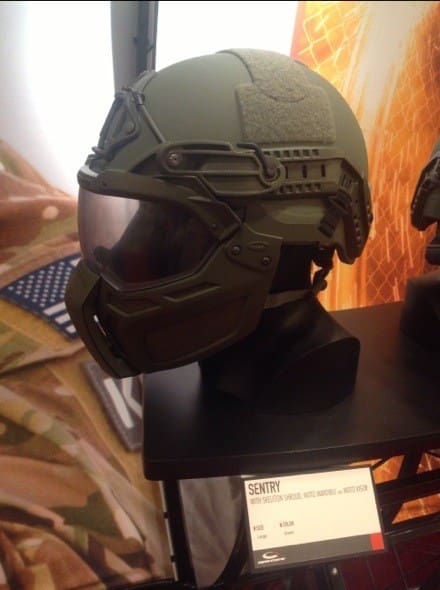
The Moto Visor opens and closes with indexing increments to allow for multiple vented positions and its designed to be used in conjunction with eye pro.
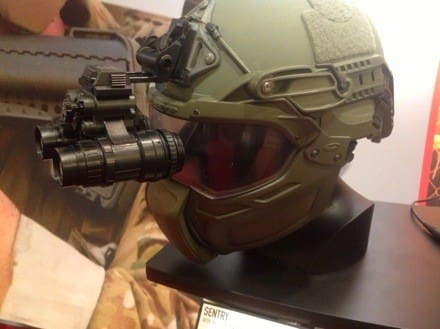
As you can see, it also works with NODs. Granted, there is a slight degradation due to the stand off of the goggles from the eye but it still works.
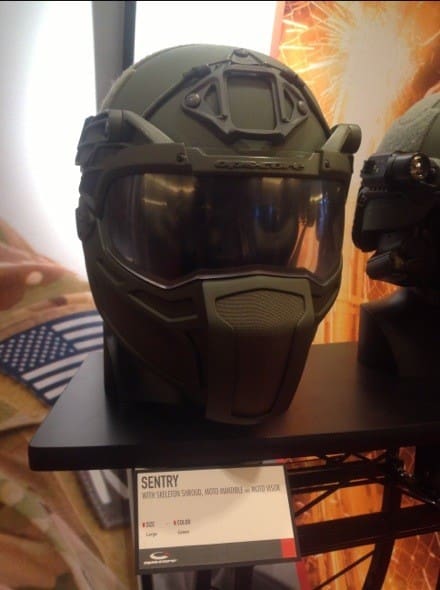
The Moto Mandible incorporates front vents that exhausts moisture from breathing to prevent the visor from fogging up. This is critical because you can actually wear the visor down to provide full protection. What would be the point of having a visor if you had to keep it up to vent?
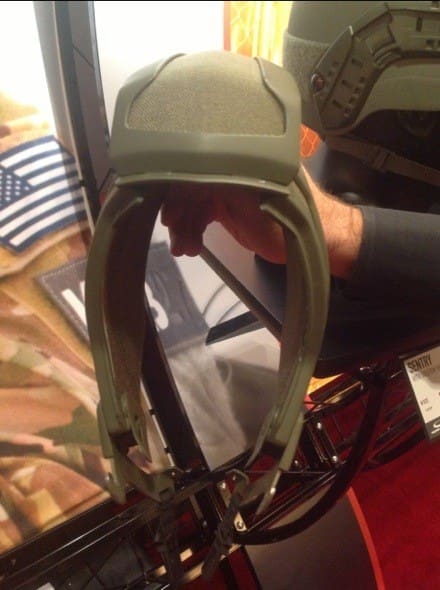
Here it’s removed from the helmet and you can see the rear of the ballistic panels. It easily mounts and cantilevers against the edge of t.he shell. It’s held in place via two buckles that fit into the oxygen mask strap receptacles on the rail.
RACS development is complete. Look for an official release in July with orders starting in September.
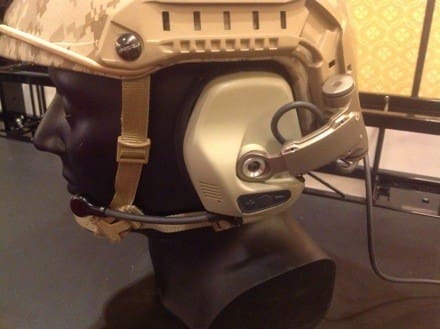
This gimbal mounted hearing protection incorporates directional hearing augmentation and can be fitted directly over your ears.
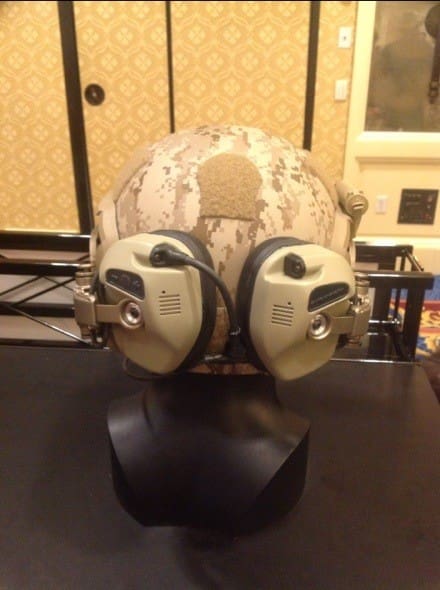
Additionally, it can moved into a portage configuration.
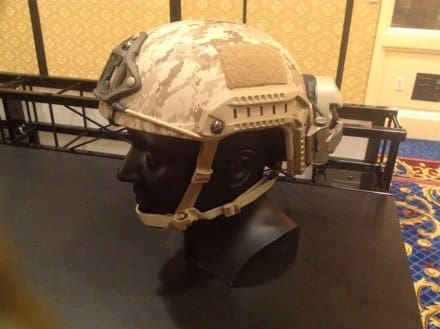
Finally, different organizations have different ballistic requirements so now they’re offering multiple performance levels for each of the shell designs.
Jack Leuba from Knights Armament talks about the 300 Black Out SR30, the M110 K1 and the Master Key!!
See more from Knights Armament at: adsinc.com/knights-armament
Walter Patenaude from FLIR points out all the cool features of the Recon B9FO portable package and the M18 mini binocular!!
See more from FLIR at: adsinc.com/flir
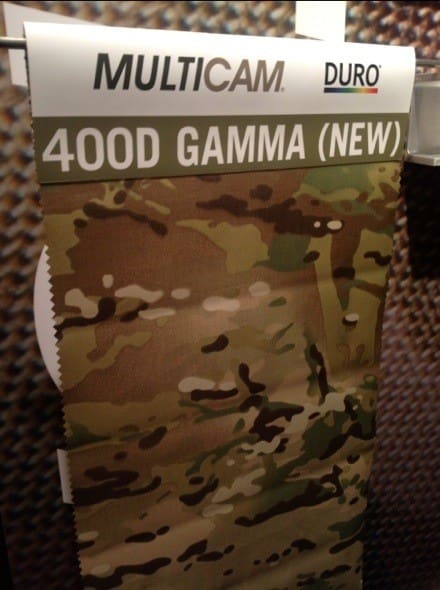
Duro has finally introduced a MultiCam pack cloth called Gamma. This 400D fabric is printed in the MultiCam pattern and available now. It’s a lightweight fabric with a slick hand. Some will say that it isn’t very abrasion resistant and compared to 1000D Cordura it isn’t. But remember, we won a couple of wars using pack cloth. It can be a great tradeoff for low weight, you just have to consider what you’re using it for.
ITWNexus APA let us see behind the curtain to take a look at some upcoming products. Some are still so new they don’t even have names. As these are still developmental pieces they may be made from unusual colors. Final models will feature the standard color palette.
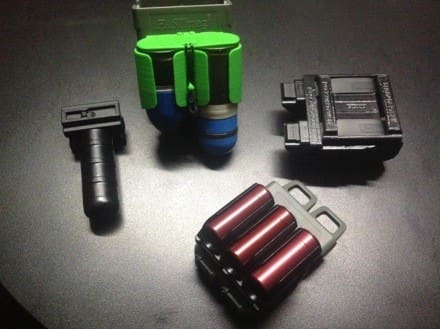
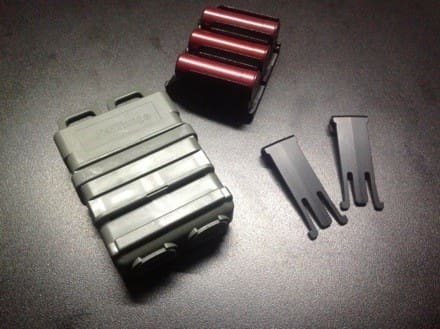
First up is a shotgun shell caddy that adapts to he front of the popular FastMag.
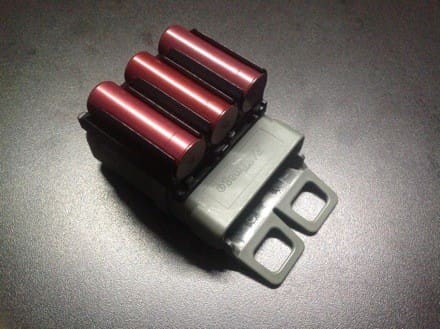
This attachment also allows the shotgun shell carrier to be attached directly to PALS webbing.
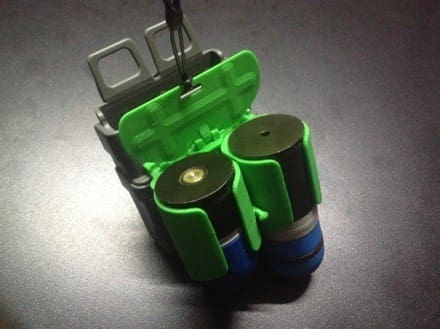
Next up is a 40mm carrier that accommodates two rounds. It is also compatible with both the FastMag as well as PALS-type webbing systems.
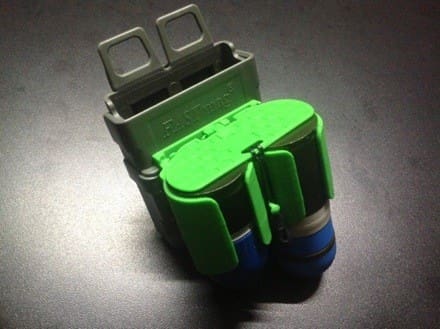
As you can see it incorporates a lid of sorts that helps keep the rounds in place.
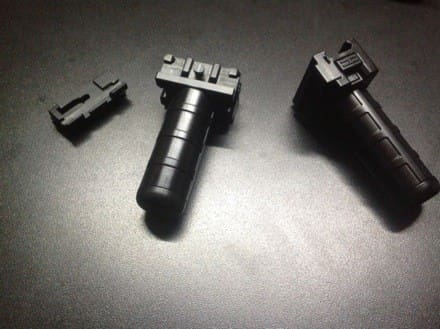
This is something completely new for the division formerly known as ITW Military Products. They have developed a Mil Std 1913 foregrip. In the event you want to slide the grip down the rail and lock it into place, the detent buttons are fore and aft and it features two blocks to ensure it stays fast in the Picatinny rail’s grooves. Additionally, one side plate can be removed in case there are item already affixed to the rail and it can slid into place. To install you remove the side plate, select a position on the rail and rock it into place. Then you replace the side plate.
Although only featured in the top photograph APA has also developed an adapter for the FastMag that will allow the user to wear it sideways on the belt.