GORE-TEX Professional

Rheinmetall to Supply Ukraine with Over 30 Leopard 1 Systems on Behalf of German Government

November 24th, 2023

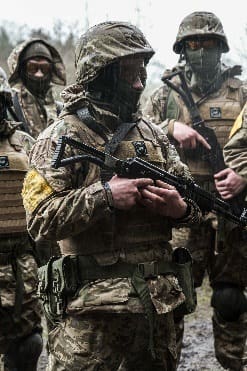
The Ukrainian government has awarded Rheinmetall a contract for Leopard 1 systems, including 25 main battle tanks Leopard 1A5, five armoured recovery vehicles (Bergepanzer 2) and two driver training tanks. The order, financed by Germany and worth a figure in the upper-two-digit million-euro range, also includes training, logistics, spare parts, maintenance and other support services. 

Delivery is due to take place in 2024. The Leopard 1 systems are currently being overhauled and readied for use at Rheinmetall’s plants in Unterlüß and Kassel. 

Rheinmetall thus continues to support Ukraine with a steady flow of tactical vehicles. The Group has previously been tasked with supplying Ukraine with a total of eighty Marder infantry fighting vehicles. Most of these are already in-country, where they have proved their mettle in ongoing operations. 

Rheinmetall is ready to supply a further twenty Marder IFVs as soon as it receives an order to this effect. In late 2023 and early 2024, Ukraine will also be taking delivery of five Caracal airmobile-capable vehicles. On behalf of the Dutch and Danish governments, moreover, next year the Group will be supplying Ukraine with fourteen Leopard 2A4 tanks. In addition to vehicles, Rheinmetall is aiding the Ukrainian armed forces with ammunition, drones, medical facilities, etc. 

GA-ASI Demonstrates Short Takeoff/Landing of UAS on UK Carrier

November 24th, 2023

Mojave Flights for the Royal Navy Highlight UAS’ Ability to Operate From Warships

SAN DIEGO – 17 November 2023 – General Atomics Aeronautical Systems, Inc. (GA-ASI) conducted a first-of-its-kind demonstration of its short takeoff and landing (STOL) capability on the HMS Prince of Wales, a Royal Navy aircraft carrier, using the Mojave Unmanned Aircraft System. The demonstration took place on November 15, 2023, when the Prince of Wales was underway off the East Coast of the U.S., and the Mojave was controlled by an aircrew within a control station onboard the ship. The demonstration included takeoff, circuits, and approaches and ended with a landing back onto the carrier.

“We applaud the Royal Navy’s foresight in embracing this unprecedented capability for its carriers,” said GA-ASI CEO Linden Blue. “We knew our STOL capability would enable a UAS to safely take off and land on the Prince of Wales. Seeing our Mojave operate successfully in this environment opens myriad new ways our aircraft can be used to support multi-domain naval operations.”

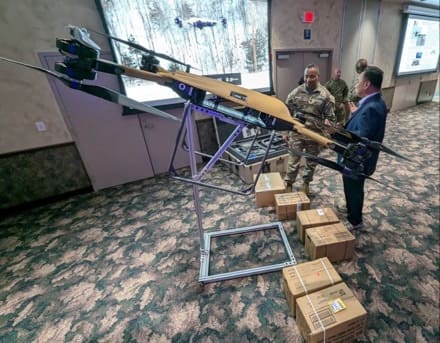
Mojave is a short takeoff and landing UAS demonstrator originally developed to prove STOL operations at unprepared landing sites. While Mojave shares common systems and components with GA-ASI’s Gray Eagle model, a STOL wing set option is likewise being planned for the larger, more capable MQ-9B aircraft, which includes SkyGuardian®, SeaGuardian®, and the new Protector RG Mk 1 currently being delivered to the UK Royal Air Force. The MQ-9B version, called MQ-9B STOL, is being considered by the Royal Navy and other navies that operate aircraft from large flat-deck warships without catapults and arresting gear.

Royal Navy Director Develop, Rear Admiral James Parkin, whose team planned the trial, said: “The Mojave trial is a European first – the first time that a Remotely Piloted Air System of this size has operated to and from an aircraft carrier outside of the United States. The success of this trial heralds a new dawn in how we conduct maritime aviation and is another exciting step in the evolution of the Royal Navy’s Carrier Strike Group into a mixed crewed and uncrewed fighting force.”

Equipping UAS with STOL capability provides greater versatility and allows the aircraft to operate in areas previously deemed unsuitable for UAS operations, including landing onto and taking off from an aircraft carrier. MQ-9B STOL will be capable of carrying the same payloads and conducting the same missions as the SkyGuardian and SeaGuardian, including maritime surveillance, Anti-Submarine Warfare (ASW), Airborne Early Warning (AEW), and surface strike.

USSOCOM Science and Technology Small Business Innovation Research (SBIR) 24.4 Release 1 Pre-Release

November 24th, 2023

The USSOCOM Small Business Innovation Research (SBIR) program will soon be accepting submissions for the following technology areas of interest:

PHASE I:
SOCOM244-001: Small Unmanned Ground Robotic Systems
SOCOM244-002: Thermal Reflex Sight

The Small Business Technology Transfer (STTR) program stimulates a partnership of ideas and technologies between innovative SBCs and non-profit Research Institutions. By providing awards to SBCs for cooperative R/R&D efforts with Research Institutions, the SBIR and STTR programs assist the U.S. small business and research communities by supporting the commercialization of innovative technologies.

On 28 November, SOFWERX will host a virtual Q&A session for the area of interest. RSVP to the Q&A session on the event webpage.

Submissions Open 05 December 2023.

events.sofwerx.org/sbir24-4r1

Rebel Rooster Bag Wax

November 24th, 2023

Rebel Rooster Bag Wax is a specially formulated wax created for shooters by shooters. Our hands-free application offers a no mess solution to the task of properly waxing your bag for the best stick, performance, and protection. Rebel Rooster Bag Wax is made proudly in America and is the first bag wax created for shooters.


rebelroostersupplyco.com/collections/wax

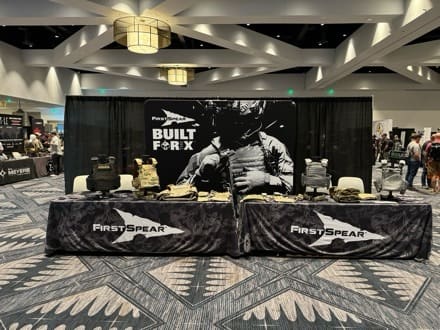
FirstSpear Friday Focus – Overrun Deals

November 24th, 2023

Overrun gear developed for Tier 1 operators. Save this Black Friday on world class gear and equipment. Matter of fact savings on matter

of fact kit. Check out our overrun options now.

Visit FirstSpear to find American Made kit and accessories, Built For The X.

Strengthened Army Industrial Base Doubles Artillery Production

November 24th, 2023

WASHINGTON — The Army’s artillery production doubled in the last year with the service currently producing 28,000 155-millimeter howitzer rounds a month.

The dramatic uptick comes as the Army expanded its capacity at current facilities while looking to bring new ones into the mix next year.

“We will have taken, over a couple years, what was a very fragile, admittedly, industrial base and dramatically improved its strength,” said Doug Bush, assistant secretary of the Army for acquisition, logistics and technology.

The need for the increased artillery comes in response to supporting the war in Ukraine, the recent conflict in Israel and replenishing U.S. stockpiles. The service has sent more than two million rounds to Ukraine thus far.

Currently, the Army ships steel from Ohio to two facilities in Pennsylvania, the Scranton Army Ammunition Plant, and a sister facility in Wilkes-Barre. These two plants turn 2,000-pound steel rods into two-foot-tall artillery shells.

The shells are then transported to the Iowa Army Ammunition Plant, where they are filled with explosives and sealed. The propellent and charges for the rounds are mostly produced at the Radford Army Ammunition Plant in Virginia and the Holston Army Ammunition Plant in Tennessee.

Throughout this year, the Army expanded production at these facilities by constructing new buildings, installing new equipment and improving automation. These upgrades helped double the Army’s artillery production rate, Bush said.

With the expanded capacity at current facilities, the Army is shifting its focus in fiscal year 2024 toward bringing brand-new production facilities into the manufacturing process. This will give the service multiple sources for each production step.

“Which is what you want in the ammunition production world,” Bush said. “You don’t want one building being the single point of failure.”

The service is building a new factory in Mesquite, Texas, and it awarded a contract last year to a Canadian company to build the artillery shells. It is also funding two new facilities to load the shells with explosives. One will be in Arkansas, and the other will be in Kansas.

The improved production process is part of the Army’s modernization plan to bring the industrial base into the 21st century. Current and future Army readiness requires modernization on a sustainable path that develops, implements, and deploys new technologies to deter current and emerging threats.

Bush said the Army aims to increase 155-millimeter production to 60,000 by next summer and to 100,000 by the end of 2025. The 100,000-round goal is largely contingent on the approval of President Joe Biden’s request to Congress for fiscal year 2024 emergency supplemental funding, which has $3.1 billion for 155-millimeter artillery production and facility modernization.

“This important legislation is needed to make sure the Army is ready to meet the growing challenges we face today, and in the future,” Bush said. “It will strengthen our industrial base to ensure we can supply our defense needs while we serve as the arsenal of democracy for our allies.”

Story by Christopher Hurd, Army News Service

Happy Thanksgiving!

November 23rd, 2023

Repurposed Technology Could Help Protect Soldiers

November 23rd, 2023

By Aeriel Storey

Army engineers use inkjet printers to replicate explosives samples for testing, training 

ABERDEEN PROVING GROUND, Md. — An unlikely fusion of ink, ingenuity and integrated teamwork is applying an existing technology to the challenge of sampling and detecting explosives.

At the U.S. Army Combat Capabilities Development Command Chemical Biological Center, a team of engineers have adapted inkjet printing technology to deposit trace amounts of explosive materials onto surfaces that can be used to test sampling and detection methods.

Since 2010, DEVCOM CBC’s electronics engineers, Raphael Moon and Norman Green, have been working on developing the unique capability by using a commercial off-the-shelf printer that deposits explosive materials on a multitude of surfaces accurately, evenly, and reproducibly.

Their idea to replace the printer’s original ink with explosive materials came from an earlier program that required the use of commercial inkjet printers to replicate detonation patterns. To bring that concept into fruition, a multidisciplinary team consisting of Kevin Hung, Erik Roese, Ashish Tripathi, Erik Emmons and Dr. Jason Guicheteau was established.

“We had to test for about a year before we felt very comfortable trying to print explosives and chemicals correctly,” Moon said of the development process. “The idea of replacing the material in an ink cartridge is simple, but the properties of the chemicals need to be considered for it to work. The ink must have the right viscosity, surface tension and a suitable solvent that maintains the consistency of the ink throughout the printing process that does not damage the printer.”

Precision and accuracy have always been at the forefront of the development process for the system to produce reliable results, allowing for control and accuracy within a microgram. To achieve these results, the team created and tested various ink solutions and engineering options. “We’re really lucky because we’re in an organization where multiple disciplines are all in one building,” said Hung, a software engineer at DEVCOM CBC. “We were able to leverage everybody’s knowledge and experience to contribute to the inkjet project. It was really a team effort.”

Since its inception, the program has demonstrated that the inkjet printer can duplicate samples with high precision, accuracy, scalability, and flexibility for a wide array of various use cases.

One program that the inkjet printer has been applied to includes the NATO Research Task Group. The program uses trace amounts of explosives to create test and evaluation standards. The program has allowed the team to display the inkjet printer’s ability to print on realistic substrates that would accurately reflect trace detection of explosives in the field.

“We are printing on substrates that replicate materials normally found among debris from detonated devices including car parts, pieces of walls, ceilings, and floors,” said Roese, CBC’s electrical engineer on the project. To print such precise solutions onto objects that vary in size, shape, and curvature is groundbreaking for modern-day printing, and creates a pathway for future developments of systems alike.

At DEVCOM CBC, a team of engineers have adapted inkjet printing technology to deposit trace amounts of explosive materials onto surfaces that can be used to test sampling and detection methods.

These breakthroughs are integral for experimentation and have proved to be applicable in the field. Most recently, the team has been successful in assisting the military on training their working dogs to detect explosives by printing small amounts on sample coupons, as opposed to using traditional bulk quantities. The coupons were buried to simulate sub-surface explosives detection. The test received positive feedback from Soldiers testing in the field and opened more avenues for which the printer could be applied.

The highly customizable system can be used for various projects, requiring in-depth involvement from the inkjet printing team to assist on the specific needs and requirements of the project. “We have developed this system to be accurate and reproducible, so if there are certain parameters that a user needs, we can replicate those requirements for them,” said Hung. “We can also create new inks to mimic instances that users would see in the field.”

The idea has even expanded to include an additional printer, called a nano-plotter, that can be used for smaller, more precise material applications. The team is continuing to pursue projects they can support that allow them to push the boundaries and capabilities of the inkjet printers.