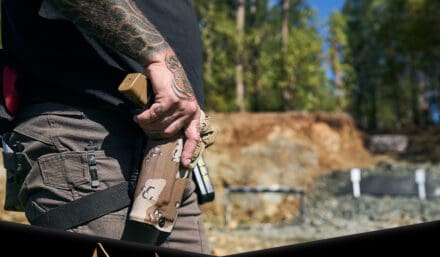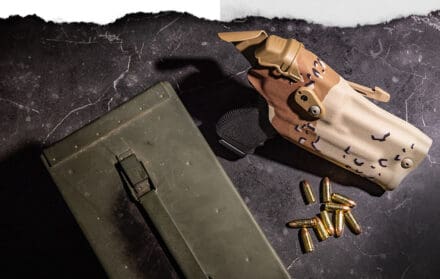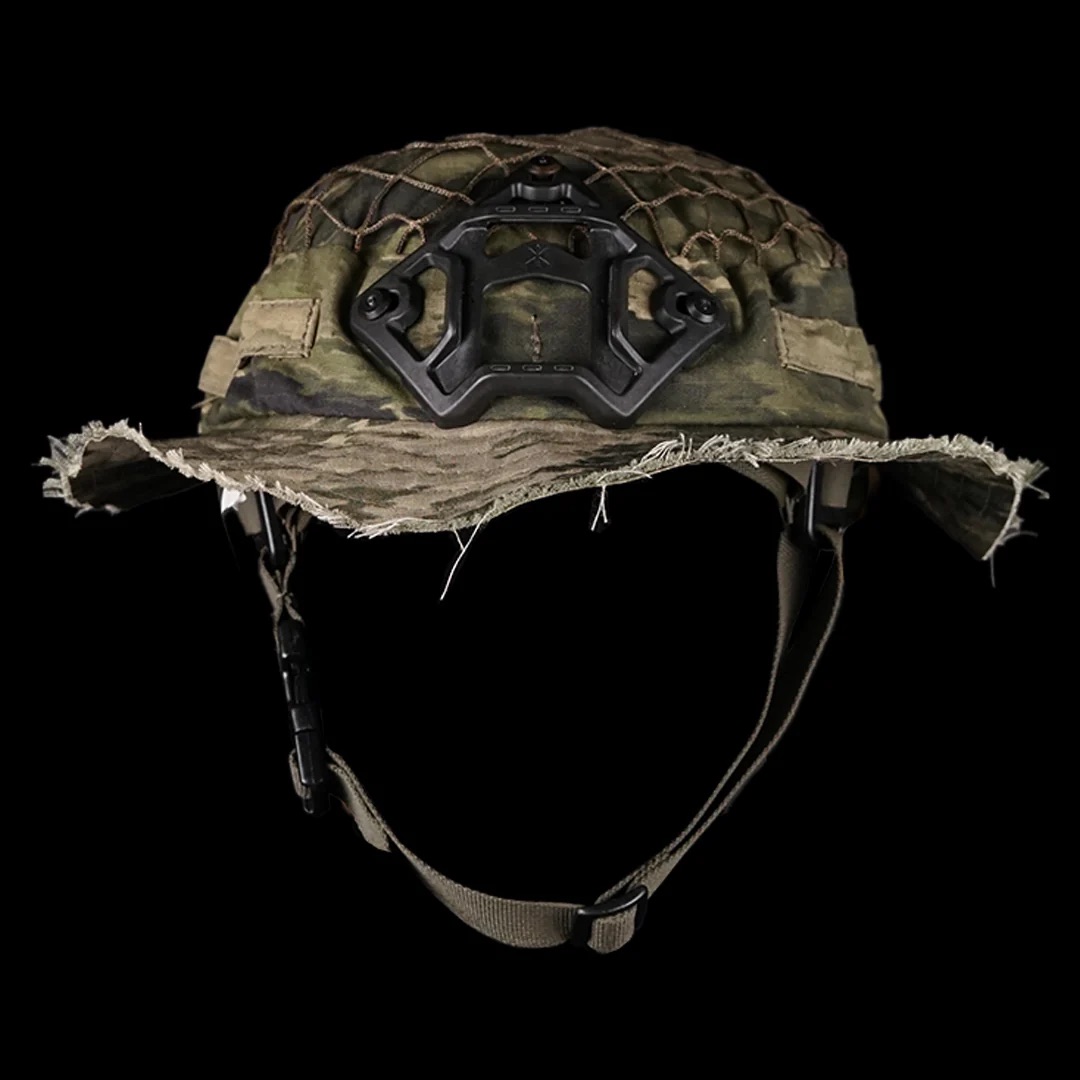
For years Tactical Concealment has been in the business of providing ghillie camouflage systems to military and police customers. They recently updated their website to make it easier to navigate but also to showcase their products for new customers.

Archive for the ‘Camo’ Category
Tactical Concealment Updates Look
Wednesday, August 25th, 2010Hyperlite Mountain Gear Update
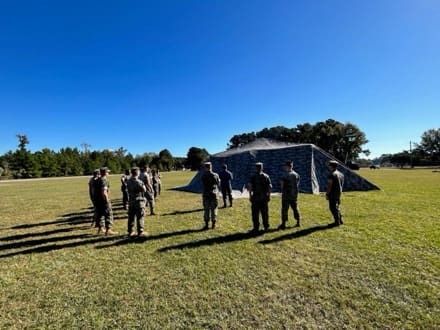
Tuesday, August 17th, 2010We received some photos of the HMG ECHO II shelter in Digital Camouflage. This is the best of the bunch, showing the pattern and features of the shelter. Manufactured from Cuben fibers, HMG products are Berry Compliant.


OCP Update
Wednesday, August 11th, 2010Yesterday, SSD participated in a teleconference with PEO Soldier’s LTC Mike Sloane and CSM Bernard McPherson. Also on hand was SMA Kenneth Preston along with several Subject Matter Experts from PEO Soldier. The press event was in conjunction with the Army’s initial fielding to a Brigade of 19 items in the new OEF Camouflage Pattern (OCP) at Camp Shelby, MS. Up to 3600 Soldiers will be equipped with the new gear over the remainder of the week before shipping off to Afghanistan. From here out, all OEF bound forces Brigades will be fielded Organizational Clothing and Individual Equipment in OCP before deploying from CONUS. Beginning in November, units with more than 120 days left in theater will also receive the kit. PEO Soldier is poised to conduct limited early fielding for deployed Battalion and smaller units who require the enhanced camouflage based on their mission. They are also developing plans to ensure that Individual Augmentees are taken care of. Additionally, Army SOF will be issued gear in the new pattern.



The ambitious fielding schedule would not have been possible without the dedicated work of two communities; the contracting office at Natick and industry. LTC Sloane commented, “The American Industrial Base is leaning forward, flying items in and driving them here.” The other side of this coin is the Army’s contracting strategy. In three months, the contracting office at Natick issued 11 contracts with another six to eight pending. Very impressive.
This fielding marks the implementation of phase III of the Army’s Congressionally directed search for enhanced camouflage for troops in Operation Enduring Freedom. Within less than a year, the Army conducted an extensive down select of 57 to five patterns that included an in-theater data collection effort and a comprehensive photo simulation study and wear test. This culminated in the selection of the Crye Precision developed MultiCam pattern as the new OCP.
When asked if he felt that, based on his experience if Soldiers were better protected with the new OCP, SMA Preston commented, “Based on testing…Yes, I believe they are safer.”
So what’s next for OCP? In February 2011, Tier II items including the Aircrew Advanced Combat Uniform, Improved Combat Vehicle Crewman Coverall, Aviation Life Support Equipment, and Fire Resistant Environmental Ensemble items will be introduced in the MultiCam pattern.
Finally, LTC Sloane announced that the Army’s Phase IV of the Global Camouflage effort will not be as short term as initially described. Instead, the TRADOC-led project will not be ready for the Army leadership to make a decision until the end of FY13. This three year effort sounds now to be more of a science project than focused on presenting a near-term warfighting enhancement. On the plus side, the Air Force is participating, and both the Navy and Marine Corps are monitoring the program so there is a slight possibility that the project may deliver a true joint solution. The down side is that for at least the next three years Soldiers must continue to rely on the limited capability of the so-called Universal Camouflage Pattern that caused this whole program in the first place. Perhaps commanders in other theaters will begin to insist that their troops also require enhanced camouflage and we will see increased fielding of MultiCam.
Thanks for Making Our Day Kit Up!
Wednesday, August 11th, 2010Kit Up! ran with our story on the two developmental variants of the new USN Type II and III NWU. They spoke with a couple of the officials working on the program and the program still doesn’t add up. They were unable to explain the desert camo issue plaguing the program. Additionally, Kit Up! came to a similar conclusion that we have. The Navy will most likely adopt a cut of uniform that NSW won’t want to wear due to the variant 1’s focus on garrison wear. Combine these two issues and you will have a Type II NWU in a restricted camo pattern and the only community that can wear it won’t because it doesn’t meet their functional requirements. Classic…
Be sure to check out the whole story at Kit Up!
More on the Type II and Type III NWU
Monday, August 9th, 2010The Program Manager for the Naval Working Uniform has set up a fantastic web site to keep the Fleet updated on the roll out of the Type II and III variants of the NWU slated for fielding in Spring 2011. Two variants of the basic layout are currently in conformance testing pitting a traditional BDU cut most Sailors are used to against a more innovative style based on features found on commercially developed combat clothing. In the photo above you can see the Type III which will replace the Camouflaged Utility Uniform in the Woodland pattern. Unfortunately, the Navy plans on retaining two separate desert camo patterns, with Naval Special Warfare adopting the AOR I inspired variant and all others retaining the old 3-color desert pattern which first saw service in Operation Desert Storm.
Stuff We Didn’t Write About
Saturday, August 7th, 2010Stuff We Didn’t Write About
Sunday, August 1st, 2010Army Camo Phase IV
Wednesday, June 30th, 2010And so it begins…well actually it began awhile ago but Phase IV of the Army’s camo program is gaining steam and Natick in conjunction with PEO-Soldier released a Sources Sought Notice yesterday for camouflage patterns. SSD was also able to speak with PEO Soldier’s COL William Cole and LTC Mike Sloane about the situation.
The Army is seeking a family of three different camo patterns including woodland, desert and, transitional (sometime called universal), and one pattern for personal equipment (such as body armor, ammo pouches and rucksacks) which works with all three (3) uniform camouflage patterns. The idea behind the family of patterns is to give Army leaders and Combatant Commanders options. The document goes on to describe a family of patterns as “A family is considered to be of the same or similar geometry with coordinating color palettes to cross the global operating environments. Global operating environments are defined by a geographic classification system that subdivides the global landmasses into areas with similar environmental characteristics.” So ultimately, they are seeking three and possibly four patterns that share basic composition. Sharing basic geometries can be used for identification purposes as well to streamline with supply chain with common printing screens. One option for the family of patterns is that the transitional or universal pattern will be issued in the clothing bag to all Soldiers and the woodland desert patterns would be special issue to those operating in those environments.
The Sources Sought Notice goes on to describe how the patterns will be evaluated. This methodology can be used in both a photosimulation study as well live field tests.
“The woodland pattern may be evaluated in forest, full ground cover, cropland and jungle terrain at distances between 35 and 400 meters.
The desert pattern may be evaluated in low sandy desert and high rocky desert terrain at distances between 35 and 500 meters.
The transitional pattern may be evaluated in both woodland and desert terrain types at the distances cited above.
All evaluations will be made with a subject mannequin and/or human wearing a uniform in the evaluated pattern and a body armor vest with ammo pouches in the family personal equipment pattern.
The primary method for evaluating uniform and personal equipment pattern effectiveness will be determining the distance at which observers have a 50% probability of detecting the camouflaged test subject; the shorter the distance the more effective the camouflage.
The secondary method for evaluating pattern effectiveness, to be used in instances where all patterns are detected at the same range, will be the relative time to detection; the longer the time to detection the more effective the camouflage.
Near IR performance will also be evaluated at distances from 35 and 200 meters. The patterns will be evaluated for Near IR performance in the same terrain types as for daylight performance.”
The big issue here is options. The camouflage team which is comprised not only of PEO-Soldier and Natick but also such stake holders as the Maneuver Center of Excellence, Naval Research Labs, USASOC, and the AWG has to brief the Army leadership on their plan of action in July. This plan not only offers choices but also economizes them through a common pattern geometry for uniforms as well as a common OCIE pattern.
COL Cole said that he expected to see a new family of patterns enter service within two years saying “We want to conduct rigorous testing. This is not a fashion contest.” What is clear is that no one wants to rush into a solution but rather, the Army would like to conduct full testing in all terrain environments and all seasons. Additionally, LTC Sloane added, the Army wants to ensure that they conduct a thorough threat analysis placing the correct emphasis on probable areas of operation.
At this point, the Army is trying to ascertain the state of industry to support this requirement and to give everyone a heads up. Offerors have one month to respond and we are looking forward to seeing what industry comes up with once a full blown solicitation is released.
A Little Foreshadowing Please
Wednesday, June 30th, 2010West Point Explores Camouflage
Friday, June 25th, 2010The West Point PAO published a fantastic story early this month about the Engineering Psychology program within the Department of Behavioral Sciences and Leadership. It gives a great account of Dr Timothy Oneill’s (LTC USA, Ret) contribution to the development of camouflage patterns and his participation in Phase IV of the Army’s current camouflage effort. It is absolutely worth reading. However, it is the last paragraph of the article that begged our attention.
“O’Neill personally believes the end state will be two uniforms with snow overwhites. Though he is currently unable to discuss any particulars about the new uniform, O’Neill assures that they are developing it as fast as they can.”
We’re sure you’ve heard the old adage, “Amateurs talk tactics, professionals talk logistics” and ultimately, this is the major issue for those touting multiple patterns for the Army. Unfortunately, many of them are also suffering from another oldie but goodie, “Those who fail to study history are doomed to repeat it.” It seems the Army’s institutional memory is incapable of even making it back to 2001 or even 2003 when US troops commenced combat operations first in Afghanistan in woodland camouflage uniforms and then a scant year and a half later liberated Iraq in a mixture of woodland and 3-color desert patterns. Even then, it was a repeat of the first Gulf war when all of the services were incapable of preparing a sufficient stockpile of desert dress. The bottom line here is that it is simply too expensive to issue every Soldier multiple camo patterns. Even if sufficient funding were secured, would even two patterns be enough? They too would be generic patterns and compromises. So how many patterns would it take?
The question isn’t whether the Army is capable of developing numerous specific patterns for a variety of target areas. That is the easy part. The real challenge is how to produce and issue such uniforms and equipment fast enough to actually have an effect on the operation. As a nation, we have failed three times to accomplish this, and that was but for a single pattern. Imagine if this issue were multiplied even ten-fold.
Yes, you are going to say that the Marine Corps issues two uniforms but they are a much smaller service. The outlay isn’t as great. However, FROG is not offered in Woodland MARPAT so the Marine Corps doesn’t even really offer a combat uniform in a jungle or forest pattern. Additionally, their solution for a common colored load carrying and armor solution was based more on economy than performance. If the Army ever issues a final report from the recent photometric camouflage study conducted in Afghanistan, there will be some empirical evidence that suggests that solid colors such as Coyote are not very good performers as they provide too much contrast with the camo pattern. So maybe the Marines didn’t do such a great job after all.
Then there is the whole issue with clashing with your environment. Specifically, woodland pattern in a desert environment or vice versa. Troops can’t carry multiple patterns during an operation and change clothing as the environment changes. This has already been an issue in Afghanistan for both the US Marines as British forces.
All of these lessons were learned at the beginning of this war and the Army decided to adopt a Universal pattern. Unfortunately, they initially chose UCP. However, they have since selected an excellent Universal camouflage pattern for Afghanistan in Crye’s MultiCam. It works, it has been tested several times, and it is available. What’s more, it is an issue pattern. Even better, the troops love it. So what’s the problem?
If the Army wants to make an effect immediately, then the solution to Phase IV is simple. Adopt MultiCam and continue to develop and evaluate camouflage patterns. Once a superior pattern is identified, work with the sister services to institute an upgrade in capability.
Camouflage Takes Centre Stage in Brussels
Thursday, June 24th, 2010If you find yourself in Brussels, Belguim between 13 and 15 October, 2010 then you might consider attending the “Camouflage Takes Centre Stage” symposium sponsored by the International Council of Museums (ICOM) and the Royal Museum of the Armed Forces and of Military History (RMM).
For more info visit the symposium’s website.
Hyde Definition Announces New PenCott Multi-Terrain Camouflage Patterns
Tuesday, June 8th, 2010Two new patterns have been specifically optimized for arid “PenCott-Sandstorm” and semi-arid terrain “PenCott-Badlands” joining the original PenCott-GreenZone pattern. These areas are the most common and most likely operational environments for military assistance and special operations forces.
PenCott’s unique digital fractal design dithers four terrain-optimized contrasting colors to create a combination of soft, blended and hard edges for a more natural-looking texture, and the illusion of a wider spectrum of color tones. This makes it harder for the human eye to process, and recognizable shapes become more difficult to detect and recognize.
Additionally, Hyde Definition has revised their licensing rates to make it even easier for companies to produce their own clothing and equipment designs in the PenCott camouflage pattern. Contact Dome Hyde for further details.
Visit the website www.hydedefinition.com
EAW Scarves from Tac-Up Gear
Sunday, June 6th, 2010Swedish brand Tac-Up Gear has just introduced their Expeditionary Air Wing Scarf in both M-90 and M-90 K Desert. Sized at 1 meter x 1 meter, the EAW Scarf is so sheer you can see right through it if you use it as a base for a scrim net.
Camouflage Patterns, Concepts and Design/Analysis Tools
Thursday, June 3rd, 2010Could the recent Sources Sought Notice from Natick for Camouflage Patterns, Concepts and Design/Analysis Tools be in support of the Army’s fabled Phase IV of their camouflage plan? We hear that so far only a few companies have ponied up and this has prompted Natick’s Multifunctional Materials Team, Warfighter Science, Technology and Research Directorate to extend the deadline from May 28th until June 18th. Interested parties should check out the Sources Sought Notice and respond if you have something of interest. Now is the time to stand up and be counted.
Apparently, whatever the final plan is for Phase IV it is supposed to be on the Chief of Staff of the Army’s desk by 14 November and word has it that the Army-wide adoption of MultiCam will be one of the courses of action. At this point, it is the path of least resistance since to do nothing and retain UCP would meet a great deal of operational resistance based on several rounds of testing. Additionally, industry is beginning to energize a supply chain for MultiCam that can be further ramped up to meet increased demand. We fully support the continued development of more advanced patterns but MultiCam increases capability immediately. What’s more we would like to see the Air Force adopt MultiCam at least for deployed forces.
Update on the Congressional Fascination with Camo
Wednesday, June 2nd, 2010Last year we reported that in addition to the Congressionally mandated search for a new camo pattern for Afghanistan, they were also going to add language to the Defense Authorization Act for 2010 that would require the services to begin to work toward a common camouflage pattern as well as combat uniform. That requirement is now section 352 of Public Law 111–84. Last week, the Government Accounting Office released the report below as an interim response.
GAO Report: Observations on DoD’s Ground Combat Uniforms
Additionally, here are some recent comments from the House Armed Services Committee:
Ground combat uniform research and development Section 352 of the National Defense Authorization Act for Fiscal Year 2010 (Public Law 111–84) established, as a policy of the United States, that the design and fielding of all future ground combat and camouflage utility uniforms of the armed forces may uniquely reflect the identity of the individual military services, provided that the ground combat and camouflage utility uniforms, to the maximum extent practicable:
(1) provide members of every military service an equivalent level of performance, functionality, and protection commensurate with their respective assigned combat missions;
(2) minimize risk to the individual soldier, sailor, airman, or marine operating in the joint battlespace; and
(3) provide interoperability with other components of individual war fighter systems, including body armor and other individual protective systems.
The committee notes that part of the rationale for section 352 of Public Law 111–84 was to reduce the multiple research, design, development, and fielding efforts for military ground combat uniforms being undertaken by the military departments and to improve the overall combat capability of those assigned to ground combat missions.
In an interim response to section 352 of Public Law 111–84, the Government Accountability Office (GAO) found no performance standards for specific combat environments, no criteria for evaluating the effectiveness of camouflage patterns, and no requirements for the services to test interoperability between their uniforms and other protective gear. Furthermore, while GAO found some examples of uniform technology being shared across the services, the committee emphasizes the importance of sharing new technologies, advanced materials, and other advances in ground combat uniform design and development between the military services. The committee notes that some of the military departments have used the Army Natick Soldier Research, Development, and Engineering Center during development of their ground combat uniforms to test the effectiveness of the camouflage, and, in some cases, camouflage effectiveness of ground combat uniforms and protective gear. The committee believes, however, that Natick’s resources could be better utilized for joint research and development. Because of its expertise, the committee urges the services to consider expanding their use of the Army Natick Soldier Research, Development, and Engineering Center as a center of excellence for uniform research and development to guide their development of camouflage effectiveness and performance criteria and testing.
Additionally, the committee encourages the Secretary of Defense to consider designating an executive agent (EA) to oversee Department of Defense activities related to research and development of ground combat and camouflage utility uniforms. The committee envisions that such an EA would be similar to the functions performed by the executive agent for operation of the Department of Defense Combat Feeding Research and Engineering Program.
Overall, not a whole lot of shocking news here but lots of good costing data has been provided. However, check out the second bullet on slide 33 of the GAO document. A bit of a surprise there. Also, of interest is slide 45 which shows the new Navy Type II and III camo based on the AOR patterns.
A-TACS Nylon Cordura Fabric, Webbing and Hook and Loop Now Available
Tuesday, June 1st, 2010This is very exciting news for large businesses as well as the Do-It-Yourselfer. After many months of stage two development on A-TACS and further enhancement of the printing technology behind the pattern, Digital Concealment Systems has announced that Berry compliant A-TACS Nylon Cordura, Nylon webbing, and Hook and Loop is now available for purchase.
In an exclusive partnership, A-TACS Nylon Cordura is now available for worldwide distribution through LC Industries. As a result of this distribution deal, production-ready fabrics can be purchased in quantities as low as 5 yards which will enable a wide range of specialized gear manufacturers to begin producing product without the need to carry heavy fabric inventory.
Fabric will be available in 330D, 500D and 1,000D weights with urethane backing and DWR treated face. For additional information, pricing or to place an order, please call Julie Kammerer or Susan Fields with LCI / TAG at 1-888-890-1199.
A-TACS nylon webbing and bindings are now available exclusively hrough Texcel, Inc. in a variety of specifications ranging from three-quarter inch to three inch widths. For ordering information and pricing, please contact John Pinkos at 401-727-2113.
To complete the A-TACS total concealment system, DCS in conjunction with Aplix, Inc. is proud to announce the release of A-TACS hook and printed loop. For ordering information and pricing, please contact James Bishop at 800-438-0424.
For all other inquiries regarding A-TACS Nylons, please contact Steve Hanks with Digital Concealment Systems at 334-448-5442.
Brits Recommended MultiCam to US Army? Excuse Me While I Guffaw
Friday, May 21st, 2010This is just precious. In a recent press release from the MoD, Colonel Stephen James, Project Team Leader for the Defence Equipment and Support Clothing Team, who was responsible for delivering the new British Multi Terrain Pattern to British forces had this to say, “We have presented the new designs to the US Department of Defense and, following our recommendations, the US Army are about to adopt the same technology for their uniform in Afghanistan.”
Ok, so there you have it. The recommendation of the British Army, after their experience in adopting MTP a MultiCam-like pattern developed by Crye Precision, is what is responsible for the US Army’s recent decision to field MultiCam to units operating in Afghanistan. I guess it has nothing to do with the results of an arduous selection process carried out by PEO-Soldier and their partners at Natick, AWG, ATEC, and the Infantry Center in which MultiCam was deemed superior to the other candidates.
Polish by the Numbers?
Tuesday, May 18th, 2010Remember the old paint by the numbers sets you used to get from your Great Aunt for Christmas? Looking at the condition of these CADPAT-TW Temperate Combat Boots currently undergoing trials, you would need the boot polish equivalent to get them back in shape. This photo of a pair of the trials boots was sent to us and identified as having reached this condition after three weeks of field use. Granted, boots usually get scraped up in the field. The difference here is that with so many colors going on, there is no way to use polish to restore the leather. That is unless there was a polish by the numbers kit.
Fielding the OEF FR ACU
Monday, May 17th, 2010
As most of you know by now, the MultiCam version of the Fire Resistant Army Combat Uniform slated to be issued to troops in Afghanistan has been officially dubbed the OEF FR ACU. This is because it is supposed to only be used in Afghanistan (Operation ENDURING FREEDOM). I guess someone forgot that operations in the Philippines are also part of OEF. But then again, I don’t share PEO-Soldier’s wishful optimism that commanders in other areas won’t want their troops to be outfitted in MultiCam as well. I mean after all, testing has demonstrated it is a very effective pattern in a variety of environments. Why wouldn’t a commander want his troops outfitted in the best equipment available.
At any rate, where are those new OEF FR ACUs anyway? Well, the Army is on its way to fielding, working its way through the procurement process, but meeting the goal of July is going to be difficult if not impossible. The recently released pre-solicitation doesn’t close until 1 June. Then, the Army still has to release an actual solicitation which is usually open for about 30 days, make an award, deal with any protests that might arise, wait for uniforms to roll off the line, and finally distribute them. While mills are chugging away manufacturing FR Defender-M from Tencate, none of the manufacturers of uniforms will place orders for fabric until they receive a contract so there is only so much leaning forward in the fox hole that can be done.
One of the reasons that PEO-Soldier isn’t jumping into MultiCam with both feet is that the Army hasn’t made a long-term decision about camouflage yet. PEO-Soldier says that the Army is moving toward a decision on Phase IV of the camo project but thus far, almost nothing has been released on what exactly this phase entails. Hopefully, we will begin to see some transparency considering the brouhaha raised over the selection of the Universal Camouflage Pattern.
MultiCam-tinged Flecktarn Abounds
Tuesday, May 11th, 2010In addition to TacGear’s MultiCam-esque Flecktarn offering, a new pattern has emerged in Germany called Arid-Flecktarn that is definitely inspired by MultiCam but features Black rather than the Dark Brown shade found in the real thing. It is purely a commercial pattern and has not been adopted for use by anyone. The garments are sewn in the same style as US-issue ACUs.

One of These Things Is Not Like the Others
Thursday, April 29th, 2010Canadians Testing Camo Boots
Monday, April 26th, 2010Over the past several years we have seen numerous images of boots printed in CADPAT TW but now they are finally undergoing a test to determine the best color scheme for Canadian military footwear. Presently, DND has pitted CADPAT TW against the solid DND Maxi-Brown in a large-scale user wear trial to verify whether or not the latest version of the Temperate Combat Boot passes user acceptance for comfort and durability. A visual detection test will be conducted later this year to determine which version (CADPAT or Maxi-Brown) performs better in term of increasing soldier survivability through reducing their visual signature. Once the results of the user wear trial and visual detection test are compiled, the final version will be put to contract sometime in the 2011-2013 time frame.
All photos Canadian DND